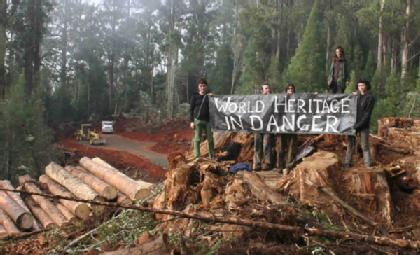
Almost 2000 people have rallied today in the Upper Florentine Valley to defend World Heritage listed forests.
The Bob Brown Foundation’s Campaign Manager Jenny Weber stated, “Today’s outstanding turn out in the Upper Florentine forests clearly shows that Australians are very proud of their World Heritage forests. We are sending a strong message to UNESCO that we love our spectacular forests of outstanding universal value, and the Australian community will stand up to defend them.”
“The Australian community strongly opposes the government’s proposal to the World Heritage Committee to remove 74 000 hectares of World Heritage listed forests from the Tasmanian World Heritage Area,” Jenny Weber said.
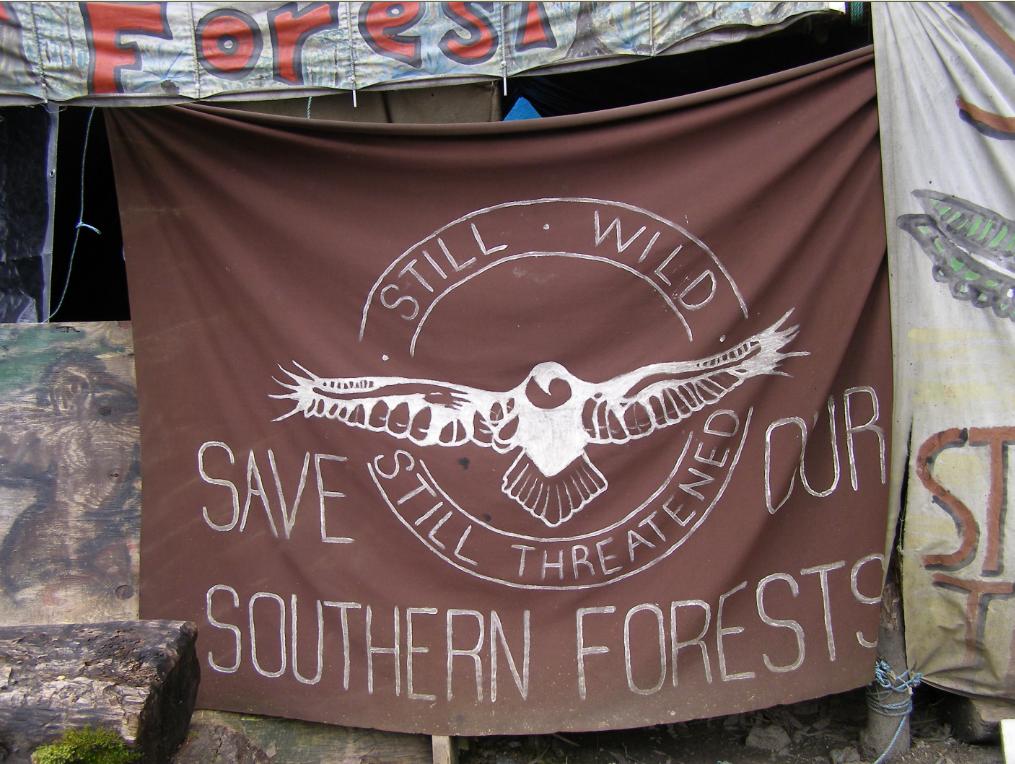
Speakers included Australian Greens Leader Senator Christine Milne, Markets for Change CEO Peg Putt, Still Wild Still Threatened’s Miranda Gibson and Home and Away actor Lisa Gormley.
For the cause and their honourCamp Flozza remembered
.
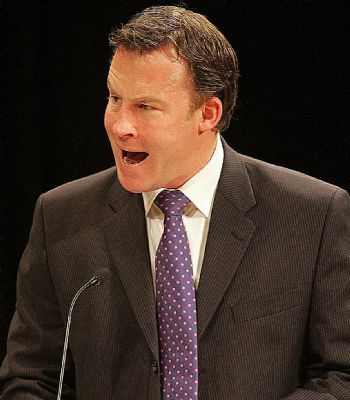
New Tasmanian Premier Will Hodgman believes in a headline sense of “economic renewal” somehow and that his vote to power provides a Viking Mandate for him to ecologically ‘rape pillage and plunder’ Tasmania’s natural resources.
With the business community on side, the minerals council, the housing industry association, the developers, the loggers, everything is up for grabs, especially Tasmania’s old growth forests.
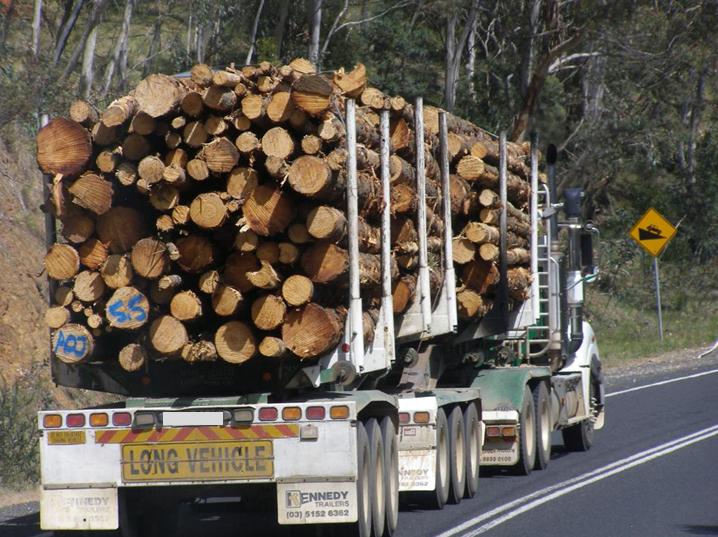
Logging trucks are already crossing back over Bass Strait from exile in parochial log state Queensland.
“We are going to embrace a new way of doing things in this state,” Mr Hodgman said.
Scary. What does he mean by that?
Not one for mature mediation, ham-fisted Hodgman is determined to tear up the $273 million ‘Tasmanian Forest Agreement‘ in what he has off-handedly vilified as a “job-destroying forest deal.” “It only threatened to lock away forever future productive forest.”
But how many Tasmanian loggers got paid out by Canberra’s $273 million Will? How much of that $273 million is left? Are you endorsing two-timing loggers – those paid out and now in for second crack?
So the hated 19th Century wood chip pulp mill is back on the table, with no prospect of profit, just a ‘work-for-the-dole’ scheme for crusted-on loggers.
But Hodgman, like Groom and Rundle before him, is sure short-term market conditions for woodchips will improve. Six hundred year old forests are renewable anyway Will reckons. Will says he has a mandate to follow through on the divisive election promise. “More wood equals more jobs” and “our plan focuses on growing the industry … not appeasing environmentalists.”
Dem’s fightin’ words indeed!
“I can’t do this on my own with these. . . people.”
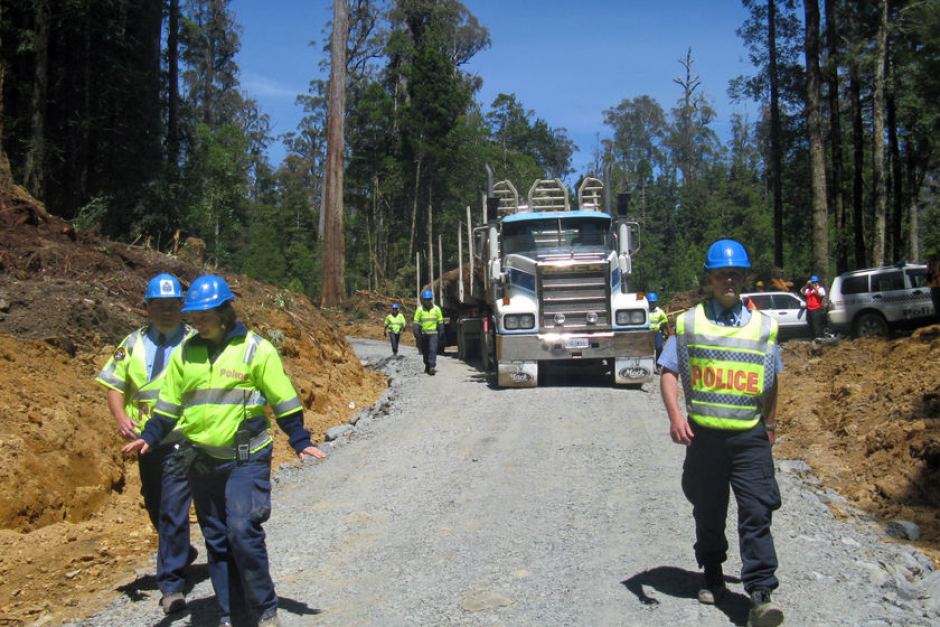
Hodgman’s heavies are regrouping and more police are being recruited and resourced. Hodgman is prepared for Forest War on the belief he has the endorsement of high-T Tasmanians.
“We will not allow the past to drag us down and stop us from moving ahead. We understand where we should move.” ~ Vladimir Putin.
Rally to Defend Tasmania’s World Heritage in the Upper Florentine!
.
When: Sunday, 27 April 2014 Time: 12 noon for 12:30pm start Where: Camp Flozza, In Tasmania’s magnificent Florentine Valley World Heritage Area, Gordon River Road, 21 km east of Maydena
(From Maydena drive along Gordon River Road, heading towards Lake Pedder. On the right, 3.3 km from the Thumbs Lookout, there will be signs for rally).
.
Tasmanians and Australians this is your time!
The Bob Brown Foundation is hosting a rally in World Heritage listed forests of the Upper Florentine, Tasmania, in response to the Australian Government’s intention to remove 74,000 ha from the Tasmanian Wilderness World Heritage Area.
Speakers include Senator Christine Milne – Leader of the Australian Greens, Peg Putt – CEO of Markets for Change and Miranda Gibson – spokesperson for Still Wild Still Threatened.
Bob Brown Foundation Campaign Manager Jenny Weber said, “Tasmania’s globally significant World Heritage Area is gravely threatened by the Australian Government’s request to the World Heritage Committee to remove 74,000ha of forests from World Heritage listing. We are receiving huge support from members of the public who are coming along to this rally, people who love these forests and don’t want to see the listing stripped from forests which have outstanding universal values.”
“We will stand together in the magnificent World Heritage listed Upper Florentine forests to support the world heritage convention and call for protection of Tasmania’s Wilderness World Heritage Area and the maintenance of the current boundary. Standing together among the ancient tall eucalyptus forests, we will prove that the Australian Government is wrong in claiming that it is logged and degraded,” Jenny Weber said.
“The Upper Florentine is pristine. This entire region is proposed for removal from the World Heritage Area, though it is a perfect contradiction of the Liberal Government’s claims that these 74,000 ha are logged or degraded. The Upper Florentine is an extensive area of pristine tall eucalypt forest, part of a corridor of tall eucalyptus forests from the far south to the central west of Tasmania, recognised as World Heritage in 2013. This intact region of ancient forest is again under threat by the Australian Government’s proposal to remove these magnificent intact forests for logging,” Jenny Weber said.
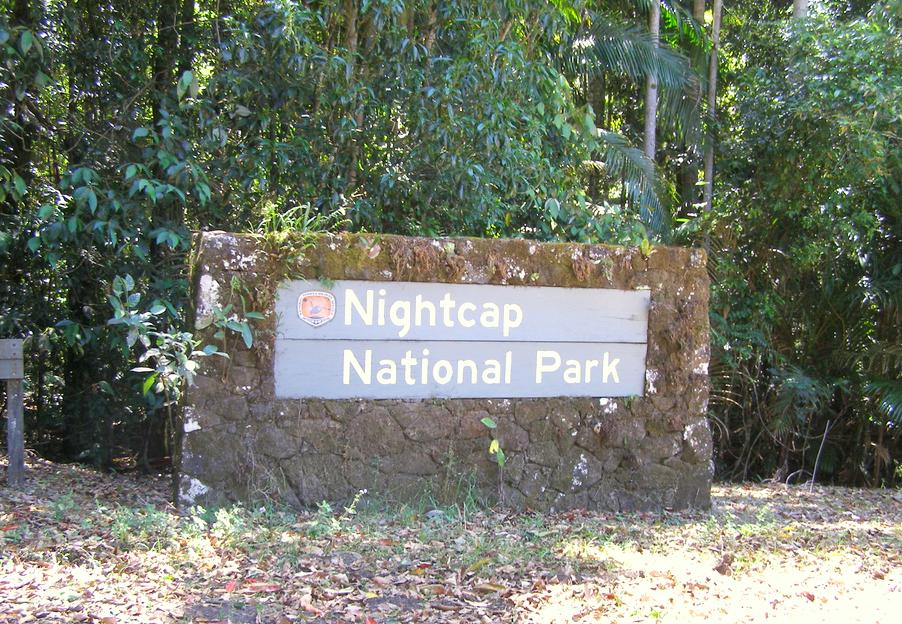
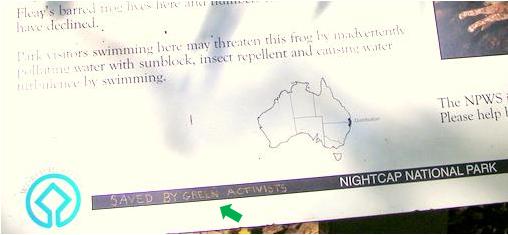
Today’s National Parks and Wildlife Service website on Nightcap National Park reads as follows:
.
<<Nightcap National Park, part of the Gondwana Rainforests of Australia World Heritage Area, is a dramatically beautiful park full of ancient rainforests, magical waterways and spectacular views. The lush rainforest provides a home for the newly discovered nightcap oak as well as a number of threatened animal species, including Albert’s lyrebird and Fleay’s barred frog which takes shelter under leaf litter and makes an ‘ok-okok-ok-ok’ after rain.
With easy access from Lismore and Nimbin, you can enjoy a picnic, bushwalk or overnight camping trip amid the park’s escarpments, waterfalls and crystal clear creeks and enjoy incredible views of the 20 million year-old Wollumbin shield volcano. >>
However, were it not for a handful of dedicated environmental activists protesting on site in the late 1970s, the Nightcap National Park would not exist.
Its magnificent rainforest ecology would be have been decimated by industrial logging, then scorched-earthed and the entire landscape converted to pasture, resembling much of what has occurred throughout the Northern Rivers Region.
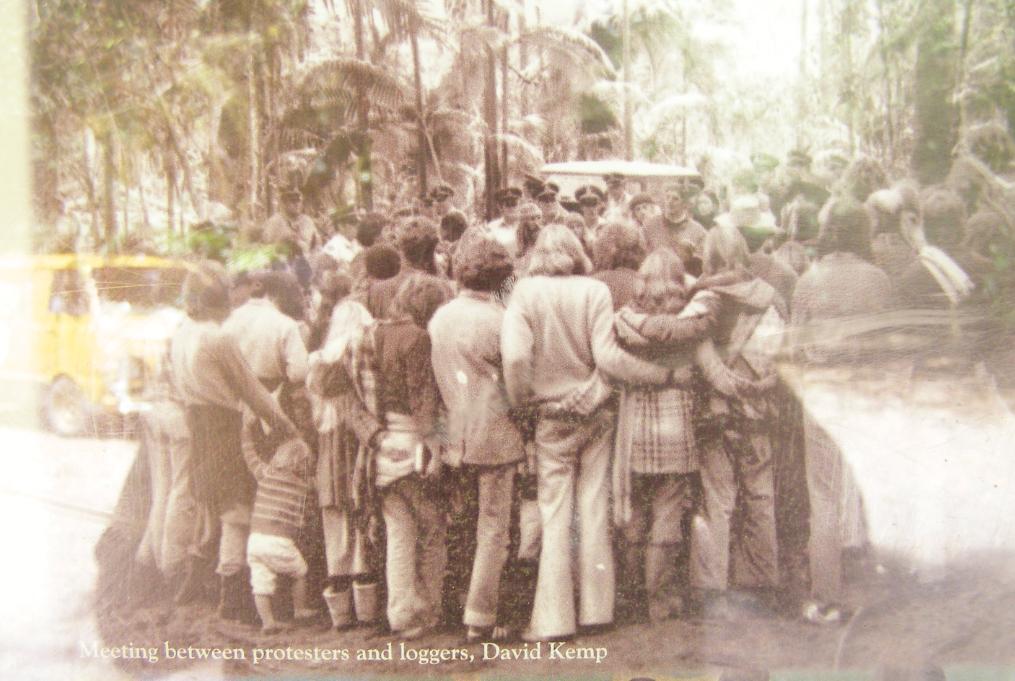
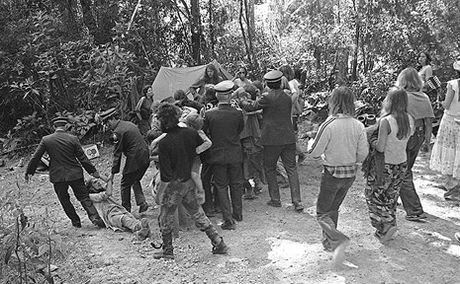
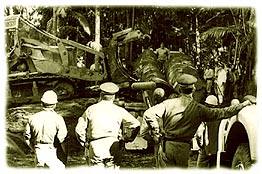
In the late 1970s, the government sent in the police to protect the loggers, not the rainforest.
<< Terania Creek, located in the Nightcap Range in northern New South Wales was the site of the first major forest blockade in Australian history. Over 200 protesters halted logging of the rainforest, through non-violent direct action. In 1982, a similar protest occurred at Mount Nadi on the other side of the Nightcap Range. In 1982, the Premier, Neville Wran, declared a moratorium on the logging of rainforests in New South Wales. Today, the Nightcap National Park incorporates Mount Nadi, Griers Scrub and Terania Creek. >>
So when one visits the National Parks offices staffed by government employees, reflect on the fact that the offices and staff exist not because of government leadership, but because of the selfless will of environmental activists prepared to go to jail to save these invaluable and increasingly rare rainforests.
<< The conflict began in 1979 over a small patch of rainforest in Terania Creek, in north-eastern New South Wales. It was Australia’s first forest protest, and it was ahead of its time both globally and environmentally. The conflict spread across New South Wales and pushed forestry issues to the forefront of politics. Protesters from Terania Creek went on to similar conflicts in the Franklin River in Tasmania, the Daintree rainforests in Queensland, and Errinundra Plateau in Victoria.
Inevitably, people on both sides of the conflict suffered. Protesters were vilified as hippies and dole bludgers, and their lifestyles and homes were targeted. Workers in the forest and sawmills were labelled as loggers and vandals, and their families and businesses were damaged. >>
.
[Quoted extract from the preface in the non-fiction book, ‘Terania Creek: Rainforest Wars‘, (2006) by author Dr Nigel Turvey, published by Glass House Books, Brisbane. A part of what has now become Australian history that needed to be told, a reflective generation later].
.
The power of ‘Direct Action’ to turn government and public opinion
<< “Some time during 1975 there were signs up around Nimbin about the logging plans for Terania Creek. By 1979, when the loggers were due to arrive in the valley, a lot of discussion was going on at The Channon Markets.”
.
Channon Markets Sunday, August 12, 1979:
“There was a big rally and the protest organisers asked if they could use my PA. They called for people to blockade and a lot of people went straight from the market to the Nicholson property which bordered the rainforest. We camped there for more than a month. Everyone was up at the bulldozer, blocking its way into the rainforest – there were cops everywhere.
“A cop told one of the protest organisers to get everyone to move down the track but I stayed where I was as most people moved off. That’s when the two cops grabbed me and dragged me down the track to the paddy wagon – it was at least a few minutes and they fractured two of my vertebrae.”
The blockade was the catalyst for the NSW Government to gazette the remaining rainforest in the state, including Terania Creek, as National Park. >>
One of Australia’s most fiercely fought environmental battles
.
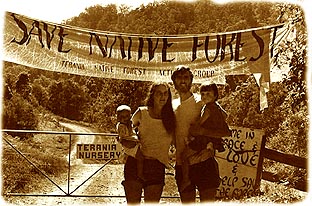
<< “Urban refugees Hugh and Nan Nicholson moved onto a property at Terania Creek in northern NSW 30 years ago. They were hoping to escape the rat race and live a self-sufficient lifestyle, but discovered that the forest surrounding their property was earmarked for extensive logging.
So began one of Australia’s most fiercely fought environmental battles, the 1979-1982 Rainforest Wars. The wars ended with the formation of Nightcap National Park, which was World Heritage-listed for good measure in 1989.
Author Nigel Turvey, a former forester and environmental scientist, stands (respectfully) on the shoulders of those who were there, using their words and pictures to give us an insightful overview of an emotionally charged environmental campaign from beginning to end; he even sets it firmly in its time with references to other newsworthy happenings such as the Azaria Chamberlain case and the Vietnam War.
One of the unexpected bonuses of this book is that it offers an inside look at the forestry profession and how it fell from grace (in the public’s eyes) during this campaign, never to recover again.
‘Terania Creek: Rainforest Wars‘ is a real page-turner and a must-read for anyone interested in conflicts in Australia’s natural places.” >>
‘Terania Creek: Rainforest Wars’– extracts from Chapter 1
.
[Ed: This book is a must read for any environmentalist/conservationist with a respect for the pioneers of environmental direct action and for any student of the Conservation Movement]
.
<< On the easternmost part of Australia, it survived the drifting continent’s climatic shifts and a hundred and fifty years of timber-getting. In 1979 some claimed it was the last unlogged rainforest and should be saved, but for foresters and saw-millers it was the last rainforest they would plan to log. The dispute over logging flared into the Rainforest War across New South Wales.
Today forest protests are part of Australia’s political landscape, but Terania Creek was the first.
This story is about the people from both sides who fought over the rainforest, but the enduring player in the story is the rainforest itself.
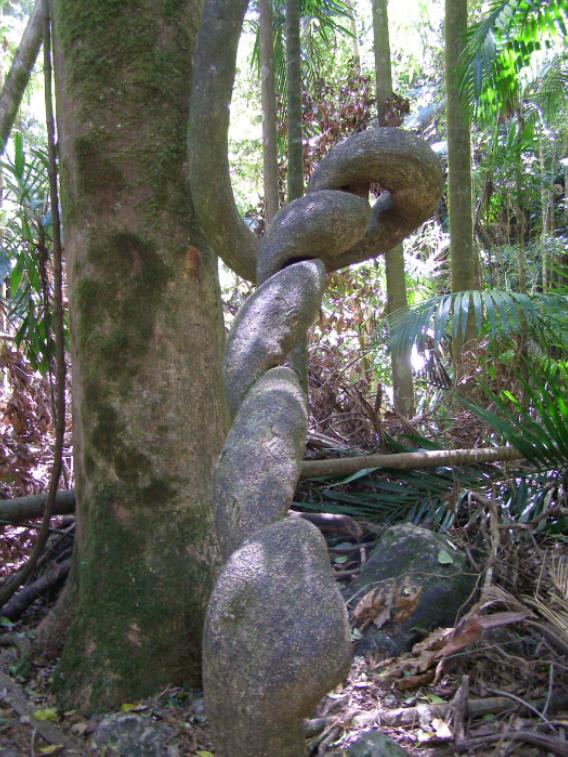
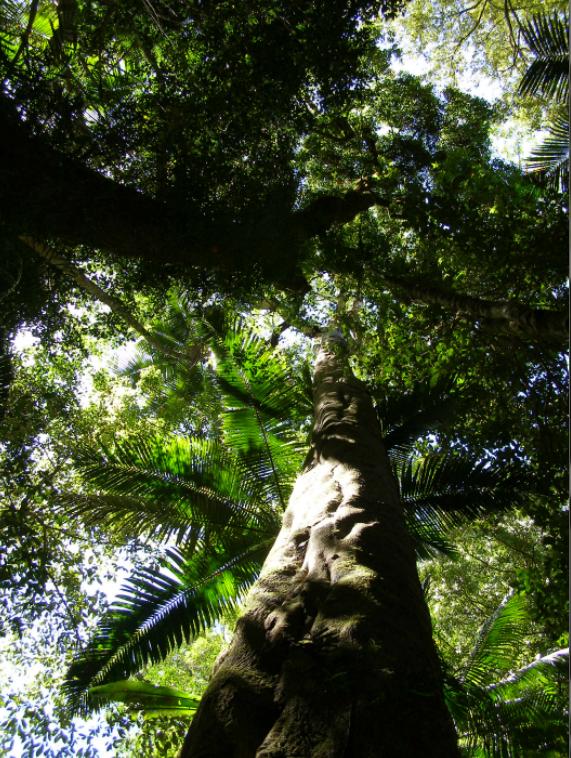
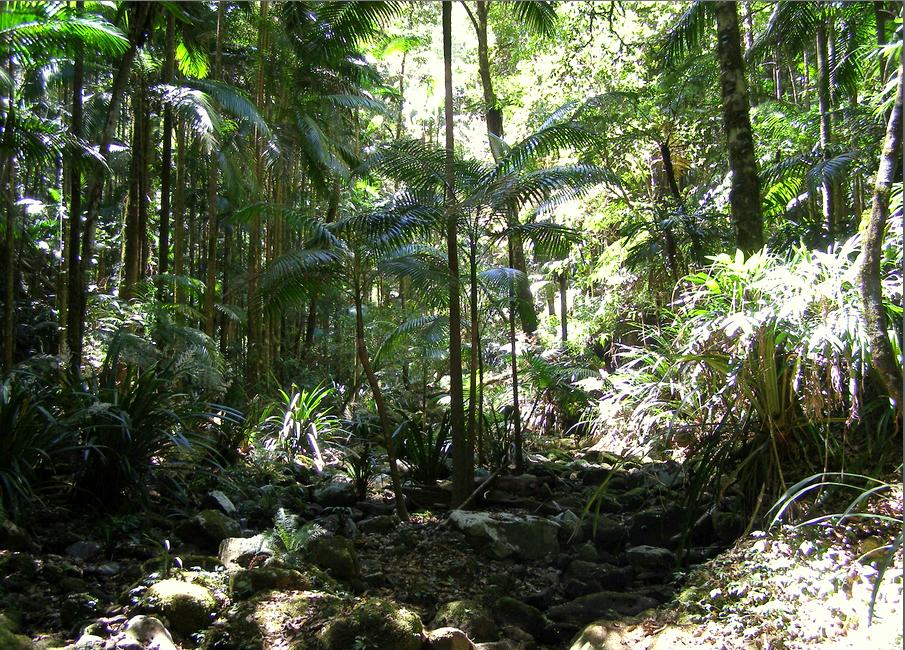
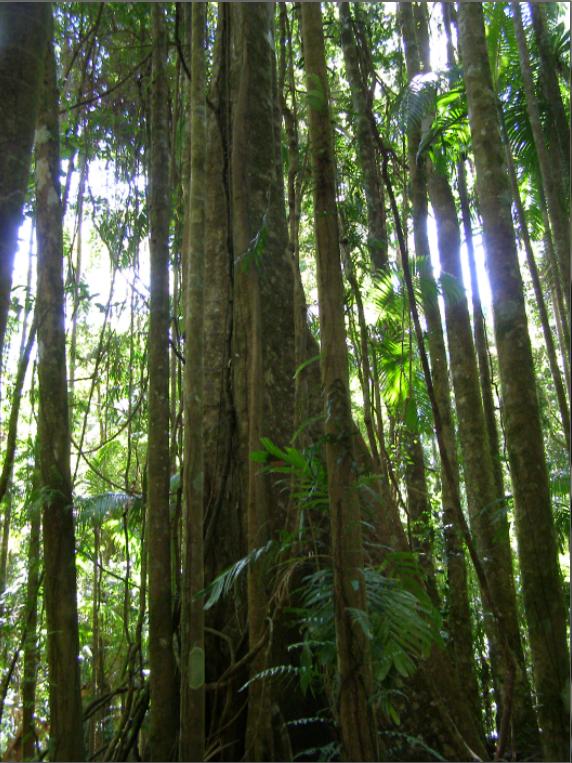
Enter the forest and you find mottled tree trunks soaring to crowns high in the canopy, supported by elegantly curved or plank-like buttresses, taller than a man, smaller trees with no buttresses at all, and trees with tumbling bifurcating trunks that grow downwards to the ground, encircling and strangling the small trees that give them support. You crouch to avoid the tangle of creepers as thick as a forearm, and the vines, some armed with hooks, which loop between the trees.>>
<< You stand under tree ferns several metres tall, with their fragile fronds and insubstantial stems protected by the high humidity and dense shade under the forest’s multiple canopy layers. And in a quiet moment you hear the startling stereophonic calls of a whip-bird and its mate. >>
<< In the early part of the twentieth century, the rainforests and drier eucalypt forests of the caldera (volcanic basin) were logged by sawmills that grew up around the ranges, providing timber for new rural industries and housing for the expanding population of the young State of New South Wales.
Soft workable timbers were harvested from remote rainforest refuges, like Terania Creek, in uncontrolled logging to supply the war effort during World War II. Bush crews returned to log the southern part of Terania Creek in the 1950s and again in 1968, but the northern part of the basin under the overhanging cliffs remained untouched. >>
<< More than two hundred years of European activity along the eastern seaboard reduced Australia’s rainforests by three quarters of their pre-1770 cover, through clearing for agriculture, uncontrolled logging, and conversion to plantations (and dairy pasture). The rainforests, which covered just 1% of Australia two hundred years ago, now cover just one quarter of one percent of the Australian landmass.
The dairy industry that had flourished on the cleared slopes of the caldera was in decline by the 1970s, and young settlers moved on to the cheap farmland. >>
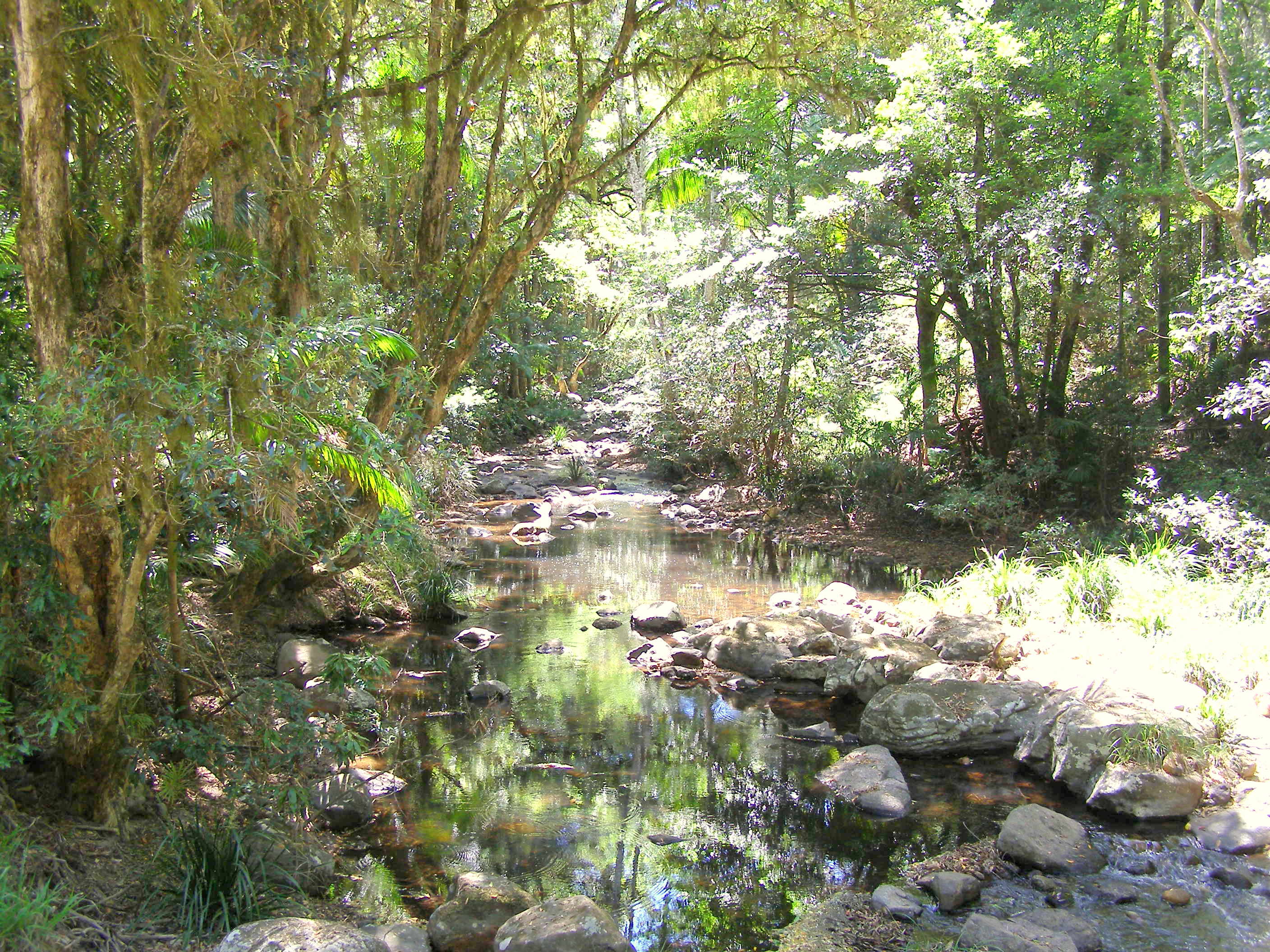
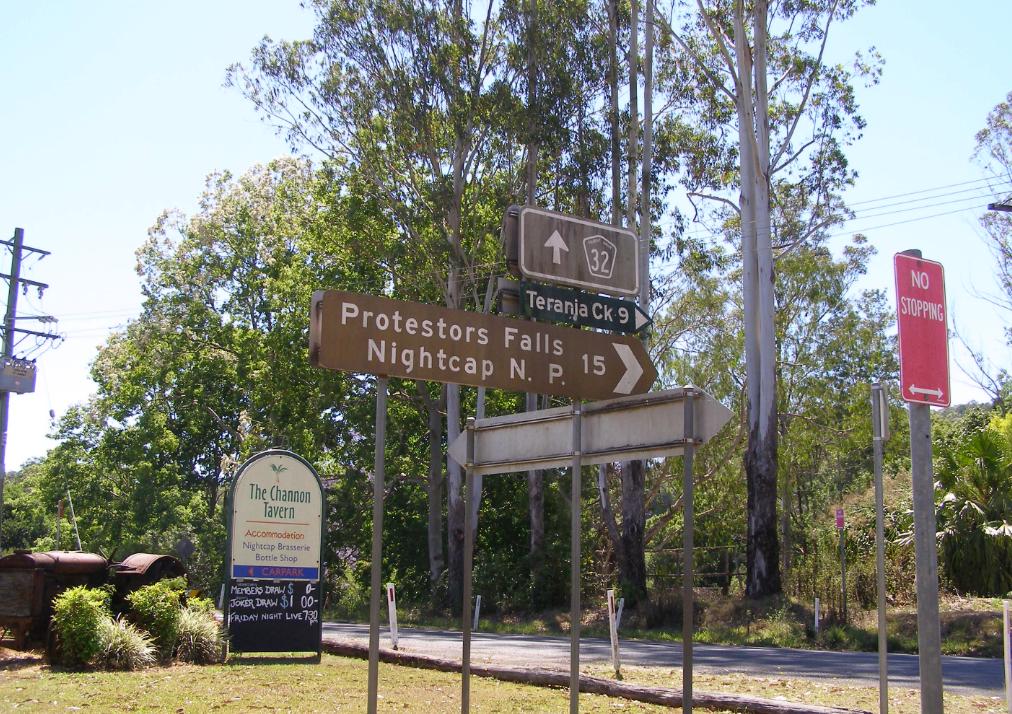
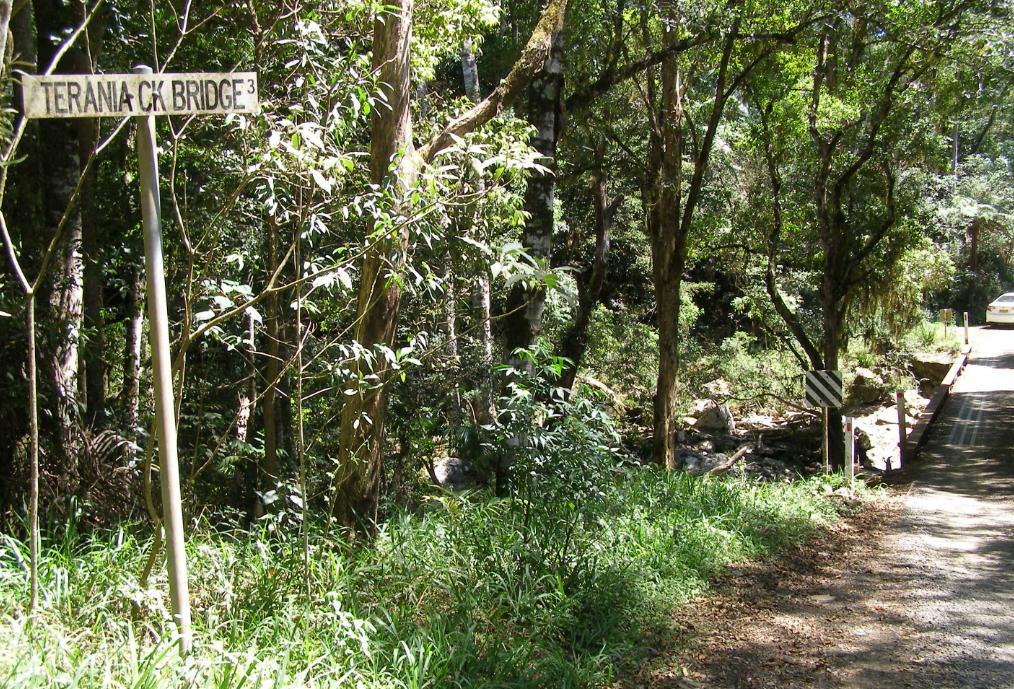
<< In September 1973 Hugh and Nan Nicholson, two urban refugees looking for a self-sufficient lifestyle, found Terania Creek. They drove north from the hamlet of The Channon on a rough dirt road through steepening hills that forced the road to wind tightly around and through the creek on the valley floor.
.
The Channon (hamlet), turnoff to Terania Creek
[Click image to enlarge, photo by Editor 20131023]
.
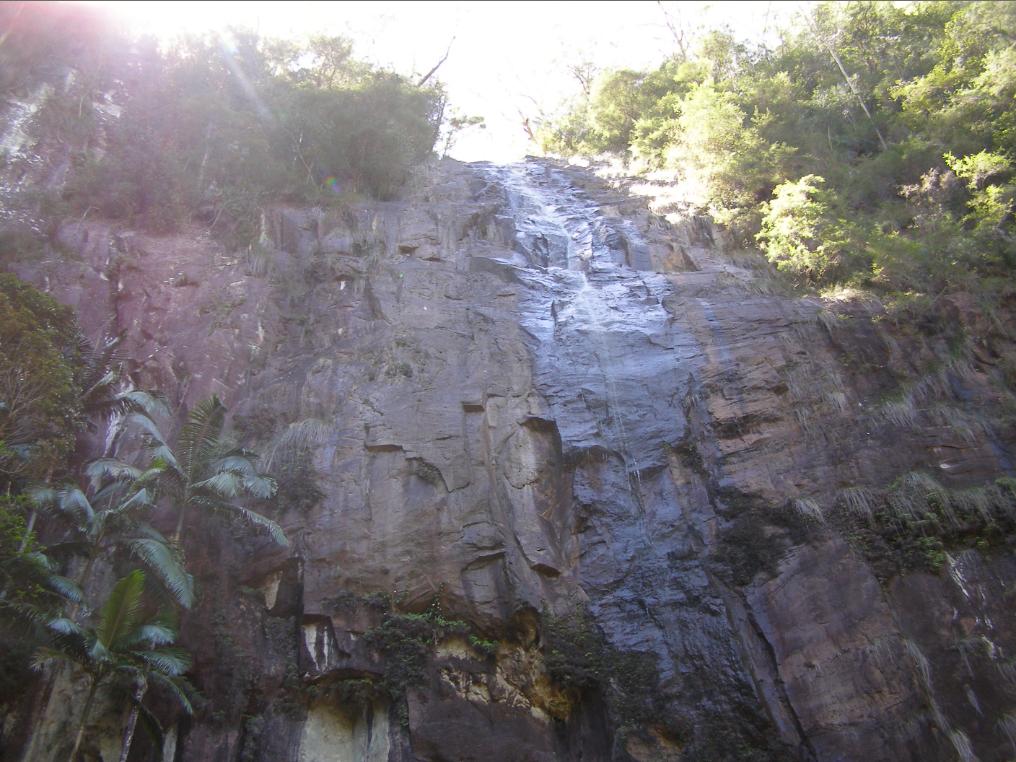
<< Just before the valley sides closed in completely they found a small patch of cleared land running a short distance upslope from the creek flats. It was the last cleared land at the end of the road, a degraded dairy farm losing ground to encroaching weeds (typically Lantana). On the eastern boundary, across the creek, was the rainforest of Whian Whian State Forest, and on the northern boundary was Goonimbar State Forest with its tall, moist rainforest and palm communities. The forests were held in the basin of Terania Creek, ringed with cliffs below the backdrop of the Nightcap Range. >>
<<Then a war broke out in this most peaceful landscape – the Rainforest War. It started in 1979 with a battle over the rainforests of Terania Creek and spread to rainforests across the State of New South Wales. On one side were the young settlers making their homes around the caldera. On the other side were the Forestry Commission of New South Wales and the sawmills it licensed.
The new settlers were bent on protecting the forests; they felt a spiritual relationship with the rainforests, were in awe on the ancient life-forms and felt duty-bound to protect them. The Forestry Commission, in contrast, managed extensive forest regions on long cycles of cutting and regeneration according to silvicultural principles of forest management. Geographically, its focus was regional and broad, whereas that of the protesters, initially was local and narrow; its intervention was based on science (agroforestry) and economics while that of the protesters was based on conservation (ecological science which then not been formalised) and spirituality.>>
<< The events that followed make up the story of The Rainforest War…But the central character of the story is the rainforest of Terania Creek, claimed by protesters as the last unlogged rainforest. Its ancient genetic lineage of buttressed trunks, soft leaves, colourful flowers and fleshy fruits appeared vulnerable and stimulated a primitive instinct in those who entered it. Like a newborn infant, the marvel of its existence inspired its own protection. It is a spiritual landscape – the living archaeology of Gondwana. >>
.
[Source: ‘Terania Creek: Rainforest Wars‘, (2006) by author Dr Nigel Turvey, published by Glass House Books, Brisbane, ^http://nigelturvey.com/page1001.aspx]
.
The joys of trouble-making on a grand scale!
.
.
<< Helicopters landed in the paddocks, police cars parked all over our precious grass, the campers kept expanding their area. All along Hugh and I had feared defeat and the loss of that exquisite forest. Now we feared loss of control of our lives. And we weren’t even getting into the forest to do the heroic stuff with all the other activists. We were pinned to the cabin with the phone stuck on an ear, sitting in strategy meetings while trying to remember where the kids were, or hunting for vital but constantly disappearing papers.
But we loved it too. The joys of trouble-making on a grand scale! The media whirlwind! The politicians suddenly ringing us! The euphoria of watching so many different skills miraculously dovetailing for an inspired purpose! The discovery of so many fascinating and resourceful people!
And on top of all that, after four weeks of intensity, we won. It was hard to believe. Was it the daily road blocks or the protestors up trees that did it? Was it the cut-up logs? That was bad press and everyone was appalled but it stopped the trees being felled wholesale. Was it brilliant, or just lucky, media manipulation? Was it the penetrating and relentless phone calls by Bren Claridge to Premier Wran’s office? Was it the lack of trespass laws which would have kept us out of the forest? Was it simply a state government leaving all the pawns to fight it out and point to the safe jumping side? Was the time just right to save rainforest or did we help to make the time happen?
Community cohesion thrives on tackling big issues together. And there are huge challenges confronting us: the local impact of climate change; the Dunoon Dam; the inevitable attack on forests thought saved for ever; an increasing regional population that also expects more per person in resources; the breath-taking irrationality of the belief that growth without limits is even possible let alone desirable.
People still come up to us in the street and say “I was at Terania Creek and it changed the direction of my life!” It sounds so corny now but it did feel like a coming-of-age for all of us, the new-age interlopers, even if it wasn’t appreciated by the “real” locals. Our ideal of self-sufficient living had turned out to be insufficient until it had acknowledged and defended the landscape in which it was embedded.
Finally, if nothing else, the wrestle for Terania Creek finally put us in touch with the original custodians, the people who fought for the land first and were massacred for it, in one of the worst killing fields in the entire country. We realised that fighting for your own backyard is a long-standing and deeply honourable activity. If everyone genuinely safeguarded their own patch most environmental problems would evaporate. And so would many social problems, since it is connectedness with its people and its history which enables little communities like ours to love themselves.
I don’t know but I would do it all again. In fact, as a community we need to do it all again. >>
[1] ‘Terania Creek: Rainforest Wars‘, (2006) by author Dr Nigel Turvey, published by Glass House Books, Brisbane, ^http://nigelturvey.com/page1001.aspx]
<< “The protest against the logging in Terania Creek Basin has been an occurrence of great social significance and for those present a spiritual experience unprecedented in their lifetime.
The spirit of caring and sharing that ebbed and flowed throughout the four week long camp of resistance was the strongest evidence that any had encountered of what was repeatedly described as tribalism but which might more easily be described as brotherhood. Perhaps it was the nature of the trees and their timeless passive servitude to man which evoked the deep inner feelings of a holy cause in their protection. Or was it the awareness of service to all mankind and the planets ecosystem that was being lived out, which allowed each individual to rise above his normal petty personal cravings and attachments…
How was this accomplished? Through the implementation of practices which re-enforced our belief in the good will of the people, the sacrifice of personal ego to guidance by the group mind. Without the circle meetings, wherein all information and feelings were exchanged and decisions made, none of this would have been possible. “May the circle be unbroken” became our deepest hymn. Through the centring of the group in the linking of the circle, the group mind was evoked and, miraculously at times, consensus was achieved. We all undertook to respect that consensus, which gave us a bewildering and potent presence in the heat of confrontation with a structured, hierarchical, but rigid and confused opponent.
And in this way we won each day and the argument to boot, demonstrating to even our amazement the power of clarity, love and peacefulness over ignorance, insensitivity and brute force.
But much more than this did we win. For what we learned about ourselves and our fellow travellers on this rainbow coloured spaceship will sustain and promote our efforts, which we will surely now give in order to bring into being a more healthy and healing lifestyle. And thus our place of power among the species here will no longer be abused but will at last be honoured.” >>
‘Presented by Ruby Vincent, “A Question of Balance” is a grassroots environmental (website-based) show that is aimed at the general community to show that we can do things to improve our environment and STILL maintain an enjoyable standard of living. We do deal with important issues but attempt to avoid the doom and gloom ‘inevitable’ approach since the average person simply tunes out and there is no point in just preaching to the committed environmental activists.’
Click icon to play interview with William Lines about the battle for Terania Creek
‘Actor Jack Thompson wraps up the documentary, summarising the achievements of the Terania Creek protesters and delivering an impassioned plea to stop the destruction of rainforests.’
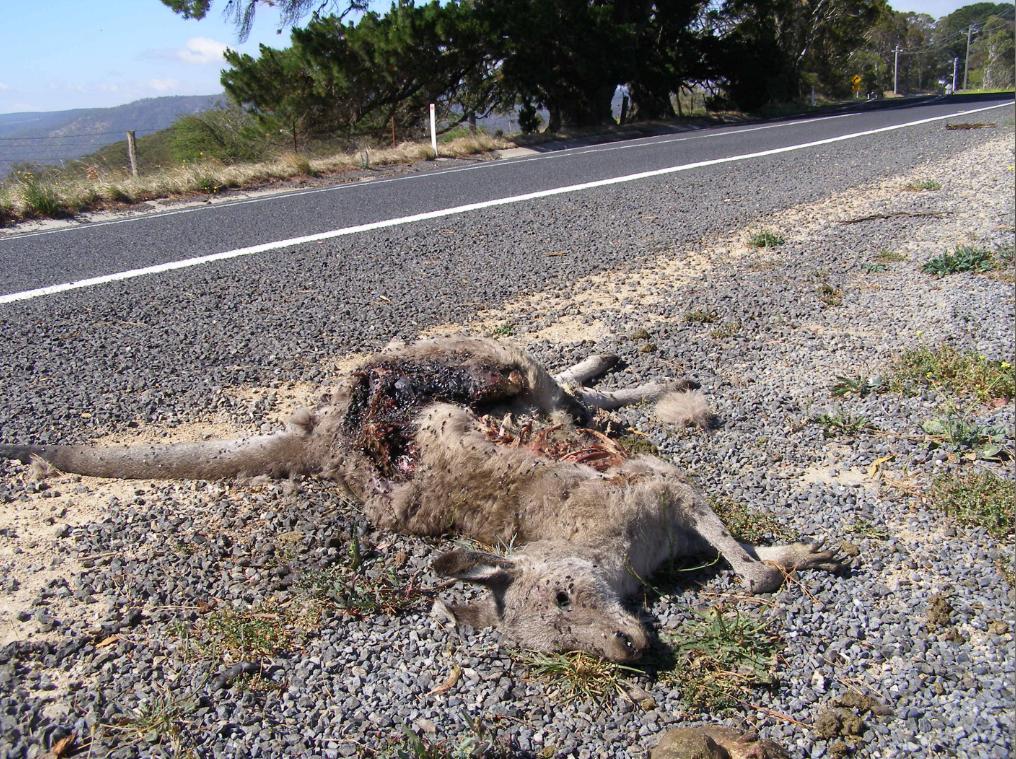
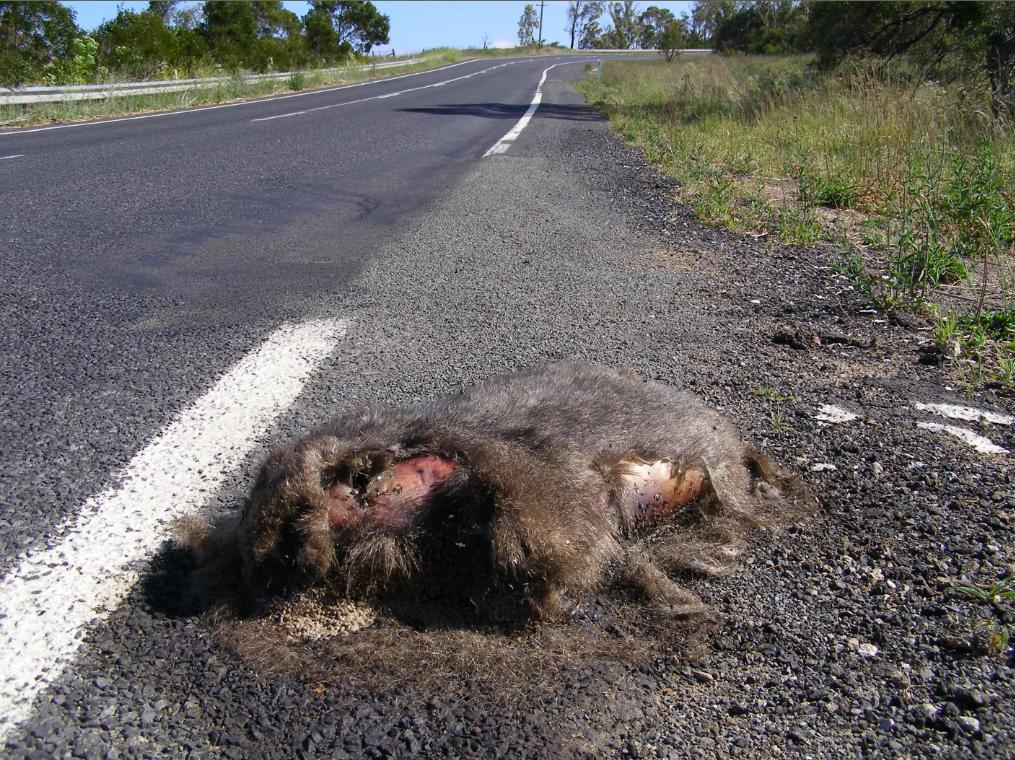
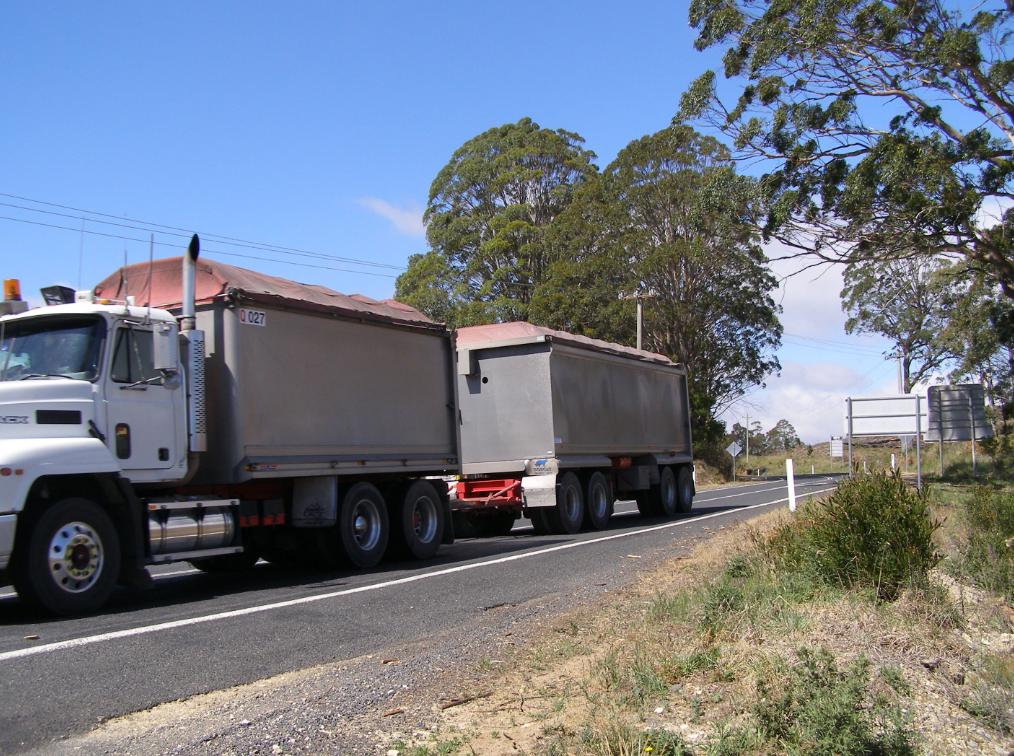
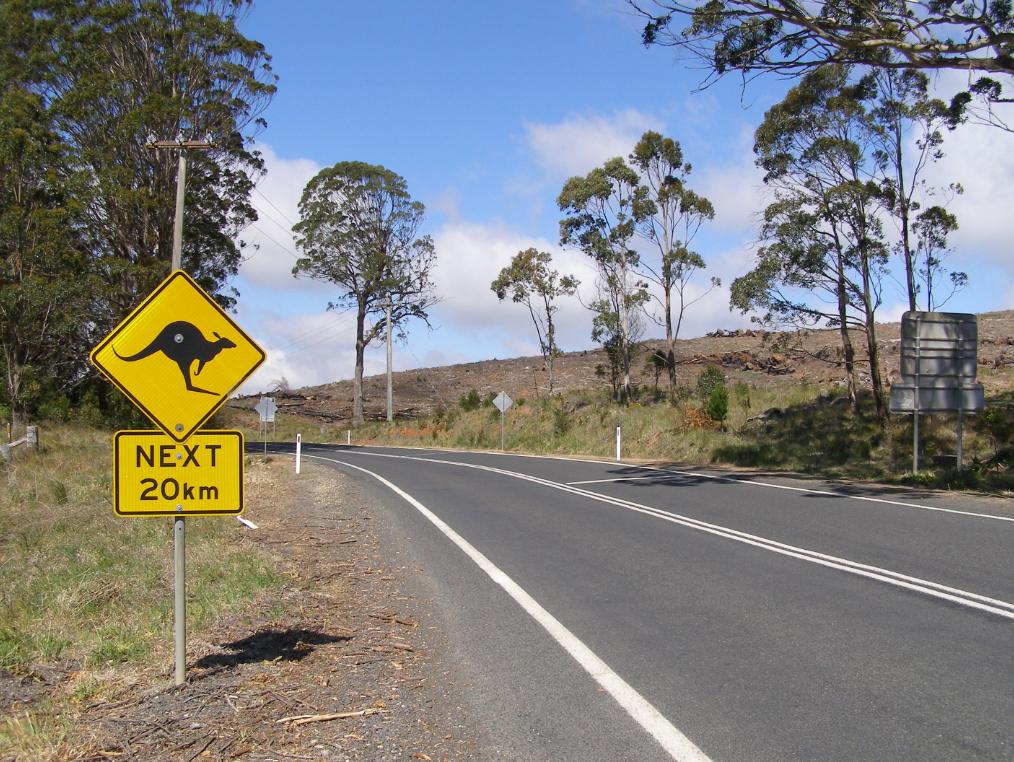
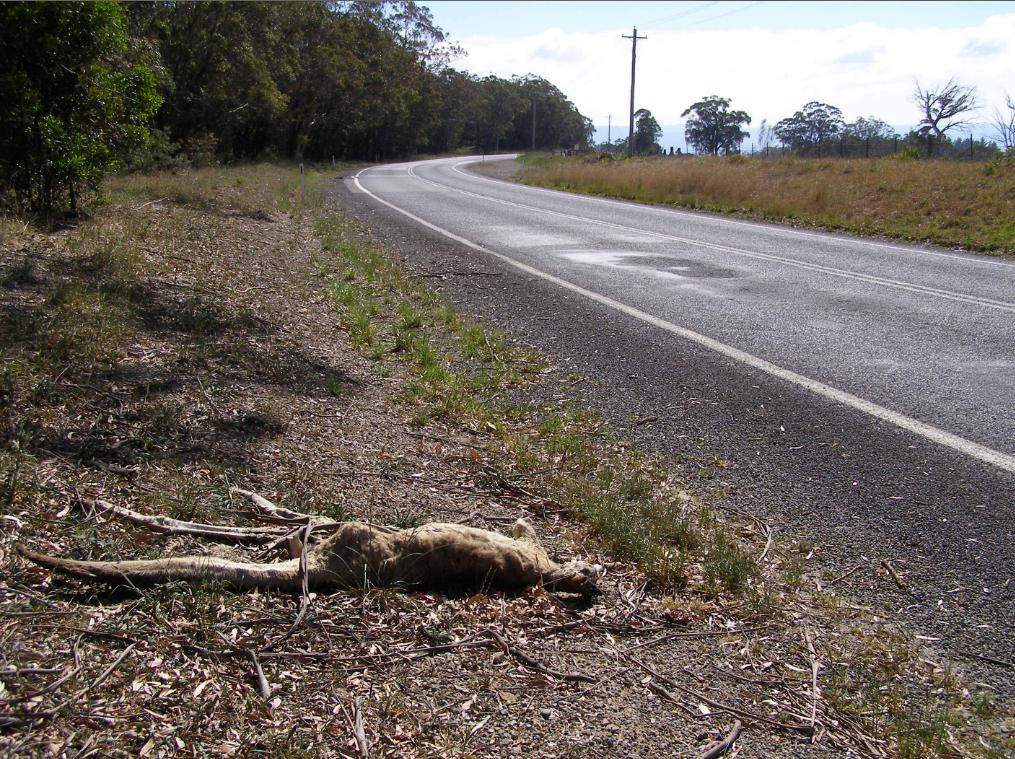
Taking the tourist drive out to Oberon last weekend, we must have counted two dozen dead, mangled and fly blown Australian animals along the roadside. Kangaroos and wombats mainly; and a few feral cats and foxes.
It was a bizarre ‘Welcome to Oberon’ along the Jenolan Caves Road and then along the Duckmaloi Road into the logging and quarry town of Oberon.
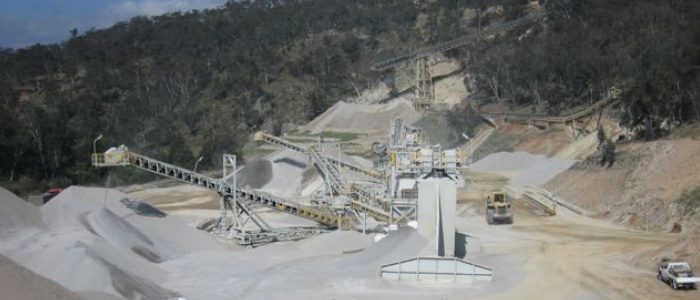
We first passed by Hytec’s Austen Quarry outside Hartley which carves into the hillside to produce road making aggregate crushed rock.
The B-doubles hoon along as if racing motorbikes. We were tailgate bullied by one on the road out to Oberon. The B-double sand trucks travel through the night at speed and so the wildlife has no chance.
One Oberon based tourism operator promotes things to do around Oberon thus:
“Explore the spectacular Blue Mountains High Country on horseback and quad bikes, ride beneath a canopy of pine forests, marvel at the unspoiled bushland, gaze into a crystal clear creek, breathe the clean mountain air.”
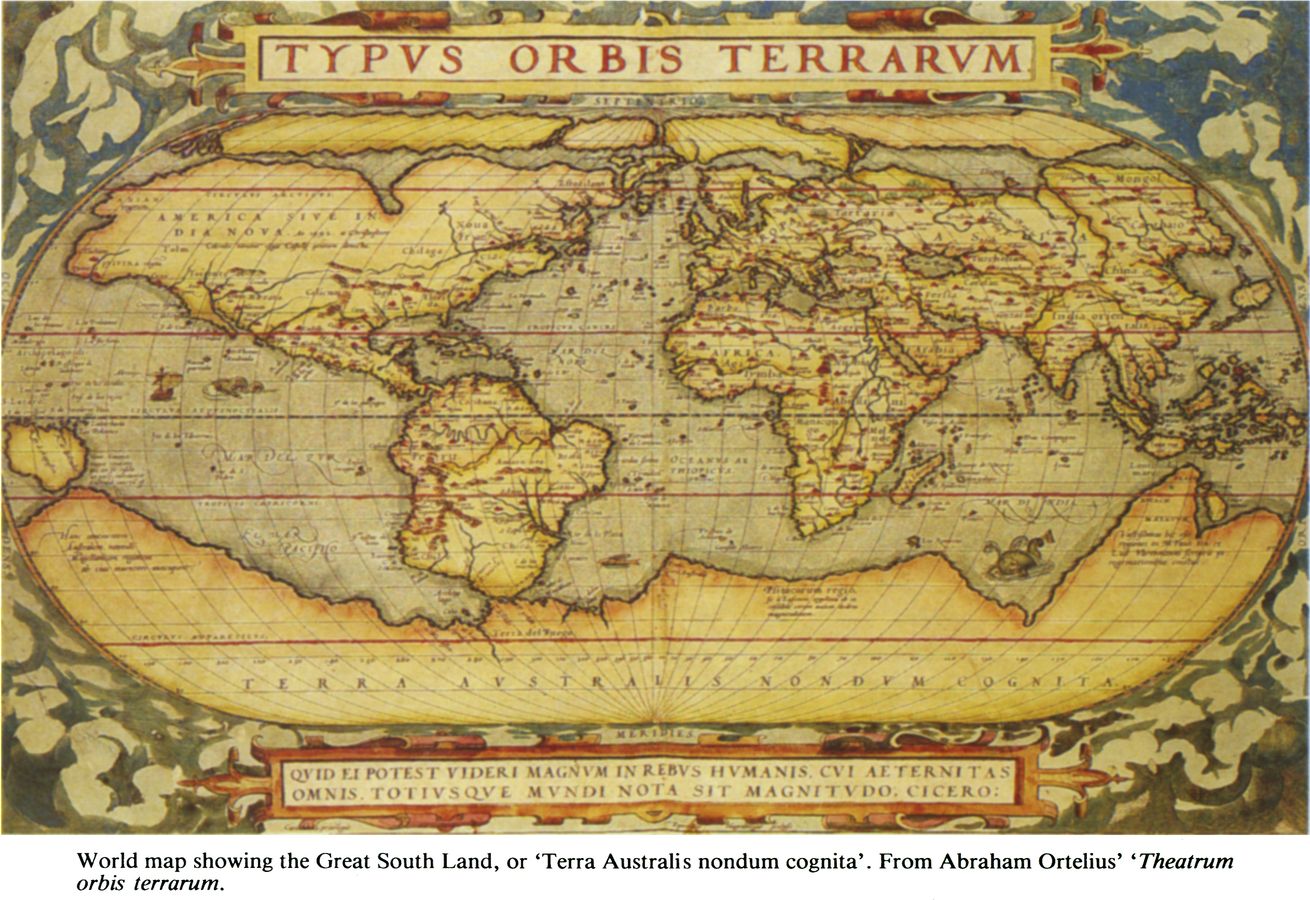
‘Typus Orbis Terrarum’ (Spherical Model of the Earth) of 1564
[Source: ‘World map showing the Great South Land, or ‘Terra Australis nondum cognita’, from Abraham Ortelius’ ‘Theatrum orbis terrarum’, No 41 Autumn 1988, The La Trobe Journal State Library of Victoria, State Government of Victoria Australia, ^http://www3.slv.vic.gov.au/latrobejournal/issue/latrobe-41/fig-latrobe-41P001a.html]
Click image to enlarge
.
This is one of the earliest walled atlases of the world by Flemish cartographer and geographer, Abraham Ortelius (b.1527). Ortelius is generally recognized as the creator of the first modern atlas, here adopting the Theatrum Orbis Terrarum or “Theatre of the World” projected interpretation. Across the south of the world he extrapolated a then yet to be discovered ‘Terra Australis nondum cognita’ or Great South Land not yet known’.
Once known, it became abbreviated to ‘Terra Australis’ and subsequently named by British explorer Matthew Flinders’ simply as ‘Australia’. Since then Australians have abbreviated everything possible..
Ortelius is also believed to be the first to imagine that the continents were joined together before drifting to their present positions. So perhaps Ortelius should be a scholar of Gondwana.
.
The following extracts have been taken from the Introduction in a 1987 book by Ian G. Read entitled, ‘The Bush – a Guide to the Vegetated Landscapes of Australia‘.. Images have been added by our Editor.
<< Australia is a vast land of never-ending horizons, broken back ranges, eerily silent forests and golden, blue shores. It is also a land of vast suburban sprawls, monotonous cropping country, eroded hillsides and long lanes of traffic leading to the beach. It is a land that has been populated for millennia and a land that has attracted new populations to its more equable southern and eastern fringes. It is both an old and a new Australia.
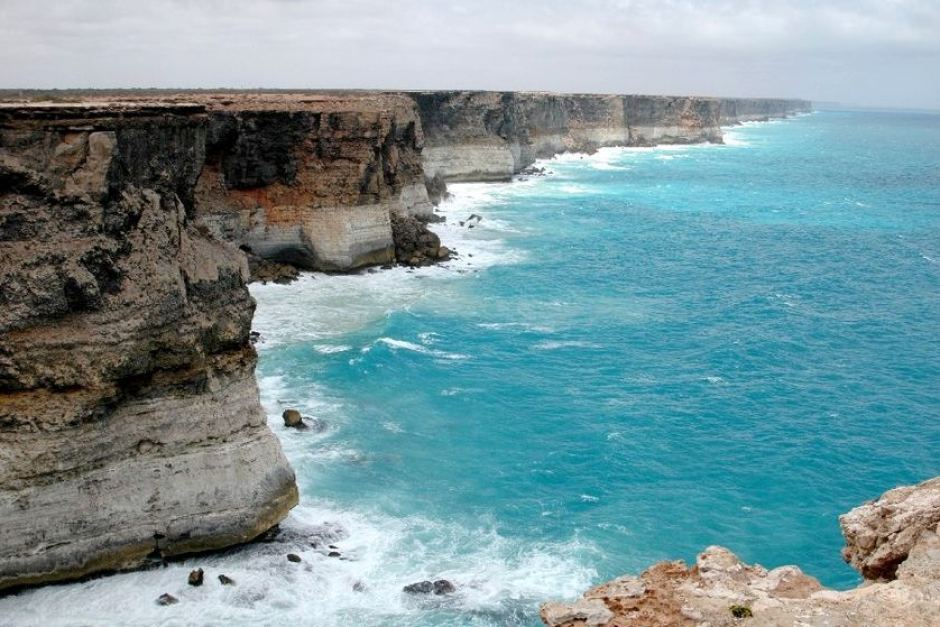
Perhaps each Australian would gain from pilgrimage to the infinite horizon of The Great Australian Bight,to grasp its awe and so with it, their own smallness.
[Ed: Note the curvature of the horizon. The planet is not as unlimited as many babyboomers imagine.]
.
To the European man Australia as firstly a mere conception, a conjecture on the earliest world maps, the Great South Land. With exploration and discovery the land grew in the minds of explorers, the map makers and the ruling classes of Europe. To Asian man Australia was a reality, particularly its northern shores which were frequently visited by peoples of the islands to the north. To the Aborigines Australia was home and has been for at least 40,000 years.
Europeans, being the latest of mankind’s races to make contact with Australia are, due to their history and traditions, the least capable of understanding the land. Having only settled here for seven or eight generations many European types have yet to establish a connection with the land beyond that of viewing the land as a resource. The last two hundred (and twenty five) years has seen the land undergo significant changes, the changes of occupation. No longer is the land in a state of balance but a state of change based on economic development.
.
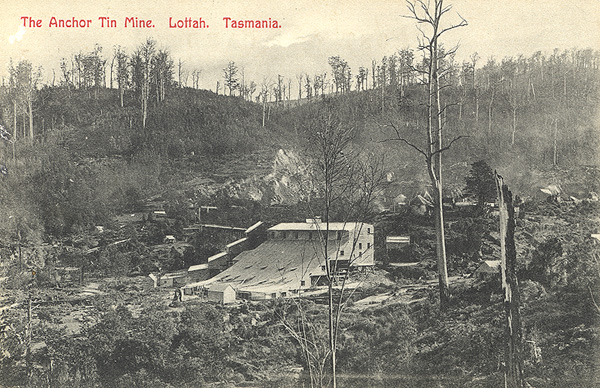
Anchor Tin Mine , Lottah Tasmania
(Tasmaniana Library, State Library of Tasmania)
.
As this development gained momentum during the twentieth century the new arrivals became less dependent on the land for their existence. There was a shift of values regarding the land; values which alienated the land further from the occupiers. European man did not see the land as nurturer but as a resource to be exploited. >>
<<..The history of European occupation of the lands of Australia is not a good one. Through fear, ignorance, greed or power much of the land has suffered. It is thought that the earliest settlers wanted to create landscape similar to where they came from so they imported planst and animals and a way of life in order to tame what they thought was a harsh environment.
.
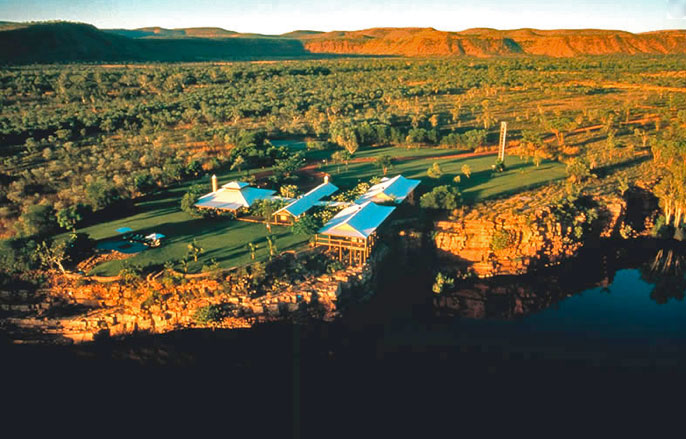
El Questro Station, The KimberleysSome things don’t change. The cattle station was initially established in 1903. In 1991, an English aristocrat bought the cattle station and developed into a tourist park, and continues to run 8,000 head of cattle.
[Source: ^http://www.broomeandthekimberley.com.au/gibb-river-road-and-gorges/]
.
The discovery of gold brought (considerably) more people who came to exploit the land without returning anything to it; needless to say many remained on the goldfields though most returned to coastal cities or to whence they came. Then followed a period of pastoral expansion whereby over ten per cent of the land was cleared of trees and another sixty per cent was grazed, browsed and trampled by sheep and cattle. Even today vast tracts of country are being cleared of vegetation.
.
Queensland Premier Campbell Newman’s government this week passed the Vegetation Management Framework Amendment Bill, which effectively removes protection of two million hectares of mature and recovering bushland.
[Source: ‘Newman takes axe to Abbott’s Direct Action, and Qld bush’, 20130524, by Giles Parkinson, Australian and New Guinea Fishes Association – QLD Inc. ^http://www.angfaqld.org.au/aqp/blog/2013/05/24/newman-takes-axe-to-abbotts-direct-action-and-qld-bush/]
.
Much of the Brigalow country of Queensland is disappearing; plans have been put forward to clear parts of the Western Division of New South Wales for crops while the conservative elements in Western Australia had plans to clear the Yilgarn and Dundas wilderness so that the sons of farmers could work their own properties. All this was (and is?) to occur in the face of unreliable rainfall, rising salt in the soil (which makes the land useless in less than three generations), and a loss of countless habitats.
Though fear of the land may have been reduced over the last two hundred (and twenty five) years ignorance, greed or power are still potent masters, and each still operates to alienate the European from his or her new landscapes.
The landscape does not evoke fear or alienation, the mind does. The landscape can trigger those feelings but it is the perception of that landscape through ignorance or a lack of understanding that induces a negative reaction.
Changing one’s perception requires more than changing one’s mind but it may be that understanding and interpreting what is being seen is all that is required. Interpretation need not be involved because all it requires is a knowledge of its components. It’s how these components fit together that is complicated. To be able to put a name to something greatly assists in interpreting what is being seen while to actually discover that named ‘something’ is an experience in itself. >>
.
~ Extracts from the Introduction, in The Bush – a Guide to the Vegetated Landscapes of Australia, by Ian G. Read, 1987, Reed Books, pp. 9-10.
.
Perceived character of natural areas (1978):
.
<<
Less than 4% see natural areas as bad, ugly, noisy, dirty, repulsive, evil, wasteful, boring, dead, uninviting, dull, useless or depressing
Between 4% and 25% see natural areas as bleak, dangerous or fragile
Between 25% and 50% see natural areas as happy, friendly, sacred, huge, roadless or pure
More than 50% see natural areas as good, remote, alive, exciting, unique, wild, challenging, inspiring, valuable, restful, unspoiled, free, beautiful or natural. >>
.
~ Based upon research for a doctoral thesis by Keith McKenry, contained in Mosley, 1978.
.
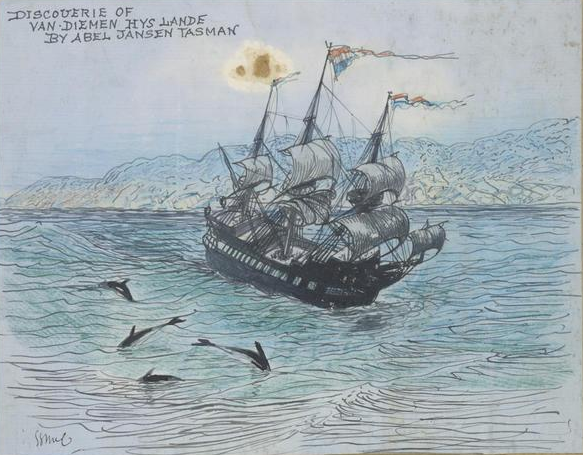
“Too far South for spices and too close to the rim of the earth to be inhabited by anything but freaks and monsters.”
.
~ Abel Tasman upon sighting the West Coast of Tasmania in November 1642.
<< Australia’s most important environmental case, ‘the Franklin Dams Case’, a successful High Court challenge, influenced the outcome of a federal election and resulted in World Heritage nomination for south-west Tasmania in 1982.
Enlarged in 1989 to cover 20 per cent of Tasmania’s land area, the Tasmanian Wilderness World Heritage Area (1.38 million hectares) failed to protect the tall eucalypt forests excluded by a convoluted eastern boundary. These ancient forests are being progressively decimated by industrial forestry, despite an international outcry. The south-west is recognised as one of the earth’s few remaining extensive temperate wilderness areas, a significant tourist drawcard posing fresh challenges as increasing visitor numbers impact on its outstanding natural values. >>
<< Overall, Australia has lost nearly 40% of its forests, but much of the remaining native vegetation is highly fragmented. As European colonists expanded in the late 18th and the early 19th centuries, deforestation occurred mainly on the most fertile soils nearest to the coast.
In the 1950s, south-western Western Australia was largely cleared for wheat production, subsequently leading to its designation as a Global Biodiversity Hotspot given its high number of endemic plant species and rapid clearing rates. Since the 1970s, the greatest rates of forest clearance have been in south-eastern Queensland and northern New South Wales, although Victoria is the most cleared state.
Today, degradation is occurring in the largely forested tropical north due to rapidly expanding invasive weed species and altered fire regimes. Without clear policies to regenerate degraded forests and protect existing tracts at a massive scale, Australia stands to lose a large proportion of its remaining endemic biodiversity. The most important implications of the degree to which Australian forests have disappeared or been degraded are that management must emphasize the maintenance of existing primary forest patches, as well as focus on the regeneration of matrix areas between fragments to increase native habitat area, connectivity and ecosystem functions. >>
.
[Source: ‘Little left to lose: deforestation and forest degradation in Australia since European colonization’, by Corey J. A. Bradshaw, School of Earth and Environmental Sciences, The University of Adelaide, article in Journal of Plant Ecology, Vol. 5, Issue 1, pp. 109-120, ^http://jpe.oxfordjournals.org/content/5/1/109.full]
.
.
.
Further Reading:
.
[1] ‘A Terrible Beauty‘, by Richard Flanagan, , Melbourne, 1985, Greenhouse Publications
.
[2] ‘The South West Book’, by Helen Gee & Janet Fenton,1978, Melbourne, William Collins and the Australian Conservation Foundation
.
[3] ‘Trampled Wilderness’, by R & K Gowlland, Devonport, 1975, C.L. Richmond and Sons Pty Ltd
.
[4] ‘History of West and South-West Tasmania’, by T Jetson & R Ely, Hobart, 1995, Tasmanian Historical Research Association
.
[5] ‘Patriots: Defending Australia’s Natural Heritage‘, by William J. Lines, 2006, University of Queensland Press
.
[6]‘The Biggest Estate on Earth: How Aborigines Made Australia‘, by Bill Gammage, 2012, Allen & Unwin
.
[7] ‘Woodland to Weeds – Southern Queensland Brigalow Belt‘, by Nita C. Lester, 2008, 2 ed, Brisbane: Copyright Publishing
.
[8] ‘ The Discovery of Tasmania: Journal Extracts from the Expeditions of Abel Janszoon Tasman and Marc-Joseph Marion Dufresne, 1642 & 1772‘, rare book by Abel Tasman.
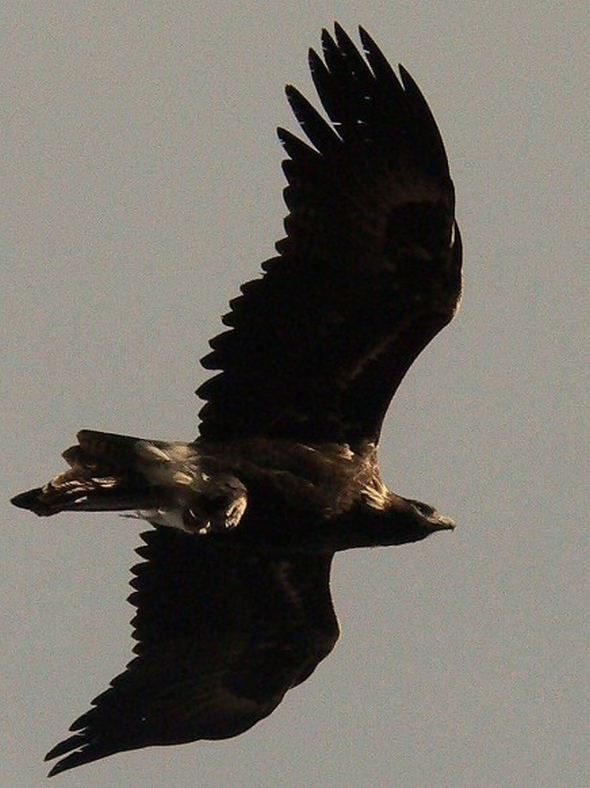
“Today I think of the Wedge-tailed Eagle that I watched fly above my tree, whose habitat was once under threat and is now protected and of the Tasmanian Devils who lived in the forest 60 metres below my platform who can now raise their young in peace.”
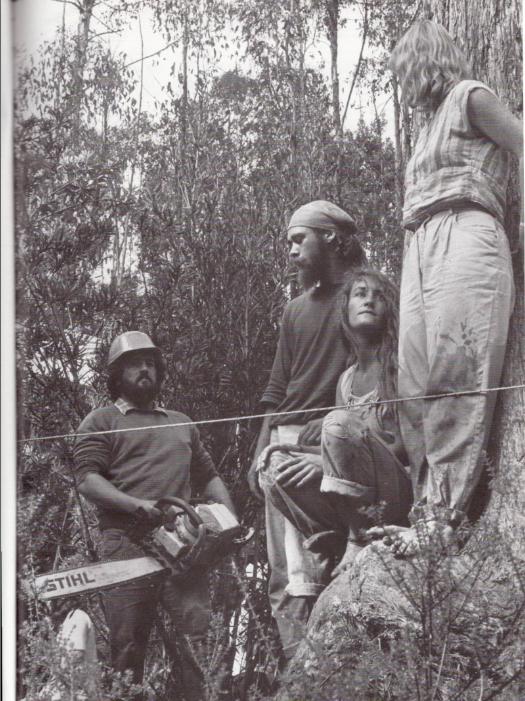
Tasmania’s Farmhouse Creek Conservation Blockade of 1982: the people’s forest stance against industrial ecocide. Moral courage in the face of adversity – it resonates with the robust spirit of our brave young people. Lest we forget our young folk’s personal exposure to Corporate Logger Bully Violence, personal sacrifice and its haunting trauma.
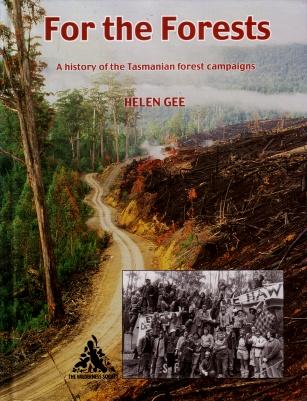
[Source: ‘For the Forests – A history of the Tasmanian Forests Campaigns’, 2001, book by Helen Gee and Janet Fenton, The Wilderness Society, Hobart, Tasmania]
.
From 2001:
.
<< In a world in which the tropical forests are disappearing and oldgrowth forests are threatened everywhere, global biodiversity is declining at an alarming rate. Australia can no longer afford to destroy oldgrowth forests. They are a priceless resource. Few of our tall forests of any type remain in pristine condition,and particularly where they have not been degraded they should be protected. The practice of destroying oldgrowth forests in order to replace it with plantations is criminal vandalism. Plantations should only be established on already degraded land.
Tasmania has the tallest forests in the Southern Hemisphere, some of the greatest areas of pristine temporate Gondwanan rainforest found anywhere on Earth, and some of the world’s oldest trees. This makes it a Mecca for tourists as forests disappear elsewhere. Because Tasmania is the State with the most forest – 40% of area forested – and because the quite erroneous view prevails that forests regenerate completely after clearfelling, a shameful attitude to forest conservation exists at the highest level in bureaucracies.
The Island is being torn apart by the woodchip-at-any-cost mentality. The forests are being sold off at a loss. The royalties paid by private companies fall far short of covering the cost of forest management, regrowth and infrastructure. Job losses attributable to woodchipping were estimated at 4,000 by 1995 – refuting the contention that the industry is good for employment. The Government, for sake of keeping a few foresters in work for a few years does not have the fortitude to stop the destruction. >>
<< Gondwanan forest, in its complex rainforest and wet scherophyll expression, does not regenerate to form its original mixture. The complex web of life that it comprises, the extraordinary antiquity and grandeur of its thousands-of-years-old giant components, and the untold interactions betwen its macroscopic and microscopic plant and animal species and soil biota, make it a living entity – ‘a surviving dinosaur deserving of complete protection’.
Over 70% of forests logged are clearfelled in Tasmania, destroying habitats and most of the wildlife they support. Replacement plantations and regenerated areas cannot provide the range of habitats or the biota. Over 90% of the timber extracted from natural forests is woodchipped and only five percent ends up as sawn timber. (An estimated five million cuibic metres of woodchips a year are sold, mainly to Japan). The common practice of burning ‘waste’ in felled coupes, a scorched earth policy, results in total slaughter of small animals and organisms, many of which are little known or understood. >>
Dark Forces RegroupingWill Hodgman’s 20th Century ignorant wrath ..against everything naturally Tasmanian
.
<< Even at the start of a new millenium, logging operations are penetrating into more of the untouched valleys. Forests of World Heritage value are being destroyed and the integrity of the World Heritage protected areas themselves is being compromised. The damaging effect of logging operations, and particularly the clearfelling, on streams and on the hydrology of catchments, and on soils, is never taken into account and is a serious consequence. The brave people who have spoken out, risked their lives and faced arrest at peaceful direct actions around the Island, need your support. Every Australian who appreciates the heritage values of our forests and wants future generations to experience them, can learn what is at stake here and support the campaigns that are ongoing. >>
~ Mary E White DSc
[Source: Forward by Mary E White in book by Helen Gee (b.1950) and Janet Fenton: ‘For the Forests – A history of the Tasmanian Forests Campaigns’, 2001, published by The Wilderness Society, Hobart, Tasmania]
.
.
Further Reading:
.
[1] Helen Gee’s 2001 book ‘For the Forests: A History of the Tasmanian Forest Campaigns‘, (with Janet Fenton) published by The Wilderness Society, Inc. [^Read More]
.
‘Oral history of the Tasmanian forest campaigns. Compilation of over 100 interviews of artists and activists, politicians and environmentalists such as Senator Bob Brown and Alec Marr, Campaign Director of the Wilderness Society. Chronicles strategies, protest marches, and achievements of campaigns. Foreword by palaeobotanist Mary E White. Copiously illustrated, includes appendices, maps, chronology, bibliography and index. Author is a Tasmanian writer and environmentalist, writer of ‘The South West Book: A Tasmanian Wilderness’.’
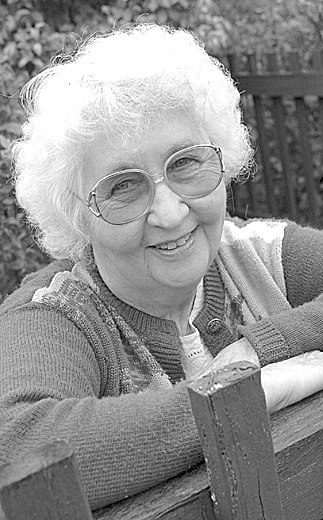
<< When Dr Mary White moved to the Manning Valley (New South Wales mid-north coast) back in 2003, the area acquired a true visionary and pioneer in the world of Paleobotany and environmental conservation.
Dr White has an amazing career that spans over five decades and two southern continents, is an accomplished and award winning palaeobotanist, lecturer and over the last 20 years author of several award winning books on the evolution of the Australian continent and its ecosystems. She is a passionate conservationist, was named a Member (AM) in the General Division of the Order of Australia for service to botany as a researcher through promotion of increased understanding and awareness of the natural world and just a few weeks ago was awarded the Lifetime Conservation Award from Australian Geographic.>>
.
Interviewer: You came to Australia in 1955. Tell us about your first encounter with Australian plant life.
Dr White: We docked at Fremantle and had three days to wait until we came to Sydney, so we hired a car and went to look at the sand plains and wildflowers. I was amazed at how the composition of the flora was just slightly different from what I had been finding in South Africa.
I had this questioning feeling; how had I travelled thousands of miles across the ocean to get here and yet I could recognise at a family level everything growing around me. It was the same kind of ecosystem I had just come from. So, I suddenly was confronted with the concept of Gondwana and believed it totally.
.
Interviewer:What prompted you to purchase Falls Retreat at Johns River at the base of Middle Brother in 2003?
Dr White: I wanted somewhere I could covenant the land to maintain biodiversity and develop as an environmental education centre. It is in a wonderful part of the world and well worth protecting. Since we’ve done all the plant, animal, bird, bat and frog lists and what not, we have realised that the biodiversity here is much, much richer than we ever thought it was going to be. We have even found a couple of rare and endangered frogs.
I am now very much into climate change and have a very important message to send, which is hopefully what I have been concentrating on doing and intend to do for the rest of my life. I decided a long time ago I was going to die at a 107, so I have a few good years left in me yet – so be warned! >>
.
Dr Mary White – Paleobotanist, curator, author (b.1926 in then Southern Rhodesia)
.
<<..original ecosystems must be preserved because they are complete and have all the interconnections. “Ultimately you need to understand that this is a living planet and it behaves like a huge super organism, and that everything is interconnected and interrelated.”>>
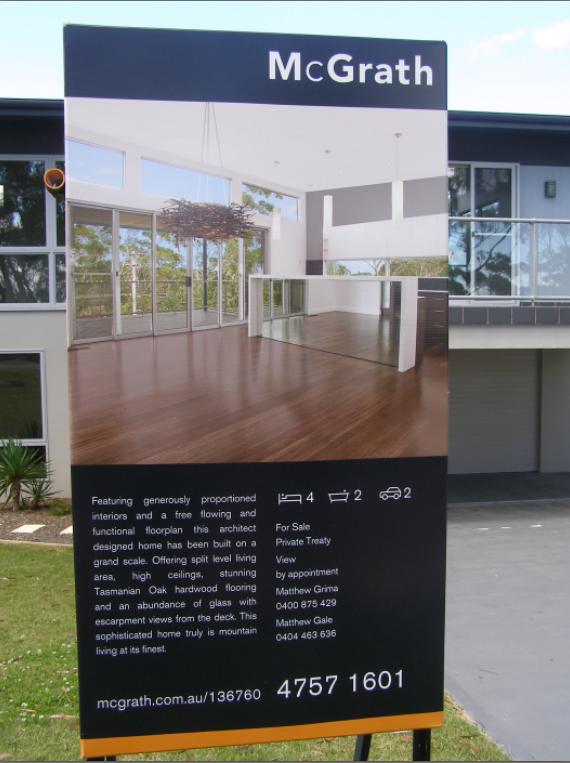
Tasmanian Oak, which is typically abbreviated as Tassie Oak, does not exist as a real tree, but as a contrived timber flooring brand marketed to household consumers by the timber industry.
The trees sourced to produce Tassie Oak Flooring are from old growth Tasmanian native forests that are either Eucalyptus delegatensis (Alpine Ash), or Eucalyptus obliqua (Stringybark or Messmate) or else Eucalyptus regnans (Mountain Ash or Swamp Gum).
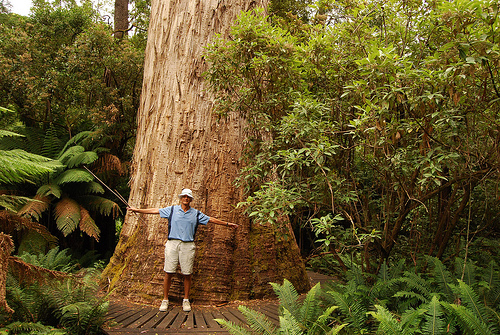
Eucalyptus Regnans is the largest flowering plant and hardwood tree in the world. Historically, it has been known to attain heights over 100 meters (330 ft) and is one of the highest tree species in the world. The tallest measured living specimen, named Centurion, stands 99.6 meters tall in Tasmania.
Eucalyptus regnans
before becoming someone’s Tassie Oak floor
.
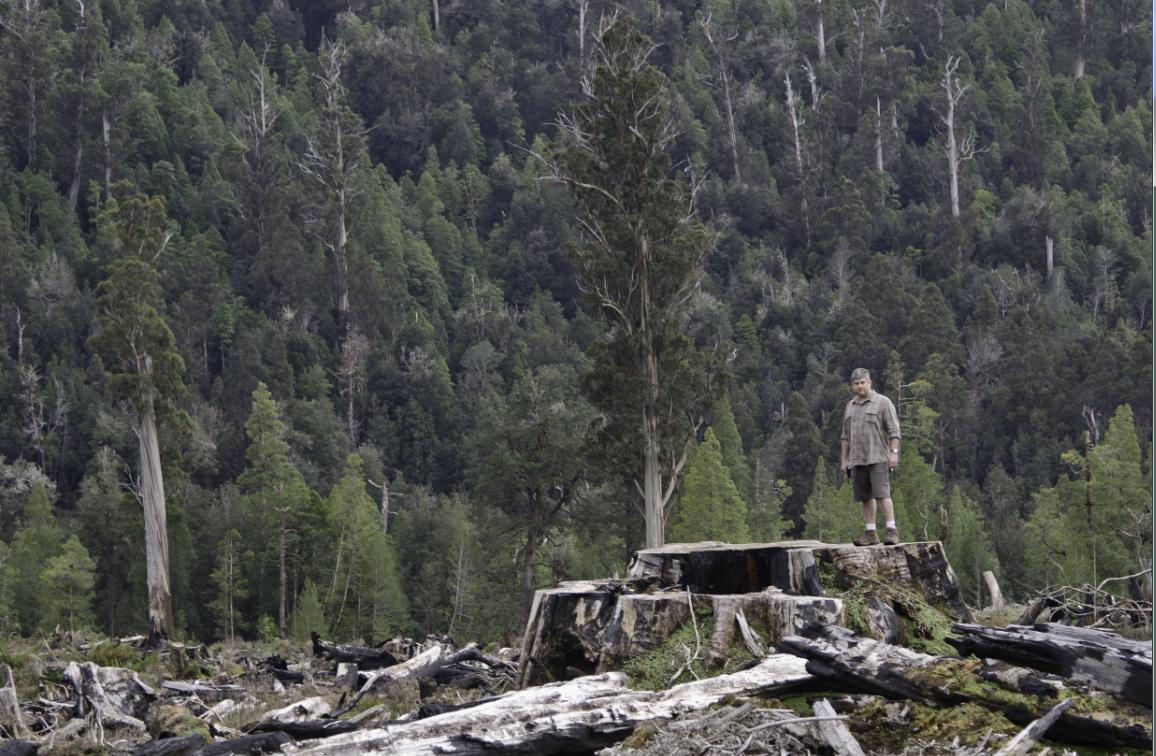
Tasmania is well known to travellers looking for pristine beauty and unspoiled wilderness. Besides unique flora and fauna including the endangered Tasmanian Devil, it is also home to the giant Eucalyptus. Tasmanian Tourism is all about marketing spin hiding the clearfelled old growth just out of sight of the tourist road. Visit Mount Field and wonder over the majesty of the old growth, but dare not venture beyond to the tragic scale of wanton clearfell.
The reality is that Australian Forestry Standard (AFS) “Chain of Custody” eco-label is an exploitative con by the timber industry.
On Forestry Tasmania’s website ‘Island Specialty Timbers’ at Geeveston claims to be a licensed Chain of Custody member, FTT CoC 08005, “which is your guarantee that all our raw material and products are Tasmanian fine timbers sourced from forests whose management is certified to the Australian Forestry Standard”.
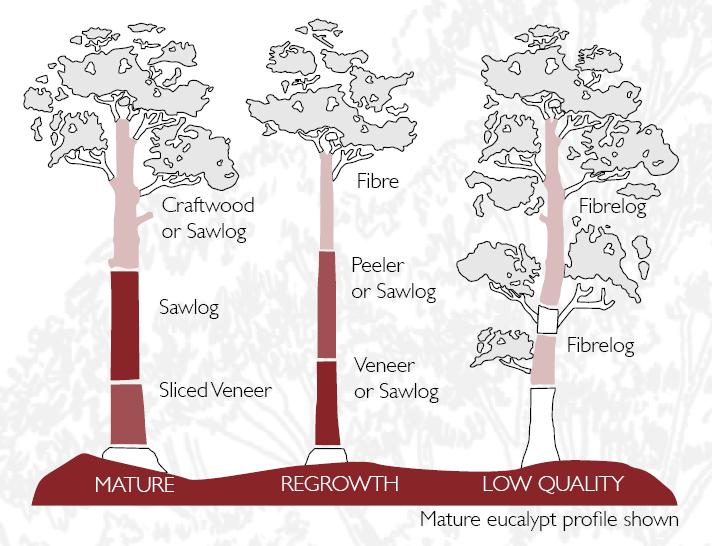
Only ‘sawlog’ sections of MATURE large hardwood trees are suitable for flooringIf there are no branch knots in the timber, then the timber has come from the trunks of mature large hardwood trees.Such trees are not from plantations, but from rare and disappearing forest habitat.
Forestry Standard AS 2796 ‘Sawn and Milled Native Hardwoods’ is the driving force for logging old growth habitat.
.
The supplier ‘Fine Timber Tasmania Inc.’ sells Tasmanian Myrtle (Myrtle Beech), Southern Sassafras, Leatherwood, Cheesewood, Musk, Blackwood, Eucalypt Burl, Figured Eucalypt, Huon pine, Celery Top Pine and King Billy Pine as ‘certified’.
The products of these ancient tree species are timber beams, posts, slabs and even raw logs – which simply can only come from old growth Tasmanian native forests.
Certification is AFS (Australian Forestry Standard) which has two separate standards
Sustainable Forest Management (SFM) Certification – Australian Standard AS 4708
Chain of Custody Certification (CoC) – Australian Standard AS 4707
.
The only benefit seems to be so that some developer and real estate agent can say hey your floorboards come from Tasmanian Old Growth and you are part of the problem; part of the Chain of Ecological Destruction, driving demand that sustains 20th Century Industrial Native Logging.
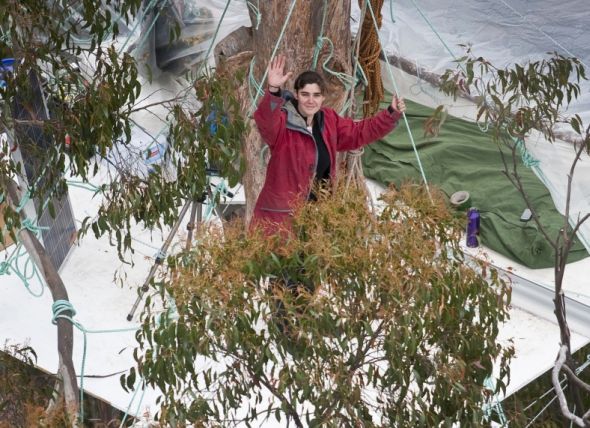
Miranda GibsonTree-sitting for 457 days in defence of Tasmanian ancient forests
.
The World Heritage Committee meeting in Phnom Penh today has just approved a 170,000 hectare extension of Tasmania’s world heritage wilderness, taking in the wild eucalypt forests fringing its eastern boundary.
The 21 nation committee accepted the nomination without dissent, despite a recommendation from an advisory body to refer the case back to Australia for more work on the extension’s cultural values.
The International Union for the Conservation of Nature had been making repeated recommendations in support of protecting these forests.
Committee members Germany, Malaysia, India, Serbia, Albania and Estonia all spoke in strong support of the extension.
Old growth native forests in the Upper Florentine, the Styx, Huon, Picton and Counsel River Valley have been afforded the highest level of environmental protection, World Heritage Listing!
The decision today by the World Heritage Committee to approve the extension to the Tasmanian Wilderness World Heritage Area is testament to the power of the community, after decades of action to defend these forests.
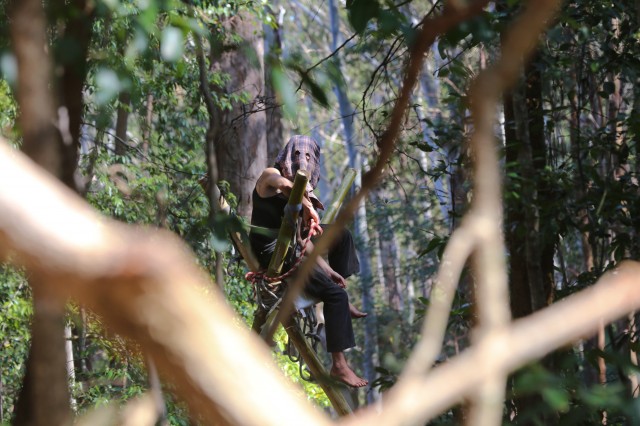
The Observer Tree and the forest surrounding it as well as the site of Camp Florentine blockade are now World Heritage listed.
.
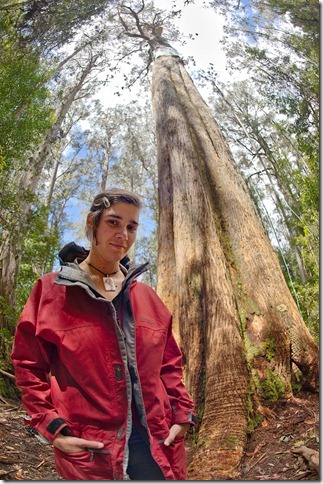
Miranda GibsonHolds the world record for Tree Sit activism in her personal defence of Tasmanian ancient forests
.
Miranda Gibson (Still Wild Still Threatened):
.
<< “On December 14th 2011 I climbed to the top of a tree in a threatened forest and said I would stay until the forest was protected. That forest is now World Heritage. It is thanks to the support from people right around the world that the forest is still standing and is now protected.
For 14 months I watched over the forest every day with the hope that we, as a community, could defend those trees for future generations. Today, for that forest, we have achieved that” said Ms Gibson.
Today I think of the wedge tailed eagle that I watched fly above my tree, whose habitat was once under threat and is now protected and of the Tasmanian devils who lived in the forest 60 meters below my platform who can now raise their young in peace.”
Today we celebrate the protection of some of Tasmania’s most significant forests including the Tyenna, Weld and Upper Florentine. For six years the Upper Florentine Valley has been defended by Tasmania’s longest running forest blockade. This forest is still standing because the community took action and halted logging to protect the values of this ecosystem, that are now officially World Heritage. This Sunday the community will return to site of Camp Florentine to celebrate our success in ensuring these forests will be standing for future generations.”
“Thousands of people across the globe have been part of this global movement to protect Tasmania’s ancient forests as World Heritage. Right around the world people today are celebrating the power of community action and what we have achieved for Tasmania’s forests.” >>
.
Actively defending Tasmania’s ancient forests since before 2009
.
Australia’s Environment Minister Tony Burke:
“If you look at the Styx in particular, there are trees that are the length of a football field going straight up. This decision today means those extraordinary giants of the forest are added to the World Heritage list. For the first time the listing happened through negotiations with the forestry industry and conservation movement, rather than by politicians drawing arbitrary boundaries. That provides a path forward for Tasmania different to the conflict model that those opposite are completely wedded to.”
.
Jenny Webber (Huon Valley Environment Centre, Tasmania):
.
“After eleven years of campaigning for the globally significant forests of the Weld, Middle Huon and wild forests in the Esperance and Far South (in Tasmania) we have achieved an awesome milestone here…
Today, thousands of hectares of contiguous tall eucalyptus wild forests, endangered species habitat, wild rivers and ancient karst systems have finally had their globally significant values recognised. This is the first time Huon Valley Environment Centre has witnessed the protection of forests.”
We have walked thousands of people through these forests, stood on the front-line to defend them as they have been wantonly destroyed with large scale logging and burning. At last, some of these forests have been saved, and we thank the artists, activists and community members who have participated in our campaign all this time.
This is truly the people’s achievement. For decades people have struggled to protect these particular forests and finally we can say, despite shortsighted and wasteful governments, inept land resource management and failed efforts to undermine and marginalise conservationists, we did it!”
.
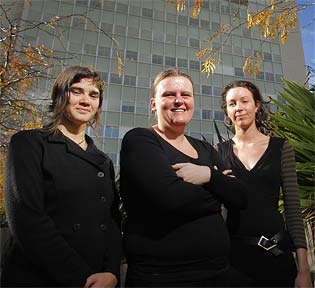
Campaigners for TasmaniaMiranda Gibson, Jenny Weber and Jasmine Wills
(and many dedicated people behind the scenes)
.
.The special spirit of Tasmania, its people, its island
Bushfire ends Miranda Gibson’s record 457 day tree protest near Hobart
.
Anti-treelogging activist, Miranda Gibson in the Styx ValleyPicture: Miranda Gibson
.
A deliberately lit bushfire by loggers has ensured an activist’s record tree-sitting protest has gone up in smoke.
The fire in the Styx Valley, about 100km north-west of Hobart, has ended Miranda Gibson’s epic tree sit-in, which lasted 457 days.
The 31-year-old has been living at the top of a 60 metre eucalypt tree since December 2011 in a bid to stop logging in high conservation value forests. She has been urging the federal government to seek world heritage listing for the Styx Valley, the Florentine and Weld forests.
When she got down, she said that her campaign will continue – for the short term at least – on the ground.
.
.
Miranda Gibson has spent a year up a tree.
“I’ll be assessing the situation as it goes in terms of the fire risk and in terms of the campaign and what I can effectively achieve on the ground or in the tree,” she told AAP.
“As time goes on I’ll be able to make a decision about how I approach that.”
An emotional Ms Gibson abseiled to the ground to be embraced by former Greens leader Bob Brown.
.
.
Miranda Gibson had vowed to stay up the tree until the Tasmanian forest is protected from logging.
“Congratulations,” he said. “You’re our hero of the forests.”
Since taking up residence on a platform suspended at the top of a 400-year-old eucalyptus tree, she has blogged about the experience, on Observer Tree.
Ms Gibson’s campaign has attracted worldwide attention, with the former teacher appearing on news shows around the world.
She’s also used satellite technology to speak at a number of environmental conferences and acted as a spokeswoman for the Still Wild Still Threatened conservation group.
Ms Gibson broke the record for the longest Australian tree-sit last July, topping the 208 days Manfred Stephens spent atop a tree near Cairns in 1995.
Isolation and solitude were the biggest challenges she faced in living in a tree, as well as coping with Tasmania’s harsh winter weather.
One of the hardest things was the uncertainty about how long she would be in the tree.
"We're coming to you from the custodial lands of the Hairygowogulator, Tarantulawollygong, and Longdrop country, within the Australia nation since 1901. From our home in Inner West Katoomba we pay respects to uncles and grandaddy elders past, present and emerging from their burrows. So wise to keep a distance out bush."
Recent
Supporting Us
A VOICE FOR NATIVE HABITAT
One’s solo mindful walk…
The Friends of Katoomba Falls Creek Valley Inc. in The Gully
The Gully Collection
Save Atlas Campaign
The Friends Archive: War and Peace with the Blue Mountains ‘hysterical’ Society
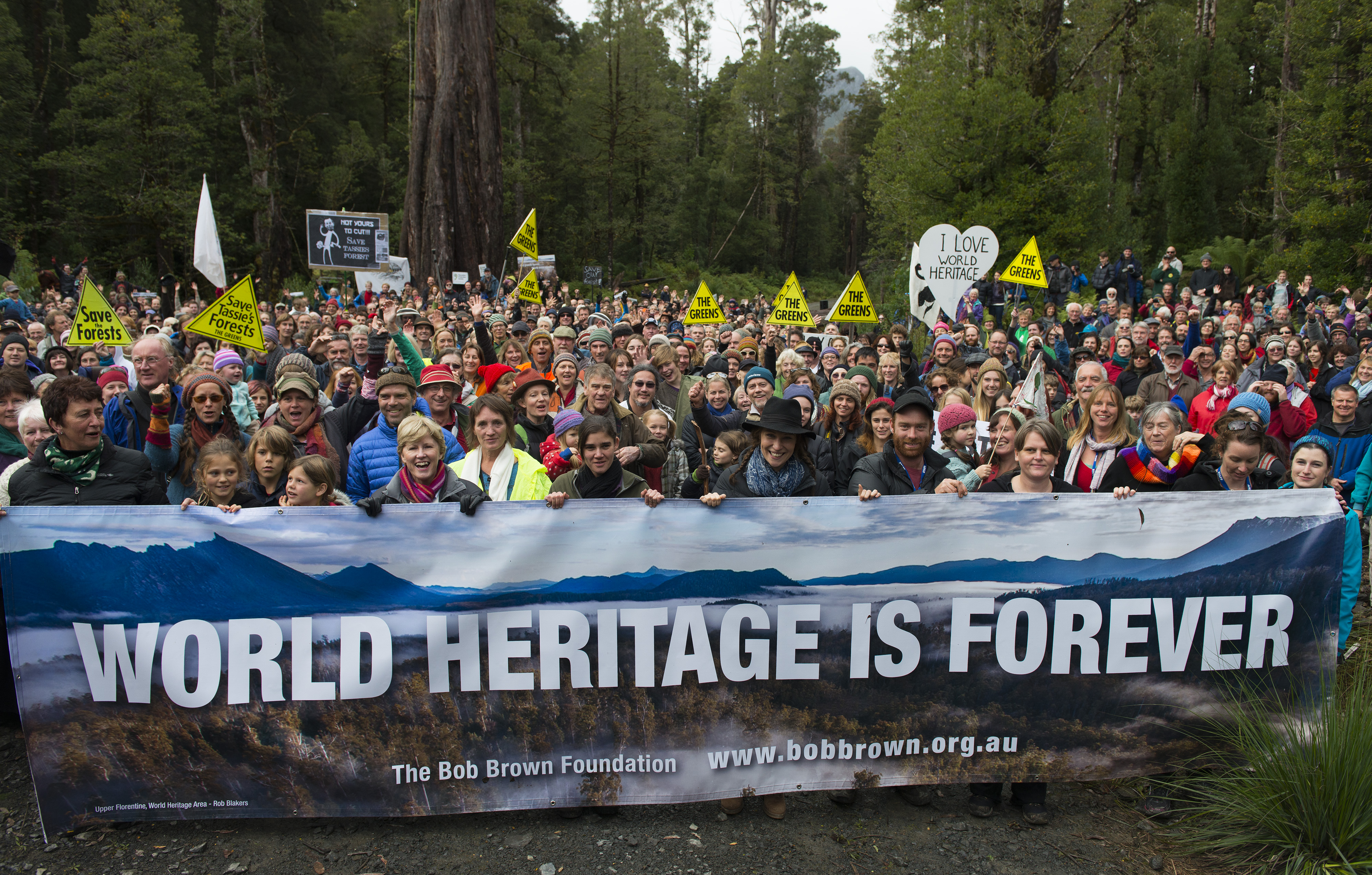 Historic rally in Tasmania’s Upper Florentine Valley, Tasmania, Sunday 20140427
Photo © Matthew Newton
Historic rally in Tasmania’s Upper Florentine Valley, Tasmania, Sunday 20140427
Photo © Matthew Newton