In urban metros, cities and towns across Australia a call to Triple Zero (000) in the event of a fire emergency, will trigger reliable response quickly by the state government’s professional fire-fighting service – all professionally trained, equipped, resourced and paid.
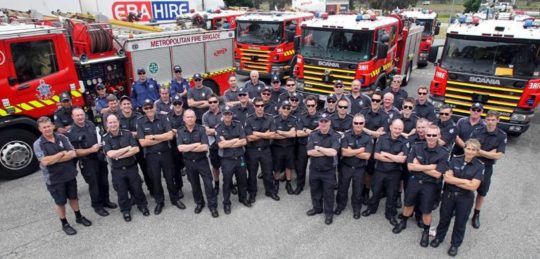
In Victoria, this professional fire fighting force does not exist outside Melbourne
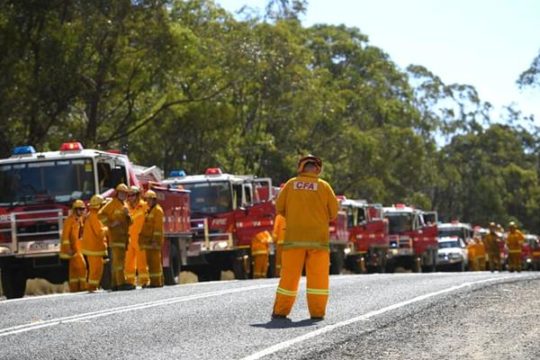
Outside urban Australia, it’s a different case of locals phoning an unpaid under-resourced Dad’s Army which directs the call to a pager. The Triple 000 emergency response standard is denied. Rural Australians are second class citizens when it comes to government response in emergencies – fire, ambulance, police. This is traditionally and persisted perpetually.
So outside urban Australia, Australians are treated by government differently – like second class citizens.
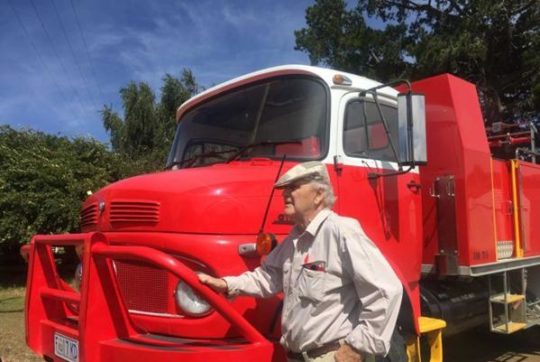
Locals throughout non-urban Australia often end up joining the local volunteer fire brigade (CFA, RFS, CFS, whatever) because there is no paid fire brigade within coo-ee; more likely to the nearest regional big town.
It’s called ‘Do It Yourself’ emergency response.
State governments require that if any fire fighting service is to be provided to a rural community that the immediate local residents must come forward and do the job of their urban professionals. The professional fire fighting training, equipment, and resourcing is all the same – non existent.
Rural Australia is grossly under-resourced in fire fighting prevention, mitigation, ignition detection and suppression response. Farmers and rural folk wisely advise incoming tree changers that they ought fast abandon their urban ‘000’ response’ expectations upon arrival in rural Australia, and become D.I.Y. rural fire volunteer unpaid members. Else when the state governments’ PR instructions are to abandon your family home and a lifetime’s values, you surrender to refugee status and so beholded to CentreLink discretion as cup-in-hand pensioners.
Non urban Australians may as well dial ’00’ instead of ‘000’. Dialing ’00’ will only deliver the same response as being…’not connected’, “not bothered”, “tell someone in government who cares”. Expect a disconnected phone signal.
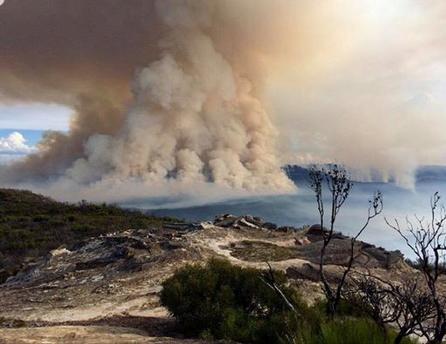
One of the decimated native regions of Australia abandoned to fend for themselves in the wake of an impending firefront, known to be imminent for weeks was Victoria’s East Gippsland. In mid December 2019, no attempt was made by the Victorian Government to detect, respond or quell the Snowy River National Park wildfire 20km west of the remote hamlet of Goongerah, 68km north of the town of Orbost in East Gippsland.
By December 30, 2019 rural locals were told to evacuate and abandoned their homes and lives, else D.I.Y. fend for themselves.
Here is one example of isolated rural Australians left in an wildfire emergency to D.I.Y. defend.
A week later, no one in government or media could care a shit about this isolated rural community’s survival or welfare.
National Parks across Australia no longer exist but in name only on the tourist literature. Exceptional national parks of the Blue Mountains region, seven of them, listed with world heritage values in 2000, no longer hold the values of that listing – Eucalyptus diversity has been incinerated on a massively widescale the area of France. Millions of wildlife species have been left to be burned alive.
The evil is that this was intentional by entrusted state government bureaucracy, the RFS and NPWS in NSW. The state minister for Police and Emergency Services, David Elliott, abandoned the emergency at the time for a family overseas holiday in France and Britain.
Greater Blue Mountains World Heritage Area
The Greater Blue Mountains World Heritage Area is one of the largest and most intact tracts of protected bushland in Australia.
The World Heritage listed Greater Blue Mountains Area is a deeply incised sandstone tableland covering over 1 million hectares spread across 8 adjacent conservation reserves. The landscapes of this World Heritage property lie inland to the west of Sydney and extend almost 250 kilometres from the edge of the Hunter Valley to the Southern Highlands near Mittagong.
An enormous variety of plants occur here, but eucalypts dominate the landscape: the area is home to 96 species (13% of all eucalypt species). Rare and endangered plants such as the Wollemi pine (Wollemia nobilis) also occur here. (incinerated by defacto hazard reduction by the NPWS and RFS in December 2019).
World Heritage listing
The Greater Blue Mountains Area was inscribed on the World Heritage List in 2000 in recognition of its significant natural values. It possesses unique plants and animals that relate an extraordinary story of the evolution of Australia’s distinctive Eucalypt vegetation and its associated communities.
No longer. The Blue Mountains World Heritage values have mostly gone. Small remote ignitions have been deliberately and systematically ignored and let burn by the New South Wales Government entrusted all-controlling national parks service (NSW National Parks and Wildlife Service) and all-controlling fire fighting authority the New South Wales Rural Fire Service (RFS). Days and weeks later, these fires have conflagrated into wildfire fronts then firestorms. These bushfires were never under control because they did not start near habital property – the RFS charter of convenience.
So by abject dereliction of duty to proactively protect World Heitage, the NSW Government has recklessly allowed vast natural areas, cumulatively larger than the size of Tasmania (42,000 km2) -a sanctuary endangered and valuable ecology to be incinerated. Sadly, these World Heritage natural values now no longer exist.
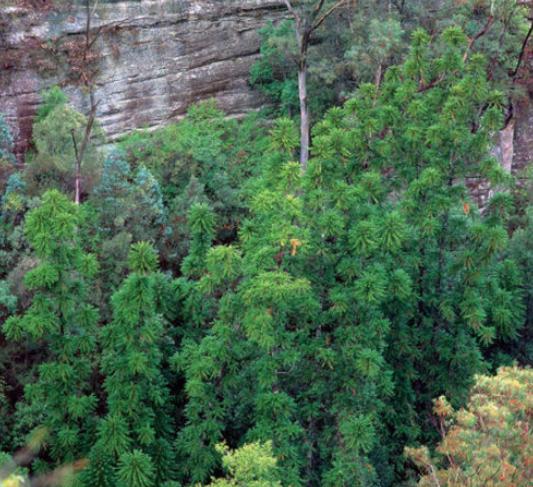
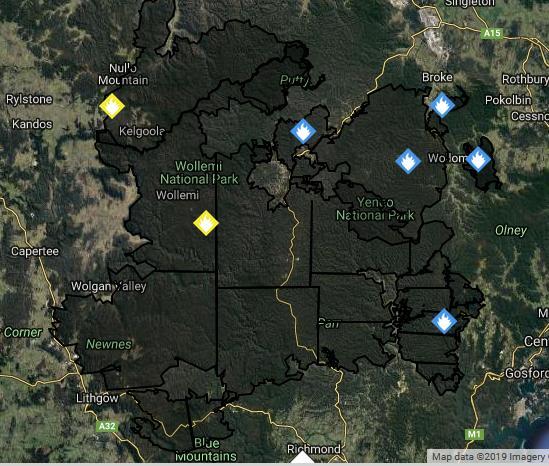
The secretly protected Wollemi Pine Grove from the Jurassic Period (201 – 145 million years ago, when conifers like the Wollemi Pine ruled the world) has likely been utterly destroyed by wildfire, according bushfire ground mapping by the Rural Fire Service (RFS) on its ‘Fires Near Me’ website. The RFS is the entrusted New South Wales state government delegated authority responsible for responding to all non-urban fire firefighting emergencies throughout the state of New South Wales.
The RFS has failed absolutely. It is a serial annual failing fire fighting agency. It lights bushfires and serves but to save the state government billions.
Half a million hectares of pristine World Heritage Wollemi Wilderness has been abandoned to wildfire by government emergency bureaucracy, the RFS, so that the preciously unique Wollemi Wilderness of some half a million hectares be left to be incinerated in a deliberate bureaucratic defacto hazard reduction, dubbed a ‘strategic burn’.
In NPWS/RFS colonial culture, World Heritage Listing means nothing but a fuel hazard to be so burned before it inevitably burns. State based rural firefighting culture across Australia harks to colonial times when wildlife was vermin and Aborigines were savages.
The vast area of the world heritage listed Wollemi National Park is 501,700 hectares. The two bureaucrats charged to protect it were NPWS Upper Mountains Area Manager Richard Kingswood and NPWS Director of Blue Mountains Branch, David Crust. Both jointly delivered Blue Mountains epic fails this Christmas. Both need to be summarily held ultimately responsible and so summarily sacked for gross wold heritage abandonment, incompetence and defacto hazard reduction arson.
This belies this government bureaucracy’s antiquated culture of ecological hate and contempt that has been allowed and encouraged to get its way. Wilderness has been tamed ready for farmland and Sydney’s massive urban sprawl.
Blue Mountains ecology has allowed to be decimated – 80% of it.
This is a programme of widespread blanket defacto ‘hazard reduction’ – we interpret as state government sanctioned ‘bush arson’ – a mindset to burn native habitat before it burns, because capital city centric state governments deliberately under-resource rural fire fighting.
The Habitat Advocate’s subsequent email to UNESCO:
Dear Committee,
We are so sad to inform you that the Blue Mountains World Heritage Area has been mostly let incinerated.
It’s world heritage values perhaps no longer exist as a result.
Sincerely,
Editor of The Habitat Advocate
Katoomba NSW 2780 Australia
Upstream of the Blue Mountains World Heritage Area.
World Heritage listing of the Blue Mountains region by the New South Wales Government (by its phony then Minister for the Environment, Bob Debus) was always with an ulterior motive. The listing’s ulterior motive was always about preserving a water catchment natural area immediately to the west of a massively expanding Sydney, since dubbed Greater Western Sydney that swallows the rural regions of the Blue Mountains, Hunter Valley, Central Coast, Newcastle, Wollondilly and Illawarra.
It’s not just sad; it is strategically planned, calculated, staged and outsourced sold by spin doctors to a naive public.
Rural fire bureaucracy at state and territory level across Australia has been allowed to perpetuate on an under-resourced piecemeal, charity and volunteer ‘Dad’s Army’ basis since the 1939 Black Friday bushfires, some four generations ago. It’s all to save governments money so they can splurge on other things.
Instead of 1939 being a national wake up call to Australia about bushfire unpreparedness, about ignorance of bushfire risk mitigation, about the lack of a nationally resourced and trained emergency unit of military standard to protect Australians, what was the governmental response?
Yet another government enquiry.
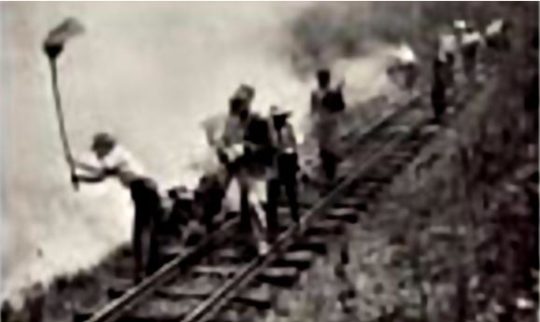
This is a photo from the desperate and overwhelming 1939 Black Friday Bushfire Disaster across Victoria.
A government enquiry (indeed a Royal Commission) was ordered into the bushfire disaster – 71 lives were lost, 69 timber mills burt out, millions of acres of fine forest of almost incalculable value decimated, townships were obliterated.
The Bushfires Royal Commission Report 1939 by Judge Leonard E. B. Stretton reported that hundreds of small fires smouldered unattended in the week leading up to Black Friday, when, fanned by the gale-force winds, they joined to create the inferno. Most of the fires Stretton declared, with almost biblical gravity, were “lit by the hand of man“.
His scathing 35 page report (extract below) was presented to the Victorian Parliament on the 16th May 1939. It led to a few token changes to pile burning and fire safety measures for sawmills, grazing licensees and the general public, the compulsory construction of dugouts at forest sawmills, increasing the forest roads network and firebreaks, construction of forest dams, fire towers and RAAF aerial patrols linked by the Forests Commissions radio network VL3AA to ground observers.
Stretton examined the inevitability of fire in the Australian bush and heard evidence from foresters, graziers, sawmillers and academics whether it was best to let fires burn because they were a part of a natural protective cycle or to combat them to defend people and the forests. Importantly, his balanced deliberations officially sanctioned and encouraged fuel reduction burning.
Stretton recommended that the Forests Commission must take complete responsibility of fire suppression and prevention on all public land including State forests, unoccupied Crown Lands, MMBW catchments and National Parks plus a buffer extending one mile beyond their boundaries onto private land.
Most of those initiatives were soon abandoned by the Victorian Government out of complacency and subsequent contemporary political priorities.
The Stretton Royal Commission of 1939 presided over by Judge Stretton has been described as one of the most significant inquiries in the history of Victorian public administration. His work has been referred to in subsequent bushfire inquiries and Royal Commissions such as Ash Wednesday in 1983 and Black Saturday 2009.
Yet, dozens of widespread bushfires later, thousands of homes razed later, ecology on the brink later, and rural fire bureaucracy rave on about the heroic effort by unpaid firefighting volunteer slaves. This despite the fact that rural fire bureaucracy at state and territory levels across Australia has yet again failed rural Australian communities, businesses and ecology.
What’s changed since 1939? Certainly not the governmental culture of leaving locals to fend for themselves.
“Effect your bushfire plan“…. (abandon our home to the fire?)
“Are you going to stay or go?” – (.. to bloody where? Putting out the fires and defending property is supposed to be the job of fire firefighters isn’t it?)
“We can’t guarantee a fire truck to turn up when you call 000.” (why not, the real fire service does. It is statutorily charged to protect the community.)
“Tourists get out now!” (Who compensates lost homes and regional tourism and business?)
The response next week after December 2019? Another government enquiry.
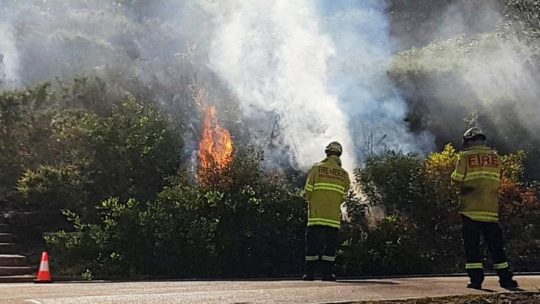
Bushfires typically start in the bush either by lightning or arsonists. Fire trucks are therefore useless; always too little, too late. The arsonists continue to get away with murder, home loss – which often leads to suicides.
Australia’s national parks have been decimated to dead, silent park graveyards for wildlife. They were never national; rather delegated to under-funded state bureaucracies with a record of mass sackings.
UNESCO needs to be told that the Blue Mountains World Heritage Area has gone. It’s world heritage listing was cynically always about setting aside inaccessible forests to preserve and expand Sydney’s drinking water for a growing human plague.
Following the 2006 Grose Valley megafire (started by a Hartley Valley RFS backburn) and the 2009 Victorian megafires, this author was rebuked for daring to critise the volunteer rural firies and laughted at for suggesting a military national organisation take control with live satellite detection of ignitions and wioth paid standby airborne resources.
A decade later the old blokes are waking up. Budget Dad’s Army culture remains stubborn – “we don’t want to be paid. We prefer dependence upon the afternoon teas and charity donations by struggling and homeless locals, and more homes lost instead. Just keep our traditional culture of volunteerism”
Australia’s remnant islands of ecology are being incinerated dead wastelands. It’s a Baby Boomer legacy.
1300 homes destroyed thus far…but you dare not criticize because those authorities responsible for community safety, hide behind the volunteer veil.
Summer 2020 herald’s the 81st anniversary of 1939 Black Friday Bushfires Disaster. Australia as a nation would surely/sadly be up to Bushfire Emergency Mark 81 at least – deploying the same state based volunteer slave labour culture to cost billions and drive ecological extinctions.
What a dishonourable scoreboard of environmental justice.
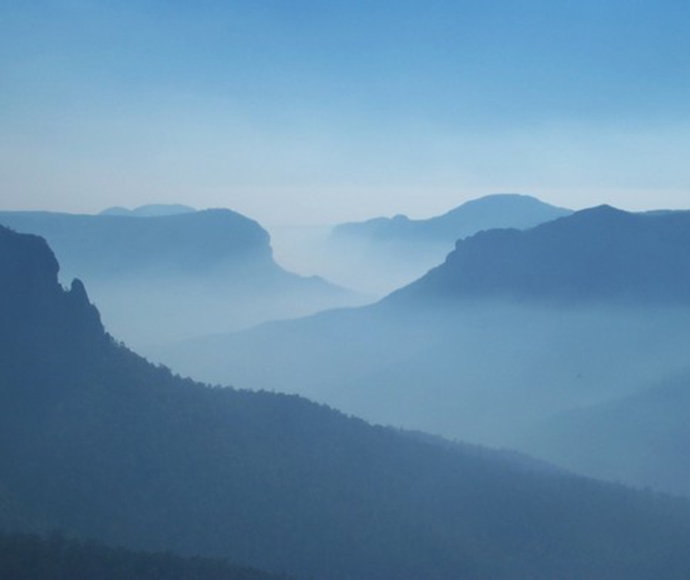
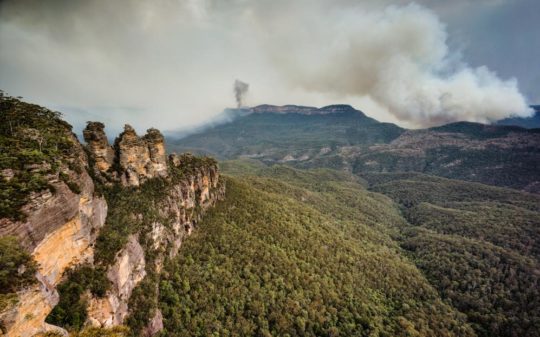
Welcome to the Blue Mountains World Heritage Area. Won’t you enjoy your stay?
An immense evil has been perpetrated upon the remnant ecology of New South Wales.
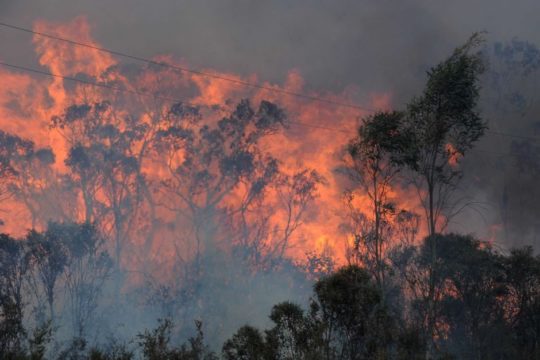
Natural forests set aside as national parks and world heritage have been allowed to incinerate on a broad scale not seen before in Australian history. The Blue Mountains World Heritage Area has been destroyed.
An tourist campfire unextinguished at the over-popular Ruined Castle Campsite was allowed to burn for days before any government response from custodian NSW National Parks. So now a third of the precious Jamison Valley has gone along.
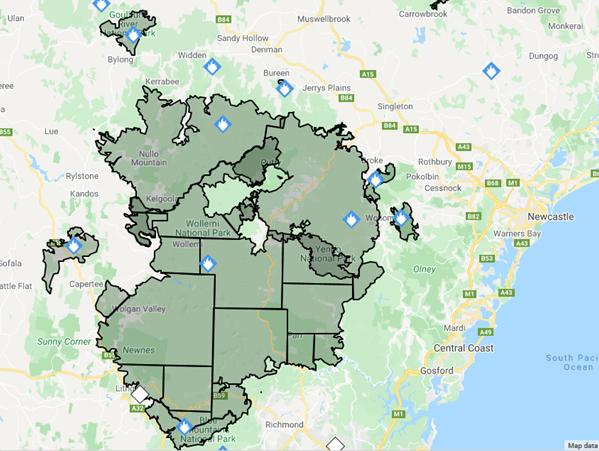
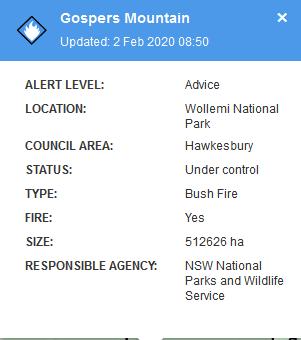
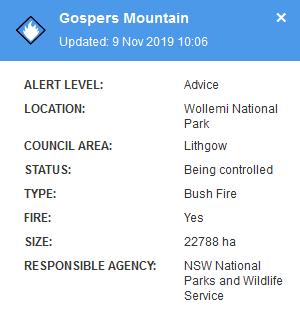
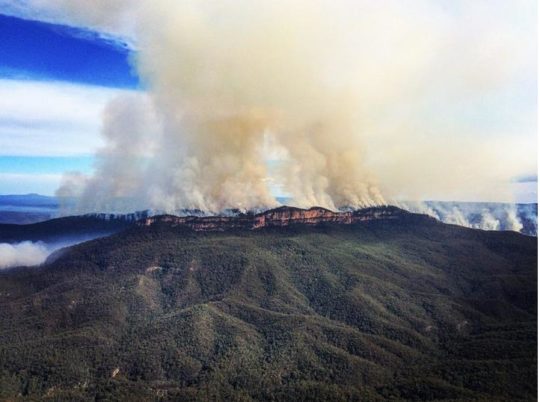
In the northern part of the Blue Mountains World Heritage, the massive celebrated expanse of the wild and rugged Wollemi National Park (5000 square km, or in firie terms 500,00 hectares) a fire that started in late October 2019 on a rural property off Army Road near Gospers Mountain was left to burn for weeks without emergency response. It was another negligent burn off. On 9th November, the RFS (Rural Fire Starters) rated it’s risk obscurely as ‘Advice’, whatever that means, and reported that it was “being controlled” – famous last words by this mob.
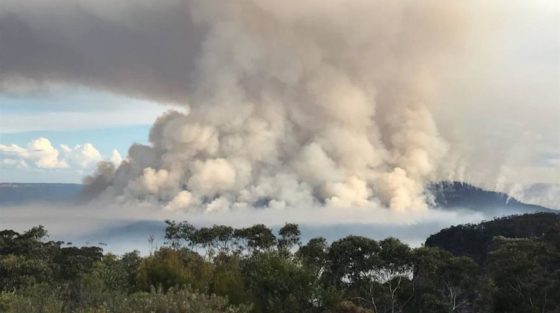
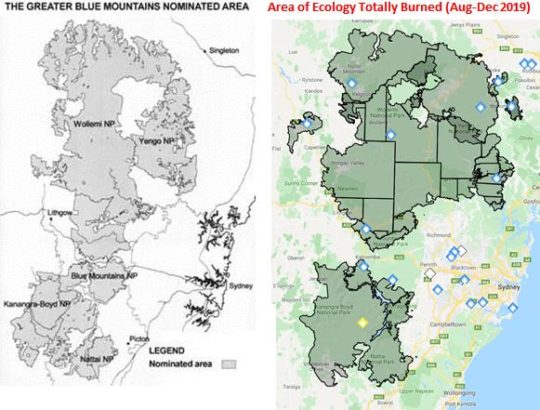
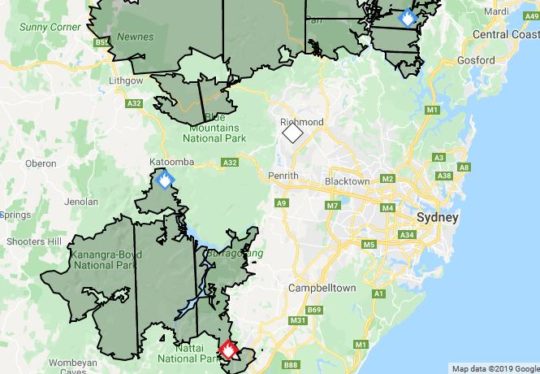
As at 20th December, the fire has been allowed to effectively wipe out the entire Wollemi National Park east to west, Yengo National Park, and spread south into the adjoining Blue Mountains National Park and now it’s in the Grose Valley. It is blackened, still and utterly dead.
The Jurassic period’s Wollemi Pine discovered by chance in 1994 in a remote patch of the Wollemi by Parks Service officer David Noble was reviewed by the NSW Scientific Committee after the International Union for the Conservation of Nature listed it as critical, with fewer than 100 mature individual trees in the wild. The NSW committee recommended the highest level of endangered status because it is so susceptible to Phytophthera cinnamomi, a pathogen which causes dieback of branches and stems. But that was not it’s obvious threat. It was the RFS.
Endangered Wollemi Pine endemic cluster – now incinerated by NPWS and RFS management negligence.
The total World Heritage Area destroyed by this particular bushfire is 720,000 hectares, more than half the size of greater Sydney (comprising multiple fires that have been allowed to all link up into one massive fire ground – Gospers Mountain fire 445000 ha, Kerry Ridge 93000 ha, Little L Complex 92000 ha, Three Mile 45000, Crumps Complex 6000 ha, Paddock Run 29000 ha, Owendale 4000 ha and Mount Victoria 2ooo ha.
The Mount Victoria fire has since been renamed the Grose Valley Fire with ominous implications of what the RFS intends with that one. Even the Goulburn River National Park has been targeted (Meads Creek West Fire 14000 ha) and that will no doubt combine with the others.
Coupled with The State Mine Fire of 2013 started by Army ordnance outside Lithgow on a Total fire Ban day which ripped through the Wollemi National Park in 2013, this year’s effort means there is nothing left of Wollemi National Park pretty much from Baerami Creek 100km south to the Wollangambe River and beyond.
This fire front is currently threatening to link up with another massive blaze that started in the Kanangra-Boyd National Park in the southern Blue Mountains around 26th November. Left to burn it has destroyed most of the national park and the water catchment.
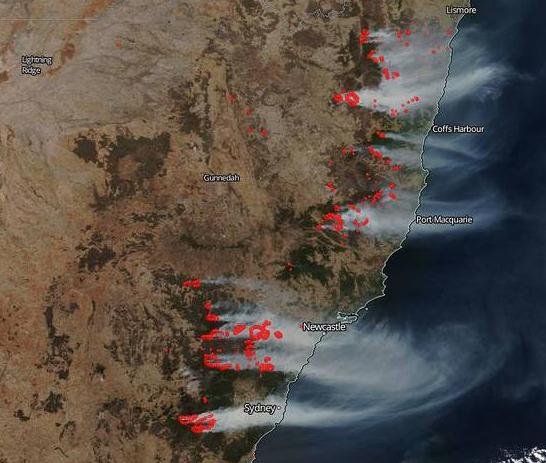
To the south of New South Wales a bushfire allowed to incinerate 220,000 ha of “protected” habitat and wildlife from outside Nowra to Batemans Bay. The firie command dubbed it the ‘Currowan Fire‘. More slaughter.
To the north of News South Wales, two more massive fire grounds, each of comparable size to the above have wiped out more than 2 million hectares of native habitat that is supposed to be ‘protected’ in national parks.
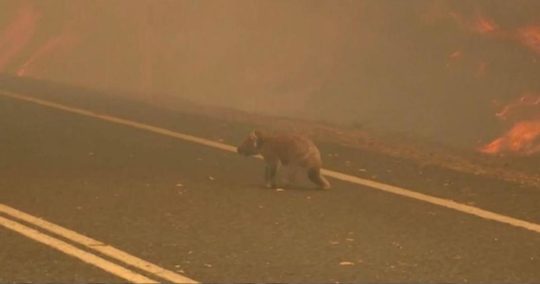
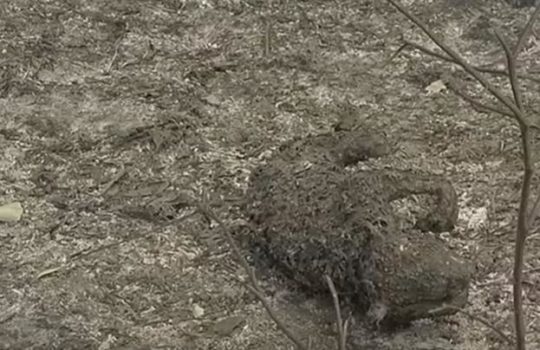
Regional extinctions will be across multiple species of rare and endangered fauna. Across the New South Wales eastern seaboard an area the size of Tasmania has gone. Thousands of koalas have perished.
This is a mass extinction event, human caused alright. This is a war crime against ecology. No wonder the RFS has initiated a media blackout.
“I love a fire burnt country… bigs me head and pays me wages, see.”
The frequency, ferocity and scale of these bushfire emergencies is well beyond a volunteer Dad’s Army limited by a dated Baby Boomer culture of responsive “protecting life and property” that demonises and antropocentrically dismisses Australia’s remnant and disappearing ecology as ‘vermin’, a ‘hazard’, and ‘fuel’.
The RFS is an abject failure and the government’s use and abuse of its century old volunteer firefighting model has again proven incapable and useless at putting our bushfires in time to save ecology, infrastructure, livestock homes and lives. Volunteer fire-fighting subsists only to save goverment money so that politicians when in power can redirect the savings of not paying firefighters away from local communities.
The Federal delegation of emergency management, not just that concerning bushfires, is beyond state and territory resources to adequately prepare, respond and extinguish with the military precision demanded for such emergencies. Australian rural communities each summer witness government overdependence upon an historic volunteer culture that fails rural Australia time and again every summer. Invariably the emergency overwhelms the Dad’s Army and interstate and overseas crews and resources are brought in – usually too little to late. This national dependency is reciprocated interstate.
PM Scott Morrison’s Boomer regurgitation of perpetuating the “spirit of volunteers” is a time old abuse of ordinary rural Australians trying to do their bit for their local community. It’s callous government paying lip service thanks with no payment or compensation more than a cheap slap on the back for the media, a sausage from the volunteer sizzle and another hollow pet talk.
Crocodile Tears Culture
Australia’s Prime Minister was publicly ressured last week to return from his Christmas holiday in Hawaii to show some degree of leadership in the wake of New South Wales declared bushfire state of emergency. The nation’s Hume Freeway between Melbourne and Sydney was closed because of the mega bushfire that had ignited weeks prior many kilometres deep in the wild Blue Mountains Kanangra-Boyd National Park, and so left by authorities to hazard reduce itself until it arrived uncontrolled to cut the Hume Freeway.
Too little to late yet again. Government is culpable for the ecological holocaust, the 3000+ Koalas burned alive, the utter destruction of World Heritage and ‘protected‘ national parks, the human lives lost, the family homes gone forever, livestock perished, business revenue lost, regional economic losses, and a massive polluting contribution to worsen global greenhouse gases.
Extinction Rebellion need to redirect their targeting of offenders to NSW RFS Headquarters at 4 Murray Rose Avenue, Sydney Olympic Park and to every petrol despatch unit branch.
Although my painting is set in the Styx Valley of the Giants, it transmits childhood memories of ethereal walks amongst the tallest trees found in the Redwood Forests of California. The Mountain Ash trees of Tasmania may arguably have been their contenders, if not for human intervention having commoditised them in their prime. My painting depicts the narrative of these Giants, whose crevassed valleys I have yet to travel.
The relational theme is exemplified through landscapes suspended in space, conveying our universally intricate ties to the natural world; ‘As above so below’. The Giants are fused together by their roots, representing the recently discovered language of trees. Their wiring is juxtaposed with our own ever-escalating dissemination of information.
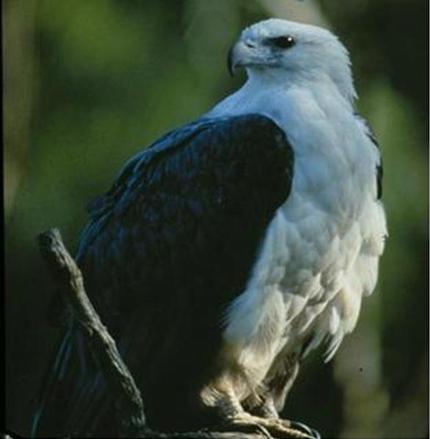
The native White Bellied Eagle protects his island, which is pockmarked with the scabs of clear felled, old growth forests. The monumental forest transforms from ‘hardy’ to ‘harvested’ and rests amongst machinery within the living limbs of a peace symbol balanced between its adversaries. The aerial perspective above the nest leaves the onus for the forest’s future, inescapably with the viewer.
The ‘Weld Angel’, perched atop a giant tripod, protests peacefully. She embodies repressed respect for mother earth and strives to regain equilibrium with her political nemeses abseiling from what remains of The Valley of the Giants.
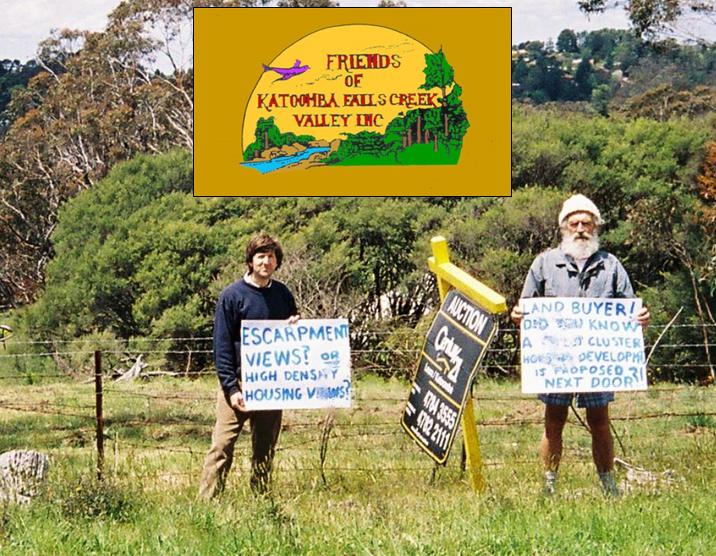
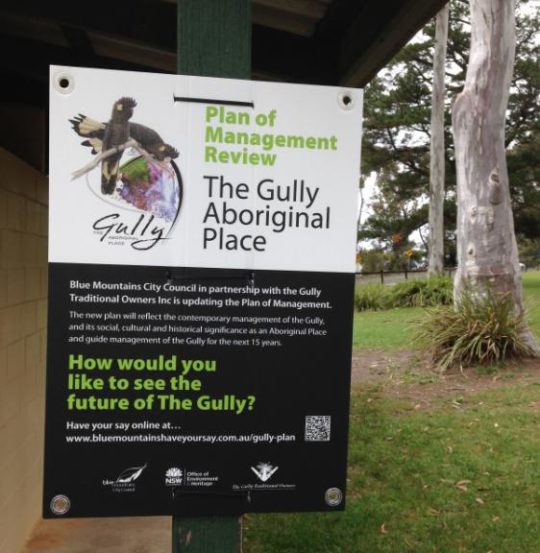
While exercising through Katoomba Falls Creek Valley in the Blue Mountains last October, this author came across this sign.
How would one like to see the future of The Gully..for the next 15 years? Have my say? Internet submissions only?
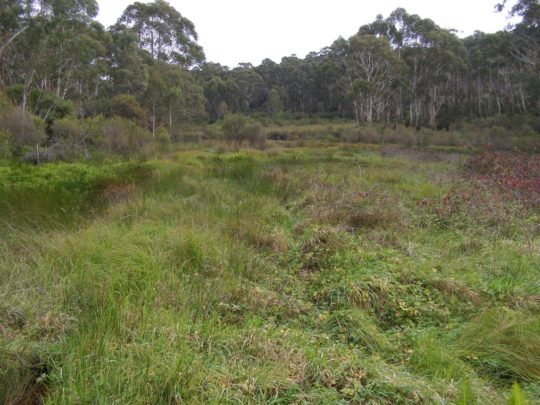
Local government authority Blue Mountains Council in about 2007 renamed this natural valley west of Katoomba ‘The Gully’ because that is the affectionate name it had from the previous residents of mostly regional Aboriginal heritage extending back many thousands of years.
Since 2001, this author has lived 50 metres from the native bushland valley we know as Katoomba Falls Creek Valley, or Sydney Water’s defined Upper Kedumba River, or as Amusement Parlour tourism businessman Horrace Gates’ Catalina Lake, or as Blue Mountains Council’s sponsored car racing enthusiasts (1957-2003) as Catalina Park, or as NSW National Parks call the valley, ‘The Gully’.
Such mixed interpretation of this watercouse valley reflects its history as complex, contested and ongoing culturally problematic. Yet since 1957, here we are in cultural denial in 2019.
In 2002, The Valley was unilaterally declared ‘The Gully’ by Blue Mountains Council – typically again no community consultation.
Ok, so what’s in a name?
‘The Gully – Aboriginal Place’ under the National Parks and Wildlife Act 1974 by the New South Wales government was justified out of recognition of the Valley’s significance holding pre-contact Aboriginal sites, post-contact settlements, its ongoing occupation by Aboriginal People until forced eviction in 1957 (to make way for bulldozing a racetrack), and by lobbying and evidence from local Aboriginal Gundungurra elder, the late Aunty Dawn Colless.
All good. But ‘Aboriginal Place’ only? Says who? By which Blue Mountains heritage Aboriginal people/clan? The Gundungurra Traditional Owners Inc. only and so denying the rights of all other Gully residents and descendants – Aboriginal (eg: Dharug or otherwise) or of non-Aborigines of The Gully?
This is at best Council prejudice and community divide and conquer; at worst Council prejudice against non-Gundungurra, non-Aborigines.
Aboriginal Place declaration while historially valid, was democratically invalid. The NSW Government declaration of such was selective and secret behind Blue Mountains Council’s closed doors – a frequent setting to get things done without pesky outspoken community awareness.
Trust? Blue Mountains Council?
From 1988 to 2016 local residents action group The Friends of Katoomba Falls Creek Valley Inc., under the inspiring and consultative leadership of the late Neil Stuart BSc., had championed a local community cause to save the Valley. From grassroots local resident motives, the Friends aims were from the outset consistently to value and respect the remnant environmental values of the Valley, to lobby to remove the invasive racetrack, to restore the Valley’s ecological integrity throughout and to foster a local community management structure to underpin the Valley’s environmental protection and rehabilition.
Basically The Friends set in train a local community management structure to care for country – the Valley as we called it. But Blue Mountains Council hegemony, situated less than 200 metres east of the Valley, corporate-culturally frustrated and ostracised The Friends out of having any say, participantion or rights in caring for the Valley.
As the awareness of the tragic local Aboriginal past was realised, The Friends respected, engaged and partnered with former residents of The Gully and their descendants (irrespective of racial background). The goal was to properly protect, rehabilitate and manage this acknowledged special place collaboratively. It was a noble mission and undertaking. The activism occupied core Friends members half an adult lifetime, proudly.
Yours truly joined The Friends’ fight to save the valley for just five years from 2002 to 2007 until other commitments took family priority.
The nearly three decades of local resident activism well exceeds the capacity of this article. Suffice to say that the resultant ‘Upper Kedumba River Valley Plans of Management Revised 2004’ achieved not just a desired and just termination to the car racing invasion, but signalled an opportunity and hope for local community partnering with Blue Mountains Council and NSW Parks Service to manage and restore the valley as a valued natural place.
So there is this new signage put up by Blue Mountains Council. After fourteen years, Blue Mountains Council deems The Gully Plan of Management is up for renewal, whatever that means.
Blue Mountains Council claims “This Plan of Management (POM) is fourteen years old and does not reflect the contemporary cultural values and perspectives held by the Gully community.” But what are these?
The local Katoomba community in and around The Gully continues to be shut out of secret talks with the parks service and only select Aborigines – The Gundungurra Traditional Owners Inc. – the legal custodians of most of the valley as appointed by closed shop local council with absolute control over the valley since 2007.
Council entered into an exclusive co-management agreement with The Gully’s traditional owners in 2008, recognising the owners’ deep connection to the place. What about the Dharug? What about other community members who share a deep conservation interest in preserving and rehabilitating the Valley’s ecological values?
Council claims: “Funding from the Office of Environment and Heritage, NSW Heritage Grants – Aboriginal Heritage Projects has been made available to review and up the Plan of Management for the Gully.” But what are these?
“Engagement and consultation with former Gully residents, their descendants and other stakeholders”. Who’s a stakeholder? Blue Mountains Council? The NSW Parks Service? This is not made clear. What about the local community, former members of The Friends of Katoomba Falls Creek Valley Inc. who volunteered years of their lives to save and protect the Gully/Valley from all sorts of harm and development threats?
Council instructs: “The Plan of Management review is being undertaken by Blue Mountains City Council in cooperation with the Gully Traditional Owners Inc.”
Why exclusively this one group of limited Aboriginal representation? Convenience? Simplicity? Becuase the planned outcome has already been decided? What about council consulting with Aboriginal Dharug residents actually born in the Valley/Gully? What about consulting with the immediate local community irrespective of racial background?
Council’s initiated review was made public from about October 2018.
Spell check?
Council instructs that in preparing its revised Plan of Management, its process will include:
Engagement and consultation with former Gully residents, their descendants and other stakeholders
Assessment of relevant information and knowledge to be included in the revised plan
Assessment and determination of current management issues and future opportunities for the Gully
Updating of the management policies and the action plan for the Gully
Prioritisation and costing of actions and works
Except that the entire process is secret. Is it to play into the hands of a few powerful and influential people? Does local council have something to hide from the local community and non-Gundungurra former residents and their decendants until commercial contracts in confidence are signed and its too late to object?
Council instructs: “The existing Plan of Management does not include the Katoomba Falls sports fields or the Tourist Park. The inclusion of these areas into the Gully plan of Management is a significant change from the existing plan.” What is the reason and motive for including more land into the proposed new plan of management?
Council instructs: “The revised Plan will be developed with reference to the Local Government Act 1993, the Crown Lands Management Act 2016, the National Parks and Wildlife Act 1974, and with the Guideline for Developing Management Plans for declared Aboriginal Places. (OEH 2012) The plan also needs to consider the future implications of the Aboriginal Cultural Heritage Bill 2018, which is earmarked to replace functions of the National Parks and Wildlife Act 1974 in relation to the management and protection of Aboriginal places.”
Council acknowledges: ‘The Gully’ was a place where Gundungurra, Darug and other Aboriginal and non-Aboriginal people lived as a fringe community from around the 1890’s onward over a number of generations.”
Council’s References Used:
Local Government Act 1993 (NSW)
Crown Lands Management Act 2016 (NSW)
National Parks and Wildlife Act 1974 (NSW)
Aboriginal Cultural Heritage Bill 2018 (NSW) – earmarked to replace functions of the National Parks and Wildlife Act 1974 in relation to the management and protection of Aboriginal places.
Guidelines for Developing Management Plans for declared Aboriginal Places, NSW Office of Environment and Heritage (2012)
Council has restricted consultative capture of any local community input to some outsourced website based software outfit in Melbourne: Bang The Table’s ‘Have Your Say’: https://www.bluemountainshaveyoursay.com.au/gully-plan Yet Blue Mountains Council’s website now instructs: “Consultation has concluded”.
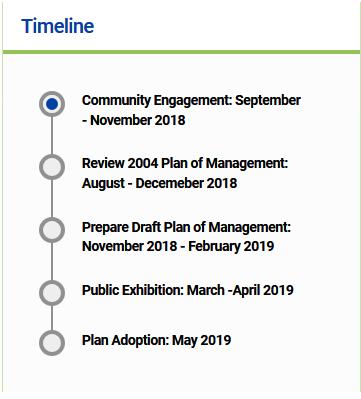
It’s July 2019 and Blue Mountains Council’s webpage on this process shows the following timeline update:
It would suggest that insufficient resources have been allocated or there are delays in the communications process,or insufficient scheduled time was provided for this project from the outset, or a combination of these.
If local stakeholders missed out on finding out what is going on, should they just await Blue Mountains Council’s press release on its pre-decision making?
Chairperson of the Gully Traditional Owner Inc., Aunty Merle Williams, says: “The Gully is a sacred place to the Aboriginal community who came from the Gully. It was a place for everybody, regardless of who you were or where you came from. It is important that The Gully is managed in a culturally appropriate way using both traditional and contemporary practices.”
The mayor, Mark Greenhill, said council had a strong commitment to working closely with traditional owner groups to care for country. “The revised plan of management for The Gully will guide the future use and management of this significant site over the next 10-15 years.”
Ok so regardless of who you were or where you came from, why are non-members of the Gundungurra Traditional Owners Inc. being excluded from consultation in Blue Mountains Council’s review process?
Nestlé Purina fully laden semi-trailer crash at Medlow Bath, Blue Mountains
On Saturday 25th May 2019 at about 7:00 am a truck crashed on the Great Western Highway just north of Medlow Bath spilling all it’s cargo. The crash occurred on a straight road section. The driver was either speeding, distracted (mobile phone?) or fell asleep at the wheel.
The truck was carting over 30 tonnes of pet food from the Nestlé Purina processing factory in Blayney to Sydney. The eastbound truck took down a power pole as it rolled just past Railway Parade, bringing down wires and creating an extra hazard in the area.
No only did the crash cause damage to vegetation and power lines and poles, but the highway was completely blocked for two hours in both directions, causing considerable traffic delays for travellers and locals alike. Power had to be turned off in the area for two hours.
Eventually a contra flow was put in place and a large crane and heavy tow truck removed the wrecked semi-trailer. Local volunteers were called in to remove the pet food strewn along the road and the shoulder. Perhaps a few Blue Mountains dogs and cats benefited from a free feed for a few weeks afterwards.
Nestlé Purina pet food strewn for 100 metres on the Great Western Highway
Why is Nestlé despatching its truck drivers to drive at breakneck speed on country roads to earn a quid? The crash site is just short of a 60 kph speed sign on the southbound approach to Medlow Bath. The truck driver must have ignored the sign and been hooning along at 90kph with his top heavy load. It is typical of the speeding and tail-gaiting of large linehaul trucks that use and abuse the Great Western Highway.
Nestlé is ultimately responsible for the crash and damage through the supplier chain of command. Australia’s Heavy Vehicle National Law was amended on 1st October 2018, to provide that every party in the heavy vehicle transport supply chain has a duty to ensure the safety of their transport activities.
Nestlé must therefore publicly accept its chain of responsibility, announce its financial compensation sum for the impact to the Blue Mountains, and outline of its financial compensation package to the Blue Mountains – the reimbursement cost of involved emergency services, the reimbursement cost of infrastructure damage (power lines and poles) and reinstating the power, the economic loss of causing the GWH to be impassible for 2-3 hours, and to publicly apologise in the Blue Mountains Gazette with an undertaking to review and imprive its logistics safety standards.
Blayney, a small town situated 240 km west of Sydney (130km west of the crash site), has its own rail freight service, so why does Swiss multinational food and drink company Nestlé avoid the perfectly good rail service which has a rail siding right next to the Nestle Purina Pet Care plant in Jarman Crescent, Blayney.
Since 1994, Blayney’s intermodal terminal provides direct import/export rail link to Sydney Ports, replete with cold storage and warehousing.
Nearby Bathurst (Kelso) business Grainforce Commodities freights 250,000 tonnes of product annually into Port Botany (Sydney), the equivalent of keeping 10,000 trucks off the road. Nestlé could learn from Grainforce and help keep these dangerous speeding trucks off the Great Western Highway.
Since 2014, Kelso’s Grainforce Commodities has joined forces with Southern Shorthaul Rail (SSR) to rail log-based exports from Bathurst over the Blue Mountains into container terminals at Port Botany in Sydney and has plans to grow the business by expanding into grain. This has served to get trucks off the busy Great Western Highway.
In 2017, NSW Deputy Premier John Barilaro announced replacing the entire NSW regional train fleet and building a new train maintenance facility at Dubbo. It is one of the largest procurements of trains in Australia. This was welcomed by lobby group Lachlan Regional Transport Committee (LRTC) and has urged the state government to give more attention to strategic planning for the future rail network.
LRTC President Dom Figliomeni said at the time, “It’s very important that we do get an efficient rail network within NSW. Lines including the partially-built Maldon-Dombarton line and the Blayney-Demondrille line needed to be part of the long-term rail planning strategy, and “unfortunately” at the moment they did not seem to be, Mr Figliomeni said. It is an indication rail must and needed to play a more significant part, whether it was passenger rail or freight rail. A more significant part of the logistics network within NSW,” he said.
“Unfortunately particularly regional rail has been allowed to languish for many years and I think the current government is realising we really need to bring it up to standard. As I say there is still a lot of work that needs to be done, there’s the location of intermodal facilities, there’s a lot of work being done at Parkes, particularly in relation to the inland rail.”
The New South Wales state government is encouraging rail freight from the Central West. In June 2018, Freight Minister Melinda Pavey announced plans to construct two rail loops near Blayney at Georges Plains and south of Rydal to facilitate reduced train turn around times. “The two loops will ensure the nine million tonnes of freight transported annually along the western corridor moves more efficiently, reducing the cost of getting export freight to port and domestic freight to markets,” she said.
Ms Pavey said the $21.5 million Main Western Rail Line Capacity Enhancement programme will help rail operators to meet the growing demand for freight on the corridor, reducing the demand for road freight without negatively impacting passenger services that run along the line. The two loops will ensure the nine million tonnes of freight transported annually along the western corridor moves more efficiently, reducing the cost of getting export freight to port and domestic freight to markets.
L to R: Bathurst MP Paul Toole, NSW Freight Minister Melinda Pavey and Grainforce managing director Derek Larnach at Blayney Railway Station
Nestlé Purina PetCare set up in Blayney in 1989 and in 2014 expanded, creating an additional 100 jobs, but then in August 2018 retrenched fourteen staff in what Nestlé called a ‘lean mapping exercise’ (Activity Based Costing). Prior to the review the company had performed a similar review within their salaried roles resulting in six positions becoming redundant.
In August 2006, Nestlé Purina cut 44 jobs from its pet food plant, in apparent response to losing export sales of pet food to Japan. The Blayney workforcer was suddenly cut by 20 per cent.
The Rural Fire Starters (RFS) of New South Wales have set fire to Blue Mountains World Heritage yet again.
They call it ‘Hazard Reduction’ because they deem native habitat to be a hazardous fuel, nothing more. Government is dominated by men and women in power their sixties (Baby Boomers currently). Their worldview is anthropcentric if not a contempt for ecology and the survival conservation of Australia’s wildlife fauna. They consider native forests to be mere ‘parks’ for human recreation. Their forebears happily shot wildlife as vermin.
So yet again more vast areas of native forest habitat have been incinerated as if it were a wildfire. The hazard reduction flames reach fully up into the tree canopy in the same way. Hazard Reduction is government condoned bush arson. It is a prime cause of local wildlife extinction.
Hazard Reduction adversely alters Forest Ecology
Hazard Reduction used to the intensity, canopy height and broad scale of a wildfire is no different to wildfires in ecological impact. Deliberate bush arson whether by arsonists or government sanctioned, harm native habitat. The penchant for increased fire regimes out of fear of government incapacity to deal with wildfires, has inculcated a mindset of a ‘burn the bush before it burns‘ mentality.
When applied to moist Closed Forest ecosystems, hazard reduction dries out the delicate moist microclimate. The complex topsoil chemistry is destroyed. Only fire resistant flora regenerate; other species die and do not return. The forest become more bushfire prone. Wildlife perishes especially territorial wildlife. The close forests become drier Open Forest Parks – ones you can more easily walk through.
“Bushfire danger is increasing as a consequence of climate change predicted by scientists. Heavy logging and burning of forests increases rather than decreases flammability. Forests permitted to exist in their natural state (with dense shading canopies and intact boundaries) lose less moisture from drying wind and direct sun. An unlogged forest can remain cooler and damper – for longer. It has been demonstrated that it can slow, and even halt a fire.” – Dr Chris Taylor, Ecologist at the University of Melbourne, in the journal Conservation Letters 2014.
“Fuel hazard is often assumed to increase with fuel age, or the time-since-fire. However, studies on fuel hazard in long-unburned forests are scarce. We measured overall fuel hazard in Eucalyptus forests and woodlands in south-eastern Australia at 81 sites where time-since-fire spans 0.5 years to at least 96 years. Overall fuel hazard was higher in forests and woodlands burned 6–12 years previously than those unburned for at least 96 years.
The probability of high, very high or extreme overall fuel hazard – which is an operational threshold considered to equate with almost no chance of wildfire suppression in severe fire-weather – was highest 0.5–12 years post-fire, and lowest where fire had not occurred for at least 96 years. Frequent burning can maintain forest understorey in an early successional ‘shrubby’ state, leading to higher overall fuel hazard than forests where a lack of fire is associated with the senescence of shrubs.
Protecting long-unburned sites from fire and managing to transition a larger proportion of forest to a long-unburned state may benefit fuel-hazard management within these forests in the long-term.” (Source: International Journal of Wildland Fire, 20180723, (Refer Note 1 in Further Reading).
Hazard Reduction fuels Carbon Emissions
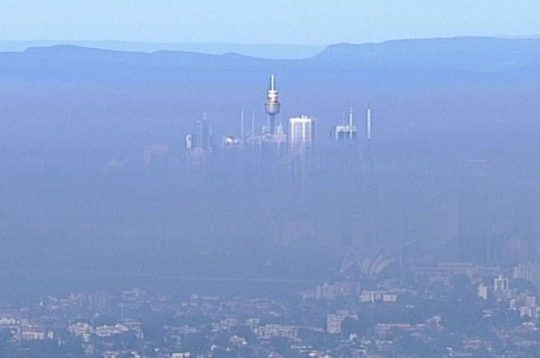
The toxic wood smoke blankets communities and the entire Sydney basin as the prevaling westerly wind drives the choking smoke for a hundred kilometres.
Thick smoke from a prescribed arson by the RFS in precious forext habitat around Faulconbridge and Springwood has blanketed the entire Sydney basin just like what happens regularly in Beijing.
The wood smoke is expected to last for days and health warnings have been issued by the New South Wales government who approved the burning. NSW Health has warned that people with existing heart and lung conditions should avoid outdoor physical activity. NSW’s Office of Environment has labelled Sydney’s air quality “poor” and warned people with health issues to stay indoors.
Outside the RFS Bushfire Season (September to March), this is the contra Habitat Reduction Season (April to August). If the Greater Blue Mountains World Heritage Area isn’t subjected to arson wildfire in the on-season, it is targeted by arson habitat reduction in the off-season. The impact is the same.
“These are important controlled burns which will reduce the risk to people and properties from bush fires,” NSW RFS said in a statement.
Up to 30 tonnes of CO2 per forested hectare is emitted by bushfires and hazard reduction alike, according to Philip Gibbons , Senior Lecturer at the Australian National University; more than coal-fired power stations.
“Burning biomass inevitably releases CO₂ (Carbon Dioxide), CH₄ (methane), N₂O (Nitrous Oxide) and other greenhouse gases (GHG) to the atmosphere. Emissions from vegetation fires account for about 3% of global GHG emissions. Bushfires in Australia burn over 500,000 km² annually, mainly in the northern half of the country. They account for about 6-8% of global fire emissions and contribute significantly (about 3%) to the nation’s net GHG emissions.” – Matthias Boer, Researcher, Western Sydney University.
Bushfire smoke contains particulate matter, respiratory irritants and carcinogens such as benzene and formaldehyde. These can travel for thousands of kilometres. Hazard reduction burns, which are being conducted more frequently due to climate change, also contribute to increased pollution.
In 2009 bushfires, back-burning and hazard reduction emitted an amount of CO2 equivalent to 2% of Australia’s annual emissions from coal-fired power. Bushfires burnt an area of forest greater than Tasmania to generate CO2 emissions equivalent to a year of burning coal for electricity. Bushfires must burn an area of forest the size of New South Wales to generate CO2 emissions equivalent to a decade of burning coal for electricity.
Wildfires and hazard reduction across Australia released millions of tonnes of carbon dioxide and carbon monoxide into the atmosphere, equivalent to more than a third of the country’s CO2 emissions for a whole year, according to scientists.
The climate costs are dire because of the type of forest that burned, according to Mark Adams of the University of Sydney. “Once you burn millions of hectares of eucalypt forest, then you are putting into the atmosphere very large amounts of carbon.”
Because hazard reduction burns have been increasingly more widespread and deliberately encouraged to blanket a wide landscape , rather than edge low level and mosaic in pattern, hazard reduction burns are litteldifferent in impact that wildlfires. A high-intensity burning into the tree canopy causes equivalent forest carbon and greenhouse gas (GHG) emissions.
Australia’s total emissions per year are around 330m tonnes of CO2. Adams’ previous research has shown that the bush fires in 2003 and 2006-07 had put up to 105m tonnes of carbon dioxide into the atmosphere because they burned up land carrying 50 to 80 tonnes of carbon per hectare.
This time, however, the forests being destroyed are even more carbon-rich, with more than 100 tonnes of above-ground carbon per hectare. The affected area is more than twice the size of London and takes in more than 20 towns north of Melbourne, so the CO2 emissions from this year’s disaster could be far larger than previous fires.
So ‘hazard reduction’, ‘fuel reduction’, ‘prescribed burning’, or indeed the more honest term ‘government arson’ – must cease because it releases vast quantities of CO2 and other toxic chemicals that pollute the atmosphere.
“The world’s forests are crucial to the long-term future of the planet as they lock away millions of tonnes of carbon dioxide,” said Robin Webster, a climate campaigner at Friends of the Earth. “More must be done to protect them – deforestation is having a devastating effect and as climate change takes hold, forest fires like those in Australia are likely to become more frequent.”
The carbon dioxide emissions from forest fires are not counted under the agreements made by countries in the Kyoto Protocol, though it is being considered for inclusion in the successor treaty that will be debated later this year in Copenhagen. The usual reasoning behind it was that, with any fires, new growth of vegetation would take up any extra CO2 that had been released. “That is true to a point, but if the long-term fire regime changes – we are now starting to have more fires – we may completely change the carbon balance of the forest,” said Adam.
He added: “All informed scientific opinion suggests that whatever new protocol is signed [at the UN summit] in Copenhagen or elsewhere will include forest carbon, simply because to not do so would be to ignore one of the biggest threats to the global atmospheric pool of carbon dioxide, the release of carbon in fires.”
“Nature reserves are areas of land in predominantly untouched, natural condition, with high conservation value. Their primary purpose is to protect and conserve their outstanding, unique or representative ecosystems and Australian native plants and animals.”
NPWS has become more an agent for Tourism than Conservation
The New South Wales National Parks and Wildlife Service is a state government entity and the sole custodian of the Blue Mountains World Heritage Area, the state’s 870 national parks, and nature reserves. It’s management has the same recreational mindset of the RFS, that national parks are set aside areas of recreation for humans to play in, not remnant habitat sanctuaries to be protected across Australia’s otherwise deforested landscape.
Successive state governments have slashed the departments funding to a skeleton service and merged it into other incompatible departments such as repporting to the Department of Planning. The fraud of the naming this grossly underfunded and mismanaged custodial authority warrants a name change to the ‘Parks NSW’, which hereafter we shall refer to them. It functions more like a department of tourism and recreation. Victoria calls its equivalent ‘Parks Victoria’.
It’s logo should better reflect what the Parks NSW actually does in national parks and nature reserves. May be it should take on manicuring council parks and gardens as well. A can of petrol and a tourism sponsor logo like North Face should replace its Superb Lyrebird and Boomerang.
RFS ‘hazard reduction’ inflicted upon Mount Solitary world heritage of a scale the same as a wildfire – all wildlife incinerated so that the ‘national park’ becomes a sterile park.
Rural Fire Service (starters) and National Parks unnecessarily incinerated Mount Solitary, The Jamison Valley and Cedar Valley by indiscriminate aerial incendiary in May 2018. What carbon emissions?
Ironically, today is the government-sanctioned day of the unpaid wildlife arsonist. Give generously.
Not a forest ecologist in sight. Volunteer bush fire-fighters no longer fight bushfires with water, but with petrol.
[2] ‘A comparison of fuel hazard in recently burned and long-unburned forests and woodlands‘, by Dixon KM, Cary GJ, Worboys GL, Seddon J, Gibbons G, 2018, in International Journal of Wildland Fire 27, 609-622, ^https://www.publish.csiro.au/WF/WF18037. Note: Associate Professor Philip Gibbons, currently an Associate Professor at The Fenner School of Environment and Society at The Australian National University where he teaches courses related to biodiversity conservation. He has published over 100 journal articles and book chapters, including three books.
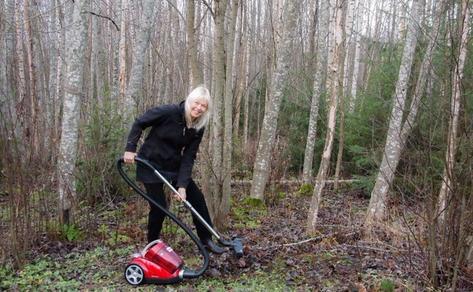
“For those who object to the burning of ‘our’ bushland for fire ‘hazard’ reduction, perhaps they could assist by adopting..the method of raking the forest floors.”
– Rod Tuck, Katoomba.
Finns beg to differ and send a message that RFS unpaid slaves are just redneck knuckle-dragging dumb arses..
Climate Change orthodoxy a red herring of floodplain developers
When in doubt and keen to push one’s unjustifiable case, resort to the excuse of notional esoteric ‘climate change’ theory. It’s the contemporary dominant creed and orthodoxy, as if invoking God’s presence. One’s stance instantly becomes sacrosanct and any challenge to it is instantly dismissed as heresy.
The New South Wales (Sydney) government’s true justification to desire expanding the city’s drinking water reservoir at Warragamba Dam from 7500 hectares by another 4700 hectares (60%) to basically double the reservoir capacity.
It has nothing to do with climate change theorised flood mitigation.
It is everything to do with increasing drinking water storage capacity to cater for doubling the human population of the Sydney Basin from the current 5 million to a ludicrously intentioned plague of 10 million humans by 2036. Given the forecasters tend to understate for fear of alarming people, the likely timing will be more like 2030, just over a decade away.
Sydney’s Kurnell Desalination Plant of 2010 only supplies 15 percent of Sydney’s current drinking water needs, so as a guide, for about 750,000 residents.
Yet, in order to cater for a human plague of 10 million residents, another 5 million residents Sydney would need to have seven Kurnell type desalination plants if Warragamba Dam remained as it is. The seven would cost about $2 billion each to construct and another $500 million a year each to run, based on current financial reports. So in order to cater for this dystopian human plague projection, the capital cost of seven Kurnell desalination plants would be at least $14 billion, plus an further $3.5 billion to run them annually.
The New South Wales (Sydney) government’s 2018 surplus after paying for its expenses totalled $2 billion, and that was an exceptionally good year because it had a windfall of $4 billion from selling Snowy Hydro to the Federal Government. Yet it retained an $11 billion net debt.
So what this all adds up to is that Sydney cannot afford another 5 million residents financially. So the New South Wales (Sydney) government’s plan B is to futher degrade the environment by raising the Warragamba Dam Wall by 14 metres and so inundating 4700 hectares of Blue Mountains vital ecology and so annulling UNESCO-listed Greater Blue Mountains World Heritage.
All About Underpinning Exponential Urban Growth
Building Warragamba Dam was first mooted in 1845 when the population of the Sydney basin was approaching 50,000 people. A hundred years later, construction began in 1948 post World War II when Sydney’s population was approaching 1.5 million and mass immigration from Europe was in full-swing.
The Federal Government’s policy was to boost Australia’s population numbers in the interests of economic and military security. The first Minister for Immigration, Arthur Calwell, promoted mass immigration with the slogan “populate or perish” to overcome domestic resistance towards mass immigration. He coined the term “New Australians” to change Australian public negative perceptions.
The dam was completed in 1960 forming the reservoir artificially named Lake Burragorang with a capacity for 3 million tonnes of drinking water, by which time Sydney’s population had exceeded 2 million people, mainly from the federal mass immigration programme.
In order to safeguard the purity of the drinking water, a Special Area – No Entry has been extended for three kilometres from the top of the full storage water level in Lake Burragorang. The surrounding forested hills and rivers of the Blue Mountains were listed by UNESCO on 29 November 2000, cynically not for eucalypt protection, but to protect Sydney’s water supply.
Hawkesbury-Nepean flood risk beyond 1867 is scaremongering
Downstream from the Blue Mountains, the Hawkesbury-Nepean River is a major river system on the western outskirts of the Sydney Basin draining a catchment area of 22,000 square kilometres. Exceptionally heavy rainfall in this area can lead to severe flooding.
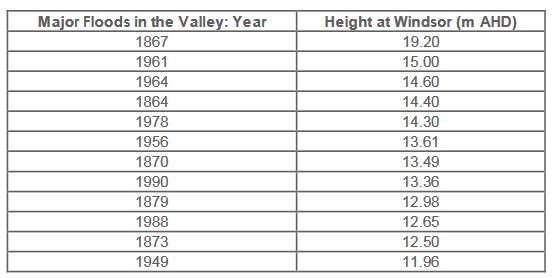
In 1867, a major rainfall event led to the river peaking at the colonial pastoral settlement of Windsor at 19.7 metres on 23rd June above the official Australian Height Datum (AHL, or basically mean sea level). The colonial township of Windsor was sensibly located an a hill rising up to 33 metres AHL, so was unaffected but the flood did however inundated the surrounding floodplain in which much of the farmland was flooded. Still twelve people died, many dwellings foolishly built in the floodplain inundated and hundreds of settlers made destitute.
Lessons learned by building on a floodplain in 2019?
‘House on the Rock’ parable:
“Everyone therefore who hears these words of mine, and does them, I will liken him to a wise man, who built his house on a rock. The rain came down, the floods came, and the winds blew, and beat on that house; and it didn’t fall, for it was founded on the rock. Everyone who hears these words of mine, and doesn’t do them will be like a foolish man, who built his house on the sand. The rain came down, the floods came, and the winds blew, and beat on that house; and it fell—and great was its fall.”
— Matthew 7:24–27, World English Bible (without endorsing religion).
Decades before, Governor Lachlan Macquarie had implored people to make their homes not on the river flats but on the high ground of the five ‘Macquarie towns’ he designated nearby. His advice was little heeded over following decades: people did not want to commute to their plots or have difficulty protecting their crops and livestock.
Over the following decades, population growth continued along the Hawkesbury, the area eventually becoming part of Sydney’s perpetuating endless sprawl.
By comparison, the 1961 flood peaked at only 15.1 metres, likely in part due to the Warragamba Dam upstream having been built the year prior. In August 1990 the Windsor level rose to 13.4 metres, then in 1992 to 11.0 m.
Windsor Flood Peaks above Average Height Datum:
Source: SW SES, 2005, Hawkesbury/Nepean Flood Emergency Sub Plan, NSW State Disaster Plan.
In 2005, the Sydney government announced plans to increase the drinking water capacity of Sydney with plans for the future of a city growing by 1,000 people a week, including western Sydney to build another wopping 160,000 houses and flats. A $1.4 billion plan was devised to secure Sydney’s water supplies for the next 25 years, including adding driving pumps into the deep water at the bottom of Warragamba and Avon dams; raising the Tallowa Dam wall on the Shoalhaven River, and constructing a pipeline to harvest surplus water from the Shoalhaven reservoir into the Warragamba reservoir.
In 2007, the Sydney government initiated a Hawkesbury-Nepean flood mitigation strategy involving building a high bypass bridge above the floodplain between Windsor and Mulgrave, costing $120 million, with its deck at a level equivalent to 17 metres at the Windsor gauge. The bridge is intended to make it possible to get the potentially trapped people of Windsor and surrounding areas, approximately 90,000 currently, to safety in the face of a severe flooding event.
In May 2017, the Sydney government then released its Hawkesbury-Nepean Valley Flood Risk Management Strategy – ‘Resilient Valley, Resilient Communities.’
The strategy is designed specifically for the valley as the most flood-prone region in the state of New Spouth Wales. It is a long-term plan to minimise significant risks to life and livelihoods; damage to urban and rural property; and, the major dislocation of economic activity from rapid, deep flooding.
After four years’ investigation, it recommended that raising Warragamba Dam by around 14 metres would be the best (cheapest) option to reduce the risks to life, property and community assets posed by floodwaters from the extensive Warragamba reservoir. Water NSW (recently renamed from Sydney Water) is the government agency that operates Warragamba Dam. It is charged to prepare a business case to raise the dam wall.
In June 2016 the then New South Wales Premier Mike Baird announced the Sydney government’s strategy to reduce the very significant flood risk in the Hawkesbury-Nepean Valley.
On 26th Oct 2018, the NSW the Berejiklian government passed its Water NSW Amendment (Warragamba Dam) Bill 2018, to amend the Water NSW Act 2014 to make provision with respect to the temporary inundation of national park land resulting from the raising of the wall of Warragamba Dam and the operation of the dam for downstream flood mitigation purposes.
The government has persisted with overstating and deliberately scaremongering the flood risk to the Hawkesbury-Nepean Valley’s community and economy.
The option of constructing a large-scale regional road package is estimated to costing many billions combined with significant development restrictions would be the only alternative to the Warragamba Dam raising and would not be as effective. This is in comparison to the estimated $690 million—in 2015 dollars—for the Warragamba Dam raising proposal.
Despite the Hawkesbury-Nepean Valley being a floodplain, the govermnent has pushed ahead with selling off and subdividing the floodplain with housng over-development as part of its Greater Sydney Region Plan and the Western City District Plan. The Sydney government will consider the business case for the dam raising in 2020, subject to the success of the environmental and planning approvals. Construction of the raised dam will take approximately four years to complete.
Well-founded opposition to bedamned dam raising obsession
Blue Mountains Labor MP Trish Doyle spoke against the bill in Sydney Parliament:
“I do not buy the line that raising the dam wall will mitigate flood risk in real terms for people living in the Hawkesbury region right now. All that it will do is justify a huge amount of new property development on land that should be left well enough alone. There are alternatives to dam wall raising, which this government has refused to consider implementing.” she said. “In the first place, the government could reduce the maximum allowable limit in Warragamba to provide overflow capacity during times of sustained rainfall and inflows to the Warragamba catchment area. This would require the supplementation of that lost water with the mothballed desalination plant that this government has allowed to fall into disrepair.”
Environmental groups, traditional owners, the Greens and Labor have roundly condemned the passing of legislation to allow flooding of Blue Mountains National Park upstream of Warragamba Dam. Others talk of threatened species such as the Camden white gum put at risk, as well as food sources and habitat for the Regent honeyeater; a rare bird under threat of extinction. Gundungurra woman Taylor Clarke explains their creation story will be impacted, as sacred sites will be flooded if the proposal goes ahead.
The NSW Greens have warned of a ‘Franklin Dam’ like campaign.
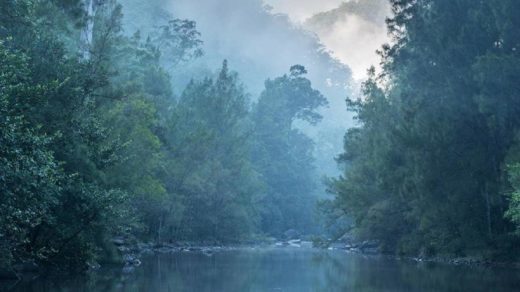
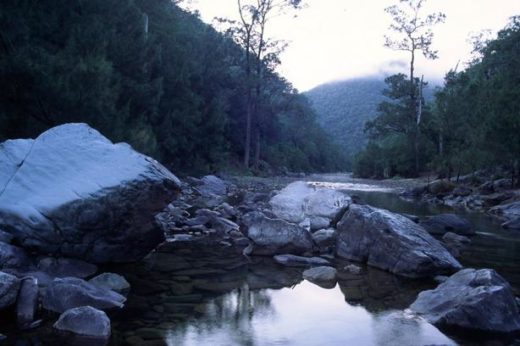
Greens Urban Water spokesman Justin Field said: “This will be Sydney’s ‘Franklin’ campaign to save the world heritage listed Blue Mountains and wild rivers like the Kowmung (pictured above); the irreplaceable Aboriginal heritage in the river valleys and the threatened and endangered species that rely on the area. “Make no mistake, even a temporary inundation of these hugely important, beautiful and sacred areas means the long-term destruction of its environmental and heritage values. There is little doubt the government will have a serious fight on its hands if it pushes ahead with the proposal,” he said.
Secret documents about Dam Raising agenda
The Colong Foundation for Wilderness Inc. through its ‘Give a Dam‘ campaign made freedom of information requests for NSW Government documents relating to the dam and the flood plain. They also applied for documents under the federal Environment Protection and Biodiversity Conservation act which revealed there would be “significant impacts” on threatened species in the Mountains, according to the federal environment department.
The secret documents have revealed that the Sydney government did not prioritise “major regional road evacuation options” in a recent flood strategy for the Hawkesbury-Nepean Valley, and that federal environmental experts now believe raising the wall will have “extensive and significant impacts” on Blue Mountains threatened species.
Colong’s campaigner Mr Harry Burkitt has said: “These previously confidential government documents (from May 2018) reveal the the Sydney government plan to place an additional 134,000 people at risk on western Sydney floodplains by not investing in much-needed flood evacuation infrastructure. The government is fixated on raising Warragamba Dam to justify the over development of western Sydney floodplains. There has not been a single flood expert in Australia who has advocated not constructing additional flood evacuation roads in the valley. The government is also ignoring clear SES advice that additional flood evacuation routes are needed.”
Associate Professor Jamie Pittock of the Australian National University said it appeared “none of the additional benefits of improved evacuation routes have been considered in the NSW Government’s flood strategy”.
In explaining why there were no major regional road options for the flood strategy the NSW Government’s document Resilient Valley, Resilient Communities Hawkesbury-Nepean Valley Flood Risk Management Strategy of May 2017 said road option packages were not found to be as effective as reducing risk to life as the dam-raising options. However road evacuation initiatives are currently being implemented to reduce risk during flood evacuation events.
Blue Mountains MP Trish Doyle said the information “just proves what Labor has been saying all along – the Liberal Government is using flood mitigation as a smokescreen to justify raising the dam wall and they will let property developers run wild.”
Minister for Western Sydney, Stuart Ayres, has been scaremongering positing that Climate Change could cause a 26 metre high “a catastrophic flood” in the fast-growing part of the city, which he is accelerating.
Yet the latest information uncovered by Colong and Give a Dam shows federal environment department advisors believe that the increase “is likely to have extensive and significant impacts on listed threatened species and communities and world and national heritage values of the Greater Blue Mountains World Heritage Area”. Mr Burkitt said it’s “compelling evidence for the Federal Environment Minister Melissa Price to refuse the dam proposal under federal environmental law … it should be shelved immediately”.
NSW Nature Conservation Council CEO Kate Smolski said the federal government has a responsibility to protect areas of national environmental significance, like the Blue Mountains. “Time and again it has handed assessment of major projects to the Berejiklian government, which has a record of putting development ahead of the environment. Putting the world heritage listing of an iconic site like the Blue Mountains at risk is unacceptable,” she said.
[8] ‘Flooding 4000 hectares of National Park at Warragamba Dam won’t save Sydney from floods, says professor‘, 20181012, by Dominica Sanda, in The Land newspaper, (Australian National University Associate Professor Jamie Pittock claims the plan won’t make nearby residents safer and instead pointed to alternative options). Source: ^https://www.theland.com.au/story/5696040/flaws-in-nsw-dam-wall-plan-expert/
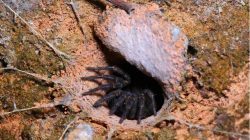
"We're coming to you from the custodial lands of the Hairygowogulator and Tarantulawollygong, and pay respects to uncle and grandaddy elders past, present and emerging from their burrows. So wise to keep a distance out bush."
 In Victoria, this professional fire fighting force does not exist outside Melbourne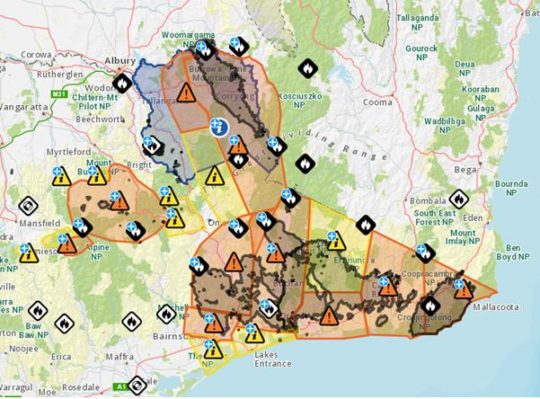
 Bushfires typically start in the bush either by lightning or arsonists. Fire trucks are therefore useless; always too little, too late. The arsonists continue to get away with murder, home loss – which often leads to suicides.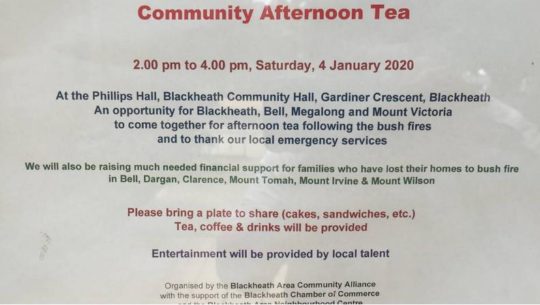

 Welcome to the Blue Mountains World Heritage Area. Won’t you enjoy your stay?






 It’s logo should better reflect what the Parks NSW actually does in national parks and nature reserves. May be it should take on manicuring council parks and gardens as well. A can of petrol and a tourism sponsor logo like North Face should replace its Superb Lyrebird and Boomerang.