Archive for the ‘Habitat Advocacy’ Category
Thursday, December 22nd, 2011
“In matters of principle, stand like a rock;
in matters of taste, swim with the current.”
.
~ Thomas Jefferson (1743-1826).
.
.

TASMANIAN FORESTS STATEMENT OF PRINCIPLES TO
LEAD TO AN AGREEMENT
7th October 2010
[Signed by all ten Parties on 14th October 2010]
.
“To resolve the conflict over forests in Tasmania, protect native forests, and develop a strong sustainable timber industry.”
.
.
The Parties to these Principles:
.
- Timber Communities Australia Ltd (TCA)
- The Construction, Forestry, Mining and Energy Union (CFMEU)
- The National Association of Forestry (NAFI)
- The Forest Industries Association of Tasmania (FIAT)
- The Australian Forest Contractor’s Association (AFCA)
- The Tasmanian Forest Contractors Association (TFCA)
- Environment Tasmania Inc. (ET)
- The Wilderness Society (TWS)
- Australian Conservation Foundation (ACF)
- Tasmanian Country Sawmiller’s Foundation (TCSF)
.
Note: Ratio of 7 to 3
.
.
‘Objectives‘ of the Parties
.
‘The parties to the Principles seek from State (Tasmanian) and Federal governments:
.
- Support for an delivery of all principles in full
- Interim support for the development of a plan to deliver the Principles, including:
- Verification (1) of Resource Constraints
- High Conservation Value Boundaries
- Implementation of the Principles through an agreed, fully-funded package and timeline that maximises benefits and reduces negative impacts
- Immediate interim assistance for Tasmanian harvest, haulage and silvicultural contractors
- To determine with industry, a guaranteed sustainable quantity and quality of wood supply within 3 months that is outside of the identified high conservation value forests, for the period of negotiations, in order to provide certainty for the industry, workers and communities.
- A progressive implementation of a moratorium on the logging of high conservation value forests commencing within 30 days – ensuring that priority, (i.e. those in the most advanced stages of planning for harvesting) HCV coupes identified by ENGO’s (2) are the first to be addressed. The full moratorium is to be completed within 3 months. Any necessity for any proposed variation to this due to unavoidable planning constraints has to be independently verified.
- To provide exit assistance for industry where required; and
- Not to accept new entrants into the Tasmanian industry, nor enter into new contractual relationships with the state while the negotiations are underway unless by the mutual agreement of all parties (3).
- Accept that delivery of these Principles will require joint agreement of the parties to timelines and funding.
- To develop an agreed stakeholder-led implementation process with a finalised full agreement within 12 months.
.
– – – – – – – – – – – –
Notes:
.
(1) Draft verification process document under construction.
(2) ENGO’s in this document means those environmental non-government organisations who are parties to this document (i.e. ONLY Environment Tasmania, The Wilderness Society, and the Australian Conservation Foundation)
(3) No party shall be required to accept a Principle which would otherwise apply to it where to do so would cause a breach of an existing contract or statutory obligation.
.
.
The Principles
.
The parties agree to the following:
.
General Wood Supply
Provide a sustainable resource supply profile to industry based on an agreed minimum quantity and quality requirement for industry. This will be underpinned by legislation.
.
Native Forest Wood Supply
Subject to the provisions of the transition, as legislated Native Forest entitlements are handed back, ensure these entitlements will not be allocated nor licensed to new players.
.
HCV Forests
Immediately protect, maintain and enhance High Conservation Value Forests identified by ENGO’s on public land.
.
Transition
Transition the commodity (non specialty) forest industry out of public native forests into suitable plantations through a negotiated plan and timeline.
.
Industry
Create a strong sustainable timber industry including the development of a range of plantation based timber processing facilities including a pulp mill. There will need to be stakeholder consultation and engagement with the proponent, ENGO’s and the community.
.
Specialty Timbers
Provide for ongoing speciality timber supply including Eucalypt for our Tasmanian high value furniture and craft industries through a negotiated plan and timeline.
.
Plantations
Support sustainable and socially acceptable plantations including agreed reforms and new agro-forestry outcomes, including pursuing certification.
.
Private Forests
Encourage and support, but not mandate, private forest owners to: seek assistance for certification; and protect, maintain and enhance high conservation value forests on their properties.
.
Communities Impacted
Support impacted rural and regional communities, workers, contractors and businesses, through a range of economic development, financial assistance, compensation and retraining measures.
.
Community Engagement
Engage and involve the broad Tasmanian community in the development and implementation of a durable solution to the Tasmanian forest conflict.
.
Tourism
Develop Tasmania’s nature based tourism industry in line with these Principles.
.
Planning
Develop a fully funded, independent, scientifically led landscape conservation, restoration and integrated catchment management program, and associated governance and regulatory improvements.
.
Government
Reform and support government agencies, policies and legislation as necessary for the implementation of an agreement associated with these Principles.
.
Climate Change
Seek funding for improving carbon outcomes as a result of delivering these Principles.
.
Biomass
In Tasmania, only permit plantation forest processing and plantation harvesting residues to be used as biomass for Renewable Energy Certificates.
.
Certification
Encourage Forestry Tasmania to firstly obtain Controlled Wood accreditation on delivery of the moratorium, secondly, obtain full FSC certification on resolution of an FSC National Standard and once an agreement based on these Principles has been finalised.
.
Durability
Undertake to ensure all elements of this agreement are fulfilled on a durable basis.
.
Legislation
Require State and Federal legislation to implement agreed outcomes arising from these Principles including appropriate review mechanisms, milestones and sanctions.
.
.
Editor’s Comment:
.
The above Statement of Principles was reproduced manually due to restricted access of the official PDF document as provided on the Tasmanian Premier’s official website. The security lock down denied printing and copying.
But then as Tasmanian Labor Premier Lara Giddings studied Law, perhaps there was a legal reason for her deliberate restriction of the details to the Tasmanian public.
.
This is the Tasmanian Premier’s restricted document:
.
>Tasmanian Forests Statement of Principles (2011)
.

.
Note: Red highlighted text indicates actual shortcomings in the document or process to date.
Note: Green highlighted text indicates particular environmental emphasis.
.
Tags: Community Engagement, Forestry Transition, FSC certification, FSC National Standard, General Wood Supply, HCV Forests, high conservation value forests, IGA, Intergovernmental Agreement, Native Forest Wood Supply, Parties to the Principles, Private Forests, Specialty Timbers, Statement of Principles, Tasmanian Forests Statement of Principles
Posted in 47 Land Reform Initiatives!, Tasmania (AU), Threats from Deforestation, Threats to Wild Tasmania | No Comments »
Add this post to Del.icio.us - Digg
Friday, December 2nd, 2011
Mass murder is considered possibly the worst crime that can be committed.
But there is a worse crime than mass murder and worse than war crime, and worse than crimes against humanity. Murder; extermination; torture; rape; political, racial, or religious persecution and other inhumane acts reach the threshold of crimes against humanity only if they are part of a widespread or systematic practice.
Even worse than crimes against humanity is the extreme extension of mass murder – genocide. Genocide is “the deliberate and systematic destruction, in whole or in part, of an ethnic, racial, religious, or national group”. What crime could possible be more evil than the willful targeting of an entire part of the human species in order to systematically wipe it out of existence? – such as what has been attempted upon the Jews, Armenians, Rwandan Tutsis, Bosnian Muslims, Sri Lankan Tamils.
 Armenian Genocide 1915 Armenian Genocide 1915
.
“More inhumanity has been done by man himself than any other of nature’s causes.”
~ (1673) by Samuel von Pufendorf
.
Yet still, there is a worse crime. It is the deliberate and systematic destruction, in whole or in part, of an entire species from the planet. In the same vein as genocide, is human-caused extinction or ‘speciescide‘, a relatively new concept. It is new concept because humans have only recently recognised species extinction as a problem. It is also a new concept because the global rate of non-human species extinction is increasing at an accelerating rate.
‘Speciescide‘ is a derived concept from the ecophilosophy of ‘speciesism‘ being a prejudice manifested as a widespread discrimination practised by humans against other species (Richard D. Ryder, 1973).
Yet deliberately causing a species to become regionally extinct, extinct in the wild or globally extinct, are not yet recognised as crimes legally. Human-caused extinction of a species is not yet a criminal offense.
Yet it is the most immoral crime that can be inflicted on the planet. Even if a nuclear holocaust wiped out 6 billion of the human species, there would still be one billion surviving from which to perpetuate the species. But wiping out an entire species is absolute, irreversible, extincting.
The Convention on the Prevention and Punishment of the Crime of Genocide establishes “genocide” as an international crime, which signatory nations “undertake to prevent and punish.”
It says that genocide means any of the following acts committed with intent to destroy, in whole or in part, a national, ethnical, racial or religious group, as such:
- Killing members of the group;
- Causing serious bodily or mental harm to members of the group;
- Deliberately inflicting on the group conditions of life calculated to bring about its physical destruction in whole or in part;
- Imposing measures intended to prevent births within the group;
- Forcibly transferring children of the group to another group.
.
Speciescide is a worse crime than described by the above definition of genocide and even worse than the previous “the deliberate and systematic destruction..” definition.
Speciescide is ecological genocide. It entails annihilating very member of a species until there is no surviving individual on the planet – the entire species becomes globally extinct. They will never be seen again on the planet. Speciescide is thus the worst hate crime possible. Speciescide is what Tasmanian colonists did to the Thylacene. It is what Traditional Chinese Medicine has just committed upon Africa’s Western Black Rhinoceros.
.
.

‘Africa’s Western black rhino declared extinct’
[Source: ‘Africa’s Western black rhino declared extinct’, Los Angeles Times, 20111010, ^http://latimesblogs.latimes.com/world_now/2011/11/africa-western-black-rhino-extinct-conservation.html]
.
Africa’s Western black rhino has officially been declared extinct and other subspecies of rhinoceros could follow, according to the latest review by a leading conservation organization.
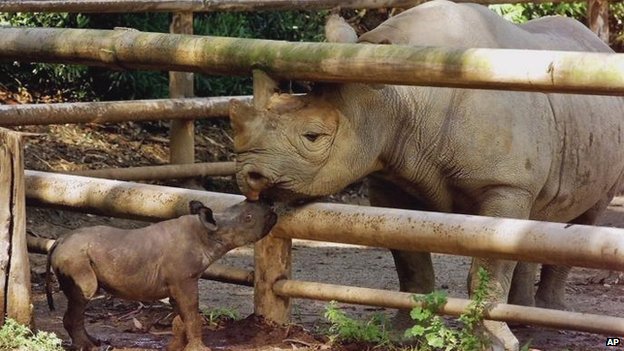
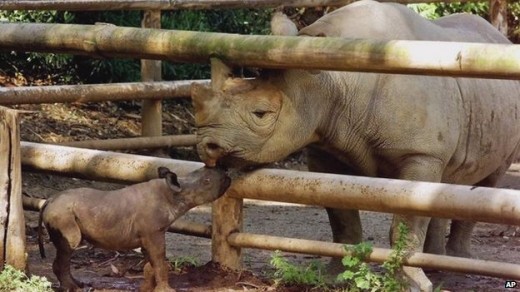 Western Black Rhino and her calf – never again on the planet Western Black Rhino and her calf – never again on the planet
.
The International Union for Conservation of Nature listed the Northern white rhino in central Africa as “possibly extinct in the wild” and the Javan rhino as “probably extinct” in Vietnam.
The organization blamed a lack of political support for conservation efforts in many rhino habitats, international organized crime groups targeting the animal, increasing illegal demand for rhino horns and commercial poaching.
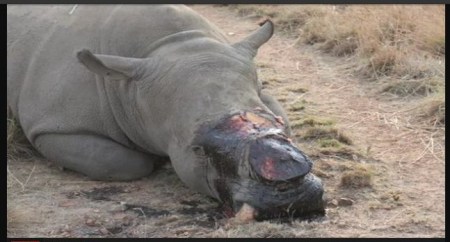
“In the case of both the Western black rhino and the Northern white rhino, the situation could have had very different results if the suggested conservation measures had been implemented,” Simon Stuart, chairman of IUCN’s Species
Survival Commission, said in a statement Thursday. “These measures must be strengthened now, specifically managing habitats in order to improve breeding performance, preventing other rhinos from fading into extinction.”
The last Javan rhino in Vietnam is believed to have been killed by poachers in 2010, reducing the species to a tiny, declining population in Java.
.
The rhinos were among more than 61,900 animal and plant species reviewed for the IUCN’s latest Red List of Threatened Species. A quarter of the mammals on the Red List were found to be at risk of extinction. But the organization said there
have also been conservation successes. Fewer than 100 Southern white rhinos survived at the end of the 19th century, but the population in the wild is now believed to number over 20,000. Numerous other species are threatened, including many types of plants. The Chinese water fir, which used to be widespread throughout China and Vietnam, was listed as “critically endangered,” due primarily to expanding intensive agriculture. The IUCN also listed five out of eight tuna species as “threatened” or “near threatened,” and added 26 recently discovered amphibians to the Red List, including the blessed poison frog.
“This update offers both good and bad news on the status of many species around the world,” said Jane Smart, director of the IUCN Global Species Program. “We have the knowledge that conservation works if executed in a timely manner, yet, without strong political will in combination with targeted efforts and resources, the wonders of nature and the services it provides can be lost forever.”
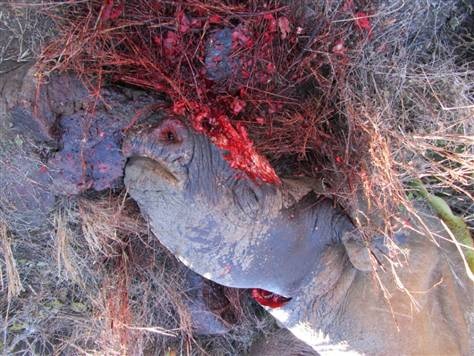 Stumpy’s lifeless body, her life stolen by poachers
(Photo credit: Lewa Wildlife Conservancy)
. Stumpy’s lifeless body, her life stolen by poachers
(Photo credit: Lewa Wildlife Conservancy)
.
‘Stumpy was the oldest female black rhino at the Conservancy, and had spent 26 years enjoying her freedom on the property. Her eighth calf, only a year and a half old, was dealt a minor wound to the neck in the incident and will survive. Coincidentally, on the day Stumpy drew her last breath, a first breath was taken by a newborn rhino at the rhino refuge.’
.
[Source: ^http://bushwarriors.wordpress.com/tag/rhino-horn-trade/page/6/]
.

.
.
‘DEAD MEN DON’T DEAL’ Campaign
.
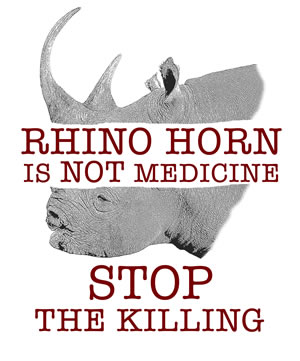
Rhinos have been slaughtered to near extinction to satisfy the demand of rhino horn products in China and Vietnam. All based on rhino horn cultural myths. It has the same effect as chewing ones fingernails.
China is costing the world its rhinos.
.
- It is seen as a remedy for nearly everything (evil possession included) in China and Vietnam
- China and Vietnam fund international organized poaching teams to kill rhino.
- Science proves there is no medicinal value about rhino horn.
- Rhino is said to be the most endangered species to date.
.
However, even if Chinese trade makers are aware that the Rhino population is on near brink to extinction; the continual demand for rhino horn persists.
Unless a serious measure evolves, Chinese businessmen will not stop.
(Ed: This is speciescide)

So, the idea sprung to mind to form a campaign that will create a cultural scare. Namely, the DEAD MEN DON’T DEAL campaign that revolves around the sudden deaths of dealers. Without knowing who or how these smugglers are tortured it will create a cultural scare amoungst those who are guilty. The idea derives from laying revenge out into the air. The revenge of the rhino. Getting back at those who took away a lot of the rhino population. The main objective here is to create fear for those who are involved in the illegal dealing of rhino horn.
.
Dehorning
The demand for Rhino has become so high that conservation officials have gotten to the point where they actually saw off their horns so rhino poachers will have no cause to kill them. These desperate measures have raised questions if removing Rhino horn impairs the rhino’s ability to survive or reproduce; one usage of the horn is to defend a mother’s young from predators.
Many parks and game reserved have battled the on going poaching around this endangered specie. Dr David Mabunda- Chief executive of SANParks stated that it is no longer appropriate to refer to this illegal action as poaching anymore as the levels of sophistication, violence and money behind it continue to raise. He also stated that the country has been working hard to bring this nearly extinct specie back, even if it requires one to become the last standing man.
Endangered stats continue to rise as reports keep coming in. In January an epidemic occurred where poachers were found using aircraft to hunt down rhino in Harare-Zimbabwe, as demand in Asia was great due to medicinal benefit growth. 7 endangered rhinos were killed, this representing one third of 22 rhinos poached throughout 2010. South Africa has about 1000 surviving rhino’s n which extra help for their existence has been sent, last year 333 rhinos were poached in South Africa nearly three times as many then 2009. However, 2011 proves to have lowered the killings. South Africa has over 21 000 more rhinos then any country in the world which puts the country as well as the animals in greater danger.
Demands in Vietnam have been noticed to increase. The black market offers huge amounts of money for trading these species for Traditional Chinese Medicine such as high blood pressure and other impairments. Experts state that as little as 5 rhinos remain in Vietnam. South Africa has become internationally known for banning rhino horn distribution.
World efforts to ‘demystify’ the medicinal affects of rhino horn fail to reach Asia and thus the uproar continues.
[Source: ^ http://savetherhino.wordpress.com/]
.
.
“For one species to mourn the death of another is a new thing under the sun. The Cro-Magnon who slew the last mammoth thought only of steaks. The sportsman who shot the last passenger pigeon thought only of his prowess. The sailor who clubbed the last auck thought of nothing at all. But we, who have lost our pigeons, mourn the loss. Had the funeral been ours, the pigeons would hardly have mourned us. In this fact, rather than in Mr. DuPont’s nylons or Mr. Vannevar Bush’s bombs, lies objective evidence of our superiority over the beasts.”
.
~ Aldo Leopold: ‘A Sand County Almanac, and Sketches Here and There‘, 1948, Oxford University Press, New York, 1987, pp. 109-110.
.
.
.
Further Reading:
.
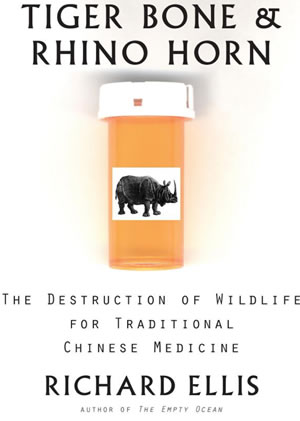
[1] Book: ‘ Tiger Bone and Rhino Horn: The Destruction of Wildlife for Traditional Chinese Medicine‘
by Richard Ellis
Format: Hardcover, 294 pages, Revised and Tea Edition
Release Date: 27 May 2005
‘In parts of Korea and China, moon bears, black but for the crescent-shaped patch of white on their chests, are captured in the wild and imprisoned in squeeze cages, where steel catheters drain their bile as a cure for ailments ranging from upset stomach to skin burns. Rhinos are being illegally poached for their horns, as are tigers for their bones, thought to improve virility. Booming economies and growing wealth in parts of Asia are increasing demand for these precious medicinals while already endangered species are being sacrificed for temporary treatments for nausea and erectile dysfunction. Richard Ellis, one of the world’s foremost experts in wildlife extinction, brings his alarm to the pages of “Tiger Bone & Rhino Horn”, in the hope that through an exposure of this drug trade, something can be done to save the animals most direly threatened. Trade in animal parts for traditional Chinese medicine is a leading cause of species endangerment in Asia, and poaching is increasing at an alarming rate. Although most of traditional Chinese medicine is not a cause for concern because it relies on herbs and other plants, as wildlife habitats are shrinking for the hunted large species, the situation is becoming ever more critical. Ellis tells us what has been done successfully, and contemplates what can and must be done to save these rare animals from extinction.’.
[Source: ^http://www.fishpond.com.au/Books/Tiger-Bone-and-Rhino-Horn-Richard-Ellis/9781559635325]
.
.
.
Tags: China, ecological genocide, ecophilosophy, extincting, Richard Ellis, speciescide, speciesism, TCM, TCM witchdoctor cult, tiger bone and rhino horn, Traditional Chinese Medicine, Vietnam, Western Black Rhino extinct, wildlife poaching
Posted in 21 Going Khaki!, Rhinoceroses, Threats from Poaching and Poisoning, Tigers | No Comments »
Add this post to Del.icio.us - Digg
Saturday, September 17th, 2011
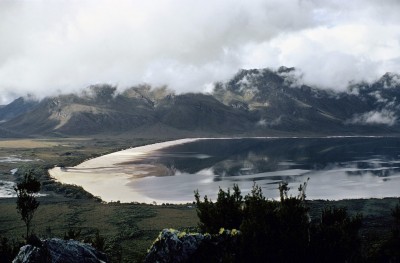
 Play music, then click back to this site, zoom in to make the photos larger and scroll through this article and appreciate the magic of what was Lake Pedder. Play music, then click back to this site, zoom in to make the photos larger and scroll through this article and appreciate the magic of what was Lake Pedder.
.
The pristine glacial lake it once was.
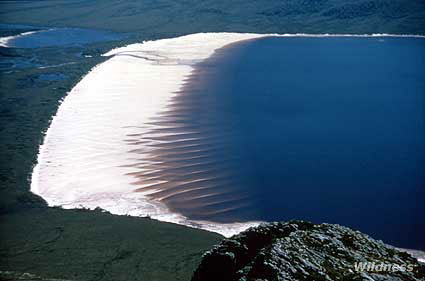
The jewel of Tasmania’s primeval sacred ecology.
.
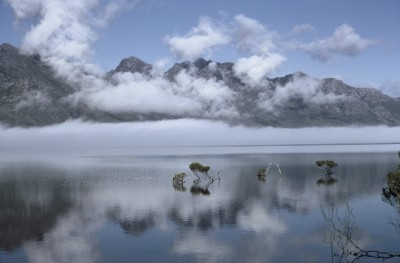 Lake Pedder
(Photo by Olegas Truchanas (1923-1972) Lake Pedder
(Photo by Olegas Truchanas (1923-1972)
.
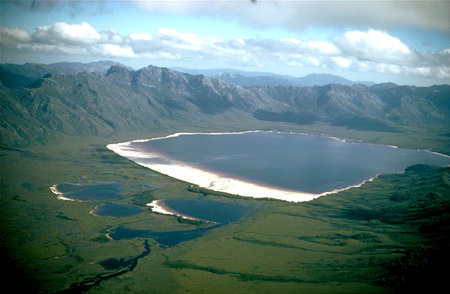 This photo currently appropriated on the website of Tasmanian Resource Planning and Development Commission,
which as the ‘Hydro-Electric Commission’ flooded the lake in 1972 and which oddly uses the word ‘justice’ in its web address.
^http://soer.justice.tas.gov.au/2003/image/544/index.php This photo currently appropriated on the website of Tasmanian Resource Planning and Development Commission,
which as the ‘Hydro-Electric Commission’ flooded the lake in 1972 and which oddly uses the word ‘justice’ in its web address.
^http://soer.justice.tas.gov.au/2003/image/544/index.php
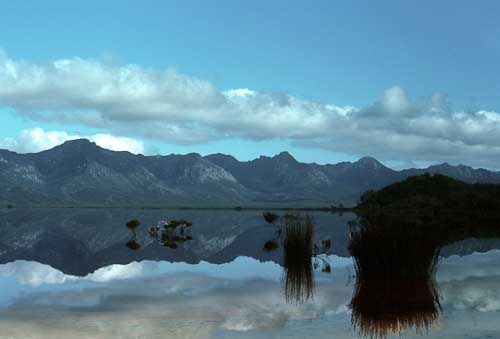
New Book Release:
.
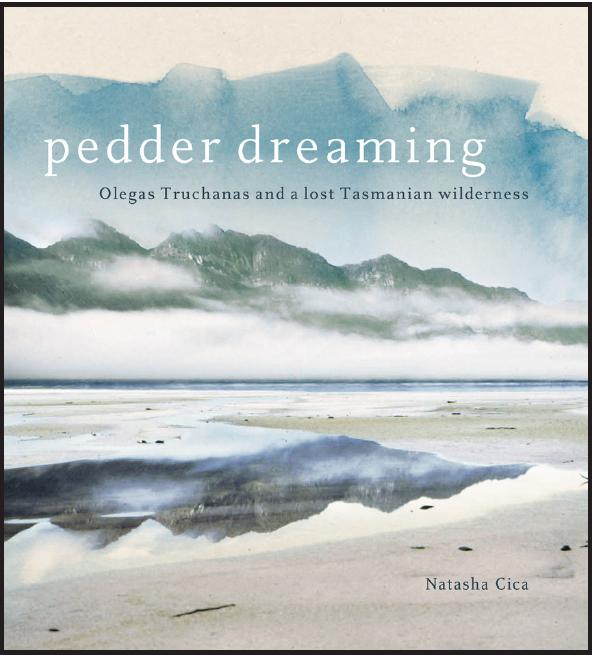
‘Pedder Dreaming: Olegas Truchanas and a lost Tasmanian Wilderness’
by Natasha Cica, September 2011 | ISBN 978 0 7022 3672 3 | RRP:$59.95, | 230mm x 203 mm | Illustrated | 256pp (full colour) | Published by UQP | [Read More]
.
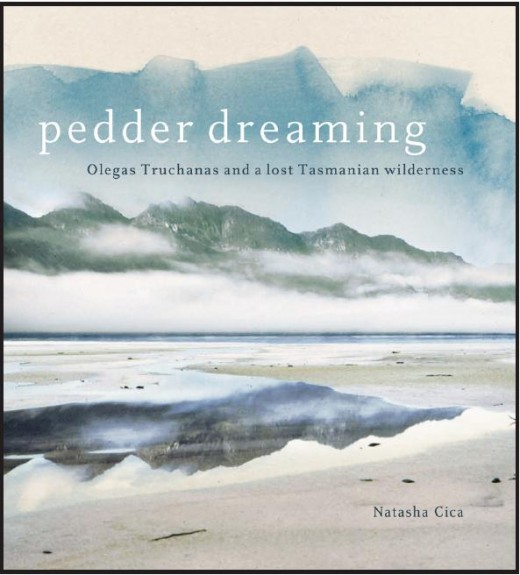
‘In 1972 Lake Pedder in Tasmania’s untamed south-west was flooded to build a dam.
Wilderness photographer Olegas Truchanas, who had spent years campaigning passionately to save the magnificent fresh water lake, had finally lost.
The campaign, the first of its kind in Australia, paved the way for later conservation successes, and turned Truchanas into a Tasmanian legend. Pedder Dreaming quietly evokes the man, the time and the place.
Truchanas, a Lithuanian émigré, is a stalwart adventurer, loving family man, activist, thinker, survivor and artist. Australia on the cusp of environmental awareness is the time, and Lake Pedder and the south-west of Tasmania, the place – wild, pristine, wondrous.
Through those who were closest to him, Truchanas emerges, as does his influence on early conservation in Tasmania, and the small group of landscape artists, the Sunday Group, who admired his passion for the lake and were inspired by it. Stunningly illustrated with original Truchanas photographs from the 1950s, ’60s and ’70s, and artwork from the Sunday Group, Pedder Dreaming captures the brutality, raw beauty and vulnerability of the Tasmanian wilderness and the legacy of one man who had the vision to fight for it.’
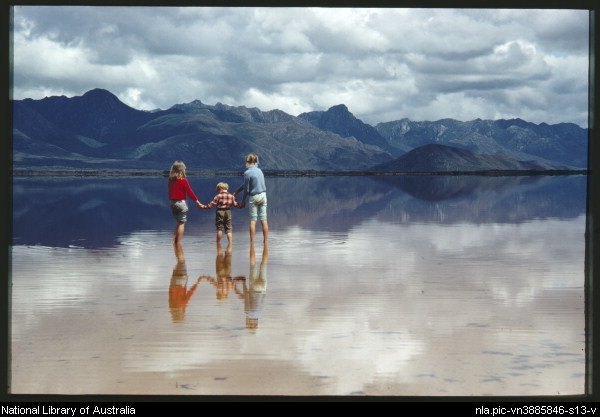
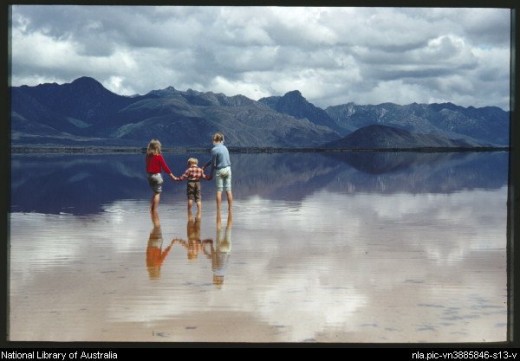 What we destroyed… Olegas Truchanas’ children playing in Lake Pedder in Tasmania’s Southwest in 1971. Less that 12 months later it was flooded. What we destroyed… Olegas Truchanas’ children playing in Lake Pedder in Tasmania’s Southwest in 1971. Less that 12 months later it was flooded.
In 1974 the head of the Lake Pedder Committee of Enquiry, Edward St John QC would famously claim “The day will come when our children will undo what we so foolishly have done.”
.
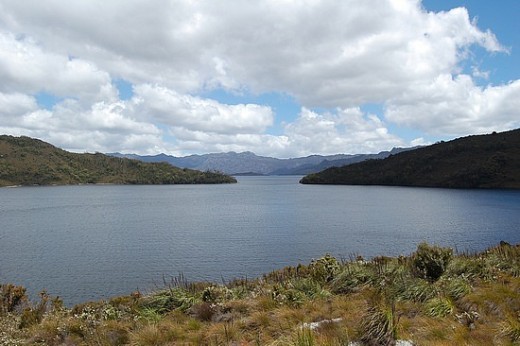 Fake Pedder ~ today’s drowned lake Fake Pedder ~ today’s drowned lake
.
.
About Olegas Truchanas

.
Olegas Truchanas, a Lithuanian born in 1923, emigrated to Tasmania after World War II, during which he fought with the Lithuanian resistance and spent time in displaced persons’ camps in Allied-occupied Germany.
From the 1950s, Olegas photographed Tasmania’s remote south-west wilderness, frequently travelling solo and risking his life in order to do so. He also met and married a Tasmanian, Melva, and together they built a house and had three children.
Through his photography, Olegas established a salon-style connection with a circle of Tasmanian photographers and watercolour painters known as the Sunday Group, and he worked with them to save a remote glacial lake with pale pink sands – Lake Pedder – from inundation by a hydroelectric scheme.
This was Australia’s “first globally noticed environmental battle, and later produced the world’s “first greens party. The campaign failed and the lake was lost. Soon afer, in early 1972, Olegas drowned while on a photographic expedition to one of Tasmania’s wildest rivers.
.
.
Remembering Lake Pedder

.
Play two rare videos of Lake Pedder by ABC Television just before the flooding:
Turn up your computer volume, then click one image at a time.
 . .

.
.
‘What Lake Pedder taught me’
by Brian Holden, 20081023, ^http://www.onlineopinion.com.au/view.asp?article=8057&page=2
.
‘It has gone, and after thousands of years of being, I was one of the last to absorb its magnificence. I still find it hard to believe that I was so fortunate. Lake Pedder February 1972 has become my dreamtime. It was for me a feeling of timelessness and a feeling of being in the type of place we were all meant to be.’
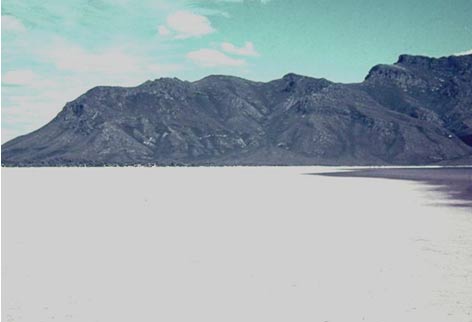 . .
What Lake Pedder taught me
‘Boneheaded politicians will only do what we let them get away with. One of our crown jewels was able to be destroyed for almost no gain because the public at large have become alien to the planet. It is normal to consume and pollute. It is normal to be stressed and in a spiritual void. We are lemmings racing towards the cliff edge – and there can be no turning back.’
.
.
‘Hydro Past Constrains Future’
by Peter Fagan, 20091027, Tasmanian Times newspaper, ^http://tasmaniantimes.com/index.php?/weblog/article/professor-west-reminds-tasmania-that-hydro-past-constrains-future/
.
‘Whatever else Tasmanians agree or disagree with in Professor West’s report, they should be grateful for this timely reminder that hydro-industrialisation continues to impose heavy costs on their state. In dollar terms alone, the sale of electricity to these industrial users below cost and way below potential value is costing the State Government up to $220 million in revenue every year.
If two-thirds of Tasmania’s annual electricity generation was to be freed up for purposes other than powering these old and highly energy-intensive plants, a range of options and opportunities would be available.
For example:
- A great deal more of the hydro electricity generated could be sold at peak times and peak tariffs via Basslink to mainland Australia
- Electricity production could be reduced whenever the hydro storage reservoirs were depleted by drought, restoring some degree of energy security to the system
- The ability of the hydro system to make electricity availabile instantly could enable integration of substantially more eco-friendly wind power into the Tasmanian and national grids – if this one isn’t clear to you the problem space is outlined in these Wikipedia articles:
http://en.wikipedia.org/wiki/Load_following_power_plant
http://en.wikipedia.org/wiki/Intermittent_power_source
.
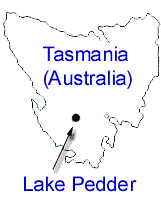
The most intriguing possibility that gaining control of its electrical energy resource would afford Tasmania is the opportunity to revisit the restoration of Lake Pedder. Draining all or part of the Huon-Serpentine impoundment (the “new” Lake Pedder) need cost less than 20% of the electricity generation capacity of the Middle Gordon Scheme.
.
Restoration of the Lake would bring enormous benefits to Tasmania
.
Remember – less than 60 air miles from Hobart, one of the natural wonders of the world lies under less than 40 feet of water. It is submerged in a massive diversion pond (NOT a storage) whose sole purpose is to transfer water to a hydro power station, two thirds of whose output is gifted, below cost and way below potential value, to old-tech secondary industry.
Professor West’s recommendation serves to remind Tasmanians that what had become the political, social, economic and environmental nightmare of hydro-industrialisation did not end when the High Court ruled out the construction of the Gordon-below Franklin dam in July 1983. More than 25 years later, Tasmania – Australia’s poorest state – a rich island full of relatively poor people – continues to bleed revenue and incur household and business energy costs, social costs, environmental costs and opportunity costs resulting from the excesses of hydro-industrialisation.’
The case for restoration of Lake Pedder and a wealth of other resources are available from the Lake Pedder Restoration Committee web site: www.lakepedder.org
.
.
‘Lake Pedder: the beginning of a movement’
by Natasha Simons, Green Left, 19920930, ^http://www.greenleft.org.au/node/2943
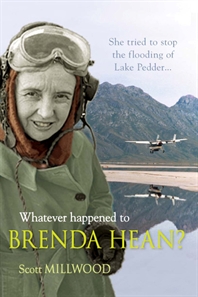
‘On September 8, 1972, Brenda Hean and Max Price, members of the Lake Pedder Action Group, waved goodbye to friends and relatives as their Tiger Moth plane taxied down the airstrip just outside Hobart. Their mission was to fly to Canberra and skywrite the message “Save Lake Pedder” to the federal government in an effort to stop the flooding of the lake. They have been missing ever since.
Twenty years ago the campaign to save Lake Pedder was lost, but its lessons were well learned by the new green movement. The fight to save Lake Pedder laid the foundations for the overwhelming success of the Franklin “no dams!” campaign in the early 1980s, and it inspired many environmental activists — some of whom, such as Bob Brown, hold seats in Parliament today.
Lake Pedder, in Tasmania’s wild south-west, is considered by many to be one of the most beautiful regions in the world. By 1946 Pedder had become a base for expeditions into all parts of the south-west. In 1955, 24 000 hectares were set aside as the Lake Pedder National Park. Bushwalkers, tourists and nature lovers came from afar to experience the beauty of Lake Pedder.
In 1967 the Hydro-Electric Commission proposed to build a power scheme in the Middle Gordon. This meant that Lake Pedder would be drowned by the damming of the Huon and Serpentine Rivers, which lay to the east and west of the lake.
In May 1967, the proposal was tabled in the state parliament. There was an immediate public outcry. Lake Pedder supporters began a petition to stop the proposal and collected 10,000 signatures, the largest number that had ever been collected in Tasmania. As the pressure mounted, the Labor government of “Electric Eric” Reece was forced to establish a select committee to determine the viability of the HEC proposal, and to look at alternatives.
However, the committee merely rubber-stamped the proposal. Two days later, on August 24, 1967, the enabling legislation was passed. Then the campaign to save Lake Pedder really began.
In 1969 the Reece government lost office in the wake of public discontent over the issue and the new government, a coalition of the Liberal and Centre parties headed by Angus Bethune, found itself in a difficult situation.
.
In March 1971 Brenda Hean and Louis Shoobridge, two prominent campaigners for Lake Pedder, organised a public meeting which packed the Hobart Town Hall.
Public opinion on the issue had polarised.
The public meeting proposed to call a referendum on the issue, but the “Shoobridge proposal”, as it became known, was defeated by a government wholeheartedly backing the HEC.
.
The grassroots activists refused to give up. They formed the Lake Pedder Action Group (LPAG), which took the issue to the federal government. As a result, Prime Minister William McMahon directed his unsympathetic environment minister, Peter Howsden, to raise an alternative scheme with Bethune. The Tasmanian premier responded with a resounding “No”.
Just as it seemed things were lost, the Bethune government was forced to the polls, and the environmentalists seized the opportunity. Again a public meeting was called in the Hobart Town Hall. Out of it the first green party, the United Tasmania Group (UTG), was formed. The UTG fielded candidates, among them Brenda Hean, with very diverse backgrounds but who were united in their desire to save Lake Pedder from the HEC.
The UTG polled well and, despite HEC attempts to discredit the campaign, Lake Pedder gained international attention, including support from organisations such as UNESCO. On July 24, 1972, 17,500 signatures reached the new premier, and the LPAG mounted a national campaign.
A few days before Brenda Hean and Max Price set off for Canberra, Hean had received an anonymous phone call from someone pressuring her to give up the campaign or “go for a swim”. The plane hangar was found to have been broken into and the safety beacon, normally stored on the plane, had been removed. There was never a proper inquiry into the case and no wreckage was ever found.
The Pedder campaigners now put their hopes on the newly elected federal Labor government, which mounted a federal-state inquiry. The Tasmanian government refused to participate, but the committee in June 1973 reported the area was too important to destroy. The inquiry recommended a moratorium on flooding so that the feasibility of saving the lake could be addressed. It adopted LPAG’s recommendations to pay the costs of the moratorium and any costs of modifying the scheme to save the lake. The weary LPAG activists could sense victory.
But the premier ignored the inquiry and gave the HEC the go-ahead. In March 1973 the vigil camp to save wildlife threatened by the rising waters was abandoned, and Lake Pedder was drowned. Tasmanian environmentalists had suffered their first great defeat.

In 1979, the HEC released details of another proposal, this time to flood the Franklin River, one of the last great wilderness areas in the world. This time it was met by a much tougher, more unified and stronger opposition.
The Franklin activists, headed by figures like Bob Brown, had learned how to run a campaign. They didn’t only argue that the Franklin should be saved, as the Pedder campaigners had done; they also presented a range of alternative and well thought-out proposals to the HEC. They gained national and international support for their campaign and employed direct action tactics as well. The Franklin was one of the biggest actions of civil disobedience the country had ever witnessed, with 1217 people arrested.
The Franklin blockade polarised the community on the West Coast. The issue tore the Tasmanian ALP apart, and it has never fully recovered from the blow.
The Franklin campaign was won, and in 1986 Bob Brown was elected to state parliament on a wave of green consciousness. Three years later, during which time the campaign for Wesley Vale was fought and won, he was joined by four other Green Independents.
“The failure of Lake Pedder was needed in a way”, says Green Independent Christine Milne, “to allow the fights for the Franklin and Wesley Vale to succeed. When the lake went under, there was a wide sense of guilt that made people feel they would never again allow that to happen without doing something.”
The momentum built up during the Lake Pedder and Franklin campaigns has been lost to the green movement in recent times. The electoral strategy of some sections has changed the focus from mobilising people to making changes through parliament. Lobbying the ALP has also proven largely ineffective for, while the federal Labor government has espoused green rhetoric, it has for the most part ignored environmental issues.
The recession has pushed the issue of living standards and jobs to the forefront. Big business, the government and the media all counterpose jobs to saving the environment, trying to drive a wedge between environmental and social justice issues.
The creation of jobs and defence of living standards need to be at the forefront of the green agenda, with the emphasis on environmentally sustainable jobs. By taking up more of the social justice agenda, the green movement may link up with others fighting for social change and revive the grassroots activity that can challenge the powers that be.’
.
.
Further Reading:
.
[1] ‘Pedder Dreaming’ – media release [ Read More]
[2] ‘Pedder Dreaming’ book launches [ Read More]
[3] Lake Pedder Restoration Committee, ^http://www.lakepedder.org/index.html
[4] Lake Pedder – an overview of its history^ http://en.wikipedia.org/wiki/Lake_Pedder
[5] ‘ Remember Lake Pedder?‘, by Robert Rankin^ http://www.rankin.com.au/essay7.htm
[6] ‘ Lake Pedder‘, Timeframe,^ http://www.abc.net.au/science/kelvin/files/s18.htm
[7] Lake Pedder Earthworm, ^ http://www.environment.gov.au/cgi-bin/sprat/public/publicspecies.pl?taxon_id=83060
[8] Lake Pedder Report, presented by ABC Four Corners, 19710424, ^ http://www.abceducation.net.au/videolibrary/view/lake-pedder-report-126 [ View Video as mp4 – ensure volume is turned up first]
[9] Lake Pedder’s Future’ , by Peter Ross, ABC TV, This Day Tonight, 19720704, ^ http://abceducation.net.au/~abceduca/videolibrary/view/lake-pedders-future-74 [ View Video – ensure volume is turned up first]
[10] ‘ Whatever happened to Brenda Hean?‘ ^ http://www.abc.net.au/atthemovies/txt/s2367992.htm
[11] ‘ Whatever happened to Brenda Hean?‘, by Scott Millwood, ^ http://www.allenandunwin.com/default.aspx?page=94&book=9781741756111
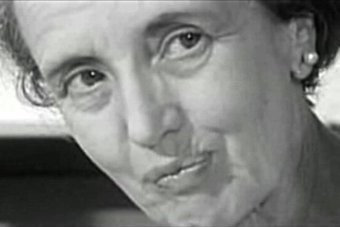 Remembering Brenda Hean
In ‘Pedder’, Brenda had found her spiritual centre. Remembering Brenda Hean
In ‘Pedder’, Brenda had found her spiritual centre.
.
.
Tags: Brenda Hean, Eric Reece, fake pedder, green movement, HEC, Hydro-Electric Commission, Lake Pedder, Lake Pedder Action Group (LPAG), Lake Pedder Restoration Committee, Louis Shoobridge, Middle Gordon Scheme, Olegas Truchanas, Pedder Dreaming, Tasmania, the jewel of Tasmania's sacred primeval ecology, the victim of an ignorant time
Posted in 04. + Ecological Jurisprudence, 32 Ecosystem Rehabilitation!, Tasmania (AU), Threats from Hydro and Dams, Threats to Wild Tasmania | Comments Off on Lake Pedder – the victim of an ignorant time
Add this post to Del.icio.us - Digg
Saturday, September 3rd, 2011
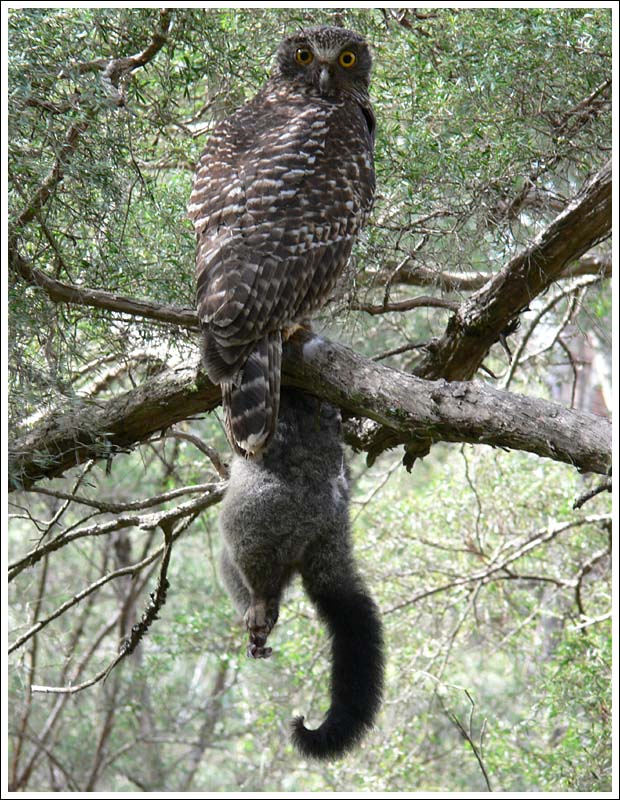
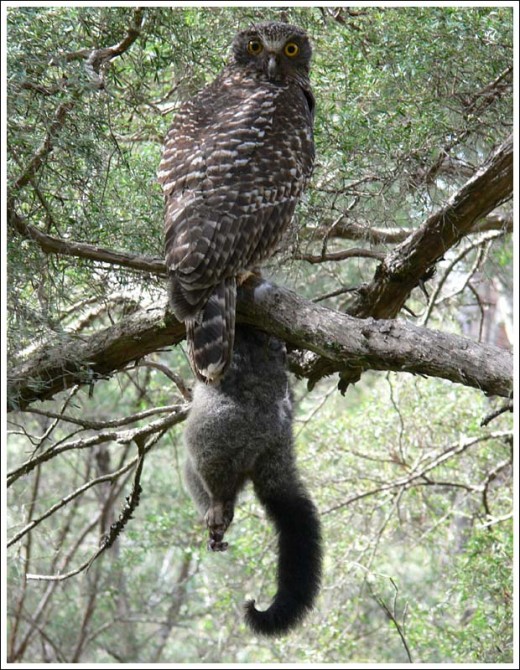 Australia’s native Powerful Owl with native prey – a juvenile Brushtail Possum (2kg?) Australia’s native Powerful Owl with native prey – a juvenile Brushtail Possum (2kg?)
© Photo by Duncan Fraser
^http://www.natureofgippsland.org/
.
Powerful Owl Call
(turn on your computer volume)

.
.
Drought, bushfires…it’ll take years to find out what’s happened to Victoria’s Forest Owls
.
[Source: ‘Something is knocking the states owls off their perches‘, by John Elder, The Age newspaper (Victoria, Australia), 20100613, ^http://www.theage.com.au/victoria/something-is-knocking-the-states-owls-off-their-perches-20100612-y4s0.html]
.
‘What’s happened to Victoria’s carnivorous owls? A significant number have vanished, and the (Victorian) Department of Sustainability and Environment (DSE) isn’t sure what’s going on.
It’s assumed the top end of the woodland food chain is either starving to death because its food source has been killed off by the drought and fires, or it is relocating to parts unknown, but it will take years to find an answer.
The DSE has been monitoring the owl populations – including that of the Powerful Owl, Australia’s largest owl – since 2000. Since then, detection rates in South Gippsland and the Bunyip State Park have dropped by half.
In some areas of the Bunyip State Park – half of which was lost to the Black Saturday fires – detections of the Sooty Owl have dropped to a third.
DSE owl specialist Ed McNabb says: ”We don’t know what’s happened to them. We can only assume that drought has played a major role. We noticed the downward trend before the fires. They’re very mobile birds, but the fires would have had an impact on their prey.”
Powerful and sooty owls, both officially listed as vulnerable, mainly eat sugar gliders and ringtail possums. The possums in particular are known to have little resistance to chronic hot weather, and their failure to thrive in the drought is the main reason why owl numbers have dropped.
While owls may have escaped (Victoria’s) Black Saturday fires, many possums would have been incinerated.
.
McNabb says the smaller carnivorous birds, such as the barking owl, are able to sustain themselves on insects. Powerful and sooty owls can also eat rabbits and birds such as magpies and kookaburras, but they need to make the change in their diet before energy loss reduces their ability to effectively hunt.
”They’ll either starve or take something else,” said McNabb.
Equally disastrous for the owls was the loss of old trees with large hollows that they require for nesting. They might have shifted elsewhere to recolonise, but this would mean taking over an already occupied territory. ”And there tends to be a home-ground advantage in these battles,” said Mr McNabb. The occupying bird has inside knowledge of the territory and a greater capacity to defend its patch, because it’s energy store will be higher. Flying great distances in search of food saps the strength from large birds and even causes them to starve.
The DSE’s biodiversity team leader for West Gippsland, Dr Rolf Willig, said:
The top order carnivores were ”an indicator species as to the well-being of the ecosystem.
Theoretically, if they’re happy, the rest are happy.”
.
For five years Dr Willig has been running a playback monitoring program in South Gippsland, where recordings of owl calls are played into the dark and answering calls are recorded. The number of birds answering calls have dropped significantly this year.
”The results indicate we may be having a delayed reaction from the fires,” he said. ”The possums not actually killed in the fires might have been exposed afterward, and the owls picked them off, eating all the food that was left.”
It will take years to find out what’s happened. ”And not just three or five years. We’ll be out here for a long time,” said Dr Willig.’
.
.
‘Conservation through Knowledge’ – a motto of leadership

The Royal Australasian Ornithologists Union is Australia’s largest non-government, non-profit, bird conservation organisation. It has sensibly branded itself as ‘Birds Australia‘, which in just two words says all that it is about, and the Emu family graphic is uniquely representative of Australia ~ the Emu being Australia’s largest bird.
Similarly sensible is its motto ‘Conservation through knowledge‘ which provides inspiration for conservation leadership, beyond Ornithology. The organisation was founded way back in 1901 to promote the study and conservation of the native bird species of Australia and adjacent regions, making it Australia’s oldest national birding association.
The Powerful Owl call above is sourced courtesy of Birds Australia.
.
.
Powerful Owl (Ninox strenua)
http://www.birdsaustralia.com.au/our-projects/powerful-owl-wbc.html
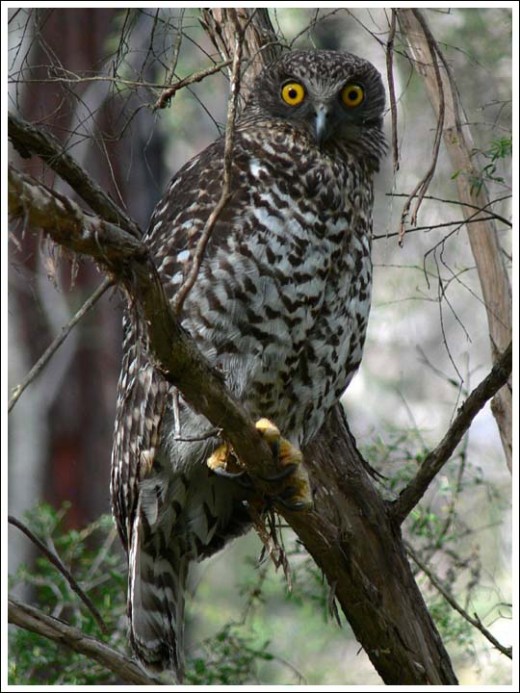 Powerful Owl (weighs under 1.5 kg) Powerful Owl (weighs under 1.5 kg)
© Photo by Duncan Fraser
^http://www.natureofgippsland.org/
.
A noctural top-order predator of tall old forests, the Powerful Owl is territorial, sedentary and monogamous ~ it calls one place home and mates for life (a lifestyle model for many humans).
.
HABITAT
Throughout most of its range this species typically inhabits open and tall wet sclerophyll forest, mainly in sheltered, densely vegetated gullies containing old-growth forest (where they breed in hollows in large trees) with a dense understorey, often near permanent streams. Such habitats are often dominated by Mountain Grey Gum, Mountain Ash, Manna Gum or Narrow-leafed Peppermint. They occasionally also occur in rainforest in gullies surrounded by sclerophyll forest or woodland. Powerful Owls also occur in adjacent open dry sclerophyll forests and woodlands, such as those dominated by box–ironbark eucalypts, Candlebark, Messmate or riparian River Red Gums; they sometimes also occur in open casuarina and cypress-pine forests.
The main food source for these owl species is hollow-dependant mammals (e.g. greater gliders, sugar gliders). Natural processes that create tree hollows typically take hundreds of years to form.
Human disturbed forests, through logging/burning/fragmentation/euphemistic ‘clearing’, destroy these vital yet rare hollow-bearing trees, and this considerably disadvantages owls.
DISTRIBUTION
- Endemic (found nowhere else on the planet, except for…) to eastern and south-eastern mainland Australia, mainly on the seaward side of the Great Divide.
.
CONSERVATION STATUS
- Vulnerable in Queensland
- Vulnerable in New South Wales
- Vulnerable in Victoria
- Endangered in South Australia
.
SURVIVAL THREATS
- Powerful Owls are adversely affected by the clearfelling of forests and the consequent conversion of those forests into open landscapes. [Deforestation]
.
When in flight, the silhouette of the Powerful Owl is distinctive, combining long, broad, rounded and deeply fingered wings with a large, sturdy body and a longish tail, gently rounded at the tip when spread. The flight is rather slow, with deep laboured wing-beats interspersed with glides.
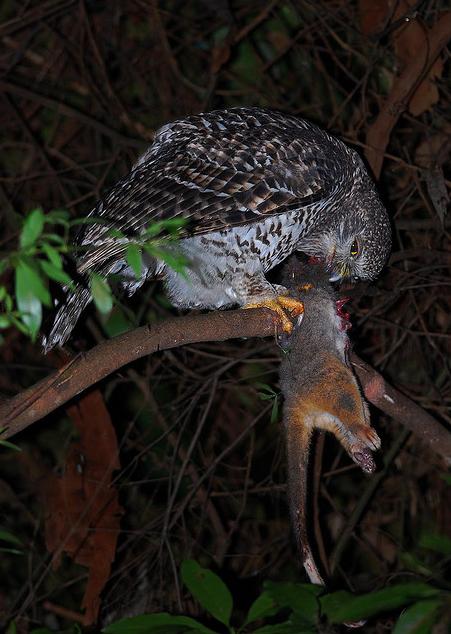
.
.
References and Further Reading:
.
[1] The Nature of Gippsland (photographic website), ‘A photo gallery featuring the natural world of Gippsland, Victoria, Australia’, Photographs by Duncan Fraser, ^ http://www.natureofgippsland.org/
[2] Birds Australia, (Special survey on Powerful Owl distribution around Sydney, 2011), ^ http://birdsinbackyards.net/surveys/powerful-owl.cfm
[3] ‘ Powerful Owl (Conservation) Action Statement, Victorian Government, Department of Sustainability and Environment, (1999), ^ http://www.dse.vic.gov.au/__data/assets/pdf_file/0019/103177/092_powerful_owl_1999.pdf [ Read More]
[4] ‘ Protecting Victoria’s Powerful Owls‘, Victorian Government, Department of Sustainability and Environment, (2001), ^ http://www.dse.vic.gov.au/__data/assets/pdf_file/0012/102144/PowerfulOwls.pdf [ Read More]
.
– end of article –
Tags: Birds Australia, Conservation through Knowledge, Forest Owls, hollow-bearing trees, old growth, Otway Ranges, Powerful Owl, Sooty Owl, South Gippsland
Posted in 07 Habitat Conservation!, Gippsland (AU), Otway Ranges (AU), Owls, Threats from Bushfire, Threats from Deforestation | No Comments »
Add this post to Del.icio.us - Digg
Friday, September 2nd, 2011
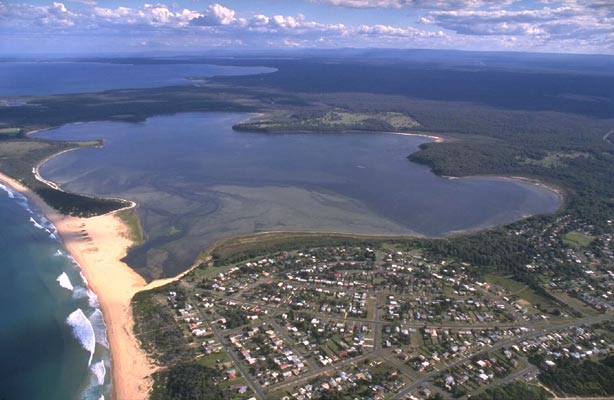
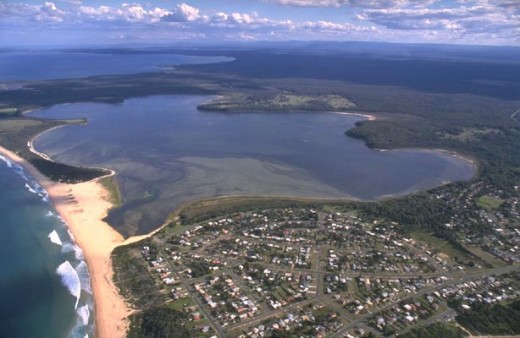 Lake Wollumboola,
South Coast (Shoalhaven Region) of New South Wales, Australia Lake Wollumboola,
South Coast (Shoalhaven Region) of New South Wales, Australia
.
Where is NSW Premier Barry O’Farrell’s environment minister when you need her?
.
Where is NSW Minister for Environment (etc.) Robyn Parker when it comes to a land use development threat to coastal breeding grounds of migratory birds and to a nominated Ramsar Wetland?
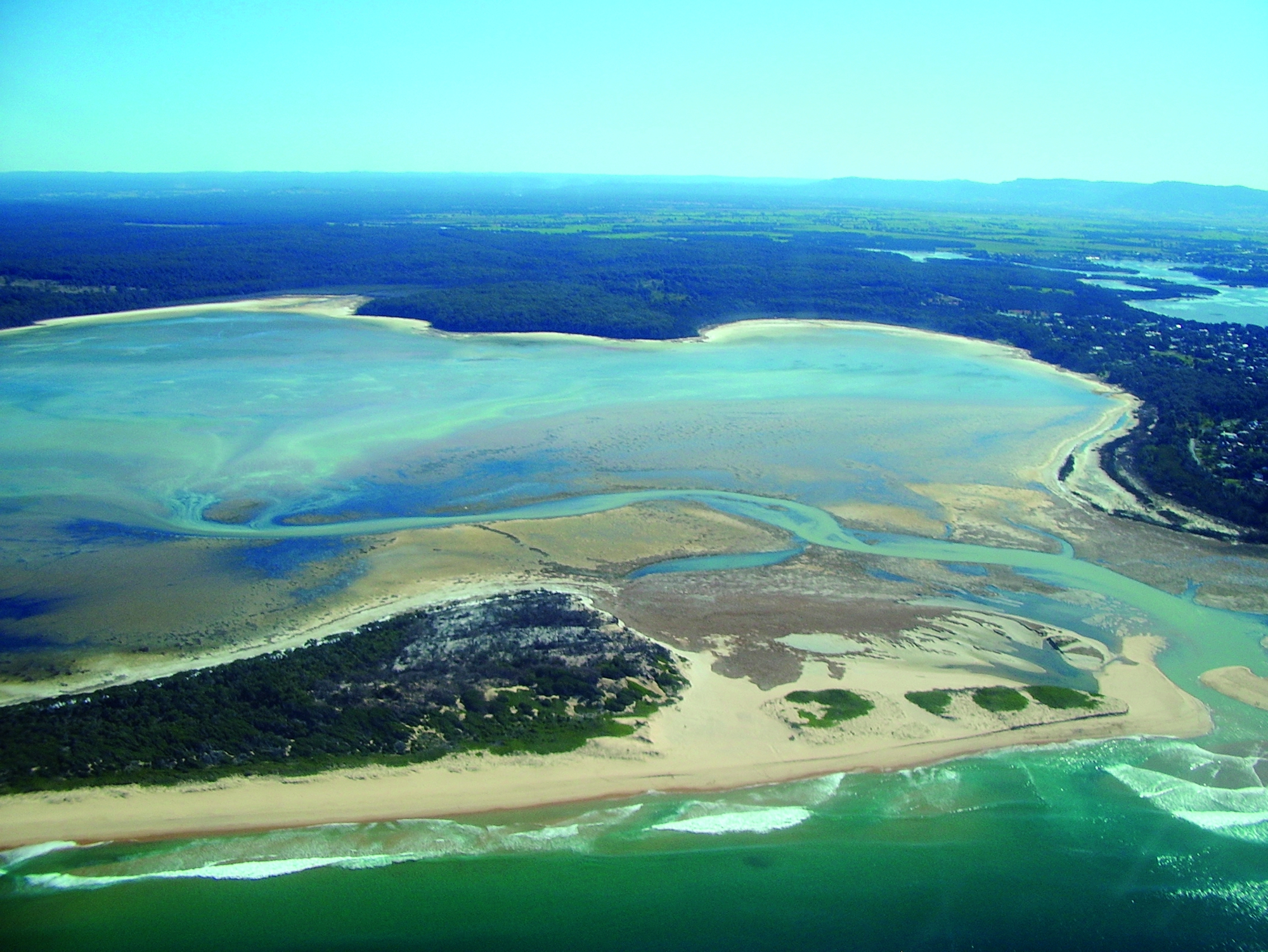
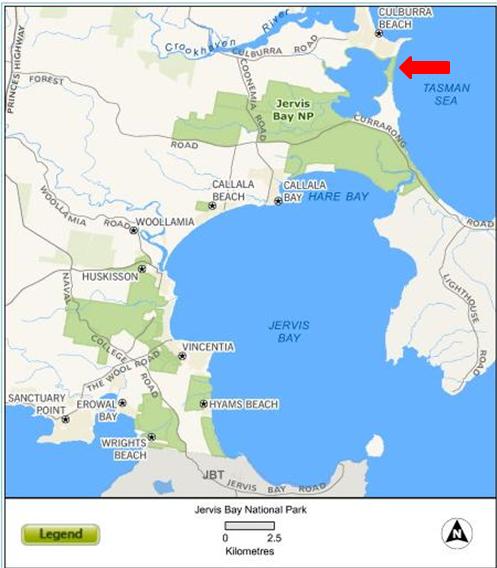
Lake Wollumboola is a natural shallow, saline, coastal lagoon, located on the NSW south coast lies north juxtaposed to Jervis Bay and forms an integral part of the Jervis Bay National Park. Lake Wollumboola is listed as a wetland of national importance, and the NSW Office of Environment and Heritage is investigating its nomination as a wetland of international importance under the Ramsar Convention on Wetlands.
Lake Wollumboola supports abundant growth of sea grass and algae, and is currently home to several thousand black swans and grey and chestnut teals and ten threatened species of Australian fauna. International migratory birds depend upon Lake Wollumboola during seasonal migration including the Caspian Tern and Little Tern.
 Little Tern (Sterna albifrons) with its distinctive black crest
[Source: ^http://www.ozanimals.com/Bird/Little-Tern/Sterna/albifrons.html] Little Tern (Sterna albifrons) with its distinctive black crest
[Source: ^http://www.ozanimals.com/Bird/Little-Tern/Sterna/albifrons.html]
.
NSW Minister for Environment etc Robyn Parker may have come to politics with the credo of ‘keeping it real’, but what environmental conservation credibility does Robyn Parker have? Many conservations are trying to keep Lake Wollumboola real and indeed free from a new golf course development threat on its northern shores.
Parker’s claim to fame is in teaching, community services, child care, childhood education, early intervention, and health issues such as drug rehabilitation and education. But sorry Adrian Piccoli MP got the Ministry for Education. So why did O’Farrell gift her with the important and controversial ‘Environment’ portfolio? No-one else put their hand up? What personal interest does Robyn Parker have in Environmental Conservation? NSW Environment Minister Robyn Parker has probably never heard of Lake Wollumboola. Has she?
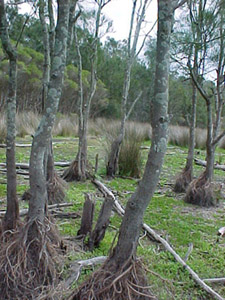
.
.
.
20th Century Golf Course Development Threat to Lake Wollumboola
.
According to the Sydney Morning Herald 20110827, defenders of Wollumboola are worried about a proposal for an 18-hole golf course on the lake’s north-western shore lodged with Shoalhaven City Council by the developer Allen, Price and Associates on behalf of the landowner, Warren Halloran. Halloran is bleating the standard ‘jobs, jobs, jobs‘ and ‘good for tourism‘ justifications for his planned development. But seriously it is just about profiting from exploitative development of natural land without a care to the ecological impact. The development concept is backward 20th Century, who the hell plays golf in the 21st Century? Golf clubs are in crisis around the nation trying to find new members. Their existing membership base of baby boomers are dying of old age!
A development application for the course lodged with the council on June 30 has attracted more than 60 submissions, nearly three-quarters opposed. Review of the proposal by local Shoalhaven Council is likely taking place behind closed doors as a ‘Confidential Business Paper‘ ~ which translates into ‘democracy exempt‘.
.
Council Decision on RAMSAR Wetlands?
.
The president of the Lake Wollumboola Protection Association, Frances Bray, said one of the biggest dangers from a golf course would be increased runoff of organic material and fertilisers.
It is feared that algal blooms could choke the lake, killing the fish, crustaceans and seagrass that can attract up to 20,000 birds during drought.
”It’s just the most beautiful serene place and to think that that could be degraded for a golf course is an absolute tragedy,” Ms Bray said.
A water management plan submitted with the development application proposed the construction of wetlands to treat stormwater runoff from the site, but the plan acknowledged that not all of the fairway areas would be covered.
The Greens councillor Amanda Findley, said the proposal was a last-minute attempt to develop land set down to become conservation land under proposed new land zoning.
But the proposed golf course has garnered some support from nearby Culburra Beach for employment opportunities and increased tourism.
The council will hold a public meeting on Monday.’
.
[Source: ‘Water hazard: golf plans at prized lake ruffle conservationists’ feathers’, Peter Rae, 20110827, Illawarra Mercury,^http://www.illawarramercury.com.au/news/national/national/environment/water-hazard-golf-plans-at-prized-lake-ruffle-conservationists-feathers/2272184.aspx, accessed 20110828]
 Jervis Bay Heathland near Lake Wollumboola
(© Photo by Michael Thompson) Jervis Bay Heathland near Lake Wollumboola
(© Photo by Michael Thompson)
.
.
Lake Wollumboola?
.
The Shoalhaven landscape is home to some of the outstanding natural features of the South Coast of NSW. The landscape contains wetlands of national importance, significant habitat for international migratory species, and is a habitat stronghold for the threatened Green and Golden Bell Frog.
The scenic beauty of the lower Shoalhaven and the lifestyle of coastal and estuary villages attract large numbers of visitors to the area. Important Aboriginal places around the estuary, coastal floodplain and headlands reflect a cultural attachment to the estuary’s natural resources extending over thousands of years. The Shoalhaven region includes a number of sensitive natural assets. The Shoalhaven River and estuary system, Jervis Bay, Coomondary Swamp and Lake Wollumboola and a number of other coastal lakes and estuaries all represent sensitive natural environments.
.
Lake Wollumboola
Lake Wollumboola and is a coastal estuarine lake within the Shoalhaven region situated south of Culburra Beach, between the Shoalhaven River and Jervis Bay and the Beecroft Peninsula. The Lake, sand bar and south west part of the catchment are included in the Jervis Bay National Park. It has an area catchment of 35 km2, and a waterway area of 6.2 km2. Lake Wollumboola is situated between Culburra Beach (north) and Currarong Road (south) at the northern end of the Beecroft Peninsula. Coonemia Creek flows into Lake Wollumboola. This estuary falls in the area covered by Southern Rivers Catchment Management Authority.
The lake does not possess an inlet channel – after periods of sufficient rainfall, the lake breaches directly across Warrain Beach to form the entrance.
Lake Wollumboola is recognised for its conservation attributes, and in 2002 was included in the Jervis Bay National Park. The Lake is frequented by thousands of native black swans, ducks, herons and waders, especially as a wetland refuge in times of drought. Large numbers of migratory birds visit the lake including over twenty species protected by international treaties.
‘Protected (endangered) species such as the Little Tern and Green and Golden Bell frog breed on the foreshores of the lake.’
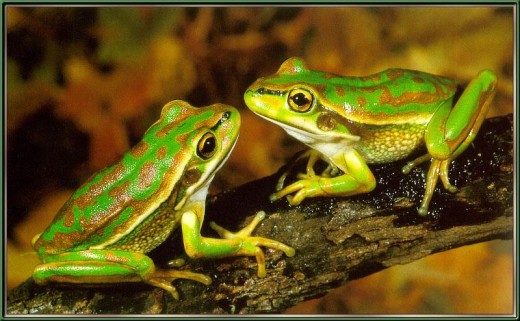
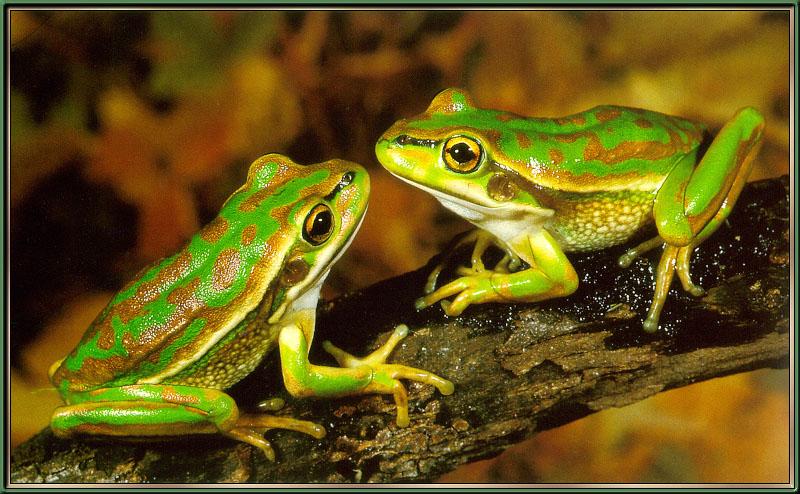
Endangered Green and Gold Bell Frogs (Litoria aurea)
.
Lake Wollumboola possesses over a square kilometre of seagrass meadows, which provide vital habitat and food sources for the many migratory bird species that seasonally visit the lake. The endangered species Wilsonia rotundifolia is also present.
The woodlands, white sands and translucent waters of Jervis Bay are reminiscent of an early, pristine environment. This park has many facets – woodland and heath, wetland and lake, seagrass beds, bays and beaches. Together they create a place that is especially beautiful. The unique Lake Wollumboola is an integral part of the park with the lake, its foreshores, associated wetlands, creeks and springs interlocking to produce twelve rich waterbird habitats in a relatively small area.
Aboriginal heritage goes back many thousands of years here and local Aboriginal people continue to maintain strong links with places special to them.
Shoalhaven City Council formed the Lake Wollumboola Estuary Management Task Force to prepare the Lake Wollumboola Estuary Management Plan.
With gazetting of the lake as part of the Jervis Bay National Park the Lake Wollumboola Reference Group was established by Department of Environment and Conservation (DEC) to oversee preparation of the Lake Wollumboola component of the Jervis Bay National Park Plan of Management.. The NSW Government is preparing a Sustainability Assessment for Lake Wollumboola, as recommended by the Healthy Rivers Commission Inquiry into Coastal Lakes.
But high human population growth rates in the Shoalhaven places considerable pressure on these natural resources, highlighting the need for appropriate management and investment.
.
Wetlands Under Threat
.
‘Wetlands are among the most threatened ecosystems in the world.
In the past, many wetlands were drained or filled in to create farmland or urban areas. In NSW, regional wetland losses range from 40% to 80% since European settlement. Although no longer openly destroyed, wetlands are currently affected by alteration of natural flow patterns caused either by droughts or by water extraction and regulation of rivers by building dams and weirs. Urban development, land clearing, grazing and use of pesticides can also impact adversely on water quality and the natural water cycles of wetlands.
Another threat to wetlands, and other ecosystems, is climate change. In inland NSW, climate change is expected to modify rainfall, evaporation and flooding patterns, increase droughts and bushfires, change the temperature of water bodies and, along the coast, cause sea levels to rise. This threat will cause the coastline to retreat and saltwater to flood freshwater lakes and lagoons.’
.
[Sources: ^ http://www.environment.nsw.gov.au/nationalparks/parkhome.aspx?id=N0090,
NSW Department of Natural Resources, ^http://test.dnr.nsw.gov.au/estuaries/inventory/wollumboola.shtml
Southern Rivers Catchment Management Authority, ^http://www.southern.cma.nsw.gov.au/our_catchment-shoalhaven.php
NSW Government Land and Property Information , Atlas of NSW – Wetlands, ^http://www.atlas.nsw.gov.au/public/nsw/home/topic/article/wetlands.html]
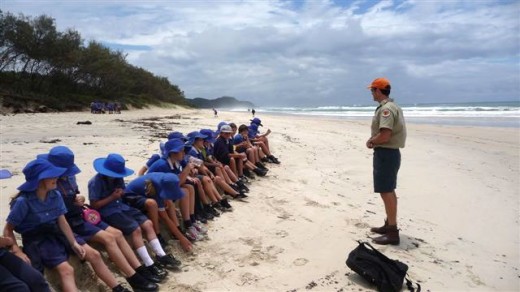
.
.
‘International recognition due to Lake Wollumboola on World Wetlands Day’
.
[Source: Nature Conservation Coucnil of NSW, 20080201, ^http://www.nccnsw.org.au/media/international-recognition-due-lake-wollumboola-world-wetlands-day]
.
The state’s peak environment group has called for the protection of Lake Wollumboola near Culburra Beach on the eve of World Wetlands Day on Saturday 2nd February.
“The Nature Conservation Council calls on the NSW Government to celebrate the unique beauty of Lake Wollumboola this World Wetlands Day and protect it under a Ramsar listing,” Cate Faehrmann, executive director of the Nature Conservation Council said today.
“Lake Wollumboola more than meets the criteria to be protected by an international Ramsar listing.
“Lake Wollumboola is a fragile and unique place that provides a safe haven for many endangered plants and animals like the Little Tern and the Green and Golden Bell Frog.
“Of the nine possible criteria for being protected under the international Ramsar listing, Lake Wollumboola meets five. Only one of these conditions needs to be met to make the area eligible for protection.
“A Ramsar listing for the lake would allow low impact recreational activities to continue, and encourage international nature and Aboriginal cultural heritage tourism and environmental education activities.
“Lake Wollumboola is one of the largest shallow saltwater lake in New South Wales. It often provides a home for thousands of iconic water birds and waders like Swans, Chestnut Teal and Bar tailed Godwits.
“The lake supports at least 43 species of migratory birds large populations of local species, with bird populations estimated at over 20,000,” Ms Faehrmann said.
.
.
During 2001/2 Researchers have been studying the complex processes of Lake Wollumboola, including the presence of Hydrogen Sulfide in the sediments and water column, and the age and rate of deposition of the sediments.
Shoalhaven City Council through its Lake Wollumboola Estuary Management Task Force developed a Community Education strategy for Culburra Beach. This focuses primarily on the Hydrogen Sulfide issue. The National Parks and Wildlife Service is likely to proceed with this program.
.
[Source: http://www.wollumboola.org.au/]
.
.
‘Lake Wollumboola gazetted as part of the Jervis Bay National Park’
.[Source: http://www.wollumboola.org.au/news.php]
.
On 11th December (1997), the Attorney General and Minister for the Environment, Mr. Bob Debus announced his decision to gazette the bed of Lake Wollumboola, the sand bar and surrounding crown land as part of the Jervis Bay National Park. Mr. Debus said the lake is one of the most significant water habitats in the State. “in recent years we have been fortunate to witness an extraordinary natural phenomena on Lake Wollumboola when 20,000 waterbirds at a time gather to feed on the lake’s rich food source.”.
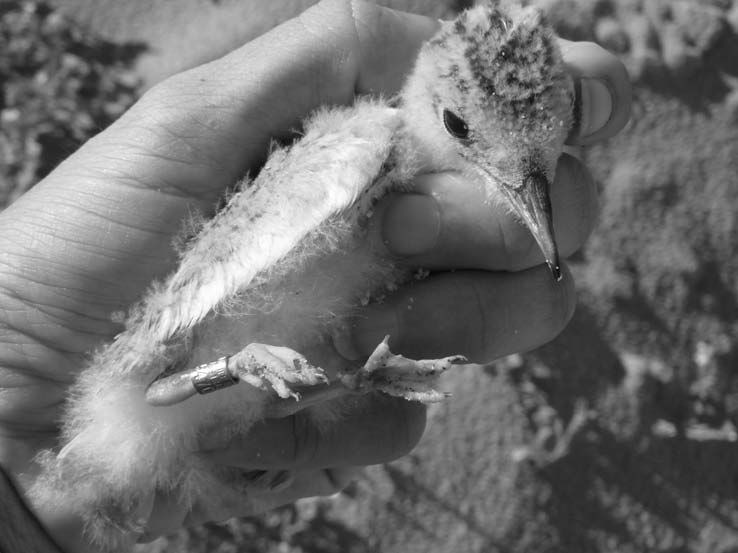
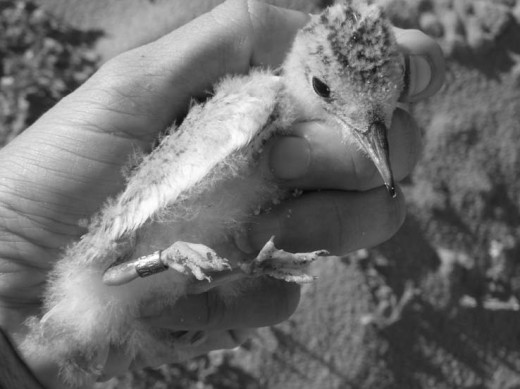 Little Tern chicks at Lake Wollumboola, 2008
(click photo to enlarge) Little Tern chicks at Lake Wollumboola, 2008
(click photo to enlarge)
.
.
.
‘The saviours of Lake Wollumboola’
[Source: Penny Figgis (ACF Vice President and a board member of the Environment Protection Authority of NSW) and Bruce Donald (Sydney lawyer and consultant, and gave voluntary legal advice to the campaign).
© 2000 Australian Conservation Foundation, © 2008 Gale, Cengage Learning, ^http://findarticles.com/p/articles/mi_hb4727/is_4_28/ai_n28789147/
.
In 2008, local conservationists, Frances Bray and Keith Campbell, were celebrated as winners of the Australian Conservation Foundation’s Peter Rawlinson Conservation Award.
‘For more than seven years Frances and Keith, together with many dedicated people in the Lake Wollumboola Support Group, tirelessly fought against a huge subdivision of some 3000 houses that would have unquestionably damaged the unique ecology of the lake and its surrounding forest.
Lake Wollumboola is one of the New South Wales coastline’s last remaining, virtually pristine, coastal lakes that intermittently open and close to the sea. It lies at Culburra Beach between the mouth of the Shoalhaven River and Jervis Bay. The lake is on the Register of the National Estate, is a wetland of key significance and a habitat for resident and migratory birds of international importance. Several threatened species have been identified within the area, including the green and gold bell frog which is seasonally abundant in the grassy edges of the lake.
For most of the past century the land around the lake was within the paper subdivision plans of the only major developer of the Shoalhaven, Realty Realizations. In the early 1990s the company finally achieved a rezoning of the land by the Shoalhaven City Council and the government of the day. The subdivision carried with it the threat of serious pollution from urban run-off, loss of forested habitat and increased recreational pressures, including demands to prevent the lake’s natural cycle of periodic draining.’
.
In for the long haul
‘Although the politics and regional power dynamics were against them and government departments were equivocating, Frances Bray and Keith Campbell refused to consider the battle lost. Together with the Lake Wollumboola Support Group, they mobilised all the effort needed to begin the task. Their dogged campaign finally achieved a decision in 1995 by the Minister for Urban Affairs and Planning to remove from the council its ability to approve the subdivision. Then, in 1996, a Commission of Inquiry into the subdivision was appointed.
At this point Frances and Keith enlisted some voluntary legal back-up and achieved a historic grant of legal aid for the inquiry from the New South Wales Legal Aid Commission. Though small, this grant helped obtain high calibre water, fauna, vegetation and social impact reports from acknowledged experts to give independent substance to their case. This also contributed to a reversal by National Parks and Wildlife Service on the first day of the inquiry of its previous decision that a Faunal Impact Statement was not necessary. Gradually over the extended four years of the inquiry the support of the principal regulatory agencies gathered force.
All of this, however, was achieved against strident support for the development at the local level. Local media targeted Frances, Keith and their colleagues with all the familiar distressing and defamatory charges that make this sort of campaign emotionally exhausting for those in the front line. These attacks continued over the duration of the inquiry and, with the enormous demands of preparing submissions of a high quality and responding to the voluminous information advanced by the developer, lesser campaigners would have been knocked out of the race. Yet they completed an outstanding and detailed submission, now held by the Environmental Defenders Office (NSW) as the leading precedent for pro-environment representation.’
.
Inspiration for us all
‘The tireless and exhausting efforts by these two remarkable campaigners and their colleagues was rewarded when on 5 April 2000 the Commission of Inquiry ruled for the environment and against the development, adopting nearly all of Frances and Keith’s submissions.
Then on Friday 2 June, just a few days before ACF announced its award, Deputy Premier and Planning Minister, Dr Andrew Refshauge, announced the government’s decision to refuse the proposed residential subdivision within the catchment of the lake.
The ACF Peter Rawlinson Conservation Award presents a fitting opportunity for a more public recognition of these brave and passionate people who were not prepared to stand and watch the loss of a place of such enormous value. They are fitting winners of the environment movement’s highest accolade.’
.
‘Turning Point for Lake Wollumboola’
[Source: Frances Bray, (2000), NPA supporter and Convenor of the Lake Wollumboola Support Group, ^http://dazed.org/npa/npj/200012/Deccover.htm]
.
This has been an extraordinary year for coastal protection generally, and for Lake Wollumboola in particular. The Premier, the Hon Bob Carr, outlined new policy directions. The NSW Government announced in April that the catchments of five South Coast lakes would be protected as national parks. It then requested the Healthy Rivers Commission to conduct an inquiry into the protection and management of coastal lakes. The Coastal Lakes Inquiry issues paper brought further good news, with its proposals for Lake Wollumboola and eight other South Coast lakes to be protected as reserves and considered for World Heritage listing.
Then on 2nd June the Deputy Premier and Minister for Urban Affairs and Planning, Dr Andrew Refshauge, announced his decision to refuse the Long Bow Point subdivision application, at Culburra Beach near Nowra on the South Coast. The proposal involved development of 837 housing lots, stage 1 of a 3,000 lot development, mainly in the catchment of Lake Wollumboola (see also June NPJ). He said,
“The evidence is overwhelming – our primary concern must be the long-term protection of the Lake.”
Members of the Lake Wollumboola Support Group are overjoyed by the Minister’s adoption of our case. The group has been campaigning, since 1993, to stop the development because of its likely destructive impacts on the unique ecology of this most fragile of coastal lakes and its catchment.
Our group was formed in response to Shoalhaven City Council seeking comment at the commencement of the Estuary Management Study for Lake Wollumboola. Soon after, we learned of plans by Realty Realisations, a landowner and developer, for a massive development primarily in the catchment of the lake. We decided to work to protect the lake, and to inform the Culburra Beach community on related issues.
.
A unique ecology
Lake Wollumboola is located just north of Jervis Bay. Maps and records from 1805, when the first Europeans came to the area, confirm that Lake Wollumboola was much the same then as it is today and that the area provided a rich environment for Aboriginal people. The Jerringa people maintain today their traditional cultural ties with Lake Wollumboola and the Beecroft Peninsula.
Lake Wollumboola is an intermittently closing and opening lake. It is particularly vulnerable to urban pollution and disturbance because it is shallow, above mean sea level and is infrequently open to the sea, causing high nutrient levels to build up in the sediments. Additional pollution is likely to maintain permanently eutrophic conditions, with algal blooms, death of seagrass and ultimately decline of the lake’s extraordinarily rich ecology.
Inter-glacial wave-cut reefs and rock platforms form much of the lake bed. The lake’s catchment is coastal bushland, wetland and heath of significant biodiversity, with at least 300 species each of flora and fauna at Long Bow Point, and at least 33 threatened species in the immediate catchment. Green and golden bell frogs are reasonably abundant around its shore, as well as the extremely rare wetland plant Wilsonia rotundifolia.
The lake is listed on the Register of the National Estate, in the Directory of Wetlands of national significance, and meets the criteria for listing under the Ramsar Convention as a wetland of international significance for water birds.
Lake Wollumboola is recognised and protected under migratory bird agreements with China and Japan as internationally significant habitat. At least 43 species of migratory birds, including little terns, have been identified, as well as large populations of local species such as black swan, teal and royal spoonbill. In the summer of 1999 a spectacular bird event occurred, with populations in excess of 20,000 and high bird populations are continuing.
.
Long-standing conflict
Conflict between protection of the natural environment of the Jervis Bay region and inappropriate development is long-standing. Since the early 1900s, Realty Realisations (the principal landowner in the region) has floated various plans to develop paper subdivisions in environmentally sensitive areas. There is equally a long history of efforts to protect this unique area. Myles Dunphy in the 1940s and NPA in 1974 put forward proposals to Government to protect the lake and the Beecroft Peninsula to its south.
The NPA case for national park status, as quoted by Alan Catford in the National Parks Journal, August 1974, says, “The club-shaped Beecroft Peninsula, which backs Point Perpendicular, the northern part of Jervis Bay, combined with the magnificent lagoon of Lake Wollumboola and the connecting lowland, is an ideal national park. Variety is surely its keynote.”
Realty Realisations and Shoalhaven City Council had other ideas. In 1992 the north-west area of the catchment was rezoned to residential as the Culburra Urban Expansion Area, by agreement between Realty Realisations, the Council and the NSW Government.
In 1995, Shoalhaven City Council was poised to approve the Long Bow Point Subdivision application, despite our protests and the reservations of several government agencies. Following the election of the Labor Government, the then Minister for Urban Affairs and Planning, Craig Knowles, in August 1995 called in the Long Bow Point subdivision and subsequently agreed to establish a Commission of Inquiry (COI).
In October 1996, Commissioner Carleton convened the first session of the Long Bow Point Subdivision COI. The Lake Wollumboola Support Group, the Culburra Beach Progress Association and, finally, the government agencies, opposed the subdivision. The NPWS reversed its previous position and advised that a Fauna Impact Statement (FIS) would be required. At the resumption of the Inquiry in November 1996, the Commissioner adjourned it indefinitely at the request of the developer, to allow for completion of a FIS.
The following three years of waiting were very stressful. In March 1998 we suffered a major setback with the release of the NPWS’ Assessment of the Natural Heritage Values of the Culburra Urban Expansion Area and Environs. While this report recommended consideration of national park or marine park status for Lake Wollumboola and recognised the high conservation values of much of the proposed development site, it recommended to the Minister for the Environment that the Government not purchase Long Bow Point. The Minister, Pam Allen, accepted this recommendation, to our great disappointment. Nevertheless, the Government purchased a large area of land between Jervis Bay and the southern shore of the lake, which is now part of Jervis Bay NP.
In November 1999, the COI reconvened, with the final hearing in January this year. In April, the COI report was released, recommending refusal of the subdivision because of its likely impact on Lake Wollumboola and its catchment. On 2 June, Dr Refshauge announced his decision to refuse the subdivision and to establish a review of planning controls and environmental management for the catchment.
.
Techniques for success
The success of our part in this landmark decision was due to several factors.
We studied and recorded the behaviour of Lake Wollumboola, analysed and interpreted research and expert advice. With the assistance of a Legal Aid Commission grant, we obtained advice from a highly professional group of experts who supported us in our submissions and presentations. Their original data and research covered water quality; evaluation of water-pollution control measures; ecology of the lake and its catchment, particularly its extraordinary birdlife; environmental law; and social and economic impacts of the proposed development.
We also worked closely with environment groups who gave us expert and strategic support, in particular Total Environment Centre, NPA, Nature Conservation Council, the Australian Conservation Foundation (ACF) and our local coalition of environment and community groups, the Jervis Bay Regional Alliance.
On World Environment Day, a few days after Minister Refshauge’s announcement, ACF recognised our efforts by awarding Frances Bray and Keith Campbell the Peter Rawlinson Conservation Award. This prestigious award focuses national attention on the lake and will assist us greatly in our ongoing campaign: to have Lake Wollumboola and its catchment protected from urban development for all time.
We are delighted also that the Lake Wollumboola Support Group has received local recognition. Narelle Wright, Frances Bray and Keith Campbell were honoured with Shoalhaven Healthy Cities awards, for their efforts to protect the lake.
Whilst the refusal of the Long Bow Point subdivision provides breathing space, the future of protection of Lake Wollumboola is not yet guaranteed. We hope this year represents the turning point, with the Healthy Rivers Commission Coastal Lakes Inquiry issues paper adding further weight to the Lake Wollumboola cause.
We hope other local environment groups will take heart from our success so far and join us in supporting these significant proposals.
.
References
-
- The Hon Bob Carr. Speech to the Brisbane Institute, A Matter of National Importance – Protection of the Australian Coastline. April 2000
- Healthy Rivers Commission. Independent Inquiry into Coastal Lakes – Issues Paper. October 2000
- Ministerial media release, 2 June 2000
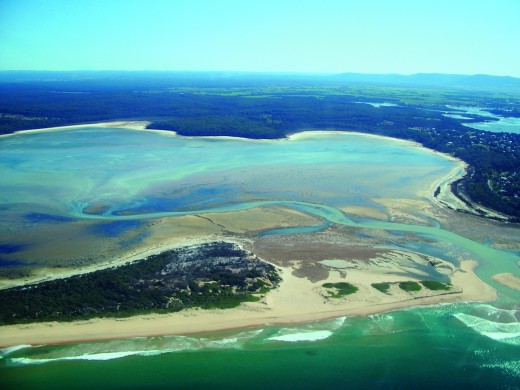 Lake Wollumboola – nominated RAMSAR wetland
(click photo to enlarge, then click to enlarge again!) Lake Wollumboola – nominated RAMSAR wetland
(click photo to enlarge, then click to enlarge again!)
.
.
History of Estuary and Catchment Use and Abuse
.
[Source: ‘Coastal Management in Australia – Key institutional and governance issues for coastal natural resource management and planning‘, (2006), published by the CRC for Coastal Zone, Estuary and Waterway Management, and supported by The Australian National University and the National Sea Change Taskforce, ^http://www.griffith.edu.au/__data/assets/pdf_file/0006/313359/Coastal_Management_in_Australia.pdf [Read More]
.
‘Critical to human health and the biological health of coastal waterways are factors influencing the discharge of waters, sediments, nutrients and pathogens into rivers and estuaries.
Throughout the 19th and 20th centuries, land clearance, soil erosion and urbanisation (including canal estates) have all contributed to the cumulative degradation of rivers, estuaries and coastal lakes.
Symptoms of the degradation are many including:
- Siltation of channels, which in some cases like on the Hunter has resulted in downstream displacement of shipping ports, and in the burial of estuarine sea grasses;
- Increased levels of nutrients, especially nitrogen and phosphorus, which are key elements for plankton and plant growth and trigger algal blooms when they reach excessive levels; and
- The presence of pathogens which may be digested by humans causing death and ill-health following consumption of seafood, or ingested while swimming.
.
Quite clearly urbanisation and deforestation has had some effect along the east coast.
The saga of Wallis Lake since the oyster contamination event of 1997 is there to remind us of the sensitivities of waters to pollutants. These sensitivities are not just biophysical and economic, but also lead to complex judicial proceedings on responsibilities under the common law concept of ‘duty of care’ as determined in the Wallis Lake case by the High Court.
We know that increasing nutrient loads or even the sediment loads from catchments into estuarine and lake systems may not trigger much change as these systems have considerable resilience to varying biophysical conditions. However, the fear is always that a lake/lagoon or estuary backwater will go beyond the ‘critical load point’. Turbidity and phytoplankton will then dominate.
It was such a concern that encouraged the then Planning Minister for NSW, Andrew Refshauge, in 2001, to stop a 2000-lot subdivision at Lake Wollumboola on the NSW south coast. This was at a location which years before had been zoned for such intensive urban use.’
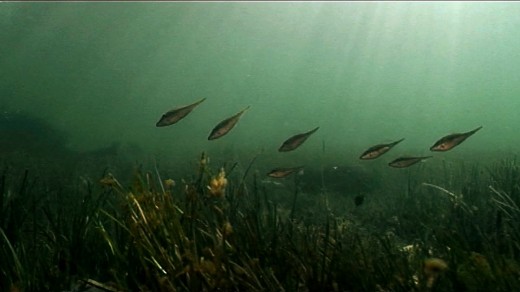
Seagrass Meadow
Source: ^http://www.hn.cma.nsw.gov.au/
..
‘Lake Wollumboola- Listing as a Ramsar site’
[Source: Amanda Findley, Shoalhaven Greens blogsite, 20110628, ^http://amandashoalhavengreens.blogspot.com/2011/06/lake-wollumboola-listing-as-ramsar-site.html]
 Black Swans and Teal (left) on Lake Wollumboola
© Photo by Frances Bray
(click photo to enlarge, then click to enlarge again! ~ you’re being looked at.) Black Swans and Teal (left) on Lake Wollumboola
© Photo by Frances Bray
(click photo to enlarge, then click to enlarge again! ~ you’re being looked at.)
.
.
‘Shoalhaven Council is it so narrow minded that it will not support taking a step forward in listing a lovely wetland in the RAMSAR register? seems so.
Department of Environment and Heritage have approached Council to advise that they wish to begin the process of talking to the community about listing this special little lake as a significant wetland- local campaigner Frances Bray sent the following letter to Council to try and influence tonights decision making.
Thanks Frances for allowing me to share this and your great photo of the swans and teals.’
~ Amanda Findley.
————————–
‘To General Manager and Shoalhaven City Councillors,
Please circulate this message to all Councillors,
I understand that at your meeting on Tuesday next, that you will consider a recommendation to oppose the listing of Lake Wollumboola as a Wetland of International importance under the Ramsar Convention.
Today I have been on a bird counting walk at Lake Wollumboola with ornithologist, Ms Joy Pegler. The Lake is an astonishing site, with Joy counting 1100 Black Swan, 957 Grey Teal and 536 Chestnut Teal, as well as 9 other species.
Here is a photo of some of the birds which are easily viewed from the north shore. Do come and enjoy this wonderful experience.
I urge you to think carefully about the benefits of Ramsar listing. Increased monitoring and research into this unique Lake would benefit its management, whilst maintaining current recreational activities. There would be significant benefits for the Aboriginal community from employment in management and Cultural tourism opportunities if community members choose to support Ramsar listing. The local and wider Shoalhaven community would benefit too from carefully promoted and managed national as well as international tourism.
The Lake Wollumboola Protection Association Inc as well as many Culburra Beach residents and ratepayers strongly support Ramsar listing, knowing the special qualities of the Lake especially for birds and understanding that Lake Wollumboola meets the relevant Ramsar criteria.
We understand that the NSW Office of Environment and Heritage is in the process of consulting the Aboriginal community regarding its views and we respect the need for that consultation to continue before the Office proceeds with consultation with the wider community.
Please do not jeopardise the planned consultations and the opportunities represented by Ramsar listing.’
Yours faithfully,
Frances Bray.
President Lake Wollumboola Protection Association Inc
.
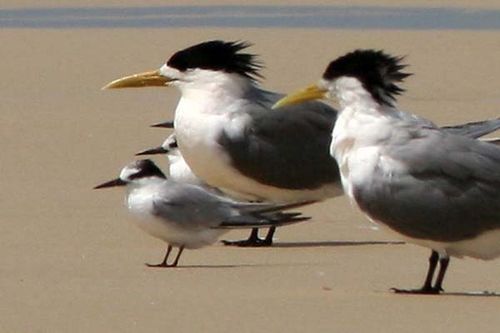 Little Terns Little Terns
.
.
Footnote
.
Ramsar Convention on Wetlands
.
The Convention on Wetlands of International Importance, called the Ramsar Convention, is an intergovernmental treaty that provides the framework for national action and international cooperation for the conservation and wise use of wetlands and their resources. The Ramsar Convention is the only global environmental treaty that deals with a particular ecosystem. The treaty was adopted in the Iranian city of Ramsar in 1971 and the Convention’s member countries cover all geographic regions of the planet.
The Convention on Wetlands is an intergovernmental treaty whose mission is “the conservation and wise use of all wetlands through local, regional and national actions and international cooperation, as a contribution towards achieving sustainable development throughout the world”. As of October 2010, 160 nations have joined the Convention as Contracting Parties, and more than 1900 wetlands around the world, covering over 186 million hectares, have been designated for inclusion in the Ramsar List of Wetlands of International Importance.’
The Ramsar Mission
‘The Convention’s mission is “the conservation and wise use of all wetlands through local and national actions and international cooperation, as a contribution towards achieving sustainable development throughout the world”.
The Convention uses a broad definition of the types of wetlands covered in its mission, including lakes and rivers, swamps and marshes, wet grasslands and peatlands, oases, estuaries, deltas and tidal flats, near-shore marine areas, mangroves and coral reefs, and human-made sites such as fish ponds, rice paddies, reservoirs, and salt pans.’
.
What are wetlands?
.
‘As defined by the Convention, wetlands include a wide variety of habitats such as marshes, peatlands, floodplains, rivers and lakes, and coastal areas such as saltmarshes, mangroves, and seagrass beds, but also coral reefs and other marine areas no deeper than six metres at low tide, as well as human-made wetlands such as waste-water treatment ponds and reservoirs.’
The Wise Use Concept
.
‘At the centre of the Ramsar philosophy is the “wise use” concept. The wise use of wetlands is defined as “the maintenance of their ecological character, achieved through the implementation of ecosystem approaches, within the context of sustainable development”. “Wise use” therefore has at its heart the conservation and sustainable use of wetlands and their resources, for the benefit of humankind*.’
.
[Source: ^http://www.ramsar.org]
.
*Editor: “for the benefit of humankind‘? Why so anthropocentric? It is not as if humankind has not benefited itself since it could at the expense of other species.
A more appropriate ending phrase would be:… “out of respect for the ecological rights of wetland-dependent species and ecological communities for survival, health and natural life processes, undisturbed”.
.
Further Reading:
.
[1] Lake Wollumboola Protection Association Inc. ^ http://www.wollumboola.org.au/
[2] ‘ Management of Amphibian Populations in Booderee National Park, South-Eastern Australia‘ (2010), by Trent D. Penman (University of Wollongong) and Traecey Brassil (NSW Department of Primary Industries) [ Read More]
[3] ‘Giving Little Terns Their Best Chance of Survival – Lake Wollumboola Little Tern Conservation Program’, (2008), by Frances Bray, ^ http://www.coastalconference.com/2008/papers2008/Bray,%20Frances%20Session%205A.pdf
[4] ‘ South Coast Shorebird Recovery Programme (2008/09 Breeding Season)’, ^ http://www.southcoastshorebirds.com.au/shorebird_downloads/annual_report/Shorebird%20Report%20200809final.pdf
[5] ‘Illawarra Bird Observers Club, Inc.’, ^ http://www.iboc.org.au/info/IBOCNewsMay2010.pdf
[6] R.J. Williams, G. West, D. Morrison and R.G. Creese, (2006), ‘ Estuarine Resources of New South Wales’, prepared for the Comprehensive Coastal Assessment (DoP) by the NSW Department of Primary Industries, Port Stephens.
[7] R.J. West, C.A. Thorogood, T.R. Walford and R.J. Williams. (1985), ‘ An Estuarine Inventory for New South Wales, Australia‘, Fisheries Bulletin 2. Department of Agriculture, New South Wales.
[8] ‘Wise Use of Wetlands‘ (Handbook 1), RAMSAR Convention on Wetlands,^ http://www.ramsar.org/pdf/lib/hbk4-01.pdf [ Read More]
.
– end of article –
Estuary and catchment use and abuse
Critical to human health and the biological health of coastal waterways are factors
influencing the discharge of waters, sediments, nutrients and pathogens into rivers and
estuaries. Throughout the 19th and 20th centuries, land clearance, soil erosion and
urbanisation (including canal estates) have all contributed to the cumulative
degradation of rivers, estuaries and coastal lakes. Symptoms of the degradation are
many including:
• siltation of channels, which in some cases like on the Hunter has resulted in
downstream displacement of shipping ports, and in the burial of estuarine sea
grasses;
• increased levels of nutrients, especially nitrogen and phosphorus, which are key
elements for plankton and plant growth and trigger algal blooms when they reach
excessive levels; and
• the presence of pathogens which may be digested by humans causing death and
ill-health following consumption of seafood, or ingested while swimming.
Quite clearly urbanisation and deforestation has had some effect along the east coast.
The saga of Wallis Lake since the oyster contamination event of 1997 is there to
remind us of the sensitivities of waters to pollutants. These sensitivities are not just
biophysical and economic, but also lead to complex judicial proceedings on
responsibilities under the common law concept of ‘duty of care’ as determined in the
Wallis Lake case by the High Court.
We know that increasing nutrient loads or even the sediment loads from catchments
into estuarine and lake systems may not trigger much change as these systems have
considerable resilience to varying biophysical conditions. However, the fear is always
that a lake/lagoon or estuary backwater will go beyond the ‘critical load point’. Turbidity
and phytoplankton will then dominate. It was such a concern that encouraged the then
Planning Minister for NSW, Andrew Refshauge, in 2001, to stop a 2000-lot subdivision
at Lake Wollumboola on the NSW south coast. This was at a location which years
before had been zoned for such intensive urban use.
Tags: Allen Price and Associates, Beecroft Peninsula, Birds (Migratory), Caspian Tern, Culburra Beach, golf course development, Jervis Bay National Park, keeping it real, Lake Wollumboola, Lake Wollumboola Protection Association, Little Tern, Ramsar Convention on Wetlands, Ramsar Wetlands, Shoalhaven, Shoalhaven Council, Southern Rivers Catchment Management Authority
Posted in 07 Habitat Conservation!, Birds (Migratory), Threats from Development | No Comments »
Add this post to Del.icio.us - Digg
Saturday, August 6th, 2011
On August 6th, 2011 Tigerquoll on CanDoBetter.net stated:
 to know one’s fate to know one’s fate
.
Globalisation is evangelised as the modern religion of humanism. But dare criticise it and so invoke the blind wrath of SBS devotees, and be cast out, branded a facist racist and persecuted as if a 1692 Salem witch – burned at the stake!
.
Yet the demise of local values, endemic plants, endemic animals and traditional peoples are under barrage from the human pathogen. The torrent of human numbers, morphing influence and power out of the hands of incumbent local populations into the hands of the immigrant, who arrives, breeds, colonises and usurps. At least Julius Caesar left after he came, saw and conquered.
Every immigrant (alien) who steps off a plane, every introduced plant (weed), every introduced animal (feral) compounds the human pathogen against endemic species and peoples. Our 21st Century has the most humans ever. Climate change is not the problem.
.
Beachhead immigration in Australia has prevaded local society into becoming a preferred choice of Labor MPs.
It’s no different to VicForests logging Potoroo forest habitat throughout Victoria’s East Gippsland and then introducing sheep. Then there is the bizarre argument of one breed of ferals proclaiming more rights over that of another.
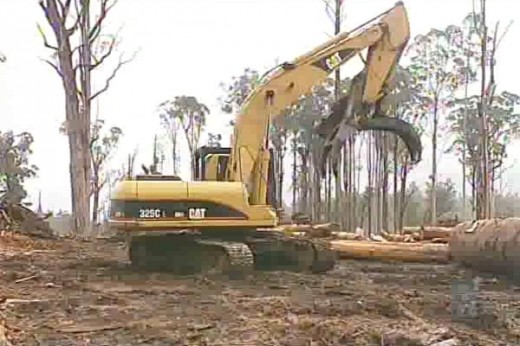 the absolute power of our species the absolute power of our species
.
.
Read the following article:
.
‘Deer culling attracts wild dogs’
[Source: ABC, Wednesday, 20110427, ^http://www.abc.net.au/rural/news/content/201104/s3201322.htm]
.
‘Wild dogs are encroaching closer into urban areas of Victoria’s east Gippsland.
Leo Hamilton, retired agronomist and 40-year landholder, has lost $1,000 worth of sheep to wild dogs in two months at his fine wool enterprise on the outskirts of Bairnsdale.
He says a formerly minor dog problem is escalating, as shooters try to control feral deer, and their fallen carcasses attract other pest animal predators.
“Sambar deer is not the sort of thing you throw in the back of the ute and cart off. You are talking 300-400 kilos of meat,” he said.
“And you talk to the truckies and the truckies have got the same problem. If they hit one on the road, it is two and half grand to fix the truck.”
Mr Hamilton says wild dogs were controlled in the past, but the behaviour of the large dogs has changed from shy killers for food, to aggressive and savage attacks that maim sheep.
“What is different about this attack is they are not predictable. In the past, the dog has come in and eaten the sheep, but these are unpredictable as they come in at any time, don’t eat the sheep, they mutilate the sheep, they just play with the sheep and maul them.”
Mr Hamilton says the culled feral pest deer weigh 300-400 kilogram, making them too heavy for shooters to remove.
“Their attitude is that they disaster in a couple of days…but they disappear in a couple of days because the wild dogs and foxes eat them.”
He says the wild dog problem is escalating and growing as the sambar deer population spreads to the outer urban areas.’
.
.
.
No mention of the indigenous Potoroo in all that. The controlling ferals are debating inter-feral rights, while the indigenous are ignored, forgotten…relegated to history’s underclass.
.
The terror of invasion. The defeat of a people and their cultural annihilation – resigned, racial hopelessness in the face of an invader’s genocidal ‘business as usual’.
.
Dominant sociopolitical dogma embraces, prescribes and propagates globalisation as global benefiting from cultural sharing and harmonisation of wealth, living standards and life expectancy. Hence AUSAID http://www.ausaid.gov.au/ is hell bent on parting Australia’s wealth to Third World prolific breeders of humanity.
.
But Globalisation erodes all labour industries in societies that have embraced human values of a safe, healthy and meaningful workplace to those backward sweatshop societies that couldn’t give a damn. This is why Australia’s unionised manufacturing which hard fought for OH&S standards has succumed to off-shoring who couldn’t give a damn about their workers.
Cheap products are human cheap, they dismiss human labour as ‘cheap’ – cheap in cost and cheap in value – cheap and nasty. 99% of all products sold in K-Mart are made in China, where cheap labour has supplanted Australia’s manufacturing base.
.
Globalised competition can force a ‘race to the bottom’ in wage rates and labour standards. Profit-imperative employers and government employer-sympathisers brand it euphemistcally ‘trade liberalisation’. Free enterprise in globalisation spares small operators no chance against the market might of multinationals. Only the big survive.
Indigenous and national culture and languages are being eroded by the modern globalised culture – the United States imposes Sarbanes Oxley on the rest of the planet who wish to trade with it.
 the tenet of globalisation the tenet of globalisation
.
Currently ecological conservation efforts are being made to deal with the rabbit population on Macquarie Island in a bid to save and restore the indigenous fauna populations and their habitat.
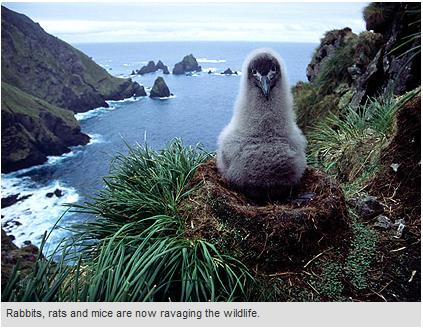 habitat reduced to islands habitat reduced to islands
.
Tigerquoll
Suggan Buggan
Snowy River Region
Victoria 3885
Australia
Tags: beachhead immigration, ferals, globalisation, habitat reduced to islands, human pathogen, humanism, indigenous, invasion, overpopulation, Potoroo, tenet of globalisation, the absolute power of our species, to know one's fate, wildlife extinctions
Posted in 34 Wildlife Conservation!, Threats from Colonising Species, Threats from Overpopulation, Wildlife | No Comments »
Add this post to Del.icio.us - Digg
Saturday, July 16th, 2011
This article was initially posted on CanDoBetter.net 20090314 by Tigerquoll:
.
Australia claims a noble record of wildlife conservation. These days we rely upon governments to perform their custodial duties to protect Australia’s vulnerable flora and fauna. But our Australian ground dwelling mammals continue to disappear. Is it because of government policy, neglect, under-resourcing, or condoning of habitat destruction?
The key problem is the lack of independent and unbiased biological and zoological measurement.
Year upon year, habitat encroachment through farming, mining, housing and prescribed burning our Australian ground dwelling habitat and its dependent mammalian species, continues to disappear. Recognised tests of habitat health iinclue the change in numbers of top order predators, the mix of biodiversity, and simply the observed presence of fauna, for instance when bushwalking.
Australia’s city-based environmental conservation movement lobbies from time to time, but seriously, if Australia’s species are to be saved from extinction, ignoring the spin from government agencies that man-made bushfire, farming, roads, mining, housing development is ‘sustainable’, billions invested in wildlife sanctaries will avert Australia’s world leading extinction record.
The extinction risk to Australia’s endemic species (rare, threatened, endangered) is that no government department is internationally legally accountable for monitoring the health of the species nor guaranteeing its survival.
Australia’s natural habitat risks decline in a comparable way to that of the Sumatran and Borneo rainforest habitat of the orang-utan.
Thursday, May 26th, 2011
[The following article has been borrowed from a section of a previous article on this website: ‘Blue Mountains copping government-arson‘, since this important message has ramifications beyond the natural areas of the Blue Mountains].
.
– – – – – –
.
.
From the frying pan…
.
When bushfire management can contrive no other excuse for setting fire to native vegetation, like when native vegetation is many miles away from human settlement and so poses no direct threat; out comes a concocted academic theory called: ‘ecological burning ‘. Over how many beers?
When those in whom our community trusts to put out bushfires, decide instead to start setting fires to bushland, and descend instantly into a betrayal of that that trust, to whom can our community entrust to put out bushfires? Government has been proven to suck.
What has happened to ecological values of the bush and the sense of urgency to put out bushfires that threaten both it and us?

.
‘Ecological Burn’ Theory
.
- The ‘ecological burn’ theory starts with the premise that because humans have observed that the Australian bush ‘grows back’ (eventually) after a bushfire, it may be concluded that the Australian bush can tolerate bushfires. This hypothesis relies on evidence that selected species of Australian germinate after smoke and fire and the example of epicormic growth of many Eucalypts after fire.
- The deductive fallacy of this theory is that all the Australian bush is bushfire tolerant.
- This deduction is then extended by unsupported assumption that since the Australian bush is bushfire-tolerant, bushfire must be an integral natural process to which the Australian bush has become adapted to bushfire.
- The assumption is then extrapolated to assert that bushfire is indeed beneficial to the Australian bush.
- The assumption is then stretched even further to conclude that without bushfire the Australian bush will be adversely affected.
- The ecological burn theory then prescribes that by burning the Australian bush, whether by natural or unnatural means, the biodiversity of the Australian bush will be improved.
- The deductive fallacy goes further, to suit the motives of the fire-lighters. The outrageous generalisation is made that all the Australian bush must be burnt at some stage for its own ecological benefit.
.
So the ‘Ecological Burn’ mantra has become:
‘Go forth and burn wilderness. It’ll grow back. It’ll do it good.‘
.
.
Habitat ‘fuel’ gone…so it wont burn now!
.
The perverted irrational logic that Australia’s native vegetation has adapted to recover from bushfire is akin to claiming the human body is adapted to recover from injury such as burns. A wound may heal but no-one seeks to be injured in the first place. And not all wounds heal. A third degree burn to more than 50% of a human body is almost a certain death sentence. What percentage of a wild animal’s body can be burnt and the animal still survive? That’s a perverted question for the fire-lighters.
Broadscale hazard reduction is not mosaic patch-work fire. It is not creating a small scale asset protection zone around the immediate boundary of a human settlement. It is wholesale bush arson that is driving local extinctions. Ever wonder why when bush walking through the Australian bush so few native animals are seen these days? Their natural populations have been decimated through two centuries of human harm – mainly poaching, introduced predation and habitat destruction including by human-caused bushfires and human-abandoned bushfires.
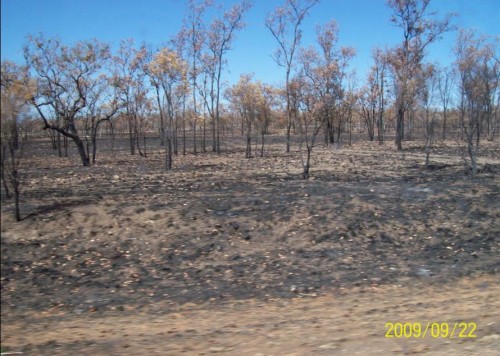 Broadscale incineration of native bushland across northern Queensland
by the Rural Fire Service Queensland.
Habitat ‘fuel’ gone ~ so it won’t burn now! Broadscale incineration of native bushland across northern Queensland
by the Rural Fire Service Queensland.
Habitat ‘fuel’ gone ~ so it won’t burn now!
©Photo by Ann Jurrjens, 20090922.
(click photo to enlarge, then click again to enlarge again).
..
.
.
.
Likely Origins of the ‘Ecological Burn’ myth
.
The concept of the ‘ecological burn’ sounds like the academic contrivance that it is. It is an outpouring from a handful of forestry academics who have successfully sold their consulting services to government under a similarly contrived expertise of being ‘fire ecologists‘ or ‘fire scientists‘. Well, at least ‘garbologists‘ work for a living.
After a major bushfire, an affected and sometimes devastated public cries for answers and the media cash in with their newspaper-selling witch hunt. The responsible government politicians and department directors of the bushfire management deflect accountability away from themselves by instigating a tried and tested ‘bushfire enquiry‘. Those enquiries seek expert evidence and so the ‘fire ecologists’ come out of the woodwork, professing expert insight into the reasons for uncontrolled bushfire and contriving theories for better bushfire management. They invariably proclaim ‘I told you so!
With the frequency of uncontrolled bushfires year after year, there have been so many enquiries across Australia, sufficient to fill bookshelves; each one wastefully gathering dust. Yet with the almost annual disaster recurrence somewhere across Australia, the relevance of ‘fire ecologists’ has morphed fire ecology into an almost full-time occupation – generally on the payroll of the government agencies seeking to justify excuses why they didn’t put out the bushfires in the first place.
The origins of ‘fire ecology’ and to the ‘ecological burn’ theory may be at least traced back to Victoria, an Australian state with perhaps the worst record of bushfire management in the country. During 1999 a series of ‘Fire Ecology Workshops’ were held at Country Fire Authority stations across the state. In that year the ‘Interim Guidelines an Procedures for Ecological Burning‘ was published by Victorian Government’s departments: Natural Resources and Environment and Parks Victoria. References to this and related documents may be found by following the links under References below.
It must have been like an evangelistic mission by these new ‘fire ecologists’, leveraging the common human terror of fire into a way of dealing with that fear once and for all. The final solution would go beyond ‘back-burning‘, beyond the ‘controlled burn‘, beyond ‘hazard reduction‘. It means burning the bush before it burns; but this time on a massive scale, taking the fire-fight to wilderness.
The ‘ecological burn’ theory has gone further. It has brainwashed fire-fighters and natural land managers into believing that burning the bush is indeed good for the bush, good for biodiversity. This is a paradigm cultural shift to a sense of ecological righteousness – by burning the bush you are doing biodiversity a favour. And the fire scientists’ proof of their theory is down to the epicormic growth and the selected native plant species shown to be fire-tolerant, and with that fire-tolerance must be ecologically sustainability. As soon as some green regrowth occurs, they are out taking photos to support and promulgate their theory. ‘Look it grows back’ they claim. Except that these same species that recover from fire have ended up dominating the natural landscape.
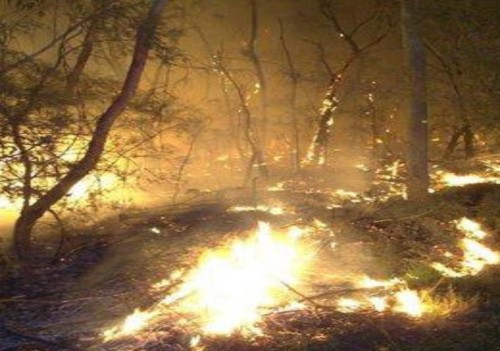 Fire-Lighters’ bliss
.
Fire-Lighters’ bliss
.
‘A Firelighters’ Bliss‘:.
‘a state of profound satisfaction in lighting a bushfire, the equivalent happiness and joy in doing so, a constant pyromaniac state of mind, undisturbed by gain or loss, so long as the lit bush burns fiercely’. i.e. the aroused state of ignition frenzy by either a closet, suspected or convicted bush-arsonist!
.
So forget Aboriginal traditional mosaic burning theory – so passé and so ineffective (below napalm baseline). So the message is officially clear, if you want to avert calamities like Black Friday, Black Saturday and the demonising of the rest of the days of the week, burn the bush in swathes, lest it burn you first. The theory is ecological satanism. It is up there with the Y2K bug. It has led a wholesale conversion of bush fire-fighters into fire-lighters on a grand scale akin to scientology’s hold on young people in the 1970s. It has culminated in an escalation of prescribed burning to an extent well outside any reasonable justification for protecting human life and property from the risk of bushfire. The ‘ecological burning’ extremists evangelise is that burning should be ‘strategic’ and for strategic zones spanning thousands of hectares of wilderness to be targeted for burning. What they avoid problem-solving is why they don’t put out the ignitions in the first place.
‘Ecological fire’ is a myth that has festered into the greatest ‘eco-crime’ in Australia’s history, second only to 19th and 20th Century widespread clear-felling. The ‘ecological fire’ myth is the most devastating driver of man-made extinctions plaguing Australia in the 21st Century.
.
A Test for ‘Fire Ecologists’:
.
Name one case study in Australia published in a peer-recognised scientific journal… in which independent wildlife ecologists have conducted proper before-and-after field tests of fauna-and-flora-biodiversity…where natural (pre-1788) biodiversity has been found to flourish… as a provable result of a broadscale ecological burn!
.
In August 2000, possibly the country’s chief druid of bushphobia, Kevin Tolhurst, produced a report seeking to justify the previous year’s setting fire to most of the Mount Cole State Forest, situated over 20km east of the town of Ararat in Victoria’s central west district. At the time, Tolhurst was part of the School of Forestry at the University of Melbourne.
Part of the report included, Appendix 3: Guidelines for the Ecological Burning in foothill forests of Victoria, in which an overview of the Mt Cole Case Study was provided. Notably, this report is provided not found on the University of Melbourne website, but that of the Department of Primary Industries of Victoria website. Clearly the ‘ecological burning’ concept stems not from preferred prestigious academic credentials, but moreso from politically motivated Primary Industries exploitive expedience.
The primary vegetation types targeted were ‘grassy dry forest’ and ‘herb-rich foothill forest’ which had not been burnt for an estimated 35 years, according the Natural Resources and Environment (Vic) corporate GIS database.
.
Tolhurst’s report states:
“Mt Cole State Forest was selected on the basis of having extensive areas of long-unburnt vegetation. A couple of areas within the forest had already been earmarked for prescribed burning from a fire-protection point of view. Mt Cole is an extensive area of easily defined forest with a wide range (of) vegetation types, ages, uses and values. The landscape management unit used in this example is about 32,000 ha in extent if which about half is forested and the other cleared for agriculture. There is little functional connection between this forest area and any other forest.”
“..The broad ecological management objective for Mt Cole State Forest, as part of the Midlands Forest Management Area is to : ‘Ensure that indigenous flora and fauna and communities survive and flourish throughout the Midlands Forest Management Area.”
…Flora and Fauna Inventory:
“Species found in study area as a result of a ramble survey of approximately 20 minutes at each location.”
.
Clearly, the motive underlying the so-called ‘ecological burning’ was the irrational fire-lighting cult fear of ‘long-unburnt vegetation’ daring to remain unburnt or so long – a symptom of bushphobia. ‘From a fire-protection point of view’ is the real motive and so it was convenient to just set fire to the lot. So some 32,000 hectares of a surviving island of native habitat was torched. After decades of agricultural land clearing Mt Cole State Forest had indeed been sadly reduced to having “little functional connection between this forest area and any other forest.” So why not just wipe the rest off the face the Earth? It probably stood out like a sore thumb coloured red for ‘high risk on ‘strategic’ CFA maps anyway.
And the blanket ‘ecological burn’ would see to it to ‘ensure that indigenous flora and fauna and communities survive and flourish throughout the Midlands Forest Management Area.”
Perhaps, post-burn, a similar 20 minute flora and fauna inventory was conducted in the CFA truck with a few tinnies, playing… ‘first-to-spot-the-first-bloated-blackened-wombat‘.
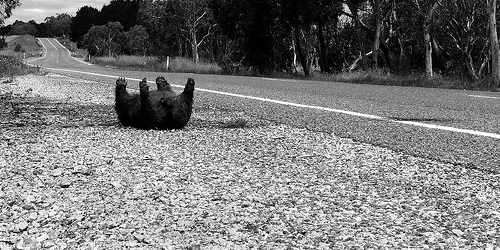 Dead Wombat Dead Wombat
.
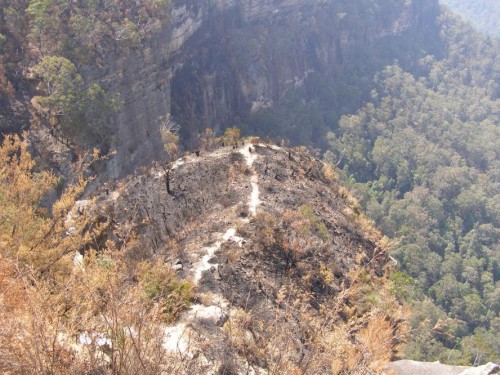
Defacto Hazard Reduction on the Grose Valley Escarpment, 2006
The fragile yet complex and vital soil biota of the escarpment built up over perhaps centuries,
gone after subsequent rain.
Habitat ‘fuel’ gone ~ so it won’t burn now!
(click photo, then click again for zoom details)
[Photo is ours, so free in public domain]
.
.
.
.
References
.
[1] ‘ Management of Fire for the Conservation of Biodiversity‘ – Workshop Proceedings, May 1999, Fire Ecology Working Group (Gordon Friend, Michael Leonard, Andrew MacLean, Ingrid Sieler), Natural Resources and Environment, Parks Victoria, ^ http://www.dpi.vic.gov.au/CA256F310024B628/0/0F55F0F75BFB3FCECA257231000D9F4D/$File/Mgt+of+fire+for+Cons+and+Biodiv.pdf.
.
[2] ‘Appendix 3: Guidelines for the Ecological Burning in foothill forests of Victoria’, Department of Primary Industry (Victoria) website, ^ http://www.dpi.vic.gov.au/CA256F310024B628/0/CC122443185E3E38CA257231001076A7/$File/MgtofCons_MtCole_CaseStudy_p21-27.pdf.
.
* Above references accessed 20110526.
.
.
– end of article –n
Tags: bush arson, bushfire tolerant, dead wombat, defacto hazard reduction, eco-crime, ecological burn, ecological burning, epicormic growth, fire ecologist, fire scientist, fire-lighter bliss, government bush-arson, hazard reduction, prescribed burning
Posted in 36 Tests of Harm!, Threats from Bushfire | 1 Comment »
Add this post to Del.icio.us - Digg
|
|