Australia’s live animal trade cannot be trusted. Animal cruelty offence after offence ignored by Meat and Livestock Australia (MLA) has become recidivist.
This organisation has not only neglected the welfare of Australian animals to slaughter time and again, it has sacrificed the standards of the Australian industry it supposedly represents.
Australian farm animals are being shipped live overseas to be tortured by cultures below Australian morality.
Australia’s entire live export industry needs to be shut down for it systemically being complicit in persistent animal cruelty and immorality.
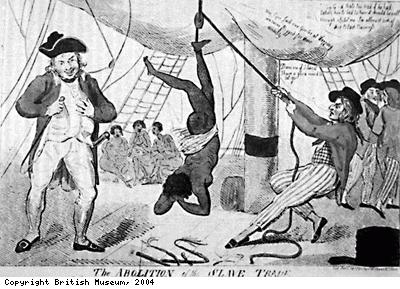
If that means Australian participating farmers and their families go broke, so be it. Australian farmers complicit in this immoral, unscrupulous and unaccountable trade are unworthy of profiting from it. They are no better than those of previous centuries who profitted out of the misery of the human slave trade or the child sex trade.
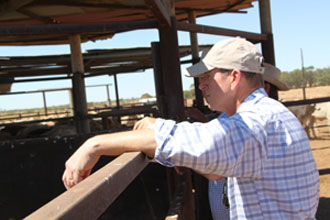
Australia’s Minister for Agriculture, Fisheries and Forestry, Senator Joe Ludwig, ultimately responsible needs to be sacked for recklessly presiding over repeated Australia’s agricultural trade immorality and for his gross incompetence in failing to address systemic animal cruelty for now years.
Senator Joe Ludwig’s legacy of prevailing over an immoral trade and doing nothing but allow it to perpetuate
The entire Meat and Livestock Australia Board of Directors needs to be sacked:
Chairman, Robert Anderson
Managing Director, Scott Hansen
Director, Michelle-Allen
Director, Lucinda Corrigan
Director, Greg Harper
Director, Christine-Gilbertson
Director, Geoff-Maynard
Director, John-McKillop
Director, Peter Trefort
Director, Rodney-Watt
.
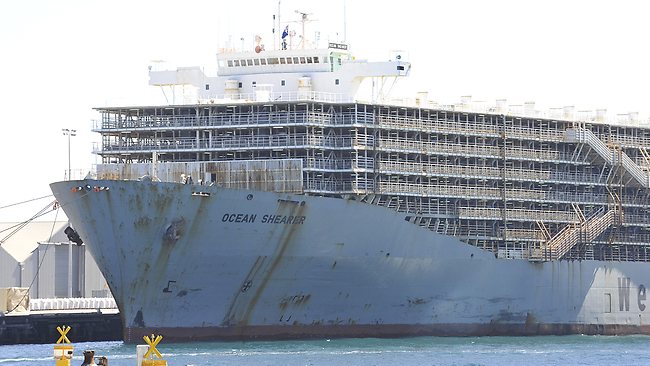
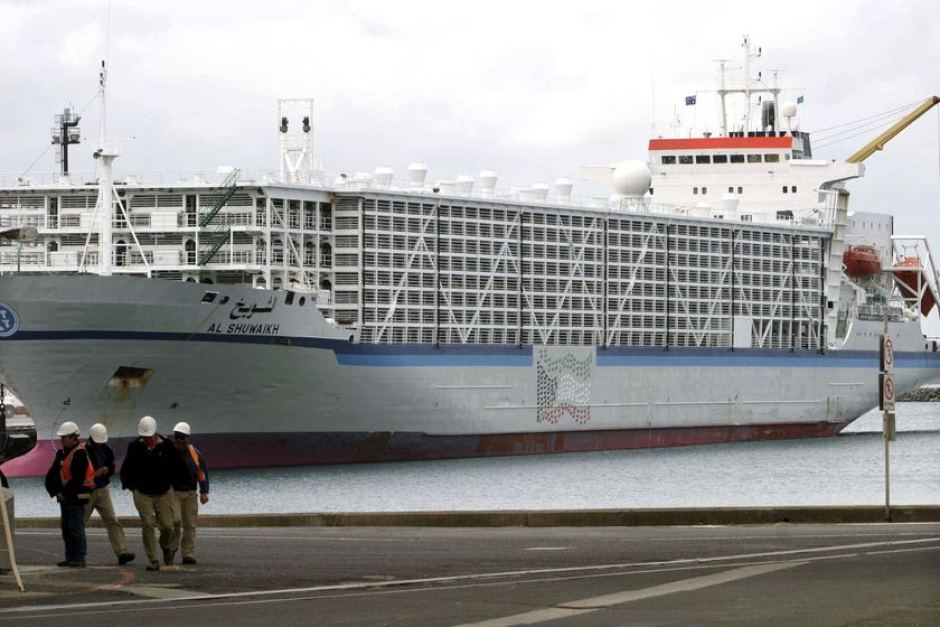
Dodgy Ships, Dodgy Trade
.
WARNING: THE FOLLOWING VIDEOS CONTAIN IMAGES OF ANIMAL CRUELTY
.
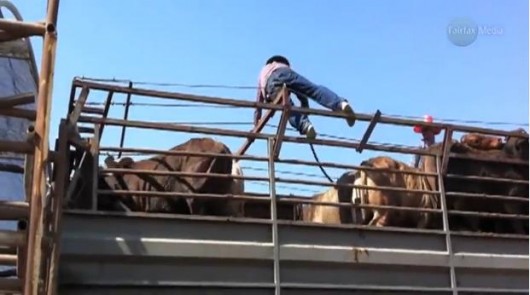
‘Indonesian torture of Australian Cattle in June 2011’
<<New vision obtained by Fairfax appears to show cruelty to cattle in Israel, one of the countries to which Australia exports its livestock.
Fresh evidence of cruel treatment of Australian livestock in foreign markets has raised new doubt about the ability of the government and industry to ensure the welfare of animals exported for slaughter.
Footage obtained by The Age shows filth-covered cattle being belted with spike-tipped poles as they are unloaded from a cramped truck in Israel. More than 43,000 cattle were exported there in 2010.
It comes as cattle exports to Vietnam are about to resume after a seven-year break, raising concern among Labor backbenchers and Animals Australia because of Vietnam’s animal welfare record.
An image taken from the video appears to show cattle being belted with spike-tipped poles.
The film, shot by Israeli group Anonymous for Animal Rights on August 12, shows cattle covered in faeces after their long boat voyage. ”It was quite obvious that the handlers had no training at all, and that the poles had nails or something sharp on the end,” spokeswoman Hila Jerem said.
While the footage is not as confronting as that from Indonesia, welfare groups say it is further evidence of how little Meat & Livestock Australia (MLA) know about foreign markets but are still willing to promote exports to them….>>
.
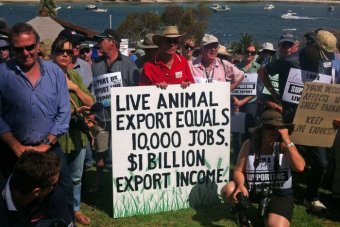
Immoral Trades are Not Worth a CentSome would sell their children for money too.
.
The immoral, illegal Sex Trade still flourishes in some countries too.
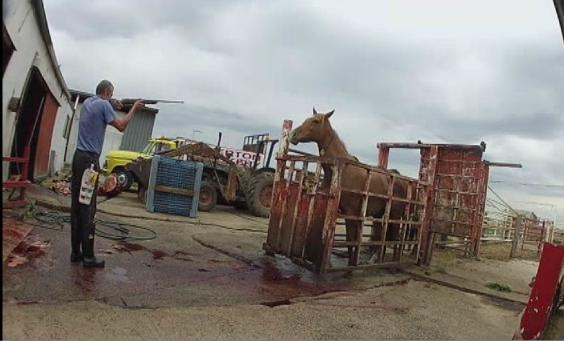
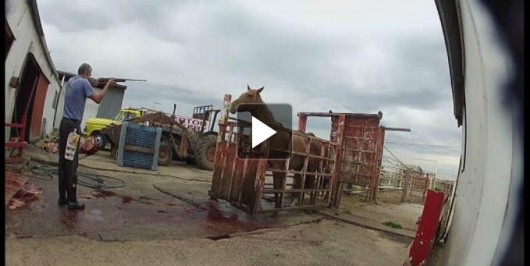
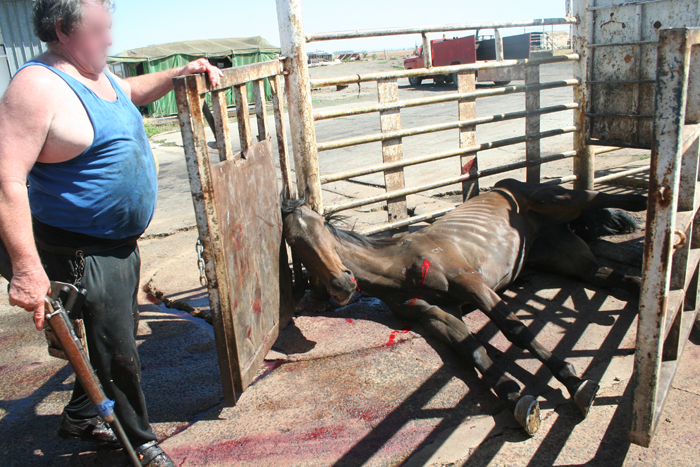
We shoot horses, don’t we?2012: An Australian shooting a beautiful, intelligent, strong, healthy horse
..just because humans decided that this horse is unprofitable for human exploitive purposes:
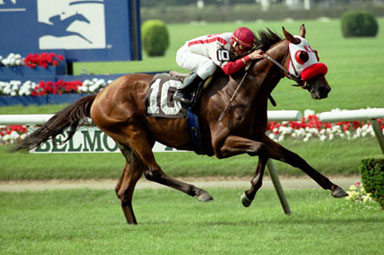
…Horse Racing!
.
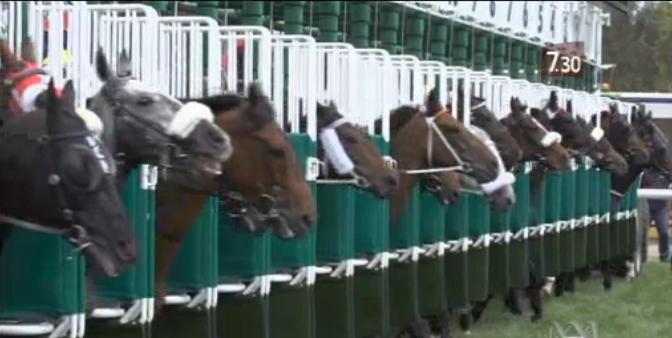
Horses exploited for gambling
.
Introducing The Knacker
.
The Knacker is a person in the trade of rendering horses unfit for human consumption, such as horses that can no longer work. This leads to the slang expression “knackered” meaning very tired, or “ready for the knacker’s yard”, where old horses are slaughtered and made into dog food and glue.
But across Australia, it is not just old horses, but unwanted horses, that are being carted to be slaughtered.
.
Complicit Melbourne Knackeries – worth a peak
(‘Horse Death Camps’ – they arrive not knowing what will become of them, and are slaughtered)
Ballarat Knackery, Finch’s Road, Smythes Creek, Victoria, 3351
.
With four knackers serving Melbourne, demand from the Victorian Horse Racing Industry must be significant.
.
.
‘Moral Universalism’ v ‘Ethical Dilemma’ – ‘Horse Racing’ couldn’t give a…
.
Such primitive and exploitative attitudes toward animals need changing.
‘Putting down‘ a health animal is euphemistic involuntary euthanasia. But such slaughter is inflicted by humans not just upon horses, but upon the entire animal kingdom.
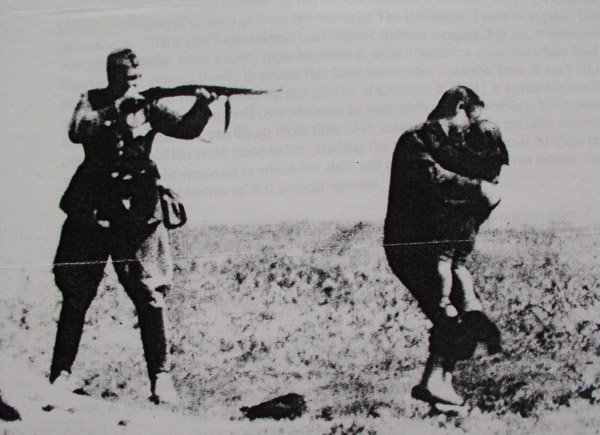
This is what the Nazi’s did to many humans – supposed ‘subhumans’ were judged unworthy of living because they didn’t suit their standards and purpose. It was eupemistically called ‘Eugenics‘.
But what is the moral difference between Nazi selective extermination of unwanted humans and the Horse Racing Industry’s selective extermination of unwanted horses?
Humanity’s treatment of animals remains rationalised nazism, and rationalising is so dangerous that it can make a moral person commit immoral and amoral acts.
.
“Your ability to rationalise your own bad deeds makes you believe that the whole world is as amoral as you are.”
~ Douglas Coupland
.
‘Murder’ or ‘being put down’?
Clearly this is a case of ‘Moral Universalism’ – a gross evil wrong and a disturbing image agreed by all humanity.
It is not a mere ‘Ethical Dilemma’.
Yet 21st Century societies continue to rationalise the exact same treatment of animals as ‘being put down’
and so regarded by the mainstream populous as a mere ‘Ethical Dilemma’.
Complexity is no excuse.
This is rationalised, reinforced, conditioned and ultimately cultural.
.
<<As long as there have been men on the earth, the struggle between man and the subhuman will be the historic rule; the Jewish-led struggle against the mankind, as far back as we can look, is part of the natural course of life on our planet. One can be convinced with full certainty that this struggle for life and death is just as much a law of nature as is the struggle of an infection to corrupt a healthy body.>>
~ Reichsführer-SS Heinrich Himmler, 1935
The year 1935 was only 77 years ago. Nazi persecutions in Germany were then deliberately and systemically rationalised, reinforced, conditioned and ultimately became cultural across mostly an entire population.
The Horse Racing Industry is exploitative of horses and immoral towards horses. It engages in horse eugenics, which is immoral.
Horses are intelligent sentient beings. Barbaric practices belong to past centuries. The 21st Century is an advancement beyond past barbarism.
Moral Sense Test: If what is allowed to horses ought to be allowed to human children.
The following television programme aired last night (20121114) on the Australian Broadcasting Corporation reveals the barbaric truth of the exploitative and murderous operations within the Racing Industry in Australia. It reveals that many horses are bred for the Racing Industry, but also that many horses are murdered like fodder.
.
The exciting public image of Thoroughbred Racing
.
‘What happens to failed racehorses?”
.
What are you going to do to me?
.
Others profit from gamblers on horse racing
.
.
WARNING: The following material includes morally disturbing images/scenes that are highly inappropriate for children to view.
These images/scenes are included in this article in the pursuit of challenging the immorality of prevaling 21st Century cultural reality.
.
.
More than 8,000 bred racehorses a year throughout Australia are murdered for dog food
Click image to replay ABC programme:
‘What happens to failed racehorses?’
[Source: ‘What happens to failed racehorses?’, by Guy Stayner (reporter), Australian Broadcasting Corporation, 20121114,
^http://www.abc.net.au/7.30/content/2012/s3632985.htm]
.
<<Owning a racehorse is promoted as an easy way to amass fame and fortune, but very few win any money at all let alone return their training costs and/or purchase price.
When a thoroughbred destined for racing is born in Australia, its chances of being a successful racehorse are slim. It is estimated that only 300 out of every 1000 foals produced will ever start in a race.
.
That means of the 18,000 thoroughbred foals born each year in Australia alone, an average of 12,600 will be ruthlessly discarded and mostly end up at “the doggers.”
.
Of the horses that do race, one Australian Study found that approximately 40% earned no money at all and only 13% earned enough money to cover costs. These figures did not include the initial purchase price. Dr Paul O’Callahan, Chief Veterinary Steward of the Victorian Racing Club states that approximately less than 2% of horses actually earn their keep.>>
.
Breeding
.
While the racing industry argues that many ex-racehorses are sent to stud for breeding, the number of horses involved in breeding has been in steady decline for many years. Since 2000, the number of breeding mares has declined by 12% while stallions have decreased by 30%. That means that for every horse that is sent to stud, at least one leaves. Nearly all the horses that leave the stud will be killed for dog food.
.
Riding Schools, Private ownership
.
Unfortunately, saving ex-racehorses from euthanasia often condemns them to a worse fate, in a downward spiral of abuse and neglect. Few members of the public have the expertise to care for and handle horses properly, let alone understand how much they eat and how expensive it is to feed even one horse, especially during droughts or where the availability of good quality land for agistment is limited. In these situations a horse may have to be fully handfed. Many horses bought as ‘paddock ornaments’ end up totally neglected and left to starve as a result. Horses sold to riding schools or trail riding clubs can lead a miserable existence of hard work, improper care and insufficient feed.
.
‘But a humane and kind retirement for racehorses in some Elysian field (pagan paradise) is largely an urban myth.’
.
A few lucky ones!
.
There is no doubt there are a few lucky horses that are saved by caring individuals and horse rescue shelters. Unfortunately, the numbers are extremely low due to the expensive costs and the time needed in retraining and maintaining a horse. An average healthy horse costs in excess of $4,000 per year.
.
The Doggers and Abattoirs
.
In a business where making a profit is extremely difficult, it is vital to discard a horse as soon as possible after deciding it is no longer viable. To facilitate this, many trainers have arrangements with transport contractors, knackeries or abattoirs that pick up horses on demand. The horses are often picked up at discreet times to spare track workers, strappers, trainers and owners from the guilt of this sad reality.
Younger horses will generally be killed for human consumption in one of Australia’s 2 horse abattoirs located in Caboolture, Queensland and Peterborough, South Australia. Older horses generally end up as dog (food).>>
.
For more information: Search Google Terms: ‘Horse Slaughter‘, ‘Horsemeat: The Facts‘
.
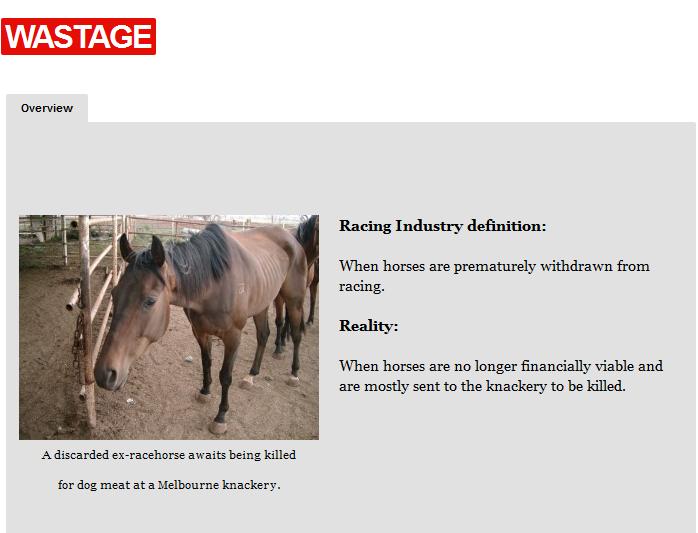
‘Wastage’ – the ‘bycatch‘ of Horse Racing
.
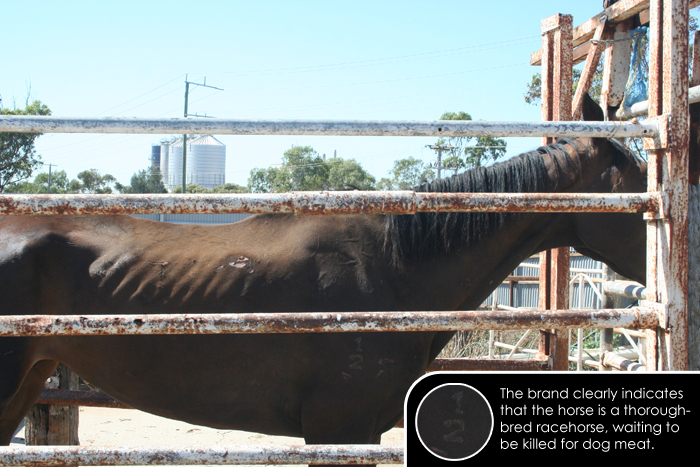
Unwanted Race Horse on Death Row at the Knackery
.
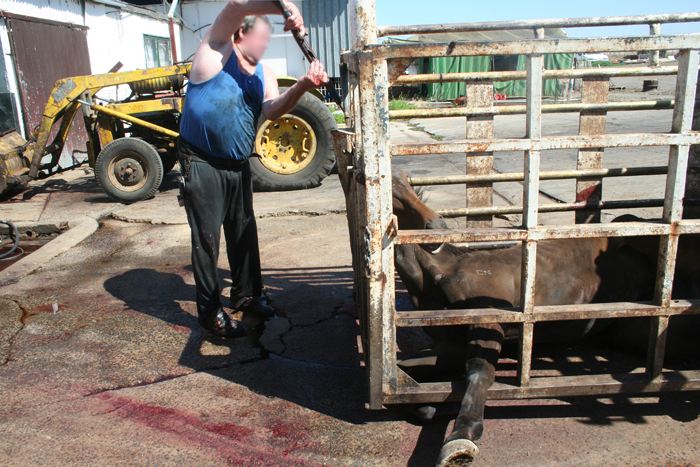
Unwanted Race Horse being murdered at the Knackery
Horse Racing is Immoral – no question Horse Racing breeds, genetically modifies, exploits, then slaughters horses only so that humans can gamble.
Horse Racing is not a sport, just as Cock Fighting and Badger Baiting are clearly not sports.
True Sport is a fair contest involving human physical exertion.
Animal use is not sport but exploitation.
Never bet on a horse race in respect to horses on principle
.
Victorian Racing’s Oak’s Day Fashion
Part of the promotion of race going
…as ethical as wearing fur coats
.
No shortage of profiteers from gamblers on horse racing
<<LEIGH SALES, PRESENTER: The Spring Racing Carnival this year has been dogged by claims of corruption and skulduggery, but there’s another ugly underside to the so-called “sport of kings”. 7.30 has obtained video of failed racehorses being shot for pet food, a fate suffered by thousands of horses around the country each year.
Guy Stayner reports, and a warning: this story contains images of horses being put down.
GUY STAYNER, REPORTER: The dust has hardly settled on the Spring Carnival and the images of Green Moon’s Melbourne Cup victory and the Royal presentation will be replayed for decades.
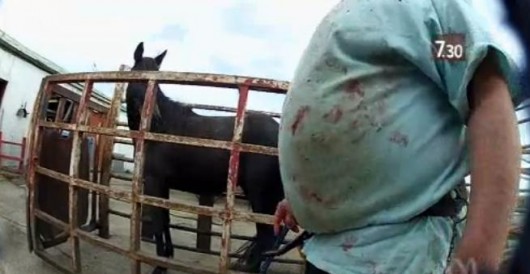
But this is the video the industry would prefer you didn’t see. Horses walking into the killing box for their meeting with the rifleman. This is Cup Week at the knackery.
WARD YOUNG, COALITION FOR THE PROTECTION OF RACEHORSES: The racing industry can’t possibly stand up and say that they love these horses and then the next day when they can no longer earn money on them, send them to the knackery where they will receive a bullet in the head and be killed for dog (food).
GUY STAYNER: The shooting of horses at the Melbourne knackery was secretly filmed by animal activists. Industry insiders estimate 10,000 race horses a year are slaughtered. The majority are used for pet food and horse sales around the country are attended by meat buyers.
At the Echuca sales this month about 100 horses were sold at auction, including failed race horses.
JOHN MOYLE, AUCTIONEER: Lot’s of those horses, contrary to what a lotta people think, actually go to homes and people will test their skills at educating them, breaking them in, using them as a kids’ pony.
GUY STAYNER: The sales can still become a dumping ground for race horses. This obviously injured horse was listed for sale at Pakenham last week.
???: A lot of people just don’t care. Like, they don’t wanna put the money into fixing them.
GUY STAYNER: There were currently about 15,000 thoroughbred foals born every year. The industry calls the number of horses lost to racing each year “wastage”.
Is the so-called issue of wastage a problem for racing?
HUGH WIRTH, RSPCA: A big, big problem and we don’t know how bad it is, but we suspect it’s very bad. We are breeding lots and lots and lots of horses. Some of them fall by the wayside for things that should never happen and that causes wastage.
GUY STAYNER: So is the racing industry breeding too many horses?
HUGH WIRTH: Absolutely.
GUY STAYNER: While the Clydesdale cross can sell for thousands of dollars in the main ring, race horses in the rear saleyards only fetch a couple of hundred.
RACHEL BEATSON, HORSE RIDER: The breeder came up to me and had a chat to me and he said, “She raced a week ago in Wodonga and came 1,400 metres behind last place.” She’s pretty slow. She’s not born to be a race horse.
GUY STAYNER: Not fast, but this horse was very lucky.
RACHEL BEATSON: I knew I had to take her home. She was just gorgeous.
GUY STAYNER: What would’ve happened to this horse if you hadn’t have … ?
RACHEL BEATSON: Dog meat. The dog meat man was bidding against me and I just – I said, “I’m gonna keep going so you might as well stop, buddy.” Yeah.
GUY STAYNER: So what did she cost you?
RACHEL BEATSON: $300. Not much at all.
GUY STAYNER: But finding a new home for a thoroughbred is easier said than done. They cost between $50 and $100 a week to keep and are often difficult to handle.
BILL SAUNDERS, HORSE TRAINER: A lot of horses are quite frazzled by racing and you find that they quite often need two or three months just to sort of come down out of the clouds and eat some grass and generally get used to being a horse again.
GUY STAYNER: Bill Saunders runs a race horse retraining program west of Melbourne. He’s found new homes for 50 former race horses in the past two years.
BILL SAUNDERS: Some of them are quite badly injured or, you know, really difficult in the head in terms of being quite mad, and those horses are probably better off put down. But of the ones that are left, there are many, many that are very suitable riding horses and of course many of them do go out and do exactly that.
GUY STAYNER: While it’s difficult enough to rehome a race horse, about a third never even reach the track.
HUGH WIRTH: Something like 8,500 horses at an early age are excluded from the racing industry. Usually due to injury – mostly due to injury. Mostly due to the fact that they were prepared for racing when they were juveniles and not mature in bone and limb. That’s the big problem for the racing industry.
WARD YOUNG: The racing industry needs to realise that by breeding these animals and by profiting from them while they’re racing and having those sort of benefits, they owe a responsibility to that animal to look after it for its entire life, not just its life while racing.
GUY STAYNER: Racing Victoria admits there is room for improvement and is considering an owners’ levy as part of a new strategic plan on race horse welfare.
BILL SAUNDERS: We have many owners here who’ve actually been prepared to pay money to get their horses retrained in order to give them a good home. Unfortunately it’s not as widespread as I would like it to be.
RACHEL BEATSON: (To horse) We’re gonna be buddies, we’re gonna be buddies.
In 2009, a British agriculture industry website reported the following horse meat production levels in various countries:
Horse meat production levels (2009)
Country
Tons per year
Mexico
78,000
Argentina
57,000
Kazakhstan
55,000
Mongolia
38,000
Kyrgyzstan
25,000
Australia
24,000
Brazil
21,000
Canada
18,000
Poland
18,000
Italy
16,000*
Romania
14,000
Chile
10,000
France
7,500
Uruguay
8,000
Senegal
9,500
Colombia
6,000
Spain
5,000*
* Including donkeys.
[Source: ‘Argentina-Horse Meat world production figures‘, Farming UK, 20090117, retrieved 20110304]
.
[Ed: A horse weighs up to about 500kg, so for every 1 ton, two horses were slaughtered; so according to the above statistics in Australia’s case 48,000 horses were slaughtered in 2009 for horse meat.
.
Animal Activists are brave moral champions exposing the immoral barbaric reality of our forebears, and are to be applauded for doing so.]
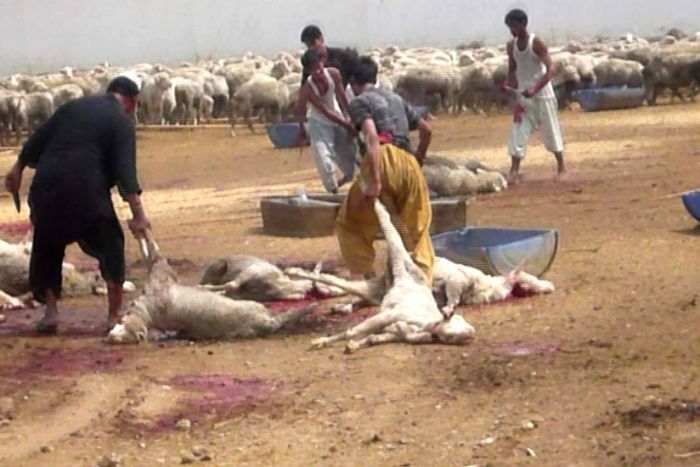
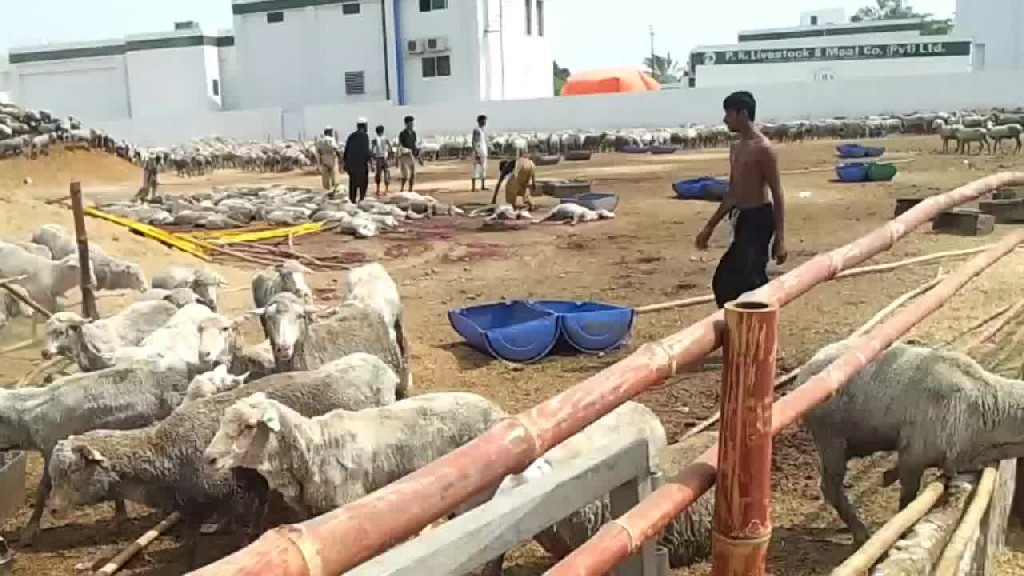
Pakistani animal handling barbarism – business as usual Australia’s Agriculture Minister claims the latest Pakistani incident is (unlike Indonesia) isolated and so he is ‘comfortable’?
.
Australia’s Agriculture Minister, Senator Joe Ludwig, says Australia’s live export program works well and will continue, despite the brutal culling of up to 10,000 Australian sheep in Pakistan in recent weeks.
Senator Ludwig said his department would conduct a full investigation into the latest animal welfare incident, in which thousands of Australian sheep were clubbed, stabbed and buried alive in the town of Karachi on suspicion they were diseased with anthrax and salmonella.
“(Live exports) continues to be a very good trade for Australia. It continues to support jobs and opportunity in rural Australia, it continues to provide employment. All of that means that it is an effective trade and quite a good trade,” Senator Ludwig told ABC radio.
Middle East profitable markets for Australian Sheep – no wonder!
Video has emerged of thousands of Australian sheep being brutally culled in Pakistan with the export company that transported the animals, Wellard, describing it as “disturbing”.
A total of 21,000 sheep arrived in Karachi earlier this month after they were given a positive health check by Pakistan and Australian government officials. They were originally destined for Bahrain but were rejected by the Arab kingdom after they were found to have the common scabby mouth disease.
Local authorities in Karachi said the culling of up to 10,000 sheep was ordered because (they claimed) the animals had salmonella and anthrax.
The owner of the sheep PK Livestock has lodged a court injunction to prevent the remaining animals being killed and a ruling on their future is due to be handed down today.
The owner, and Australian officials, have questioned the finding that the animals were diseased.
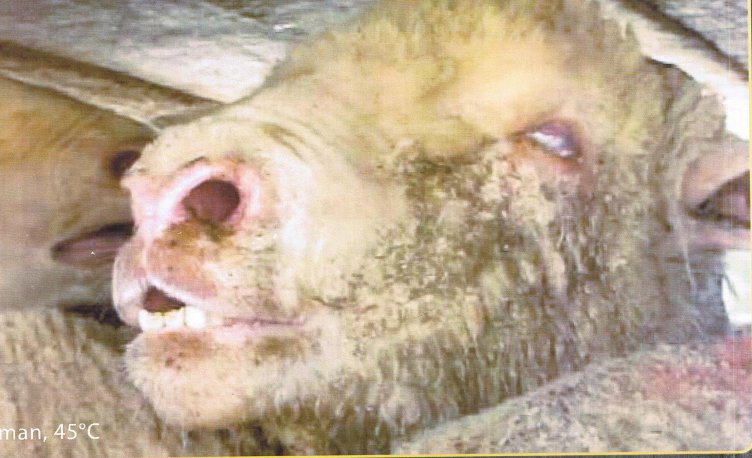
2007: Australian Sheep dying under 45 Degrees Celsius under Oman sheep traders
.
Paul Morris, acting deputy secretary of the Department of Agriculture, Forestry and Fisheries, said this morning if the animals had been infected with anthrax they would have died within 48 hours and so any potential disease could not have come from Australia.
“From our view point when the animals left Australia they were perfectly healthy, they certainly had no major diseases,” Mr Morris told ABC radio.
“When they arrived in Bahrain and even before that when they were offloaded in Oman there were certainly no issues. We had a vet on board all the way through who was checking the health and the animals seemed fine throughout the voyage.
“If they did have anthrax they would have died or they would have contracted it in Pakistan rather than during the voyage or before they left Australia.”
(Reproduced as follows…before the government website is deleted)
.
Live Animal Export Trade
.
The live export industry is an important part of Australia’s vibrant and growing livestock industry. In 2009 the live export sector earned $996.5 million and underpinned the employment of around 10 000 people in rural and regional Australia.
Australia leads the world in animal welfare practices. The Australian Government does not tolerate cruelty towards animals and will not compromise on animal welfare standards. Our ongoing involvement in the livestock export trade provides an opportunity to influence animal welfare conditions in importing countries.
The government and the livestock export industry are working cooperatively with our trading partners to address post-arrival welfare concerns and to improve the transportation, handling and slaughter practices of livestock in overseas markets. The Department is jointly funding a number of projects with the live export industry to improve infrastructure and training to promote better animal handling and slaughter practices. Australia is the only country that requires specific animal welfare outcomes for livestock exports. Our ongoing involvement in this trade provides an opportunity to influence animal welfare conditions in importing countries.
In 2003 a broad-ranging investigation into Australia’s livestock export industry chaired by Dr John Keniry recommended a range of initiatives to improve animal welfare conditions in the livestock export trade including better infrastructure to reduce livestock stress or injury and training for feedlot, abattoir and transport staff in overseas markets.
In the 2009-10 Budget, the government announced the Live Trade Animal Welfare Partnership, which will invest $3.2 million over three years, including $1.6 million from the government with matching support from Australian producers and livestock exporters to further improve animal welfare in, and support trade with, overseas markets. The Government has also introduced legislation that provides stronger regulation of the livestock export industry. This includes a requirement to comply with the Australian Standards for the Export of Livestock.
This legislation was an important step by the Government to overhaul the livestock export trade. Arrangements to ensure exported animals are well treated during road and sea transportation are an important part of the standards. Ships must comply with strict rules about ventilation, drainage and provision of water and food. Each animal must have access to food and water on demand and enough space to lie down, and there must be special pens for sick animals to receive veterinary care.
Under the Australian Meat and Live-stock Industry Act 1997, a report on the carriage of livestock on any sea voyage to a port outside of Australia must be tabled in each House of Parliament every 6 months. The reports to Parliament are based on the total voyage mortalities for each voyage. Some voyages include several consignments for different exporters, so it is possible for a consignment to experience a high mortality incident, but for the outcome of other consignments on the same voyage to be under the reportable mortality level. For this reason, some of the consignment mortality events may not appear in the report to Parliament, which is tabled every six months.
A reportable mortality event occurs in a consignment if the mortality rate is equal to, or exceeds, the reportable level specified in the Australian Standards for the Export of Livestock (ASEL). For cattle, sheep and goats these levels are:
Sheep and goats: 2%
Cattle voyages greater than or equal to ten days (long haul): 1%
Cattle voyages less than ten days (short haul): 0.5%
Mortality rates have fallen in recent years. Between 2000 and 2010 the average mortality rate for short haul cattle fell from 0.09% to 0.04%, the average mortality rate for long haul cattle from 0.42% to 0.28%, the average mortality rate for sheep has fallen from 1.34% to 0.91% and the average mortality rate for goats has fallen from 1.98% to 0.69%. The government’s policy is to bring about further improvements.
Australia has signed Memoranda of Understanding (MOU) with ten countries in the Middle East and Africa region and negotiations continue with other trading partners in the region. A key element of these MOUs is that animals be unloaded on arrival regardless of their health status. The MOUs also allow us to help our trading partners improve post arrival handling and slaughter through cooperative activities based around improving animal welfare.
Australia has also signed an MOU with Egypt on Handling and Slaughter of Australian Live Animals. This MOU requires that international animal welfare standards be applied to the handling of Australian livestock (sheep and cattle) as well as some specific handling requirements for Australian cattle.
Suggestions that the live trade could be completely replaced by chilled and frozen meat fails to take into account the requirements of the market. While Australia has developed a significant trade in meat products, the lack of refrigeration and cold chain facilities, as well as strong cultural preferences for freshly slaughtered meat precludes Australia from servicing all of its export markets with processed meat products.
.
Australian Government Action on Live (animal) Exports
Senator the Hon. Joe Ludwig
Minister for Agriculture, Fisheries and Forestry
Senator for Queensland
Ms Glenys Oogjes
Executive Director
Animals Australia
37 O’Connell Street
North Melbourne VIC 3051
17 October 2012
Dear Ms Oogjes
I am aware that Animals Australia has established the ‘Forgotten animals of live export’ campaign to highlight the animal welfare issues your organisation would like to see dealt with by federal, state and local governments. The key issues identified on your website are about the regulations for exporting breeder animals.
As you are aware, the health and wellbeing of exported livestock is a priority for the Australian Government.
The Independent Review of Australia’s Livestock Export Trade undertaken by Mr Bill Farmer AO recommended that the Australian Government should articulate an approach to the question whether there is a need for any additional conditions for the export trade in breeder livestock.
At the heart of the issue is a judgement about when livestock exported from Australia become the responsibility of the importing country. Livestock that are exported for breeding purposes mix with the importing country’s domestic herd and attain local animal health status. Currently these animals are considered to be beyond Australia’s jurisdiction.
The Department of Agriculture, Fisheries and Forestry is working with key stakeholders to undertake a review of the arrangements for the export of breeder livestock. Issues around breeder livestock exports are complex, particularly with some animals living as breeder livestock in foreign countries for many years. Nonetheless it is important to ensure that this is not used as an excuse for poor animal welfare outcomes.
The Review has commenced by gathering information about the nature of the trade, including regulatory and commercial arrangements in each of the markets that receive Australian breeder livestock. To better understand the risks of the trade, the Review will look at the complexities of each market, for example whether livestock go to a breeding facility or are more widely distributed. The Review will also seek more robust information on the price differential between livestock exported for slaughter and livestock exported for breeding to better understand the level of risk if livestock exported for breeding purposes end up in the feeder/slaughter supply chain.
The Department of Agriculture, Fisheries and Forestry will work closely with industry to progress this work and the Industry-Government Implementation Group (IGIG) will present the final report to me later this year.
On 6 September 2012, the Department of Agriculture, Fisheries and Forestry received a complaint from a third-party that claims poor animal welfare practices in exported Australian Breeder livestock in Qatar. The current regulations for the export of breeder livestock extends to the point of disembarkation and are not currently covered by the Exporter Supply Chain Assurance (ESCAS) arrangements in place for the export of feeder/slaughter livestock.
Notwithstanding the limitation of the current regulatory framework for the export of breeder livestock, the Department of Agriculture, Fisheries and Forestry is investigating the complaint, which includes further information provided by the RSPCA on 17 September 2012. The Department of Agriculture, Fisheries and Forestry will advise the outcomes of the investigation once the process is completed.
This information is provided so that you may inform your members and interested others of the Government’s position on these animal welfare matters.
This letter will be made available on the Department of Agriculture, Fisheries and Forestry website. The Government will not be responding directly to campaign correspondence arising from the Animals Australia website.
I trust this information is of assistance.
Yours sincerely
[signed]
Joe Ludwig
Minister for Agriculture, Fisheries and Forestry
Senator for Queensland
.
‘Investigation into alleged breaches of animal welfare’
1 March 2012
[DAFF 12/6D]
Statement by Deputy Secretary, Department of Agriculture, Fisheries and Forestry, Phillip Glyde.
<<The Department of Agriculture, Fisheries and Forestry (DAFF) is continuing to investigate a complaint of alleged animal welfare concerns at three* Indonesian abattoirs.
The complaint was submitted by Animals Australia on Friday 24 February 2012 and included video footage.
As part of the new Exporter Supply Chain Assurance System (ESCAS) for live animal exports, procedures are in place to investigate allegations of animal welfare breaches and to take appropriate action where required.
DAFF animal welfare experts, including Australia’s Chief Veterinary Officer, are assessing the footage for compliance with the World Organisation for Animal Health (OIE) animal welfare guidelines.
DAFF is working to ascertain if the animals in the footage are from Australia and if the facilities in the footage are part of approved supply chains.
The investigation also includes assessing any relevant independent audits of the three abattoirs to compare with the detail of the footage provided.
The Guidelines for management of non compliance is being used to guide the investigation and potential actions on the licensed exporters. Possible compliance actions will depend on the findings of the investigation.
The Australian and Indonesian Governments are cooperating closely to ensure that the investigation process is followed according to the mutual understanding between the two governments.
DAFF has provided the footage to the Indonesian government.
DAFF was informed yesterday, 29 February 2012, that an exporter has voluntarily suspended the supply of animals to one facility which has been part of an approved supply chain. The Indonesian Government has been notified of this development. DAFF continues to investigate the facilities shown in the footage provided to the department to determine if any Australian animals were being processed and will assess if there has been a breach of the new regulatory framework.>>
“It brings people and ideas together for the conservation of Australia’s natural places through science, law, design and the community.”
.
The Habitat Advocate’s first video (one small step for Habitat.. Mankind better lookout!)
.
.
American film director, Tom Shadyac, has created a documentary film entitled ‘I AM: the shift is about to hit the fan’‘, which asks some of today’s most profound thinkers, two questions – What’s wrong with our world, and what can we do about it? This moving, inspiring film is about reconnecting with Nature and with others and indeed with ‘Reality‘. It has won the Audience Choice Award and the Student Choice Award at the Mountain Film Festival in Telluride Colorado, where it premiered in February 2011:
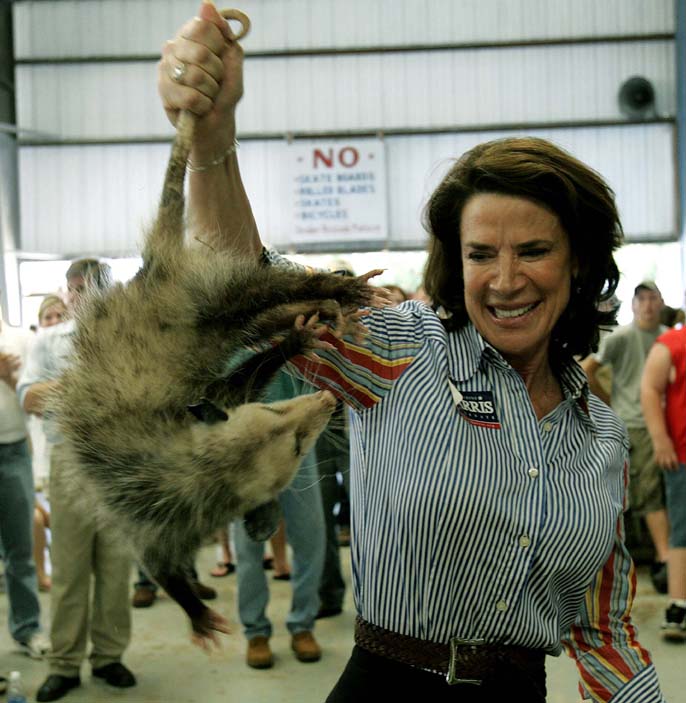
The following article was initially written by Tigerquoll entitled ‘US Republican Katherine Harris – a Presbyterian ‘pro-lifer’ who treats animals like this!‘ and published on CanDoBetter.net 20091129.
Animal Cruelty by US Republican Katherine HarrisThe woman should have a criminal record and be prohibited for life from holding public office
(Photo: AP)
.
In rural Wassau in the southern US state of Florida, the Wausau Possum Festival has become an annual summertime folk festival over the past forty years. This event is said to celebrate the role of the opossum in the survival of the populace of Northwest Florida during the depression. Aside from the music, a key feature is the fundraising possum auction for the local Wausau Development Club, which involves holding opossums by their tail. Possum is served up as a main fare.
The Virginia oppossum (Didelphis virginiana Kerr) is the only marsupial native to the south eastern region of North America and extending through Central America.
American Republican politician Katherine Harris of Florida is shown here in August 2006 during her campaigning for the 2006 Florida United States Senate election, holding a possum by the tail and is said to have bid $400 at the so-called ‘possum auction’.
According to the festival’s sick tradition, every election year, national and statewide candidates in Florida must prove they are good country folk by mistreating a possum at the Wausau Possum Festival. “Candidates bid for a possum, taking it out of a holding area by its tail and giving it a shake to terrify the creature into going limp so it won’t claw them. They’re later fed and released into the wild“.
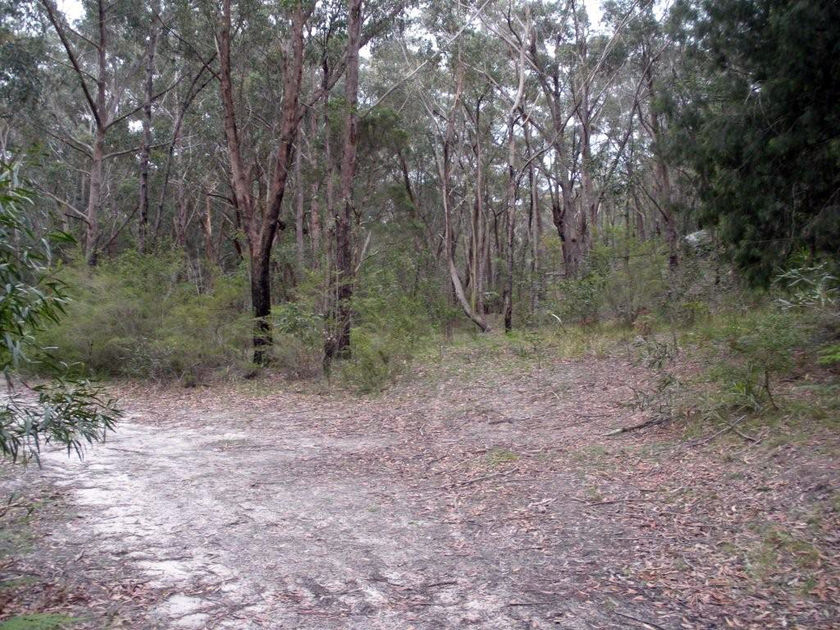
This photo looks to be an innocuous clearing in the Australian scrub somewhere,
which makes this photo all the more representative of the intangible meaning of a place.
Just as few Australians will be aware of this site, few Australians will be aware of what happened here in 1816.
The site is in Appin outside Sydney.
It is the site of the little known massacre of an unknown number of Australian Aborigines by a posse sent out by the government to murder them and who did just that.
.
‘Call to return massacre site to Aboriginal people’
.
A New South Wales MP has begun a campaign for greater recognition to be given to the descendants of those killed in the 1816 Appin Aboriginal Massacre south-west of Sydney.
The official number of those killed is 14 but some historians believe the death toll is much higher. Aboriginal men, women and children were shot, while others were driven off a steep cliff.
The events of April 17, 1816 can be traced back a few years earlier. Tit-for-tat violence between the British and Aborigines caused the New South Wales Governor Lachlan Macquarie to order retribution. The orders are recorded in governor Macquarie’s diary which is kept at Sydney’s Mitchell Library.
“I therefore, tho (sic), very unwillingly felt myself compelled, from a paramount sense of public duty, to come to the painful resolution of chastising these hostile tribes, and to inflict terrible and exemplary punishments upon,” reads the diary entry from 10 April 1816.
“I have this day ordered three separate military detachments to march into the interior and remote parts of the colony, for the purpose of punishing the hostile natives, by clearing the country of them entirely, and driving them across the mountains.
“In the event of the natives making the smallest show of resistance – or refusing to surrender when called upon so to do – the officers commanding the military parties have been authorised to fire on them to compel them to surrender; hanging up on trees the bodies of such natives as may be killed on such occasions, in order to strike the greater terror into the survivors.”
The captain in charge of the mission was James Wallis. He recorded in his journal that 14 people were killed in the Appin region.
“I regret to say some had been shot and others met their fate while rushing in despair over the precipice,” Captain Wallis said.
But Dharawal man and local historian Gavin Andrews says civilians continued killing Aborigines after the military forces returned to Sydney.
“They went hunting. They went on a black hunt and of course most of the blacks out there were the women and children,” Mr Andrews said.
Mr Andrews believes many more than 14 were killed.
“Well, it is a lot more and what is not recorded is the following three or four days of the militia and the farmers on their killing fields exercise around this countryside here,” he said.
Mr Andrews’s wife is Frances Bodkin. She is a direct descendent of one of the men killed in 1816.
“Kannabi Byugal was one of my ancestors. He was my great grandfather’s grandfather, I think. I get mixed up with all the greats,” Ms Bodkin said. She still does not go to the cliffs where the women and children fell to their deaths.
“You know it’s fear and I don’t understand why I am afraid, but I am afraid and I have this awful choking feeling inside me so I can’t face it. Even now I still can’t face it,” she said.
.
The massacre site is on land owned by the New South Wales Government. Ms Bodkin believes the site of the massacre should be in Aboriginal hands.
“I’d like to return it to what it was before to make it a place that is happy, that it was before the massacres,” she said.
Ms Bodkin has got the support of MP Phil Costa, who is now lobbying the State Government.
“So what we are trying to do now here is to hand this land back to the people who originally lived here or owned it so the story can be told, so it can be a place of healing,” he said.
“If there is a place so sacred as this is to the local Aboriginal community it ought to go back to them.”
.
This illustration depicts another massacre of Aborigines twenty odd years later.
.
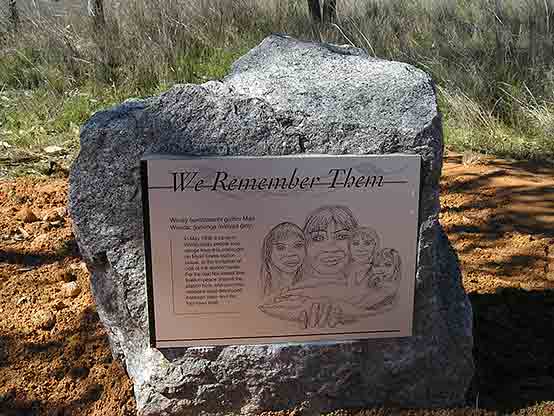
The Myall Creek Massacre saw colonial settlers led by a squatter, John Fleming, shooting up to 30 unarmed Australian Aborigines of the local Kamilaroi tribe on 10 June 1838 – largely women, children and old men. After the massacre, Fleming and his gang rode off looking to kill the remainder of the group who they knew had gone to the neighbouring station. They returned two days later to Myall Creek and dismembered and burnt the bodies.
Memorial plaque at Myall Creek40km west of Inverell in northern New South Wales
.
Call to stop celebrating ‘Invasion Day’
.
“Australia Day is traditionally the most racist day of the year for Aboriginal people.
When people celebrate on January 26, there is no escaping the fact they are celebrating the day that one race of people invaded another race of people’s country and took control of Aboriginal lands and tried to dominate Aboriginal people.
Invasion Day, as it should be called, celebrates the dispossession of land, culture, and way of life of Aborigines.Aborigines and members of the wider community should not allow this to continue. Otherwise we are saying that it was ok to try to destroy the Aboriginal way of life, to murder Aborigines and to attempt cultural genocide.True reconciliation cannot be achieved and a just society cannot be built if we continue to celebrate the gains of one race at the expense of another.Invasion Day is a day to remember the wrongs that were committed against Aborigines, a day to remember the injustices forced upon one race of human beings by another.
This is no day for celebrating; it’s a day for mourning, a time to reflect, and a time to steel ourselves for the ongoing battle for a better society.”
[Source: Jay McDonald, an activist with the Tasmanian Aboriginal Centre, Launceston, quotation reproduced on ^http://meltjoeng.com/?p=2046].
.
Editor: Australia needs to leave the British colonial nest. The current national celebration of Australia Day falls on 26th January each year (today). It is the day the British landed the First Fleet at Sydney Cove and proclaimed British sovereignty over the eastern seaboard of New Holland. (Ed: corrected thanks to the comment below). It was a British invasion of foreign land and preceded many massacres of the traditional people to the point of genocide.
Today, Australia’s national strategic security and being a first world wealthy nation, our important interests are to our region, not to Britain, not to the United States.
We have a moral responsibility to democratic human rights in our region, namely in West Papua, and it is despicable that successive Liberal-Labor governments shun the injustices inflicted on the people of our region, in favour of pouring taxpayer billions to support the strategic interest of the US on the other side of the globe.
Celebrating invasion day is an insult to those whose forebears were invaded, displaced, murdered, raped, persecuted and wiped out by colonial diseases. The map of the hundreds of Aboriginal nations was erased by a colonial map of six States. The landscape was butchered and tamed by colonists trying to emulate the old country, planting deciduous trees around settlements to remind them of the four seasons of European origins.
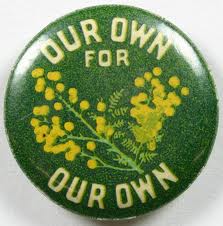
Australia does not have four seasons. It probably has at least six and the traditional people of this land recognise these by the flowering times of certain native plants and trees. Wattle Day, the 1st of September, would seem a uniquely Australian and non-partison way to celebrate Australia Day.
.
The Wattle is Australia’s floral emblem.
“Wattle is a unifying symbol and in its multitude of forms, it grows in every state and territory. Its profusion is a sign of fertility for a growing nation. As a symbol of nature, it is a sign of the depth of feeling Indigenous people have for their land. Their ecological practice is an outcome of their relations of kinship with the natural world and they contribute a great deal to land management across Australia based on their eco-knowledge. There are a wide range of cooperative activities between Indigenous groups, government and industry. Indigenous people refer to these as ‘looking after country‘.”
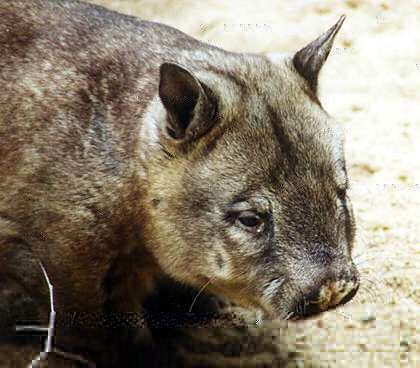
“Farmers are illegally slaughtering thousands of wombats in South Australia, a nature group says. Brigitte Stevens from the Wombat Awareness Organisation says burrows of southern hairy-nosed wombats are being bulldozed or blown up on Yorke and Eyre Peninsulas and in the Murraylands.
She says farmers can get permits to destroy a few wombats, but that it not a licence to wipe out the entire population.
“There’s not enough or not good enough regulations on what actually happens to the wombat if those numbers are being killed,” she said. “Now I know it’s difficult because I know you need a lot of staff to be able to do that. But it’s really hard for us when we’re trying to stop people killing them illegally – if it’s allowed by the government through permits, how are we going to stop it?”
Ms Stevens wants the Department for Environment and Heritage (DEH) to act on evidence the group has gathered.
“We’ve also got evidence, photographic, and also I’ve kept all my correspondence with DEH, the RSPCA about places that we’ve reported that have ended up having destruction permits, but we’ve got evidence the animals are being buried alive, the entire population is being killed on that particular property,” she said.
Department for Environment and Heritage chief executive, Allan Holmes, says it will act when enough evidence is provided. “You need to know where it’s occurred, when it occurred, it’s about providing evidence that will stand up in a court of law,” he said. “Again the issue for me is at the moment these claims are largely unsubstantiated. “If the evidence is provided we will investigate them.”
Mr Holmes says mass killings with petrol bombs or bulldozing will not be tolerated.
“The only way that you can legally destroy a wombat is by shooting with a particular calibre rifle,” he said. “And, as I said, given the evidence we will prosecute with the full force of the law.”
They’ve always been uneasy bedfellows, but now Hairy-Nosed Wombats – a rare and protected marsupial – are being slaughtered in large numbers by South Australian farmers as their numbers boom thanks to abundant rain and plenty of food.
. Nearly 900 southern hairy-nosed wombats have been shot with South Australian Government sanction since 2006, and there are claims that many more have been slaughtered illegally.
.
The Government also has rules which state that any young wombats found in the pouch of a shot wombat should be killed by decapitation, as this achieves “a sudden and painless death”.
Sickeningly, Parliament has been told that apart from the official deaths, hundreds more wombats are being killed illegally by landholders across the state.
As well as being the state’s animal emblem, the wombat is classed as a vulnerable species, but farmers claim its burrows destroy their land and damage farm machinery.
Like badgers in the United Kingdom, wombats are much maligned by the farming community and are seen as a menace, copping the blame for everything from soil erosion and breaking the legs of cattle (from falling into wombat burrows) to spreading disease.
Official figures show that between January 1, 2006, and December 22 last year, 139 permits were issued for destruction of South Australian wombats.
.
Hairy-nosed Wombats?
The much rarer southern hairy-nosed wombat has larger ears than the common wombat, and its snout is coated with fine hairs, whereas the northern hairy-nosed wombat is presumed extinct in NSW.
The southern hairy-nosed wombat prefers dry, open country bu have become very rare, and until recently were thought to be extinct in NSW. They are currently listed as endangered.
A wombat can reproduce after it reaches two years of age. Mating occurs between September and December, and usually results in one offspring. The newborn wombat, which weighs only 1 g and is less than 3 cm long, has to crawl from the birth canal into the mother’s pouch. This pouch faces backwards, which stops dirt and twigs getting caught in it when the mother digs. The young wombat will stay in the pouch for between seven and 10 months.
Because of settlement and agriculture, wombats in most areas have been pushed into the rugged hills and mountains. As long as they remain in these areas, wild dogs and collisions with cars are more of a threat to these marsupials than landowners. However, because of their habit of wandering down to the flats to enjoy the tasty morsels growing there (knocking down fences on the way), they are sometimes killed by farmers.
‘The Wombat Awareness Organisation (WAO) is a non-profit organisation specialising in large scale rescue, rehabilitation and conservation of the Southern Hairy Nosed Wombat (Lasiorhinus latifrons).
The Wombat Awareness Organisation is playing an instrumental role in preventing unneccessary suffering of the wild population of Southern Hairy Nosed Wombats in hope to conserve this incredible little Aussie for future generations.
When WAO established itself in the Murraylands of South Australia in 2007 we were overwhelmed at the lack of services and protective rights offered to SA’s faunal emblem. Battling the effects of drought and global warming, Sarcoptic mange, habitat destruction, vehicular accidents and culling both legal and illegal it was obvious that this species was in trouble. Getting back to basics and finding simple, productive alternatives of drought relief, mange management and coexistence strategies have become the main focus of the organisation by aiming to protect these beautiful wombats from suffering and minimise the need for them to come into care.’
Government wildlife protection has long been a joke and so much so that ‘Government wildlife protection‘ has become an oxymoron. Community frustration is obviously a boiling point at learning about an endangered wildlife species being poached by selfish farmers for their own ends.
If there were a fund for taking out poachers of wildlife I would gladly donate to it.
If it were legal to shoot wildlife poachers I would be amongst the first to enlist. It is legal to shoot wildlife poachers in parts of Africa where it is needed…
‘They’re trained to kill, with orders to shoot on sight. Could they be the saviors of Africa’s wildlife?
Writer Tom Clynes went deep into the Central African Republic to find out. Here he reveals the stories behind his new article, “They Shoot Poachers, Don’t They?”
This year Wyoming conservationists took their battle overseas into the savanna of the Central African Republic. With the permission of President Ange-Félix Patassé to shoot on sight, the group is raising a militia to patrol the eastern third of the African country for poachers.
Writer Tom Clynes spent nearly a month with the hired guns in this latest effort to stop the bush-meat trade, perhaps the pre-eminent threat to African wildlife today. The assignment was as complicated as it was fascinating.
“The good stories begin with intriguing questions. And in this case the questions were complicated and quite epic. You had a bunch of Americans who had basically convinced a leader of a Third World country to let them raise an army and take over a third of the country with shoot-on-sight authority,” says Clynes. “I had a good idea how I felt about this kind of thing: Killing is wrong—end of argument.”
.
In the heart of central Africa, marauding bands of bush-meat hunters are terrorizing villages and slaughtering wildlife to the brink of extinction. Now a family practitioner from Wyoming has decided to recruit his own army to stop them.
The story, as I first heard it, had the zing of a Hollywood pitch: Led by a soft-spoken doctor, a band of American conservationists had persuaded the president of the Central African Republic to let them raise a militia and take over the eastern third of the Texas-size country. Their mission was to drive out the marauding gangs of Sudanese poachers who were rapidly wiping out the region’s elephants and other animals.
Their authority: ‘Shoot on sight’
No one had been killed yet when I arrived in Bangui in early March. Throughout the dilapidated capital, signs of a November coup attempt were still fresh: Bullet divots scored the bricks of the Tropicana Club, and a curfew remained in effect. A detachment of Libyan paratroopers hulked in front of the mansion of President Ange-Félix Patassé, who had been bailed out, again, by his friend Muammar Qaddafi.
Most of the fighting had taken place in the northern reaches of town, where the American group, Africa Rainforest and River Conservation (ARRC), had rented a gated compound. As I approached the large whitewashed porch, it struck me that ARRC was well prepared for another flare-up. Scattered among the wicker furniture were several men in fatigues, a couple of AK-47s, a grenade launcher, and a very excited chimpanzee.
Dave Bryant, a 49-year-old South African who had been hired in August to lead the militia, extended his hand. “Welcome to bloody paradise,” he said. He introduced a slight, 26-year-old Iowan named Michelle Wieland, who was in charge of ARRC’s community-development component, and a thin 35-year-old named Richard Hagen, who had flown up from South Africa to help with security.
“And the little fellow jumping up and down is Commando,” said Bryant. “We rescued him from a Sudanese trader, and to show his appreciation he’s been crapping all over our floors.”
Bryant’s face seemed custom-assembled for bad-ass impact. Beneath a clean-shaven scalp, a towering forehead descended into a deep ravine of a scowl line, bridged by wraparound sunglasses. An expansive Fu Manchu mustache arched around a loaded cigarette holder, which dangled expertly from one side of his mouth.
“I guess you’ve heard that we’re in a bit of a cock-up,” he said. “We’ve been stuck in this shit-hole for five months now, trying to get out into the bush to do a reccy [reconnaissance] before the rains hit. We’re waiting for gear, we’re waiting for money, and we’re waiting for vehicles. And we’re waiting for people in this zoo they call a government to do something other than put their bloody hands out.”
The three were eager to hear about my meeting that day with the American ambassador, Mattie Sharpless. Sharpless had recently arrived in Bangui, and I had asked her what she knew about ARRC.
“The rumor is that they’re hiring South African mercenaries and diverting funds into diamond ventures,” Sharpless had answered.
Wieland winced when I relayed the quote, but Bryant smiled and leaned back in his chair. “Yes, well. We South Africans don’t usually like to use the term ‘mercenary.’ We prefer to say ‘playing at soldiers on a privately employed basis.'”
Humpback Whale in a magnificent breach
(click photo to enlarge)
^http://rtseablog.blogspot.com/2011/09/bermuda-humpback-whale-sanctuary-noaa.html
.
Christmas is a time for goodwill and hope.
.
“There is joy in the companionship of others working to make a difference for future generations,” declares activist David Suzuki, “and there is hope. Each of us has the ability to act powerfully for change; together we can regain that ancient and sustaining harmony, in which human needs and the needs of all our (plant and animal) companions on the planet are held in balance with the sacred, self-renewing processes of Earth.”
.
We at The Habitat Advocate convey our goodwill and hope to those out there right now defending Nature.
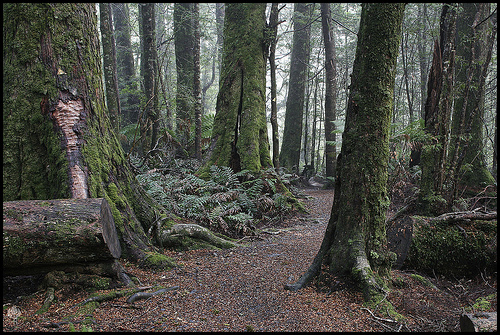
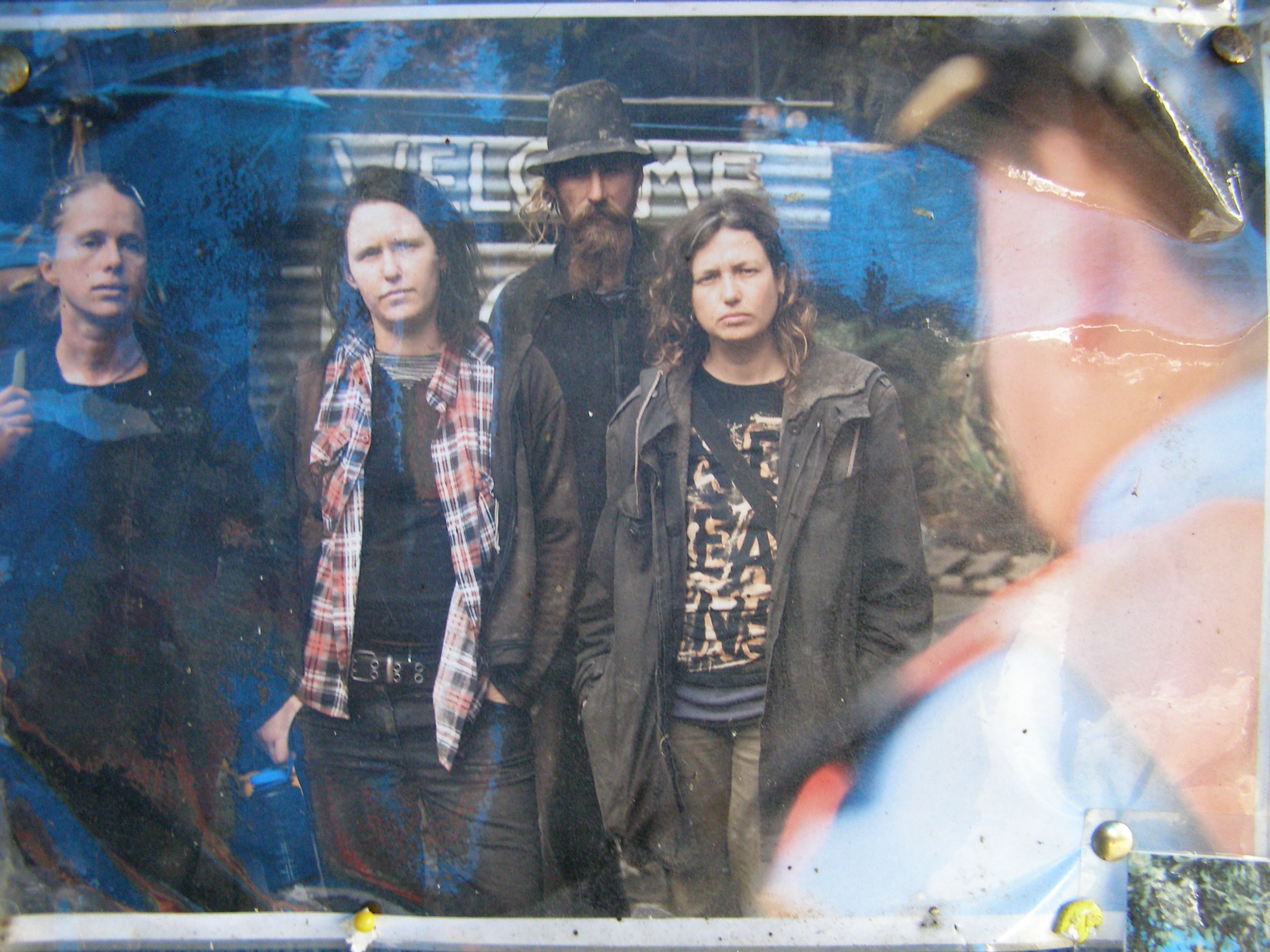
We convey our goodwill and hope to the environmental activists in Tasmania’s wild defending threatened forests.
SWST advocates for the immediate formal protection of Tasmania’s precious Southern Forests using a combination of political and corporate lobbying, community education, research, exploration and frontline direct action. We also promote the creation of an equitable and environmentally sustainable forest industry in Tasmania. Protecting Tasmania’s ancient forests: a real climate change solution.
.
We at The Habitat Advocate convey our goodwill and hope to the environmental activists in the Southern Ocean defending threatened whales.
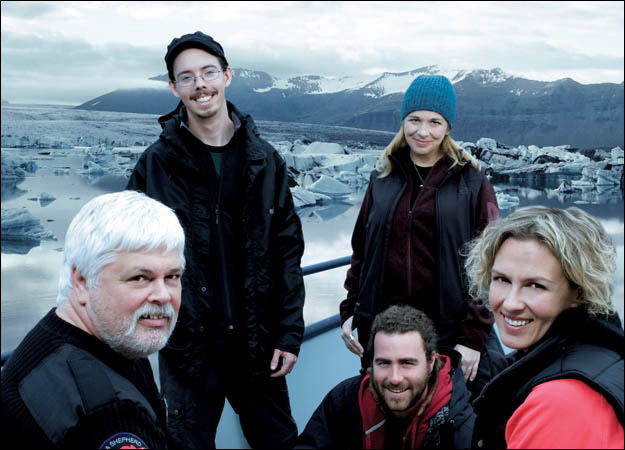
Captain Paul Watson and the crew of Sea Shepherd Conservation Society (SSCS)
currently braving the freezing Southern Ocean south of Australia to defend whales from poachers.
^http://www.seashepherd.org/
.
Sea Shepherd’s mission is to end the destruction of habitat and slaughter of wildlife in the world’s oceans in order to conserve and protect ecosystems and species.
The meaning of Christmas has ancient Pagan origins pre-dating Christianity, coinciding with the Winter Solstice of the northern hemisphere celebrating the return of life at the beginning of winter’s decline. [Source: ^http://www.christmastreehistory.net/pagan]
Consistent with the original goodwill meaning of Christmas, we advocate the inclusion of Nature in this goodwill spirit:
That each us strives to do something every day for wildness.
That each us tries to practice simplicity and frugality. Conserve, reuse, and recycle to reduce pressures for resource extraction on remaining wildlands. Buy less. Play more.
That each us supports conservation organizations that champion wildness, especially those acquiring acreage for wildlands preservation.
As environmental activist David Suzuki advocates, “each of us has the ability to act powerfully for change”. So we like the initiative of Melbourne-based company ‘Eco Christmas Trees‘. Eco Christmas Trees rents out ‘living growing trees providing the real Christmas experience without cutting down a tree‘.
"We're coming to you from the custodial lands of the Hairygowogulator, Tarantulawollygong, and Longdrop country, within the Australia nation since 1901. From our home in Inner West Katoomba we pay respects to uncles and grandaddy elders past, present and emerging from their burrows. So wise to keep a distance out bush."
Recent
Supporting Us
A VOICE FOR NATIVE HABITAT
One’s solo mindful walk…
The Friends of Katoomba Falls Creek Valley Inc. in The Gully
The Gully Collection
Save Atlas Campaign
The Friends Archive: War and Peace with the Blue Mountains ‘hysterical’ Society
 Senator Joe Ludwig’s legacy of prevailing over an immoral trade and doing nothing but allow it to perpetuate

 Dodgy Ships, Dodgy Trade
 Click Above Image to link to site to watch video
 Immoral Trades are Not Worth a Cent
Some would sell their children for money too.
Immoral Trades are Not Worth a Cent
Some would sell their children for money too.
 The immoral, illegal Sex Trade still flourishes in some countries too.









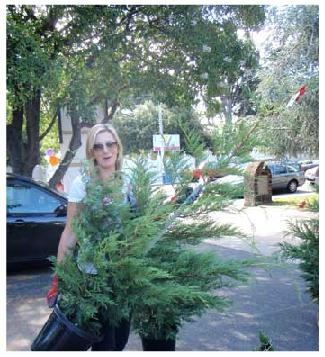 The real Christmas experience without cutting down a tree.