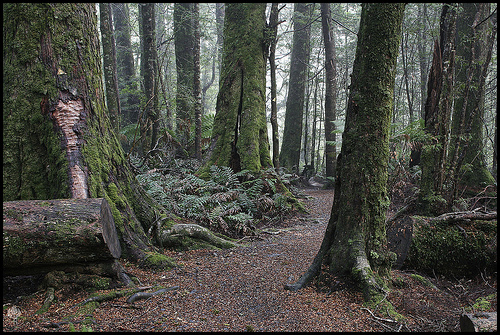
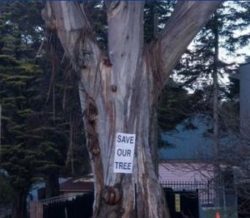
A native Scribbly Gum of Faulconbridge, Blue Mountains, Australia
…perhaps over 200 years old, healthy and in its natural setting.
(Photo by Editor 20111226, free in public domain, click photo to enlarge)
.
.…but simply because land developers want to destroy the bush for selfish housing, they legally claim the tree is ‘potentially dangerous’
It seems the New South Wales Court Commissioner has sympathised and condemned the tree to a chainsaw death.
(Photo by Editor 20111226, free in public domain, click photo to enlarge)
.
Court Presumptuous?
.
The New South Wales Land (before) Environment Court has demonised and stigmatised this native Eucalypt tree as a “hybrid” (i.e. as a ‘half cast’ in human terms). The Acting Commissioner has ruled a death warrant upon this native old growth Eucalypt in its natural bushland setting on the following three bases:
..
Basis #1. Blue Mountains ‘Significant Tree’ protection ignores claims of a tree being somehow dangerous (however contrived, false and self-servingly malicious the rationale)
.
“While the provisions of (Blue Mountains Council’s) Development Control Plan (DCP) 9 must be considered as a fundamental element in the decision process…it does not necessarily follow that the tree should be retained under any circumstances.
“DCP 9 is silent on how to address trees that are potentially dangerous or unhealthy although Clause 6 provides the opportunity to “cut down”… any tree on the Register of Significant Trees” but with the consent of Council.”
(Ed: Blue Mountains Council had unanimously rejected the development application – so the ‘acting’ Commissioner is presuming any real opportunity and by raising such weak argument is siding with the developer).
.
Basis #2. The ‘acting’ Commissioner rejects the tree’s scenic quality instantly without due consideration and with a presumed fear of trees
.
“Accepting that the Hybrid adds to the scenic quality of the site and the surrounding area, this benefit needs to be balanced against the likely longevity of the tree and its health. (Ed: The Court has no grounds for estimating the longevity of this tree, and seems to be surmising on the basis of personal prejudice).
In this case, I have little trouble in concluding that the balance falls in favour of the removal of the tree . The conclusions of the two tomograph (xray) tests and the evidence of Dr McDonald and Mr James, and supported by the council officer, leave little doubt as to the appropriate outcome.
(Ed: Tomograph tests and evidence withheld in Court decision, so how do we know the tree is unhealthy?)
“I do not accept that the retention of the tree, irrespective of the scenic quality links to the area, should be preferred when there is a serious and legitimate question over the safety of the tree. (Ed: The “serious and legitimate question over the safety of the tree” is unsubstantiated and appears presumptive).
“In my view, the overwhelming expert and scientific evidence clearly suggests that the tree is dangerous and presents an unsafe situation for future ocupants of the site.”
(Ed: ‘Overwhelming‘ from what independent qualified and scientifically relevant source and where is the report? The ‘acting‘ Commissioner’s presumption of ‘future occupants of the site‘ suggests a high probability of judicial bias).
.
Basis #3. Tree canopies are inconsistent with housing safety
.
“Even if a dwelling is constructed outside of the area covered by the tree canopy, I am not satisfied that (it) sufficiently overcomes the potential danger from the tree. It would be clearly impractical to fence off the area under the canopy, given the limited area remaining for a dwelling on the site and the need to provide ancillary matters such as private open space and building setbacks.” (Ed: The Court is prejudging that the developer proposal for dwellings (x2) and proposed private open space and building setbacks have precedent values over the natural values of pre-existicng native bushland including a Council-protected significant mature native tree, native vegetation and bushrock).
“The suggestion by Ms Hobley that a dwelling could be located underneath the (tree) canopy is misconceived, given the weight of evidence for branch failure and which is supported by the obvious example where an existing branch has failed and only remains because it is held up by another tree on the site. I am not satisfied that Ms Hobley has given proper consideration to the potential for injury in her assessment of the tree.”
.
(Ed: The ‘acting’ Commissioner conveys an preconceived view that trees are dangerous. Details of “an existing branch” failing are not available in the Court’s decision.)
.
A native Eucalypt, condemned as a ‘hybrid’
by those who themselves are but hybrid descendants of colonists
because human invasion is enshrined in law as having a superior value than existing native old growth.
(Photo by Editor 20111226, free in public domain, click photo to enlarge)
.
The Habitat Advocate is pleased to support the efforts of local people in Faulconbridge trying to save this grand native tree from being killed. For further information visit: ^http://savethetree.org/
.
.
‘Native Cleansing’
.
Clearing native trees for human development is a value judgment of convenience. Philosophically native tree cleansing is no different to ethic cleansing of one human ethic group of another.
Native forest deforestation (ethnic cleansing)– at record levels across New South Wales
.
‘Ethnic Cleansing’ is a process in which advancing army of one ethnic group expels civilians of other ethnic groups from towns and villages it conquers in order to create ethnically pure enclaves for members of their ethnic group.
‘Serbian military commander in Bosnia, a war criminal sought by the War Crimes Tribunal in The Hague, Ratko Mladic, sometimes issued specific orders to his subordinates to shell a particular village more than others, because there is less Serbs and more Muslims living there. Often, refugees of one ethnic group previously “cleansed” from their homes by other ethnic group are made to live in freshly “cleansed” territory of that other ethnic group.’
‘It’s not just humans who have rights, all beings do. The right not to be polluted is a right that belongs to us as well as to the Earth, to the air we breathe and to future generations. There are other rights which apply to us all, the problem is that they are not yet recognised internationally. But this is rapidly changing and you can find more information about the campaigns and progress of this fast developing arena of humanitarian and environmental law, called Earth Law.’
Humpback Whale in a magnificent breach
(click photo to enlarge)
^http://rtseablog.blogspot.com/2011/09/bermuda-humpback-whale-sanctuary-noaa.html
.
Christmas is a time for goodwill and hope.
.
“There is joy in the companionship of others working to make a difference for future generations,” declares activist David Suzuki, “and there is hope. Each of us has the ability to act powerfully for change; together we can regain that ancient and sustaining harmony, in which human needs and the needs of all our (plant and animal) companions on the planet are held in balance with the sacred, self-renewing processes of Earth.”
.
We at The Habitat Advocate convey our goodwill and hope to those out there right now defending Nature.
We convey our goodwill and hope to the environmental activists in Tasmania’s wild defending threatened forests.
SWST advocates for the immediate formal protection of Tasmania’s precious Southern Forests using a combination of political and corporate lobbying, community education, research, exploration and frontline direct action. We also promote the creation of an equitable and environmentally sustainable forest industry in Tasmania. Protecting Tasmania’s ancient forests: a real climate change solution.
.
We at The Habitat Advocate convey our goodwill and hope to the environmental activists in the Southern Ocean defending threatened whales.
Captain Paul Watson and the crew of Sea Shepherd Conservation Society (SSCS)
currently braving the freezing Southern Ocean south of Australia to defend whales from poachers.
^http://www.seashepherd.org/
.
Sea Shepherd’s mission is to end the destruction of habitat and slaughter of wildlife in the world’s oceans in order to conserve and protect ecosystems and species.
The meaning of Christmas has ancient Pagan origins pre-dating Christianity, coinciding with the Winter Solstice of the northern hemisphere celebrating the return of life at the beginning of winter’s decline. [Source: ^http://www.christmastreehistory.net/pagan]
Consistent with the original goodwill meaning of Christmas, we advocate the inclusion of Nature in this goodwill spirit:
That each us strives to do something every day for wildness.
That each us tries to practice simplicity and frugality. Conserve, reuse, and recycle to reduce pressures for resource extraction on remaining wildlands. Buy less. Play more.
That each us supports conservation organizations that champion wildness, especially those acquiring acreage for wildlands preservation.
As environmental activist David Suzuki advocates, “each of us has the ability to act powerfully for change”. So we like the initiative of Melbourne-based company ‘Eco Christmas Trees‘. Eco Christmas Trees rents out ‘living growing trees providing the real Christmas experience without cutting down a tree‘.
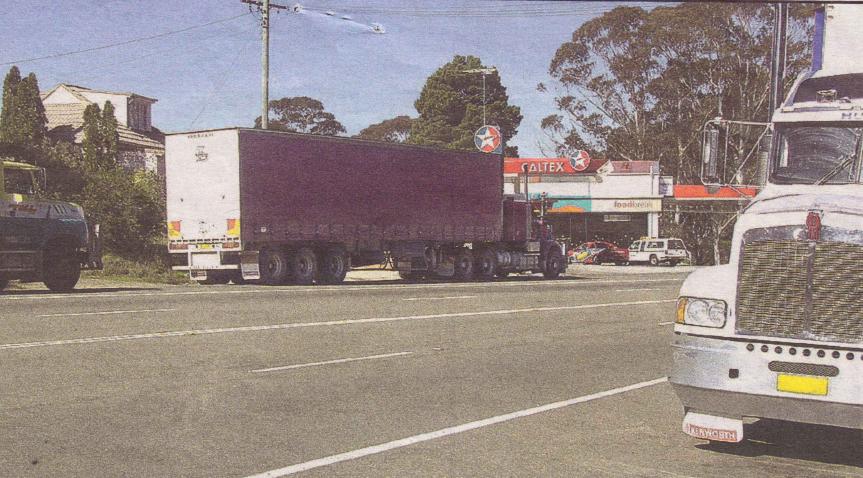
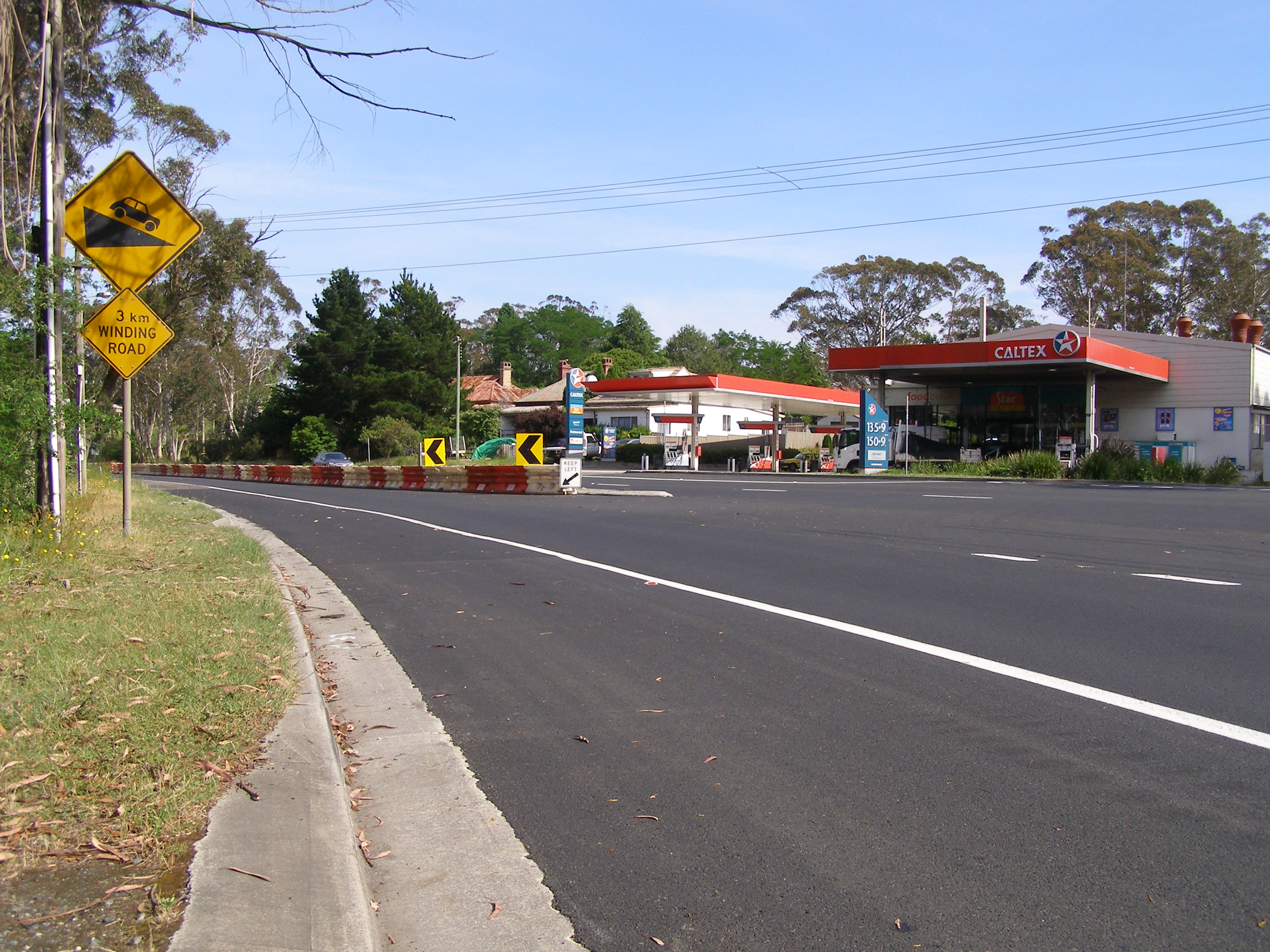
Noisy by day, nightmarish by night: Mt Victoria residents (Blue Mountains) near this 24-hour Caltex service station are being disturbed round-the-clock by truck drivers parking on their doorstops.
[Source: Blue Mountains Gazette, 20040924]
.
As alternating Labor and Liberal governments ignore rail investment across Australia and instead encourage and invest hundreds of million of our taxes in bigger roads for truck freight, regional highways are being transformed into noisy and dangerous trucking expressways.
Year on year, the regional Great Western Highway over the Blue Mountains for instance, has seen a steady increase in the number, size and frequency of trucks using it for long-distance linehaul. Produce, fuel, sand, soil, cement, grain, steel, concrete pipes, shipping containers are getting carted by road, some from as far away as Darwin and Perth, over the highway that runs through Blue Mountains towns and villages. There are many different speed zones to ensure the safety of local road users. All of these freight types could be carted by rail, which for the most part runs alongside the highway, but is mostly only used by passenger trains. The only commodity still banned is uranium but with federal Labor recently allowing uranium sales to India to resume, is it only matter of time before radioactive uranium is carted through Blue Mountains towns and villages?
There are commuters, school zones, buses, cyclists, pedestrian crossings and increasingly 19 metre B-double trucks hurtling along the same highway driven by ‘trip-rate’ pay incentives. Tail-gating is an all too frequently noted dangerous habit of many of these truck drivers, yet the NRMA suggests that “you try not to let the size of the vehicle intimidate you“. (Karen Fittall, NRMA’s ‘Open Road’ magazine, September/October 2005, ^http://www.mynrma.com.au/cps/rde/xchg/mynrma/hs.xsl/heavy_going.htm).
.
Trucks behaving badly Pacific Highway (and Great Western Highway)
.
.
Somehow the Transport Workers Union has allowed the hourly rate to go out the window in favour of the employer’s convenient fixed cost ‘trip rate’. So to a truck driver it’s more trips for more money based on commercial incentive arrangements. This incentive structure has become the motivation driving faster trucks and therefore more dangerous trucks to push and exceed speed limits. Across the Blue Mountains, both Great Western Highway and Bell Line of Road, highway signposted speed limits are systemically unenforced.
.
Where’s the speed governor? Where are the road patrols?
At the time of Bob Debus MP as NSW Labor Member for Blue Mountains (1981 – 1988, then again 1995 – 2007), then federal Labor member for Macquarie (2007 – 2009), the once prohibited B-double trucks surreptitiously started using the Great Western Highway. How was this allowed? Now 19 metre B-doubles are at such frequency along the highway as to be standard, but there has been no local community consultation nor local community approval. It has been an undemocratic impost. What is stopping 26 metre B-doubles creeping in?
.
Exhaust Brake Noise is Rife!
.
Many trucks drivers on the highway apply their noisy engine brakes (engine compression braking) because they are told it saves on the cost of brake pads. Engine brakes in heavy vehicles are auxiliary brakes installed as important backup safety braking to reduce the load on service brakes on a steep descent. But many truck drivers have then engaged automatically so they kick in as soon as the driver takes his foot of the accelerator pedal. (This Editor holds a Class ‘HC’ Heavy Vehicle Drivers Licence, so is aware of this lazy habit).
Many truck engine brakes are noisy and the ‘bark’ characteristic of the noise reverberates considerably at night. Truck drivers selfishly use these even as they drive through Blue Mountains towns and villages. So 24 hours a day, often in the wee small hours, these exhaust brakes can be heard reverberating for miles around, keeping many Blue Mountains residents awake.
The police do nothing – they say it’s not their job. The Roads and Traffic Authority (RTA) does nothing, except put up tokenistic signs – ‘Trucks – limit engine braking‘, which is flatly ignored and not enforced. The Blue Mountains Council does nothing – it say it’s not it’s job, even though it accepts operating as an agency for the RTA at Katoomba.
Possibly the most ignored sign on a highway
One sign means the RTA can avoid the cost of enforcement
while pretending to and meet its local government development guidelines
– on paper.
.
So truck owners apparently save on the cost of renewing their brakes, but selfishly at the expense of Blue Mountains residents trying to get a good night’s sleep. This editor lives a kilometre from the highway yet almost nightly hears some lousy trucker’s exhaust brakes as it moans up to the red lights outside Council chambers. Selfish bastards they are! I bet there’s been complaints, but typically none of these agencies has done squat about it.
.
Dodgy Truck Rest Area
.
Big linehaul trucks are destroying the Blue Mountains. Not only by their noise and dangerous speeds, but intimidating tail-gating to keep schedule and parking day and night outside residents homes.
At Mount Victoria in the Blue Mountains, the RTA and Blue Mountains Council approved of 24-hour Caltex Service Station and allowing truck drivers to use the adjacent highway shoulder to park and sleep. The shoulder was even widened to accommodate and encourage its use as a dodgy heavy vehicle rest area.
Since December 2003, Caltex at Mount Victoria was somehow allowed to become a round-the-clock operation with drivers of passing trucks, semi-trailers and B-doubles using the road shoulders to park their vehicles, often directly in front of residents’ front doors.
Local residents have complained to their members of parliament about the constant truck noise, of truck drivers leaving their rubbish by the side of the road and some even using front yards as a toilet – urinating and defecating!
In 2004, Liberal MP Duncan Gay, then Shadow Roads Minister, met with local community representatives at Mount Victoria, confirming that:
.
“The RTA, who are responsible for fatigue management need to provide proper rest points”
.
Now in 2011, with the Liberal Coalition in power, still nothing has been done. With speed being the main cause of at least half the recorded crashes, and the NRMA confirming a need for increased enforcement of heavy vehicle speed limits, Duncan Gay back in 2004 also advocated the installation of two new speed cameras ‘to convince motorists to take more care.’ Nup, not yet done either!
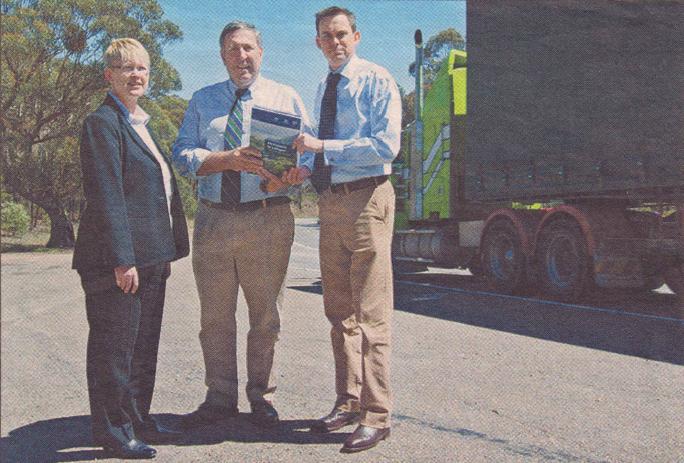
Then NSW Liberal Party Shadow Minster Duncan Gay (centre)
meeting Blue Mountains community representatives at Mount Victoria in 2004.
All care and no responsibility.
(Source: Blue Mountains Gazette)
.
The RTA, while headlong enthusiastic about channelling hundreds of millions into capital works widening sections of the highway, highway maintenance and traffic enforcement has always been the RTA’s unsexy Cinderella. Fatigue is one of the biggest causes of crashes for heavy vehicle drivers and the RTA is the delegated authority responsible for overseeing heavy vehicle driver fatigue management on New South Wales roads. This necessarily includes providing for the necessary rest facilities.
Suitable rest areas are important for heavy vehicle drivers to take long and short rest breaks, use amenities and check loads and vehicles. Heavy vehicle drivers must conform to fatigue management legislation that specifies strict resting requirements. In order to fulfil these requirements they require suitable rest area facilities that are regularly spaced along key freight routes. (Source: ^http://www.rta.nsw.gov.au/heavyvehicles/safety/hvfatigue/index.html)
.
RTA reneging on its duty to provide suitable Rest Areas
On 29th September 2008, Australia’s National Transport Commission (NTC) introduced new Heavy Vehicle Driver Fatigue laws national-wide. This came about as a consequence of many crashes involving heavy vehicles on designated national freight routes and fatigue identified as a key cause. The Audit of Rest Areas against National Guidelines (Austroads 2006) had found that many rest areas on freight routes across Australia (many in NSW) were deficient in being suitable to provide for appropriate rest breaks to address driver fatigue. One of the key freight routes is Great Western Highway /Mitchell Highway (Nepean River to Dubbo).
The NTC Guidelines for Major Heavy Vehicle Rest Areas includes the following principles:
Sites generally at no more than 100km intervals. Geographical and other physical constraints may require a range between 80 and 120km with the maximum limit generally being 120km.
Sites are to be provided on both sides of the road on those parts of the network that have high levels of demand, while those with lower levels of demand will not require provision on both sides of the road.
Sites are to be well signposted for heavy vehicle drivers and have suitable access for ingress and egress.
Sites are to have designated hard stand parking for heavy vehicles and an appropriate number of parking spaces dependent on demand.
Sites are to meet the basic needs of heavy vehicle drivers including provision of sealed pavements particularly for ingress and egress lanes/ramps, at least one toilet on each site, shade, shelter, rubbish bins and tables and chairs.
The RTA restated these two years later in its public document ‘RTA Strategy for Major Heavy Vehicle Rest Areas on Key Rural Freight Routes in NSW, January 2010‘.
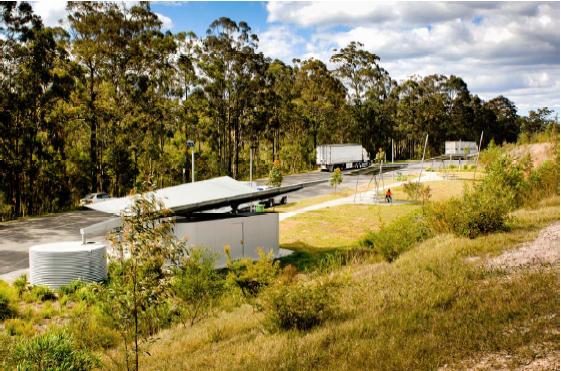
A RTA model heavy vehicle rest area
‘Station creek’ rest area north of Karuah, Pacific Highway, NSW
.
A RTA dodgy heavy vehicle rest area
‘Mount Victoria’ outside resident properties #45-47, #49, #51, #143, #147, #151.
.
RTA dodgy (unconscionable) heavy vehicle rest area in front of residents’ homes
.
The RTA is obligated to provide for a Major Heavy Vehicle Rest Areas along the Great Western Highway accessible from each side of the highway at the intervals and with minimum standard of facilities as prescribed under the 2008 NTC Guidelines. Similarly, heavy vehicle drivers are required to have breaks at the frequencies, duration and under such conditions as prescribed under the 2008 Heavy Vehicle Driver Fatigue laws, basically to ensure that they ‘fit for duty’ and not too tired to drive safely. In NSW this is law under the Road Transport (General) Regulation 2005, which in relation to trucks applies to trucks with a Gross Vehicle Mass of 12 tonnes. Under the regulation, Basic Fatigue Management, starts with a solo driver required to have a 15 minute ‘stationary rest‘ after no more than 6 hours and 15 minutes at work, driving or otherwise. Longer work shifts have increasing rest break requirements. ‘Stationary rest‘ is defined as rest time that the driver spends out of the heavy vehicle or in an approved sleeper berth of a stationary regulated heavy vehicle.
.
However, along the Great Western Highway, which the RTA deems to be a ‘key rural freight route‘, the entire route of 200 km between outer Sydney (Penrith) and Orange provides no current rest area facilities, either westbound or eastbound that meet the 2008 NTC Guidelines. There should be two sites at no more than 100km apart, and on both sides of the highway, not just one side, with suitable access for ingress and egress. The sites should have stand parking for heavy vehicles and an appropriate number of parking spaces dependent on demand, as well as offering drivers a toilet, shade, shelter, rubbish bins and tables and chairs.
But the RTA simply doesn’t care. The RTA is prepared to ignore the problem of fatigue, to configure exemptions to avoid legalities and otherwise spend millions on the more politically sexy capital works upgrades. Three years after the NTC Guidelines, and many crashes later (involving heavy vehicles), the RTA has spent hundred of millions widening the Great Western Highway into a trucking expressway for bigger and more trucks to use, but has provided no facilities to address heavy vehicle driver fatigue. So the RTA is telling truck drivers to take proper breaks, but providing them with stuff all places to properly have a break. The RTA is negligent. It is also sly at claiming private enterprise facilities as its delivery of rest areas.
So the RTA is not just negligent. It is unethical.
No heavy vehicle facilities provide by the RTA for 200 km between Penrith and Orange
.
Along the Great Western Highway freight route between Penrith and Orange, a distance of over 200 km, the RTA provides no dedicated rest areas for heavy vehicles to the NTC Guidelines. The only RTA-built rest area is an unshaded paved vehicle check area just west of Faulconbridge with no facilities except two rubbish bins.
Only private enterprises are providing any form of adequate rest facility eastbound between Orange and Penrith that is accessible by heavy vehicles – the BP Service Station at Mount Lambie and the Caltex Service Station at Mount Victoria, but neither provide space for a heavy vehicle to park so the driver can sleep. The only heavy vehicle rest facility between westbound between Penrith and Orange is the Shell Service Station at Yetholm where there is ample off road parking, a roadside restaurant, toilets and an adjoining motor inn, but this is a commercial operation, not one provided by the RTA.
The RTA is thus contributory in culpability for heavy vehicle crashes due to driver fatigue along the Great Western Highway.
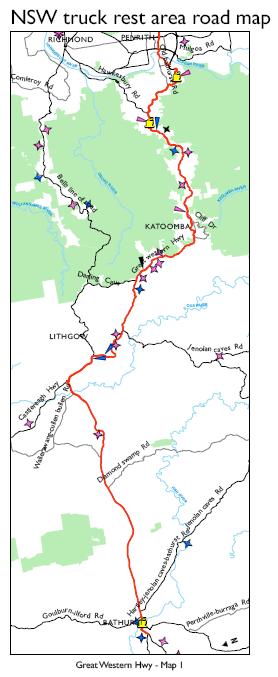
The RTA map below (which can be viewed full size by the link provided) shows the Great Western Highway from Penrith to Bathurst, with only two rest stops (‘Driver Reviver‘ sites in yellow) – one at Glenbrook (westbound only), and one at Faulconbridge (eastbound only). Neither are any more than roadside parking areas without facilities – big of the RTA!
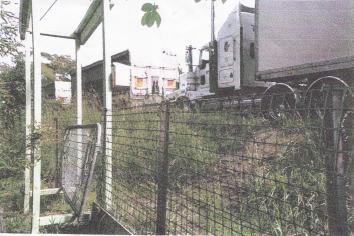
RTA’s key rural freight route supposed ‘rest area’
for Heavy Vehicles at Faulconbridge – westbound access only.
(Photo by Editor 20111019, free in public domain)
No toilets
No shade
No shelter
No tables
Two bins, but who empties them and how often?
Not signposted as ‘Rest Area’ but as ‘Vehicle Checking Area’ I wonder why? (see next zoom photo)
.
RTA key rural freight route truck stop Faulconbridge
Not signposted as ‘Rest Area‘ but as ‘Vehicle Checking Area‘
.
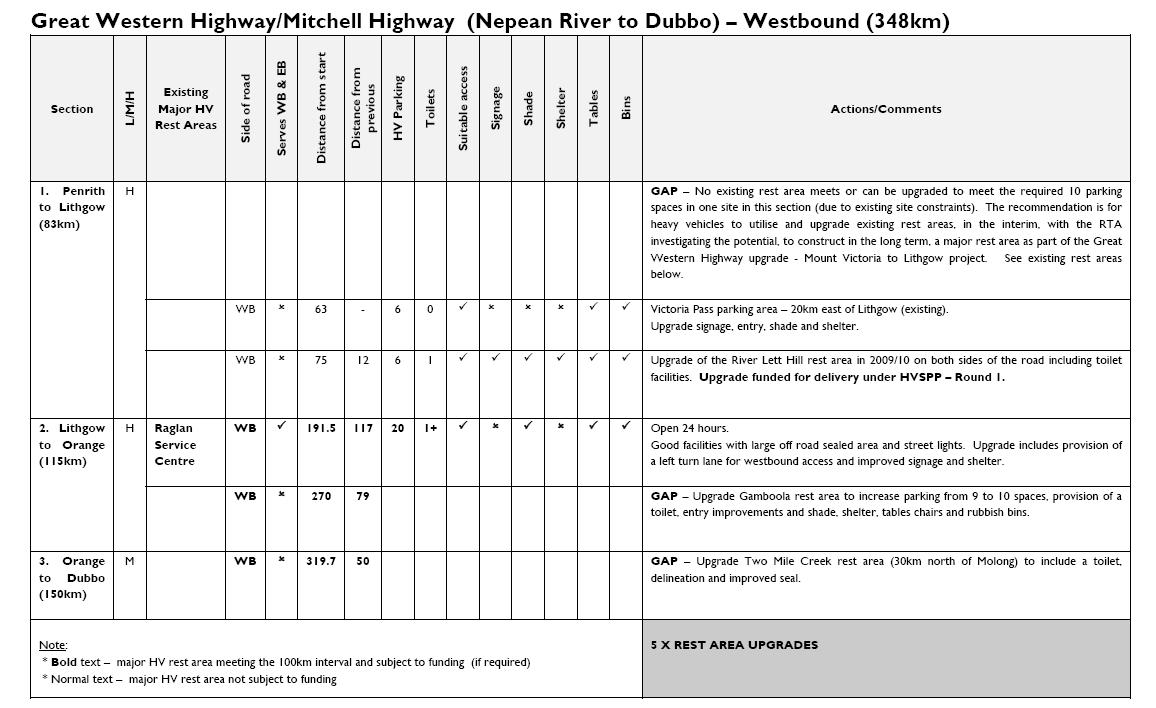
Back to the January 2010 ‘RTA Strategy for Major Heavy Vehicle Rest Areas on Key Rural Freight Routes in NSW’, the RTA lists the facilities available or not available for heavy vehicle drivers along the Great Western Highway between Penrith and Orange in two tables – one Westbound (p.19), one Eastbound (p.20).
‘Victoria Pass Parking Area‘ is nothing but a widened road shoulder outside the Caltex Service Station at Mount Victoria outside residents homes. There is no shade or shelter. The Caltex Service Station provides for refuelling/vehicle inspection, but no place for drivers to sleep in the vehicles.
At the time of writing, there are no current facilities at River Lett Hill – the statement of there being ‘a rest area…on both sides of the road including a toilet‘ is false and misleading.
At the time of writing, the Raglan Service Centre (Shell) is currently closed and is under construction as a BP service station. It is to be a private facility, not provided by the RTA.
RTA: “No existing rest area meets or can be upgraded to meet the required 10 parking spaces in one site in this section (due to existing site constraints). The recommendation is for heavy vehicles to utilise and upgrade existing rest areas, in the interim, with the RTA investigating the potential, to construct in the long term, a major rest area as part of the Great Western Highway upgrade – Mount Victoria to Lithgow project.”
Ed: Given this will cost about $1 billion, it is unlikely to be funded or built any time soon, and so is a poor excuse by the RTA for doing nothing.
.
Eastbound (north side of the highway)
.
(Click to enlarge table)
.
There is no heavy vehicle facility between Orange and Bathurst. The RTA’s mention of upgrading the Larra Lee rest area is a proposal only, just to fill in space in the table to mask its failure to provide a facility.
‘Raglan Service Centre’
At the time of writing the ‘Raglan Service Centre is closed. It was a Shell Service Station for heavy vehicles. It is currently under construction as a BP Service Station, but it is not a facilty provided by the RTA. The RTA’s branding of this facility as a ‘Raglan Service Centre’ is deceptive and misleading.
.
Caltex Service Station at Mount Victoria
The only facility that the RTA mentions is “Parking bay east of Mount Victoria (existing). Food, toilet, shade, shelter provided at adjacent service station“.
This false and misleading. The facilities are not that of the RTA. The only service offered by the Caltex Service Station for heavy vehicles is refueling, vehicle inspection, a roadside cafe and toilet. There is no shade or shelter either on the Caltex site or along the road shoulders. The “parking bay” is the road shoulder. What a deceptive fabrication!
.
RTA’s excuse for perpetuating its Dodgy Rest Area at Mount Victoria
.
Standard Politic Tactic #1: Blame lack of Federal Government – will sit well with NSW Roads and Transport Minister of the day
.
RTA:
‘Implementation of the RTA’s Strategy for Major Heavy Vehicle Rest Areas on Key Rural Freight Routes in NSW is largely dependent on the availability of funding from the Federal Government.
The Federal Government’s 2008/09 Budget outlined that the Department of Infrastructure, Transport, Regional Development and Local Government would provide $70 million across Australia over four years to fund a range of heavy vehicle safety initiatives. This funding is being allocated under the Heavy Vehicle Safety and Productivity Program (HVSPP) in two rounds with Round 1 covering 2008/09 – 2009/10 (complete) and Round 2 covering 2010/11 and 2011/12 (current). Under the HVSPP Guidelines a key consideration in allocating the funding is the extent to which state and territory governments commit to match the Federal Government’s funding contribution.
As part of Round 1 of the HVSPP, on 8 May 2009 the Federal Minister for Infrastructure, Transport, Regional Development and Local Government and the then State Minister for Roads announced $16M (50% Federal and 50% State) for NSW. Of this, $15M is currently being spent on 6 new rest areas and 22 rest area upgrades with the balance on bridge assessments for higher masses. In Round 1, NSW received 26.6% of $30 million available.
In applying the principles set in the RTA’s Guidelines for Provision of Major Heavy Vehicle Rest Areas a summary of needs across key rural freight routes in NSW is outlined in Table 2. Currently, on these routes 101 rest areas qualify as major heavy vehicle rest areas and 76 sites have been identified for enhancement. A total of 61 existing rest areas have been identified for upgrade to qualify as a major heavy vehicle rest area and 15 sites identified for new heavy vehicle rest areas. The strategic cost ($2009) to undertake required works that are not anticipated to be delivered as part of a major infrastructure proposal is estimated at around $50 to 60 million.
Delivery of works at all 76 identified sites is significantly higher than this strategic estimate.’
.
So what is the RTA’s ultimate excuse:
‘The RTA investigating the potential, in the long term, for a major rest area as part of the Great Western Highway upgrade – Mount Victoria to Lithgow.‘.(Ed: Given the $1 billion pre-blowout estimate, the RTA can focus on its more sexy capital works highway upgrades)..
Meanwhile, back at sleepless Mount Victoria, the Blue Mountains Council was told that the real estate profession had refused to place a valuation on the homes because of the problem and that the homes had been ‘effectively rendered worthless‘.
.
[Source: ‘Mt Vic’s truck dilemma’, by Len Ashworth, Lithgow Mercury, Tuesday 20081125]
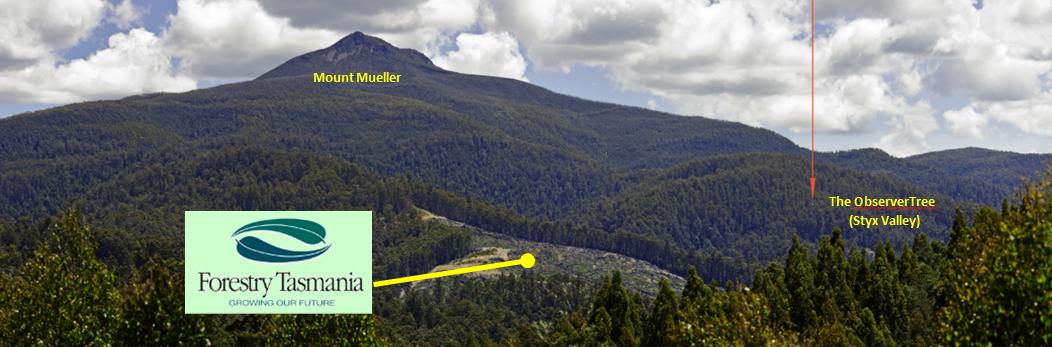
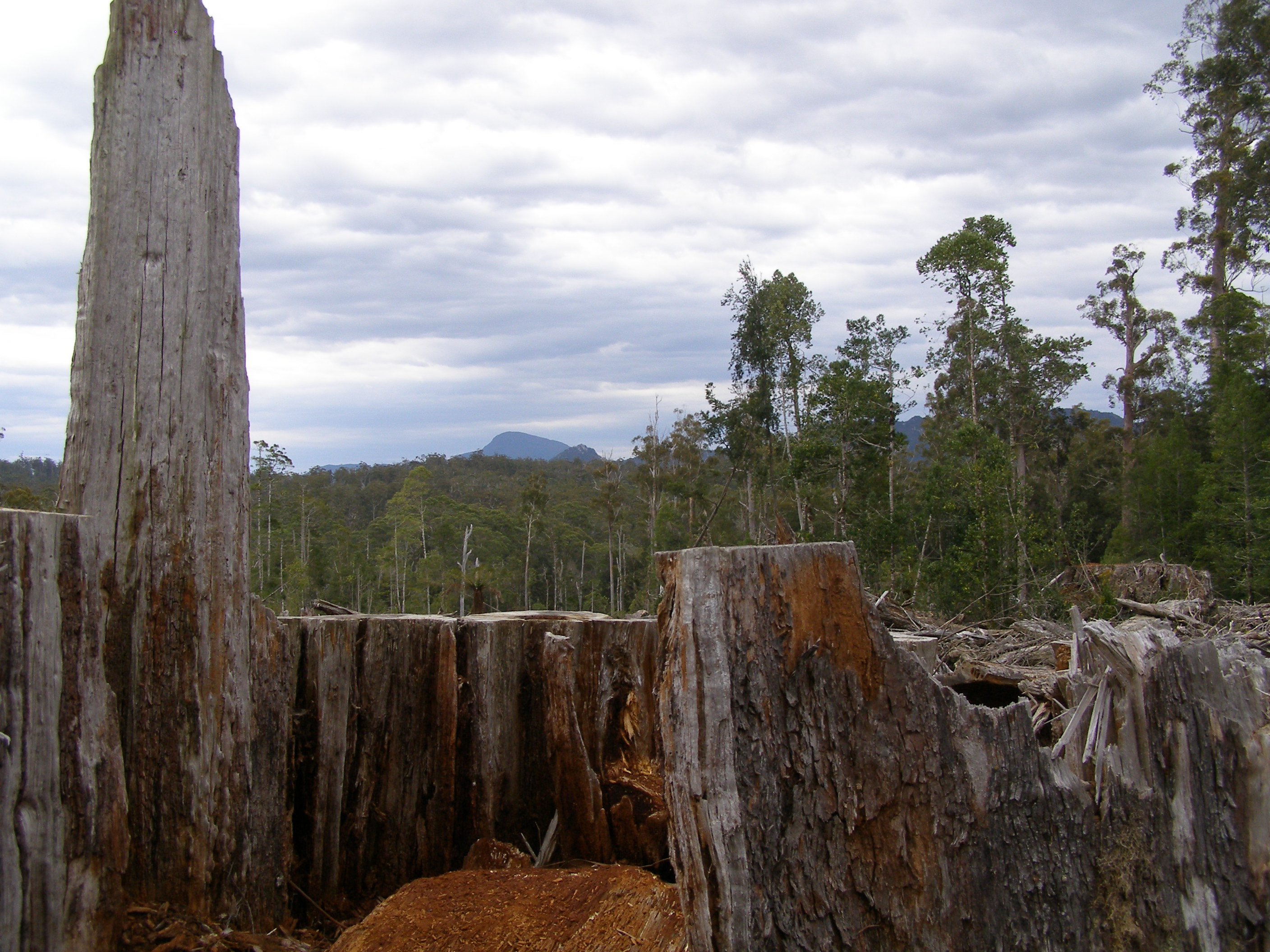
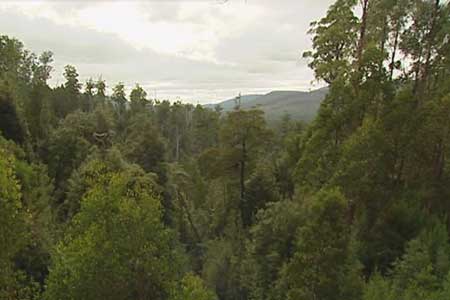
The ObserverTree in Tasmania’s magnificent Styx Valley below Mount Mueller
(Photo source: Alan Lesheim, Dec 2011, click photo to enlarge)
Click to visit: ^The ObserverTree
.
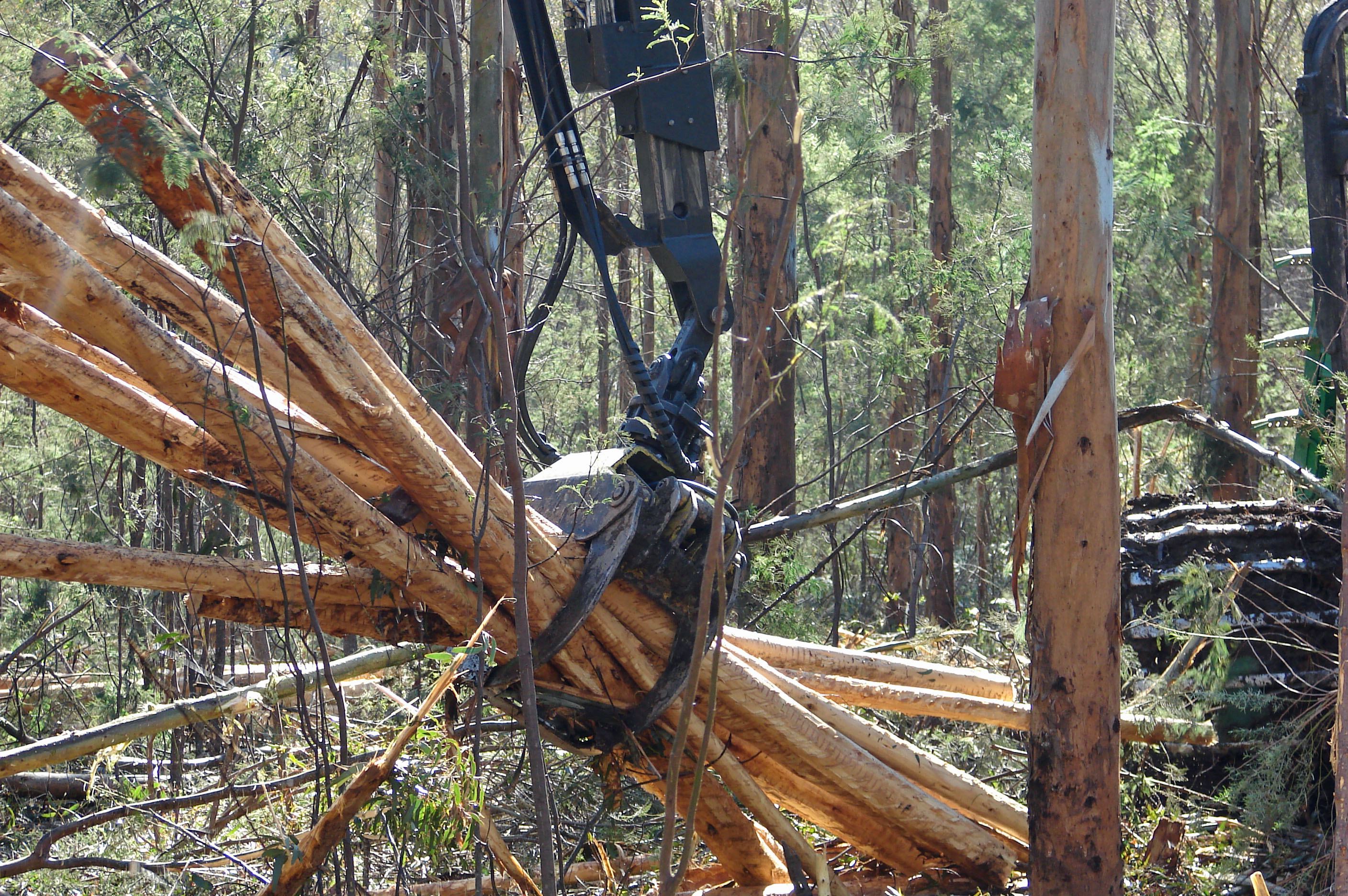
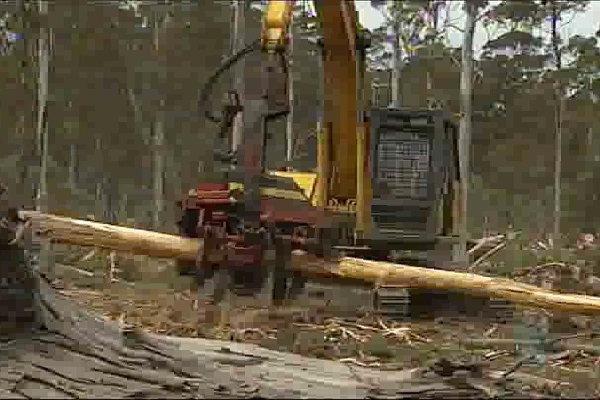
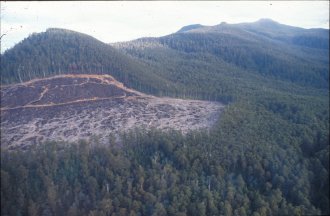
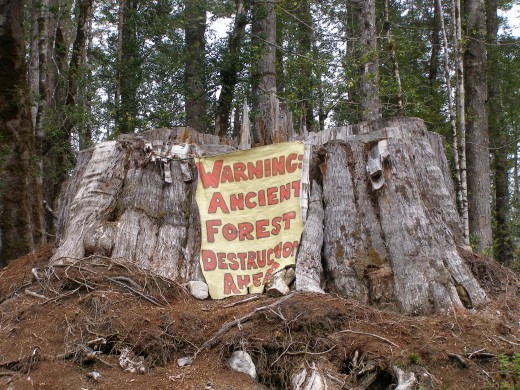
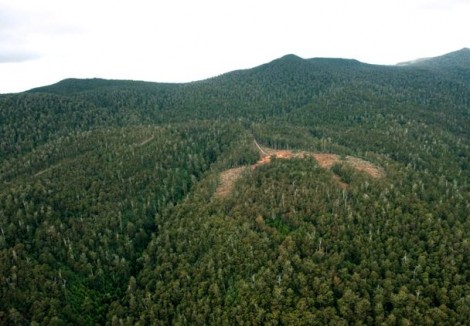
Ta Ann, industrial logger of Tasmania’s native old growth forests, has been exposed misrepresenting its timber products as environmentally sustainable. It reflects the underhand falsehoods behind the logging propaganda of Tasmanian Sustainable Forest Management.
Forestry Tasmania, which trashes and flogs old growth timber to Ta Ann, spends lots of money concocting glossy brochures claiming forestry (euphemism for ‘logging’) engages in ecologically sustainable forest management. But it is all simply logger language belying old growth clearfell! And the clearfell continues still, this year, this month!
The following video near ‘The ObserverTree‘ shows industrial logging underway in the magnificent Styx Valley on 16th December 2011.
.
.
.
Plywood supplier to London 2012 Olympics stops buying from Ta Ann
.
Recently Jenny Weber from the Huon Valley Environment Centre went to Japan with former Greens leader Peg Putt to meet with the Japanese companies purchasing from Ta Ann. The company representatives showed concern about the environmental destruction taking place to produce the products they are purchasing.
This week, a major British importer of plywood, International Plywood, which is helping to build facilities for the London 2012 Olympics, has publicly stated that it will not be purchasing any more timber from Ta Ann, due to Ta Ann being exposed for sustainable timber misrepresentation and using vital Tasmanian old growth in its plywood veneer timber flooring. Ta Ann has been falsely selling its plywood veneer timber products claiming that the timber is certified as sustainable under the international PEFC scheme and is sourced from plantations and sustainable regrowth forests. Doesn’t say much for the ‘PEFC’ scheme! The Programme for Endorsement of Forest Certification (PEFC) has been widely criticised by international environment groups as it is not an indicator of acceptable environmental standards and does not safeguard high conservation value from ongoing logging. No wonder Ta Ann relies on it. Forest Stewardship Council is the superior forest certification.
Environmental campaigners from Markets for Change and the Huon Valley Environment Centre travelled to England recently to meet with UK companies implicated in forest destruction. They launch a detailed report that traced Ta Ann veneer timber from Tasmania’s high conservation value forests through Malaysia to a London sports hall which will be used in training by Team USA during the 2012 London Olympics.
Tim Birch from Markets for Change was among the delegation – “We went to London to visit a number of companies to inform them of exactly what was happening“.
Ian Attwood, managing director of International Plywood, says his company is now boycotting Ta Ann’s products. Even a recent letter from the Deputy Premier of Tasmania, Brian Green to International Plywood UK urging them to continue buying from Ta Ann Tasmania did not persuade the company to continue purchasing veneer plywood from Ta Ann Tasmania.
Attwood said: “We’re not there to you know, to savage the forests. You know we’re here to try and buy product in a responsible manner.”
And the response spin from Forestry Tasmania (logger of Tasmania old growth and vested interest supplier to Ta Ann) – General Manager Forestry Tasmania’s Corporate Relations and Tourism Ken Jeffreys said:
.
(Logger Logic #1): “Tasmanian timber products represent a sustainable and renewable resource with stringent forest practice standards and certifications.”
(Ed: see video above)
.
(Logger Logic #2): “If you were concerned about the planet, you would buy timber product from Tasmania, because we have the highest level of forest reservation anywhere in the world“
(Ed: have old growth, so we log it)
.
(Logger Logic #3): “If you were going to buy plywood you would buy it from Ta Ann, because Ta Ann is using a raw material that would otherwise be exported as woodchips.”
(Ed: buy old growth for veneer otherwise it’ll end up as woodchips anyway – we’ve gotta find some use for it).
London 2012 Olympics setting sustainability standards
One key reason why International Plywood is rejecting Ta Ann’s old growth plywood is that as building materials supplier to the London 2012 Olympics, International Plywood is obligated to prove its supplies are environmentally sustainable to the Olympic Delivery Authority (ODA). The Olympic Delivery Authority’s Sustainable Development Strategy has the strict objective to identify, source, and use environmentally and socially responsible materials. . ‘Key to delivery of a sustainable development is its design, and the methods used in its construction. Also pivotal is what materials are used to construct the facilities. The materials used in the construction of the Olympic Park and venues are a key aspect of the ODA’s commitment to delivering a sustainable development. The ODA is working closely with industry bodies to allow suppliers to respond positively to the ODA’s requirements. Through this engagement, the ODA hopes to leave a lasting legacy of a more socially and environmentally responsible approach to materials use within development.
Four principles apply when sourcing materials.
Responsible sourcing
Use of secondary materials where possible
Minimising embodied impacts
Healthy materials.
.
Responsible sourcing
.
‘Suppliers will be asked to demonstrate, as appropriate, responsible sourcing of materials by providing evidence of the existence of legal sourcing, environmental management systems, or through the use of chain of custody schemes.’
‘A Timber Supplier Panel has been established for the Olympic Park to support the commitment to source 100 per cent of timber from legal and sustainable sources as defined by CPET (Central Point of Expertise on Timber Procurement) and in line with Government policy. [CPET website: ^http://www.cpet.org.uk/]
To date, all timber used in the construction of the Olympic Park meets this commitment.
The ODA received the ‘Achievement in Sustainability Award’ at the 2009 Timber Trade Journal Awards for the set up and management of the Timber Supplier Panel.
LOCOG’s Sustainable Sourcing Code states that the Forest Stewardship Council (FSC) certification scheme is approved for the purposes of both ‘Legal Timber’ and ‘Sustainable Timber’. Where it can be robustly demonstrated that it is not possible to supply items from FSC-certified sources, then timber and timber products that can be verified with appropriate documentation in respect to their origin and legality are acceptable.’
‘Wood from forests which provide homes to some of the planet’s most endangered species is being used to construct athletes’ training facilities for next year’s London Olympics, it has been alleged. Eucalyptus trees, from forests which date back more than 1,000 years, are being logged, despite the UN World Heritage Committee’s repeated calls for that region of Tasmania to be protected.
The forests provide habitats to Tasmanian Devils, the Tasmanian Giant Freshwater Lobster and the Swift Parrot, all of which are listed as endangered species and scientists believe that the wooded area captures and stores the most carbon of any on earth per square mile.
Now though, an Australian environmental group has claimed that products made from trees felled there are being used to make a basketball court for Team USA to train on during the Games. Although the building is not being run by the London 2012 organisers Locog, in 2018 they pledged to only use sustainable timber in the construction of the Games’ venues and infrastructure, as part of a drive to make them a “truly green Games“.
And, while Athens was criticised for making “no requirements for any form of sustainable wood products” in 2004, the organisers of Beijing 2008 banned wood “obtained directly from virgin forest” and, in the run-up to the 2000 Sydney Olympics, organisers pledged to only use wood which was certified by the Forest Stewardship Council.
Wood in the London SportDock facility, construction of which is being lead by the University of East London (UEL), conforms to the rival Programme for the Endorsement of Forest Certification (PEFC) standard, which environmental groups attack for not going far enough to promote ethical logging. The facility will be rented by Team USA for the duration of the Games.
Though it does not contravene any law, the logging is opposed by environmental groups. Tim Birch, Chief executive of Markets for Change, which led a six-month investigation into the trade, tracing the wood from Tasmania to the London 2012 site, said:
“Tasmania’s ancient forests, which offer crucial habitat to endangered species like the Tasmanian Devil and the Tasmanian Wedge-Tailed Eagle, are being trashed so that plywood can be sold on to the international markets. It’s a tragedy that this time the trail of destruction has led to London’s Olympic Games so America’s international sports stars could be forced to play on forest destruction.”
He added that it was “essential” that companies review their procurement policies to ensure that they “end the UK’s part in wrecking some of the world’s last remaining old growth forests”.
Campaigners point to Tasmanian Government documents, which show that the Malaysian manufacturer Ta Ann received timber from logging operations undertaken within old growth areas of the forest. “Whether or not Ta Ann eventually use the old growth trees which are cut down is irrelevant, the habitats have been destroyed all the same,” said Will Mooney of the Huon Valley Environment Centre.
He added: “Even if they do not use the old growth timber to make their products, it is the demand for timber from the Tasmanian forest which means that old growth trees are nevertheless being cut down then discarded.”
But Ta Ann says that no old growth trees are used in their products, pointing out that machinery recently installed by the company is only capable of processing regrowth trees. A spokesman for Ta Ann Tasmania said that its products are produced “from regrowth timber billets harvested strictly in accordance with Australia’s forest policies and laws including the forest practices code”.
.
Greenpeace’s executive director John Sauven said:
“As a proud Londoner, I’m shocked that ancient forests crucial for conserving the world’s tallest flowering plants, the largest hardwood trees in the world, and many endangered animals are being used for flooring in London’s Olympics.
.
“British companies like International Plywood could end the destruction by ensuring they no longer do business” with companies who handle even new growth Tasmanian timber.
Both UEL and Dynamik Sport Surfaces, which installed the wooden flooring, said they were initially unaware that parts of the wood used in the flooring installed in the building was from the Tasmanian forest. UEL said that, had it been aware of the concerns over the source of the material, “it would have been considered. But hindsight is a great thing.”
A spokesman said: “We are totally committed to making sure the £21million Sports Dock facility is an environmentally friendly development and that this new facility has the best mix of sustainable materials and features.
“The International Basketball Federation has very clear specifications about what type of materials should be used when constructing a court, which will be used by professional basketball players. Following this guidance and consultation with the relevant consultant for this development, the material was sourced.”
According to Markets for Change, the wood products destined for the UEL site passed from the Malaysian logging company Ta Ann, entering Europe in the hands of International Plywood. It eventually ended up in the hands of Dynamik, which laid it as flooring.
Anil Batra, Dynamik’s Financial and Marketing Director said he was “interested in the issue, now it has been brought to our attention” but pointed out that no laws had been broken and that the wood was certified by the international PEFC.
A Ta Ann spokesman initially called said: “what a great result for Tasmania, our timber being used in the London Olympics. He claimed that the Tasmanian subsidiary uses regrowth billets of wood and operates strictly in accordance with Australian laws and sustainability requirements. He acknowledged that the Tasmanian forest is “a mosaic of regrowth and some old
growth” and said that the company can only use billets from regrowth”. He later said that the company had not carried out any production of veneer products bound for the UK and cast doubt on whether the wood used at UEL could be proven to be from his company.
Markets for Change produced images it said showed Ta Ann-branded crates at the UEL site which they said also had licence numbers identifying them as containing Ta-Ann-manufactured products.
A spokesman for International Plywood said the company did not have any current contracts with Ta Ann and would review its trading relationship with the firm, if it could be shown it was “acting in a way that would not comply with our purchasing policy standards“. However, the spokesman said it had no reason to believe that were the case and “if Ta Ann were able to supply PEFC certified plywood as they have done previously they would meet our current purchasing policy“.
A spokesman for Team USA refused to comment.’
.
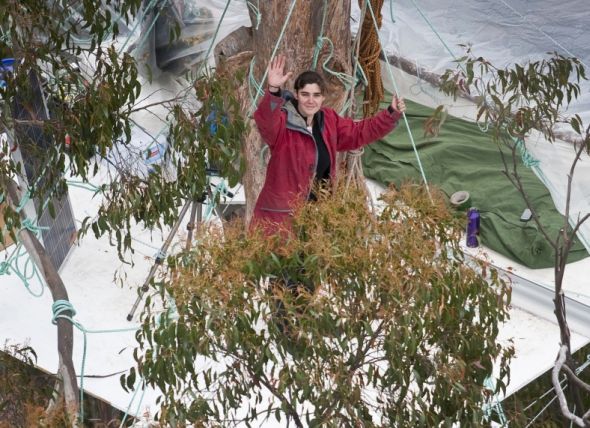
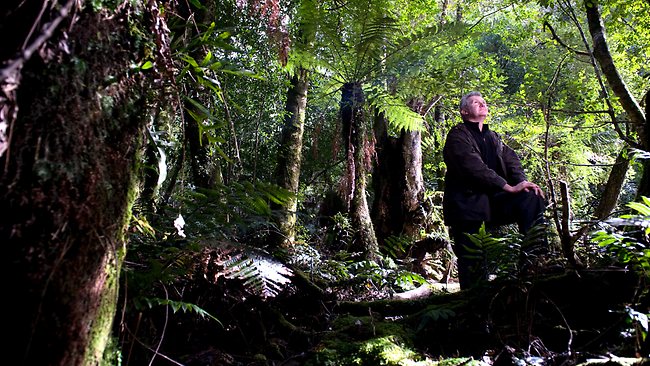
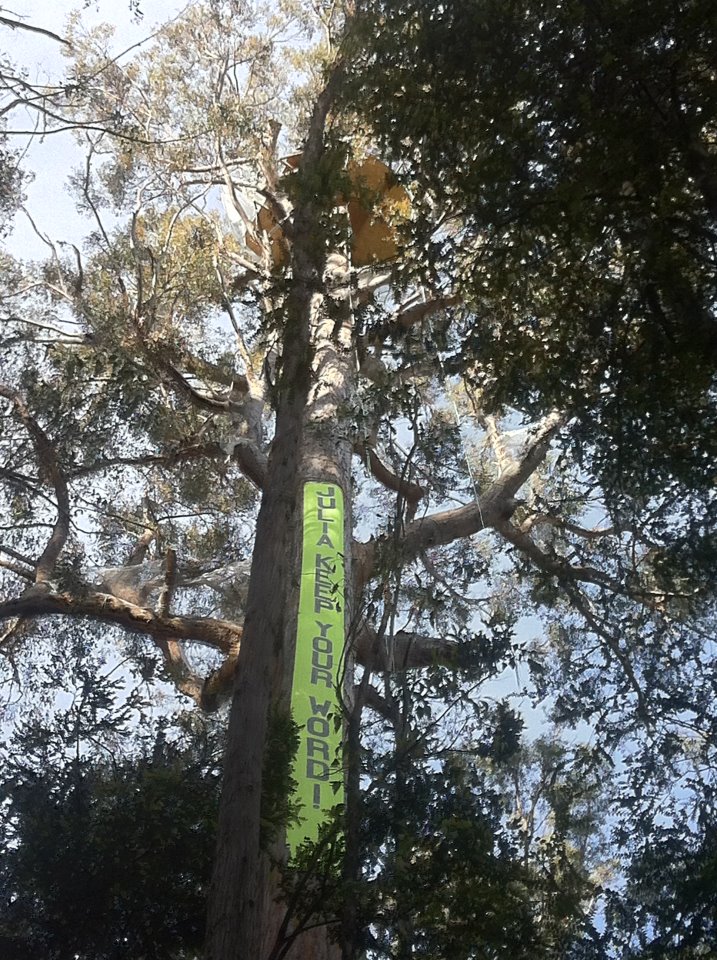
Forest Defender Miranda Gibson
of Tasmanian activist group Still Wild Still Threatened, in ObserverTree
Mount Mueller Forest, Styx Valley South West Tasmania, Australia.
“To resolve the conflict over forests in Tasmania, protect native forests, and develop a strong sustainable timber industry.”
.
.
The Parties to these Principles:
.
Timber Communities Australia Ltd (TCA)
The Construction, Forestry, Mining and Energy Union (CFMEU)
The National Association of Forestry (NAFI)
The Forest Industries Association of Tasmania (FIAT)
The Australian Forest Contractor’s Association (AFCA)
The Tasmanian Forest Contractors Association (TFCA)
Environment Tasmania Inc. (ET)
The Wilderness Society (TWS)
Australian Conservation Foundation (ACF)
Tasmanian Country Sawmiller’s Foundation (TCSF)
.
Note: Ratio of 7 to 3
.
.
‘Objectives‘ of the Parties
.
‘The parties to the Principles seek from State (Tasmanian) and Federal governments:
.
Support for an delivery of all principles in full
Interim support for the development of a plan to deliver the Principles, including:
Verification (1) of Resource Constraints
High Conservation Value Boundaries
Implementation of the Principles through an agreed, fully-funded package and timeline that maximises benefits and reduces negative impacts
Immediate interim assistance for Tasmanian harvest, haulage and silvicultural contractors
To determine with industry, a guaranteed sustainable quantity and quality of wood supply within 3 months that is outside of the identified high conservation value forests, for the period of negotiations, in order to provide certainty for the industry, workers and communities.
A progressive implementation of a moratorium on the logging of high conservation value forests commencing within 30 days – ensuring that priority, (i.e. those in the most advanced stages of planning for harvesting) HCV coupes identified by ENGO’s (2) are the first to be addressed. The full moratorium is to be completed within 3 months. Any necessity for any proposed variation to this due to unavoidable planning constraints has to be independently verified.
To provide exit assistance for industry where required; and
Not to accept new entrants into the Tasmanian industry, nor enter into new contractual relationships with the state while the negotiations are underway unless by the mutual agreement of all parties (3).
Accept that delivery of these Principles will require joint agreement of the parties to timelines and funding.
To develop an agreed stakeholder-led implementation process with a finalised full agreement within 12 months.
.
– – – – – – – – – – – –
Notes:
.
(1) Draft verification process document under construction.
(2) ENGO’s in this document means those environmental non-government organisations who are parties to this document (i.e. ONLY Environment Tasmania, The Wilderness Society, and the Australian Conservation Foundation)
(3)No party shall be required to accept a Principle which would otherwise apply to it where to do so would cause a breach of an existing contract or statutory obligation.
.
.
The Principles
.
The parties agree to the following:
.
General Wood Supply
Provide a sustainable resource supply profile to industry based on an agreed minimum quantity and quality requirement for industry. This will be underpinned by legislation.
.
Native Forest Wood Supply
Subject to the provisions of the transition, as legislated Native Forest entitlements are handed back, ensure these entitlements will not be allocated nor licensed to new players.
.
HCV Forests
Immediately protect, maintain and enhance High Conservation Value Forests identified by ENGO’s on public land.
.
Transition
Transition the commodity (non specialty) forest industry out of public native forests into suitable plantations through a negotiated plan and timeline.
.
Industry
Create a strong sustainable timber industry including the development of a range of plantation based timber processing facilities including a pulp mill. There will need to be stakeholder consultation and engagement with the proponent, ENGO’s and the community.
.
Specialty Timbers
Provide for ongoing speciality timber supply including Eucalypt for our Tasmanian high value furniture and craft industries through a negotiated plan and timeline.
.
Plantations
Support sustainable and socially acceptable plantations including agreed reforms and new agro-forestry outcomes, including pursuing certification.
.
Private Forests
Encourage and support, but not mandate, private forest owners to: seek assistance for certification; and protect, maintain and enhance high conservation value forests on their properties.
.
Communities Impacted
Support impacted rural and regional communities, workers, contractors and businesses, through a range of economic development, financial assistance, compensation and retraining measures.
.
Community Engagement
Engage and involve the broad Tasmanian community in the development and implementation of a durable solution to the Tasmanian forest conflict.
.
Tourism
Develop Tasmania’s nature based tourism industry in line with these Principles.
.
Planning
Develop a fully funded, independent, scientifically led landscape conservation, restoration and integrated catchment management program, and associated governance and regulatory improvements.
.
Government
Reform and support government agencies, policies and legislation as necessary for the implementation of an agreement associated with these Principles.
.
Climate Change
Seek funding for improving carbon outcomes as a result of delivering these Principles.
.
Biomass
In Tasmania, only permit plantation forest processing and plantation harvesting residues to be used as biomass for Renewable Energy Certificates.
.
Certification
Encourage Forestry Tasmania to firstly obtain Controlled Wood accreditation on delivery of the moratorium, secondly, obtain full FSC certification on resolution of an FSC National Standard and once an agreement based on these Principles has been finalised.
.
Durability
Undertake to ensure all elements of this agreement are fulfilled on a durable basis.
.
Legislation
Require State and Federal legislation to implement agreed outcomes arising from these Principles including appropriate review mechanisms, milestones and sanctions.
.
.
Editor’s Comment:
.
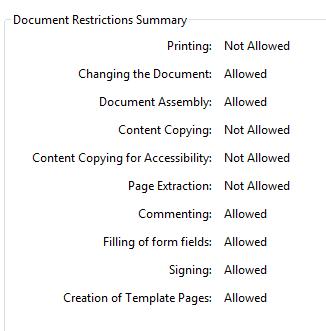
The above Statement of Principles was reproduced manually due to restricted access of the official PDF document as provided on the Tasmanian Premier’s official website. The security lock down denied printing and copying.
But then as Tasmanian Labor Premier Lara Giddings studied Law, perhaps there was a legal reason for her deliberate restriction of the details to the Tasmanian public.
.
This is the Tasmanian Premier’s restricted document:
This article was initially published by Tigerquoll on Candobetter.net on 20090625 under the title ‘Shooters Party – fanatical red necks pushing for open season in National Parks’.
.
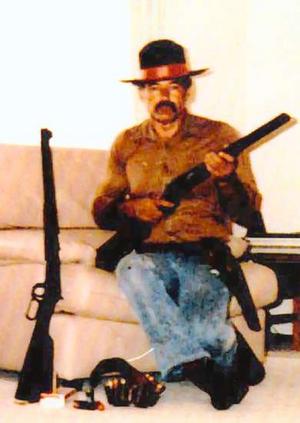
An infamous licensed shooter
.
Since May 2009, Robert Brown MP of the Shooters Party has been pushing for the Game and Feral Animal Control Amendment Bill 2009 to be passed into legislation in New South Wales, Australia. The spin of this Bill is so feral animals can be controlled in National Parks. But in reality the proposed changes would mean the following main changes:
.
Many of Australia’s native fauna across NSW would be condemned as ‘game animals’ just like in colonial times, when Australian native animals were despised as ‘vermin’. Other native animals can be included in the shooters hit list so long as there is consultation with the Minister for National Parks (DECC).
It would be lawful for sporting shooters to hunt and shoot native fauna in all National Parks, State Forests, Crown Land and ‘private game reserves’ across NSW. Killing wildlife is to be branded as ‘conservation hunting’ and basically would be permissible through most natural landscapes outside built up areas.
The Game Council of NSW, which is a government body dominated by members of shooting and hunting clubs, and it would assume authority for granting shooting licences in National Parks.
Shooters and hunters in National Parks would be immune from protesters trying to protect native animals and birds – as it would become “an offence to approach persons (within 10 metres) who are lawfully hunting on declared public hunting land, or to interfere with persons lawfully hunting game animals”.
Any environmental protection legislation that impedes shooting and hunting of native animals is to be overriden by the new changes – such as under the National Parks and Wildlife Act 1974.
Hunting of native game animals can be done by non-commercial shooters – i.e weekend sports shooters. Using spot lights is optional and it is ok to leave the dead, dying and injured prey where they fall.
In the case of native waterfowl, licensed game hunters will be required to pass an official identification test of native waterfowl. The record of shooters killing protected bird species is woeful, yet the proposed legislation won’t make any difference.
.
(Source: New South Wales Legislative Council, Game and Feral Animal Control Amendment Bill 2009, Second Reading in Parliament)
.
Professional safari hunters, recreational hunters, sports shooters, or weekend warriors?
.
This Bill would overturn all environmental legislation protecting our remaining wildlife in NSW. It is repugnant. This proposal is nothing to do with noble gesture of taking on the task of the government’s culling feral animals in National Parks.
.
The Game Council in this self-interested set of demands, simply wants to give its weekend warrior member base open slather access to shoot almost anything and everything in the bush. It would be 24/7 open season on wildlife perpetually across NSW every day of the year. Every weekend would be weekend warrior party time in the ute with the spotties and the beers and the guns – just like in the good old days eh? In doing so, The Game Council and the Shooters Party have shown their true colours. The Game Council’s objective is to provide for the effective management of ‘introduced species’ of game animals. By advocating the hunting and shooting of native animals and birds is outside its ‘introduced species’ charter.
.
According to Greens MP Ian Cohen, if feral animals are to be culled then:
“it should be managed by trained Livestock Health and Protection Authority officers.” “Recreational hunters are not helping when it comes to feral species – the reality is that hunters, with their dogs, are often a cause of pest species dispersal, driving feral animals into national parks.”
.
Fortunately, NSW Cabinet yesterday backed away from supporting the Bill.
‘Ivan Milat was a licensed competition shooter. In police interviews he referred to a shooting range in the Belangalo State Forest he knew well.‘
.
Milat was probably a member of a local shooting club, perhaps the Bowral Pistol Club situated in the Belangalo State Forest or with the Southern Highlands Rifle Club. As such, Milat would have been eligible to have been one of the licensed shooters/hunters under this Bill before being convicted of his crimes. This example of a licensed competition shooter does not engender public confidence in the shooting and hunting fraternity to be trusted to self-regulate itself and attract law abiding citizens and carte blache access to National Parks for shooting!
Message:
Exclude all native animals as ‘game’ and prohibit the use of dogs in all hunting and shooting and you will have me starting to listen to proposals by The Shooters Party to control feral animals. But as for controlling feral animals in National Parks in NSW, this is an ecological management matter for DECC to be held accountable for.
To be genuine about feral control, this Bill must specifically exclude:
Native animals
National Parks
Recreational shooters
.
The intent then of The Shooters Party to help control ferals will starts becoming more genuine.
If the Bill is one of targeting ferals, why does it include native animals in National Parks?
If the Bill is one of targeting ferals, why is it limited to shooting and not other control means?
Why are the government authorities most qualified to control feral animals not granted the delegated responsibility for this Bill?
Where in this Bill does it specify controls on the time of day that shooting can take place? (i.e. it is 24/7)
Where in this Bill does it specify how shooting is to be independently policed? It doesn’t.
Where in this Bill does it specify that only qualified marksman trained in species identification will be permitted to engage in feral hunting in national parks? Why are recreational hunters permitted without the high standards of marksmanship and species recognition training?
Where in the Bill are inexperienced recreational hunters prohibited from such shooting? These are the ‘weekend warriors’ that give the contract professionals a bad name, yet the The Game Council is not going out of its way to distinguish these two extremes.
Who will be monitor, police and breath test the shooters?
Who will watchdog those monitoring the shooters to ensure that all legal, environmental and ethical standards are properly complied with?
.
Under The (NSW) Fireams Act 1996 Part 2, Division 1, Clause 10 ‘Applications for Licences, all that is required to be granted a firearms licence is:
Be over 18
Show proof of ID
Be someone who has not been convicted of an offence within the past 10 years
Not subject to an apprehended violence order
Not subject to a good behaviour bond
Not deemed not a risk to public safety
Pay the license fee.
.
Convicted backbacker murderer, Ivan Milat, was a legally licenced shooter and got through these stringent ‘elite’ tests and he owned multiple longarm firearms.
How does this reflect upon the test standards for firearm owners?
Since 18 August 2008, the Firearms Amendment Act 2008 has required unlicenced persons seeking a licence for longarms undertake and pass an approved Firearms Safety Qualification (Long-arms) Course. This is admittedly a step in the right direction.
.
(Source: NSW Shooting Centre)
.
Lack of professional controls for shooters
.
Under Firearms Regulation 2006 (NSW) clause 28 ‘Recreational hunting/vermin control—persons who are not members of approved hunting clubs’, an applicant can obtain a firearm licence without being a member of an approved hunting club in order to engage in recreational hunting/vermin control so long as they obtain and hold written proof of permission to shoot on rural land by the landholder which must describe the land to which the permission relates and the type of game to be shot.
But there is nothing in the legislation to enable a firearm holder to have a licence suspended or revoked as a result of shooting protected wildlife.
The NSW Department of Environment and Conservation, not the Game Council should be the prescribed authority for all vertebrate pest animal control.
.
Poor Species identification training
.
It is quite obvious that a feral animal is not synonymous with a native animal. One would hope that a shooter can distinguish a rabbit from a wombat, but what training exists to ensure natives are not mistakenly shot. Where is the policing to ensure that natives are not shot intentionally?
.
‘Conservation Hunters’?
.
Surely, this conjured term is oxymoronic spin. Instead, the designation ‘professional contract shooter‘ needs to be distinguished from ‘recreational shooter‘. If this Bill is to genuinely seek a professional approach to feral animal control it must specifically exclude recreational shooters and the weekend warrior element.
.
‘Ancestral & cultural right to hunt’?
.
The loose premise of some “ancestral & cultural right to hunt” – may apply to traditional Aborigines using traditional methods on traditional lands away from populated areas, but to quote the Game Council’s NSW Hunter eduication Handbook.. “in today’s world, hunting is no longer a necessity for most of us, but is something we are never the less driven to the associations with our past.” (p4.1.5). So this rather dubious argument says hunting is justified by some nostalgic notion of being connected to early colonists.
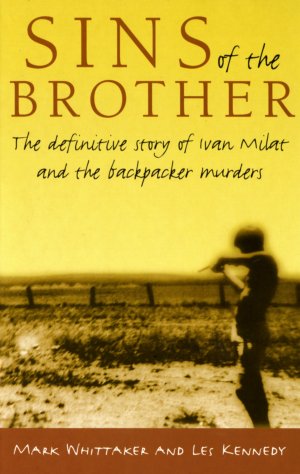
Airguns to teens are a catalysts for psychopaths. The book ‘Sins of the Brother: The Definitive Story of Ivan Milat and the Backpacker Murders‘ is an eye opener into a case of a hard rural lifestyle controlled by hardline paternal corporal punishment, when guns are part of life and temper tolerated.
“Guns are power” as confirmed by Ivan Milat’s brother Boris. Untempered power leads to consequences only limited to the discretion of the person in control.
Gun laws in Australia fuel criminal opportunity, yet gun laws don’t test for criminality. A cocktail of a gun acceptance culture, killing of animals from an early age, an insular rural upbringing, a penchant for control, an uncontrolled aggression, and opportunity are a recipe for incubating deviancy and how Ivan Milats and Martin Bryants are made. Milat’s upbringing featured a tolerance of incest, which fueled sexual depravity.
.
It starts with children being given airguns (or similar). Airguns inculcate shooting living things as acceptable.
.
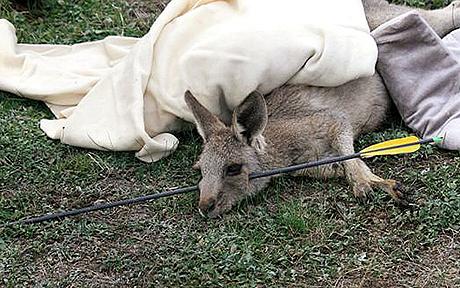
Kangaroo survives arrow shot through head
Melbourne (2009):
‘A kangaroo survived for about a week after being shot through the head with an arrow, wildlife officials said, and is expected to make a full recovery. Wildlife Australia has posted a A$10,000 dollar (£5,032) reward to find the person responsible for shooting the kangaroo, which was found in parkland near Melbourne’s outer suburbs on Thursday.
Veterinary surgeons from Melbourne Zoo operated on the stricken animal over the weekend and were optimistic about his chances.
“This was a big injury, but because the arrow didn’t seem to have been in there for a long time, and the injury was fresh, hopefully he’ll be okay,” said Michael Lynch, a vet at Melbourne Zoo.
“I’m cautiously optimistic about the kangaroo’s prospects for a full recovery.”
The marsupial was rescued just days after another kangaroo was found with an arrow in its rump in the same location, said Fiona Corke, a Wildlife Victoria spokesman. She said her organisation wanted to catch those responsible.
“It’s just unbelievable, I just can’t believe that anybody would do something so cruel. It must be a very cold-hearted person to do that,” she told national news agency AAP.
Miss Corke said the kangaroo was believed to have survived for up to a week before it was discovered and taken to an animal hospital.
There is a ‘baby boomer‘ political penchant to encourage more and more freight to travel by truck, which has dominated Australian Government transport planning for the past sixty years since World War II.
It is a short-term tactical stop-gap measure. Compared with rail freight, road linehaul for large volumes, over long distances, in the long term is price uncompetitive, and Peak Oil driving up fuel costs will eventually prove road linehaul a strategic economic blunder.
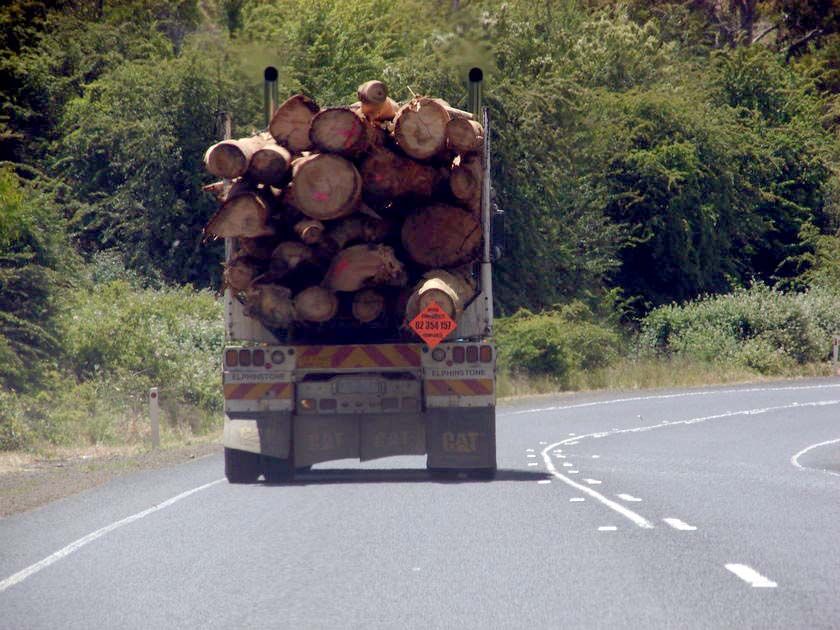
Speeding B-doubles increasingly dominate the highway over the Blue Mountains‘Woe betide anyone who gets in my way!‘
(Photo by Editor, free in public domain)
.
Yet ‘road-centric’ freight policy dominates the infrastructure planning, simply because it is being driven by the self-centred vested interests of the trucking industry – influenced (read ‘bought‘) by ongoing substantial monetary donations (read ‘bribes’) to the electoral campaigns of alternating Labor and Liberal governments. Visit ^http://democracy4sale.org/ and choose either:
Money talks, hence the political penchant to favour road freight. Whereas rail, entrenched as a government monopoly, has long denied any community say. Rail has become the Cinderella to Road where only a small honourary volunteer lobby, the Australasian Railway Association (ARA) has not the funds to compete against the collective corporate might of trucking donors. Read about the ARA: ^http://www.ara.net.au/site/index.php
The Liberal-Labor Party’s Auslink National Transport Plan since 2004 professed ‘a new strategic framework for the planning and funding of Australia’s roads and railways to meet long term economic and social needs.’ However, in reality the funding has all but gone into building bigger and more highways.
News is, we are about to enter the year 2012, so we should have advanced somewhat from post-war trucking thinking.
Yet in the Blue Mountains, west of Sydney, well over $1 billion is forecast to be spent to build a massive highway viaduct and tunnel; simply so that larger and faster trucks can cart freight, fuel and ore over the Blue Mountains and to bypass the village of Mount Victoria. The fact that a rail line following a similar route exists and has long been used to cart copious quantities of coal over the Blue Mountains, is ignored by a truck-centric political mindset. The planned Mount Victoria bypass is just one of the multiple ongoing highway widening sections being constructed by Roads and Traffic Authority (RTA) contractors over the Blue Mountains and ultimately extending from Penrith in Sydney’s outer metropolitan west to the New South Wales central-west regional town of Orange, 250km away.
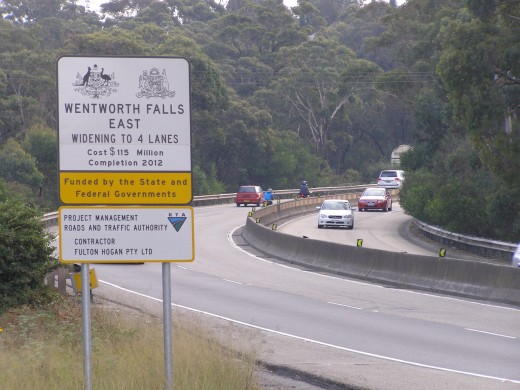
Great Western Highway, Wentworth Falls, March 2010
This trucking section just $115,000,000 (pre-blowout estimate)
(Photo by Editor, free in public domain)
.
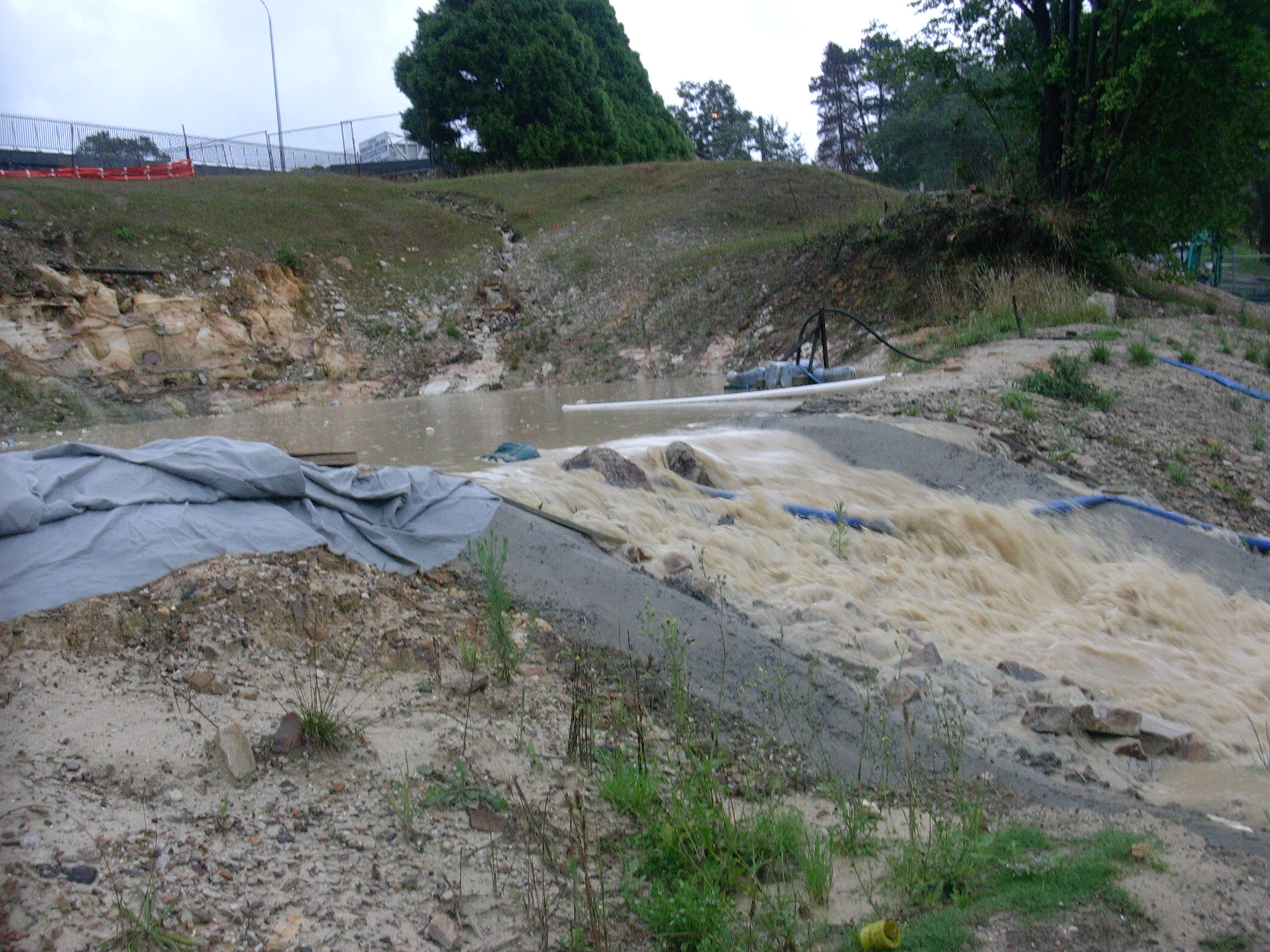
The widening of the highway has caused the destruction of much native vegetation and has ruined the bushland amenity of the villages and towns of the Central Blue Mountains. Construction has caused irreversible sediment contamination of many Blue Mountains waterways that drain from the highway ridgeline downstream into the Blue Mountains National Park and World Heritage Area.
Leura, January 2006
– collateral stormwater pollution of downstream creeks to serve the Trucking Expressway
(Photo by Editor, free in public domain, click photo to enlarge)
.
Since 1996, the widening of the Great Western Highway over the Blue Mountains has cost over a billion dollars already. Yet the highway runs parallel to an existing dual rail line, which for the most part runs right alongside one another. One justification argued for the massive cost and widening of the highway is to relieve traffic congestion for motorists, but there is a low population base in the Blue Mountains as settlement is confined to the ridgeline over the Blue Mountains where the highway and rail run together. Steep terrain either side prevent a large population expansion.
Katoomba, May 2009– collateral vegetation damage to serve the Trucking Expressway
(Photo by Editor, free in public domain, click photo to enlarge)
.
Before construction began, the only systemic traffic congestion on the highway was at weekends when tourists from Sydney ventured west in their cars. Spending billions to encourage domestic regional tourism has not been the real justification. The real justification has been and continues to be to encourage more truck freight along the Great Western Highway.
Yet the public is still waiting for a cost-benefit analysis, a calculation of any return on investment, an end-to-end journey analysis of the freight options, an holistic comparison to rail.
Instead, not only has there been a road-only freight focus, the trucks have got bigger. Governments are now permitting and encouraging the use of 19 metre ‘B-doubles’ along the highway. It is only a matter of time before 26 metre B-doubles turn up. In Victoria they are permitting B-triples – basically road-trains! Successive Labor and Liberal governments at both national and state level have maintained a truck-centric mindset since the 1980s when the NSW Greiner Government abandoned and close down much of the State’s rail infrastructure, including the closure of rail depots at Valley Heights and Junee.
This baby boomer political penchant has been encouraged and lauded by baby boomer himself, Bob Debus, long-time Labor politician for the NSW seat of Blue Mountains then the Federal seat of Macquarie, both covering the Blue Mountains region. Bob Debus has since retired, yet the Labor boomer mindset perpetuates with its truck-centric fervour.
.
“It is with dismay that I watch the Mountains stand by as the RTA fulfills Bob Debus’ promise of an “upgraded” highway (read Trucking Expressway) – by his own admission – built to carry 26m B-double trucks. The RTA admits that when the western container hubs are finished they will generate 4000 extra B-double movements per day. Parked end to end they would stretch 102 km – every day! Goondiwindi, Toowoomba and many other towns don’t allow them but we will see them roaring through every Mountains town – past schools, shops and homes.”
.
~ Dennis Plink, Hartley Vale (letter ‘B-double agenda‘ in Blue Mountains Gazette, 20090304, p.8.
.
The widening of the highway into a trucking expressway is wrecking the Blue Mountains. And certainly, those trucks have increased – in number, in size and length and in speed. These bigger, faster trucks are not policed. They are turning the Great Western Highway into a dangerous death zone.
Speeding B-Double truck overturns on Lapstone Hill
– at an already widened section of the Trucking Expressway
Zoom, zoom, zoom!
(Photo by Top Notch Video).
Last July, on the highway at Lawson near Queens Road, truck driven by a 66-year-old Murrangaroo man collided head-on with an eastbound car trapped a female passenger, followed by a separate collision between a truck and a car near Boland Ave at Springwood. On Friday, 29th July 2011 on Lapstone Hill the driver of a semi-trailer failed to negotiate a left-hand bend while travelling east and crashed into the concrete median barrier. The impact caused the truck’s trailer — containing a full load of bark — to tip over the barrier and slide a short distance into the path of a westbound Mitsubishi Lancer, driven by a 30-year-old Hazelbrook woman, who remained trapped before being rushed to Westmead Hospital. Traffic chaos ensued as all westbound lanes were closed for more than eight hours and one eastbound lane also shut for the clean-up operation. Lapstone Hill is one of the widened sections of the highway.
Increasingly we are reading in local newspapers of road trauma involving trucks. Across Australia, during the 12 months to the end of March 2009, 248 people died from 229 crashes involving heavy trucks or buses. These included:
Here are just some of the tragic road trauma incidents involving trucks across Australia over the past year:
.
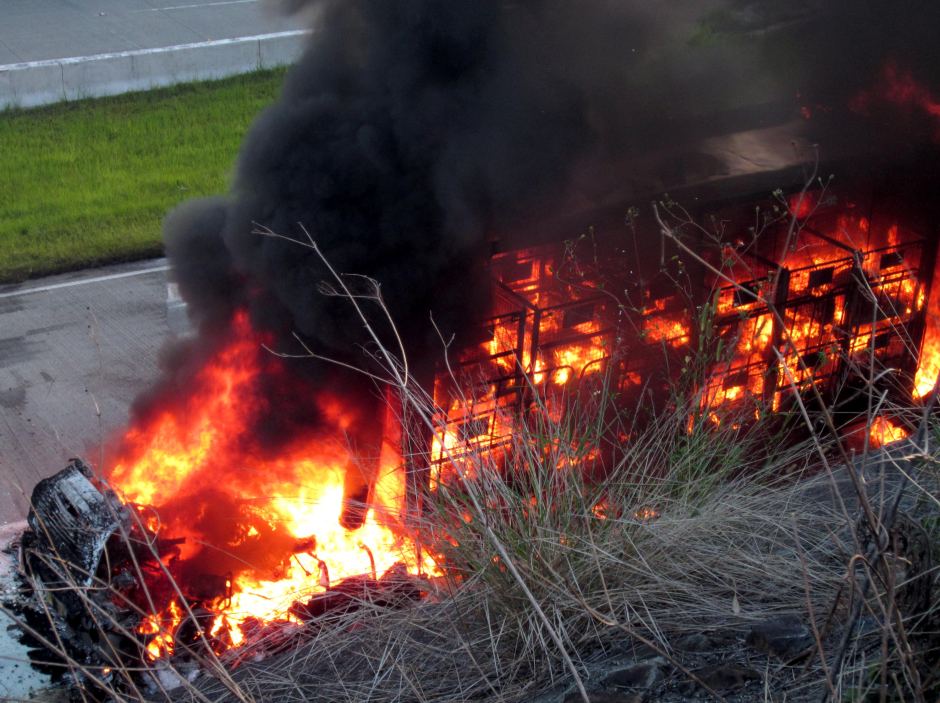
‘Truck burns at Yelgun’ … two days ago!
.
Flames engulf a postal truck at Yelgun on the NSW north coast on December 18, 2011. The driver stopped the truck after noticing smoke pouring from the engine bay. He collected his belongings and departed the vehicle before the flames took hold.
.
[Source: ‘Truck burns at Yelgun”, by Kalindi Starick, ABC, 20111220, ^http://www.abc.net.au/news/2011-12-19/flames-engulf-a-postal-truck-at-yelgun-on-the-nsw-north-coast/3737752]
.
‘Teenage driver killed in truck collision’…two days ago
.
One woman was killed and five people were injured in two accidents involving B-double trucks.
Engineers were called to the scene of a dramatic accident on the Gateway Motorway at Boondall in Brisbane about midday yesterday, when a B-double truckexploded after it and a car collided.
On the Bruce Highway near Rockhampton, a 19-year-old woman died and four people were injured when a car and a B-double truck collided. Police said the station wagon tried to turn into the southbound lanes of theBruce Highway at Marmor just before 8pm on Friday when the car and truck, whichwas travelling in the northbound lane, collided. The 19-year-old driver was killed, while her three female passengers, two aged19 and one aged 18, were taken to Rockhampton hospital. The three are in a stable condition. The 65-year-old driver of the B-double was taken to hospital for precautionary treatment and has been released.
.
[Source: ‘Teenage driver killed in truck collision’, by Date: December 18 2011, Ellen Lutton, 20111218, Sydney Morning Herald, ^http://www.smh.com.au/queensland/teenage-driver-killed-in-truck-collision-20111217-1p0ax.html?skin=text-only]
.
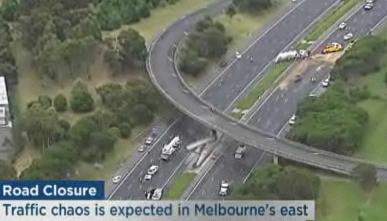
‘Truck crash closes Melbourne freeway’
Melbourne’s Monash Freeway is closed in both directions after a semi-trailer crashed into a bridge pylon in the suburb of Mulgrave in the city’s south-east.
Two people have died in a crash on the Pacific Highway near Yamba on the NewSouth Wales north coast.
A 62-year-old man and a 51-year-old woman from the Leeton area died when two cars collided about 11:00am (AEDT) today. A woman and three children who were in the other car have been taken to the Coffs Harbour Hospital. Police say a truck driver who was involved in the accident but failed to stop, was later pulled over at Ballina. Police are interviewing him. Rebecca Walsh, from the Traffic Management Centre, says the Pacific Highway is closed in both directions and vehicles are being diverted along the Summerland Way at Grafton.
‘Chemical alert after truck rolls in Blue Mountains’
.
Fire crews are battling to contain a major chemical spill on the Great Western Highway at Katoomba in the Blue Mountains, after a truck overturned and 20,000 litres of a bright green industrial chemical poured out.
Protective bunds have been built around the spill site to stop the chemical, which is possibly a type of hydraulic fluid, reaching the iconic Leura cascades. The chemical is described as biodegradable, but it can be a toxic irritant to skins and eyes if touched.
Six fire crews were at the site at 5pm, plus a hazardous materials unit from St Marys, a spokesman for Fire and Rescue NSW said.National Parks rangers, Blue Mountains council staff and fire crews are monitoring the extent of the spilled fluid, some of which entered the drainage system. Council staff have poured gravel around the edge of the spill area to try and contain it. The truck rolled over at about 2pm, and the driver’s condition is unknown, although he or she was understood to not have been trapped in the vehicle.
Editor: Subsequent reports by a Katoomba resident reported observing the green hydraulic fluid flow in quantities down Govetts Creek. The contaminant would probably have ended up in the World Heritage Area of the creek within the Grose Valley, but would the RTA, Blue Mountains Council or the National Parks Service care?
‘.
‘Truck overturns at Tabbimoble’ (Maclean)
.
A woman suffered minor injuries when the truck she was driving overturned on the Pacific Highway at Tabbimoble yesterday morning.
The B-double truck carrying general freight was heading north on the Pacific Highway and was about 2km south of the New Italy complex and 25km north of Maclean when it rolled shortly before 5am. The 46-year-old woman who was at the wheel of the Volvo semi-trailer complained of back pains and was taken by ambulance to Lismore Base Hospital. The highway was partially blocked for four hours while emergency service cleared away the debris. The accident occurred on what has become a notoriously black stretch of road where several fatalities have occurred in recent years. .
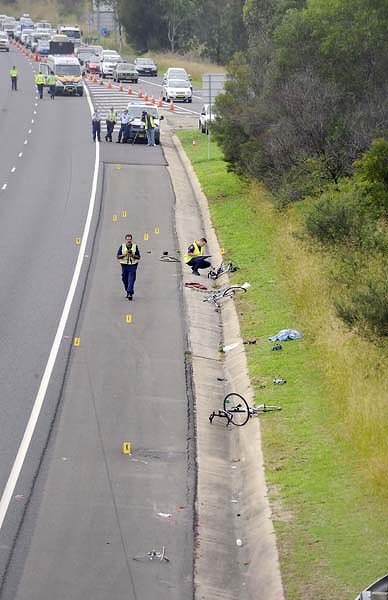
M4 Motorway (aka Trucking Expressway) on approach to the Blue Mountains
Photo: Adam Hollingworth
.
One man has died after a truck veered into a group of cyclists on the M4 motorway.
Fatigue may have caused a truck driver to veer into the breakdown lane and mow down a group of cyclists, killing one, on the M4 in Sydney’s west. Police said a group of four cyclists were riding in the breakdown lane of the M4 near the Northern Road overpass at South Penrith when they were struck by a B-double truck about 7.40am today. A male cyclist died and the three others sustained serious injuries. The injured were taken to Nepean Hospital.
A WorkCover spokesman said a preliminary investigation was under way to ascertain whether driver fatigue caused the accident. Police said the male truck driver was taken to hospital for mandatory blood and urine tests. Police are investigating the cause of the crash.
‘Overtaking gamble cost highway driver his life, police believe’
.
One person has died after a truck carrying chemicals exploded after colliding with a car on the NSW north coast this morning.
Police believe a car driver’s early morning gamble in trying to pass a B-double truck on a no-overtaking stretch of the Pacific Highway cost him his life. The sedan was travelling southbound at Warrell Creek just before 4am when it appeared to pull out into the oncoming lane to overtake the truck. It then crashed head-on into a second, northbound, B-double carrying chemicals, Senior Constable Brian Carney of the Mid North Coast Crash Investigation Units aid.
The Pacific Highway on the New South Wales north coast will be closed until New Year’s Day while crews clear a fuel tanker that exploded and killed the driver.
The tanker hauling 40,000 litres of fuel overturned and exploded on what is regarded by truckies as a notorious stretch of the highway, near Tintenbar, 10 km north of Ballina.
Authorities have set up a one-kilometre exclusion zone around the burning tankerand more than 100 firefighters equipped with breathing apparatus were sent to the scene.The ambulance service says the truck driver was killed in the blast, while two people have been freed from a nearby car after being trapped when powerlines came down on their vehicle. The second trailer of the B-double was thrown into a paddock where it leaked fuel into a nearby wetland, and police still cannot get to the cabin of the burnt truck where the driver’s body remains inside.
Another tanker driver, Gary, says the driver is one of their own but they do not know who.”It is sad to be holed up on the side of the road like this. And it’s sad for a driver that’s not going to go home to his family,” he said.
The truck was laden with diesel and unleaded fuel, which has now been mostly contained. Police say they will not be able to assess the damaged road until the scorched truck is moved, but they expect the Pacific Highway to be closed for the rest of today. Six other trucks are banked up behind the accident site unable to turn around.
‘Truck lobby donations seem more important than people’s lives!‘
.
~ Dennis Plink, loc. cit.
Native Angophora 300 years old.The RTA’s Environment Manager says it’s in the way – Chip it!
– collateral damage for the Trucking Expressway
…note railway line on left
Forestry clearfell of old-growth in Tasmania’s Styx Valley
(Photo by Editor 20110928, free in public domain, click photo to enlarge)
.
More than two months (on 7th August 2011) after the landmark deal that promised to bring peace to Tasmania’s forests the protests – and the logging – continue unabated.
Funding for the struggling timber industry under the landmark $276 million Gillard-Giddings deal is starting to trickle out, but as yet not one tree has been saved!
Conservationists concede they may end up with nothing to show for 18 months of torturous negotiations, while many in the industry are sceptical that the promised peace will ever be achieved. The key decisions – on how many and which forests will be saved – are bogged down in difficult detail and alleged recalcitrance. Tasmania’s upper house, meanwhile, is lining up to sink the legislation needed to create the new national parks and reserves.
Environment Tasmania’s Phill Pullinger (right) with The Wilderness Society’s Vica Bayley
.
A key conservationist and negotiator, Environment Tasmania director Phill Pullinger, concedes to Inquirer that events could conspire to see money flow to industry without one tree ever being saved.
“To be honest, it is a possibility,” says Pullinger, a Hobart doctor and former young Tasmanian of the year. “It has always been the case that the forest protection couldn’t be permanently delivered until the legislation goes through both houses of the Tasmanian parliament.”
.
That vote is a long way off, probably well into next year. The most immediate hurdle to overcome is a row over whether the state-owned Forestry Tasmania should be allowed to continue logging in 41 coupes (forest areas). All are within 430,000ha of forests set aside for “immediate” interim protection in the Gillard-Giddings deal of August 7, known as the Forests Intergovernmental Agreement or IGA.
Forestry Tasmania insists it needs to log in these coupes, a fraction of the total area, to maintain existing contracts to timber mills. Conservationists argue Forestry Tasmania could and should reschedule logging to less ecologically significant forests. The dispute was being sorted out by an independent rescheduling team appointed by state and federal governments. Inquirer has learned this process has gone badly for conservationists, with only seven of the 41 coupes able to be protected and five already logged. Forestry Tasmania and industry claim there simply is not time to do the rescheduling work – new roads, development of forest practices plans – necessary to shift to new areas quickly enough to meet existing timber contracts.
.
‘It is a fundamental problem that has weakened the (peace) process: you’ve got a government agency that is essentially working against the agreement. And the governments haven’t shown the stomach to pull the agency into line.’’
~ Phill Pullinger, Environment Tasmania, October 2011
Conservationists claim this should have been done months ago, given that Forestry Tasmania was asked by the state government – its owner – to place a moratorium on logging in these forests in March.
“They (FT) have basically for 12 months now deliberately spun the wheels on that; there could easily have been a moratorium delivered six or nine months ago,” Pullinger says. “It is a fundamental problem that has weakened the (peace) process: you’ve got a government agency that is essentially working against the agreement. And the governments haven’t shown the stomach to pull the agency into line.”
Crew-cutting pristine Tasmanian wilderness
.
This is rare intemperate talk from Pullinger, normally diplomatic and restrained as he tries to keep his constituency in the peace tent and the process on track.
It’s a sign things are not going well. Forestry Tasmania, a government business enterprise that reports to a board and is not necessary bound by ministerial direction, denies it has been dragging the chain. While it is the party with the most to lose – up to 572,000ha of native forest it manages for timber production – corporate relations manager Ken Jeffreys insists it is acting in good faith.
“Some people out there seem to think that FT has some maniacal glint in their eye and go out and harvest forests when it has no market because it has nothing better to do,” Jeffreys complains to Inquirer. “That is so far from common sense it’s hard to respond to.“
He insists Forestry Tasmania is happy to abide by the independent reschedulers’ verdict and points out that it has already rescheduled logging out of some contentious coupes. This fight over a handful of coupes has been holding up plans under the IGA for an overall immediate interim conservation agreement between the state, Forestry Tasmania and Canberra to protect the 430,000ha. Under the IGA, this interim agreement would protect those forests while an independent verification team determines the final size and location of the new permanent reserves.
Ancient Myrtle Beech (Nothofagus cunninghamii) chainsawed in the Upper Florentine Valley, Tasmania
(Photo by Editor 20110928, free in public domain, click photo to enlarge)
.
IGA Independent Verification Team
.
The independent team, overseen by academic Jonathan West, will decide how much forest, of a larger 572,000ha nominated by green groups, is worthy of protection. West’s team will also test industry claims about how much timber it requires to meet existing contracts. Then it must decide how much forest can be protected while providing this resource. The job, which unrealistically is due to be completed by December 31, is the “forest wars” equivalent of deciding where exactly the boundaries of a Palestinian state should be drawn.
Conservation groups believe that most – if not all – of the 572,000ha can be protected, once a developing plantation resource is factored in.
.
Forestry Tasmania’s position
Forestry Tasmania chief, Bob Gordon
– what IGA? It’s logging business as usual to fill ‘orders’.
.
Forestry Tasmania stands by its modelling suggesting that no more than 300,000ha can be protected if it is to deliver on current timber contracts. Some in the industry believe only 250,000ha can be saved from the chainsaws. Neither of the industry figures is unlikely to be enough for conservationists, but may well be too much for Tasmania’s independent-dominated upper house. Several recent votes in the Legislative Council suggest it is opposed to the IGA and to more forest “lock-ups”. Its refusal to pass the reserves would leave conservationists relying on a federal-state conservation agreement to protect those forests.
While such an agreement would ban logging, it is legally uncertain if Forestry Tasmania could ignore this on the basis that it conflicts with its legislative or contractual obligations.
Jeffreys insists Forestry Tasmania would abide by any final agreement, subject to being able to meet those commitments – a big out if Forestry Tasmania decided to dig in for a battle.
.
Tony Burke’s position:
.
Federal Environment Minister Tony Burke
in Tasmania’s Wielangta forest, March 2011
(Photo by Matthew Newton, Source: The Australian ) .
Despite the difficulties, federal Environment Minister Tony Burke remains confident he can pull off the kind of final “win-win” forest peace deal that has eluded so many of his predecessors. He tells Inquirer the alternative is a kind of mutually assured destruction, whereby the forests continue to fall as fast as the jobs.
The number of jobs in Tasmanian forestry has halved since 2008 from 6960 to 3460, due mainly to Japanese paper-makers boycotting woodchips sourced from native forests, Gunns exiting the industry in favour of a plantation-based pulp mill and as a result of the high Australian dollar.
“If you let the markets sort this one out without a co-ordinated strategy from state and federal government … then you end up with a terrible outcome for the Tassie economy … diabolical,” Burke says.
Initially as Forests minister and more recently as Environment Minister, Burke has been involved in the process from the beginning. The first in federal cabinet to twig to the potential to assist industry while securing a historic conservation outcome, he has repeatedly slipped quietly into Tasmania to do his own field work.
The former staffer to Graham Richardson has camped with greenies amid the giant eucalypts of the Styx Valley and toured sawmills and production forests. When the process has looked as if it were imploding, he has intervened with all sides to keep it on track. Inspired to join the ALP by landmark conservation battles such as the Daintree and Kakadu, Burke constantly stresses his desire to also secure a good outcome for jobs and industry.
He believes the (Tasmanian) Legislative Council will take a different view to new reserves when details are developed for a $120m federal regional development fund promised under the IGA. That money, to revitalise timber communities and diversify the Tasmanian economy, is contingent upon state parliament passing the new reserves legislation. No reserves; no $120m.
Burke, himself a former state upper house MP (in NSW), believes this cash for regions will ultimately win over the key 12 independent MLCs.
“Those MPs will have to look in the eyes of a whole lot of their constituents who are out of work and justify their actions,” he says. “I just don’t believe when it comes to it they’ll vote this down. This is the first time we have tried to deal with this issue with an independent process rather than a political fix. The irony this time is: can we stop politics from wrecking it, not from fixing it?”
He warns both sides will need to accept the outcome of the independent verification process. “They are honour-bound to accept the process – they created it,” he says.
This suggests Canberra will not be afraid to impose the verdict of the independent verification team if the two sides cannot embrace it – or at least an agreed variation of it. Such action may well see either side – timber or conservation – walk away.
Certainly, Pullinger won’t promise to accept the outcome if it is not embraced by both sides.
“If the independent verification group comes down and says … we are going to protect just a fraction of these forests … then – expert group or not – I don’t think anyone believes that is going to be able to deliver a lasting agreement.”
.
Editor:
The IGA deal is a deal is a promise. Why are Gillard and Giddings allowing Forestry Tasmania to renege on the deal by continuing to log these now protected native forests in Tasmania’s Styx Valley and southern forests. Why are Gillard and Giddings breaking their promise to Tasmanians?
IGA interim reserves are IGA interim reserves? The IGA offers millions in contractual compensation. So take the compensation Bob Gordon! You can’t have your compensation and interim reserves too!
Leave the bloody old growth alone!
Prime Minister Julia Gillard, 2011
– do I really have to honour that forest deal?
(Photo: The Examiner)
.
Evidence of new logging despite Tasmanian Forests Agreement
Environment Tasmania, the Wilderness Society and the Australian Conservation Foundation have released a report assessing the status of logging in important native forests and photographs that show new logging activity in forest reserves prescribed by the Tasmanian Forests Intergovernmental Agreement (IGA).
“The settlement and retirement of Gunns’ native forest timber quotas has halved the demand for native forest timber from Forestry Tasmania, so there is no need or justification for logging within the forest reserve areas,” said Dr Phill Pullinger of Environment Tasmania.
“Wood supply for remaining sawmills can be provided from outside of the important native forests identified for protection,” Dr Pullinger said.
“Aerial photographs taken in late August and last week show Forestry Tasmania continues to log inside the 430,000 hectares of unique and important forests identified for immediate protection in the IGA,” said Vica Bayley of the Wilderness Society.
“In fact, our report and the new photos show Forestry Tasmania has not rescheduled logging outside this area and has even commenced logging new coupes since the IGA was signed.
“While we are encouraged to see progress on key components of the intergovernmental agreement — including the retirement of Gunns’ wood quota, funding for timber workers and contractors and the independent verification group — we have seen no progress on halting logging inside the nominated forest reserve areas,” Mr Bayley said.
“Environment groups again call on the state government to honour the agreement it has signed by directing Forestry Tasmania to declare the nominated forests as informal reserves and immediately appointing an independent expert to undertake the rescheduling,” said Denise Boyd of the Australian Conservation Foundation.
The report released today is part of environment group signatories’ ongoing commitment to implementing the IGA and will provide governments with verified, accurate information to help achieve the forest protection outcomes of the IGA. The state government must now ensure delivery of the critical plank of the IGA – forest protection.
“We have seen no progress on halting logging inside the nominated forest reserve areas.”
~ Vica Bayley, The Wilderness Society
.
Forest protest continues in Mount Mueller Forest, Styx Valley (Tree Sit, Day 7)
"We're coming to you from the custodial lands of the Hairygowogulator, Tarantulawollygong, and Longdrop country, within the Australia nation since 1901. From our home in Inner West Katoomba we pay respects to uncles and grandaddy elders past, present and emerging from their burrows. So wise to keep a distance out bush."
Recent
Supporting Us
A VOICE FOR NATIVE HABITAT
One’s solo mindful walk…
The Friends of Katoomba Falls Creek Valley Inc. in The Gully
The Gully Collection
Save Atlas Campaign
The Friends Archive: War and Peace with the Blue Mountains ‘hysterical’ Society
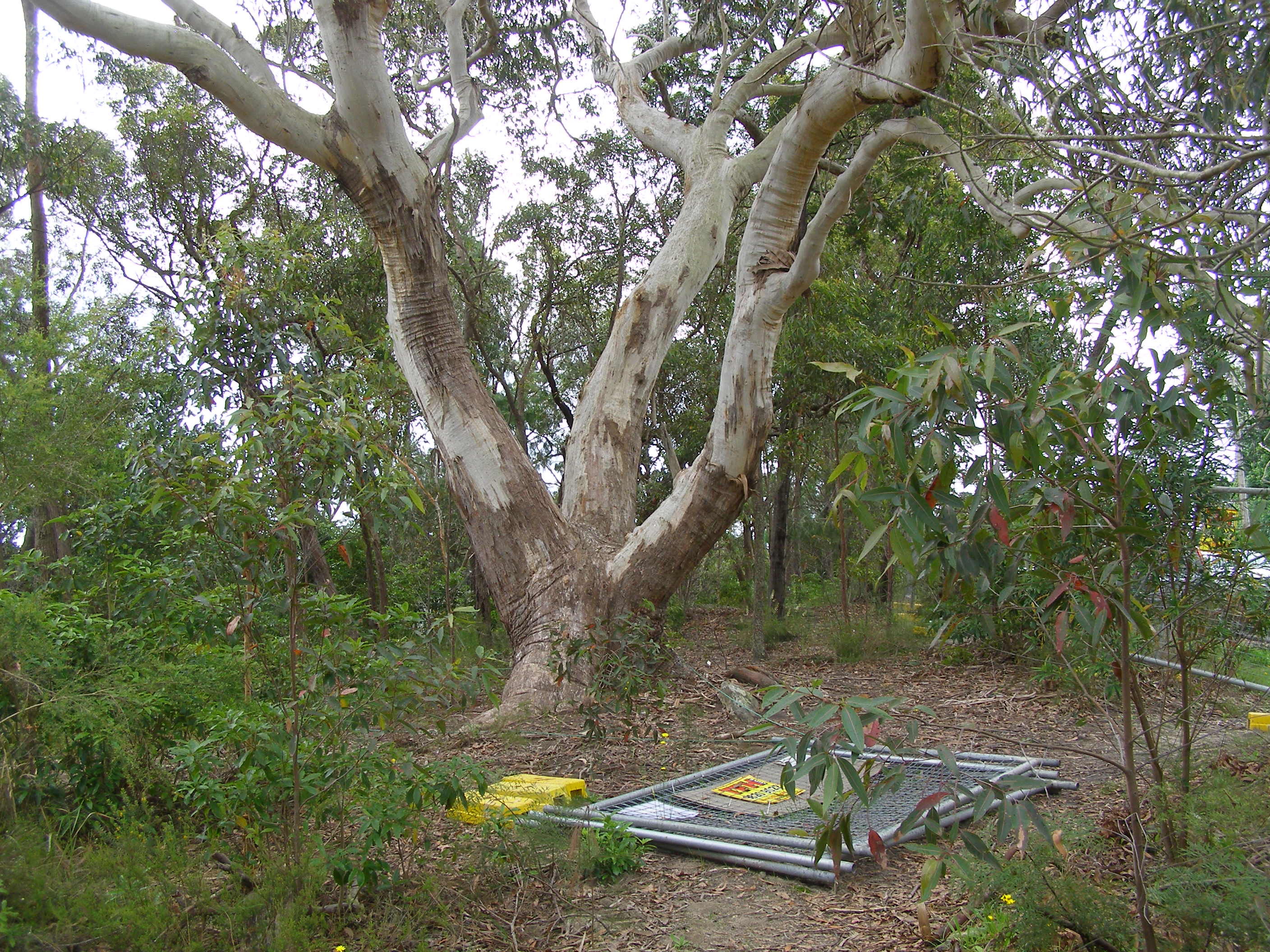 A native Scribbly Gum of Faulconbridge, Blue Mountains, Australia
…perhaps over 200 years old, healthy and in its natural setting.
(Photo by Editor 20111226, free in public domain, click photo to enlarge)
A native Scribbly Gum of Faulconbridge, Blue Mountains, Australia
…perhaps over 200 years old, healthy and in its natural setting.
(Photo by Editor 20111226, free in public domain, click photo to enlarge)
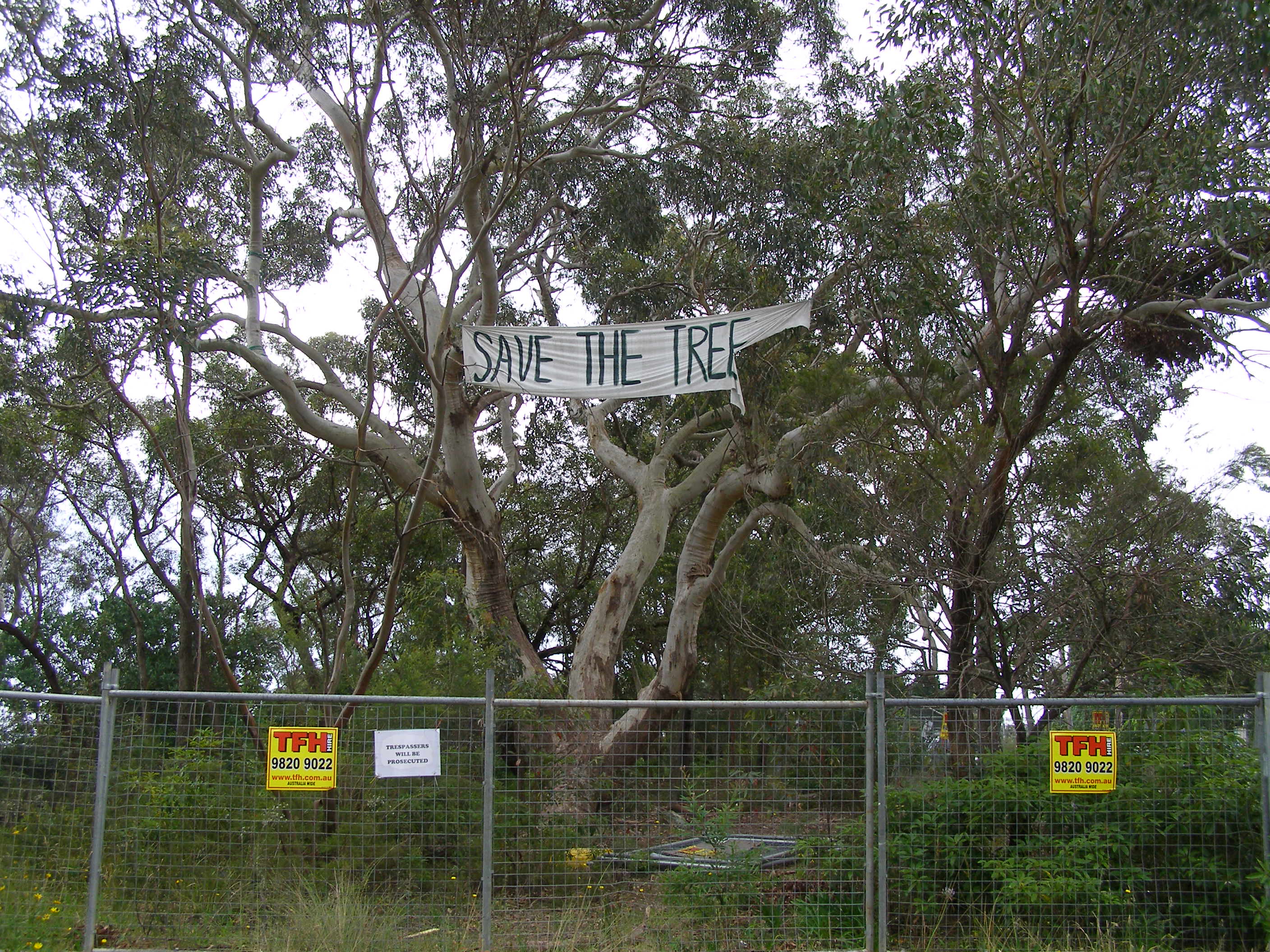 …but simply because land developers want to destroy the bush for selfish housing, they legally claim the tree is ‘potentially dangerous’
It seems the New South Wales Court Commissioner has sympathised and condemned the tree to a chainsaw death.
(Photo by Editor 20111226, free in public domain, click photo to enlarge)
…but simply because land developers want to destroy the bush for selfish housing, they legally claim the tree is ‘potentially dangerous’
It seems the New South Wales Court Commissioner has sympathised and condemned the tree to a chainsaw death.
(Photo by Editor 20111226, free in public domain, click photo to enlarge)
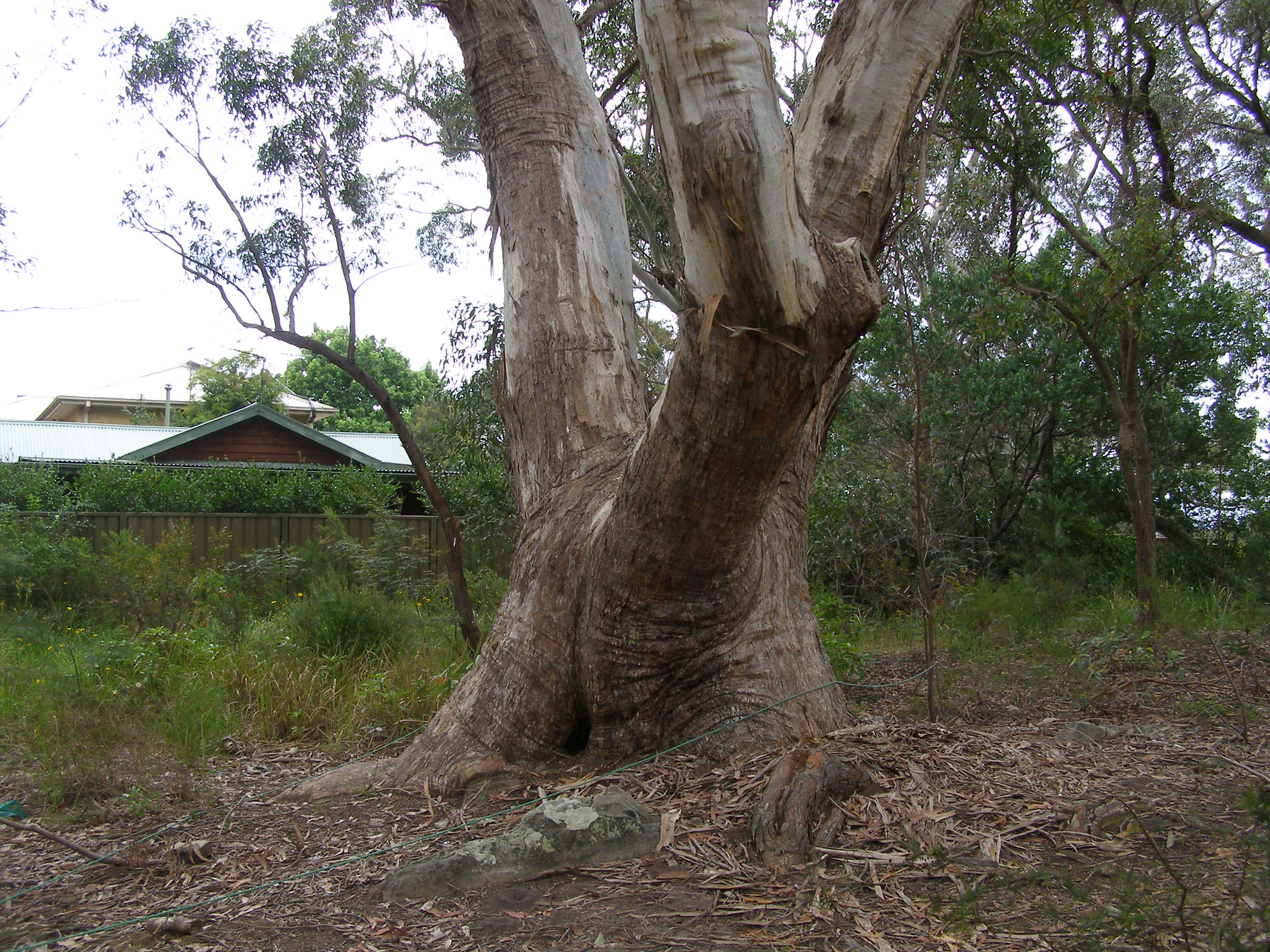 A native Eucalypt, condemned as a ‘hybrid’
by those who themselves are but hybrid descendants of colonists
because human invasion is enshrined in law as having a superior value than existing native old growth.
(Photo by Editor 20111226, free in public domain, click photo to enlarge)
A native Eucalypt, condemned as a ‘hybrid’
by those who themselves are but hybrid descendants of colonists
because human invasion is enshrined in law as having a superior value than existing native old growth.
(Photo by Editor 20111226, free in public domain, click photo to enlarge)
 Native forest deforestation (ethnic cleansing)
– at record levels across New South Wales
Native forest deforestation (ethnic cleansing)
– at record levels across New South Wales
 In 2011 humanity continues to trash the sublime for a selfish vista



 The real Christmas experience without cutting down a tree.