Archive for the ‘Habitat Threats’ Category
Saturday, December 3rd, 2011
The following article was first published in the Blue Mountains Gazette newspaper 20060122:
.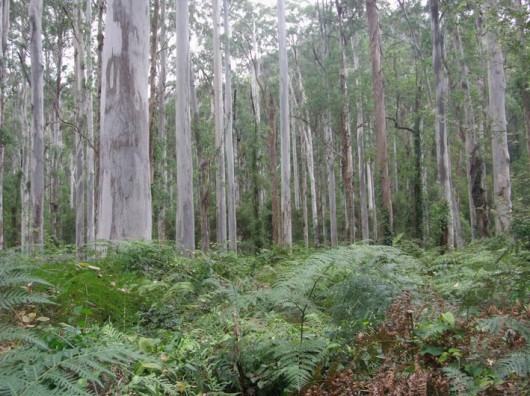 Blue Gum Forest, Grose Valley, Blue Mountains
[Source: AK Bushwalks, ^http://mywebdots.com/bushwalks/?page_id=26] Blue Gum Forest, Grose Valley, Blue Mountains
[Source: AK Bushwalks, ^http://mywebdots.com/bushwalks/?page_id=26]
.
A tall moist open forest dominated by Blue Gum (Eucalyptus deanii) characterises the famous ‘Blue Gum Forest’ at the junction of the Grose River and Govetts Creek in the Grose Wilderness.
But there would be no Blue Gum Forest if it were not for the efforts of a dedicated band of very fit bushwalkers seventy odd years ago. In 1931, under the leadership of Myles Dunphy, the ‘save Blue Gum Forest’ campaign was ignited by the threat by a leaseholder on the Grose River/Govetts Creek junction wanting to clear the icon stand of tall blue gums for cattle grazing. Consisting of members of the Wildlife Preservation Society, the Sydney Bush Walkers and the Mountain Trails Club, they formed the Blue Gum Forest Committee. Hard campaigning secured purchase of the forest for £130, which they handed back to the Crown and on 2nd September 1932 was proclaimed a recreation reserve. They unknowingly in their bold defence of the Blue Gum Forest, established what has become known as Australia’s ‘cradle of conservation‘.
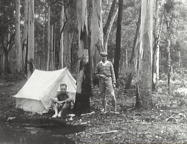
It took another 27 years of wilderness campaigning for The Blue Mountains National Park to be proclaimed in 1959 and the Blue Gum Forest incorporated two years later.
Despite deserved World Heritage listing in 2000, the Grose has again come under threat. This time last year, tonnes of caramel sediment from highway upgrade stockpiling at Leura started choking Govett’s Creek. Seems the RTA simply underestimated Mountains weather.
To the credit of Leura residents, grassroots leadership has again emerged to defend the Grose and to hold the RTA accountable. A year hence, council has responded with a working party to develop remedial actions, although ‘in-creek’ action remains wanting. Abundant photographic evidence and a moral obligation warrant the RTA fund ecological remediation.
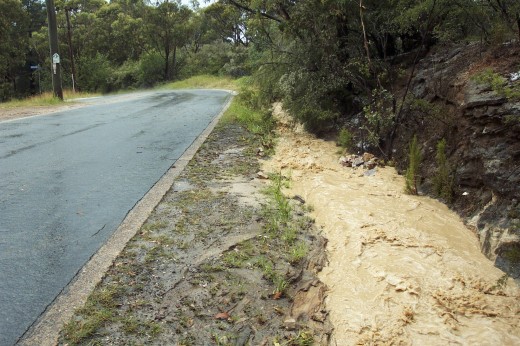 Caramel-coloured construction sediment from the RTA’s Trucking Expressway
Leura, Blue Mountains 2006
(click photo to enlarge, the click again to enlarge again) Caramel-coloured construction sediment from the RTA’s Trucking Expressway
Leura, Blue Mountains 2006
(click photo to enlarge, the click again to enlarge again)
.
But where was the custodial manager of the Grose while the damage was being reported? The Department of Environment and Conservation (National Parks) and the environmental enforcer (the EPA) have been conspicuously muted to environmental breaches caused by their sister government agency.
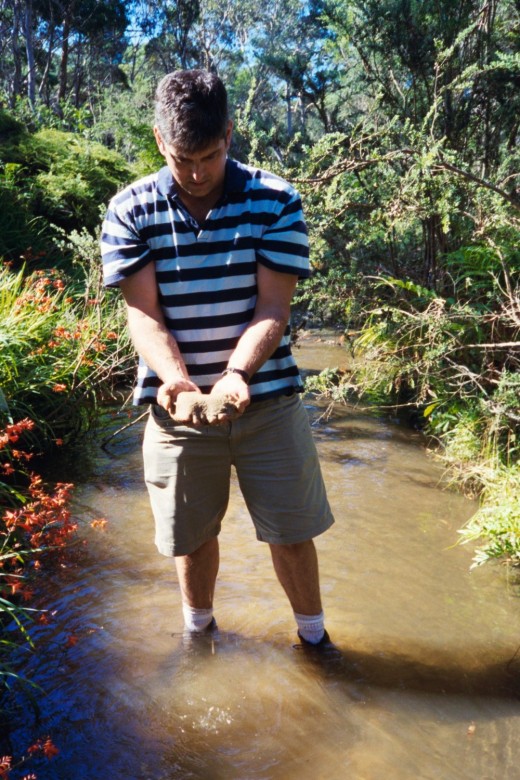 RTA sediment from the upstream Trucking Expressway development
polluting Govetts Creek inside the Blue Mountains World Heritage Area.
Photo of Editor in Govetts Creek, Leura, Blue Mountains 2006 RTA sediment from the upstream Trucking Expressway development
polluting Govetts Creek inside the Blue Mountains World Heritage Area.
Photo of Editor in Govetts Creek, Leura, Blue Mountains 2006
.
Tags: Blue Gum, Blue Gum Forest, Blue Mountains National Park, Cradle of Conservation, creek polluton, EPA, Eucalyptus deanii, Govetts Creek, Grose River, Grose Valley, highway sediment pollution, RTA Blue Mountains, trucking expressway, Wildlife Preservation Society
Posted in Blue Mountains (AU), Threats from Road Making | Comments Off on Grose Leadership
Add this post to Del.icio.us - Digg
Saturday, December 3rd, 2011
This article was initially published by Tigerquoll 20090622 onCanDoBetter.net under the article title ‘Rees’ ‘red hot go’ hunting in our National Parks‘. It has been modified somewhat.
.
New South Wales Premier Rees is set to pass into law a ‘Game and Feral Animal Control Amendment Bill 2009‘ to permit recreational hunters shooting everything and anything in protected National Parks across NSW, including native wildlife.
Controlling feral animals is a science, not a sport. Rees’ passion for sport is compromised by influential cronies and naivety. Problem is: Rees has no knowledge, experience in or aptitude for science. His inaugural “red hot go” says it all and threatens to be his legacy.
 Australian Wood Duck (Chenonetta jubata) Australian Wood Duck (Chenonetta jubata)
(a native species not protected)
©Photo by Ákos Lumnitzer (with permission), ^http://www.amatteroflight.com/
.
Be clear, the Game and Feral Animal Control Amendment Bill 2009, Schedule 3, Part 2 lists the following Australian native fauna as free ‘game‘, including:
.
Native Ducks:
Australian Shelduck (or Mountain Duck) (Tadorna tadornoides)
Australian Wood Duck (or Maned Duck) (Chenonetta jubata)
Black Duck (or Pacific Black Duck) (Anas superciliosa)
Blue-winged Shoveler (or Australasian Shoveler) (Anas rhynchotis)
Chestnut Teal (Anas castanea)
Grass Duck (or Plumed Whistling Duck) (Dendrocygna eytoni)
Grey Teal (Anas gibberifrons)
Hardhead Duck (or White-eyed Duck) (Aythya australia)
Pink-eared Duck (Malacorhynchus membranaceus)
Water Whistling Duck (or Wandering Whistling Duck, Whistling or Wandering Tree Duck) (Dendrocygna arcuata)
Native Quails:
Brown Quail (Coturnix ypsilophora)
Stubble Quail (Coturnix pectoralis)
Native Birds:
Australian White Ibis (Threskiornis molucca)
Black Swan (Cygnus atratus)
Common Bronzewing Pigeon (Phaps chalcoptera)
Galah (Eolophus roseicapilla)
Little Corella (Cacatua sanguinea)
Long-billed Corella (Cacatua tenuirostris)
Purple Swamphen (Porphyrio porphyrio)
Straw Necked Ibis (Threskiornis spinicollis)
Sulphur Crested Cockatoo (Cacatua galerita)
Topknot Pigeon (Lopholaimus antarcticus)
Kangaroos:
Eastern Grey Kangaroo (Macropus giganteus)
Euro (Macropus robustus)
Red Kangaroo (Macropus rufus)
Western Grey Kangaroo (Macropus fuliginosus)
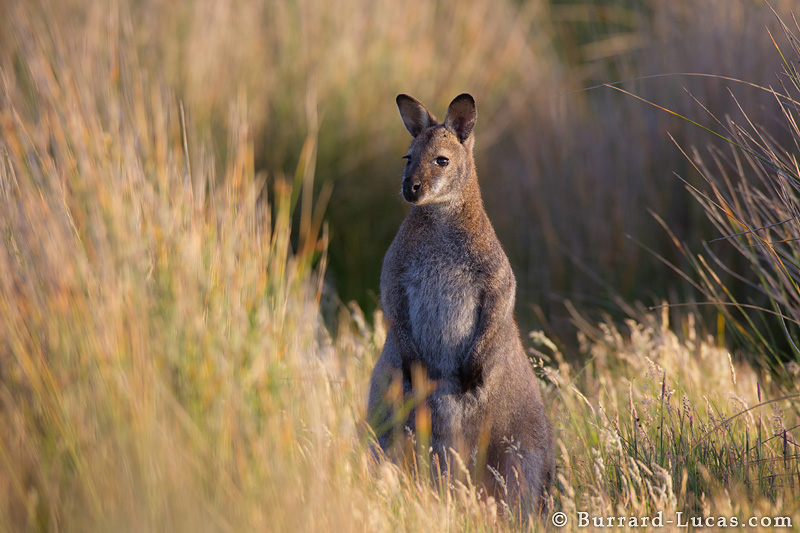
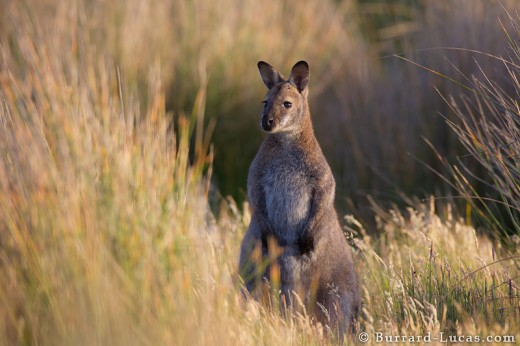 Bennetts Wallaby (Red-Necked Wallaby) (Macropus rufogriseus)
is native to Tasmania, but is not protected
(© Photo Burrard-Lucas) ^http://www.burrard-lucas.com/ Bennetts Wallaby (Red-Necked Wallaby) (Macropus rufogriseus)
is native to Tasmania, but is not protected
(© Photo Burrard-Lucas) ^http://www.burrard-lucas.com/
.
If the proposed legislation is genuinely and solely to control feral animals, the National Parks and Wildlife Service (NPWS) as delegated custodian of National Parks in New South Wales, must first answer these questions:
- Why are native animals included amongst the ferals?
- What action in fact has the NPWS undertaken over the last 20 years to control ferals in National Parks across NSW?
- Which measures have been successful at dealing with the target species and which have not?
- Which measures have caused a detrimental impact on non-target species?
- What interstate or overseas model/case study does NPWS rely upon to justify why shooting is the preferred method of control?
- What standard of identification test is imposed on would be feral shooters?
- What standard of marksmanship is required and what NPWS-approval system would be in place?
- What monitoring is to be conducted of these shooters and by whom?
- What happens to the carcasses to prevent disease?
.
If NPWS was serious about controlling feral animals in National Parks, it would have a permanent programme to specifically deal with the key threatening processes that involve ferals, namely to target:
- Competition and grazing by the feral European rabbit
- Competition and habitat degradation by feral goats
- Environmental degradation caused by feral deer
- Predation by feral cats
- Predation by the European Red Fox
- Predation, habitat degradation, competition and disease transmission by feral pigs.
SOURCE: DEC, ^http://www.threatenedspecies.environment.nsw.gov.au/tsprofile/pas_ktp.aspx
.
These feral species need to be the primary target of eradication. Professional contract shooting may be an option, but it is not for ‘weekend warrriors‘. The solution must be science-based not sport-based.
According to the Australian Wildlife Conservancy:
“Australia has the worst mammal extinction record in the world – 27 mammals have become extinct in the last 200 years. No other country or continent has such a tragic record of mammal extinctions.”
.
.
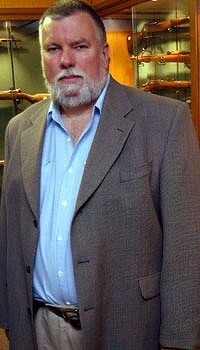 . .
In June 2009 the Game and Feral Animal Control Amendment Bill was introduced into the NSW Upper House by Shooters Party MP Robert Brown, that would pave the way for hunting in national parks, private game reserves, the hunting of native species and the growth of recreational shooting on public and private lands (Sydney Morning Herald, page 6, 12 June 2009). Lee called on the Environment Minister Carmel Tebbutt to reject outright a new bill from the Shooters Party.
.
The NSW Government has withdrawn its support for the bill, but it is still before the NSW Parliament!
.
[Source: Australian Greens Party Senator Lee Rhiannon, ^http://archive.leerhiannon.org.au/portfolios/firearms/firearms/atct_topic_view?b_start:int=10&-C=]
.
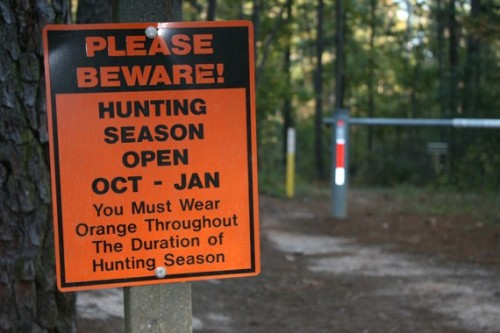
Overview of the Game and Feral Animal Control Amendment Bill 2009:
.
The object of this Bill is to amend the Game and Feral Animal Control Act 2002 (the Act) as follows:
- To enable the Minister responsible for national park estate land to make that land available for the hunting of game animals by licensed game hunters
- To expand the list of game animals that may be hunted in accordance with the Act and, in the case of any native game animals that are listed, to impose special requirements in relation to the hunting of those animals by licensed game hunters
- To provide for the operation of private game reserves under the authority of a licence granted by the (NSW) Game Council
- To make it an offence to approach persons who are lawfully hunting on declared public hunting land or to interfere with persons lawfully hunting game animals
- To make a number of other amendments of an administrative, minor or consequential nature..
.
[Source: ^ http://www.parliament.nsw.gov.au/prod/parlment/nswbills.nsf/1d4800a7a88cc2abca256e9800121f01/6dce0470707e4f4bca2575b4001bd3f1/$FILE/b2009-031-d10-House.pdf]
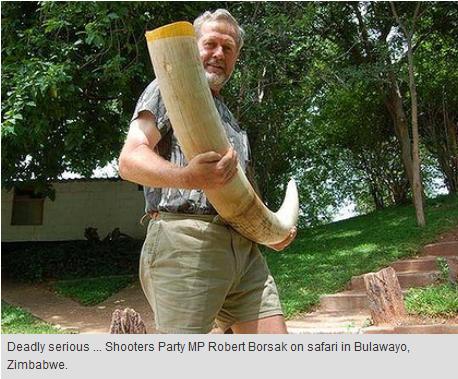
Support from the Coalition of Law Abiding Sporting Shooters Inc (CLASS):
.
‘For too long large areas of bushland has been locked away (aka protected from exploitation) as National Parks, State Forests etc. In many of those parks and forests invasive plants, such as blackberries, bracken, lantana, etc have grown unchecked, resulting in a great unbalance among local flora leading to reduced biodiversity among fauna. Permitting conservation hunting in those areas will help restore the balance, while permitting controlled harvesting of native and introduced species for food, trophies or fur/leather….the Game and Feral Animal Control Amendment Bill 2009 will go a long way to utilising the inherent value of sustainable resources which would otherwise be wasted.’
[Source: ^http://www.c-l-a-s-s.net/game-bill.htm]
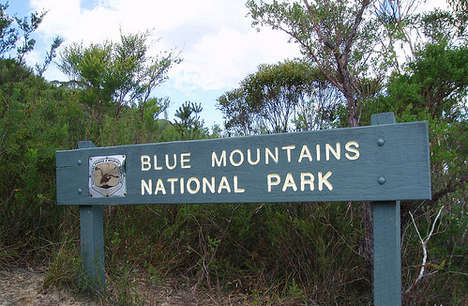 According to CLASS, wildlife in National Parks are wasted resources According to CLASS, wildlife in National Parks are wasted resources
.
.
Selected background articles at the time:

‘Government deal to open national parks to shooters’
.
[Source: Erik Jensen, 20091021, Sydney Morning Herald ^http://www.smh.com.au/environment/conservation/government-deal-to-open-national-parks-to-shooters-20091020-h6yt.html]
.
Hunters will be allowed to shoot animals in national parks for the first time under a deal offered to the Shooters’ Party by the NSW Government. The Herald understands the deal would modify a private member’s bill introduced by a member of the Shooters’ Party, Robert Brown, to allow hunting in 13 national parks if the Shooters’ Party removed demands for enclosed game reserves or safari parks from its draft legislation.
”We have had discussions with senior Labor people,” Mr Brown said. ”I’m not going to confirm or deny that we’re any closer to a resolution … My bottom line is the whole bill must be passed or we continue to withdraw our support for the Government.”
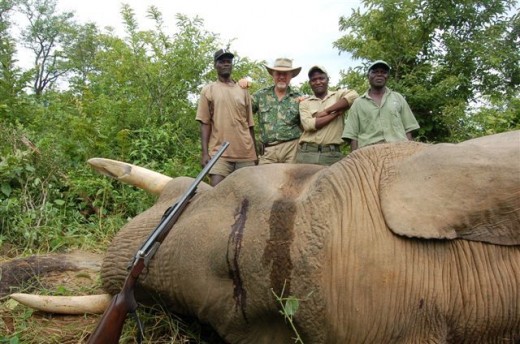
The Shooters’ Party has been holding the Government to ransom since introducing the bill in June and yesterday voted against the Government on all legislation in the upper house. Negotiations on the bill had broken down with the Premier’s chief of staff, Graeme Wedderburn – who Mr Brown described as ”tits on a bull” – but resumed in September, less than a week after John Robertson took over the environment portfolio. The Treasurer, Eric Roozendaal, one of Mr Robertson’s factional allies, took part in negotiations.
According to Mr Brown, the pair offered a memorandum of understanding that would allow hunting in national parks along the Queensland and South Australian borders. But he said the proposed parks were too far away.
”The closest one to Sydney was 10 hours’ drive,” he said. ”That [offer] was there to f— us, as far as I’m concerned.”
The Greens’ spokeswoman on animal welfare, Lee Rhiannon, said the deal was intended to allow free passage of Government legislation through the upper house but may cost Labor seats at the next election – including that of the former environment minister Carmel Tebbutt.
”We’re about to come into the busiest legislation time of the year. They’re going to have to pass 30 bills in a week,” she said. ”If they don’t have the Shooters’ on side, they’ll actually have to talk to other people. [But] as well as being ethically wrong and environmentally damaging, they will be inflicting enormous pain and damage to their own party … For Tebbutt and [Verity] Firth, they could well be putting an expiry date on their political careers.”
The acting executive officer of the National Parks Association of NSW, Bev Smiles, said her office had received an overwhelming amount of correspondence criticising the bill.
”We were hoping the Shooters were having some other face-saving deals with 12-year-olds and airguns,” Ms Smiles said, with reference to another bill the party is introducing.
”[But] with a new Minister for the Environment having an upper house position rather than an electorate, it’s all political. This particular deal has probably created more response from a broader cross-section of the community than any other issue I’ve been involved in.”
Neither Mr Robertson nor Ms Tebbutt would comment on the deal. Mr Brown said he would continue to frustrate government policy until his bill was passed in its entirety.
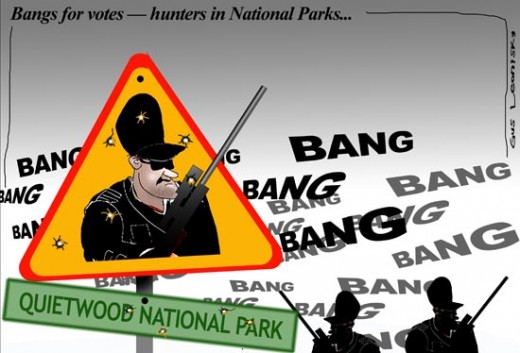
.
.
‘Greens oppose recreational hunting in national parks’
.
[Source: Marian Wilkinson, Environment Editor, Sydney Morning Herald, 20090612, ^http://www.smh.com.au/environment/conservation/greens-oppose-recreational-hunting-in-national-parks-20090611-c508.html]
.
A new bill that would open the state’s national parks and reserves to recreational hunters who could be licensed to shoot native animals and birds has been condemned by the NSW Greens, the Liberal Party and environmental groups.
The NSW Shooters Party has introduced the private members bill to Parliament. It allows for private game reserves to be set up for professional safari hunters, overturning NSW laws that prevent the enclosing of animals on land solely for hunting purposes. A Shooters Party MP, Robert Brown, said the bill would not allow the hunting of threatened species and, in the case of native waterfowl, licensed game hunters would be required to pass an official identification test of the ducks.
But the Opposition’s environment spokeswoman, Catherine Cusack, attacked the bill, saying key elements were unacceptable. “We totally reject the idea of shooting in national parks and the concept of shooting native animals in national parks is repugnant to almost anyone.”
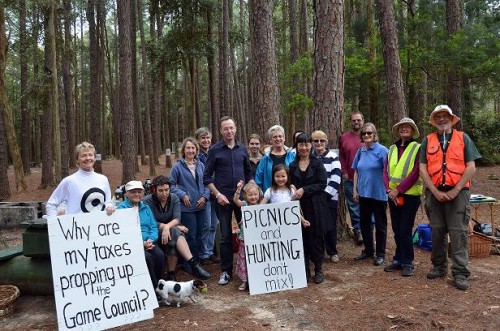
Among the birds and animals that could be hunted are the Australian wood duck, the chestnut teal and grey teal ducks, galahs, corellas and eastern grey, western grey and red kangaroos. The Shooters Party hopes to gain the Government’s support for the bill but the Environment Minister, Carmel Tebbutt, is already signalling she will oppose key provisions in it, including allowing recreational hunters into national parks and the hunting of native animals. Her spokeswoman said the Government would consider the bill’s merits but it did not support “the hunting of native animals or hunting in national parks“.
Mr Brown said the bill drew on many of the recommendations of a government-backed review of existing laws undertaken with staff from the NSW Department of Primary Industries and the Game Council.
He said that under his bill, the environment minister would be responsible for declaring any national park or reserve open to hunters. He told the Herald that opening national parks to recreational hunters to shoot feral animals would save the Government significant amounts of money and the hunting of native animals and birds in parks would require ministerial approval.
The Greens leader, Lee Rhiannon, called on Ms Tebbutt to reject the entire bill, not only the provisions concerning national parks. “Opposing shooting in national parks may well be a tactic Labor is using to divert attention from the fact it will support other equally regressive changes being pushed by the Shooters Party,” Ms Rhiannon said.
The Greens are also concerned about provisions in the bill that would make it an offence to approach anyone or interfere with anyone “lawfully hunting game animals” on any land that had been declared public hunting land.
.
.
‘Shooting in national parks dead: Macdonald’
.
[Source: AAP, 20090729, ^http://www.smh.com.au/environment/conservation/shooting-in-national-parks-dead-macdonald-20090729-e1an.html]
.
A deal with the Shooters’ Party that would allow hunting in national parks is unlikely, the NSW Government says. The Government withdrew its support for the proposal last month, prompting the Shooters to retract their support for legislation to privatise NSW Lotteries management. Primary Industries Minister Ian Macdonald said today the national parks proposal was all but dead in the water.
“The Government has been considering these issues for some time and has taken a policy position that they don’t want that type of shooting activity in national parks,” Mr Macdonald told reporters in Sydney.
“I wouldn’t say it is likely to change, but there again, there’s nothing in life that’s immutable.”
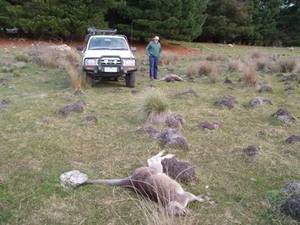
Kangaroos illegally shot through SE Forests National Park
.
.
Game and Feral Animal Control Repeal Bill 2010 – lapsed
.
On 23rd June 2010, then NSW Greens MP Lee Rhiannon introduced a private members bill to the NSW Parliament, ‘Game and Feral Animal Control Repeal Bill 2010’, designed to repeal the Game and Feral Animal Control Act 2002 and its regulations, to abolish the Game Council and to prohibit hunting for sporting or recreational purposes on national park estate land, Crown land and State forests. However although the Repeal Bill reached a second reading stage, the then Labor Premier Kristine Keneally suspended (proroged (suspended) the sitting of the NSW Parliament ahead of an election, and the Bill lapsed on 2nd September 201o.
It needs to be reinstated forthwith!
.
Overview of Bill
The objects of this Bill are as follows:
- To repeal the Game and Feral Animal Control Act 2002 and the regulations made under that Act
- To expressly abolish the Game Council and provide for the transfer of its assets, rights and liabilities to the Crown
- To prohibit hunting for sporting or recreational purposes on national park estate land, Crown land and State forests
.
‘Greens’ Bill abolishes Game Council, ends hunting in State Forests, NP‘
.
[Source: The Australian Greens, 20100624, ^http://greens.org.au/content/greens-bill-abolishes-game-council-ends-hunting-state-forests-np]
.
Greens MP Lee Rhiannon was last night given urgent leave by the NSW Upper House to introduce her private members bill to abolish the NSW Game Council and prohibit recreational hunting in national parks, state forests and public land.
The Game and Feral Animal Control Repeal Bill 2010 is now available.
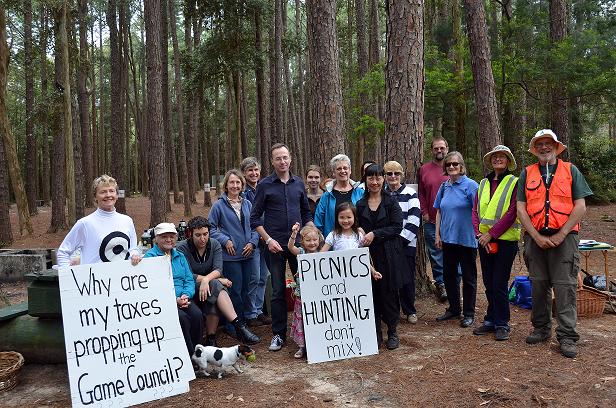
“Feral animals are a significant environmental problem in Australia but the Games Council, set up as a favour by the Labor Party to the Shooters Party to shore up their vote, is a bankrupt vehicle for managing invasive species,” Ms Rhiannon said. “The more than $11 million in public funding and millions in loans spent propping up the Gaming Council since 2002 would be better spent developing an evidenced based, strategic plan using professionals to tackle invasive species.
“The Game Council was set up to be self funding, yet the Auditor General has noted its ongoing financial difficulties, with the government being forced to prop it up with loans and additional recurrent funding to manage ongoing debt problems.
“Former Premier Bob Carr’s establishment of the Game Council in 2002 was an act of unashamed capitulation to the gun and hunting lobbies, legitimising recreational animal cruelty while risking an increase in feral animal populations.
“The Greens Bill also prohibits recreational hunting in state forests, national parks and Crown Land.
“As part of the deal making between Labor and the Shooters Party, NSW’s state forests have been lately opened up to recreational shooters, risking public safety. “There is still currently a Shooters Party private members bill before parliament which if passed would broaden where recreational shooters can hunt to include national parks.
“The NSW government has agreed to various demands by the Shooters Party for changes to gun ownership laws in recent years and there is no guarantee that shooting in national parks will not be next on the list. “In the interests of the environment and good government NSW Labor should support the Greens’ bill to abolish the Game Council and ensure the professional and scientific management of invasive species in NSW,” Ms Rhiannon said.
.
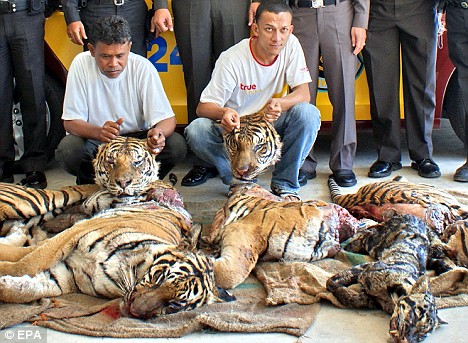
It’s 2011 and we’re still killing Tigers!
[‘Police Seize Firearms Used by Wildlife Officials to Fight Off Poachers‘ by Sarah Pappin, Bushwarriors, 20100716,
^http://bushwarriors.wordpress.com/tag/south-china-tiger/]
.
In only the last eight years, the Bengal Tiger population has decreased by over 61% and is now frighteningly close to extinction with only 1,400 of the cats left. Habitat loss and poaching are to blame for their decline. Nagarhole Tiger Reserve is home to the highest density of these tigers in all of India, attracting a heavy and constant flow of poachers. Forest officers tasked with protecting the National Park’s tiger population (and other wildlife) from the poachers are now impeded by a devastating combination of muddy monsoon conditions and a complete lack of defense.
Comments:
.
Arvind Telkar (20100717): “Poaching is one of the heinous crimes, which must be dealt with a very severe punishment. The law should be changed in such a manner, that he must think hundred times before aiming any wild animal.”
.
Franklin Joel (20100717): “Thank you very much for sharing,I am sharing this on my wall. Please do something to Stop Poaching, My eyes are wet seeing these pictures..The Hon. court should pronounce the highest punishment to these people….”
.
Anne Maher (20100719): “Absolute tragedy. Decisions made by idiots. They must be in on the corrupt poaching activities to leave the Wildlife rangers and the Tigers so unprotected. Spare us from brainless individuals.”
.
Amay (20100903): “What cruel people they are the biggest criminals i hav ever seen in my life how badly these people hav cut the tigers they truly deserve a capital punishment.”
.
Zachary (20101118): “What the hell is wrong with these people?! why don’t they do something to stop this? I don’t give a damn if they think that certain parts have special healing or good luck charms, this is wrong! This is just digusting.”
.
 An effective tool against poachers An effective tool against poachers
.
 An effective but under-resourced force against poachers An effective but under-resourced force against poachers
.
Tags: animal cruelty, Australian Wood Duck, Bennetts Wallaby, Coalition of Law Abiding Sporting Shooters, Game and Feral Animal Control Amendment Bill 2009, Game and Feral Animal Control Repeal Bill 2010, hunting, hunting season, illegal shooting, Lee Rhiannon, national parks, NSW Game Council, NSW Government, Premier Nathan Rees, SE Forests National Park, Shooters and Fishers Party, still killing Tigers, weekend warriors, Wildlife, wildlife poaching
Posted in Africa, Birds (Australian), Birds (Migratory), Blue Mountains (AU), Elephants, Kangaroos and Macropods, Threats from Poaching and Poisoning | No Comments »
Add this post to Del.icio.us - Digg
Friday, December 2nd, 2011
Mass murder is considered possibly the worst crime that can be committed.
But there is a worse crime than mass murder and worse than war crime, and worse than crimes against humanity. Murder; extermination; torture; rape; political, racial, or religious persecution and other inhumane acts reach the threshold of crimes against humanity only if they are part of a widespread or systematic practice.
Even worse than crimes against humanity is the extreme extension of mass murder – genocide. Genocide is “the deliberate and systematic destruction, in whole or in part, of an ethnic, racial, religious, or national group”. What crime could possible be more evil than the willful targeting of an entire part of the human species in order to systematically wipe it out of existence? – such as what has been attempted upon the Jews, Armenians, Rwandan Tutsis, Bosnian Muslims, Sri Lankan Tamils.
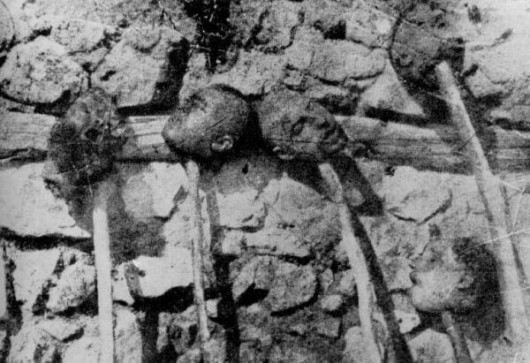 Armenian Genocide 1915 Armenian Genocide 1915
.
“More inhumanity has been done by man himself than any other of nature’s causes.”
~ (1673) by Samuel von Pufendorf
.
Yet still, there is a worse crime. It is the deliberate and systematic destruction, in whole or in part, of an entire species from the planet. In the same vein as genocide, is human-caused extinction or ‘speciescide‘, a relatively new concept. It is new concept because humans have only recently recognised species extinction as a problem. It is also a new concept because the global rate of non-human species extinction is increasing at an accelerating rate.
‘Speciescide‘ is a derived concept from the ecophilosophy of ‘speciesism‘ being a prejudice manifested as a widespread discrimination practised by humans against other species (Richard D. Ryder, 1973).
Yet deliberately causing a species to become regionally extinct, extinct in the wild or globally extinct, are not yet recognised as crimes legally. Human-caused extinction of a species is not yet a criminal offense.
Yet it is the most immoral crime that can be inflicted on the planet. Even if a nuclear holocaust wiped out 6 billion of the human species, there would still be one billion surviving from which to perpetuate the species. But wiping out an entire species is absolute, irreversible, extincting.
The Convention on the Prevention and Punishment of the Crime of Genocide establishes “genocide” as an international crime, which signatory nations “undertake to prevent and punish.”
It says that genocide means any of the following acts committed with intent to destroy, in whole or in part, a national, ethnical, racial or religious group, as such:
- Killing members of the group;
- Causing serious bodily or mental harm to members of the group;
- Deliberately inflicting on the group conditions of life calculated to bring about its physical destruction in whole or in part;
- Imposing measures intended to prevent births within the group;
- Forcibly transferring children of the group to another group.
.
Speciescide is a worse crime than described by the above definition of genocide and even worse than the previous “the deliberate and systematic destruction..” definition.
Speciescide is ecological genocide. It entails annihilating very member of a species until there is no surviving individual on the planet – the entire species becomes globally extinct. They will never be seen again on the planet. Speciescide is thus the worst hate crime possible. Speciescide is what Tasmanian colonists did to the Thylacene. It is what Traditional Chinese Medicine has just committed upon Africa’s Western Black Rhinoceros.
.
.

‘Africa’s Western black rhino declared extinct’
[Source: ‘Africa’s Western black rhino declared extinct’, Los Angeles Times, 20111010, ^http://latimesblogs.latimes.com/world_now/2011/11/africa-western-black-rhino-extinct-conservation.html]
.
Africa’s Western black rhino has officially been declared extinct and other subspecies of rhinoceros could follow, according to the latest review by a leading conservation organization.
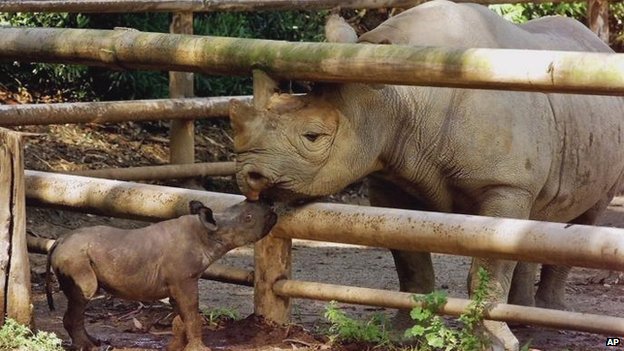
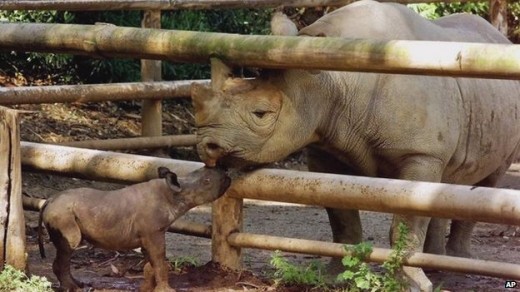 Western Black Rhino and her calf – never again on the planet Western Black Rhino and her calf – never again on the planet
.
The International Union for Conservation of Nature listed the Northern white rhino in central Africa as “possibly extinct in the wild” and the Javan rhino as “probably extinct” in Vietnam.
The organization blamed a lack of political support for conservation efforts in many rhino habitats, international organized crime groups targeting the animal, increasing illegal demand for rhino horns and commercial poaching.
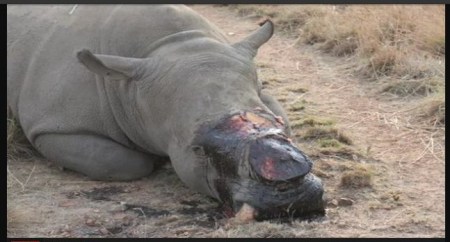
“In the case of both the Western black rhino and the Northern white rhino, the situation could have had very different results if the suggested conservation measures had been implemented,” Simon Stuart, chairman of IUCN’s Species
Survival Commission, said in a statement Thursday. “These measures must be strengthened now, specifically managing habitats in order to improve breeding performance, preventing other rhinos from fading into extinction.”
The last Javan rhino in Vietnam is believed to have been killed by poachers in 2010, reducing the species to a tiny, declining population in Java.
.
The rhinos were among more than 61,900 animal and plant species reviewed for the IUCN’s latest Red List of Threatened Species. A quarter of the mammals on the Red List were found to be at risk of extinction. But the organization said there
have also been conservation successes. Fewer than 100 Southern white rhinos survived at the end of the 19th century, but the population in the wild is now believed to number over 20,000. Numerous other species are threatened, including many types of plants. The Chinese water fir, which used to be widespread throughout China and Vietnam, was listed as “critically endangered,” due primarily to expanding intensive agriculture. The IUCN also listed five out of eight tuna species as “threatened” or “near threatened,” and added 26 recently discovered amphibians to the Red List, including the blessed poison frog.
“This update offers both good and bad news on the status of many species around the world,” said Jane Smart, director of the IUCN Global Species Program. “We have the knowledge that conservation works if executed in a timely manner, yet, without strong political will in combination with targeted efforts and resources, the wonders of nature and the services it provides can be lost forever.”
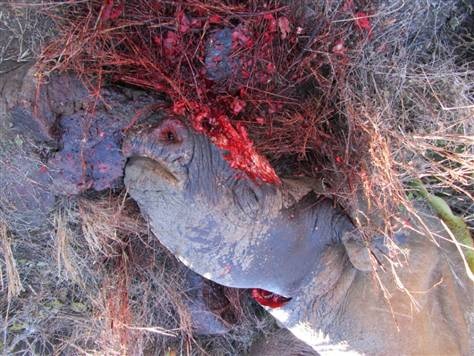 Stumpy’s lifeless body, her life stolen by poachers
(Photo credit: Lewa Wildlife Conservancy)
. Stumpy’s lifeless body, her life stolen by poachers
(Photo credit: Lewa Wildlife Conservancy)
.
‘Stumpy was the oldest female black rhino at the Conservancy, and had spent 26 years enjoying her freedom on the property. Her eighth calf, only a year and a half old, was dealt a minor wound to the neck in the incident and will survive. Coincidentally, on the day Stumpy drew her last breath, a first breath was taken by a newborn rhino at the rhino refuge.’
.
[Source: ^http://bushwarriors.wordpress.com/tag/rhino-horn-trade/page/6/]
.

.
.
‘DEAD MEN DON’T DEAL’ Campaign
.
Rhinos have been slaughtered to near extinction to satisfy the demand of rhino horn products in China and Vietnam. All based on rhino horn cultural myths. It has the same effect as chewing ones fingernails.
China is costing the world its rhinos.
.
- It is seen as a remedy for nearly everything (evil possession included) in China and Vietnam
- China and Vietnam fund international organized poaching teams to kill rhino.
- Science proves there is no medicinal value about rhino horn.
- Rhino is said to be the most endangered species to date.
.
However, even if Chinese trade makers are aware that the Rhino population is on near brink to extinction; the continual demand for rhino horn persists.
Unless a serious measure evolves, Chinese businessmen will not stop.
(Ed: This is speciescide)

So, the idea sprung to mind to form a campaign that will create a cultural scare. Namely, the DEAD MEN DON’T DEAL campaign that revolves around the sudden deaths of dealers. Without knowing who or how these smugglers are tortured it will create a cultural scare amoungst those who are guilty. The idea derives from laying revenge out into the air. The revenge of the rhino. Getting back at those who took away a lot of the rhino population. The main objective here is to create fear for those who are involved in the illegal dealing of rhino horn.
.
Dehorning
The demand for Rhino has become so high that conservation officials have gotten to the point where they actually saw off their horns so rhino poachers will have no cause to kill them. These desperate measures have raised questions if removing Rhino horn impairs the rhino’s ability to survive or reproduce; one usage of the horn is to defend a mother’s young from predators.
Many parks and game reserved have battled the on going poaching around this endangered specie. Dr David Mabunda- Chief executive of SANParks stated that it is no longer appropriate to refer to this illegal action as poaching anymore as the levels of sophistication, violence and money behind it continue to raise. He also stated that the country has been working hard to bring this nearly extinct specie back, even if it requires one to become the last standing man.
Endangered stats continue to rise as reports keep coming in. In January an epidemic occurred where poachers were found using aircraft to hunt down rhino in Harare-Zimbabwe, as demand in Asia was great due to medicinal benefit growth. 7 endangered rhinos were killed, this representing one third of 22 rhinos poached throughout 2010. South Africa has about 1000 surviving rhino’s n which extra help for their existence has been sent, last year 333 rhinos were poached in South Africa nearly three times as many then 2009. However, 2011 proves to have lowered the killings. South Africa has over 21 000 more rhinos then any country in the world which puts the country as well as the animals in greater danger.
Demands in Vietnam have been noticed to increase. The black market offers huge amounts of money for trading these species for Traditional Chinese Medicine such as high blood pressure and other impairments. Experts state that as little as 5 rhinos remain in Vietnam. South Africa has become internationally known for banning rhino horn distribution.
World efforts to ‘demystify’ the medicinal affects of rhino horn fail to reach Asia and thus the uproar continues.
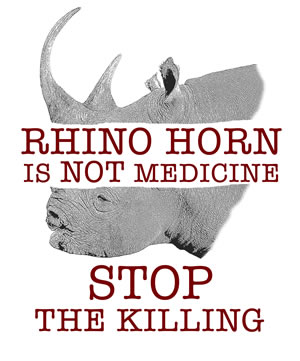
[Source: ^ http://savetherhino.wordpress.com/]
.
.
“For one species to mourn the death of another is a new thing under the sun. The Cro-Magnon who slew the last mammoth thought only of steaks. The sportsman who shot the last passenger pigeon thought only of his prowess. The sailor who clubbed the last auck thought of nothing at all. But we, who have lost our pigeons, mourn the loss. Had the funeral been ours, the pigeons would hardly have mourned us. In this fact, rather than in Mr. DuPont’s nylons or Mr. Vannevar Bush’s bombs, lies objective evidence of our superiority over the beasts.”
.
~ Aldo Leopold: ‘A Sand County Almanac, and Sketches Here and There‘, 1948, Oxford University Press, New York, 1987, pp. 109-110.
.
.
.
Further Reading:
.
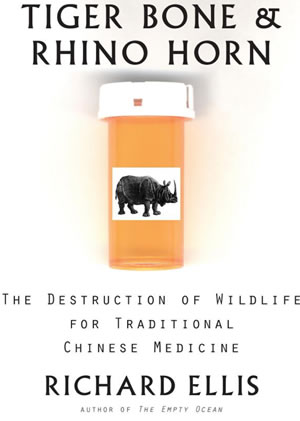
[1] Book: ‘ Tiger Bone and Rhino Horn: The Destruction of Wildlife for Traditional Chinese Medicine‘
by Richard Ellis
Format: Hardcover, 294 pages, Revised and Tea Edition
Release Date: 27 May 2005
‘In parts of Korea and China, moon bears, black but for the crescent-shaped patch of white on their chests, are captured in the wild and imprisoned in squeeze cages, where steel catheters drain their bile as a cure for ailments ranging from upset stomach to skin burns. Rhinos are being illegally poached for their horns, as are tigers for their bones, thought to improve virility. Booming economies and growing wealth in parts of Asia are increasing demand for these precious medicinals while already endangered species are being sacrificed for temporary treatments for nausea and erectile dysfunction. Richard Ellis, one of the world’s foremost experts in wildlife extinction, brings his alarm to the pages of “Tiger Bone & Rhino Horn”, in the hope that through an exposure of this drug trade, something can be done to save the animals most direly threatened. Trade in animal parts for traditional Chinese medicine is a leading cause of species endangerment in Asia, and poaching is increasing at an alarming rate. Although most of traditional Chinese medicine is not a cause for concern because it relies on herbs and other plants, as wildlife habitats are shrinking for the hunted large species, the situation is becoming ever more critical. Ellis tells us what has been done successfully, and contemplates what can and must be done to save these rare animals from extinction.’.
[Source: ^http://www.fishpond.com.au/Books/Tiger-Bone-and-Rhino-Horn-Richard-Ellis/9781559635325]
.
.
.
Tags: China, ecological genocide, ecophilosophy, extincting, Richard Ellis, speciescide, speciesism, TCM, TCM witchdoctor cult, tiger bone and rhino horn, Traditional Chinese Medicine, Vietnam, Western Black Rhino extinct, wildlife poaching
Posted in 21 Going Khaki!, Rhinoceroses, Threats from Poaching and Poisoning, Tigers | No Comments »
Add this post to Del.icio.us - Digg
Thursday, December 1st, 2011
Corporate Tin Miner:
“We will continue to be aggressive explorers with multiple rigs focused on exploration for the foreseeable future.”
.
~ Venture Minerals (corporate tin miner from Perth), in its Mt Lindsay-Investor Presentation,
(Nov 2011), p.31
.
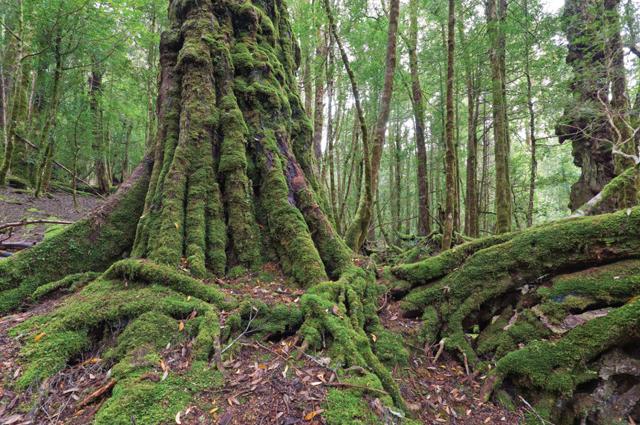
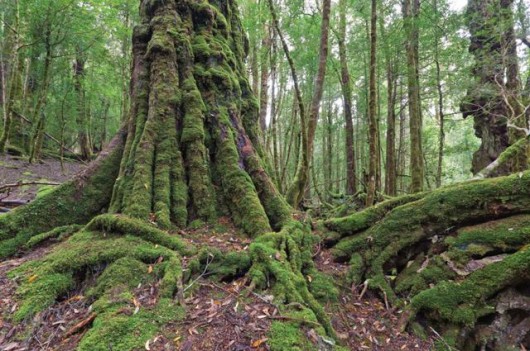 ‘The Tarkine’ – 430,000 hectares of ancient Tasmanian forest ‘The Tarkine’ – 430,000 hectares of ancient Tasmanian forest
Tasmania’s ancient Myrtle/Sassafras forest – threatened by loggers, logger ‘adventure tourism’, roads and now bloody tin mining!
[Photo by Peter Walton, Tasmanian Expeditions – Photo Gallery on The Tarkine, ^http://www.tasmanianexpeditions.com.au/index.php?section=photo_highlights&id=285742]
.
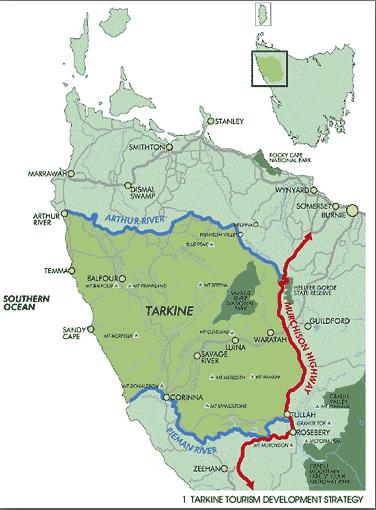 Cradle Coast Authority (CCA), North West Tasmania’s map
as part of a tourism development strategy. Cradle Coast Authority (CCA), North West Tasmania’s map
as part of a tourism development strategy.
.
A bid to restore emergency National Heritage protection to the Tarkine wilderness in Tasmania’s north-west has been launched by environmentalists to head off a ”Pilbara-style” mine in the rainforest. Several conservation groups lodged the nomination with the Environment Minister, Tony Burke, hoping he will count heritage values in his impending decision on the big Venture Minerals’ Mount Lindsay open cut project.
Emergency listings of The Tarkine have been granted four times since 2004!
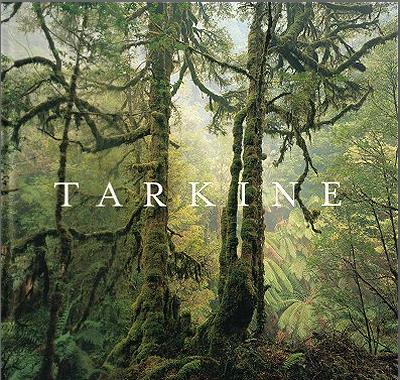 Moss-clad Sassafras (Atherosperma moschatum) trees in the Arthur River catchment near Waratah, Tarkine, Tasmania
(Photo © Ted Mead November 2003)
[Front Cover of the 2004 book, ‘Tarkine‘ edited by Ralph Ashton, and available from publishers Allen and Unwin,and just purchased by The Habitat Advocate.
Available at: ^http://www.allenandunwin.com/default.aspx?page=94&book=9781742372846]
Moss-clad Sassafras (Atherosperma moschatum) trees in the Arthur River catchment near Waratah, Tarkine, Tasmania
(Photo © Ted Mead November 2003)
[Front Cover of the 2004 book, ‘Tarkine‘ edited by Ralph Ashton, and available from publishers Allen and Unwin,and just purchased by The Habitat Advocate.
Available at: ^http://www.allenandunwin.com/default.aspx?page=94&book=9781742372846]
.
…but that’s not how the ‘Tin Men‘ see The Tarkine…
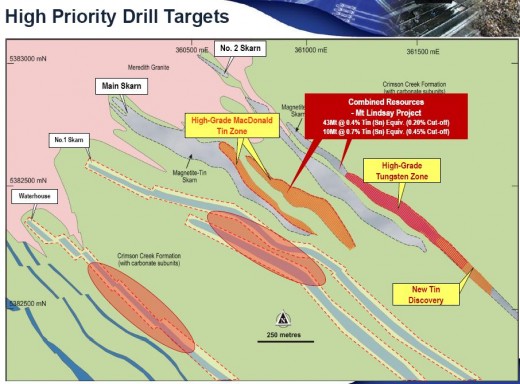 This is how the ‘Tin Men‘ see the Tarkine… for its tin and tungsten.
(Source: Venture Minerals’ Mt Lindsay-Investor Presentation, Nov 2011) This is how the ‘Tin Men‘ see the Tarkine… for its tin and tungsten.
(Source: Venture Minerals’ Mt Lindsay-Investor Presentation, Nov 2011)
.
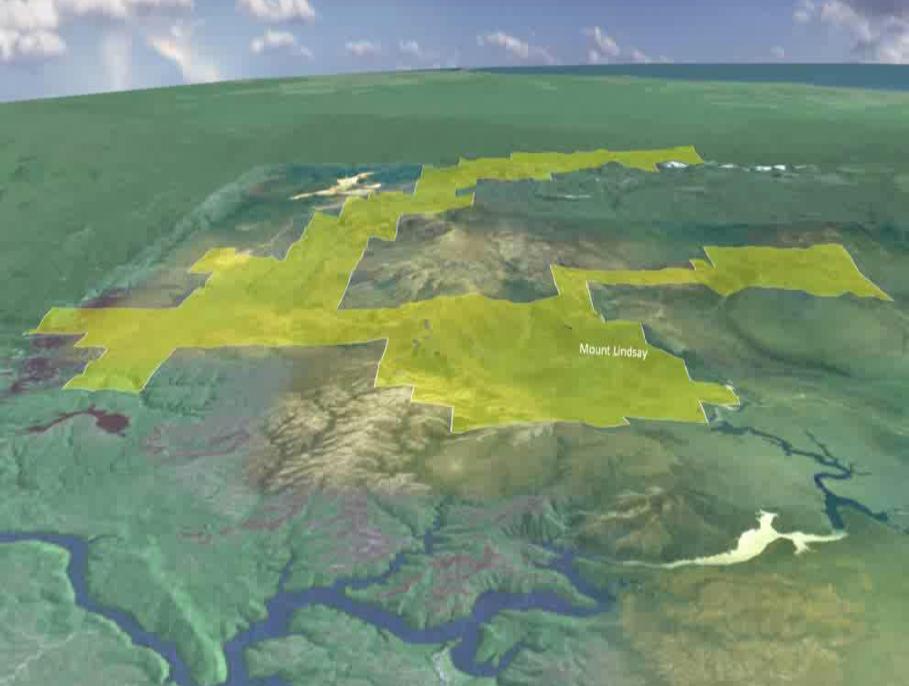
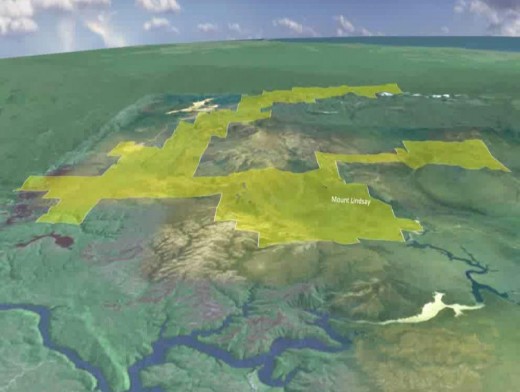 …and this is how the ‘Tin Men’ see the Tarkine… for the vast mining lease area they are happy to exploit and lay to waste. …and this is how the ‘Tin Men’ see the Tarkine… for the vast mining lease area they are happy to exploit and lay to waste.
(Source: Venture Minerals’ Mt Lindsay-Investor Presentation, Nov 2011)
.
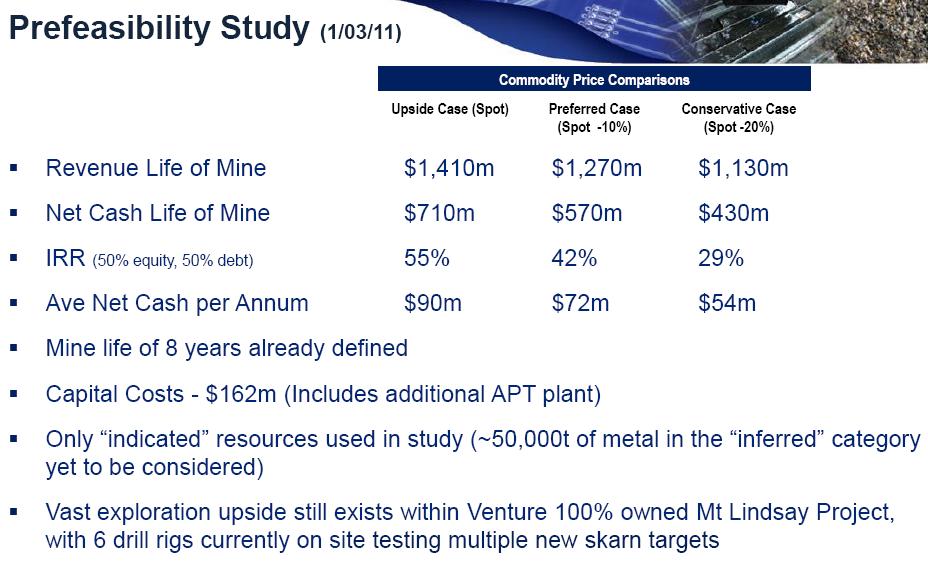
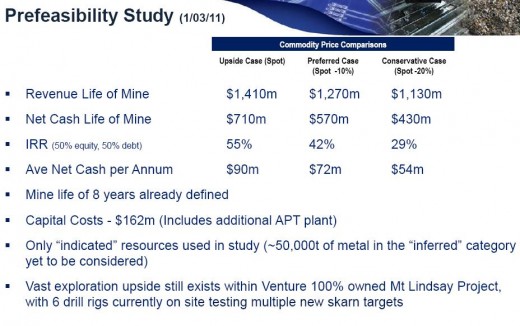 …and this is how the Tin Men see the Tarkine – for its ‘Super Mining Profits’ … 30 to 55% return! …and this is how the Tin Men see the Tarkine – for its ‘Super Mining Profits’ … 30 to 55% return!
(Source: Venture Minerals’ Mt Lindsay-Investor Presentation, Nov 2011)
.
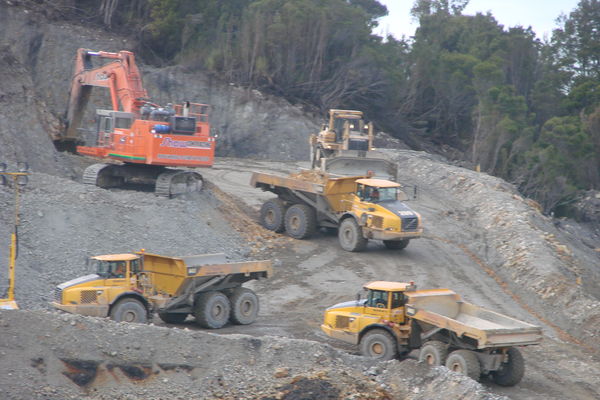
The Mount Lindsay tin project is the largest of several mines planned around the Tarkine in an emerging new Tasmanian environmental battle. The Tarkine National Coalition said up to nine new open cut mines are in development there. Mr Burke allowed a previous emergency listing for the Tarkine to lapse a year ago when he said plans for a road through the wilderness were dropped. Environment groups objected because of what they said were increasing threats from mining.
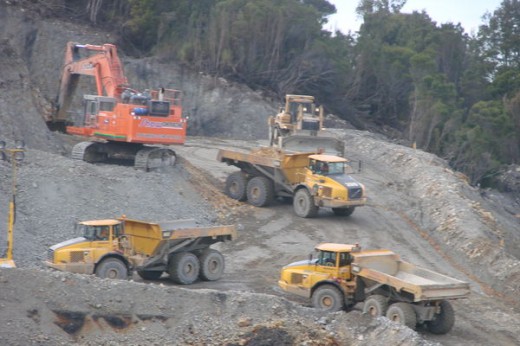 Corporate Miner ‘Metals X’ getting well stuck into a Tarkine rainforest hillside at nearby Mount Bischoff Corporate Miner ‘Metals X’ getting well stuck into a Tarkine rainforest hillside at nearby Mount Bischoff
.
The 430,000-hectare Tarkine region is undergoing a protracted assessment for future listing by the Australian Heritage Council. But because the wilderness now lacks any listing, Mr Burke is unable to consider heritage values in an approval of the Mount Lindsay mine under the Environment Protection and Biodiversity Conservation Act. Instead, his decision is likely to focus on protection of endangered species such as the Tasmanian Devil. The Tarkine is the wildest remaining stronghold for healthy devils, stricken across the rest of the island by a deadly facial cancer.
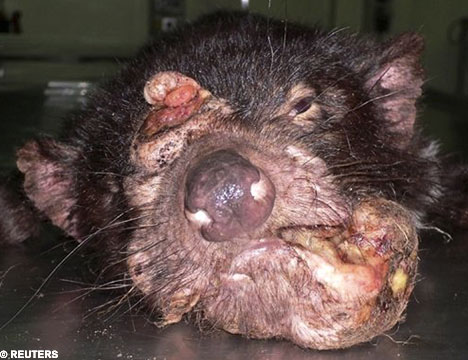 The Tarkine is a refuge for healthy Tasmanian Devils to avoid the genocidal tumour disease
..but what could heartless commercial ‘Tin Men’ care?
Think of the ‘Super Mining Profits’ … 30 to 55% return! The Tarkine is a refuge for healthy Tasmanian Devils to avoid the genocidal tumour disease
..but what could heartless commercial ‘Tin Men’ care?
Think of the ‘Super Mining Profits’ … 30 to 55% return!
.
The Tarkine National Coalition spokesman Scott Jordan said yesterday:
”Companies, including Venture, are using the removal of the heritage protections to ramp up exploration activities including roading and drilling that are having a significant effect on the values of the area.”
.
The coalition was joined by the World Wildlife Fund, the Australian Conservation Foundation and The Wilderness Society in seeking the listing. An Australian National University environmental law specialist, Andrew Macintosh, said emergency listings had been granted four times since 2004, but Mr Burke was not compelled to respond to the request. In a statement, Mr Burke did not respond directly to the emergency listing request, but said he would continue meeting with different groups on issues surrounding the heritage listing of the Tarkine. [Editor’s note: in fact there has been one emergency National Heritage listing (Dec 2009 – Dec 2010), one National Heritage nomination (2004), three emergency National Heritage nominations (Nov 2009, Mar 2011 and Nov 2011), and two AHC recommendations (2003 and Sep 2010)… so what’s it bloody take to get the message through?]
.
[Source: ‘ Call for heritage listing of the Tarkine to head off tin mine‘, Sydney Morning Herald, 20111119, ^ http://www.smh.com.au/national/call-for-heritage-listing-of-the-tarkine-to-
head-off-tin-mine-20111118-1nndq.html]
.
.
‘Jobs, jobs, jobs’ justification – but all for mainlanders, foreigners and short-termers
.
Typically, this miner (Venture Minerals) relies on the standard jobs justification to exploit, dig up, pollute and destroy the Tarkine Wilderness for tin. Venture Mineral is promising 700 jobs! But of those , 500 jobs involve construction – so short term fly ins from the mainland and overseas only during construction phase. The remaining 200 jobs are promised for the mine’s operations. But miners don’t train locals. This is not about Tasmanian jobs. These 200 jobs will be sourced from similar mines on the mainland and indeed from overseas all on on Federal Labor’s 457 Visa (Australian worker displacement) Scheme. Just look at OZ Minerals at Rosebery.
457 Visas: ‘..for employers who would like to employ overseas workers to fill nominated skilled positions in Australia, to employ overseas workers for a period of between one day and four years.’
[Source: ^http://www.immi.gov.au/skilled/skilled-workers/sbs/]
.
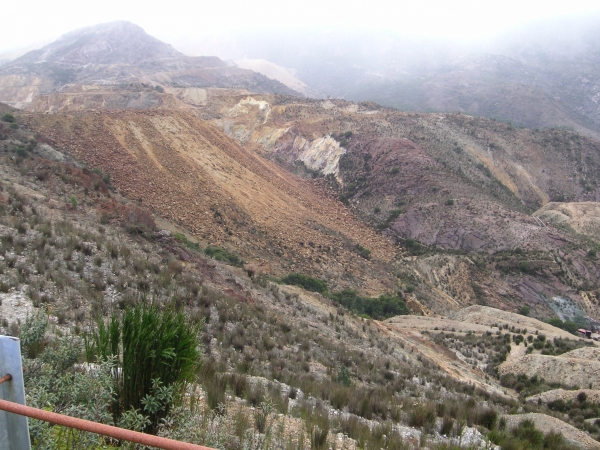
Venture Minerals is Perth-based at 181 Roberts Road Subiaco, another West Australian corporate miner exploiting Tasmania and taking the profits offshore. Venture Minerals forecasts $1 billion in revenue but it won’t go to Tasmanians. It will go back to West Australia and to its rich mine shareholders. Typically mining is eco-rape, pillage and plunder – wam, bam, thank you mam, then pissing off back to where one came, leaving another tin moonscape like Mount Bischoff.
Look at the mining legacies across Tasmania left as moonscapes:
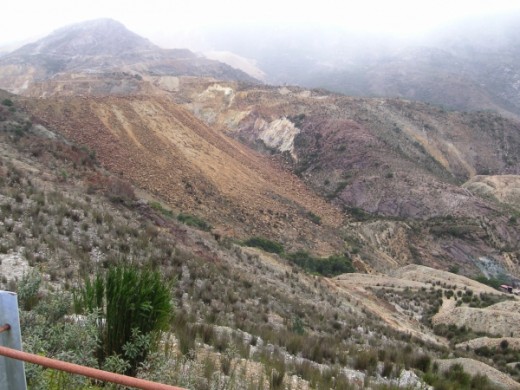 Nearby Mount Bischoff Tin Mine – wam, bam, thank you mam! Nearby Mount Bischoff Tin Mine – wam, bam, thank you mam!
.
- Kara Mine in Hampshire
- Mount Lyle’s sulphuric moonscape
- Henty Mine
- Briseis Mine at Derby
- Pioneer Mine on Bradshaws Creek
- Anchor Mine on Blue Tier
- Gladstone Mine
- Coles Bay Mine
- Ben Lomond Mine
- St Paul’s River Mine
- Flinders Island Mines
- Mount Heemskirk
- Mount Balfour
- Renison Bell
- Stanley River
- Mount Cleveland
- Cox Bight
- Melaleuca
- etc

And of course the Tasmanian Minerals Council backs mining in The Tarkine. And of course it opposes national heritage listing of the Tarkine. The Tasmanian Minerals Council is only about the financial bottom line, exploitation of ore and perpetuating its own existence.
 The Tasmanian Minerals Council claims that there are “already enough layers of protection across the Tarkine region, where about 80% of the land has been put in multiple use reserves that allow mining“. The Tasmanian Minerals Council claims that there are “already enough layers of protection across the Tarkine region, where about 80% of the land has been put in multiple use reserves that allow mining“.
What ‘layers of protection’? If 80% of the Tarkine is reserved form mining, how can that be for protection? – for protection of mining profits and royalties perhaps.
So Tony Burke, if you’re not to pre-occupied with resolving the future of the Murray-Darling, what time are you allocating for Tasmania’s ancient Myrtle forests?
.
.
.
‘Tasmania’s Tarkine wilderness is one of the world’s largest temperate rainforests.
This vast expanse is a wilderness wonderland of wild rivers, dramatic coastal heathlands, button grass plains, bare mountains, ancient Huon pines, giant eucalypts and myrtles and extraordinary horizontal scrub.
It is home to rare and endangered birds – like the Orange-bellied parrot and the White goshawk – and countless animals such as the Eastern pygmy possum. This superbly illustrated book captures the beauty of this unique wilderness.’
.
[Source: ^http://www.andrewisles.com/all-stock/publication/tarkine]
.
Orange-bellied Parrot
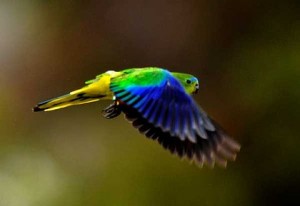 ‘Here at Melaleuca, six days’ walk from the nearest road,
such moments of peace are typically broken by bird calls,
including the distinct buzzing of the orange-bellied parrot’.
.
[Source: ‘Scientists Race To Rebuild Parrot Population’, by Peter Ker, Sydney Morning Herald, 20110207, ^http://www.globalanimal.org/2011/02/07/scientists-race-to-rebuild-parrot-population/29032/] ‘Here at Melaleuca, six days’ walk from the nearest road,
such moments of peace are typically broken by bird calls,
including the distinct buzzing of the orange-bellied parrot’.
.
[Source: ‘Scientists Race To Rebuild Parrot Population’, by Peter Ker, Sydney Morning Herald, 20110207, ^http://www.globalanimal.org/2011/02/07/scientists-race-to-rebuild-parrot-population/29032/]
.
Current status:
‘The Orange-bellied parrot (Neophema chrysogaster) is one of 18 birds listed as endangered under the Tasmanian Threatened Species Protection Act 1995. It is also listed as endangered under the Federal Act and has the dubious honour of being one of the most endangered birds Australia wide.
Why is it endangered? The Orange-bellied parrot is endangered because it is so rare (only 200 birds left) and its habitat is quickly disappearing.
.
There are only about 50 breeding pairs of this bird left!
..but what could heartless commercial ‘Tin Men’ care?
Think of the ‘Super Mining Profits’ … 30 to 55% return!
.
‘…It is a breeding endemic of Tasmania, which means that it only breeds in Tasmania. In fact it only breeds in one place in Tasmania and that is in our Southwest National Park. It arrives here in summer, nesting in eucalypt tree hollows adjacent to the parrot’s feeding grounds of extensive coastal buttongrass plains.’
.
[Source: http://www.dpiw.tas.gov.au/inter.nsf/webpages/bhan-54g3c5?open]
.
Tags: 457 visas, Cradle Coast Authority, Environment Minister, high priority drill targets, Melaleuca, Metals X, Mount Lindsay, Orange-bellied Parrot, Pieman River, super mining profits, Tarkine Tourism Development Strategy, Tarkine Trails, Tarkine wilderness, Tasmania, Tasmanian Devil, Tasmanian Minerals Council, The Tarkine, tin man, tin men, tin mine, Tony Burke, tungsten mine, Venture Minerals, wam bam thank you mam
Posted in Birds (Australian), Tasmania (AU), Tasmanian Devils, Threats from Mining, Threats to Wild Tasmania | 8 Comments »
Add this post to Del.icio.us - Digg
Wednesday, November 30th, 2011
This article was initially published by Tigerquoll 20090622 on CanDoBetter.net in the aftermath of the devastating Victorian bushfires that climaxed on 7th February 2009:
.
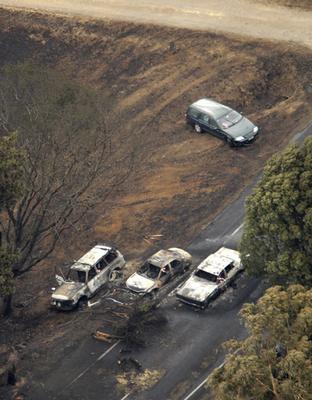 Last ditch huddling together in cars didn’t work
(Chum Creek)
Last ditch huddling together in cars didn’t work
(Chum Creek)
.
The Victorian Premier Brumby’s Royal Commission into the January-February 2009 bushfires is a mere incident review. If Victoria is to be protected from firestorms in future, it should undertake a root cause analysis, including the numerous past investigations into bushfires, with a view to achieving a cultural shift in rural fire fighting methods, resourcing and emergency management and into ecology management, housing approvals in bushfire prone areas, building design in bushfire prone areas, bush arson criminology and into serious resourcing of rural fire management.
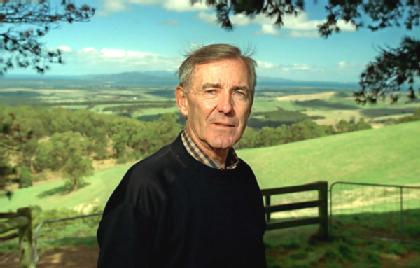 A familiar media icon of Victorian television news for over a decade – he and his family, like those around him, had a right to a safe lifestyle in beautiful rural Victoria
(This editor grew up watching Nine News, as part of our family routine for many years, and I remain still personally affected by his awful tragedy). A familiar media icon of Victorian television news for over a decade – he and his family, like those around him, had a right to a safe lifestyle in beautiful rural Victoria
(This editor grew up watching Nine News, as part of our family routine for many years, and I remain still personally affected by his awful tragedy).
.
Indeed, given the repeated history of bushfires across Australia and the repeated uncontrolled nature of many of these leading to extensive property damage, the loss of thousands of livestock, widespread ecological destruction, the human lives lost and injuries, and the massive costs incurred every year, the scope of the enquiry should be escalated to a national level.
But the Victorian Commission’s terms of reference focuses on the immediate causes and circumstances of the 2009 Victorian Bushfires. It focuses on the immediate management, response and recovery. This is a start, but the real start occurred in 1939 with the shock of Black Friday. It lead to the Stretton Enquiry, but many large and damaging firestorms have occurred since – so the Stretton Enquiry showed that lessons were either ignored or the application of those lessons were ineffective. The Esplin Inquiry of 2003 identified striking parallels between 1939 and 2002-3 bushfires. Now we have the 2009 Bushfires, but each investigation is disconnected from the previous one, almost as if to intentionally ignore history and any prior lessons learnt. Interstate and overseas, many major bushfires and their subsequent investigations have amassed research, insight and lessons. Why limit the investigation to one event?
 Victorian Premier’s complicity in under-preparation, and precious nothing’s been done since Victorian Premier’s complicity in under-preparation, and precious nothing’s been done since
.
Incident investigation will uncover causes and flaws and will likely make specific recommendations in the hope of preventing similar incidents. But root cause analysis goes beyond identifying the symptoms of a problem. But the Commission has not started with identifying the problem.
Let’s say that that at the core is the problem of preventing ignitions becoming firestorms.
- What are the causes of uncontrolled ignitions in the bush?
- Where are they typically lit?
- How are ignitions detected by fire authorities?
- What is the time lapse between ignition and detection?
- What is the time lapse between detection and response and eventual suppression?
- Which causes and interventions would mitigate the risk of these ignitions developing into uncontrollable firestorms?
- Are the ignition detection tools adequate?
- Are the communications tools adequate?
- Do we have the right tools and trained personnel in the right places to effectively respond?
- Is the entire detection, response and suppression system sufficiently integrated to deal with multiple ignitions in extreme conditions across the State at the same time?
- How would this be achieved?
- What budget would be required to have such resources and technology in place to achieve this standard?
- Is the problem indeed too big for Victoria by itself to adequately deal with and so is the problem in fact a national one?
- How would a satisfactory solution be achieved without causing other problems like ecological damage and local wildlife extinctions?
.
Then implement the recommendations and scientifically monitor their effectiveness. But the Commission is looking at what caused the specific ignitions, what damage the specific bushfires caused and specific responses. It will conclude what specifically should have been done in these specific incidents. It will lead to a blame game that will solve nothing. Subsequent ignitions if not predicted, detected, responded to and suppressed to prevent firestorms, will likely have different circumstances in different locations.
- So how will the problem have been solved by this Royal Commission?
- How will the Victorian Royal Commission prevent bushfire history repeating itself?
.
What a useless fabricated enquiry, another one in the litany of government rural community betrayal!
.
.
Tuesday, November 29th, 2011
This article was initially published by Tigerquoll 20090621 on CanDoBetter.net in the aftermath of the devastating Victorian bushfires that climaxed on 7th February 2009:
.
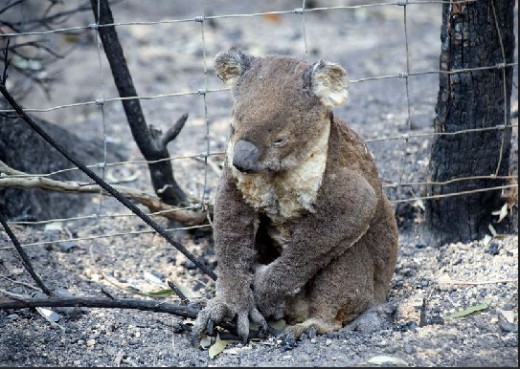 A forgotten victim of bushfire
.
The analogy of the Titanic ocean liner disaster of 15th April 1912 is apt in relation to rural communities entrusting those in charge to be able to deal with public/national emergencies. The public trusted the Titanic met government standards. But 2,223 people boarded and 1514 died from the iceberg collision. Government standards were later revealed as substandard.

Public trust in government is appropriate (it’s why we pay our bloody taxes), but government systemically neglects its responsibility and abuses that public trust. Government has the nerve to entice volunteer members of the community to do its dirty work – aka the CFA. So individuals have given up on their government to be able to respond adequately to emergencies (bushfires, floods, droughts, etc) feel compelled to take measures themselves. Building a bunker is a vigilante response. I’m not saying its not a constructive response, but it is a consequential reaction of government failing to protect bushfire-prone communities. It’s like residents losing faith in the police and feeling compelled to being vigilantes. It’s akin to Titanic passengers bringing along their own liferafts.
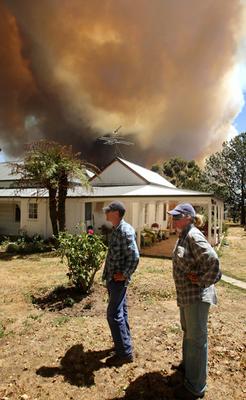 ‘Stay or Go‘? ‘Stay or Go‘?
.
To attribute blame on climate change ignores the role of government and in the case of the 2009 Victorian Bushfires lets government get away with manslaughter – literally.
Look into the history of the causes of the Titanic sinking and one can draw many comparisons with the failures of Emergency Management Australia in how it failed to protect life, property and ecological values from the bushfires across Victoria last January and February. The root causes of the (a) 1914 Titanic’s sinking and (b) the loss of 1514 lives were: management culture, poor contingency planning, design flaws, poor governance (e.g. inadequate safety regulations), poor operational response, amongst others.
 Victorian CFA Chief during Victoria’s tragic 2009 bushfires Victorian CFA Chief during Victoria’s tragic 2009 bushfires
The root causes of (a) the 2009 Victorian Bushfires being allowed to grow into unstoppable infernos and (b) the tragic loss of 127 lives were: management culture, poor contingency planning, design flaws, poor governance (e.g. inadequate safety regulations), poor operational response, amongst others.
The basic question is what emergency strategy was adopted to deal with the Victorian bushfires and why didn’t it work adequately to achieve a best practice outcome – no lives lost, no houses lost, no wildlife killed?
 Words from Strathewen
. Words from Strathewen
.
A root cause of the firestorms being allowed to become firestorms from multiple ignitions is that insufficient dedicated resourcing was provided to deal with the hundreds of ignitions in extreme tinder dry conditions with high winds. The government agencies (CFA, et al) knew the fire index was 300, that this was the worst on record, yet did stuff all to prepare or warn the public. There was a wind change forecast, yet this was not communicated to residents. Relying upon volunteers to drive fire tankers to remote ignitions is proven as ineffective as pissing into a wall of flame.
The 1940’s fire fighting thinking needs to be overhauled – by the time the 000 call is received, the volunteers are called in, drive their fire trucks out to an ignition, two hours later, that ignition has spotted into a fire front and its too late! Happens all the time!
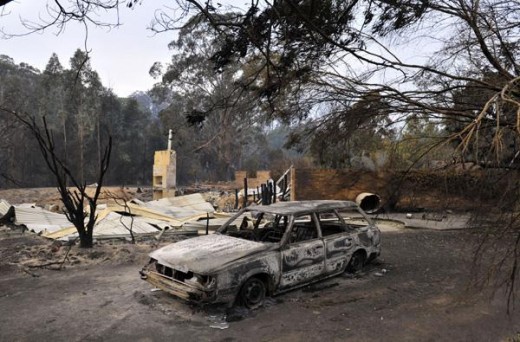
Trapped and no hope
.
Another root cause is government allowing people to build in the bush in extreme fire risk locations and in houses that are not bushfire resistant. The tragedy is that after the Royal Commission, the likely response is to incinerate the bush like no tomorrow – destroy the natural environment that people yearn to be near. It will fail to recognise the complexity of the causes and the solutions and will advocate a knee-jerk – troglodyte (‘ugg ugg’) burn the lot approach. The Commission’s verdict will fuel Brumby’s Final Solution to prescribe Victoria back to the Stone Age.

A key question is what is government leadership in fire fighting to do – i.e Emergency Management Australia? How about four fundamental approaches:
- Introduce world-leading scientific research and monitoring of bushfire threats – climate and weather conditions, bush conditions, arson investigation, lightning, and integrate these with bushfire fighting.
- Obtain state-of-the-art monitoring of bushfire-prone areas across South Eastern Australia to the point where ignitions and plumes in the remotest of locations can be detected within minutes of them starting, feeding this data to a central database and to a standby emergency professional and national response unit.
- Employ military-esque emergency services professionals to respond to ignitions within an hour of starting – airborne professionals, not a volunteer ‘dads army’ sitting in trucks.
- Resource Australian Firefighting with serious air resources to combat bushfires with military efficiency and scale. A chunk of Rudd’s $26 billion budget on Defence should have gone to setting up a national airborne fire fighting response division and an integrated satellite detection, alert and response system/unit. Isn’t this defence at home?
.
Unless the above is done, nothing will change, but now that Titanic has sunk (Victorian Bushfires killed 173 human lives, cost billions in property losses and contributed to many local wildlife extinctions) we no longer should be shocked when it happens all over again.
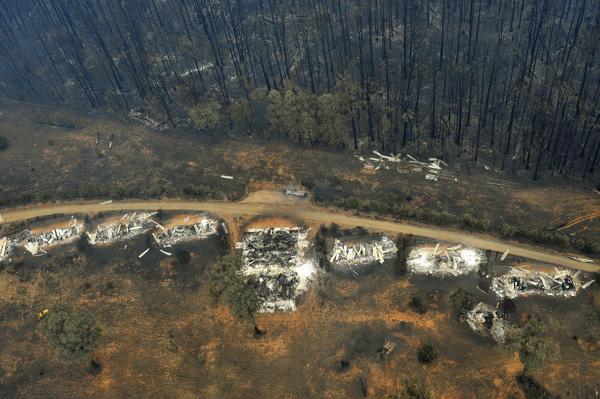
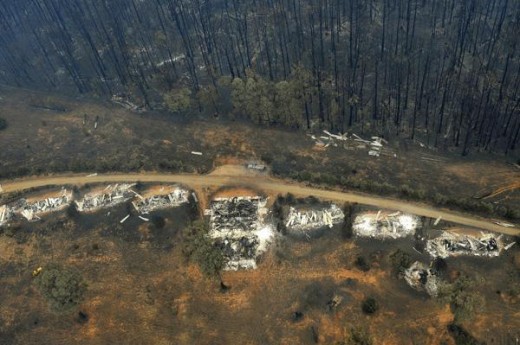 Kinglake aftermath – homes and lives incinerated Kinglake aftermath – homes and lives incinerated
.
As for bunkers, no government will guarantee a bunker to protect life ever.
One must attribute responsibility to the top of government, down. I hold Kevin Rudd accountable for the next bushfire tragedy and we are six months before next January.
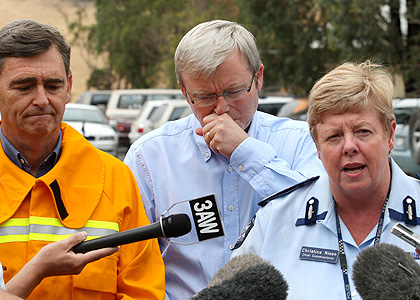 Brumby, Rudd, Nixon- the ultimate emergency leadership responsible for the Victorian Bushfires outcome of 2009 Brumby, Rudd, Nixon- the ultimate emergency leadership responsible for the Victorian Bushfires outcome of 2009
Ultimate government leadership has ultimate responsibility for public emergency
– the resourcing, the planning, the risk recognition, the mitigation, the response, the compensation.
.
In bushfire management, political will continues to be negligent.
.
.
Tags: bush fires, CFA, Emergency Management Australia, emergency services, Kevin Rudd, Kinglake, Premier Brumby, Stay or Go, Strathewen, tigerquoll, Titanic, Victorian Bushfires 2009, wildlife victims of bushfire
Posted in Threats from Bushfire | No Comments »
Add this post to Del.icio.us - Digg
Friday, November 25th, 2011
‘It’s only bush, she’ll be right’ – famous last words by bushfire management, and not a wildlife zoologist among them.
 …was …was

Part of the human cost of State-sanctioned Arson
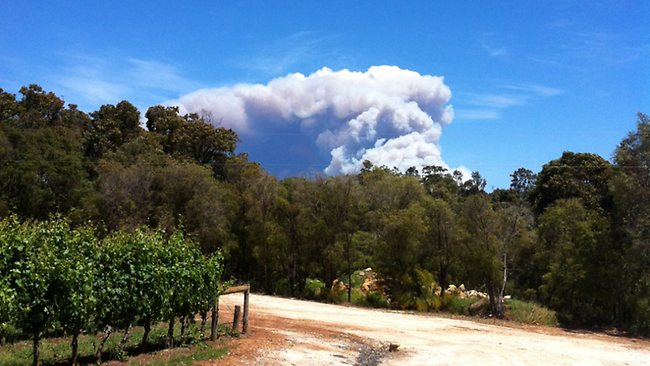
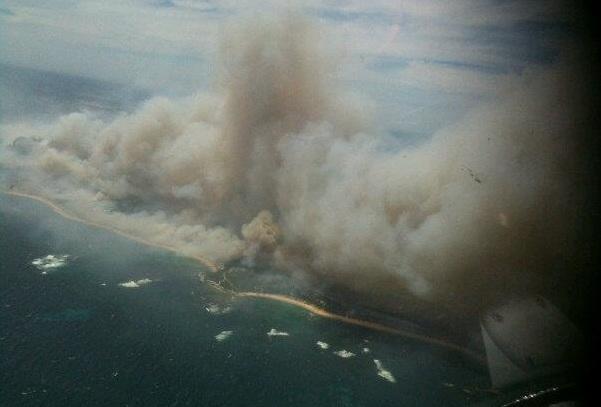
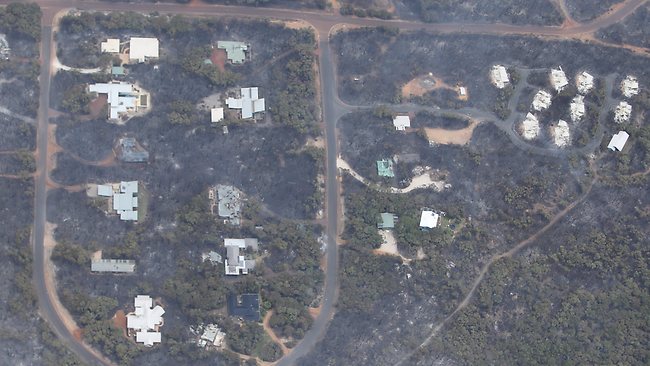
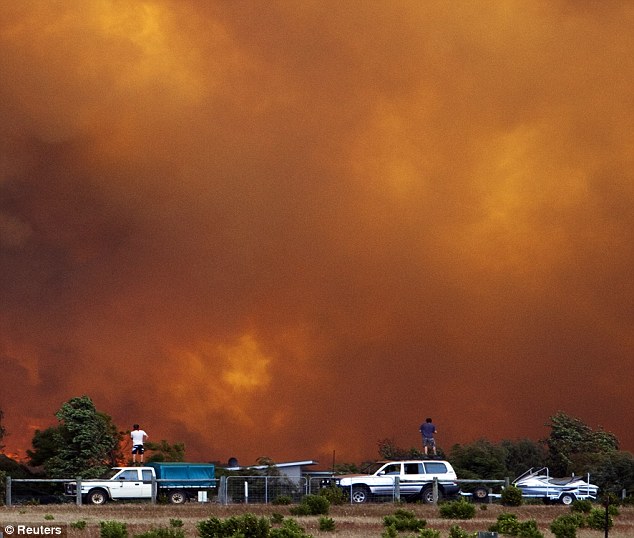
Margaret River Fire 2011.
.
“All my bits and pieces that make me are gone,” says Marjorie Stewart, who lost her home in the raging bushfire in Margaret River.
.
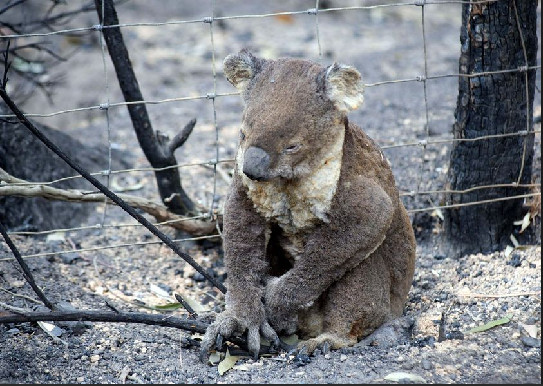
Here we go again. Every year, prescribed burns get out of control somewhere across Australia, yet the State culture of lighting fires to mitigate wildfires continues unquestioningly. No thought is given to the consequential killing of Australian wildlife and the destruction of ever-shrinking islands of habitat. To wildlife it is arson. Is it any wonder why Australia has the world’s worst record in local fauna extinctions.
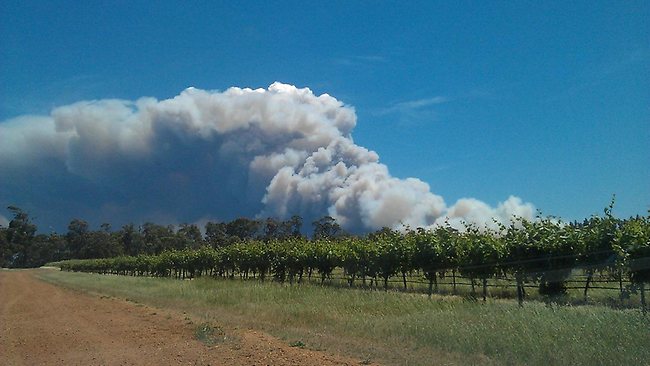
But it is when human lives and human property are damaged that bushfires make the human headlines. The current Margaret River Bushfire’ is a consequence of yet another ‘escaped burn’ in the litany of bushfire management’s perverted ‘strategic bushfire protection‘. Some protection! Lighting bushfires is arson. Letting a bushfire burn remotely overnight for 80 nights is grossly reckless neglect. The consequential human cost and community cost is the responsibility of the State.
Local farmer near the WA town of Denmark Tony Pedro is angry at what he says are government-sanctioned burns which get out of control and threaten private property. Mr Pedro says it is time authorities in WA changed their fire management policy from one of ignition to suppression.
“In summer the community doesn’t light fires. You know the farmers don’t light fires and if someone does light a fire they’re called an arsonist.”
[Source: ‘Fires in Denmark contained and downgraded’, ABC, 20111125, ^http://www.abc.net.au/news/2011-11-25/denmark-fires-downgraded/3694428?section=wa]
.
.
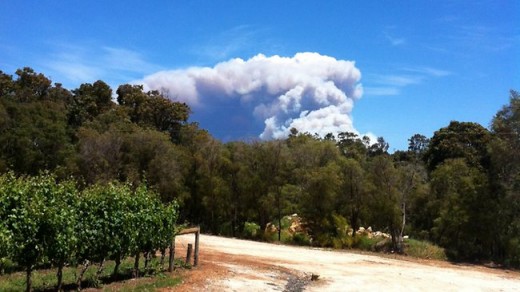
Margaret River Bushfire, 2011
.
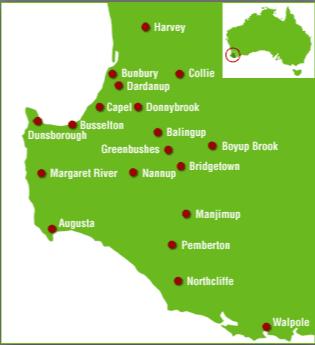 Margaret River, Western Australia
situated about 230km south of Perth
[Source: http://www.mysouthwest.com.au/Tourism]
. Margaret River, Western Australia
situated about 230km south of Perth
[Source: http://www.mysouthwest.com.au/Tourism]
.
The West Australian Government’s Department of Environment and Conservation (DEC) is the State authority delegated the custodial responsibility for protection and conservation of the environment of Western Australia. This includes managing the State’s national parks, marine parks, conservation parks, State forests and timber reserves, nature reserves, marine nature reserves and marine management areas. Leading its key objectives is the requirement to conserve biodiversity – ‘Protect, conserve and, where necessary and possible, restore Western Australia’s biodiversity’. [Source: ^http://www.dec.wa.gov.au/content/section/29/2035/ (About Us)]
Yet, every three years DEC lights bushfires across the State, euphemistically termed ‘prescribed burns‘ under its Master Burn Planning process, that it has convinced itself..is designed for:
- ‘Biodiversity conservation through application of scientifically based fire regimes to maintain and protect native flora and fauna communities and/or habitats’
- ‘Community protection-protection of human life, property, public assets, parks, water catchments, timber values and plantations’
- ‘Silvicultural burns for regeneration of native forests following timber harvesting’.
[Source: DEC website, ‘Planning for prescribed burning’, ‘Proposed Burn Program’, ^http://www.dec.wa.gov.au/content/view/128/1870/1/3, accessed 20111125]
.
You see, Australian native vegetation burns, so burning it must be good for it. As for the wildlife, well we think they come back, but we don’t really check. DEC’s Master Burn Planning for the three year period 2011-2014 began in Spring.
.
.
Tue 6th Sep 2011: The ignition?
.
The Margaret River ‘prescribed burning’ was reportedly lit on Tuesday 6th September, two and a half months ago by DEC as a prescribed burn! Exactly when or where has not been made officially public by DEC. Another report claims that a spokesperson for Environment Minister Bill Marmion said:
“The Department of Environment and Conservation were not undertaking any prescribed burns in the Augusta-Margaret River area. However, a prescribed burn was commenced in the Leeuwin-Naturaliste National Park on the 10th of November and completed yesterday. We understand that this fire is a result of winds picking up an ember from a hot spot and carrying it over the burn boundary today.”
.
The ‘extent of the indicative burn programs for the south-west regions for the six seasons for spring 2011 to autumn 2014’ specific to the Margaret River area is shown on the following map extract . [Read full PDF map]
.
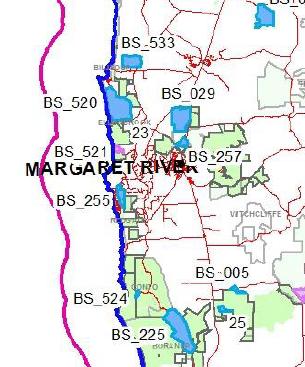
DEC’s ‘Indicative Burn Plans for South West (Spring 2011)
– Blackwood and Wellington districts‘
(Blue areas are targeted for ‘strategic bushfire protection’)
.
Anecdotal evidence from various online media reports suggests that DEC’s prescribed burning was occurring within the nearby coastal Leeuwin-Naturaliste National Park.
So DEC, the custodian of National Parks in Western Australia, set fire to the National Park. So it is likely the magnificent tall stands of Karri and Jarrah forest, that characterise areas of the Park, have been burned? The coastal scrub-heath and large peppermints and banksias which provide habitat to a variety of native mammals including the Southern Brown Bandicoot, Western Grey Kangaroos, Common Ringtail Possum and Brush-tailed Wallabies – have they been burned too? What of the native birds of the Park including the Red-eared Firetail, White-breasted Robin, Rock Parrot and Emu? How much of this important dedicated wildlife sanctuary has been incinerated and disclocated by the custodian charged to protect it? And why?
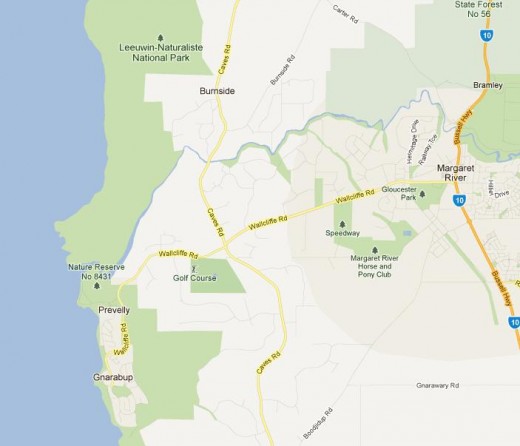 Map of Margaret River and surrounds
The Leeuwin-Naturaliste National Park is where the bushfire was apparently started,
then the fire seems to have been fanned across the Margaret River into the villages of Prevelly and Gnarabup Map of Margaret River and surrounds
The Leeuwin-Naturaliste National Park is where the bushfire was apparently started,
then the fire seems to have been fanned across the Margaret River into the villages of Prevelly and Gnarabup
(Google Maps)
.
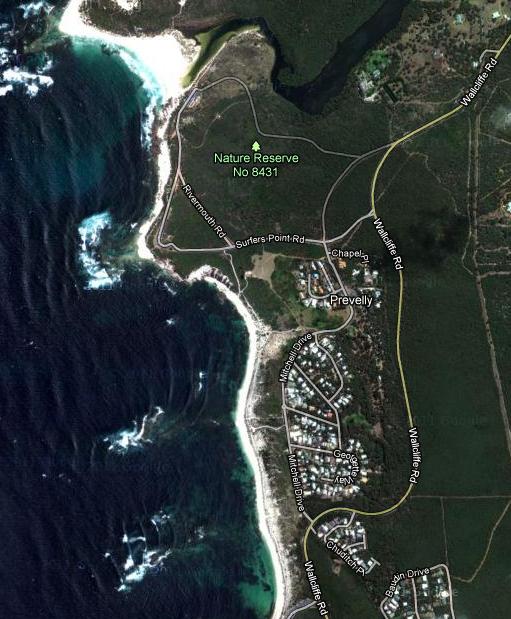 Close up satellite map of the Nature Reserve and coastal village of Prevelly
[Source: http://www.maplandia.com/australia/western-australia/augusta-margaret-river/margaret-river/] Close up satellite map of the Nature Reserve and coastal village of Prevelly
[Source: http://www.maplandia.com/australia/western-australia/augusta-margaret-river/margaret-river/]
.
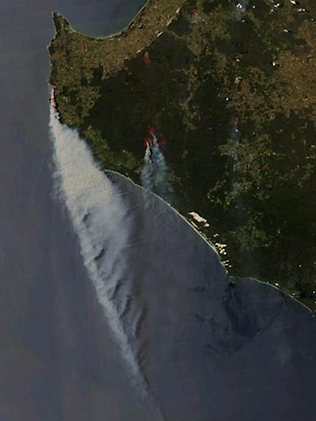 High level satellite photo shows a clear plume of smoke along the coast indicating a strong NNW wind.
[Source: Jeff Schmaltz and LANCE/EOSDID Rapid Response Team, NASA] High level satellite photo shows a clear plume of smoke along the coast indicating a strong NNW wind.
[Source: Jeff Schmaltz and LANCE/EOSDID Rapid Response Team, NASA]
At the time of compiling this article (20111125), no clear and definitive map of the progress of the bushfire zone was available online. The following map is indicative, but it is known that the coastal village of Prevelly to the south was affected, so not too much reliance can be placed upon this aerial map.
 . .
Weather Forecasts?
.
A key factor in bushfires is weather – minimum and maximum temperatures, wind direction, wind speed, maximum wind gust strength, relative humidity, anticipated wind changes, precipitation, etc. What as the weather forecast at the Time? Over 80 days the weather must have varied – the winds, the temperature, yet the prescribed burn was allowed to perpetuate. Weather archival information is available from the Australian Bureau of Meteorology (BOM) for a small fee. An example of yesterday’s weather forecast for the south western area where Margaret River is situated is limited but reads as follows:
.
District Forecasts for Western Australia:
IDW13000
Australian Government Bureau of Meteorology
Western Australia
DISTRICT FORECASTS FOR WESTERN AUSTRALIA
Issued at 4:20pm WST on Thursday the 24th of November 2011
for tonight and Friday with outlooks for Saturday
—————————————————–
IDW1300003
SOUTHWEST:
Remainder of Thursday: Partly cloudy. Becoming humid. Moderate to fresh NW’ly
winds, easing during the evening.
Friday: Areas of morning drizzle in the southwest. Moderate W/SW winds.
Fire Danger:
COASTAL LOW-MODERATE
INLAND LOW-MODERATE
Outlook for Saturday : Isolated areas of drizzle in the southwest in the
morning.
Temperatures for Friday (Minimum Maximum)
Bunbury 17 26
Busselton 15 26
Margaret River 15 24
Bridgetown 16 26
Collie 15 28
Manjimup 16 26
——————————————————-
IDW1300004
SOUTH COASTAL:
Fire Weather Warning issued for Stirling-Inland subdistrict.
Remainder of Thursday: Partly cloudy. Moderate N/NE winds.
Friday: Areas of morning drizzle in the far west. Isolated showers and
thunderstorms developing during the afternoon. Moderate W/SW winds.
Fire Danger:
Stirling Coastal VERY HIGH
Stirling Inland SEVERE
Outlook for Saturday : Isolated areas of drizzle in the far west in the morning. Isolated showers and thunderstorms over the central and eastern parts in the afternoon.
Temperatures for Friday (Minimum Maximum)
Albany 17 27
[Source: ^http://www.bom.gov.au/wa/forecasts/swarea.shtml]
.
 Presuming the fire danger was rated low-moderate,
on 6th September off DEC went and lit bushfires around Margaret River Presuming the fire danger was rated low-moderate,
on 6th September off DEC went and lit bushfires around Margaret River
.
.Clearly DEC’s prescribed burn by yesterday (24th Nov) the bushfire(s) around Margaret River had been burning for some 80 days.
- Why?
- When had they got out of control?
- What measures were put in place to handle increase in wind speed?
- Clearly it was imprudent to allow a bushfire continue for 80 days. When had the decision to suppress been taken?
- DEC had decided to continue the prescribed burn in the National Park as recently as Sunday 20th November, despite high temperatures and strong winds being forecast for later in the week. *
*[Source: ‘WA Premier admits failures on Margaret River fire‘, by Nicolas Perpitch and Paige Taylor, The Australian, 20111125, ^http://www.theaustralian.com.au/national-affairs/politics-news/wa-premier-admits-failures-on-margaret-river-fire/story-fn59nqld-1226205457331]
.
When prescribed burns escape and get out of control (which across Australia is all too frequent), this is more than a tactical misjudgment. It is becomes a bush arson gamble gone wrong. Then more than 30 homes are destroyed as a direct consequence, this is gross culpable negligence.
How dare Premier Colin Barnett then offer those who lost their homes in the Margaret River bushfire a measly $3000 compensation each from the State government. Add three zeros – to each affected household! All affected by loss should collectively seek redress and compensation for all economic loss and trauma and file a class action against DEC and the State Government. Dare to set a precedent! Hip pocket strategy is the best way to put an end to government negligence!
Incident controller Roger Armstrong said the burns escaped authorities’ control 23rd November 2011. The prescribed burn that had led to the present disaster started on September 6, with 60 burns undertaken in the past month. “I want to reinforce with you that we did not ignite a prescribed burn on a serious fire danger day,” Mr Armstrong said. “It was ignited quite a considerable time before that.” [Source: ‘DEC denies Margaret River fire negligence‘, by Courtney Trenwith and Aja Styles, WA Today, 20111124, 12:02 PM, ^http://fw.farmonline.com.au/news/state/agribusiness-and-general/general/dec-denies-margaret-river-fire-negligence/2369712.aspx]
.
.
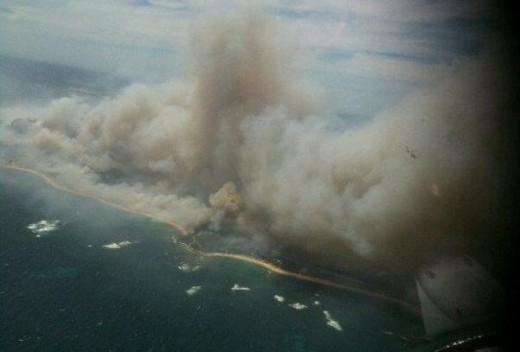
Related Events:
.
During September, DEC’s prescribed burning spring was in full swing across Western Australia. Opposition Leader Eric Ripper questioned whether DEC had been under political pressure to complete an extraordinary number of prescribed burns before the official start of the bushfire season on December 1. [Source: ‘WA Premier admits failures on Margaret River fire’, by Nicolas Perpitch and Paige Taylor, The Australian, 20111125, ^http://www.theaustralian.com.au/national-affairs/politics-news/wa-premier-admits-failures-on-margaret-river-fire/story-fn59nqld-1226205457331].
DEC Principal Fire Operations Manager, Terry Maher, has more or less confessed that DEC fast-tracked this planned prescribed burn. Maher has said that wet weather in October prevented the Department from concluding the prescribed burn sooner.
.
“It would have been absolute negligence if we hadn’t had a crack at trying to complete it because the result would have been the same,” he said.
“It was running around. We had to complete that burn.”
[Source: ‘ Cool change hoses down Margaret River fire‘, 20111125, ABC, ^ http://www.abc.net.au/news/2011-11-25/cool-change-hoses-down-fires/3695026?section=wa]
.
On 15th September, the biggest controlled burn in WA’s history was reported underway on the Nullarbor plain, with DEC setting fire to 660,000 hectares (80km x 80km) of native grasslands. [Source: ‘Nullarbor goes up in smoke‘, ABC Rural, by Tara De Landgrafft, 20110915, ^http://www.abc.net.au/rural/wa/content/2011/09/s3318617.htm?site=perth]. The bushphobic logic was that recent rains had generated natural regrowth, which is demonised as bushfire ‘fuel’, so best burn it in case it burns. No thought was given to the consequential killing of vulnerable fauna native to the Nullabor grasslands such as the Yitjarritjarri (Notoryctes typhlops), Sandhill Dunnart (Sminthopsis psammophila), Bush Stone-curlew (Burhinus grallarius) and Malleefowl (Leipoa ocellata). Interesting how the same logic applied to flammable native vegetation is not applied to flammable pine plantations. Why? The latter is valued, the former is not.
‘It’s only spinifex, she’ll be right’
.
The same day, the WA State Government’s Emergency Services Minister Rob Johnson announced that 80% of Western Australia was at heightened risk of bushfire due to regrowth of native vegetation and so urged home owners ‘to be prepared‘. In the preceding February around the Perth Hills towns of Kelmscott and Roleystone, 72 homes had been destroyed by bushfire. Johnson went on to reassure the public stating that ‘authorities are adequately prepared for the season ahead after considering recommendations from recent bushfire reviews and implementing changes’. [Source: ‘Warning to be prepared for increased bushfire risk’, ABC Rural, 20111015, ^http://www.abc.net.au/news/2011-10-15/bushfire-preparation-wa/3573018/?site=perth]. In October, Johnson had further publicly declared “I don’t think we’ve ever been so well prepared as we are at this moment in time.” [Source: ‘A dire bushfire season ahead: how will it be tackled?‘, by Natasha Harradine, ABC Rural, 20111109, ^http://www.abc.net.au/news/2011-11-09/bushfire-preparedness-feature/3655174]
.
Throughout September, October and right up until 23rd November 2011, no mention can be found online of any news about the supposed continuing prescribed burn in the Margaret River Area. So up until this time one may presume that the prescribed burn in question was either under control, or otherwise out of control in remote bushland and not reported to the media.

On Wednesday 9th November, the local newspaper, the Augusta-Margaret River Mail, had reported a landowner in the Prevelly area burning off a pile of branches, which had escaped due to a sudden wind gust and then burning about 400 square metres of surrounding grass and scrub. The fire was supposedly extinguished. Brigade captain and fire control officer for Prevelly, Brett Trunfull, was quited at the time as saying: “Obviously we are happy to see people burning off their piles, but they must do it within regulation“. The article stated that permits for burning piles were permitted in the area up until midnight on 21st November. [Source: ‘No permit, no burn‘, by Tom Nelson, Augusta-Margaret River Mail, 20111116, ^http://www.margaretrivermail.com.au/news/local/news/general/no-permit-no-burn/2360451.aspx] Editor: Is this a wise practice?
.
The Keelty Report into the Perth Hills Bushfire of February 2011 (released 17th August 2011) highlighted damning inadequacies in the State’s ability to respond to major bushfires – including a lack of appropriate equipment, poor and mismatched radio communication systems, and difficulties in the interaction between the agencies responsible for responding to fires. The Report made 55 recommendations, of which thus far, the Barnett Government has implemented just nine.
Since then the West Australian Government response has been to increase funding into bushfire fighting by about $6 million, including leasing a waterbomber and importing five new appliances (fire tanker trucks), except the trucks aren’t due to arrive until summer 2012. The United Firefighters Union had called for 13 medium tankers. The United Firefighters Union secretary Graeme Geer’s comment was pertinent:
“The next thing is to make sure that the career fire and rescue services have got enough resources on the days when they need them. There are a lot of resources out in the state but they belong to a range of different agencies. On those days when it’s extreme and catastrophic they should be ready to respond at short notice.”
[Source: ‘ A dire bushfire season ahead: how will it be tackled?‘, by Natasha Harradine, ABC Rural, 20111109, ^ http://www.abc.net.au/news/2011-11-09/bushfire-preparedness-feature/3655174]
.
In the weeks leading up to the Margaret River Bushfire, strict new firebreak and fuel hazard reduction notices had been issued in October to property owners in towns and subdivisions throughout the Augusta-Margaret River Shire, including those in Augusta, Margaret River, Witchcliffe, Rosabrook, Cowaramup, Gnarabup, Prevelly, Gracetown and Molloy Island. Property owners who failed to comply with the notice requirements risked a $5000 fine plus the additional cost of paying for a contractor called in by the council to clear their land. Co-ordinator of council rangers Gavin Jennion said that from 6th December 2011: “We will begin inspecting the high risk areas first – places like Prevelly, Gnarabup, Gracetown and Molloy Island where there is only one road in and out.” [Source: ‘Fire hazards may cost land owners’, by Mal Gil, Augusta-Margaret River Mail, 20111102, ^http://www.margaretrivermail.com.au/news/local/news/general/fire-hazards-may-cost-land-owners/2344773.aspx?storypage=1]. Clearly, many of these property owners have now incurred an immensely far greater personal cost.
In early November, near the township of Nannup, about 60km west of Margaret River, a suspicious bushfire was reported which was quickly suppressed by DEC. It burnt out an estimated 67 hectare of bushland. Also around the time of the Margaret River bushfire flare up, nother prescribed burn at Mount Lindesay National Park, north of south coast WA township of Denmark went out of control.
.
.
Wed. 23rd Nov 2011: Suddenly properties already destroyed
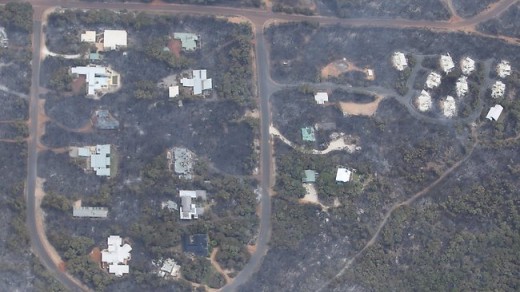
Apparently, the fire started after embers from the still smouldering burn-offs became airborne and ignited in surrounding scrub and began threaten properties along the north-south running Caves Road, west of the township of Margaret River.
7.28pm: Police Commissioner Karl O’Callaghan has told ABC Southwest Radio the current plan was to make sure there were enough resources on the ground for tomorrow.
.
7.40pm: There have been conflicting reports just how many properties have been damaged or destroyed in the fire but according to FESA chief executive Wayne Gregson 21 houses, nine chalets, five sheds and two other buildings had been damaged.
.
7.46pm: The latest alert from FESA advises the potential for severe bushfire behaviour still exists. “The fire has crossed the Margaret River mouth and is currently impacting Prevelly and the south-eastern edge of Gnarabup townsite. “Spot fires have developed in the vicinity of Terry Drive and are burning aggressively in a south easterly direction and have crossed Redgate Road in the vicinity of Redgate Beach. “Winds are moving westerly during the evening, with conditions easing. Homes are still at risk of being damaged by the fire and you need to keep up to date. According to FESA the blaze is likely to have burnt through about 2400 hectares. Firefighters are actively engaged in firefighting at Prevelly, Cherry Road and Burnside Road. Western Power crews are working to re-establish power.
.
8.05pm: While cooler conditions tomorrow are predicted to make it easier for firefighters to control the fire FESA has just issued a severe fire danger advice for parts of the South West land division. A full list of towns and shire in the region can be found at www.fesa.wa.gov.au Residents are urged to stay alert and watch for signs of fire, especially smoke and flames. Have your bushfire survival plan and kit ready.
8.56pm: We are going to wrap up tonight’s coverage now but will be back nice and early in the morning. Visit www.fesa.wa.gov.au for further updates. A Total Fire Ban has been declared tormorrow, Friday, for the shires of Augusta-Margaret River, Busselton, Boyup Brook, Bridgetown-Greenbushes, Donnybrook-Balingup, Manjimup and Nannup.
.
[Source: ‘Parts of Margaret River evacuated as fire approaches‘, by staff reporters, 20111123, ^http://www.margaretrivermail.com.au/news/local/news/general/parts-of-margaret-river-evacuated-as-fire-approaches/2368478.aspx]
.
.
Thu 24th Nov 2011: Flare Up
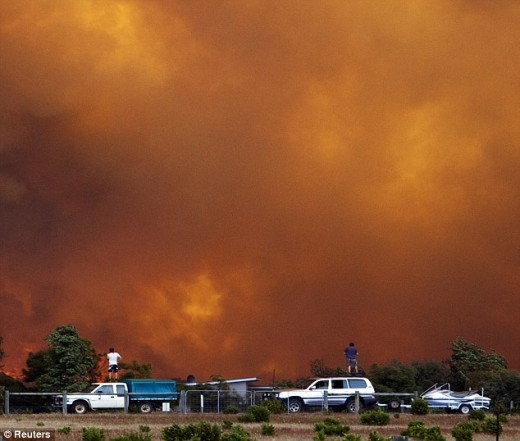
7.05am: Evacuation centre that ”it’s still pretty sleepy”, with dozens of people resting, many of them still uncertain whether they have lost their homes in the fires.
.
7.33am: The Insurance Council of Australia has declared an insurance catastrophe for the bushfires currently burning around Margaret River.
Chief executive Rob Whelan said it was too early to quantify the damage caused by the fires, but expected it to be in the tens of millions of dollars.
.
8.48am: A Bureau of Meteorology spokesman said the temperature at Margaret River was currently 28 degrees, with humidity at 25 per cent.
The spokesman said the winds were currently north north-easterly up to 30km/h with gusts up to 35km/h.
He said that during the day the winds would be about 40km/h with gusts up to 60km/h, changing to north north-westerly through the afternoon.
The Bureau has forecast a maximum temperature of 30 degrees for Margaret River today.
.
9.35am: Wayne Gregson, chief executive at FESA confirms on ABC Radio that so far 10 homes, nine cottages and five sheds have been completely destroyed, and two more homes have been badly damaged.
He said the fire was between 85 and 90 per cent under control, but that this meant that overall it was still out of control.
“Prevelly is under threat. Our focus is on Prevelly in terms of homes and people,” he told ABC Radio.
“At this stage, we think that we have no loss of live or injury.”
He said he had “significant resources” at the scene ahead of blustery winds expected to hit the South-West this afternoon.
.
10.18am: A community meeting is currently underway at the Margaret River Cultural Centre. The crowd is spilling out of the centre as hundreds of people attempt to get the latest information.
DEC incident controller Roger Armstrong is currently addressing the crowd, who are voicing their frustrations at the lack of information. Residents are shouting out for information on road closures and how many homes have been lost.
Mr Armstrong has told the crowd that “we’re not out of the woods here today” and that Prevelly Park was still the main concern for firefighters.
.
10.45am: Prevelly Park remains the area about which authorities are most concerned. DEC incident controller Roger Amstrong said the fire was 80 per cent contained but if winds changed, there was a significant risk for communities west of Margaret River.
.
11.27am: Roger Armstrong, DEC’s incident controller told ABC Radio that an evacuation has been ordered for people in a rural subdivision north of the Margaret River as the bushfire front continues to move.
He said FESA and DEC would be evacuating residents about four to five kilometres ahead of the frontline as the blaze continues to move with the north north-easterly winds.
He said the subdivision, north of Harrington Road, south of Burnside Road, west of Sandpit Road and Boodjidup Roads was the next to be evacuated as a precaution, and said they were in no immediate danger.
Winds in the area are currently about 40km/h, with gusts up to 60km/h.
.
12.38pm: Two more fires have been declared out of control around the state, with six homes in Martin, in the City of Gosnells currently under threat.
The fire is burning between Versteeg Grove and Feldts Road, and residents are being urged to evacuate in the immediate vicinity.
FESA have also warned of a fire that broke containment lines near Denmark.
.
1pm: 140 people find safety in emergency welfare centre ‘Margaret River Cultural Centre on Wallcliffe Road’, intended for Margaret River people who have had to relocate from their homes because of the bushfire, and were being provided with food, care and a place to sleep.
.
1.18pm: The latest update from FESA: A bushfire emergency warning remains in place for people in the Kilcarnup subdivision, Prevelly and Wallcliffe subdivisions and the area north of Wallcliffe Road and east of Caves Road.
An evacuation has occurred in the following areas: south of Burnside Road, north of Harrington Road (also called Exmoor Road), west of Umberto, Kevill, Sandpit and Boodjidup Road.
FESA are advising people in this area that it is too late to leave, and they need to take shelter in their homes and actively defend their properties.
A bushfire watch and act has been issued for people in the greater fire area, including the localities of Ellensbrook, north-east of Kilcarnup, south of Prevelly and east of Caves Road.
.
1.26pm: Mirambeena Aged Care Facility in Margaret River has been evacuated this afternoon.
.
1.32pm: Several reports via Twitter that the fire has now crossed the mouth of the Margaret River. Still awaiting official confirmation but doesn’t sound good. If it’s true, many more homes are likely to be under threat.
.
1.59pm: The fire seems to ramp up as a 100 square-kilometre area south-west of Margaret River is being evacuated, and the blaze is now burning in Prevelly, the DEC told the media scrum.
.
3.00pm: About 30 people stranded on the beach near Prevelly and Gnarabup are being evacuated by jet ski as the fire pushes towards the coast, a resident whose son has been called to help. He said all jet skis in the area had been called to assist.
Only an hour earlier the department had said the beach was the safest place for them to be and that evacuating them would draw resources away from battling the fire. The blaze crossed the Margaret River at Surfers Point Road earlier this afternoon.
.
3.19pm: FESA have advised the Augusta Margaret River Vet Hospital, less than 2 kilometres from the town centre, to now prepare for evacuation. In the last two days they have taken in 31 family pets of people who have been evacuated from the area
.
4pm: WIN news reported flames up to 10-metres high have been spotted as more than 100 firefighters work into the evening to extinguish the blaze.
Ryan Jose told reporters all residents could do was “hope it [the fire] doesn’t burn your house to the ground” while Sam Kinney said residents would be pointing their finger at DEC. “DEC has a lot to answer for” said Mr Kinney.
Residents have told ABC SouthWest radio there is a lot of smoke in the area with one listener saying “it’s very scary”. Another listener has vented her frustration at DEC for burning off on “a day like today” so close to homes.
Olivia who owns some horses has had to take the animals to the local showgrounds and said there is lots of smoke but has yet to see any flames. She was concerned about the change in the wind which may push the fire toward her property.
According to Olivia the townsite was very full with people congregating in the park and in cars as they waited for more information.
More than 100 fire personnel and 30 fire units from the Department of Environment and Conservation, Fire and Rescue Service and local volunteer bushfire brigades are on the scene. Two helicopters and two fixed-wing water bombers are assisting ground crews.
He said almost 100 volunteers were on the scene.
According to DEC the fire is moving in a south-westerly direction towards Ellen Brook homestead at around 200 metres an hour. It is out of control and unpredictable. There have been unconfirmed reports the homestead has been damaged. Firefighters are expecting the wind to change from north-east to north-west about 5pm. This means properties to the east of Caves Road and south of Ellen Brook Road may be impacted by the fire and residents need to keep up to date. So far more than 1000 hectares have been burnt.
 House engulfed near Prevelly 24th November 2011
(likely an ember attack)
House engulfed near Prevelly 24th November 2011
(likely an ember attack)
(Photo by Andre Vanderheyden)
.
[Sources: ‘ Flames up to 10-metres high as residents terrified‘, 20111124, Augusta-Margaret River Mail, ^ http://www.margaretrivermail.com.au/news/local/news/general/flames-up-to-10metres-high-as-residents-terrified/2369987.aspx?storypage=1, ‘WA’s bushfire emergency’, by staff reporters, WA Today, 20111124, 7:59PM, ^http://www.watoday.com.au/wa-news/live-coverage-was-bushfire-emergency-20111124-1nvog.html]
.
.
Fri 25th Nov 2011: Bushfires still uncontained
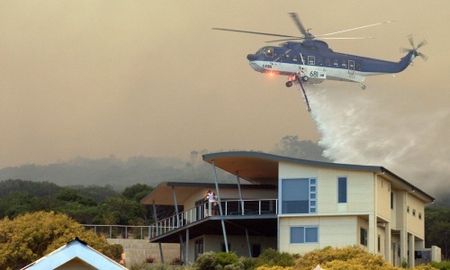
[Source: ‘Fire threatens Hills home’, by staff reporters, Perth Now, 20111125, ^http://www.perthnow.com.au/news/western-australia/wa-fires-fire-threatens-hills-homes-s-w-resort-at-risk/story-e6frg13u-1226205630864]
.
Key Items:
- A bushfire emergency warning remains in place in WA’s Margaret River region, where 34 homes and holiday cottages have been destroyed by a prescribed burn that got out of control.
- The fires, which have been burning out of control for two days, has claimed 25 homes nine holiday chalets, including historic Wallcliffe House, built in 1865.
- However cooler weather today — and the possibility of some rain — either today or tomorrow is expected to help firefighters.
- Some residents are advised to leave their homes immediately if the way is clear but not to relocate at the last minute.
- The warning is directed at people in the area south of Carters Road, north of Forest Grove Road and Conto Road on the west side of the Bussell Highway, south of the industrial area. If they cannot leave, residents are advised to get ready to take shelter in their home and actively defend it. If they have prepared their property to the highest level and plan to use their home as shelter they are being advised to start patrolling it to put out spot fires.
- Twenty-five houses and nine chalets were lost to the fire on Wednesday and Thursday, and properties have been burnt or damaged at Prevelly, Gnarabup and Redgate, the Department of Environment and Conservation said in a statement early today.
- The Department of Environment and Conservation (DEC) said homes were still at risk and it was important for residents to remain up to date.
- Yesterday the fire crossed the Margaret River mouth and burnt through parts of Prevelly and the southeastern edge of Gnarabup.
- Spot fires in the around Terry Drive resulted in aggressive fire behaviour south of Redgate Road.
- The fire is estimated to have burnt around 2800 hectares.
- According to FESA 27,000 hectares has been burnt since the fire was reported in the area at 10pm on Thursday.
- Thirty Fire and Rescue Service, Bush Fire Service and DEC firefighters from six stations are managing the fire.
- Western power said power had been cut along the Vasse Hwy between Stewart Rd and Seven Day Rd.
- Vasse Hwy has been close between Nannup and Pemberton.
- Late yesterday State Emergency Coordinator Karl O’Callaghan said fires were burning out of control in the several areas including Prevelly, where at least 30 properties have been destroyed and 2000 hectares razed after prescribed burning in the Leeuwin-Naturaliste National Park over the past 10 weeks sparked the widespread blaze on Wednesday.
- He said the State Emergency Management Committee had met on Thursday evening and determined no extra resources would be needed to fight the fires in Margaret River, Nannup and Denmark today. “We spoke about whether there would be more resources required, but we’re not expecting them to need more resources tomorrow,” he said.
- FESA spokesman Allen Gale told 6PR about 30 homes and about 10 sheds were severely damaged. He said the area of concern was Gnarabup and further south towards Redgate, where the fire was headed.
- Fifty-five people stranded on a Prevelly beach overnight had to be rescued by jet ski after the high bushfire swept through their coastal town.
- Reports firefighters were “holding back” a blaze which threatening Margaret’s Beach Resort in Gnarabup.
- Cooler temperatures and low winds are making the bushfire ravaging Margaret River easier to fight, although authorities say the fire is still not contained.
- More than 150 firefighters continue to battle the fire wall, which is 34 kilometres in perimeter.
- About 700 residents have gathered in Margaret River for the latest community briefing from emergency services about the fire.
- Despite confirmation another 15 properties were destroyed overnight, taking the total to 34
- As more than 400 firefighters last night battled an out-of-control blaze in and around Margaret River, 233km south of Perth, Emergency Services Minister Rob Johnson conceded the State Alert fire system failed to send phone warnings to some residents until “after the fire had gone through their particular area”.
- Emergency services across the southern part of the state were stretched to capacity as the south coastal town of Denmark last night braced itself for a similar fire threat. Harvester bans were put in place across the state’s entire wheatbelt region while Perth sweltered in 37C heat, and spot fires across the city’s hills kept locals nervous and firefighters busy.
- The Margaret River fire has so far burnt 2400ha and destroyed or damaged at least 30 homes, including the historic Wallcliffe House, a 1865 riverbank manor restored by Woodside chairman Michael Chaney.
- WA Premier Colin Barnett has acknowledged the burn had “gone wrong”
- A report by the community development and justice standing committee tabled in parliament yesterday found there had not been enough action taken on a recommendation for DEC, the Fire and Emergency Services Authority and local government to develop a single, integrated fuel-load management system.
- A DEC spokesman said the fire was “85 per cent” contained after engulfing1800ha, but if winds pushed the fire south-west this morning, houses in Prevellywere in danger. Extra firefighters would be deployed to secure that front of the fire, he said. “If we can get through the next couple of hours here, things are looking good”, the spokesman said.
- An estimated tens of millions of dollars worth of damage by Margaret River bush fires has been declared an ‘insurance catastrophe’. The Insurance Council of Australia chief executive officer Rob Whelan though it was too early to quantify the damage amount, they predicted it would be tens of millions of dollars.
.
[Sources: ‘ WA Premier admits failures on Margaret River fire‘, by Nicolas Perpitch and Paige Taylor, The Australian, 20111125, ^ http://www.theaustralian.com.au/national-affairs/politics-news/wa-premier-admits-failures-on-margaret-river-fire/story-fn59nqld-1226205457331, ‘ DEC denies Margaret River fire negligence‘, by Courtney Trenwith and Aja Styles, WA Today, 20111124, 12:02 PM, ^ http://fw.farmonline.com.au/news/state/agribusiness-and-general/general/dec-denies-margaret-river-fire-negligence/2369712.aspx], ‘Bush fire is an insurance catastrophe’, Augusta-Margaret River Mail, 20111124, ^ http://www.margaretrivermail.com.au/news/local/news/general/bush-fire-is-an-insurance-catastrophe/2369749.aspx]
.
.
Initial Assessment:
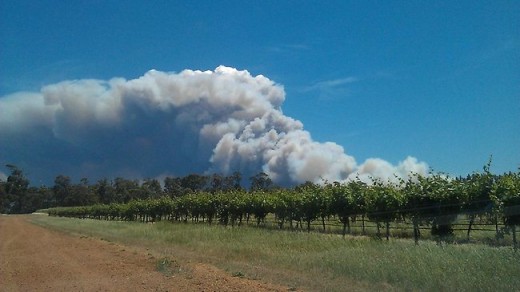
- Sue the arsonist bastards, DEC and the WA Government, jointly in a community-wide class action.
- The ‘blame game‘ phrase is standard defence language of the culpable to try to divert accountability. When someone’s negligence causes your house to burn down, legal justice allows for fair compensation to the victims of negligence. If culpability is proven, compensatory damages are payable by the culpable to restore a victim to the position before the negligence. The fact is not one of discretionary moral blame. It is a fact of culpability. Most criminals will argue black and blue that they are never to blame. They will point to the system, to critics, to the messengers, even to the victims, to anyone but themselves.
- The Premier Colin Barnett has promised a full inquiry into the Department of Environment and Conservation’s handling of the Margaret River fire an hour after the department denied culpability. Barnett’s offer of $3000, to declare Margaret River a disaster area, to spend money on a full enquiry are standard means of government to capture and dissipate community anger so over time all will be forgotten and DEC and FESA business as usual may resume.
- DEC set fire to the environmentally protected Leeuwin-Naturaliste National Park.
- DEC allowed a prescribed burn to get out of control
- Hundreds of people were affected and many have lost everything and will never fully recover – financially, physically, emotionally, as a community
- The full direct and indirect cost of bushfire suppression including the 100 odd firefighters, aircraft and support organisations – must be worn by DEC
- An untold because unknown number of wildlife have suffered and been killed, and perhaps causing or contributing to local extinctions – an independent (DEC-funded) zoological and ecological assessment is called for, with results to be made public.
.
.
Selected Comments from the Community:
‘Well done DEC (Destroy Everything Completely). You have screwed up royally by destroying people’s homes and destroying the environment and the wildlife there. I hope you are proud of what you have done you morons. You knew about the weather conditions and still went ahead. My thoughts go to the people who have lost everything thanks to DEC. My thanks go to the fire fighters who always put in no matter what. They, along with the cops and ambos and the volunteers who will no doubt be there to help everyone, are champs. Stay safe people.’
~ It is I of Perth, posted 20111124
.
‘The time has come to finally get rid of the most incompetent organisation in W.A., the criminal damage they cause to property, humans, wildlife and habitat is beyond comprehension. They create problems where ever they are based to justify their own exsistance.they are also destroying local tourism with their ‘jack boot’ mentality.’
~ the girrawheen oracle, , posted 20111124
.
‘Just having been to Marg River for holidays (the third in 3 yrs to this area) I cannot believe they did a prescribed burn at this time of year in that area I live in Port Lincoln and my house was very close to being burnt down two years ago in our fires .My heart goes out to those people who have lost everything as many of my friends did in our fire .I love the sou west area and stayed at the Margarets beach resort last year hopefully it can be saved as it’s a fantastic resort.Stay safe and stenghth to those who have to pick up the pieces to those who made the decision to burnmshame on you and goodluck sleeping at night as the lives you have shattered are on your consciences. To all those fighting the blaze goodluck and stay safe our prayers are with you……’
~ Mark Wright of Port Lincoln South Australia,, posted 20111124
.
‘My sympathies to the people who have lost homes, need to be relocated and to the animals that were caught in the blaze! Thankyou to the firefighters, ambos and police who will tirelessly work through the days and nights! My fiancé is a police officer. We live in ravensthorpe (2 hrs from esperance) and he has been called to Denmark to help. I hope he stays safe and I am crossing my fingers that nobody will be injured or killed while this fire rages on.’
~ Shouldhavebetterthingstodo of Ravensthorpe,, posted 20111124
‘Firefighters are our heroes but their bosses are twerps.Maybe they will implement the Keelty report recommendations now but then maybe not!’
~ boocuddles, , posted 20111124
.
‘I’m on the surf coast in Victoria and our controlled burns always get out of control! I have family in margs (Margaret River) and friends in prev (Prevelly) so be safe love to everyone helping out. Let’s see the end of these “prescribed burns”‘
~ jodie of victoria, , posted 20111124
.
‘When a cop accidently starts a bushfire with an angle grinder he is charged and prosecuted by police. I wonder if the person/department responsible for this bushfire will also be charged and prosecuted?’
~ Wots good for the Goose, , posted 20111124
.
‘Just the inept DEC (Department of Everything) causing sorrow and mayhem again. There needs to be a full enquiry into all of the DEC doings. They are corrupt, vindictive, horribly inept and almost above the law. Disband the DEC and let’s start again with a fresh honest department.’
~ Dave, posted 20111124
.
‘Let’s see the end of these “Prescribed Burns”. Living in the foothills of Perth, every fine day during the winter months, you see that plume of smoke as CALM lights yet another fire, and in the morning the smoke haze can be seen in the distance, the excuse is to stop wild fires, therefore reduce loss of life and property. People choose to live in wooded areas and know the risks, I was one of them and loved the way of life until I had to come back to live in the burbs, with every hectare CALM burn. How many animals are killed or loose their homes, how many birds nests are burned down during their breeding season in Spring, and how many people with respiratory problems like myself end up sick because of the continuous smoke haze from “prescribed Burning”? Let’s start to do something to stop this legal arson. For goodness sake, doing a so called “prescribed Burn” on a 36 degree day with high winds is stupidity. The person who allowed it should be sacked and sued by the people who lost their homes. Couldn’t agree more!
~ b of a, , posted 20111124
.
‘My family have just lost there house in Prevelly…..’
~ Liz of Jandakot, posted 20111124
.
.
Further Reading:
.
[1] ‘ A Shared Responsibility: The Report of the Perth Hills Bushfire February 2011 Review‘, by Mr Mick Keelty APM AO, ^http://sharedservices.servicenet.wa.gov.au/bushfire/Perth_Hills_Bushfire_Report_Feb_2011.pdf, [ Read Full Report – 8MB]
.
Tags: Caves Road, DEC, Department of Environment and Conservation, escaped burn, Gnarabup, hazard reduction, Keelty Report, Margaret River Bushfire, Margaret River Fire, Master Burn Planning, prescribed burning, Prevelly, State Arson, State-sanctioned Arson, strategic bushfire protection, United Firefighters Union, Western Australian Government
Posted in Threats from Bushfire | 3 Comments »
Add this post to Del.icio.us - Digg
Wednesday, November 23rd, 2011
‘Don’t clear-fell History… let’s have another vision’
[^RechercheBay.org]
… but try telling Forestry Tasmania’s out-of-control logging thugs:
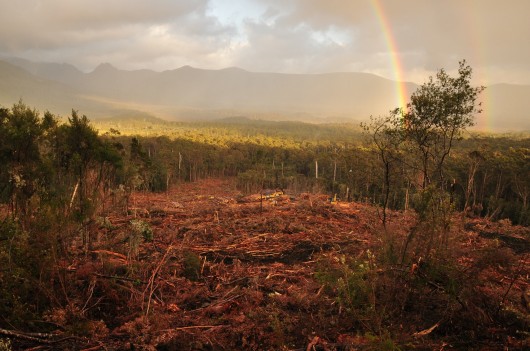
State Slaughter
Tasmania’s precious ancient Southern Forests at Catamaran, today 23rd November 2011
Out of Control State Logger ‘Forestry Tasmania‘ defies the 7th August 2011 moratorium on logging Informal Reserves.
Logging Coupe CM004C (above photo) is a breach of the 2011 Tasmanian Forestry Agreement, Clause 25
[Photo courtesy of Huon Valley Environment Centre ^http://www.huon.org/]
(click above photo image to enlarge, then click again to enlarge again)
.
.
Forestry Tasmania’s supposed ‘Sustainability Charter’:
.
‘The sustainability charter is a forest management plan that reflects FT’s role as stewards of the forest.
The document guides FT’s decision making over the next ten years,
and outlines how our commitment to sustainable forest management
and protection of the environment will be balanced with responsible economic and social outcomes.’
.
[Source: ^http://www.forestrytas.com.au/sfm/sustainability-charter, Read Charter]
.
Ed: What Crap!
.
 The fading farce of forestry’s promise The fading farce of forestry’s promise
.
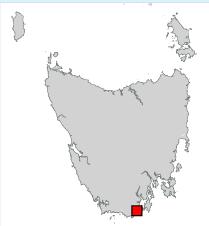 ‘Catamaran Forests’ location in southern Tasmania, near Hobart ‘Catamaran Forests’ location in southern Tasmania, near Hobart
.
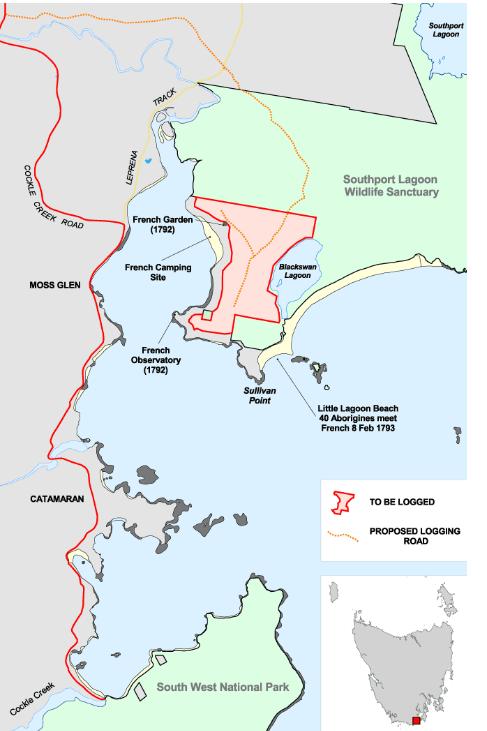 Old map showing relative position of Catamaran Forests (left) of Recherche Bay Old map showing relative position of Catamaran Forests (left) of Recherche Bay
^http://www.recherchebay.org/maps/index.html
.
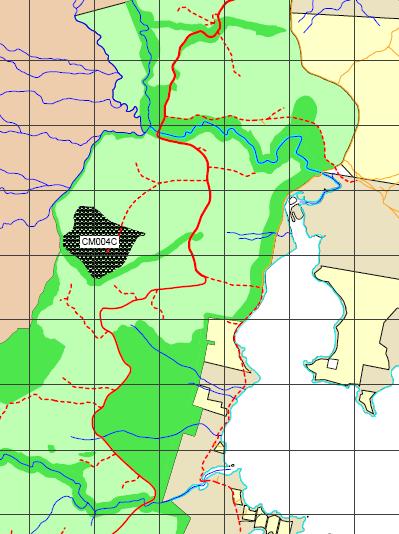 Forestry Tasmania’s map of Coupe CM004C (black area), situated east of Moss Glen
[Source: ^http://www.huon.org/, [Read PDF map] Forestry Tasmania’s map of Coupe CM004C (black area), situated east of Moss Glen
[Source: ^http://www.huon.org/, [Read PDF map]
.
Forestry Tasmania is scheduling provocative new logging in areas that will impact the habitat of vulnerable species like the Tasmanian giant freshwater lobster, Tasmanian devil, Tasmanian wedge-tailed eagle and the spotted-tailed quoll.
And do they have a care factor beyond their pay packet?
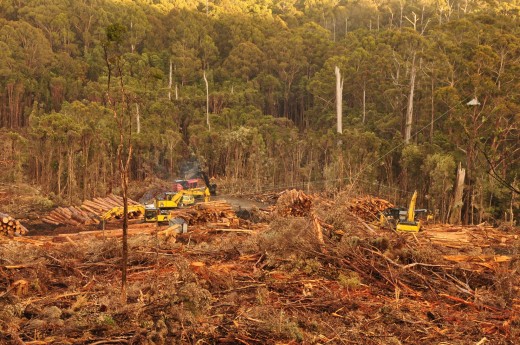 Gotcha Forestry Tasmania! Gotcha Forestry Tasmania!
State Logger ‘Forestry Tasmania’ photographed today logging native forests at Catamaran inside the IGA’s excluded 430, 000ha Informal Reserves.
(Wednesday 23rd November 2011)
Catarmaran forests are IGA Informal Reserves as designated by the Independent Verification Process.
(click above photo image to enlarge, then click again to enlarge again)
.
.
Above is forestry reality, while the following is forestry greenwash…
.
 . .
Forestry Tasmania: ‘Vision’
‘Tasmania’s state forests will be a globally trusted source of sustainable timber and other forest products and services for this and future generations.’
.
Forestry Tasmania: ‘Mission’
‘Forestry Tasmania manages state forests for optimum community benefit, using environmental best practice to create long term wealth and employment for Tasmanians.’
.
Forestry Tasmania: ‘Corporate Objectives’
- To embrace science to achieve best practice environmental stewardship and maintain Australian Forestry Standard certification.
- To create long term business and employment opportunities for the community by managing the forests for multiple use and encouraging down stream processing.
- To achieve positive financial returns through sound, ethical business practice.
- To build community trust through honest dialogue.
.
FT Values:
- We care for people and their environment
- We get things done.
- We do what we say we will do.
- We are proud of who we are and what we do
- We think before we act.
.
Forestry Tasmania has the statutory responsibility for the management of 1.5 million hectares of State forest land. This land contains 39% of the Tasmania’s forests.
About half the forest managed by Forestry Tasmania are available (to us) for ‘sustainable’ timber production (aka clearfell logging, incineration then conversion to plantations – i.e no ecological future).
.
[Source: ^http://www.forestrytas.com.au/about-us ]
.
.
And the forestry reality…‘Forestry Tasmania posts $12 million loss’
[Source: by Patrick Caruana, AAP, 20110829, ^http://www.news.com.au/business/forestry-tasmania-posts-12-million-loss/story-e6frfm1i-1226124330440]
.
‘Forestry Tasmania has posted a $12 million loss, which it says is due to mill closures and the recent inter-governmental agreement on the sector. The state-owned company lost $12.09 million for the 2010-11 financial year, a marginal improvement on the previous year’s loss of $12.26 million. It will not pay a dividend to the Government.
Managing Director Bob Gordon said the closure of timber company Gunns’ mills around the state had hurt the company’s bottom line.
“Effectively, Gunns shut Triabunna, Burnie and the two Bell Bay chip mills at the same time in February-March,” Mr Gordon told reporters in Hobart today.
“In normal circumstances, that would’ve accounted for about two million tonnes a year of our sales, and they disappeared with about two weeks’ notice.”
Mr Gordon said Gunns was Forestry Tasmania’s single biggest debtor.
“We believe that Gunns owes us a bit over $25 million,” he said.
“Of that, about half to two thirds is in dispute. And by dispute, I mean Gunns aren’t paying us. But we believe that we’re on very solid legal, contractual grounds.”
Mr Gordon said the recent intergovernmental forestry agreement, which protects 430,000 hectares of high conservation value forests, was responsible for a substantial writedown in the company’s assets.
“The effect of the proposed extra reservations in the intergovernmental agreement led to writedown of about $100 million in the company’s forestry assets,” he said.
Mr Gordon said the company would now focus its efforts on new rotary veneer technologies, rather than sawlogs and woodchips.
He said Forestry Tasmania would look to open mills around the state capable of creating rotary veneer products in coming years.’
.
.
Bob Gordon’s last statement above…
“Forestry Tasmania would look to open mills around the state capable of creating rotary veneer products in coming years.”
.
Editor:
So if rotary veneer products are Forestry Tasmania’s new timber product strategy using only ‘Tasmanian Regrowth Timbers’, what the hell is FT doing today sending in its logging thugs to eco-rape Tasmanian old growth at Catamaran?
Is there a corporate dysfunctional addiction to ‘old-growth’? Is Old Growth Hate so systemic in FT as to be psychotic and so out of control?
Where is logger patsy Lala?
.
.
In Bob Gordons’ 2008 press release:
.
‘Forestry Growth Plan’
.‘In 2007, the local community celebrated with Malaysian-based company Ta Ann, as its first Tasmanian rotary veneer mill was opened.
When Premier Paul Lennon officially opened Ta Ann Tasmania’s Huon rotary veneer mill in May 2007, it marked the culmination of many years of planning and persistance by FT to attract private sector investment to our State’s wood processsing industry.
FT’s plan in developing the Wood Centre was to provide the foundation for companies such as Ta Ann to invest with confidence in Tasmania. We have now seen the reward of this foresight, with a major project brought to fruition and 60 new jobs created for the people of the Huon Valley.
Projects such as this, which develop innovative, high-quality products from regrowth timbers, will lead the way as the industry gradually makes the transition out of old growth timber.
This growth in jobs is not only good news for the Huon region, it is good news for Tasmania as a whole. Economist Dr Bruce Felmingham has estimated that the State’s economy will grow by some $32 million as a result of this increased employment.
The rotary veneer mill also delivered on Forestry Tasmania’s long-term plan to find new ways of adding value to Tasmanian regrowth timber.
This mill will produce high-quality veneer from regrowth logs that would otherwise be classified as pulpwood. This value-added product will ensure that Tasmania receives the maximum return from its timber.
Already, Ta Ann is receiving a very favourable response to Tasmanian eucalypt veneer through market trials with its Japanese customers. The product is highly regarded in this market for its strength and durability.
In fact, Ta Ann is unable to meet the market demand for this product from the Huon mill alone. We were pleased to see the official start of work in May 2007 on the company’s second veneer mill at the Circular Head Wood Centre.
Tasmania’s ability to supply sustainable wood products has provided Ta Ann with a competitive advantage in its overseas markets.
Ta Ann services major customers, who demand that the timber they purchase is verified as being harvested from sustainable sources.
Tasmania’s reserve system, which surpasses international benchmarks, and Forestry Tasmania’s certification under the Australian Forestry Standard provide this verification.
Forestry Tasmania will continue to develop the Wood Centre to its full potential as an integrated timber processing facility. The Wood Centre will ensure that every piece of timber brought to the site is used to its most valuable end. It will also continue to support the Huon community with investment and employment opportunities.’
Bob Gordon
Managing Director
[Source: Forestry Tasmania website ^http://www.forestrytas.com.au/voices/bob-gordon, accessed 20111123]
.
Ed: And so today Bob’s logging thugs have been caught on camera logging Catamaran old growth.
 . .
.
Tags: Bob Gordon, Catamaran, Catamaran Forests, Coupe CM004C, Forestry Tasmania, Forestry Tasmania out-of-control, Huon Valley Environment Centre, logger patsy Lala, Recherche Bay, State Slaughtered, Tasmanian Forestry Agreement, Tasmanian Southern Forests
Posted in Tasmania (AU), Threats from Deforestation, Threats from Greenwashing, Threats to Wild Tasmania | No Comments »
Add this post to Del.icio.us - Digg
|
|
 Blue Gum Forest, Grose Valley, Blue Mountains
[Source: AK Bushwalks, ^http://mywebdots.com/bushwalks/?page_id=26]
Blue Gum Forest, Grose Valley, Blue Mountains
[Source: AK Bushwalks, ^http://mywebdots.com/bushwalks/?page_id=26]
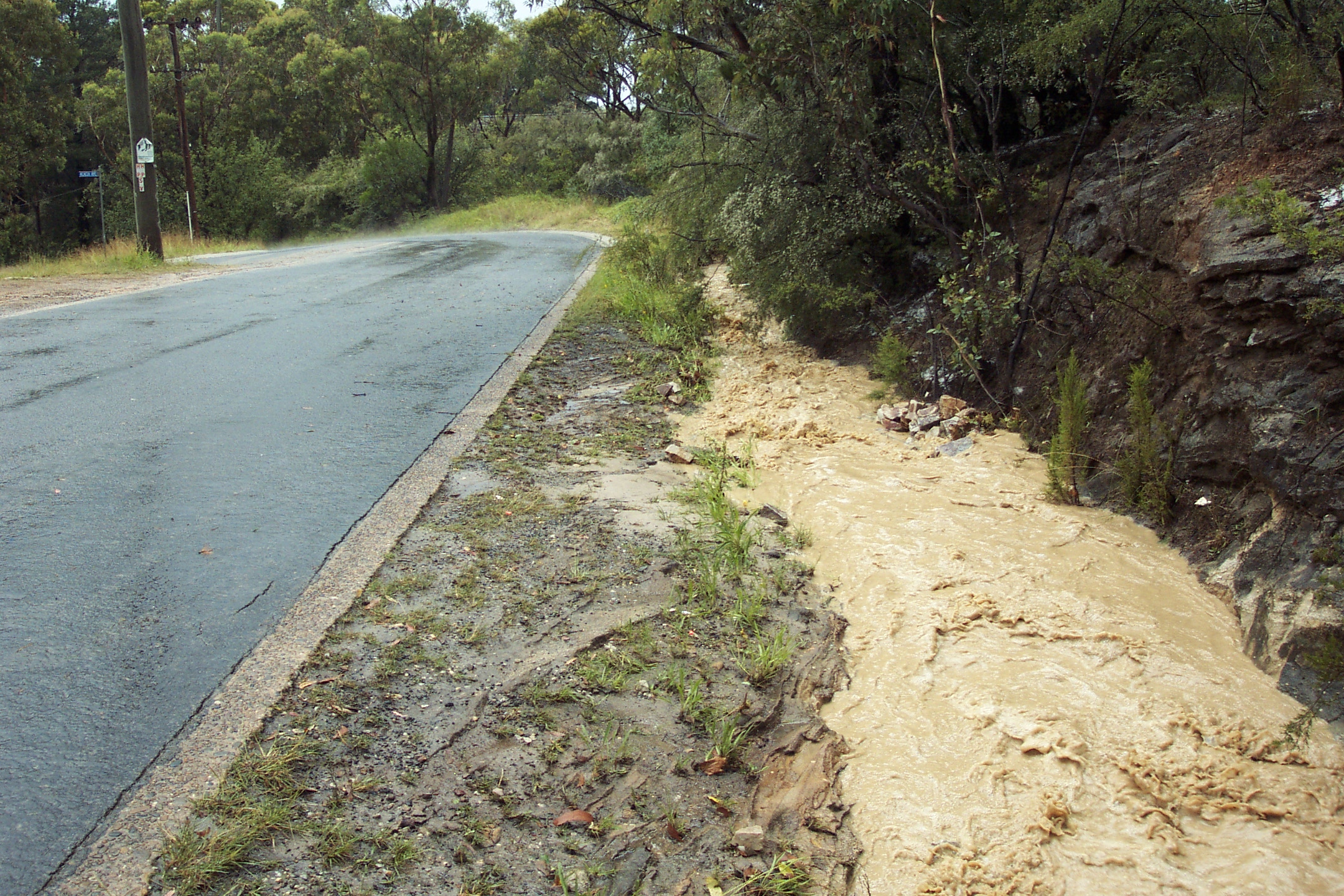 Caramel-coloured construction sediment from the RTA’s Trucking Expressway
Leura, Blue Mountains 2006
(click photo to enlarge, the click again to enlarge again)
Caramel-coloured construction sediment from the RTA’s Trucking Expressway
Leura, Blue Mountains 2006
(click photo to enlarge, the click again to enlarge again)
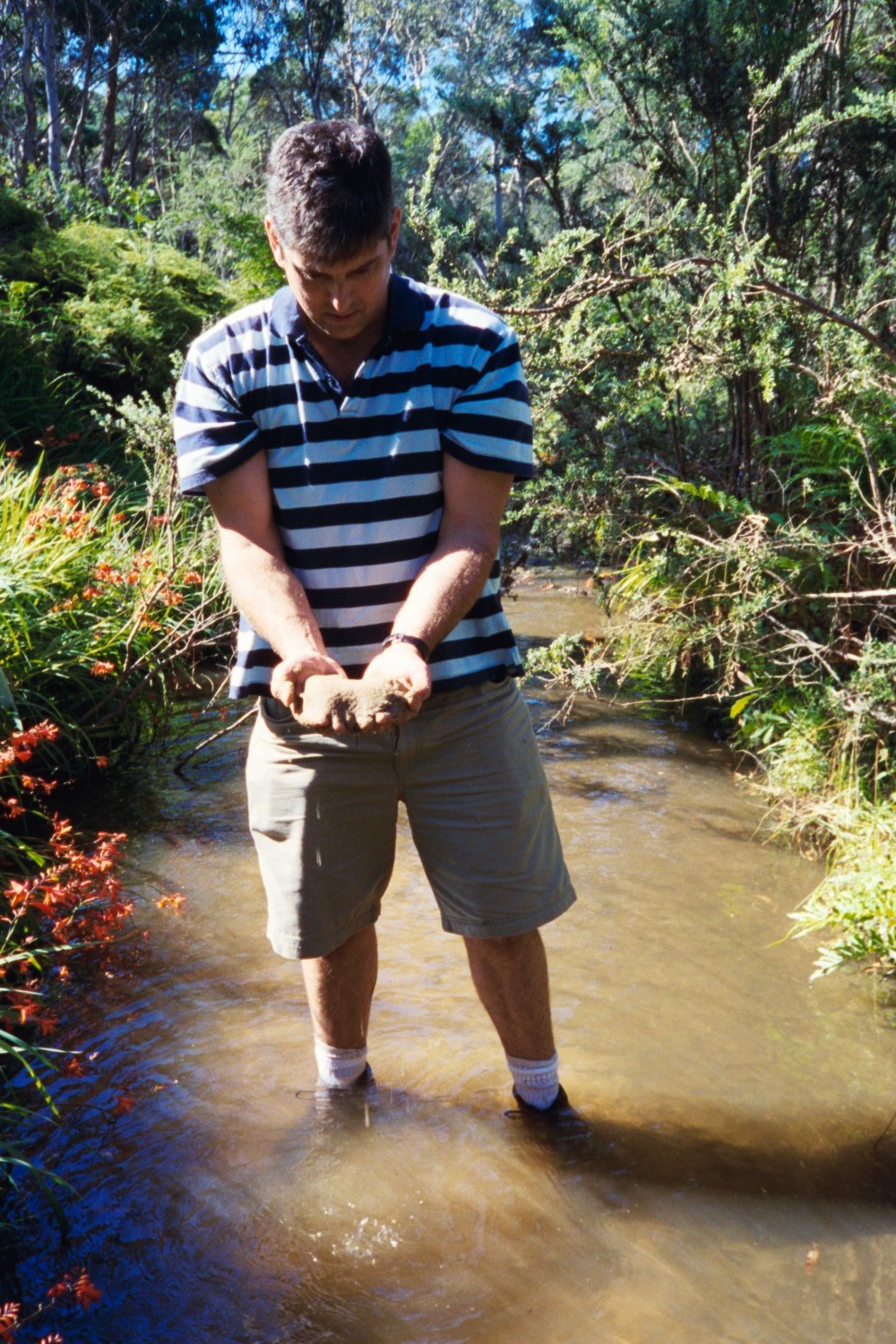 RTA sediment from the upstream Trucking Expressway development
polluting Govetts Creek inside the Blue Mountains World Heritage Area.
Photo of Editor in Govetts Creek, Leura, Blue Mountains 2006
RTA sediment from the upstream Trucking Expressway development
polluting Govetts Creek inside the Blue Mountains World Heritage Area.
Photo of Editor in Govetts Creek, Leura, Blue Mountains 2006