These are Forestry Scabs:
Forestry Scabs of clearfelled Tasmanian endangered old-growth forests
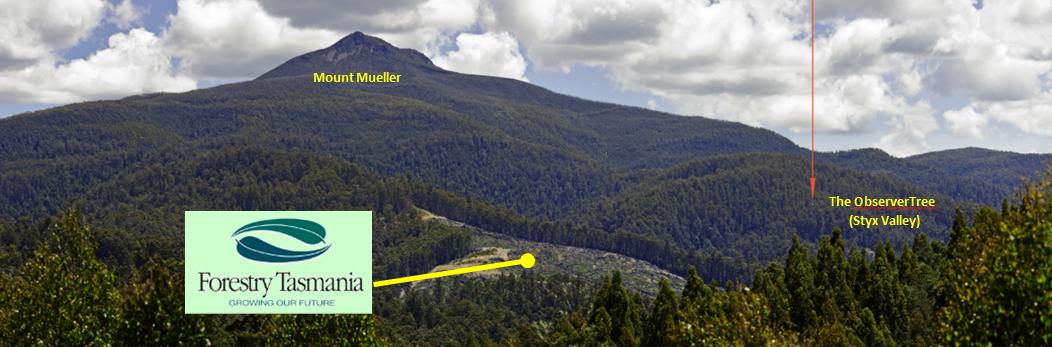
Google Earth reveals the clearfell truth behind the Forestry propaganda
(Click satellite image to enlarge – note environmental protestors’ ObserverTree)
To download Google Earth software (93MB), go to: ^http://www.google.com/earth/index.html
.
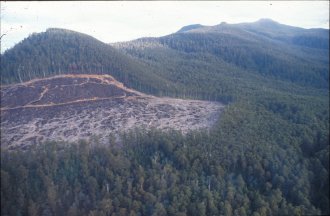
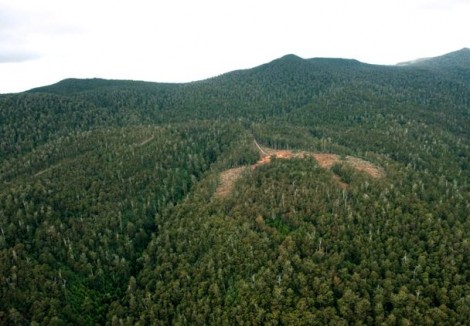
This is an aerial close up of Forestry Scabs:
Forestry Scabs pocking the endangered Upper Florentine Forest, 2011
.
This is the ‘Forestry Plunder’
Old Growth which in the case of the Styx Valley, Forestry Tasmania labelled ‘Coupe SX015‘
.
Recall 2006: ‘Forests protected: another tall story‘
Two days after the election the police moved into the Styx Valley to apprehend a small band of protesters. An arrest was made and a 70-metre-tall tree holding a protest platform was blown up! Cable logging was set to resume in the Styx Valley of the Giants.
Yet last year both the state and federal Governments claimed that they had saved the giant trees of the Styx. Indeed, they claimed to have resolved the entire forests debate.
This week’s developments have given the lie to those claims. Not only is logging making a comeback in the Styx; it is also about to start in parts of the Weld and Upper Florentine that have never before seen a chainsaw. Other key areas are likely to follow, from the Tarkine in the far north-west, where there are still 400 square kilometres of threatened oldgrowth forest, to South Sister on the East Coast, Bruny Island in the south and the beleagured north-east highlands.
The Styx case is a classic example of how the governments deal with forest issues. One of the new reserves they have promised to create is the 336-hectare Styx Tall Trees Forest Reserve. This reserve occurs on either side of Skeleton Road, the road up which 4000 people marched on a cold, drizzly day in July 2003 to protest at logging.
The Reserve’s southern boundary occurs very close to the huge stump on which speakers at the rally delivered their speeches. The reserve contains several well-known giants, including the Chapel Tree — an 85-metre-tall giant which is the second most massive known living thing in Tasmania. It also contains the Mount Tree and Icarus Dream, which, at 96 and 97 metres respectively, are the tallest known trees in the Southern Hemisphere. The Two Towers, Gothmog, the Perfect Tree and the Andromeda Twins are other registered giants within the reserve.
Declaration of this reserve will be very welcome. However, cold hard scrutiny reveals that very little loggable forest has been conceded by the industry here. About 20 hectares were already in the informal Andromeda Reserve, which contains some of the tall trees mentioned above. In addition, Forestry Tasmania’s Giant Trees policy and protocols, adopted in the wake of the El Grande debacle, require the establishment of buffers of at least 100 metres radius around each registered giant. The abundance of giant trees in this patch of forest means that logging had already been severely curtailed.
In essence, the creation of the Styx Tall Trees Reserve is a minimalist recognition that little logging could have proceeded amongst these statuesque giants anyway.
.
Protected the bare minimum area
.
A look at the mapped boundaries of the reserve shows them to be very convoluted. That’s because the reserve has been designed to accommodate areas planned for logging.
Last year, Forestry Tasmania scheduled 26-hectare coupe SX18F. This created a cable-logged cut on the steep slopes immediately south-east of the Reserve. The imminent destruction of the tall oldgrowth forests in coupe SX15A will mark the southern edge of the reserve. Immediately west of the reserve is the already-logged SX13D and the scheduled SX13K. Later in the logging schedule come SX18E and SX13J.
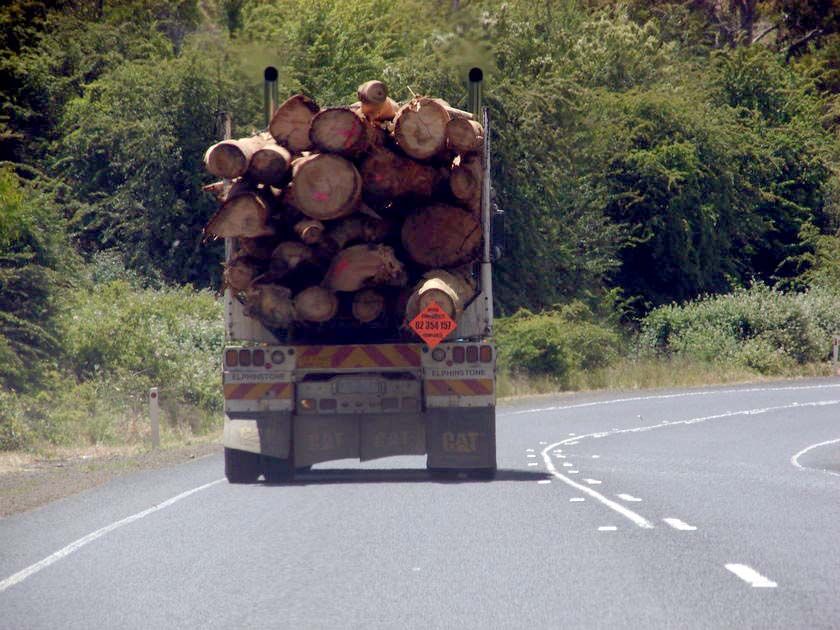
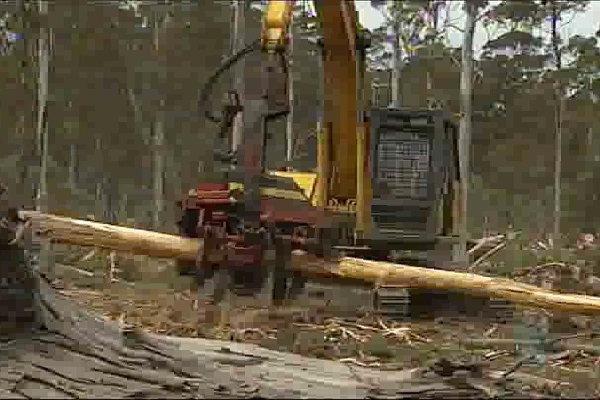
Forestry Tasmania logging the Styx Valley of its ancient old growth
.
The conclusions to be drawn from this are simple.
Forestry Tasmania protected the absolute bare minimum area of tall-eucalypt forest in the Styx Tall Trees Forest Reserve.
.
“Forestry Tasmana is now embarking on a program of ringing the reserve with new coupes. This appears to be an obvious bid to pre-empt any future expansion of the reserve. This strategy will have the effect of isolating the giants from adjacent protective forest. The reserve will become increasingly prone to the ‘edge effects’ of fire, wind and disease. This situation is not assisted by the messy design of the reserve.”
.
Forestry Tasmania will claim that it has protected these giants and met all of its legislated obligations. In fact, Forestry Tasmania has still failed to meet the targets set in the RFA for the protection of oldgrowth Eucalyptus regnans — the tallest flowering plant on Earth.
The Howard Government has been a party to this sham, providing millions of dollars of taxpayers’ funds to the logging industry and state government as ‘compensation’.
.
‘Forests Onslaught to Follow Election’
.
by Geoff Law, Tasmanian Campaign Coordinator, The Wilderness Society, 20060318, comment to an article in the Tasmanian Times of a speech made by Richard Flanagan, Parliament House Rally, Hobart, 16 March 2006, ^http://tasmaniantimes.com/index.php?/article/we-will-not-give-up/]
.
‘An onslaught of burning, logging and clearing in Tasmania’s forests will follow Saturday’s election, according to the Wilderness Society.
“New logging operations in the Styx, South Sister, Weld and Jackeys Marsh, huge new areas of tree-clearing, and another 30,000 hectares of burning are set to follow the election,” said the Society’s Tasmanian Campaign Coordinator, Geoff Law.
The burning program is set out in a brochure about forestry burn-offs distributed by Forestry Tasmania and FIAT in the Derwent Valley Gazette on Wednesday. It says: This autumn, the forest industry plans to prepare about 30,000 hectares of land for planting or sowing in patches scattered across Tasmania.
Logging is also poised to move into contentious forests in the Upper Florentine, at South Sister and unprotected parts of the Tarkine.
Mr Law said that his warning was based on:
Forestry Tasmania’s attempt to log coupe SX15A in the Styx Valley, which was put on hold two weeks ago after the efforts of a handful of protesters. The logging machinery is poised and ready to go as soon as the election is out of the way.
Forestry Tasmania’s interim draft Three Year Plan which has scheduled almost 16,000 hectares of tree-clearing for this calendar year as well as logging at South Sister, Jackeys Marsh, in the Weld and Upper Florentine Valleys and unprotected parts of the Tarkine
The brochure on burning, which presents ‘Facts about the forest industry’s planned burning program during Autumn’ and which foreshadows 30,000 hectares of burning this autumn.’
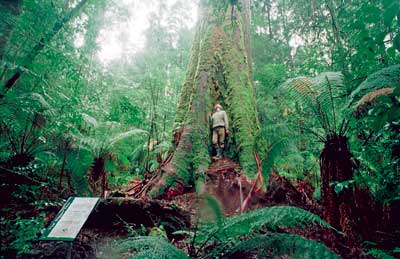
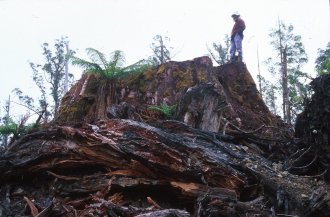
A Styx Legacy
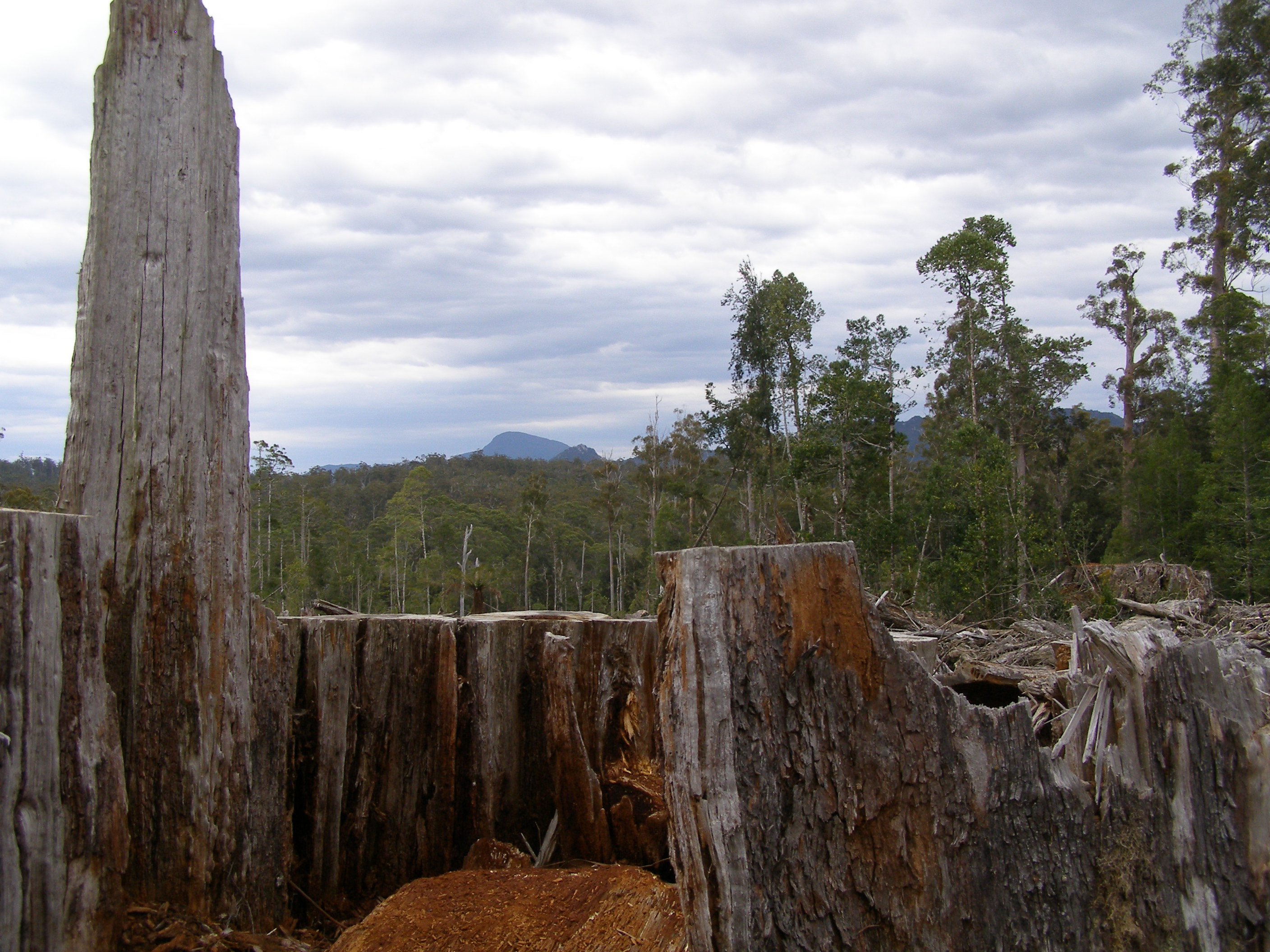
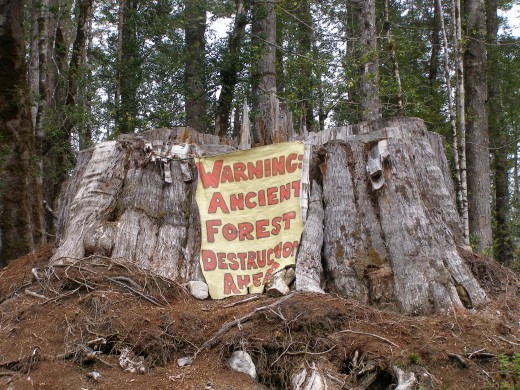
A Eucalyptus regnans giant stump is all that remains of one of the huge trees
felled to make way for the logging road in coupe SX 15A in the Styx Valley.
^http://www.lexicon.net/peterc/Tasmania/Tas01.htm
.
‘Forestry Tasmania’s Sustainability Charter for Threatened species, communities and habitats‘
.
“Aim: Maintain viable populations of all existing animal and plant species and communities found in State forests. This will involve:
Increasing understanding of ecology and habitats of threatened species and communities and implementing appropriate management
Active participation in the management of threatened species, communities and habitats
Implementing specific strategies to protect threatened species and their habitats.”
.
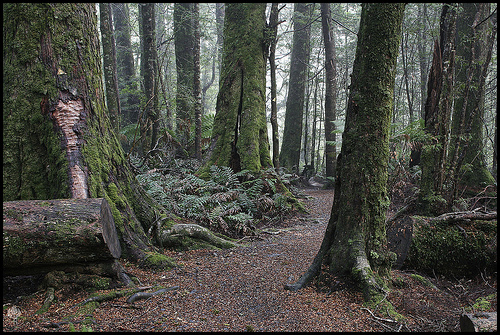
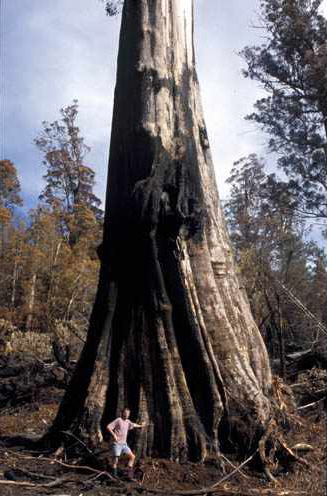
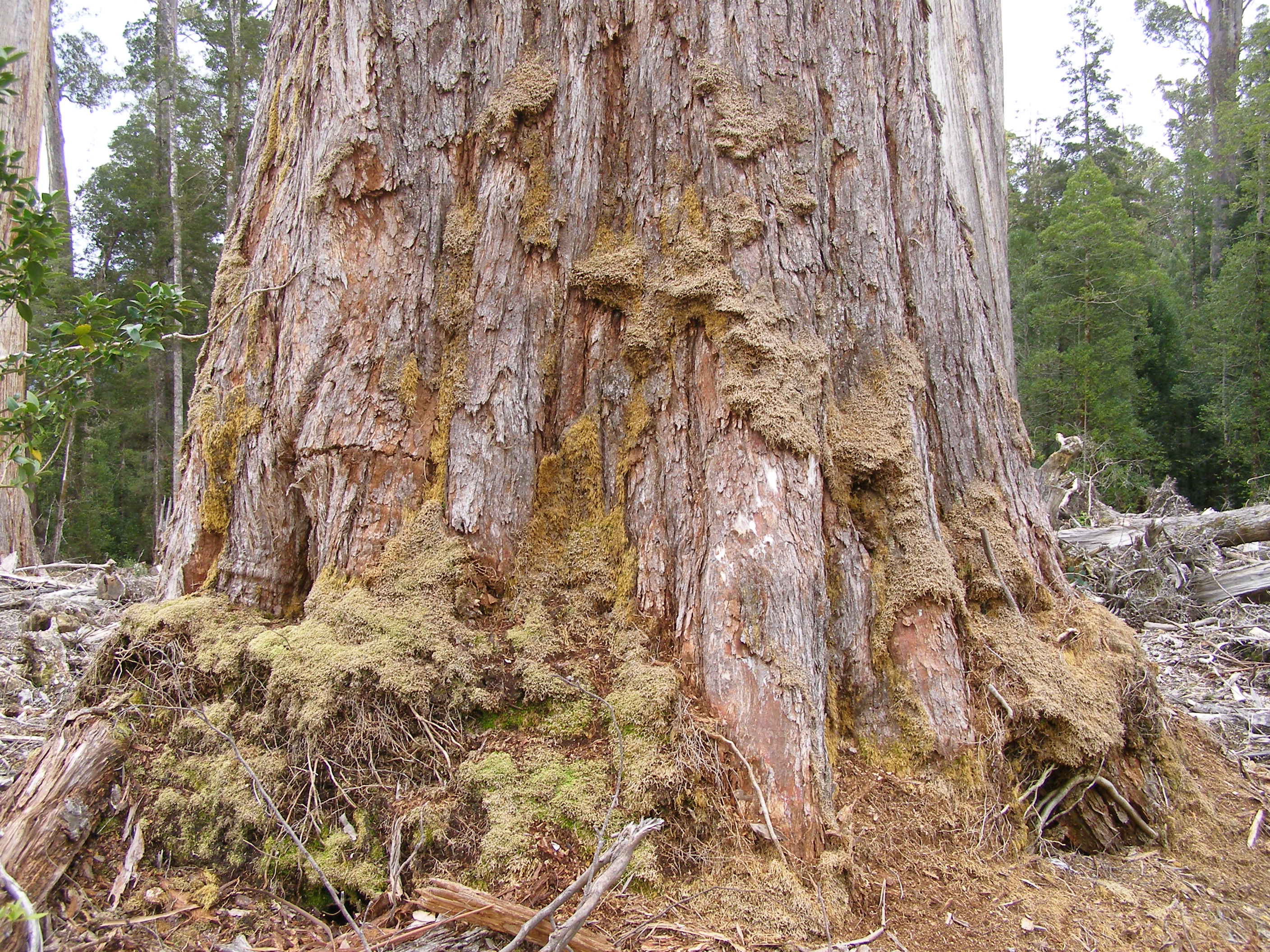
A rare giant Eucalyptus regnans of the nearby Upper Florentine
(Photo by Editor 20110928, free in public domain, click photo to enlarge)
.
2012 Year of the Forestry Scab?
.
In late 2011 and now going into 2012, Forestry Tasmania are at it again, trying to clearfell the Styx Valley of its old growth.
Get the lastest from the forest protest at The ObserverTree below Mount Mueller in the Styx Valley.
In February 2010, at the advent of the Chinese Year of the Tiger, the World Wildlife Fund (WWF) reported that tigers were in crisis around the world. With as few as 3,200 left of this endangered species compared to 100,000 a century ago, it was clear that this would be the vital tipping point for tigers.
Two key causes of the tiger’s plight are (1) poaching to feed consumer demand for tiger body parts, mostly for use in traditional Asian medicines (TCM) and folk remedies, and (2) deforestation as more and more forests are cleared for paper and palm oil, tiger habitat disappears daily.
.
‘New Study shows Bengal Tiger’s Habitat in Danger’ .
..
A new study by WWF scientists and partner organizations has found global climate change could shrink Bangladesh’s Sundarbans tiger habitat by 96 %, potentially reducing the tiger population to fewer than 20 breeding individuals!
An estimated sea level rise of 11.2 inches above 2000 levels by 2070 means this unique mangrove ecosystem could disappear within half a century.
The Sundarbans delta is the largest mangrove forest in the world.
This UNESCO World Heritage Site is shared by India and Bangladesh and sits at the mouth of the Ganges River. It is home to an estimated 254-432 Bengal tigers, the only tiger population adapted to live in mangroves. The tigers here regularly swim between islands and are the only tigers to have crabs and other seafood as an important part of their diet.
The area is an amazing ecosystem that houses a plethora of species including the spotted deer (the tiger’s prey), water birds, many kinds of fish, marine mammals, crocodiles, and snakes. The landscape naturally protects the area from natural disasters such as cyclones, storm surges, and wind damage. The mangroves are home not only to endangered fauna like tigers, but also to several million people who depend on the Sundarbans for their livelihoods.
The Bengal tiger population has already been under threat from poaching and habitat destruction and loss, and research suggests that the seas may be rising faster than originally thought.
Worldwide, tigers occupy only 7 percent of their historic range with as few as 3,200 left in the wild. The study encourages local governments to take immediate action to conserve and expand mangroves while cracking down on poaching. It suggests that globally, countries should work strongly on reducing greenhouse gas emissions in order to save the Sundarbans.
The Siberian tiger is a tiger subspecies inhabiting mainly the Sikhote Alin mountain region with a small subpopulation in southwest Primorye province in the Russian Far East. In 2005, there were 331–393 adult-subadult Amur tigers in this region, with a breeding adult population of about 250 individuals.
The main threats to the survival of the Siberian Tiger are (1) poaching, (2) habitat loss, and (3) illegal hunting of ungulates, which are tigers’ main prey (Ed: looks similar to a lama). Because they increase access for poachers, roads are another important threat to the Siberian tiger. Intrinsic factors such as inbreeding depression and disease are also potential threats to this big cat, but are less understood.
The Siberian tiger (Panthera tigris altaica), also known as the Amur tiger
.
Poaching
.
Roads in Amur tiger habitat, Russian Far East Wildlife Conservation Society (WCS) research has demonstrated that human-caused mortality accounts for 75-85% of all Amur tiger deaths. Current estimates indicate that 20-30 tigers are poached in the Russian Far East each year, although actual numbers may be higher.
Population modeling based on Siberian Tiger Project field data suggests that poaching rates exceeding 15% of the adult female population could have dangerous repercussions, especially as tigers have fairly low population growth rates compared to other big cats. Analysis of mortality data in Sikhote-Alin Biosphere Reserve indicates that poaching rates may be at least this high in a significant area of Russian tiger range.
Tigers are most commonly poached for their fur and for their body parts, such as bones, that are used in Traditional Chinese Medicine. The opening of the border between China and Russia after the fall of the Soviet Union has now made it possible to easily transport goods to Chinese markets and beyond. Although tigers are a protected species in Russia, enforcement agencies have very limited ability to catch convict poachers, and, even when this happens, fines are relatively small and disincentives insufficient. Poaching problems are further exacerbated by low incomes in many rural areas of the Russian Far East – sale of a tiger skin and bones represents a substantial source of income for poor people in remote villages.
It is also common for hunters to poach tigers to eliminate competition for ungulates and for locals to kill tigers in retaliation for depredations on domestic animals such as dogs and cows.
.
Habitat Loss
.
In Russia, human population growth does not threaten habitat as it does in many other tiger-range countries. However, activities such as logging, grazing, various development projects and uncontrolled fires are all resulting in direct habitat loss in the Russian Far East. Habitat is increasingly being divided into isolated patches, particularly at the southern edge of Amur tiger range.
Logging takes place in most of Amur tiger habitat. Although existing guidelines for timber harvest are actually quite sufficient, significant illegal logging and overharvest still occur. Selective logging, rather than clear cutting, is most common in tiger habitat, and does not seriously impact the quality of the habitat, if access to the extensive road system is controlled (thereby limiting poaching).
Fires are another important form of habitat loss. Many local residents consider fires to be the main cause of loss of forest habitat in parts of Primorsky Krai, and Amur tigers avoid areas that have burned, as they provide neither adequate cover for hunting, nor the habitat needed for prey.
.
Illegal Hunting of Ungulates
.
Illegal hunting of ungulates such as deer and wild boar significantly reduce prey availability for tigers. While official estimates continue to report stable numbers of ungulates, many hunters and wildlife biologists believe that abundance of ungulates in the Russian Far East has decreased considerably over past 15 years. Analyses from WCS’s Amur Tiger Monitoring Program clearly demonstrate that ungulate numbers are often 2-3 times higher inside protected areas, which are nonetheless impacted by poaching, though to a lesser extent.
Low ungulate numbers also foster a sense of competition between hunters and tigers. When ungulates numbers are low, it is easy to blame tigers, even when the root cause of population declines is over-harvest by humans. When there is little prey available in the forest, tigers sometimes enter villages and prey on domestic animals, including dogs and livestock, which creates tiger-human conflict situations.
.
Roads
.
The number of roads in Amur tiger habitat is increasing steadily as logging activities and development push into even the most remote regions. Besides allowing greater access for poachers, roads increase tiger mortality from vehicle collision, and increase the probability of accidental encounters between tigers and people, leading to tigers being shot out of fear or opportunity.
Roads also provide poachers greater access to ungulate habitat, which reduces tiger prey abundance. Roads can be divided into two categories: primary roads, which are maintained year-round and provide access between villages and towns; and secondary roads, which are not regularly maintained but nonetheless allow access.
From 1992 to 2000 the Wildlife Conservation Society studied the fates of radio-collared Siberian tigers living in areas with no roads, secondary roads and primary roads. Our findings:
100% survival rate for adult tigers living in areas with no roads
89% survival rate for adult tigers living in areas with secondary roads
55% survival rate for adult tigers living in areas with primary roads
.
These results clearly demonstrate that the presence of both secondary and primary roads both greatly increase the odds of tigers being poached, and indicate the need for road closures and access control. (Ed. Main roads contribute to tiger road kill reducing tiger populations by about a half).
The number of tigers in the world has diminished at an alarming speed in recent years, global conservation group WWF cautioned on Wednesday, blaming poaching for much of the decline. “We are left with roughly 3,500 tigers (2008) all around the world now,” Bivash Pandav, a tiger specialist at the World Wildlife Fund, said, pointing out that “five years back, the estimate was around 5,500 to 6,000.” [Ed: In 2010 total world population was 3,200, and in 2011?, 2012?]
.
In India, which is home to nearly half of the world’s tigers, or 1,400 animals,
the number of the big cats has shrunk by 60% over the past three to four years!
…Pandav said during a visit to Sweden.
A century ago, some 40,000 tigers roamed the Indian subcontinent, according to the WWF, which singles out poaching, widespread destruction of the tigers’ natural habitat and human hunting of their prey as the main causes of today’s dire situation.
“Poaching is primarily to meet the demand for tiger bones in Traditional Chinese Medicine (TCM)… That’s the immediate reason behind the decline of tigers,” Pandav explained.
“The situation is pretty bad in the sense that they (the tigers) are rapidly being wiped out from many parts of their range,” he added.
.
According to the WWF:
On the Chinese market, a dead tiger can be worth “tens of thousands of dollars”
The United States is the world’s second largest market for tiger products.
.
Despite the daunting challenge of preserving tiger populations, Pandav insisted that “there is definitely hope,” pointing out that big cats “are prolific breeders (and) produce large numbers of offspring.”
“Despite all the problems, there are a couple of places in India (where tigers) are doing pretty well,” he said.
To rectify the overall situation however, the animals need access to forests, food and undisturbed habitats, Pandav said, insisting that the main priority was to protect the tigers from poachers and put “pressure on China to stop the farming of tigers.”
“The Chinese government is actively planning to legalise the trade (of tiger products) and if they legalise this trade then the demand for wild tigers is going to increase many fold,” he said, pointing out that people preferred products from wild tigers over farmed animals. That is going to be the death blow for the tigers in the wild,” he said.
..
‘At the beginning of this year, a ground-breaking, new, and scientific tiger census, which took two years to complete, announced that there were 1,411 wild tigers left in India. By November, the Government had admitted that of that number, 14 tigers had been poached this year. The figure actually may be nearly double.
The poaching cases registered and seizures of body parts of tigers this year show that around 27 of the big cats have been killed in 2008, making the number of wild tigers in India less than even 1,400, and showing that government efforts have failed so far to deter poachers.
“On an average, 25 tigers are poached every year”
.
…says an official from the NTCA. Data compiled by the WPSI shows an equal number, 27 tigers, were killed in 2007.
In January, a tiger survey commissioned by the Government indicated that there were only five-seven tigers left in Panna. Now, tiger experts fear the number may actually be just two. Kanha, also in Madhya Pradesh, lost a tiger to poaching by electrocution, using an 11,000-volt current, this November.
According to data compiled by the Wildlife Protection Society of India (WPSI), there have been 27 instances of tiger skins and parts being found in different parts of the country in 2008. The Wildlife Crime Control Bureau (WCCB), which came into existence this year, recovered a tiger skeleton from Gurgaon and two tiger skins from Himachal Pradesh, a case that involved a Tibetan national.
“Tiger killing may be higher than what recorded numbers tell us,” admits National Tiger Conservation Authority Member Secretary Rajesh Gopal. “Poachers are very clandestine and at times even a tiger carcass may not be found.”
A WCCB official said their main problem was that the trade in tiger parts was trans-country and inter-state, necessitating strong intervention from the Centre.
“Day before, we managed to get a case registered in Bihar for Dariya, a tiger poacher, who was arrested in December in Katni, Madhya Pradesh. A case had to be registered in Bihar where he is suspected to have poached tigers from the Valmiki tiger reserve. We have to expedite history-sheeting quickly to facilitate arrest of poachers who travel and escape extensively,” he added.
“The fact that tiger numbers are going down but poaching remains constant is a huge cause for concern. The number of tigers as per the Census is very low. If we don’t improve protection, India may well lose its tigers,” says Belinda Wright, Executive Director, WPSI.
The tiger census also shows another trend: that India’s tigers are now found only in areas with a high degree of protection, which is sanctuaries or existing tiger reserves. Recognising this, the NTCA has given approval to as many as 12 new tiger reserves this year, of which four — Pilibhit (Uttar Pradesh), Sunabeda (Orissa), Rapa Pani (MP) and Sahyadri (Madhya Pradesh) — have got in-principle approval.’
.
Videos on the plight of the Bengal Tiger
.
Videos in 2010 on the Bengal Tiger by big cat expert Dr. Alan Rabinowitz i, hosted by the BBC on its Lost Land of the Tiger series.
Click the following link then scroll down to watch the four episode extracts:
The tiger is at the top of the food chain in all the ecosystems it lives in. If one species in a food chain becomes extinct there is a knock-on effect on other species. The loss of a main predator can actually cause the extinction of a prey species as greater competition presents a threat to a species.
When the Bali and Javan tigers became extinct in the 20th century, poachers turned their attention to the Sumatran tiger. Which animal will be exploited into extinction once all the tigers are gone?
If tigers were to go, the forests which are currently protected as key habitat would be more likely to fall victim to illegal logging, conversion to agriculture and development. This leads to greater CO2 emissions and climate change. Deforestation currently accounts for 15% of global greenhouse gas emissions. Which species live alongside the tiger? Many of the species which could be affected by the disappearance of tigers are also endangered and already fighting for their own survival. The 5 sub-species of tigers live in some of the most spectacular parts of the world which provide a home for some other amazing species, including:
.
A herd of Siberian tigers chased and devoured live chicken flung at them from a tourist safari bus at the Siberian Tiger Forest Park in Harbin, north-west China, on Tuesday.
Siberian Tigers Grab at Live Chickens Tossed at Them to Tourists’ Delight in China
20111227 (two days ago)
Photo by Sheng Li
The white form of the Grey Goshawk is the only pure white raptor in the world. In Tasmania, Grey Goshawks, are listed as endangered species, with their nesting habitat affected by logging. It favours tall closed forests including rainforests and particularly those of the large wild tracts of tall forest across the Tarkine.
Grey Goshawks form permanent pairs that defend a home territory year round. Both sexes construct a stick nest lined with leaves high in a tree fork, and often re-use the same nest. While the female does most of the incubation, the male relieves her when she needs to feed, and catches most of the food for the young, which the female tears up for them to eat.
Bordered by the Arthur River in the north, the Pieman River in the south, the Murchison Highway in the east, and the ocean to the west, Tasmania’s wild Tarkine is a magnificent wilderness sanctuary but threatened by ongoing industrial interests from mining and logging, as well as from road making, off-road vehicles, poaching, cattle and exploitative tourism.
Scott Jordan from the Tarkine National Coalition says:
“We see it as an area containing great wilderness values, a lot of natural – as well as cultural – values. We see it as an area that really needs to be protected and enjoyed.”
Volunteer Tasmanian Environmentalist, Scott Jordan
The Tarkine National Coalition wants to see it made a national park, and protected under a World Heritage listing, before it is ruined and goes the same way as Mount Lyell.
With Tasmania’s alternating Labor and Liberal governments still hell bent on carving up Tasmania’s remaining wilderness, they have divvied up more than 50 mining exploration licences in the Tarkine.
There are some ten proposed mines set to dig up the Tarkine!
.
Whereas Alan Daley from industrial miner Tasmania Magnesite has plans to develop an open cut mine. He is reticent about identifying the Tarkine…“I’m not sure what the Tarkine is. To my knowledge there isn’t a boundary yet defined as the Tarkine.” I understand the marketing value.”
Tasmania Magnesite (Beacon Hill Resources) wants to establish an open cut magnesite mine within the Keith River area, Shree Minerals wants an open cut iron ore mine at Nelson Bay River, and Venture Minerals are planning open cut mining for tin and tungsten in the rainforest at Mount Lindsay.
Savage River MineThis is on the northern boundary of the Tarkine
.
Editor:
It has become apparent to this observer, that many of those with a broad commitment to protecting Nature are comparatively young. Whereas those ‘baby-boomer‘ industrial executives and old school Labor/Liberal politicians seem narrower in outlook, committed to pursuing 20th Century exploitation as if such business-as-usual plundering of Nature is limitless. May be I’m generalising.
. Tim Flannery:
“One of the greatest tragedies of Tasmania is that its European inhabitants have always wanted their island home to be something it is not – a little England perhaps, or the world’s largest sheep paddock or even, in later years, the Ruhr of the South (which was to be powered by Tasmania’s out-of-control hydro schemes). All such dreams have failed, but nevertheless their pursuit has cost the present generation dearly.” (Tarkine, 2010, p.4-5).
.
Tasmania’s Queenstown Left behind by 19th and 20th Century industrial minersThis is south of the Tarkine
Humpback Whale in a magnificent breach
(click photo to enlarge)
^http://rtseablog.blogspot.com/2011/09/bermuda-humpback-whale-sanctuary-noaa.html
.
Christmas is a time for goodwill and hope.
.
“There is joy in the companionship of others working to make a difference for future generations,” declares activist David Suzuki, “and there is hope. Each of us has the ability to act powerfully for change; together we can regain that ancient and sustaining harmony, in which human needs and the needs of all our (plant and animal) companions on the planet are held in balance with the sacred, self-renewing processes of Earth.”
.
We at The Habitat Advocate convey our goodwill and hope to those out there right now defending Nature.
We convey our goodwill and hope to the environmental activists in Tasmania’s wild defending threatened forests.
SWST advocates for the immediate formal protection of Tasmania’s precious Southern Forests using a combination of political and corporate lobbying, community education, research, exploration and frontline direct action. We also promote the creation of an equitable and environmentally sustainable forest industry in Tasmania. Protecting Tasmania’s ancient forests: a real climate change solution.
.
We at The Habitat Advocate convey our goodwill and hope to the environmental activists in the Southern Ocean defending threatened whales.
Captain Paul Watson and the crew of Sea Shepherd Conservation Society (SSCS)
currently braving the freezing Southern Ocean south of Australia to defend whales from poachers.
^http://www.seashepherd.org/
.
Sea Shepherd’s mission is to end the destruction of habitat and slaughter of wildlife in the world’s oceans in order to conserve and protect ecosystems and species.
The meaning of Christmas has ancient Pagan origins pre-dating Christianity, coinciding with the Winter Solstice of the northern hemisphere celebrating the return of life at the beginning of winter’s decline. [Source: ^http://www.christmastreehistory.net/pagan]
Consistent with the original goodwill meaning of Christmas, we advocate the inclusion of Nature in this goodwill spirit:
That each us strives to do something every day for wildness.
That each us tries to practice simplicity and frugality. Conserve, reuse, and recycle to reduce pressures for resource extraction on remaining wildlands. Buy less. Play more.
That each us supports conservation organizations that champion wildness, especially those acquiring acreage for wildlands preservation.
As environmental activist David Suzuki advocates, “each of us has the ability to act powerfully for change”. So we like the initiative of Melbourne-based company ‘Eco Christmas Trees‘. Eco Christmas Trees rents out ‘living growing trees providing the real Christmas experience without cutting down a tree‘.
The ObserverTree in Tasmania’s magnificent Styx Valley below Mount Mueller
(Photo source: Alan Lesheim, Dec 2011, click photo to enlarge)
Click to visit: ^The ObserverTree
.
Ta Ann, industrial logger of Tasmania’s native old growth forests, has been exposed misrepresenting its timber products as environmentally sustainable. It reflects the underhand falsehoods behind the logging propaganda of Tasmanian Sustainable Forest Management.
Forestry Tasmania, which trashes and flogs old growth timber to Ta Ann, spends lots of money concocting glossy brochures claiming forestry (euphemism for ‘logging’) engages in ecologically sustainable forest management. But it is all simply logger language belying old growth clearfell! And the clearfell continues still, this year, this month!
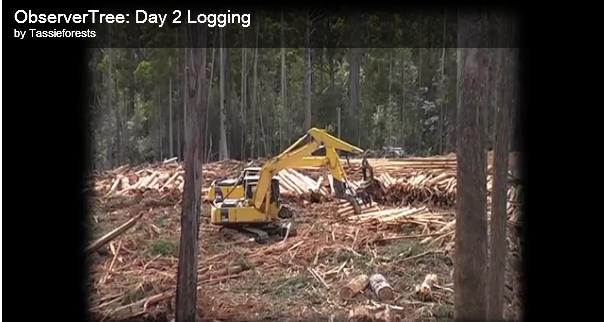
The following video near ‘The ObserverTree‘ shows industrial logging underway in the magnificent Styx Valley on 16th December 2011.
.
.
.
Plywood supplier to London 2012 Olympics stops buying from Ta Ann
.
Recently Jenny Weber from the Huon Valley Environment Centre went to Japan with former Greens leader Peg Putt to meet with the Japanese companies purchasing from Ta Ann. The company representatives showed concern about the environmental destruction taking place to produce the products they are purchasing.
This week, a major British importer of plywood, International Plywood, which is helping to build facilities for the London 2012 Olympics, has publicly stated that it will not be purchasing any more timber from Ta Ann, due to Ta Ann being exposed for sustainable timber misrepresentation and using vital Tasmanian old growth in its plywood veneer timber flooring. Ta Ann has been falsely selling its plywood veneer timber products claiming that the timber is certified as sustainable under the international PEFC scheme and is sourced from plantations and sustainable regrowth forests. Doesn’t say much for the ‘PEFC’ scheme! The Programme for Endorsement of Forest Certification (PEFC) has been widely criticised by international environment groups as it is not an indicator of acceptable environmental standards and does not safeguard high conservation value from ongoing logging. No wonder Ta Ann relies on it. Forest Stewardship Council is the superior forest certification.
Environmental campaigners from Markets for Change and the Huon Valley Environment Centre travelled to England recently to meet with UK companies implicated in forest destruction. They launch a detailed report that traced Ta Ann veneer timber from Tasmania’s high conservation value forests through Malaysia to a London sports hall which will be used in training by Team USA during the 2012 London Olympics.
Tim Birch from Markets for Change was among the delegation – “We went to London to visit a number of companies to inform them of exactly what was happening“.
Ian Attwood, managing director of International Plywood, says his company is now boycotting Ta Ann’s products. Even a recent letter from the Deputy Premier of Tasmania, Brian Green to International Plywood UK urging them to continue buying from Ta Ann Tasmania did not persuade the company to continue purchasing veneer plywood from Ta Ann Tasmania.
Attwood said: “We’re not there to you know, to savage the forests. You know we’re here to try and buy product in a responsible manner.”
And the response spin from Forestry Tasmania (logger of Tasmania old growth and vested interest supplier to Ta Ann) – General Manager Forestry Tasmania’s Corporate Relations and Tourism Ken Jeffreys said:
.
(Logger Logic #1): “Tasmanian timber products represent a sustainable and renewable resource with stringent forest practice standards and certifications.”
(Ed: see video above)
.
(Logger Logic #2): “If you were concerned about the planet, you would buy timber product from Tasmania, because we have the highest level of forest reservation anywhere in the world“
(Ed: have old growth, so we log it)
.
(Logger Logic #3): “If you were going to buy plywood you would buy it from Ta Ann, because Ta Ann is using a raw material that would otherwise be exported as woodchips.”
(Ed: buy old growth for veneer otherwise it’ll end up as woodchips anyway – we’ve gotta find some use for it).
London 2012 Olympics setting sustainability standards
One key reason why International Plywood is rejecting Ta Ann’s old growth plywood is that as building materials supplier to the London 2012 Olympics, International Plywood is obligated to prove its supplies are environmentally sustainable to the Olympic Delivery Authority (ODA). The Olympic Delivery Authority’s Sustainable Development Strategy has the strict objective to identify, source, and use environmentally and socially responsible materials. . ‘Key to delivery of a sustainable development is its design, and the methods used in its construction. Also pivotal is what materials are used to construct the facilities. The materials used in the construction of the Olympic Park and venues are a key aspect of the ODA’s commitment to delivering a sustainable development. The ODA is working closely with industry bodies to allow suppliers to respond positively to the ODA’s requirements. Through this engagement, the ODA hopes to leave a lasting legacy of a more socially and environmentally responsible approach to materials use within development.
Four principles apply when sourcing materials.
Responsible sourcing
Use of secondary materials where possible
Minimising embodied impacts
Healthy materials.
.
Responsible sourcing
.
‘Suppliers will be asked to demonstrate, as appropriate, responsible sourcing of materials by providing evidence of the existence of legal sourcing, environmental management systems, or through the use of chain of custody schemes.’
‘A Timber Supplier Panel has been established for the Olympic Park to support the commitment to source 100 per cent of timber from legal and sustainable sources as defined by CPET (Central Point of Expertise on Timber Procurement) and in line with Government policy. [CPET website: ^http://www.cpet.org.uk/]
To date, all timber used in the construction of the Olympic Park meets this commitment.
The ODA received the ‘Achievement in Sustainability Award’ at the 2009 Timber Trade Journal Awards for the set up and management of the Timber Supplier Panel.
LOCOG’s Sustainable Sourcing Code states that the Forest Stewardship Council (FSC) certification scheme is approved for the purposes of both ‘Legal Timber’ and ‘Sustainable Timber’. Where it can be robustly demonstrated that it is not possible to supply items from FSC-certified sources, then timber and timber products that can be verified with appropriate documentation in respect to their origin and legality are acceptable.’
‘Wood from forests which provide homes to some of the planet’s most endangered species is being used to construct athletes’ training facilities for next year’s London Olympics, it has been alleged. Eucalyptus trees, from forests which date back more than 1,000 years, are being logged, despite the UN World Heritage Committee’s repeated calls for that region of Tasmania to be protected.
The forests provide habitats to Tasmanian Devils, the Tasmanian Giant Freshwater Lobster and the Swift Parrot, all of which are listed as endangered species and scientists believe that the wooded area captures and stores the most carbon of any on earth per square mile.
Now though, an Australian environmental group has claimed that products made from trees felled there are being used to make a basketball court for Team USA to train on during the Games. Although the building is not being run by the London 2012 organisers Locog, in 2018 they pledged to only use sustainable timber in the construction of the Games’ venues and infrastructure, as part of a drive to make them a “truly green Games“.
And, while Athens was criticised for making “no requirements for any form of sustainable wood products” in 2004, the organisers of Beijing 2008 banned wood “obtained directly from virgin forest” and, in the run-up to the 2000 Sydney Olympics, organisers pledged to only use wood which was certified by the Forest Stewardship Council.
Wood in the London SportDock facility, construction of which is being lead by the University of East London (UEL), conforms to the rival Programme for the Endorsement of Forest Certification (PEFC) standard, which environmental groups attack for not going far enough to promote ethical logging. The facility will be rented by Team USA for the duration of the Games.
Though it does not contravene any law, the logging is opposed by environmental groups. Tim Birch, Chief executive of Markets for Change, which led a six-month investigation into the trade, tracing the wood from Tasmania to the London 2012 site, said:
“Tasmania’s ancient forests, which offer crucial habitat to endangered species like the Tasmanian Devil and the Tasmanian Wedge-Tailed Eagle, are being trashed so that plywood can be sold on to the international markets. It’s a tragedy that this time the trail of destruction has led to London’s Olympic Games so America’s international sports stars could be forced to play on forest destruction.”
He added that it was “essential” that companies review their procurement policies to ensure that they “end the UK’s part in wrecking some of the world’s last remaining old growth forests”.
Campaigners point to Tasmanian Government documents, which show that the Malaysian manufacturer Ta Ann received timber from logging operations undertaken within old growth areas of the forest. “Whether or not Ta Ann eventually use the old growth trees which are cut down is irrelevant, the habitats have been destroyed all the same,” said Will Mooney of the Huon Valley Environment Centre.
He added: “Even if they do not use the old growth timber to make their products, it is the demand for timber from the Tasmanian forest which means that old growth trees are nevertheless being cut down then discarded.”
But Ta Ann says that no old growth trees are used in their products, pointing out that machinery recently installed by the company is only capable of processing regrowth trees. A spokesman for Ta Ann Tasmania said that its products are produced “from regrowth timber billets harvested strictly in accordance with Australia’s forest policies and laws including the forest practices code”.
.
Greenpeace’s executive director John Sauven said:
“As a proud Londoner, I’m shocked that ancient forests crucial for conserving the world’s tallest flowering plants, the largest hardwood trees in the world, and many endangered animals are being used for flooring in London’s Olympics.
.
“British companies like International Plywood could end the destruction by ensuring they no longer do business” with companies who handle even new growth Tasmanian timber.
Both UEL and Dynamik Sport Surfaces, which installed the wooden flooring, said they were initially unaware that parts of the wood used in the flooring installed in the building was from the Tasmanian forest. UEL said that, had it been aware of the concerns over the source of the material, “it would have been considered. But hindsight is a great thing.”
A spokesman said: “We are totally committed to making sure the £21million Sports Dock facility is an environmentally friendly development and that this new facility has the best mix of sustainable materials and features.
“The International Basketball Federation has very clear specifications about what type of materials should be used when constructing a court, which will be used by professional basketball players. Following this guidance and consultation with the relevant consultant for this development, the material was sourced.”
According to Markets for Change, the wood products destined for the UEL site passed from the Malaysian logging company Ta Ann, entering Europe in the hands of International Plywood. It eventually ended up in the hands of Dynamik, which laid it as flooring.
Anil Batra, Dynamik’s Financial and Marketing Director said he was “interested in the issue, now it has been brought to our attention” but pointed out that no laws had been broken and that the wood was certified by the international PEFC.
A Ta Ann spokesman initially called said: “what a great result for Tasmania, our timber being used in the London Olympics. He claimed that the Tasmanian subsidiary uses regrowth billets of wood and operates strictly in accordance with Australian laws and sustainability requirements. He acknowledged that the Tasmanian forest is “a mosaic of regrowth and some old
growth” and said that the company can only use billets from regrowth”. He later said that the company had not carried out any production of veneer products bound for the UK and cast doubt on whether the wood used at UEL could be proven to be from his company.
Markets for Change produced images it said showed Ta Ann-branded crates at the UEL site which they said also had licence numbers identifying them as containing Ta-Ann-manufactured products.
A spokesman for International Plywood said the company did not have any current contracts with Ta Ann and would review its trading relationship with the firm, if it could be shown it was “acting in a way that would not comply with our purchasing policy standards“. However, the spokesman said it had no reason to believe that were the case and “if Ta Ann were able to supply PEFC certified plywood as they have done previously they would meet our current purchasing policy“.
A spokesman for Team USA refused to comment.’
.
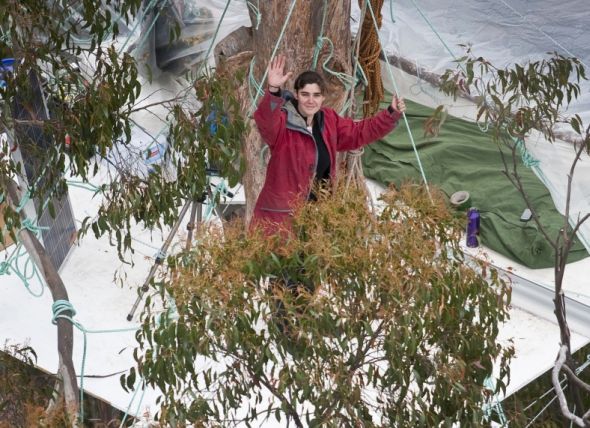
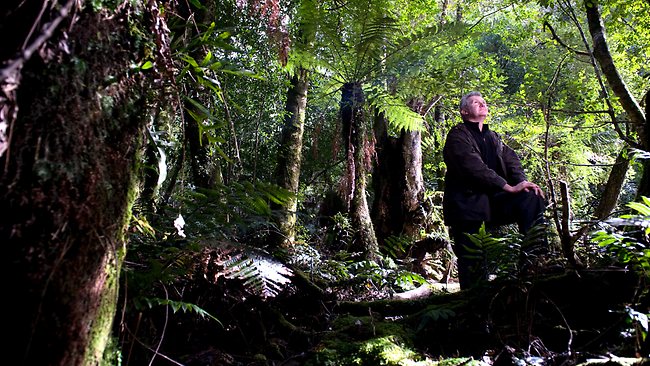
Forest Defender Miranda Gibson
of Tasmanian activist group Still Wild Still Threatened, in ObserverTree
Mount Mueller Forest, Styx Valley South West Tasmania, Australia.
“To resolve the conflict over forests in Tasmania, protect native forests, and develop a strong sustainable timber industry.”
.
.
The Parties to these Principles:
.
Timber Communities Australia Ltd (TCA)
The Construction, Forestry, Mining and Energy Union (CFMEU)
The National Association of Forestry (NAFI)
The Forest Industries Association of Tasmania (FIAT)
The Australian Forest Contractor’s Association (AFCA)
The Tasmanian Forest Contractors Association (TFCA)
Environment Tasmania Inc. (ET)
The Wilderness Society (TWS)
Australian Conservation Foundation (ACF)
Tasmanian Country Sawmiller’s Foundation (TCSF)
.
Note: Ratio of 7 to 3
.
.
‘Objectives‘ of the Parties
.
‘The parties to the Principles seek from State (Tasmanian) and Federal governments:
.
Support for an delivery of all principles in full
Interim support for the development of a plan to deliver the Principles, including:
Verification (1) of Resource Constraints
High Conservation Value Boundaries
Implementation of the Principles through an agreed, fully-funded package and timeline that maximises benefits and reduces negative impacts
Immediate interim assistance for Tasmanian harvest, haulage and silvicultural contractors
To determine with industry, a guaranteed sustainable quantity and quality of wood supply within 3 months that is outside of the identified high conservation value forests, for the period of negotiations, in order to provide certainty for the industry, workers and communities.
A progressive implementation of a moratorium on the logging of high conservation value forests commencing within 30 days – ensuring that priority, (i.e. those in the most advanced stages of planning for harvesting) HCV coupes identified by ENGO’s (2) are the first to be addressed. The full moratorium is to be completed within 3 months. Any necessity for any proposed variation to this due to unavoidable planning constraints has to be independently verified.
To provide exit assistance for industry where required; and
Not to accept new entrants into the Tasmanian industry, nor enter into new contractual relationships with the state while the negotiations are underway unless by the mutual agreement of all parties (3).
Accept that delivery of these Principles will require joint agreement of the parties to timelines and funding.
To develop an agreed stakeholder-led implementation process with a finalised full agreement within 12 months.
.
– – – – – – – – – – – –
Notes:
.
(1) Draft verification process document under construction.
(2) ENGO’s in this document means those environmental non-government organisations who are parties to this document (i.e. ONLY Environment Tasmania, The Wilderness Society, and the Australian Conservation Foundation)
(3)No party shall be required to accept a Principle which would otherwise apply to it where to do so would cause a breach of an existing contract or statutory obligation.
.
.
The Principles
.
The parties agree to the following:
.
General Wood Supply
Provide a sustainable resource supply profile to industry based on an agreed minimum quantity and quality requirement for industry. This will be underpinned by legislation.
.
Native Forest Wood Supply
Subject to the provisions of the transition, as legislated Native Forest entitlements are handed back, ensure these entitlements will not be allocated nor licensed to new players.
.
HCV Forests
Immediately protect, maintain and enhance High Conservation Value Forests identified by ENGO’s on public land.
.
Transition
Transition the commodity (non specialty) forest industry out of public native forests into suitable plantations through a negotiated plan and timeline.
.
Industry
Create a strong sustainable timber industry including the development of a range of plantation based timber processing facilities including a pulp mill. There will need to be stakeholder consultation and engagement with the proponent, ENGO’s and the community.
.
Specialty Timbers
Provide for ongoing speciality timber supply including Eucalypt for our Tasmanian high value furniture and craft industries through a negotiated plan and timeline.
.
Plantations
Support sustainable and socially acceptable plantations including agreed reforms and new agro-forestry outcomes, including pursuing certification.
.
Private Forests
Encourage and support, but not mandate, private forest owners to: seek assistance for certification; and protect, maintain and enhance high conservation value forests on their properties.
.
Communities Impacted
Support impacted rural and regional communities, workers, contractors and businesses, through a range of economic development, financial assistance, compensation and retraining measures.
.
Community Engagement
Engage and involve the broad Tasmanian community in the development and implementation of a durable solution to the Tasmanian forest conflict.
.
Tourism
Develop Tasmania’s nature based tourism industry in line with these Principles.
.
Planning
Develop a fully funded, independent, scientifically led landscape conservation, restoration and integrated catchment management program, and associated governance and regulatory improvements.
.
Government
Reform and support government agencies, policies and legislation as necessary for the implementation of an agreement associated with these Principles.
.
Climate Change
Seek funding for improving carbon outcomes as a result of delivering these Principles.
.
Biomass
In Tasmania, only permit plantation forest processing and plantation harvesting residues to be used as biomass for Renewable Energy Certificates.
.
Certification
Encourage Forestry Tasmania to firstly obtain Controlled Wood accreditation on delivery of the moratorium, secondly, obtain full FSC certification on resolution of an FSC National Standard and once an agreement based on these Principles has been finalised.
.
Durability
Undertake to ensure all elements of this agreement are fulfilled on a durable basis.
.
Legislation
Require State and Federal legislation to implement agreed outcomes arising from these Principles including appropriate review mechanisms, milestones and sanctions.
.
.
Editor’s Comment:
.
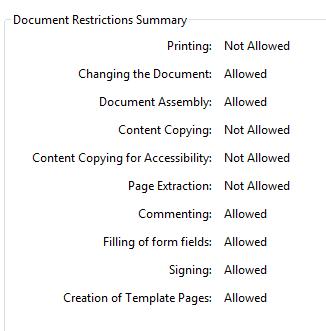
The above Statement of Principles was reproduced manually due to restricted access of the official PDF document as provided on the Tasmanian Premier’s official website. The security lock down denied printing and copying.
But then as Tasmanian Labor Premier Lara Giddings studied Law, perhaps there was a legal reason for her deliberate restriction of the details to the Tasmanian public.
.
This is the Tasmanian Premier’s restricted document:
Forestry clearfell of old-growth in Tasmania’s Styx Valley
(Photo by Editor 20110928, free in public domain, click photo to enlarge)
.
More than two months (on 7th August 2011) after the landmark deal that promised to bring peace to Tasmania’s forests the protests – and the logging – continue unabated.
Funding for the struggling timber industry under the landmark $276 million Gillard-Giddings deal is starting to trickle out, but as yet not one tree has been saved!
Conservationists concede they may end up with nothing to show for 18 months of torturous negotiations, while many in the industry are sceptical that the promised peace will ever be achieved. The key decisions – on how many and which forests will be saved – are bogged down in difficult detail and alleged recalcitrance. Tasmania’s upper house, meanwhile, is lining up to sink the legislation needed to create the new national parks and reserves.
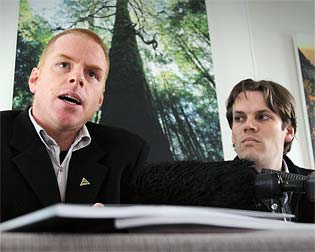
Environment Tasmania’s Phill Pullinger (right) with The Wilderness Society’s Vica Bayley
.
A key conservationist and negotiator, Environment Tasmania director Phill Pullinger, concedes to Inquirer that events could conspire to see money flow to industry without one tree ever being saved.
“To be honest, it is a possibility,” says Pullinger, a Hobart doctor and former young Tasmanian of the year. “It has always been the case that the forest protection couldn’t be permanently delivered until the legislation goes through both houses of the Tasmanian parliament.”
.
That vote is a long way off, probably well into next year. The most immediate hurdle to overcome is a row over whether the state-owned Forestry Tasmania should be allowed to continue logging in 41 coupes (forest areas). All are within 430,000ha of forests set aside for “immediate” interim protection in the Gillard-Giddings deal of August 7, known as the Forests Intergovernmental Agreement or IGA.
Forestry Tasmania insists it needs to log in these coupes, a fraction of the total area, to maintain existing contracts to timber mills. Conservationists argue Forestry Tasmania could and should reschedule logging to less ecologically significant forests. The dispute was being sorted out by an independent rescheduling team appointed by state and federal governments. Inquirer has learned this process has gone badly for conservationists, with only seven of the 41 coupes able to be protected and five already logged. Forestry Tasmania and industry claim there simply is not time to do the rescheduling work – new roads, development of forest practices plans – necessary to shift to new areas quickly enough to meet existing timber contracts.
.
‘It is a fundamental problem that has weakened the (peace) process: you’ve got a government agency that is essentially working against the agreement. And the governments haven’t shown the stomach to pull the agency into line.’’
~ Phill Pullinger, Environment Tasmania, October 2011
Conservationists claim this should have been done months ago, given that Forestry Tasmania was asked by the state government – its owner – to place a moratorium on logging in these forests in March.
“They (FT) have basically for 12 months now deliberately spun the wheels on that; there could easily have been a moratorium delivered six or nine months ago,” Pullinger says. “It is a fundamental problem that has weakened the (peace) process: you’ve got a government agency that is essentially working against the agreement. And the governments haven’t shown the stomach to pull the agency into line.”
Crew-cutting pristine Tasmanian wilderness
.
This is rare intemperate talk from Pullinger, normally diplomatic and restrained as he tries to keep his constituency in the peace tent and the process on track.
It’s a sign things are not going well. Forestry Tasmania, a government business enterprise that reports to a board and is not necessary bound by ministerial direction, denies it has been dragging the chain. While it is the party with the most to lose – up to 572,000ha of native forest it manages for timber production – corporate relations manager Ken Jeffreys insists it is acting in good faith.
“Some people out there seem to think that FT has some maniacal glint in their eye and go out and harvest forests when it has no market because it has nothing better to do,” Jeffreys complains to Inquirer. “That is so far from common sense it’s hard to respond to.“
He insists Forestry Tasmania is happy to abide by the independent reschedulers’ verdict and points out that it has already rescheduled logging out of some contentious coupes. This fight over a handful of coupes has been holding up plans under the IGA for an overall immediate interim conservation agreement between the state, Forestry Tasmania and Canberra to protect the 430,000ha. Under the IGA, this interim agreement would protect those forests while an independent verification team determines the final size and location of the new permanent reserves.
Ancient Myrtle Beech (Nothofagus cunninghamii) chainsawed in the Upper Florentine Valley, Tasmania
(Photo by Editor 20110928, free in public domain, click photo to enlarge)
.
IGA Independent Verification Team
.
The independent team, overseen by academic Jonathan West, will decide how much forest, of a larger 572,000ha nominated by green groups, is worthy of protection. West’s team will also test industry claims about how much timber it requires to meet existing contracts. Then it must decide how much forest can be protected while providing this resource. The job, which unrealistically is due to be completed by December 31, is the “forest wars” equivalent of deciding where exactly the boundaries of a Palestinian state should be drawn.
Conservation groups believe that most – if not all – of the 572,000ha can be protected, once a developing plantation resource is factored in.
.
Forestry Tasmania’s position
Forestry Tasmania chief, Bob Gordon
– what IGA? It’s logging business as usual to fill ‘orders’.
.
Forestry Tasmania stands by its modelling suggesting that no more than 300,000ha can be protected if it is to deliver on current timber contracts. Some in the industry believe only 250,000ha can be saved from the chainsaws. Neither of the industry figures is unlikely to be enough for conservationists, but may well be too much for Tasmania’s independent-dominated upper house. Several recent votes in the Legislative Council suggest it is opposed to the IGA and to more forest “lock-ups”. Its refusal to pass the reserves would leave conservationists relying on a federal-state conservation agreement to protect those forests.
While such an agreement would ban logging, it is legally uncertain if Forestry Tasmania could ignore this on the basis that it conflicts with its legislative or contractual obligations.
Jeffreys insists Forestry Tasmania would abide by any final agreement, subject to being able to meet those commitments – a big out if Forestry Tasmania decided to dig in for a battle.
.
Tony Burke’s position:
.
Federal Environment Minister Tony Burke
in Tasmania’s Wielangta forest, March 2011
(Photo by Matthew Newton, Source: The Australian ) .
Despite the difficulties, federal Environment Minister Tony Burke remains confident he can pull off the kind of final “win-win” forest peace deal that has eluded so many of his predecessors. He tells Inquirer the alternative is a kind of mutually assured destruction, whereby the forests continue to fall as fast as the jobs.
The number of jobs in Tasmanian forestry has halved since 2008 from 6960 to 3460, due mainly to Japanese paper-makers boycotting woodchips sourced from native forests, Gunns exiting the industry in favour of a plantation-based pulp mill and as a result of the high Australian dollar.
“If you let the markets sort this one out without a co-ordinated strategy from state and federal government … then you end up with a terrible outcome for the Tassie economy … diabolical,” Burke says.
Initially as Forests minister and more recently as Environment Minister, Burke has been involved in the process from the beginning. The first in federal cabinet to twig to the potential to assist industry while securing a historic conservation outcome, he has repeatedly slipped quietly into Tasmania to do his own field work.
The former staffer to Graham Richardson has camped with greenies amid the giant eucalypts of the Styx Valley and toured sawmills and production forests. When the process has looked as if it were imploding, he has intervened with all sides to keep it on track. Inspired to join the ALP by landmark conservation battles such as the Daintree and Kakadu, Burke constantly stresses his desire to also secure a good outcome for jobs and industry.
He believes the (Tasmanian) Legislative Council will take a different view to new reserves when details are developed for a $120m federal regional development fund promised under the IGA. That money, to revitalise timber communities and diversify the Tasmanian economy, is contingent upon state parliament passing the new reserves legislation. No reserves; no $120m.
Burke, himself a former state upper house MP (in NSW), believes this cash for regions will ultimately win over the key 12 independent MLCs.
“Those MPs will have to look in the eyes of a whole lot of their constituents who are out of work and justify their actions,” he says. “I just don’t believe when it comes to it they’ll vote this down. This is the first time we have tried to deal with this issue with an independent process rather than a political fix. The irony this time is: can we stop politics from wrecking it, not from fixing it?”
He warns both sides will need to accept the outcome of the independent verification process. “They are honour-bound to accept the process – they created it,” he says.
This suggests Canberra will not be afraid to impose the verdict of the independent verification team if the two sides cannot embrace it – or at least an agreed variation of it. Such action may well see either side – timber or conservation – walk away.
Certainly, Pullinger won’t promise to accept the outcome if it is not embraced by both sides.
“If the independent verification group comes down and says … we are going to protect just a fraction of these forests … then – expert group or not – I don’t think anyone believes that is going to be able to deliver a lasting agreement.”
.
Editor:
The IGA deal is a deal is a promise. Why are Gillard and Giddings allowing Forestry Tasmania to renege on the deal by continuing to log these now protected native forests in Tasmania’s Styx Valley and southern forests. Why are Gillard and Giddings breaking their promise to Tasmanians?
IGA interim reserves are IGA interim reserves? The IGA offers millions in contractual compensation. So take the compensation Bob Gordon! You can’t have your compensation and interim reserves too!
Leave the bloody old growth alone!
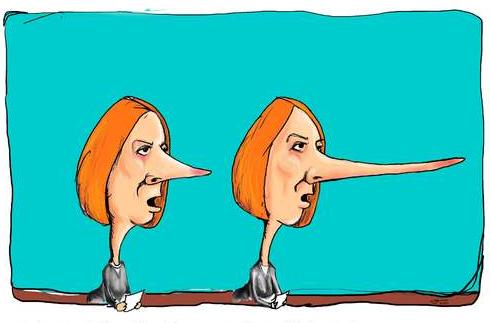
Prime Minister Julia Gillard, 2011
– do I really have to honour that forest deal?
(Photo: The Examiner)
.
Evidence of new logging despite Tasmanian Forests Agreement
Environment Tasmania, the Wilderness Society and the Australian Conservation Foundation have released a report assessing the status of logging in important native forests and photographs that show new logging activity in forest reserves prescribed by the Tasmanian Forests Intergovernmental Agreement (IGA).
“The settlement and retirement of Gunns’ native forest timber quotas has halved the demand for native forest timber from Forestry Tasmania, so there is no need or justification for logging within the forest reserve areas,” said Dr Phill Pullinger of Environment Tasmania.
“Wood supply for remaining sawmills can be provided from outside of the important native forests identified for protection,” Dr Pullinger said.
“Aerial photographs taken in late August and last week show Forestry Tasmania continues to log inside the 430,000 hectares of unique and important forests identified for immediate protection in the IGA,” said Vica Bayley of the Wilderness Society.
“In fact, our report and the new photos show Forestry Tasmania has not rescheduled logging outside this area and has even commenced logging new coupes since the IGA was signed.
“While we are encouraged to see progress on key components of the intergovernmental agreement — including the retirement of Gunns’ wood quota, funding for timber workers and contractors and the independent verification group — we have seen no progress on halting logging inside the nominated forest reserve areas,” Mr Bayley said.
“Environment groups again call on the state government to honour the agreement it has signed by directing Forestry Tasmania to declare the nominated forests as informal reserves and immediately appointing an independent expert to undertake the rescheduling,” said Denise Boyd of the Australian Conservation Foundation.
The report released today is part of environment group signatories’ ongoing commitment to implementing the IGA and will provide governments with verified, accurate information to help achieve the forest protection outcomes of the IGA. The state government must now ensure delivery of the critical plank of the IGA – forest protection.
“We have seen no progress on halting logging inside the nominated forest reserve areas.”
~ Vica Bayley, The Wilderness Society
.
Forest protest continues in Mount Mueller Forest, Styx Valley (Tree Sit, Day 7)
“The moment one definitely commits oneself, then providence moves too. All sorts of things occur to help one that would never otherwise occurred. A whole stream of events issues from the decision, raising in one’s favor all manner of unforeseen incidents and meetings and material assistance which no man could have dreamed would have come his way. Whatever you can do or dream you can, begin it. Boldness has genius, power and magic in it. Begin it now.”
~ attributed to Goethe.
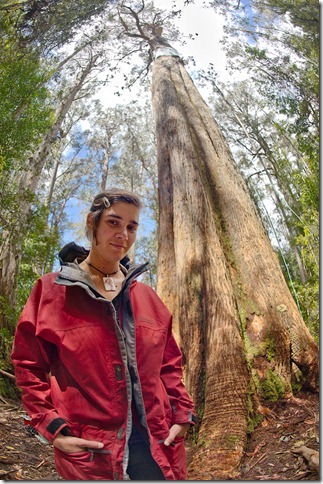
Miranda – Defender of Tasmania’s Forest Heritage
at the foot of ‘The Observer Tree‘
Mount Mueller Forest, Styx Valley, Tasmania .
One young Tasmanian woman, charged with a deep commitment to her natural island heritage, continues to be prepared to do more to protect Tasmanian old growth forests than most Tasmanians. Miranda Gibson of Still Wild Still Threatened is certainly prepared to do more than the current (read ‘temporary‘) Premier of Tasmania Lara Giddings, and more than the current (read ‘temporary‘) Prime Minister of Australia, Julia Gillard, who have quickly turned their backs on Tasmanians to more populist party-political issues of the day.
.
Tasmania’s Forest Wars
– what the Intergovernmental Agreement is supposed to resolve.
.
Gillard and Giddings in breach of Tasmania’s 2011 Forest Agreement
.
Tasmanians are condemning government delinquency on meeting the conservation goals contained in the Gillard Labor Government’s Forests Intergovernmental Agreement (IGA) signed and promised to all Tasmanians in Launceston on 7th August 2011.
Giddings and Gillard
– hollow Labor promises
.
IGA Clause 25 states:
.
‘The State will immediately place the 430,000 ha of native forest identified in Attachment A (other than any areas which are not State forest) from the 572,000 ha nominated by ENGOs through the Statement of Principles process, into Informal Reserves.’
.
IGA Clause 27 states:
.
‘In the event that Forestry Tasmania reports that it cannot meet contractual requirements from production resources outside the nominated 430,000 ha the Governments will undertake the following steps. First, an independent expert will be jointly appointed by the Governments to review scheduling and other relevant data and attempt to reschedule harvesting activities so as to meet the requirements of contracts and maintain the interim protection of 430,000 ha. In the event that the independent expert concludes it is impossible to achieve this, the Commonwealth will compensate the contract holder for the value of lost profits and unavoidable costs.’
.
Gillard’s fly-in to Launceston on 7th August 2011 to sign and celebrate the Tasmanian Forests Intergovernmental Agreement with Labor mate Giddings was not a mere plaque unveiling, it was a Tasmanian landmark agreement to provide certainty for Tasmania’s forestry industry, support local jobs and communities, and protect the state’s ancient forests. It deserves the respect of commitment and follow through on promise.
On the one hand it has funded Forestry and its associated families hundreds of millions and with a dignified exit from logging and transition to alternate trades. On the other hand Gillard’s Forest Agreement guarantees protection for Tasmania’s natural but threatened heritage – its most iconic ancient forests, immediately placing 430,000 hectares of iconic old growth native forest into informal reserve – the Styx, Upper Florentine, Huon, Picton and Weld Valleys and the Great Western Tiers, Tarkine and Wielangta.
.
Gillard’s promise made to the Australian people (Prime Minister Gillard’s official website):
.
‘These forests will not be accessed for harvest while verification takes place.‘.
Well, verification is still taking place. And Bill Kelty, who brokered the deal, seems to have run to the hills.
Such a landmark State-wide agreement that promises a ‘strong foundation‘ is hollow if the leadership waddles off to be distracted by other issue so the day, without the committed delegation of trusted lieutenants to see through on implementation. Predecessor PM Kevin Rudd failed classically on the implementation phase of his policy – insulation being his and Garrett’s multi-million dollar incompetent legacy.
“The Australian and Tasmanian governments are taking too long to implement the intergovernmental agreement. If they can get their act together to offer contractors exit packages then they can honour the conservation agreement as well.” Greens Senator Bob Brown has said. “Four months later not one hectare has been protected and Forestry Tasmania continues to fell these magnificent trees as fast as they can put the roads in. All up, more than 10km2 of our wild forests will be destroyed“, Greens Senator Brown said.
All political leaders, while dancing on mountains of power and influence, pragmatically realise that their time in office is temporary. Status quo is not a characteristic of modern democratic politics. What matters most in political careers is legacy. Australia’s current Prime Minister Julia Gillard is starting to stare that legacy in the face as she allows Premier Lara Giddings to breaking the $276 million promise by backing Forestry Tasmania’s current logging of the 430,000 hectares of old growth forest protected under the Gillard Government’s Agreement.
.
Tasmanian Betrayal
.
Gillard and Giddings have allowed Forestry Tasmania to log the protected 430,000 hectares, ignoring the prescribed compensation requirement. Gillard and Giddings have blatantly reneged on their core promise in the Agreement to cease logging and to protect these forests. Gillard and Giddings have betrayed the Tasmanian and Australian people. They have no mandate to stay in power. Their broken promises are to be their legacies.
.
“Those who cannot work with their hearts achieve but a hollow, half-hearted success that breeds bitterness all around”
~ Abdul Kalam, President of India (b.1931)
Styx Valley Giants being massacred by State logger ‘Forestry Tasmania’
.
Tasmania sells itself as ‘the natural state’. But there is a gap between rhetoric and reality as logging of old-growth forests continues – to international dismay.
“And they have these big logs, and you just know they are coming from old-growth forests…I don’t think I could take living there and seeing them every day knowing (the trees) are going mostly to woodchips.” ~ Larraine Herrick or Tumbarumba, Snowy Mountains, New South Wales.
But the Styx has been, and (is continuing) to be, logged by the timber industry in a state in which questions have been repeatedly raised about whether cronyism, corruption and deception underlie the management of forests. Only discovered in 2002, El Grande was a Eucalyptus regnans with a 19-metre circumference. Last autumn (2003), it was killed when a regeneration burn went wrong. Its demise helped fuel a midwinter protest that drew more than 2000 people to the Styx Valley. There, The Wilderness Society and Greenpeace began a tree-sit, 65 metres up a threatened giant eucalypt called Gandalf Staff.
Tasmanian forests activist organisation Still Wild Still Threatened have called on the Federal and State governments to honour a $276 million forest deal made on 7th August 2011.
“This deal has already seen $35 million delivered to Forestry Tasmania and Gunns Ltd. without protecting a single tree” said Still Wild Still Threatened spokesperson Ali Alishah.
“It is clear that by backing Forestry Tasmania’s destructive practices within the identified 430,000 ha area of high conservation value native forest, the State and Federal Governments are in direct violation of Clauses 25 and 27 of their own Inter Governmental Agreement.” said Mr. Alishah.
.
.
.
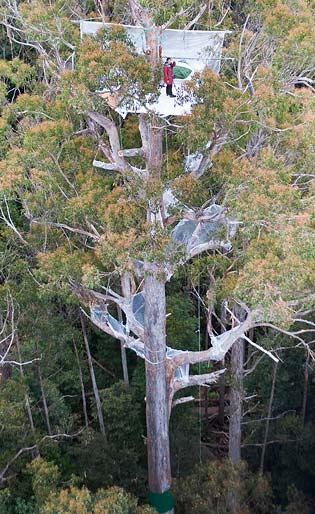
The Observer Tree
Miranda Gibson on top of The Observer TreeTotally committed to Tasmanian Forests, unlike Gillard and Giddings hollow words.
.
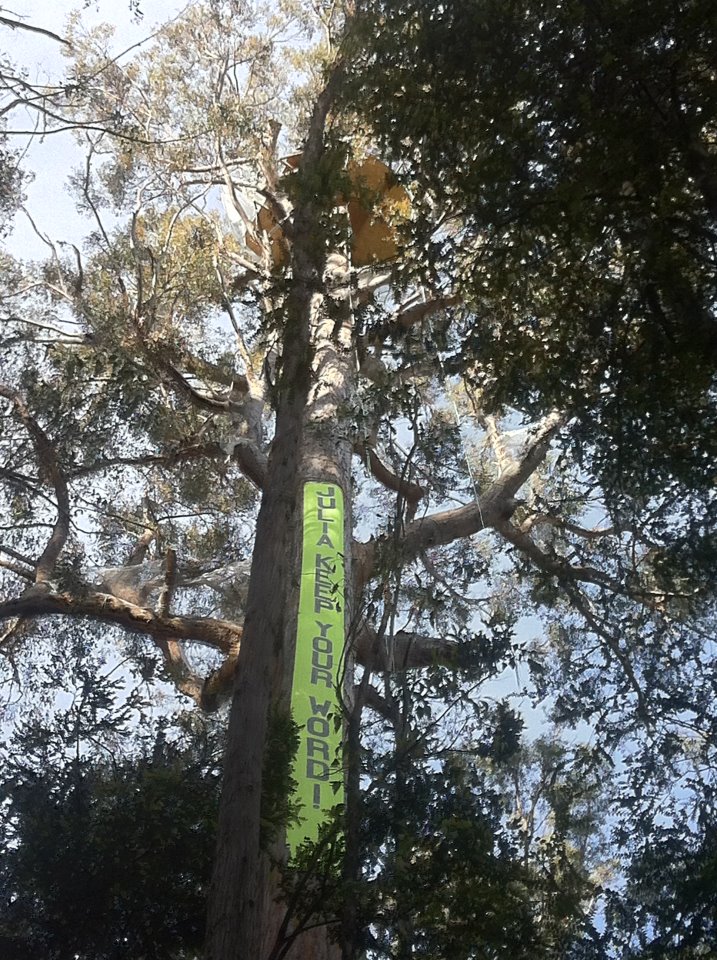
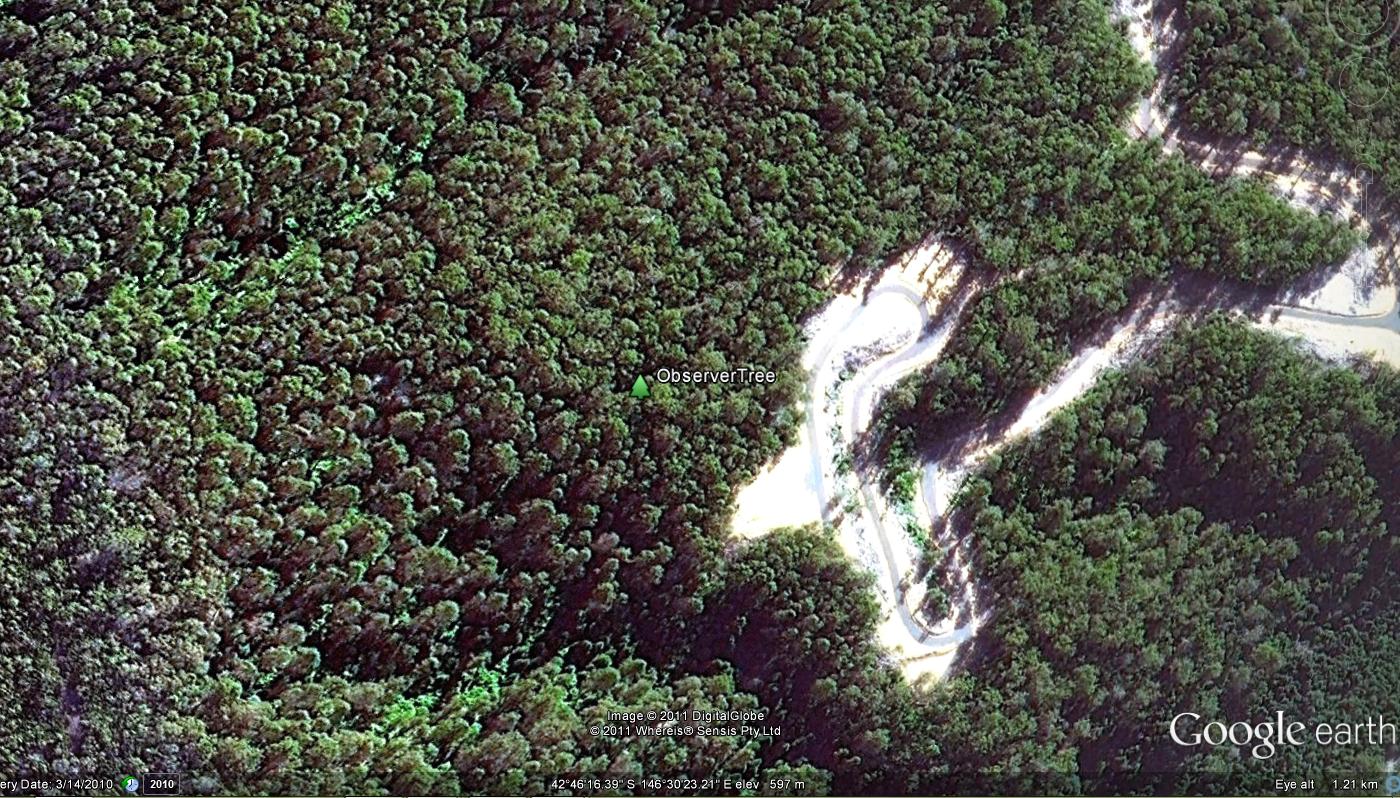
Still Wild Still Threatened have this week launched a new tool in the fight to protect Tasmania’s forests today, unveiling the ‘ObserverTree‘, a 17-storey high tree sit and media centre equipped with the technology to record footage of logging operations and stream these images live to the world via the internet.
The Observer Tree is located in the Styx Forest below Mt Mueller, in Tasmania’s western wilderness, part of the 430,000 ha of forest that was supposed to receive immediate protection under the federal-state agreement on forests (the IGA). The Observer Tree is situated at the head of a section of Styx Forest currently targeted for logging by Forestry Tasmania.
Teacher, author and forest activist, Miranda Gibson, has vowed to occupy the tree-platform continuously, until real protection is secured for Tasmania’s forests. Ms Gibson will maintain a daily blog and upload video updates during her stay in the tree, documenting the struggle to protect Tasmania’s forests to concerned people all over the globe.
‘We have used the internet to connect this spectacular patch of threatened Tasmanian forest to the world. The Observer Tree will transmit images and information about the value of the thousands of hectares of forest that remain threatened if Julia Gillard does not keep her word. People across Australia and the globe will have the opportunity to view bear witness to the wasteful destruction of these forests and hear from the people fighting to protect them,’ said Ms Gibson.
For the first time their actual logging will be broadcast live internationally via the web.
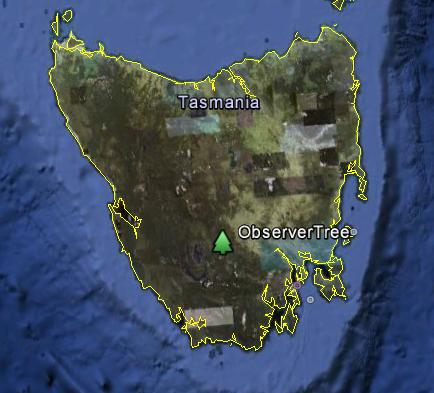
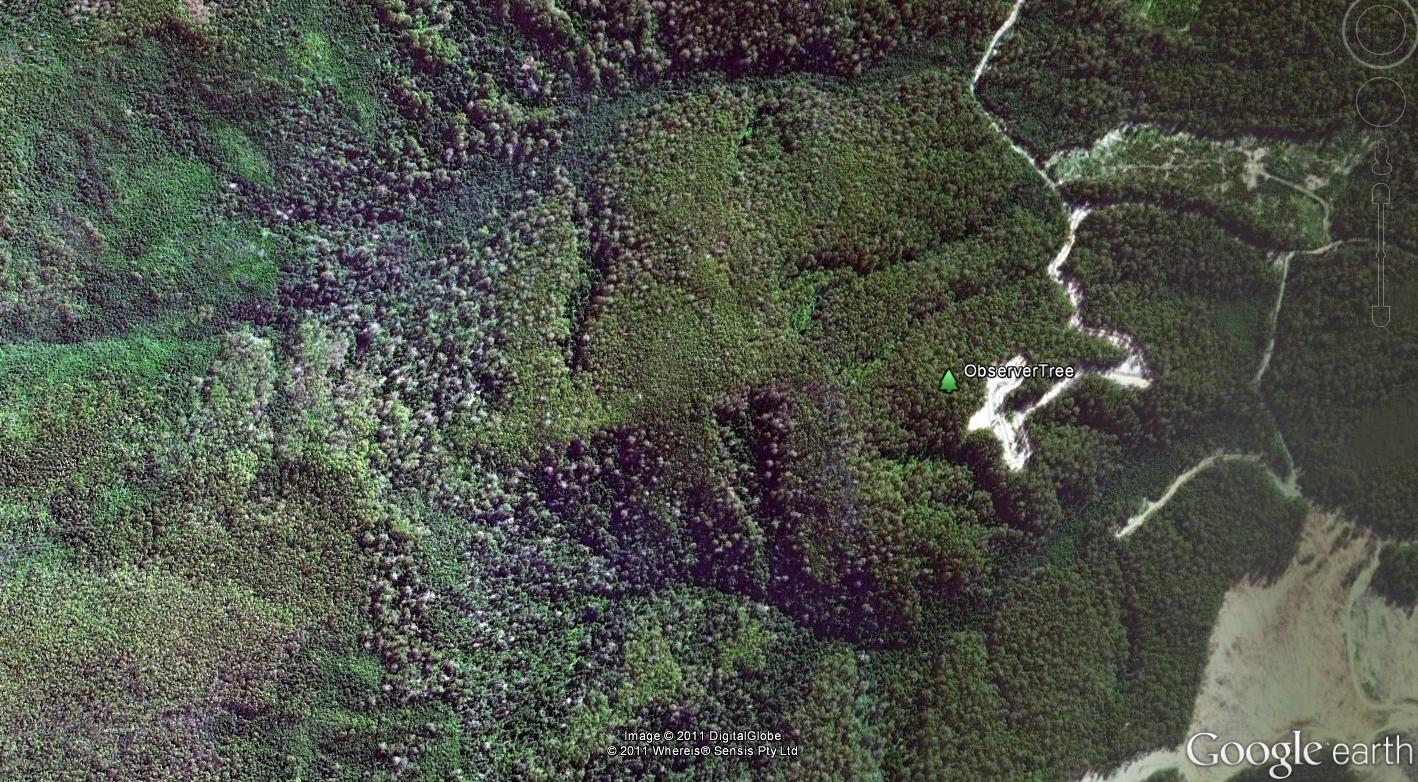
Google Earth’s satellite image of the Observer Tree in dense old-growth, adjacent to Forestry Tasmania’s fresh logging road
(click photo to enlarge)
.
Close up image
(click photo to enlarge)
.
.
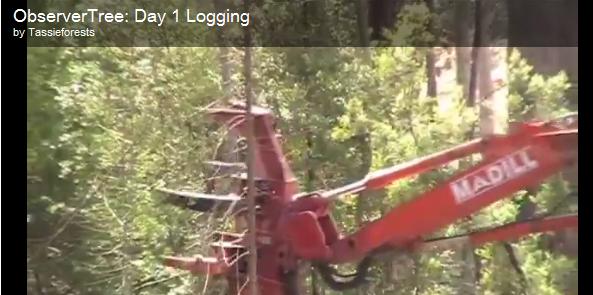
Monday: Forestry Tasmania attacks the Styx Forest
.
On Monday 12th December 2011, State forest ‘nazi logger’, Forestry Tasmania, under the command of District Officer(Gauführer) Steve Whitely, rolled in its contracted ‘ecodeath-squad’ into the western end of the magnificent Styx Valley. The targeted forest area is situated at the base of Tasmania’s prominent and wild Mt Mueller on the border of the World Heritage Area. It is situated about 25 km west of the infamous logging town of Maydena.
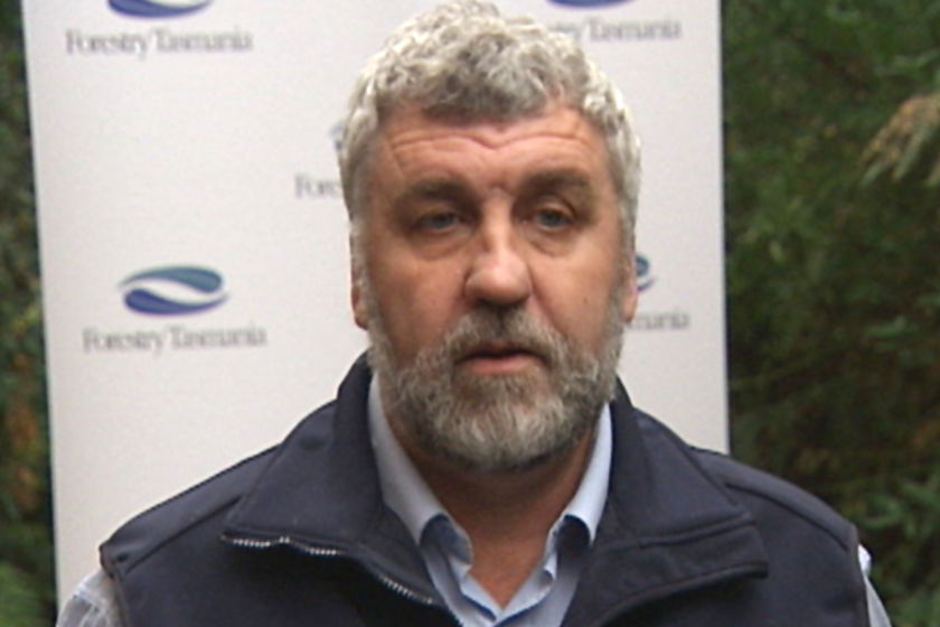
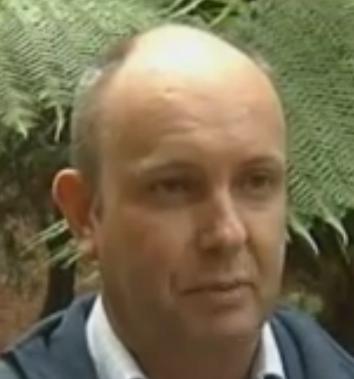
Directing the logging – Forestry Tasmania’s Steve Whiteley
[Source: Southern Cross Television, 20111214]
.
In true forest nazi style, Forestry Tasmania’s targeted forest area is branded as coupe ‘TN 044B‘.
Logging Nazi in and destroying the Styx Valley Forest
Monday 12th December 2011, in direct breach of Prime Minister Gillard’s Forest Agreement.
.
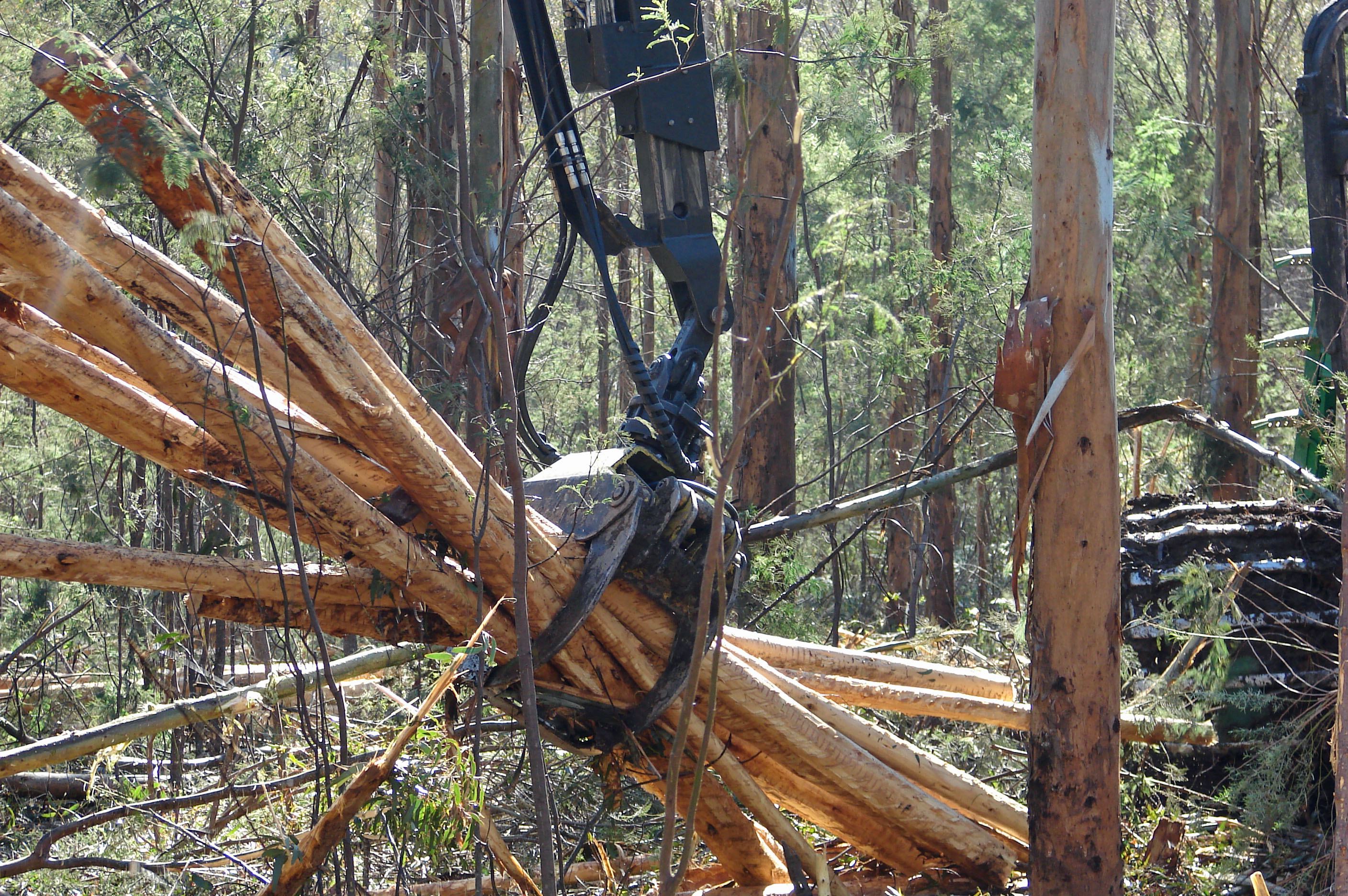
This ‘Madill’ feller buncher was getting well stuck into the Styx Valley last Monday morning just below the Observer Tree. The hydraulic arm clamps onto the trunk of the tree while a cutting mechanism severs the tree at the stump. The machine then lifts the tree, lowers the tree into a horizontal position, and drops the tree on a bunch of logs piled on the ground. The industrial machinery has all the efficiency of a Nazi death factory.
.
.
Foresty Tasmania is operating in direct contradiction of IGA Clauses 25 and 27. The coupes within the 430,000 ha of high conservation value forest are not to be logged under any condition. The IGA prescribes that relevant customers and contractors are to be granted compensation and million have been set aside for this purpose. Foresty Tasmania under Gauführer Steve Whitely is out of control. He is driving ecological apocalypse in Tasmania’s southern forests. He has become a Walter E. Kurtz.
"We're coming to you from the custodial lands of the Hairygowogulator, Tarantulawollygong, and Longdrop country, within the Australia nation since 1901. From our home in Inner West Katoomba we pay respects to uncles and grandaddy elders past, present and emerging from their burrows. So wise to keep a distance out bush."
Recent
Supporting Us
A VOICE FOR NATIVE HABITAT
One’s solo mindful walk…
The Friends of Katoomba Falls Creek Valley Inc. in The Gully
The Gully Collection
Save Atlas Campaign
The Friends Archive: War and Peace with the Blue Mountains ‘hysterical’ Society
 .
. Forestry Scabs of clearfelled Tasmanian endangered old-growth forests
Google Earth reveals the clearfell truth behind the Forestry propaganda
(Click satellite image to enlarge – note environmental protestors’ ObserverTree)
To download Google Earth software (93MB), go to: ^http://www.google.com/earth/index.html
Forestry Scabs of clearfelled Tasmanian endangered old-growth forests
Google Earth reveals the clearfell truth behind the Forestry propaganda
(Click satellite image to enlarge – note environmental protestors’ ObserverTree)
To download Google Earth software (93MB), go to: ^http://www.google.com/earth/index.html
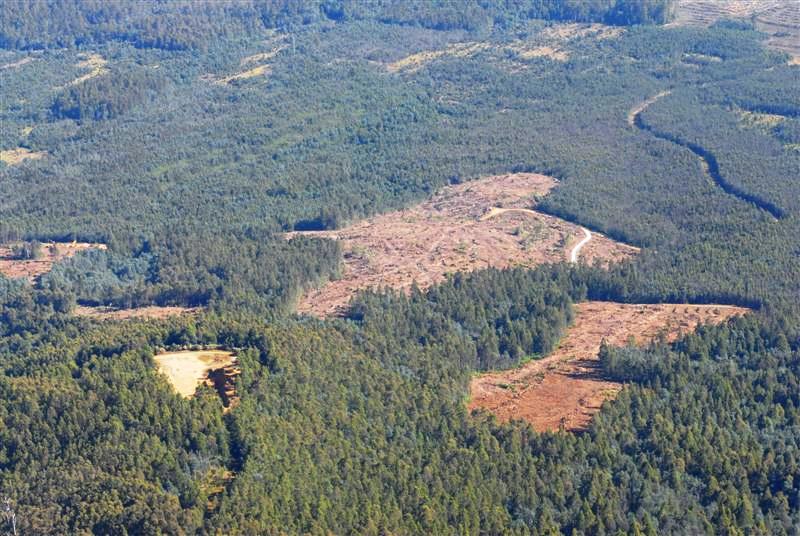 Forestry Scabs pocking the endangered Upper Florentine Forest, 2011
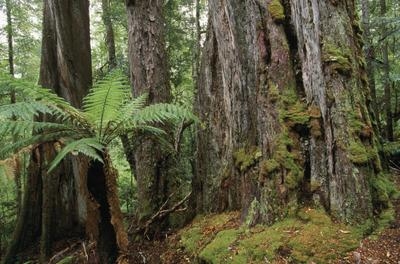 This is the ‘Forestry Plunder’
Old Growth which in the case of the Styx Valley, Forestry Tasmania labelled ‘Coupe SX015‘
This is the ‘Forestry Plunder’
Old Growth which in the case of the Styx Valley, Forestry Tasmania labelled ‘Coupe SX015‘
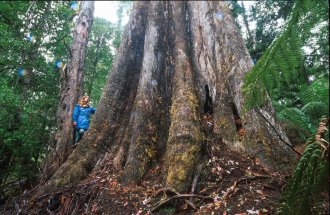
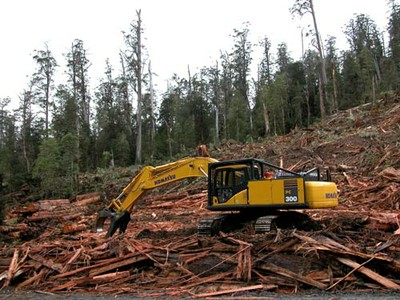 Forestry Tasmania logging the Styx Valley of its ancient old growth
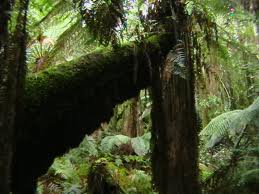
 A Styx Legacy
A Eucalyptus regnans giant stump is all that remains of one of the huge trees
felled to make way for the logging road in coupe SX 15A in the Styx Valley.
^http://www.lexicon.net/peterc/Tasmania/Tas01.htm
A Styx Legacy
A Eucalyptus regnans giant stump is all that remains of one of the huge trees
felled to make way for the logging road in coupe SX 15A in the Styx Valley.
^http://www.lexicon.net/peterc/Tasmania/Tas01.htm
 A rare giant Eucalyptus regnans of the nearby Upper Florentine
(Photo by Editor 20110928, free in public domain, click photo to enlarge)
A rare giant Eucalyptus regnans of the nearby Upper Florentine
(Photo by Editor 20110928, free in public domain, click photo to enlarge)



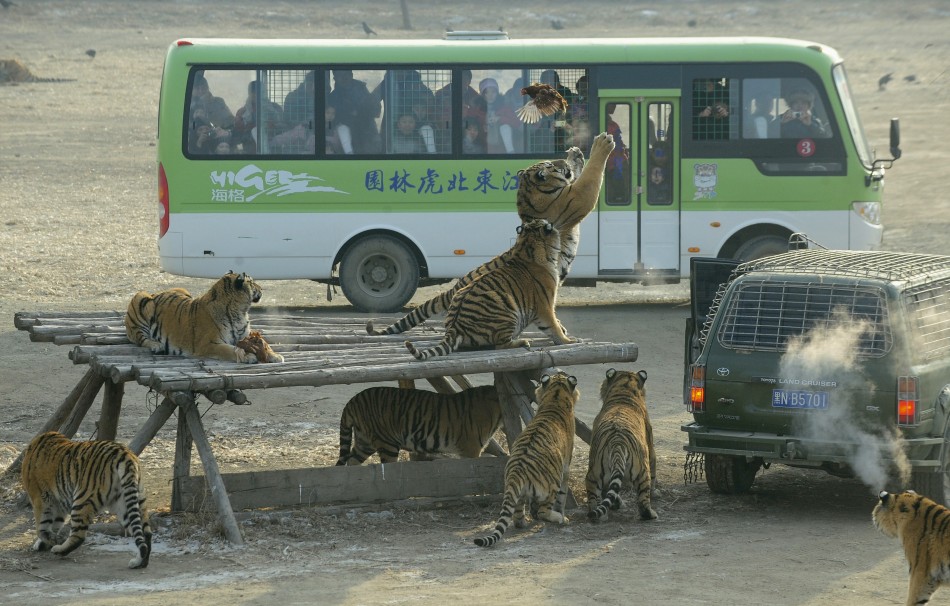
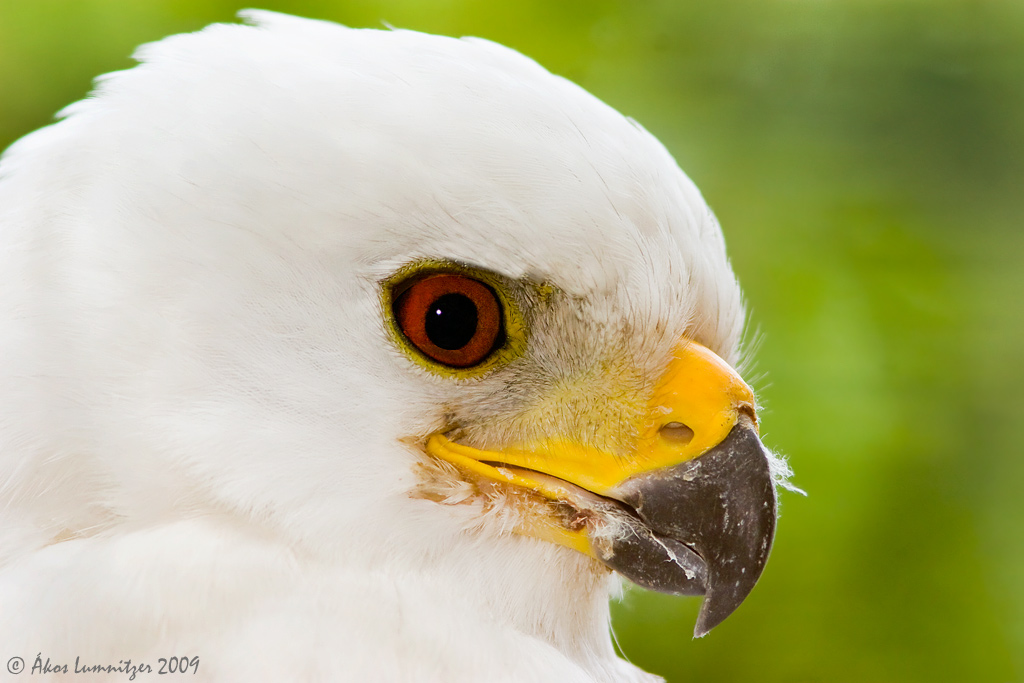

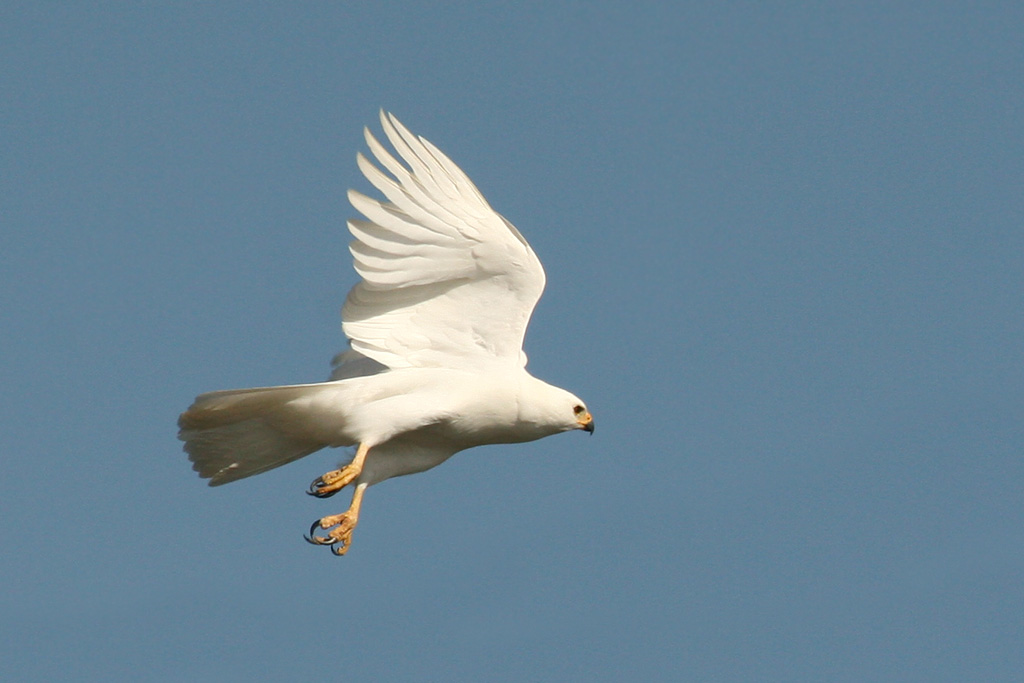



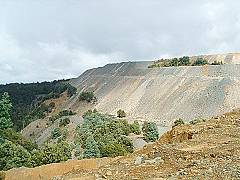
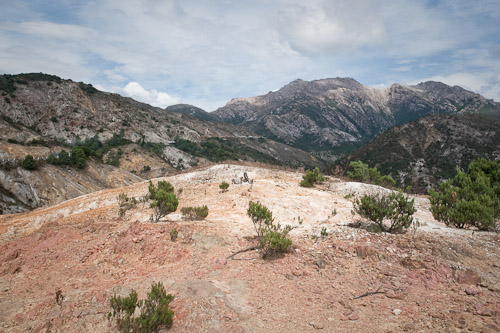


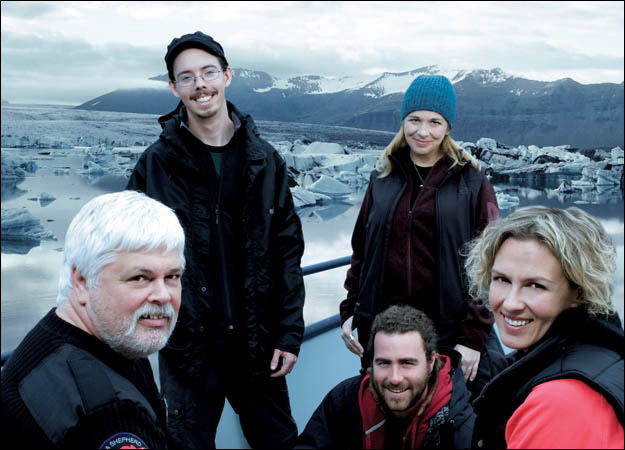

 The real Christmas experience without cutting down a tree.