Archive for the ‘Threats from Deforestation’ Category
Friday, February 24th, 2012
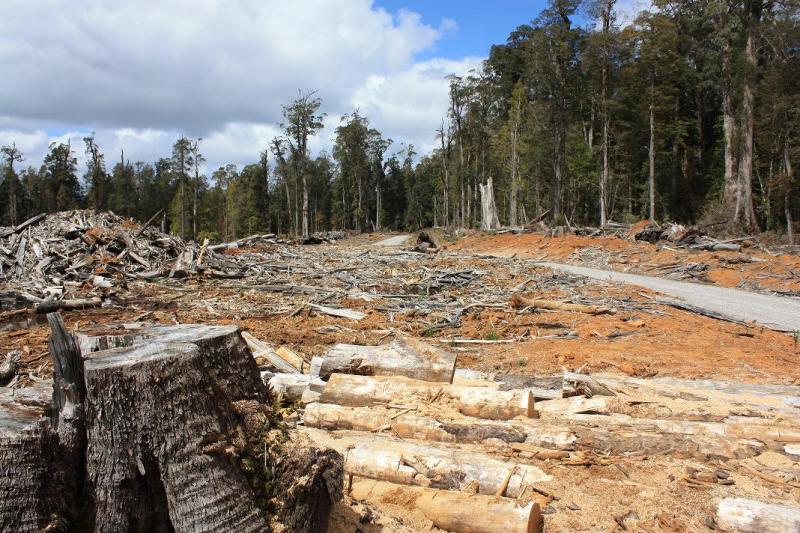
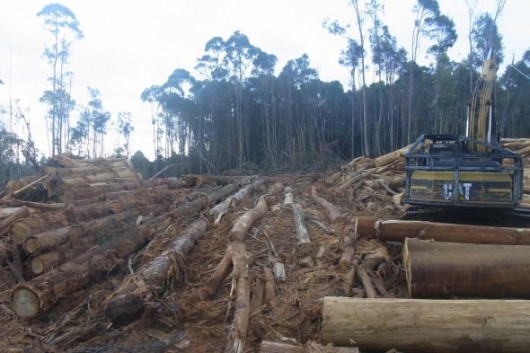 Tasmania’s Old Growth Forests
– victims of obsessive compulsive logging by Forestry Tasmania
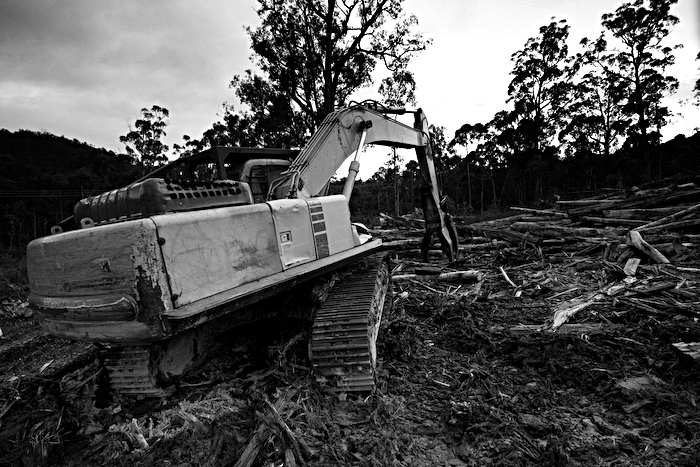
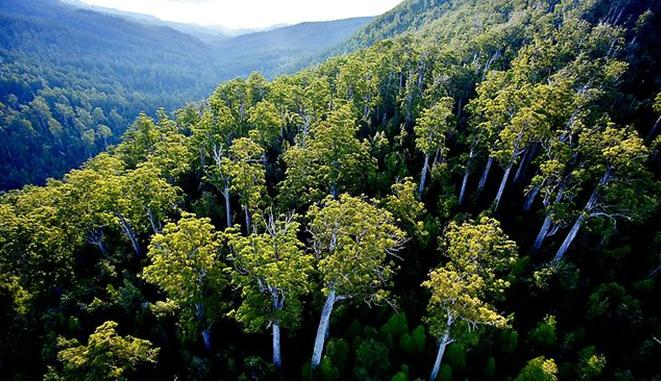
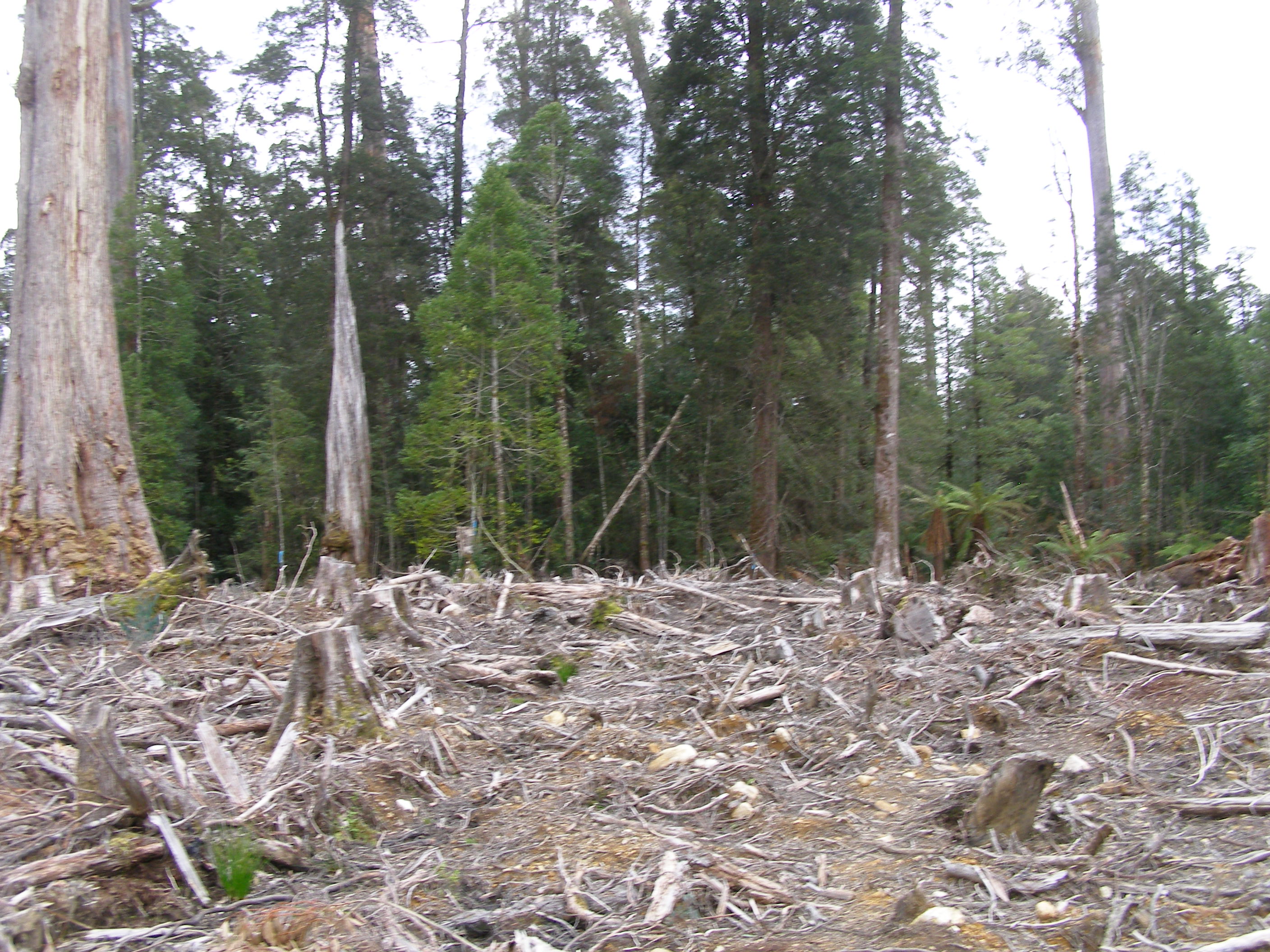
(Photo courtesy of HVEC and Code Green) Tasmania’s Old Growth Forests
– victims of obsessive compulsive logging by Forestry Tasmania
(Photo courtesy of HVEC and Code Green)
.
Logging is not about woodchips or timber or even land clearing for plantations. It is a compulsive addiction, like compulsive hoarding.

Compulsive Logging Self Test:
Are you a compulsive logger? Answer YES or NO to the following:
.
- Do you find yourself logging forests that timber markets do not consider valuable?
- Do you experience difficulty or find it impossible to stop logging say for more than a week?
- Do you keep your chainsaw in your ute?
- When you drive past a forest, or even a tree for that matter, do you get an urge to chainsaw it?
- Do you need to be told to stop chainsawing at the end of a day’s shift, even after it has become dark?
- Do you have recurring dreams about falling trees?
- Do you hate Monty Python’s I’m a Lumberkjack song, and become agitated and violent when hearing it played?
.
If you answered YES to most of the above questions, you maybe a compulsive logger.
.
Forestry Tasmania a Compulsive Logger
.
Despite Tasmania’s Inter-governmental Agreement (IGA) on 7th August 2011 assuring immediate logging moratorium of native forests in agreed reserves, Forestry Tasmania continues to eco-rape and pillage protected native forests in defiance of this agreement.
.
IGA Clause 25 states:
‘The State will immediately place the 430,000 hectares of native forest identified in Attachment A (other than any areas that are not State forest), from the 572,000 hectares nominated by ENGOs through the Statement of Principles process, into Informal Reserves. The boundaries of this 430,000 hectares were verified through an independent verification process.’
.
Yet the Tasmanian Government’s industrial logger Forestry Tasmania displays business as usual pre-IGA (7-Aug-2011) and pre-Conservation Agreement (13-Jan-2012).
Forestry Tasmania is delinquent, operating to its own parallel agenda, despite being taxpaper funded, despite annually losing millions of taxpayer funding. It is an indulgent selfish cult offering only hand to mouth welfare to its logging members. It is currently getting stuck into Coupe BA388D in the Liffey State Forest inside the IGA Immediate Protection Area of 430,000 hectares.
.
Forestry Tasmania is characterised by the following:
-
- Feelings of excessive doubt and caution
- Preoccupation with details, rules, lists, order, organization or schedule
- Excessive conscientiousness, scrupulousness, and undue preoccupation with productivity to the exclusion of pleasure and interpersonal relationships
- Excessive pedantry and adherence to social conventions
- Rigidity and stubbornness
- Unreasonable insistence that others submit exactly to its way of doing things, or unreasonable reluctance to allow others to do things
- Intrusion of insistent and unwelcome thoughts or impulses.
Tasmanian Forests Minister Bryan Green dodges questions, covering for Forestry Tasmania
.
‘The Tasmanian Greens today accused the Minister for Forests Bryan Green MP of dodging questions on whether Forestry Tasmania has entered into any new wood supply contracts since the implementation of the moratorium on logging high conservation value forests.
Greens Forestry spokesperson Kim Booth MP said that in Parliament today the Minister would only say that Forestry Tasmania had renewed contracts with sawmills, but did not clarify whether the duration and/or volume of those contracts had been changed.
“I have asked Minister Green on numerous occasions to provide details of any contracts Forestry Tasmania has signed for logging or roading in high conservation value forests placed under a moratorium by the Forest Principles process,” Mr Booth said.
“Judging by the Minister’s refusal to answer my clear and direct question it would appear he is trying to cover for Forestry Tasmania’s refusal to comply with the IGA.”
“The Minister must clarify whether Forestry Tasmania is deliberately undermining the Tasmanian Forests Intergovernmental Agreement and all the hard work that has gone into it.”
“Forestry Tasmania is stuck in the past and continues to want to wage war over the Tasmanian forests by targeting areas of High Conservation Value forests.”
“The Minister for Forests must once and for all clarify what he knows about any contracts that have been signed or renewed since the moratorium was put in place.”
“I will be writing to the Minister for a full and detailed response to the question that I asked in Parliament today and I would urge him to encourage Forestry Tasmania to keep up with the expectations of Tasmanians and play their part in the implementation of the IGA.”
November 16, 2011
[Source: ^http://mps.tas.greens.org.au/2011/11/minister-dodges-questions-covering-for-forestry-tasmania/]
.

.
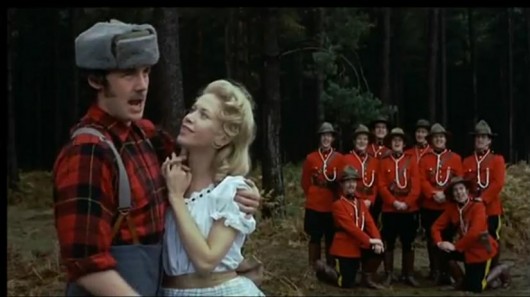
I’m a Lumberjack
(Tasmanian version)
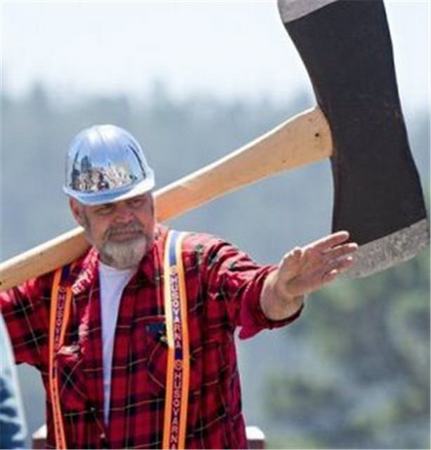
He’s a logger and he’s okay, he borrows for gear ‘cos Gillard ‘ll pay.
.
FORESTRY TAS:
He’s a logger, and he’s okay.
He borrows for gear cos Gillard will pay.
.
LOGGER:
I cut down trees. I eat my lunch.
I go to the lavatory.
On Fridays afters, I knock off
And call into the National for tea.
.
FORESTRY TAS:
He cuts down trees. He eats his lunch.
He goes to the lavatory.
On Fridays afters, I knock off
And call into the National for tea.
He’s a logger, and he’s okay.
He sleeps all night and he works all day.
.
LOGGER:
I cut down trees. I skip and jump.
I like to press wild flowers.
I put on women’s clothing
And hang around in bars.
.
FORESTRY TAS:
He cuts down trees. He skips and jumps.
He likes to press wild flowers.
He puts on women’s clothing
And hangs around in bars?!
He’s a lumberjack, and he’s okay.
He sleeps all night and he works all day.
.
LOGGER:
I cut down trees. I wear high heels,
Suspendies, and a bra.
I wish I’d been a girlie,
Just like my dear Papa.
.
FORESTRY TAS:
He cuts down trees. He wears high heels,
Suspendies, and a bra?!
?????
What’s this? Wants to be a girlie?! Oh, My!
…X%$*&#@)*#!^@!
He’s a lumberjack, and he’s okay.
He sleeps all night and he works all day.
He’s a lumberjack, and he’s okaaaaay.
He sleeps all night and he works all day.
.
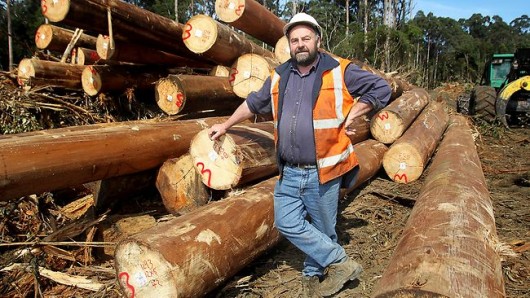 . .
‘An audit of Forestry Tasmania’s logging plans by environment groups shows Forestry Tasmania has not only failed to cease logging within proposed new forest reserves, but since receiving a $12.5 million government payout, it has increased the number of logging operations within the new reserve areas — a move directly at odds with the Tasmanian Forests Intergovernmental Agreement (IGA).’
~ 9th February 2012
.
[Source: ‘Forestry Tasmania’s ongoing logging in proposed new forest reserves‘, joint publication by The Wilderness Society, Environment Tasmania, and the Australian Conservation Foundation, ^http://www.wilderness.org.au/pdf/ongoing-logging-report >Read Report (pdf) ]
.
Tuesday, February 21st, 2012
This article was initially published on 20110728 by the UK based Environmental Investigation Agency (EIA) under its press release entitled ‘Vietnamese Army named as timber smuggler’, Contact: EIA, 62-63 Upper Street, London N1 0NY, United Kingdom, ^www.eia-international.org]
.
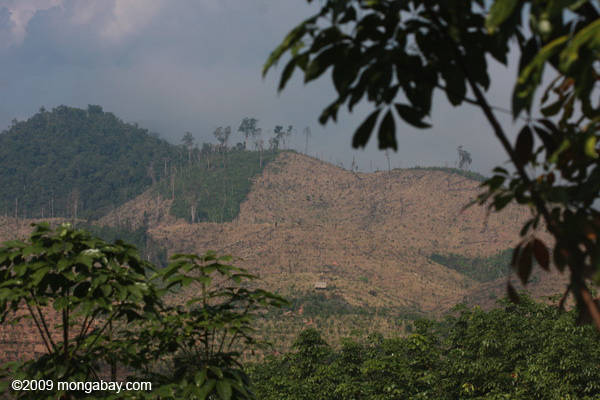
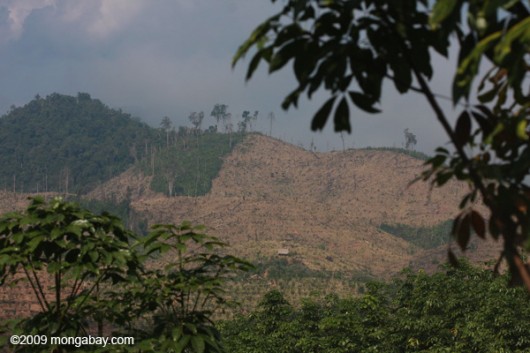 Forests in Laos have declined steadily in recent decades,
falling from 64% cover in 1960 to 41% in 2005.
Primary forests now cover less than 10 % of the country according to U.N. data.
(Source: Mongabay, ^http://news.mongabay.com/2011/0622-laos_crackdown.html) Forests in Laos have declined steadily in recent decades,
falling from 64% cover in 1960 to 41% in 2005.
Primary forests now cover less than 10 % of the country according to U.N. data.
(Source: Mongabay, ^http://news.mongabay.com/2011/0622-laos_crackdown.html)
.
BANGKOK: A new report released today (20110728) exposes the pivotal role played by the Vietnamese military in a multi-million dollar operation which is smuggling threatened timber over the border from the shrinking forests of neighbouring Laos.
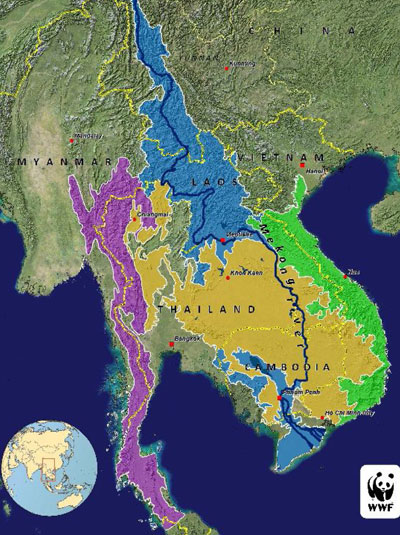 Greater Mekong Region Greater Mekong Region
.
Laos has some of the Mekong region’s last intact tropical forests, but the London-based Environmental Investigation Agency (EIA) report Crossroads: The Illicit Timber Trade Between Laos and Vietnam reveals its export ban on raw timber is routinely flouted on a massive scale to feed the ravenous timber processing industries of Vietnam, China and Thailand.
During undercover operations in 2010 and 2011, EIA agents posing as timber buyers tracked a trail of corruption and inadequate enforcement back from the busy furniture factories and ports of Vietnam to its border with Laos and beyond.
 The forests of Laos support the livelihoods of millions of rural and indigenous people but are seriously threatened by over-exploitation; such is the volume of illegal timber flowing through Laos’ porous borders that its furniture manufacturing industry is finding it cannot supply orders due to a lack of raw materials. The forests of Laos support the livelihoods of millions of rural and indigenous people but are seriously threatened by over-exploitation; such is the volume of illegal timber flowing through Laos’ porous borders that its furniture manufacturing industry is finding it cannot supply orders due to a lack of raw materials.
Through investment in logging, plantations and hydropower projects, Vietnamese firms have appropriated large swathes of Lao forests, yet the only winners in Laos are corrupt Government officials and well-connected businessmen. Meanwhile, Vietnamese logging companies and furniture factories are booming on the back of the illegal trade, exporting billions of dollars worth of finished wood products to the major markets of the USA and European Union.
And EIA’s investigations revealed that one of the biggest loggers in Laos is a company owned by the Vietnamese military. Investigators first encountered the Vietnamese Company of Economic Cooperation (COECCO) in October 2010 during a visit to Qui Nhon port, documenting huge piles of logs bearing green paint marks and tagged with yellow labels bearing a Vietnamese name which translated into Company of Economic Cooperation – Ministry of Defence (or COECCO). A port worker said 95 per cent of the logs had come from
Laos and most were owned by the Vietnamese military; specifically Military Zone 4.
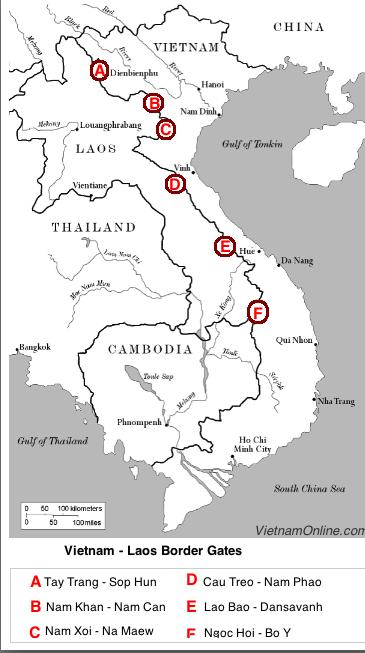
Similarly marked logs were observed in a huge storage area between the two formal checkpoints at the Bo Y border crossing (‘F‘ on map below) and EIA was eventually able to confirm that most of them had come from logging operations linked to the construction of a nearby hydropower dam.
To uncover more details of the company’s operations, EIA investigators travelled to COECCO’s headquarters in Vinh City, Vietnam, in May 2011 and learnt COECCO has been in the timber trade and logging business in Laos for more than 20 years, that it sources most of its logs from Lao dam clearance sites and that it is one of a handful of companies permitted to carry out logging in these areas.
A well-connected Lao company is also making a fortune trading logs to Vietnam; the Phonesack Group, the boss of which is connected with the Lao Government, prefers to send logs across the border while its own wood processing struggles to get supplies of raw material.
EIA Head of Forest Campaign Faith Doherty said:
“EIA first exposed the illicit log trade between Laos and Vietnam in 2008, and our latest investigations reveal that sadly nothing has changed.
“The governments of Vietnam and Laos urgently need to work together to stem the flow of logs and curb the over-exploitation of Laos’ precious forests before it’s too late, and the Vietnamese military must be excluded from logging operations in Laos. “With a new Timber Regulation coming into force within European markets in 2013, both Vietnam and Laos have a lot at stake and urgently need to work with the European Union.”
.
Urgent Call to Action – by EIA
.
1. THE GOVERNMENT OF LAOS SHOULD:
- Enforce its log export ban
- Publish details of all logging quotas and the selection process
- Clarify rules for converting forest land for plantations
.
2. THE GOVERNMENT OF VIETNAM SHOULD:
- Respect the policies of the Lao Government by blocking log imports from the country
- Hold bilateral talks with the Government of Laos over illicit wood trade between the two countries
- Work with Vietnamese wood industry associations to exclude Lao logs from its supply chain
- Exclude military businesses from carrying out logging operations in Laos
.
3. THE EUROPEAN UNION SHOULD:
- Ensure that any Voluntary Partnership Agreement (VPA) discussions with Vietnam and Laos address the issue of log trade between the two countries
- Ensure that VPA talks include the full range of stakeholders
- Promote forest governance lessons from FLEGT (Forest Law Enforcement, Governance and Trade) into the development of REDD+ (Reducing Emissions from Deforestation and Forest Degradation) , specifically in terms of displaced deforestation
.
4. COMPANIES AND CONSUMERS SHOULD:
- Obtain proof that wood products sourced from Vietnam are not derived from logs imported from Laos
Copies of the full Crossroads report, stills and footage are available on request from Environmental Investigation Agency (EIA) Press Officer Paul Newman at paulnewman@eia-international.org, or or Faith Doherty at faithdoherty@eia-international.org.
.
Illegal logging and the associated trade in stolen timber
.
[Source: ‘Transnational Organised Crime in South East Asia: Threat Assessment‘, article in newsletter ‘NTS Alert’, July 2010 (Issue 1), published by the Centre for Non-traditional Security Studies (NTS), within the S. Rajaratnam School of International Studies (RSIS), Graduate School of Nanyang Technological University, Singapore, ^http://www.rsis.edu.sg/nts/HTML-Newsletter/alert/NTS-alert-jul-1001.html]
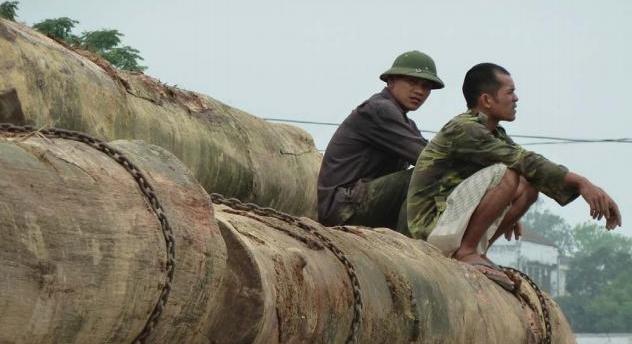
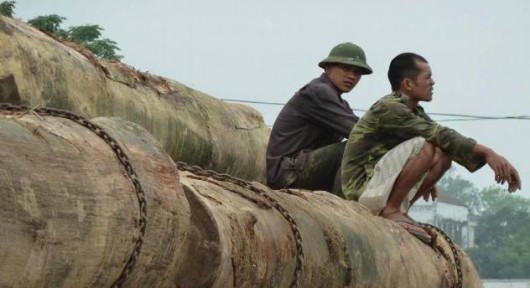
.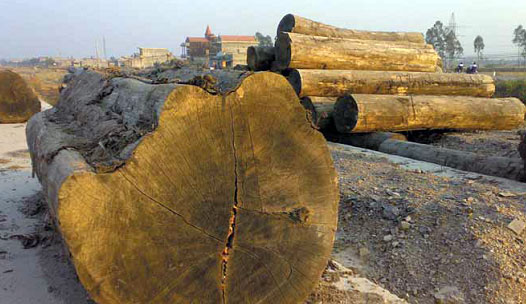 Yellow balau log from Lao Peoples Democratic Republic, awaiting transportation. Yellow balau log from Lao Peoples Democratic Republic, awaiting transportation.
(Photo : Environmental Investigation Agency, 2008)
.
Illegal logging occurs when timber is harvested, transported, processed, bought, or sold in violation or circumvention of national or sub-national laws (Miller et al., 2006). Between 8 and 10 per cent of global wood products stems from illegal logging, with annual global market value of losses estimated at over USD 10 billion (United Nations Office on Drugs and Crime – UNODC, June 2010). Southeast Asia is a major supplier of illicit timber with an estimated annual turnover of USD 3.5 billion. As much as 40 per cent of wood-based products imported into the EU in 2008 and half of China’s imports in 2007 (worth USD 900 million) originated from illegal logging.
Indonesia remains the country most heavily affected by illegal logging. The country possesses 123 million ha of forest (10 per cent of global forest cover) including the third largest tropical rainforest. As much as 80 per cent of timber logged in Indonesia is suspected to be illegally sourced with annual losses in government revenue estimated at USD 2 billion (Human Rights Watch, 2009). The Indonesian Ministry of Forestry estimates that in recent years, the country lost between 1.6 and 2.8 million ha of forest annually (between 3 and 5 ha a minute) to illegal logging and land conversion (UNODC, June 2010).
.
Imported Rainforest Timbers to Australia
[Source: ‘The Good Wood Guide: A Residents Guide to Purchasing Environmentally Friendly Timber’, Waverley Council, NSW, ^http://www.wettropics.gov.au/st/rainforest_explorer/Resources/Documents/8to9/GoodWoodGuide.pdf]
.
About 13% of Australia’s sawn timber is sourced from tropical forests. We also import tropical rainforest timber items such as veneers, plywoods and picture mouldings. The majority of these timber products are sourced from unsustainably logged forests and could be replaced by sustainable locally grown alternatives.
Logging tropical rainforests causes the extinction of hundreds of plant and animal species each year in addition to loss of the home of many indigenous tribal peoples. In South East Asian rainforests the rate of clearing is five million hectares per year. Once an intact rainforest has been destroyed, it cannot be replaced for thousands of years.
Ed: A rainforest is not a ‘renewable resource’. Rainforest timber is driving extinctions.
.
Commonly Imported South East Asian Rainforest Timbers to Avoid
.
- Meranti
- Merbau
- Ramin
- Pacific Maple
- Philippine Mahogany (Calantas)
- Keruing (also known as Naytoh, Narra and Kapur)
- Teak
- Jelutong
- Motoa (also known as Merawan, Batu)
- Balau
.
Old-Growth Forests
.
‘Old-growth forests are native forests which have had no recent disturbance by humans and regenerate naturally over hundreds of years. Like rainforest, old growth forests provide vital habitats for many species of flora and fauna. These forests are becoming increasingly rare both overseas and in Australia. Consequently we recommend that you avoid timbers sourced from old growth forests.’
Chea Sa Timber wholesales SE Asian rainforest timbers

…’We are a well established trading company situated in Malaysia. We have been in this industry since year 1995 and have earned superb reputation in our business circle. We offer a large variety of Tropical sawn timber. We have excellent sources and reliable network to fulfill both local and international market. ‘Currently, our overseas customers including Singapore, Hong Kong, China, Japan & etc. We intend to further expand our business to new markets abroad and looking for long term business partners worldwide.
Products
We specialize in following sawn timber, size in accordance to customer’s requirement:
- Finger Jointed Wood (Meranti, Durian, Sesendok)
- Meranti (Light Red/Dark Red)
- Kapur
- Kempas
- Keruing
- Merbau
- Merbatu
- KSK (Kembang Semangkok, or ‘Samrong’)
- Yellow Balau (Selangan Batu) & etc
.
[Source: ^http://www.cheasatimber.com/index.html]
.
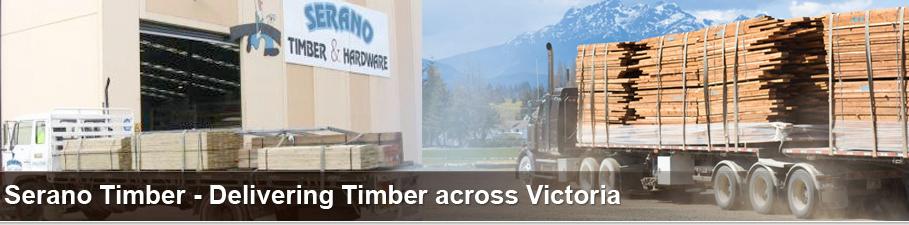
‘Serano Timber’ in Dandenong Victoria retails Yellow Belau’
.
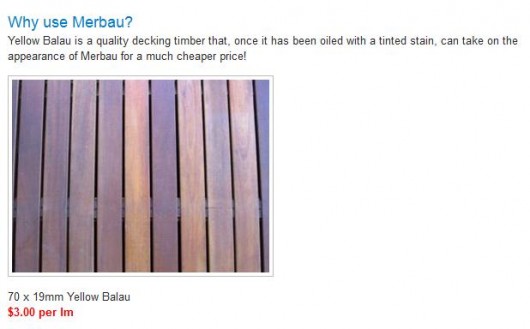
 Source: ^http://www.seranotimber.com.au/yellow-balau.html
.
Further Reading:
.
[1] FLEGT (Forest Law Enforcement, Governance and Trade), ^ http://www.euflegt.efi.int/portal/ ‘The Forest Law Enforcement, Governance and Trade (FLEGT) Action Plan sets out a range of measures available to the European Union and its Member States to tackle illegal logging in the world’s forests. Use the menu on the left to find more information about the FLEGT programme.’
.
[2] UN-REDD (Reducing Emissions from Deforestation and Forest Degradation), ^ http://www.un-redd.org/ ‘ The UN-REDD Programme is the United Nations Collaborative initiative on Reducing Emissions from Deforestation and forest Degradation (REDD) in developing countries. The Programme was launched in September 2008 to assist developing countries prepare and implement national REDD+ strategies, and builds on the convening power and expertise of the Food and Agriculture Organization of the United Nations (FAO), the United Nations Development Programme (UNDP) and the United Nations Environment Programme (UNEP).’
.
[3] Illegal Logging (UK-based) website, ^ http://www.illegal-logging.info/index.php , ‘ The purpose of this site is to provide information on the key issues in the debate around illegal logging and the trade in illegal timber, via news stories and key documents, as well as details of relevant events, and links to other relevant websites.’
.
Tags: Balau, Bo Y border crossing, Greater Mekong Region, illegal logging, Illicit Timber Trade, Lao Government, Laos, Phonesack Group, rainforest timber, Vietnamese Army, Vietnamese Company of Economic Cooperation, Voluntary Partnership Agreement
Posted in Mekong (VN), Threats from Deforestation | No Comments »
Add this post to Del.icio.us - Digg
Sunday, February 19th, 2012
This article was initially posted by Tigerquoll 20120202 as a comment on the Tasmanian Times newspaper to an article entitled ‘Gunns’ Pulp Mill lifeline extended – community will protest‘ by Anne Layton-Bennett, Friends of The Tamar Valley (20120201).
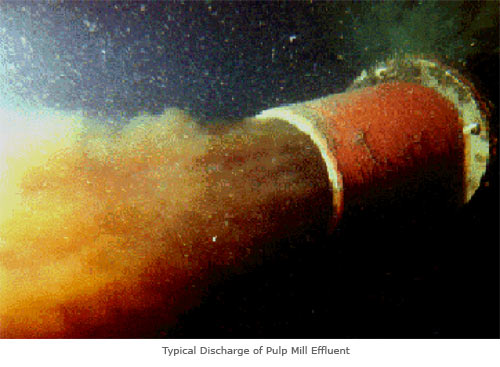 . .
The ANZ Bank publicly claims it has adopted the Equator Principles of the World Bank’s International Finance Corporation (IFC).
These are ‘voluntary standards designed by the World Bank’s International Finance Corporation (IFC) to help banks identify and manage social and environmental risks associated with the direct financing of large projects‘ – i.e. Natural Resource projects like Gunns Pulp Mill.
[Source: ANZ Bank website, ^ http://www.anz.com/aus/values/environment/Equator.asp]
.
“ANZ has voluntarily committed to fund only new projects that can be developed and operated according to sound social and environmental standards.”
~ ANZ website
 ANZ Bank’s new brand represents a bank “for the people”
For the people or for its executives? ANZ Bank’s new brand represents a bank “for the people”
For the people or for its executives?
.
As at 1 Jan 2012, the IFC’s Equator Principles Performance Standard 3 ‘Resource Efficiency and Pollution Prevention” states that its aim is
- To avoid or minimize adverse impacts on human health and the environment by avoiding or minimizing pollution from project activities.
- To promote more sustainable use of resources, including energy and water.
- To reduce project-related GHG emissions.
.
ANZ’s prominent project finance client, Gunns and its planned Tamar Valley Pulp Mill project seems set to fail each of these objectives in its airborne emissions and waste water. In September 2007, the ANZ was ranked the most sustainable bank globally by the Dow Jones Sustainability Index. So what is the ANZ Bank not telling the IFC?
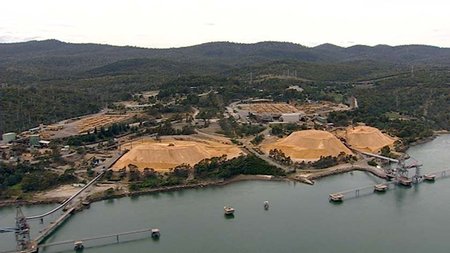 A Gunns Woodchip Mill at Longreach, Tasmania A Gunns Woodchip Mill at Longreach, Tasmania
.
 . .
IFC’s Sustainability Framework – 2012 Edition:
Performance Standard 6: ‘Biodiversity Conservation and Sustainable Management of Living Natural Resources’
Clause 14: The client will not significantly convert or degrade natural habitats, unless all of the following are demonstrated:
- No other viable alternatives within the region exist for development of the project on modified habitat;
- Consultation has established the views of stakeholders, including Affected Communities, with respect to the extent of conversion and degradation;8 and
- Any conversion or degradation is mitigated according to the mitigation hierarchy.
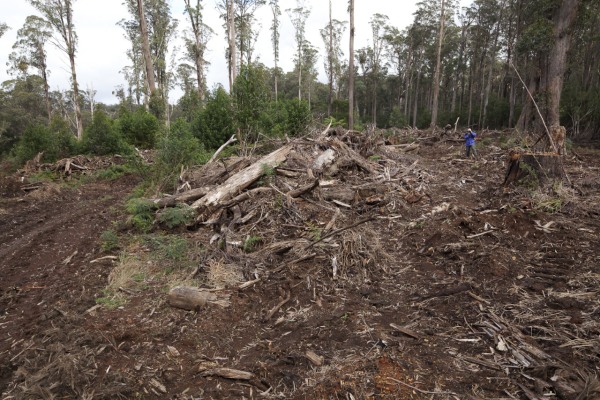
.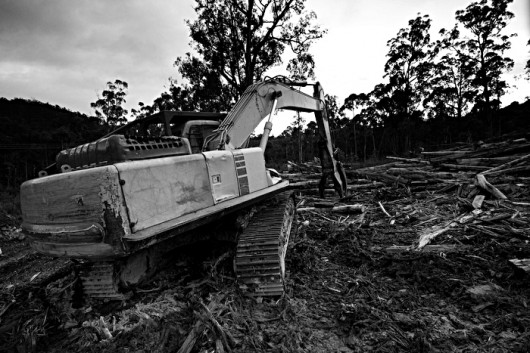 Gunns Clearfell of Tasmanian Heritage
© Photo by Alex Wise
Source: ^http://www.alexwisephotography.net/blog/2008/11/08/tasmania-clearfelling/ Gunns Clearfell of Tasmanian Heritage
© Photo by Alex Wise
Source: ^http://www.alexwisephotography.net/blog/2008/11/08/tasmania-clearfelling/
.
Clause 17: In areas of critical habitat, the client will not implement any project activities unless all of the following are demonstrated:
- No other viable alternatives within the region exist for development of the project on modified or natural habitats that are not critical
- The project does not lead to measurable adverse impacts on those biodiversity values for which the critical habitat was designated, and on the ecological processes supporting those biodiversity values
- The project does not lead to a net reduction in the global and/or national/regional population13 of any Critically Endangered or Endangered species over a reasonable period of time;
- A robust, appropriately designed, and long-term biodiversity monitoring and evaluation program is integrated into the client’s management program.
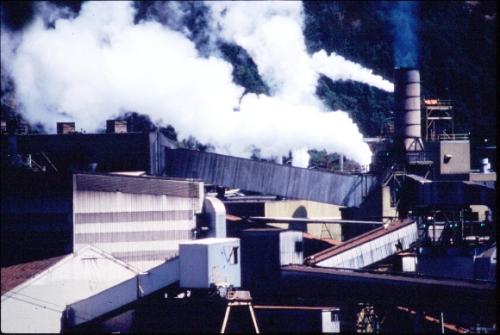
.
Back to ANZ’s website…
‘ANZ will comply with the Principles for all project finance proposals, regardless of their size, and apply the same Equator Principles standards to all projects in all countries.’
.
These people don’t think so..
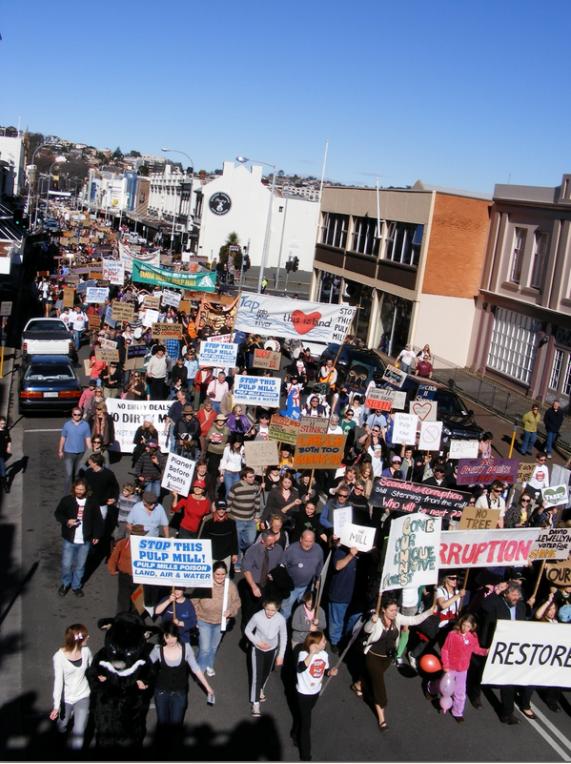
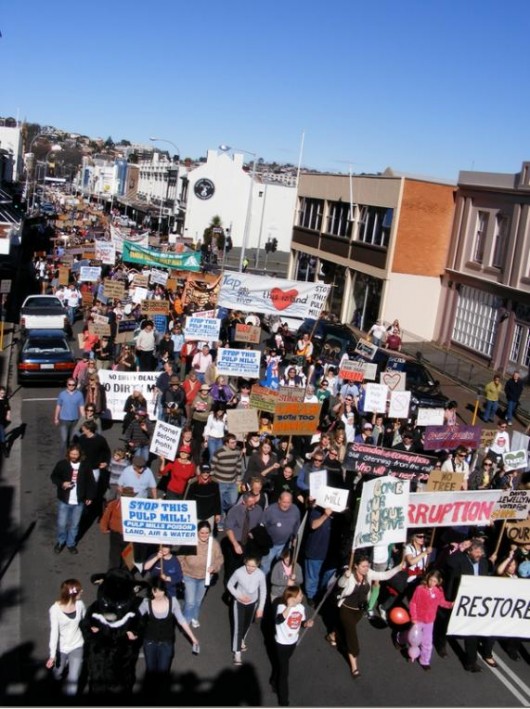 Pulp Mill protest, Launceston Tasmania
A pulp mill for the people? Pulp Mill protest, Launceston Tasmania
A pulp mill for the people?
.
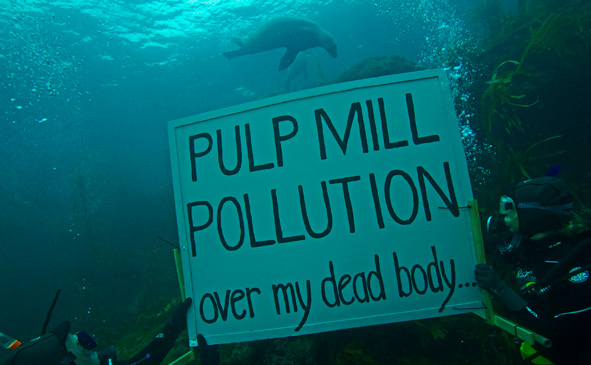
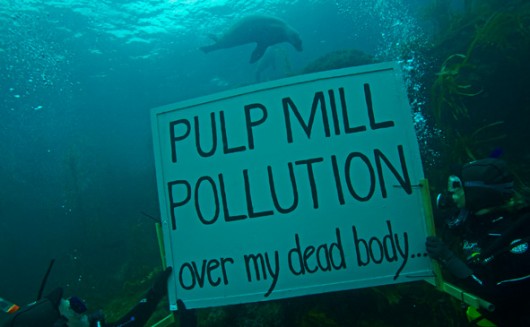
Grassroots community action group in Tasmania, Pulp the Mill Alliance, continues to oppose Gunns’ proposed Tamar Valley Pulp Mill for the following reasons:
- Toxic effluent in Bass Strait
- Threats to the livelihood and lifestyle of thousands of Tamar Valley residents
- Fresh water usage
- Possible future use of native forests
- The draconian and undemocratic Section 11 of the Pulp Mill Assessment Act
- Lack of an independent, transparent assessment of a “critically non-compliant” mill
- Lack of public hearings and community consultation
- A complete lack of integrity on Gunns’ part
.
The No Pulp Mill Alliance is undertaking a national campaign to warn the ANZ that if they renew their debt facility to Gunns Ltd then we will renew our national campaign targeting ANZ as the bank that is financing the corruptly approved, environmentally destructive, divisive, and financially risky Tamar Valley pulp mill.
‘We will be placing national advertisements, undertaking direct actions, sending letters/petitions, and anything else it takes to let ANZ know that we don’t want them to finance the Gunns’ Tamar Valley pulp mill.’
With Gunns’ share price at its lowest ever and a capital equity of only $82 million, Gunns Ltd is in serious financial trouble. It is selling everything to try and get its pulp mill built. In fact, the name Gunns Ltd could now be considered as synonymous with the Tamar Valley Pulp Mill.
Gunns has a net debt of $616 million, of which the primary financing facility – a $350 million senior debt facility – is maturing in January 2012. ANZ is the primary financing facility and thus is the Aussie Bank that keeps Gunns standing. Current site works taking place to prepare for construction of the proposed pulp mill are directly financed by the ANZ bank.
Gunns’ Chairman stated in his Annual General Meeting speech in November 2011 that Gunns Ltd is in discussion with ANZ to extend the debt with the: “objective of these discussions is to provide financing terms which facilitate the completion of the asset sale program and financial close of the Bell Bay pulp mill project.”
 Gunns’ pulp mill site on the Tamar River, Tasmania Gunns’ pulp mill site on the Tamar River, Tasmania
.
We demand that ANZ do not extend the debt facility for Gunns Ltd, and warn ANZ that if it does announce an extension of the debt facility, then our national campaign will result in letting its customers know worldwide that it is backing a polluting project that does not comply with the Equator Principles.’
[Source: ANZ Campaign to stop funding the Pulp Mill, ^http://www.pulpthemill.org/]
 . .
The current ten banks committed to Gunns in a syndicated loan are gambling solely on the go ahead and profitability of the proposed Pulp Mill.
Whereas Gunns once had a reliable cash inflows stream from multiple revenue streams – plantation sales including interstate, sawmilling, and hardware earlier on, all non pulp mill assets are being treated as “non-core”.
This strategy has already shown to be poor by the fire sale desperation of these assets in order to maintain operating cash flow to remain solvent, while the myopic focus on the proposed $2.3 billion Bell Bay pulp mill drives the Gunns’ Board. Gunn’s revenue strategy is hedged on one big risky pulp mill – risky from the point of view of fickle international market demand and pulp commodity prices, mired by political controversy and considerable community opposition to the mill.
It’s equivalent to gambling all the $340 Million on the red to win on the roulette wheel.
These banks must be privy to some revenue guarantees and that is likely from ‘commercial in confidence’ assurances from the Tasmanian Labor Party.
.
Tigerquoll
Suggan Buggan
Victoria
.
Further Reading:
.
[1] World Bank’s International Finance Corporation (IFC) Equator Principles , ^ http://www.equator-principles.com/
.
[2] Pulp the Mill Alliance Inc. ^ http://www.pulpthemill.org/
.
[3] Friends of the Tamar River, ^ http://ftv.org.au/
.
[4] TAP, ^ http://www.tapvision.info/
.
[5] The Wilderness Society (Tasmania), ^ http://www.wilderness.org.au/regions/tasmania
.
[6] Tasmanian Times (forum), ^ http://tasmaniantimes.com.au/, ‘Tasmanian Times is a forum of discussion and dissent – a cheeky, irreverent challenge to the mass media’s obsession with popularity, superficiality and celebrity’. Article: ^ http://tasmaniantimes.com/index.php?/article/gunns-pulp-mill-lifeline-extended-community-will-protest/
.
[7] Tasmania Clearfelling, Alex Wise Photography, ^ http://www.alexwisephotography.net/blog/2008/11/08/tasmania-clearfelling/
.
Tags: ANZ Bank, Equator Principles, for the people, Gunns, Gunns Pulp Mill, IFC, International Finance Corporation, Natural Resource Projects, pulp mill pollution, Toxic effluent, World Bank
Posted in Tasmania (AU), Threats from Deforestation | No Comments »
Add this post to Del.icio.us - Digg
Sunday, January 22nd, 2012
Tags: Bill Kelty, Blueprint for Tasmania's Forest, Conservation Agreement, Contractors Voluntary Exit Grants, ENGO, ENGO Report of Logging breaching IGA, Environmental NonGovernment Organisation, FIAT Submission to Legislative Council, Forest Reserve Map, Forestry Tasmania, Giddings Labor Government, Gillard Labor Government, Heads of Agreement, Independent Verification Group Terms of Reference, interim reserves, National Partnership Agreement, Protecting Private Forests, Tasmanian Forest Contractors Exit Assistance Program, Tasmanian Forests Agreement, Tasmanian Forests Agreement Independent Verification Group, Tasmanian Forests IGA, Tasmanian Forests Intergovernmental Agreement (IGA), Tasmanian Forests Interim Report, Tasmanian Forests Statement of Principles, Tasmanian Regional Forest Agreement, Timber Workers for Forests
Posted in Tasmania (AU), Threats from Deforestation, Threats to Wild Tasmania | No Comments »
Add this post to Del.icio.us - Digg
Sunday, January 15th, 2012
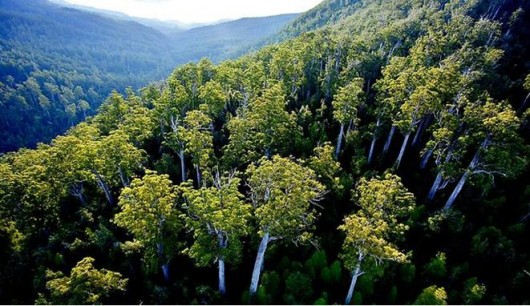 Tasmania’s magnificent ‘Weld Forest’
~ one of Tasmania’s rare ancient forests constantly threatened
by Tasmanian Government recidivist logger ‘Forestry Tasmania’ Tasmania’s magnificent ‘Weld Forest’
~ one of Tasmania’s rare ancient forests constantly threatened
by Tasmanian Government recidivist logger ‘Forestry Tasmania’
.
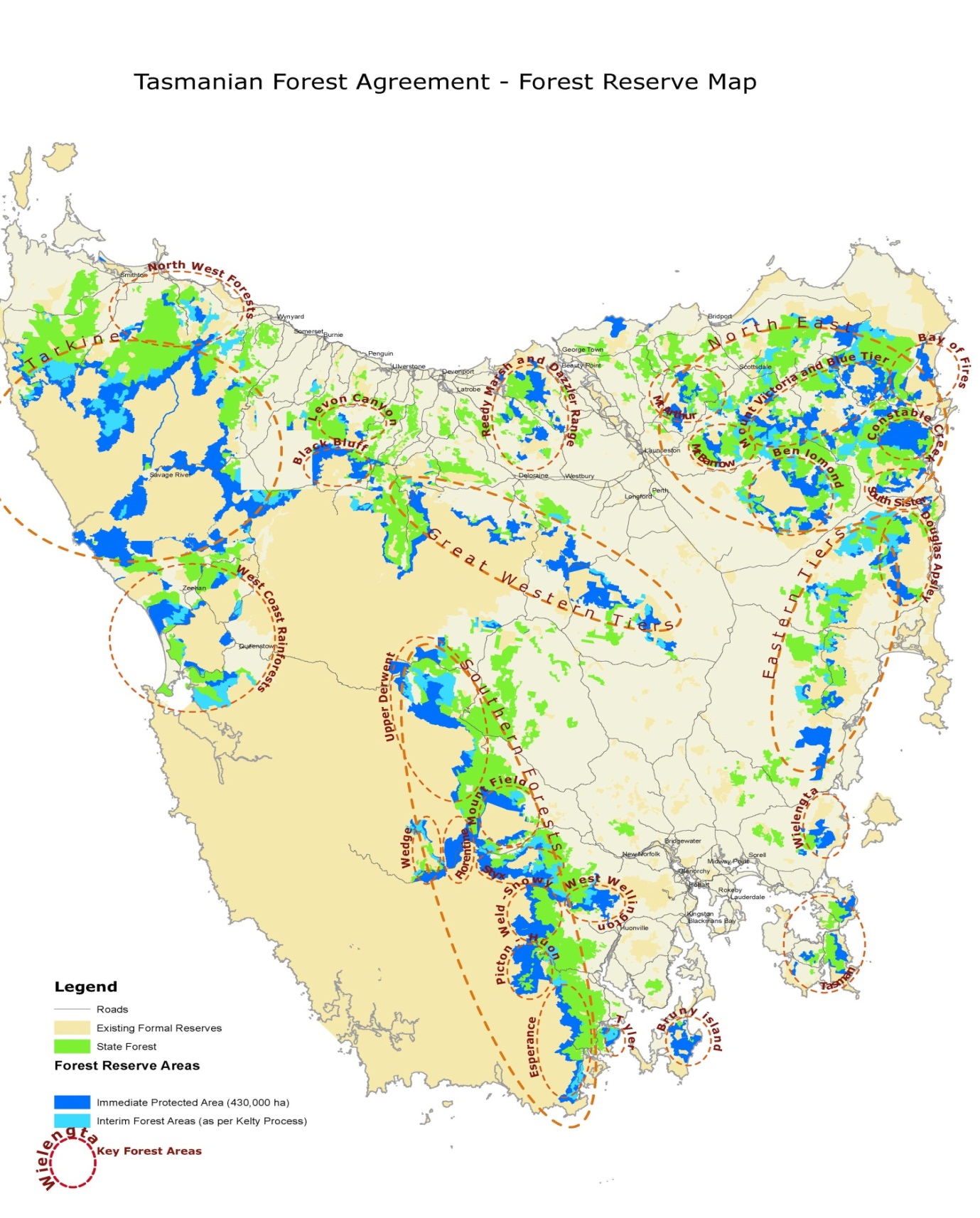
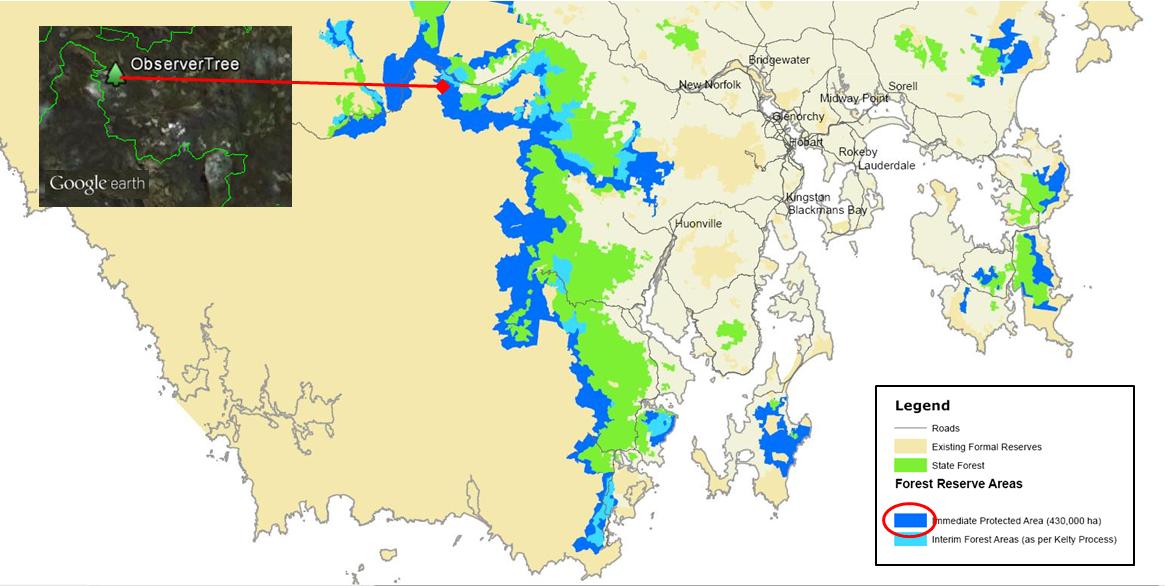
Australia’s Gillard Labor Government yesterday (20120114) announced an ‘interim legal protection for 428,000 ha’ ahead of tomorrow’s scheduled return of recidivist logging.
This appears good news which obviously the Gillard media release intends. But the process is duplicitous and sly.
Tasmania’s 2011 Forests Agreement is a community agreement about public forest protection involving taxpayer funded Forestry Tasmania so what moral right does the Labor Party have to deny the process being public – i.e. transparent and open? Why is the forest map not publicly online showing the updates of the discussions? Which 1950ha get the chainsaw and why?
This is the only available map. [Read Tasmanian Forest Protection Map 2011]
Professor Jonathan West, Chair of the Independent Verification Group has a lot to answer for. Why has he not voiced outrage publicly of Forestry Tasmania’s illegal logging of the 430.000 hectares of native forests protected in Interim Reserves under the Agreement?
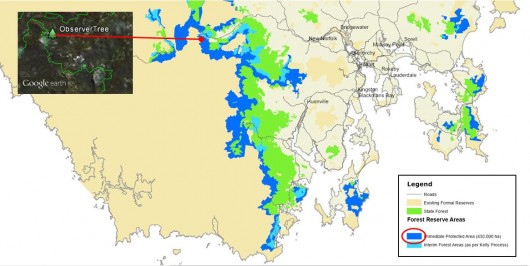
Relative position of the local Tasmanian community protest tree sit The Observer Tree
For ongoing updates visit The ObserverTree.org
.
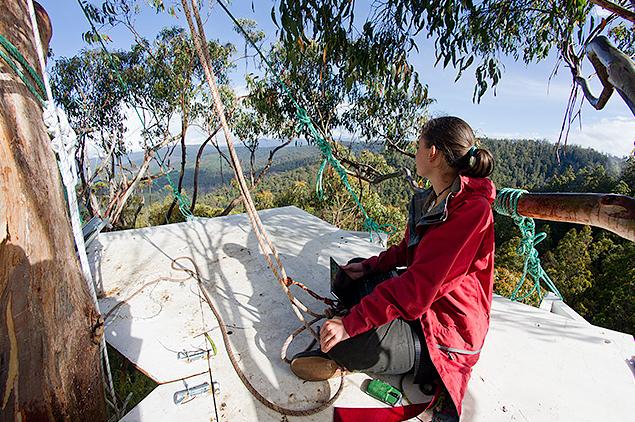
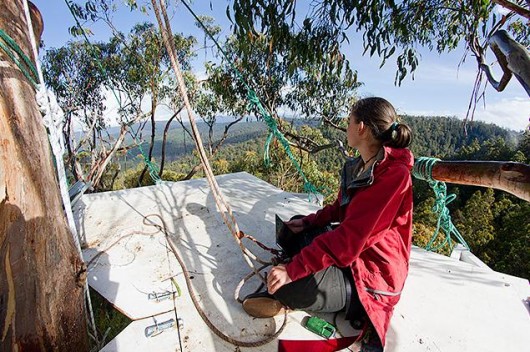 Tasmania’s Forest Defender – Miranda Gibson
stationed in a eco-Tree Sit 60 metres above the Styx Valley Forest floor
Visit: The ObserverTree.org
…waiting for Australia’s Prime Minister Julia Gillard to honour her personal promise to Tasmanians to protect Tasmanian old growth forests for perpetuity.
. Tasmania’s Forest Defender – Miranda Gibson
stationed in a eco-Tree Sit 60 metres above the Styx Valley Forest floor
Visit: The ObserverTree.org
…waiting for Australia’s Prime Minister Julia Gillard to honour her personal promise to Tasmanians to protect Tasmanian old growth forests for perpetuity.
.
572,000 hectares of Tasmania’s remaining old growth
…’as agreed‘ Julia!
.
‘Tassie forests deal like a Gunn to the head’
[Source: ‘Tassie forests deal like a Gunn to the head’, by political journalist Bruce Montgomery in Hobart, ^http://www.crikey.com.au/2011/09/06/tasmanian-forrests-deal-gillard-and-giddings/]above the Styx
.
‘The $276 million agreement that Prime Minister Julia Gillard and Tasmanian Premier Lara Giddings flaunted only a month ago as the ultimate peace deal to end the 40-year war in Tasmania’s forests is dead in the water. It comes as no surprise to those who have sought to interpret the poorly drafted provisions of the intergovernmental agreement (IGA) signed by Gillard and Giddings and those of the agreement that preceded it, the so-called Statement of Principles.
The Statement of Principles was the product of those purporting to represent the Tasmanian forest industry and the conservation movement to achieve a peace, most recently under the guidance of former ACTU secretary Bill Kelty.
Both documents appear to have been the work of plant operators rather than draftspeople. Grammar and proofing blunders aside, the giant flaw in both agreements has been the right of conservation groups to identify and nominate another half a million hectares of Crown land in Tasmania to be annexed into reserves, perhaps to the status of national parks or World Heritage, in order to neuter, by law, the timber industry in Tasmania and to pay alms to its victims.
Private foresters, who manage 26% of the total forest cover, were excluded from the negotiations on the pretext that the talks did not involve forests on private land, yet clause 31 of the IGA specifically drags 885,000 hectares of private forests into the equation.
Such a deal, whether concluded at NGO or government level, was never going to pass Tasmania’s Upper House, the Legislative Council. If it did come to pass, it would seal the fate of the Labor-Green governments in Canberra and Hobart as far as Tasmanian voters were concerned.
The premise for the Statement of Principles and the IGA was that the major industrial player, Gunns, was getting out of native forest logging in favour of plantations in order to swing public and banker support behind its $2.5 billion pulp mill proposal at Long Reach on the Tamar River.
In effect, Gunns was about to place all its eggs in one basket, a world-scale pulp mill using only plantation timber. Both agreements hinged on Gunns getting government compensation for its departure from public native forests, yet the mood in Tasmania has clearly been that Gunns should get nothing; its exit from native forests was being made on purely commercial grounds; it was immaterial that it had residual rights to use the public native forests.
If the Giddings government had been responsible for giving Gunns one red cent from the overall $276 million compensation package for the IGA, it would have faced political and electoral oblivion.
We don’t know what Gunns was offered in the end. It is thought to have been $23 million, but on the proviso that it pay its debts to Forestry Tasmania, a disputed $25 million.
Yesterday the Tasmanian government confirmed Gunns had rejected the offer, though Gunns, which has been in a trading halt on the stock exchange since August 8, said nothing.
Assuming that is right, it has the option to place those forest rights on the market. Since the IGA depends on those forests being protected, the keystone to the agreement is gone.’
.
‘Tasmanian forest deal riles green groups‘
[Source: ‘Tasmanian forest deal riles green groups’, by Lanai Vasek and Matthew Denholm, ‘The Australian’, 20120113, The Australian: ^http://www.theaustralian.com.au/national-affairs/tasmanian-forest-deal-riles-green-groups/story-fn59niix-1226243780040]
.
The Gillard Labor Government has announced interim legal protection for 428,000 ha of Tasmania’s forests, but has been accused of reneging on a deal to deliver a larger logging ban.
 Australia’s 27th Prime Minister, The Hon. Julia Gillard (June 2010 – ?)
In her vital and privileged position, she has the power, influence, connections and taxpayer resources
to protect Tasmania’s 572,000 hectares of old growth native forests consistent with the IGA.
As usual, it comes down to political will, courage and innovative thinking – which is what we expect of our leaders. Australia’s 27th Prime Minister, The Hon. Julia Gillard (June 2010 – ?)
In her vital and privileged position, she has the power, influence, connections and taxpayer resources
to protect Tasmania’s 572,000 hectares of old growth native forests consistent with the IGA.
As usual, it comes down to political will, courage and innovative thinking – which is what we expect of our leaders.
.
Environment Minister Tony Burke announced the move today after the Greens suspended normal relations with the government in protest at continues logging of areas deemed sensitive.
The new Conservation Agreement with the Tasmanian Government falls 1950ha short of the forest protection promised under last year’s intergovernmental agreement (IGA) between the Gillard and Giddings governments.
This provoked an angry reaction from environment groups, who said it had “shaken” their confidence in the two governments’ ability to deliver a broader agreement to protect up to 572,000ha.
And Greens leader Bob Brown said it was “a blueprint for the destruction of more than 20 square kilometres of high-conservation value forests”.
…The agreement provides legal protection to the area until an independent process decides how much of the larger area of 572,000ha deserves protection and can be locked up without harming existing timber contracts.
Mr Burke said the new interim deal was good for both forest conservation and jobs and would allow all parties to focus on supporting the longer-term independent verification process, expected to complete by June.
“With this agreement in place, all parties can now concentrate their efforts on assisting the important work of the Independent Verification Group, which is assessing the conservation values of the entire 572,000ha nominated by environmental non-governmental organisations, in addition to verifying long-term timber supply requirements,” Mr Burke said.
“This is a good result for Tasmania’s forestry industry, for local jobs and communities while protecting Tasmania’s iconic forests.”
However, the Wilderness Society, the Australian Conservation Foundation and Environment Tasmania all condemned the two governments for allowing logging in the 1950 ha, saying this included iconic, ancient forests in the Styx Valley, Weld Valley and The Tarkine, including endangered species habitat.
Earlier this week Greens leader Bob Brown said he would not resume his regular meetings with Julia Gillard once parliament returns next month unless she committed to ending logging. This afternoon, Senator Brown said he remained open to ad-hoc talks with Ms Gillard, who will visit Tasmania on the weekend, but accused her of reneging on the promise to protect the full 430,000ha in the IGA announced in August last year.
.
How is Tasmania’s Premier Lara Giddings dealing with the colonial cultural right to log Tasmania’s remaining ancient forests?
Only when Tasmania’s condemned old growth forest is ultimately logged, will neanderthal loggers ugg…
.
‘Where’s me big trees gone’ ?
 . .
Bill Kelty’s drafting of the IGA was a contradictory hoodwink
.
While the public message is $276 million (no less) to exit native forests and a logging moratorium, what is Lara Giddings saying privately to Forestry that we see its business as usual pursuing old growth logging self-righteously on its perceived right to log?
Under the conservation agreement, the Tasmanian government agency Forestry Tasmania is restrained from logging swathes of disputed public forest while the deal is settled. However, evidence has been found of Forestry Tasmania continuing to penetrate its logging deep into these wilderness forests. Meanwhile the contradictory message by the Giddings Labor Government to the Tasmanian forest industry is that it has a ‘guaranteed wood supply‘.
Perhaps having the $276 million cake she says its ok to log the forest too!
In 2004 the Timber Workers for Forests (TWFF) defended their “statutory requirement that a minimum of 300,000 m3 of high quality Eucalypt veneer and sawlog be made available annually.” It’s ‘Logging Statutory Requirement‘ versus ‘Native Logging Moratorium‘ allowing a duplicitous and sly parallel government message process.
Bill Kelty’s drafting of the IGA was worse that a compromise. Its complex and contradictory legalese was a hookwink. Kelty’s wording allowed Forestry to have its cake and eat it. On the one hand it promises Conservation (lumped as “ENGO’s”) under Clauses 25, 26 and 27 …”The State will immediately place the 430,000 ha of native forest…into Informal Reserves.”
While at the same time it also guarantees Forestry wood supply for the remaining industry under Clause 17…”At least 155 000 thousand cubic metres per year of high quality sawlog, by regulation, 265 000 metres per year of peeler billets, a speciality timber supply, noting that the industry claim is 12,500 cubic metres per year, subject to verification.”
So Forestry has has a window of logging opportunity to go for it while Professor Jonathan West’s Independent Verification Group decides the exact boundaries of the 430,000 and 572,000 for either protection or the chainsaw (Clause 20). That decision was due 31st Dec 2011, two weeks ago.
.
“It is little wonder that many Tasmanians now worry that the woodchippers’ greed destroys not only their natural heritage, but distorts their parliament, deforms their polity and poisons their society. And perhaps it is for that reason that the battle for forests in Tasmania is as much about free speech and democracy – about a people’s right to exercise some control over their destiny, about their desire to have a better, freer society – as it is about wild lands.”
[Source: ‘Out of Control: The tragedy of Tasmania’s forests’, by Richard Flanagan, in The Monthly, May 2007, ^http://www.themonthly.com.au/monthly-essays-richard-flanagan-out-control-tragedy-tasmania-s-forests-512]
.
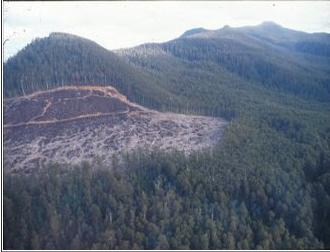 Logging invades Tasmania’s South-West wilderness in the Huon valley,
not far downstream of the above photo.
This logging is ruining the integrity of the adjacent Tasmanian Wilderness World Heritage Area
whose boundaries have been drawn to protect the treeless mountaintops
and leave the forested valleys to the loggers. Logging invades Tasmania’s South-West wilderness in the Huon valley,
not far downstream of the above photo.
This logging is ruining the integrity of the adjacent Tasmanian Wilderness World Heritage Area
whose boundaries have been drawn to protect the treeless mountaintops
and leave the forested valleys to the loggers.
.
Tags: Bill Kelty, Forestry Tasmania, Gillard Labor Government, Independent Verification Group, Julia Gillard, Labor Party, Lara Giggings, old growth forest, recidivist logging, Tasmania, Tasmanian Forests Intergovernmental Agreement, Weld Forest
Posted in + Wild Tasmania, Tasmania (AU), Threats from Deforestation | No Comments »
Add this post to Del.icio.us - Digg
Saturday, January 7th, 2012
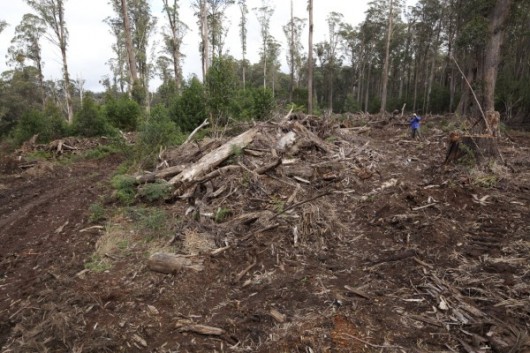 Cathcart State Forest (NSW) being logged in 2011
[Source: Australian Forests and Climate Alliance ^http://forestsandclimate.net/newsouthwales] Cathcart State Forest (NSW) being logged in 2011
[Source: Australian Forests and Climate Alliance ^http://forestsandclimate.net/newsouthwales]
.
Most of Australia’s native vegetation cover, over 75% of that predating the 1788 Colonial Invasion, has been ‘cleared’ – a euphemism for deforested, logged, destroyed, killed.
Today, as one travels around Australia and sees vasts areas of unproductive, degraded, denuded and abandoned farmlands – one questions why destroy more fragile environment? Yet the exploitative bastards are still hell bent on killing more native forest and bushland, even though they can’t properly manage the ‘already ‘cleared’ lands they’ve got. It is a short sighted insatiability, harking to a 19th Century ‘old blighty’ mindset of taming the land. It is deluded thinking that just because the native vegetation is green and looks fertile that it can be replaced for pasture and cropping and that new cleared land will be any different to that already cleared.
The Liberal-Labor governments and their rural National mates haven’t given a toss throughout the entire 20th Century and still couldn’t give a toss.
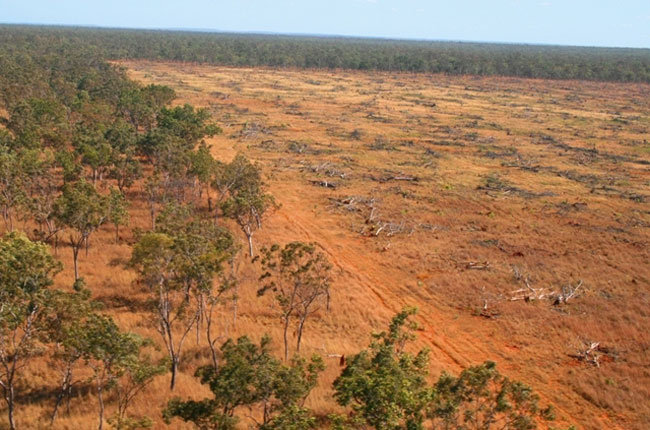
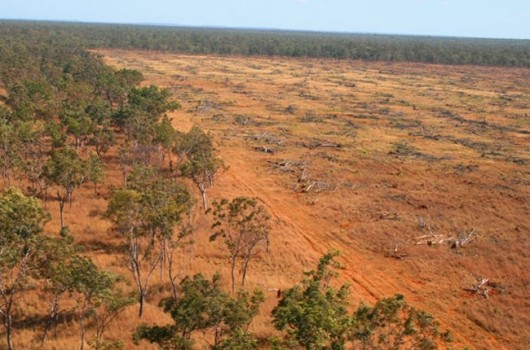 Recent land clearing in the Daly River catchment area
Northern Territory, Australia.
Photo: Environment Centre NT Recent land clearing in the Daly River catchment area
Northern Territory, Australia.
Photo: Environment Centre NT
.
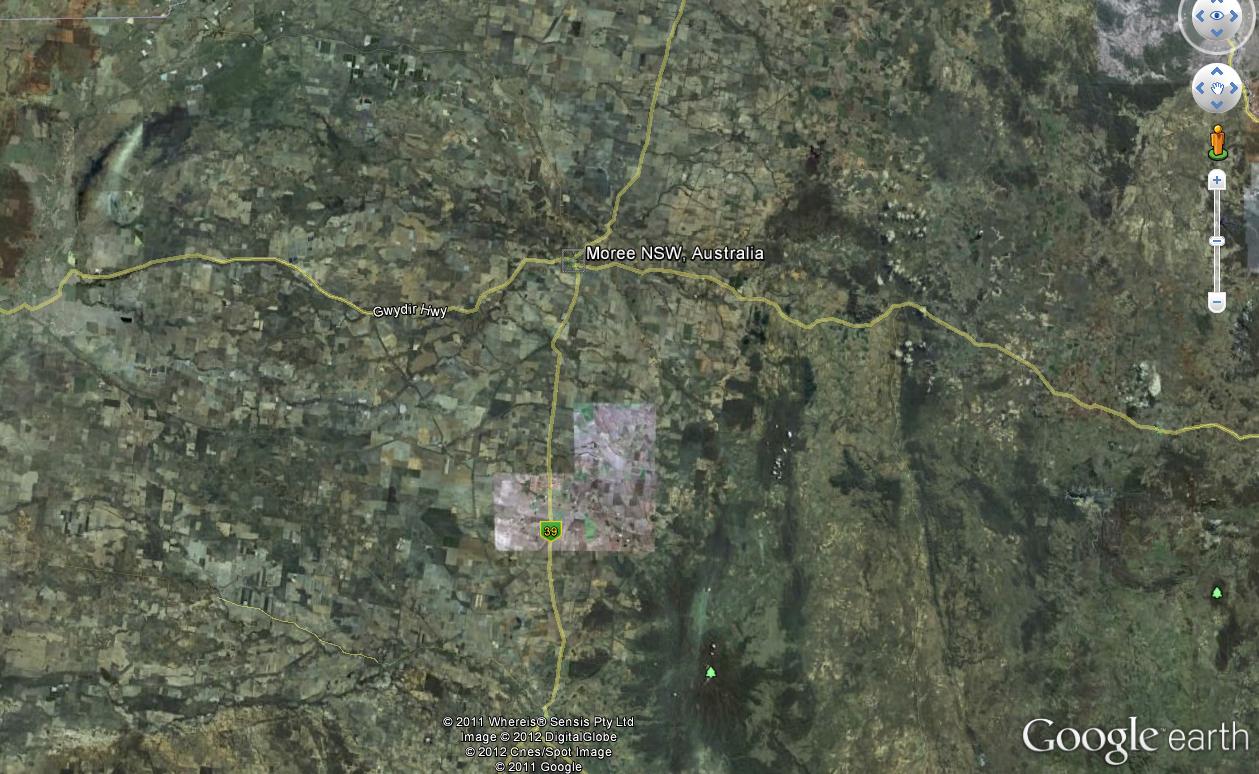
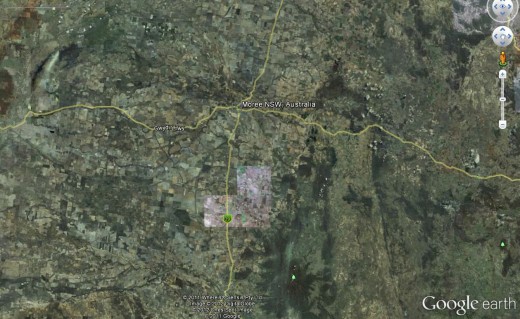 Moree region New South Wales – mainly deforested
Visit Google Earth and zoom into any area of NSW and see that most of it has been deforested
(click image to enlarge) Moree region New South Wales – mainly deforested
Visit Google Earth and zoom into any area of NSW and see that most of it has been deforested
(click image to enlarge)
.
Still across Australia in 2011, thousands of hectares of native forests continue to be deforested – albeit for farming, logging and development, or just bizarre bushfire abandonment. Not only is this occurring on private land, but in State Forests, which most people think are protected. Native forests on land are being cleared branded by State governments as ‘State Forests’ are simply not protected.
The native trees, flora and fauna are not protected from logging, bushfire, State-sanctioned arson (aka ‘hazard reduction‘), State napalming (aka indiscriminate ‘hazard reduction‘), indiscriminate State aerial poisoning with 1080, wildlife poaching, 4WD hooning, trail bike hooning, or even backpacker murdering. The watercourses (and the interconnected groundwater aquifers), that flow through State Forests are not protected from fishing, stormwater run-off, mine tailing contamination, farm pesticide and herbicide, industrial pollution.
.
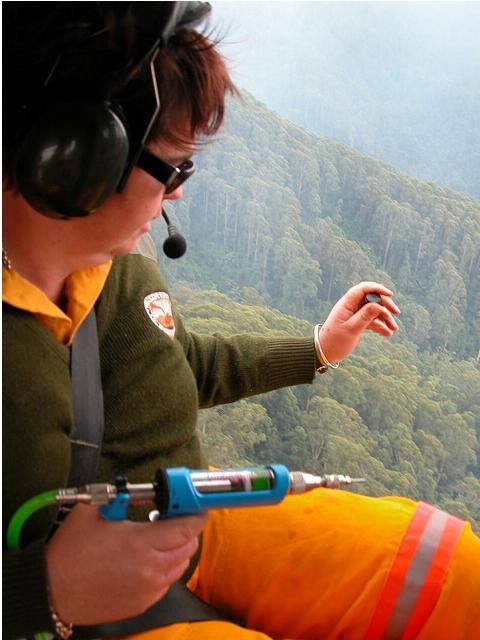 Helicopter Aerial Incendiary
Over Bindarri National Park, 20km south-west of Coffs Harbour, New South Wales
Yes, even our National Parks and Wildlife Service sets indiscriminate fires to National Parks! Helicopter Aerial Incendiary
Over Bindarri National Park, 20km south-west of Coffs Harbour, New South Wales
Yes, even our National Parks and Wildlife Service sets indiscriminate fires to National Parks!
.
For the likes of taxpayer funded government industrial loggers ‘State Forest’ is a euphemism ‘for not logged yet‘. This applies to the likes of Forestry Tasmania, VicForests, Forests NSW, Forestry SA (spot the naming trend), as well as the more aptly Queensland Department of Primary Industries and Fisheries, and likewise the Forest Products Commission of Western Australia.
It seems that doesn’t matter whether there is proof that there is an endangered and protected species such as the Long-Footed Potoroo in the Cann Valley State Forest or Drummer State Forest in Victoria, or protected Koalas in the Murrah/Mumbulla State Forests of New South Wales, or three identified endangered species, the wedge-tailed eagle, the swift parrot and the wielangta stag beetle in Tasmania’s Wielangta State Forests, the Liberal-Labor governments of those States turn a blind eye to deforestation.
It is only when self-funded local communities take the respective government logger to the Supreme Court and win that logging stops momentarily, such as in the recent Victorian Supreme Court case Environment East Gippsland Inc v VicForests [2010] VSC 335. In 2006, the Victorian State Government committed to increasing the conservation parks and reserves within the broader Brown Mountain area. Disregarding its elected master and ignoring any concerns for the ecological Precautionary Principle, State industrial logger VicForests, got stuck in with its mechanical clearfelling of old growth forests in the Brown Mountain area.
Not-for profit group Environment East Gippsland (EEG) self-funded and obtained numerous studies of the area indicated the presence of important threatened and rare species. EEG requested the Minister for Environment and Climate Change, Gavin Jennings, to make an interim conservation order to conserve critical habitat of the endangered Long-footed Potoroo, Spotted-tailed Quoll, Sooty Owl, Powerful Owl and Orbost Spiny Crayfish at Brown Mountain. Even then, the Minister for Environment and Climate Chang did not grant a conservation order, but instead increased the conservation area surrounding Brown Mountain. It took the overriding legal authority of the Supreme Court to stop the Victorian Government and its delinquent logger trashing protected old growth habitat.
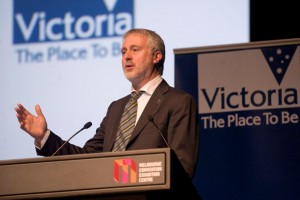 Victorian Labor Minister for Environment (etc), 2007-2010 Victorian Labor Minister for Environment (etc), 2007-2010
.
In March 2010, Forests NSW began controversial logging operations in the Mumbulla State Forest, south of Bermagui on the state’s far south coast. Despite being criticised, after a recent survey identified the forest as a key colony for the region’s remaining koala population, Forests NSW Regional Manager Ian Barnes says the logging must go ahead across 240 hectares of the forest, in order to satisfy a supply agreement with the timber industry.
 Deforestation is all about lining ones pockets out of ecological wanton exploitation
It’s a ‘wam bam thank you mam’ approach no different to what the Vikings did to the British in the eight Century.
Colonial Australians and their descendants are doing the same to Australian ecology in the 19th, 20th and 21st Centuries. Deforestation is all about lining ones pockets out of ecological wanton exploitation
It’s a ‘wam bam thank you mam’ approach no different to what the Vikings did to the British in the eight Century.
Colonial Australians and their descendants are doing the same to Australian ecology in the 19th, 20th and 21st Centuries.
Mr Barnes says the logging will not affect the koala habitat. “We’ve taken quite some effort to avoid any possible conflict there,” he says. “As anybody who reads the recent report will know, the koalas have been found in the eastern side of the forest, and our logging is planned for the western part, as far away as we can get from the koalas.”
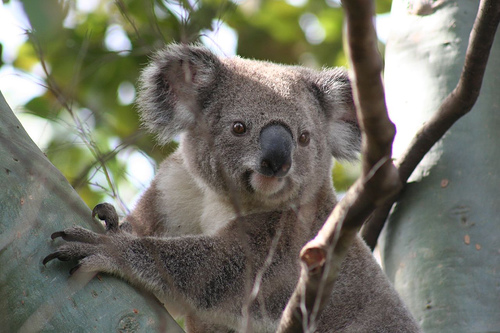
Despite assurances, anti-logging campaigners have organised a vigil in the forest in an attempt to stop the logging. Conservationist Prue Acton says the activity will devastate the koala population.
“Why risk the only healthy koala colony left in the far south coast. For what? “ she said. “95% of what is going to be logged is going to end up at the Eden woodchip mill, be shipped to Japan for cheap copy-paper. What a disgrace.”
The Greens MP Lee Rhiannon says the Premier should put the protection of koalas ahead of the interests of logging companies. “The New South Wales Government has refused to end logging in the south east native forest but they should step in and stop the destruction of the koala habitat,” she said.
[Source: ‘Logging begins near key koala habitat‘, ABC, 20100330, ^http://www.abc.net.au/news/stories/2010/03/30/2859615.htm?site=southeastnsw]
.
‘Loggers are clearing bushland at rising rate‘
[Source: ‘Loggers are clearing bushland at rising rate’, by Ben Cubby, Sydney Morning Herald, 20111221, ^http://www.theherald.com.au/news/national/national/general/loggers-are-clearing-bushland-at-rising-rate/2399764.aspx?storypage=0]

The amount of bushland being cleared by logging in NSW soared last year to the highest level since state-wide records began in 1988. An area equivalent to 138,400 football fields was cleared for crops, forestry or infrastructure, says a government report.
The Office of Environment and Heritage said the rise in logging was probably cancelled out by regrowth, leading to no net loss of trees, though its most recent survey took place in 2008, before the land clearing spike. It said the reasons for the logging increase were unclear.
”[The] most likely factors relate to market demand and favourable climatic conditions and [they] can be expected to fluctuate over time,” a department spokesman said. ”It is also possible that recent changes in forestry methods are more readily detectable by satellite monitoring.”
Environment groups said the annual vegetation report was evidence that logging companies were operating in an unrestrained manner.
Bushfires remain the biggest destroyer of forests in the state, leading to a net loss of 48,300 hectares in 2010, the report said.
.
But logging activities now come a close second, accounting for the removal of 42,700 hectares of trees in 2010. This is up from 31,000 hectares the previous year, and an average of about 21,000 hectares a year since 1988.
About 21,200 hectares of bushland was cleared in 2010 to make new areas for crops and grazing, while 5300 hectares were cut down to make way for roads, factories and housing.
”The NSW government is currently conducting a review of native vegetation controls,” said the chief executive of the Nature Conservation Council of NSW, Pepe Clarke. ”They should take this report as a warning – what is required are stronger land- clearing laws that do more to protect the environment, not weaker ones.”
The Wilderness Society said the government had ”failed in its promises to restrain land clearing, resulting in rapid and accelerating degradation of wildlife habitat and water catchments.”
The most recent State of the Environment report found that there had been no net loss of ”woody cover” across NSW between 2003 and 2008.
”This is because, although clearing has occurred over that period, there has also been an equivalent amount of regrowth including government sponsored environmental and forestry planting programs conducted by private landholders and state forests, within crown forests areas,” the department said.
”Notwithstanding no net loss over the whole state, some regions have experienced net declines in woody cover.”
The report uses the international definition of ”woody cover”, which includes land at least 20% covered by the crowns of trees higher than 2 metres, a description which would include relatively open country.
The introduction of a satellite monitoring system for land clearing last year appears to have increased the level of prosecution for illegal land clearing on private property. On crown lands, the number of prosecutions has increased threefold, from a low base, since 2007.
In 2010, the government received 471 reports of suspected illegal land clearing.
.
‘Landowners sent satellite images identifying land clearing‘
[Source: ‘Landowners sent satellite images identifying land-clearing’, NSW Department of Environment (etc), Media release: 14 May 2010, ^http://www.environment.nsw.gov.au/media/DecMedia10051404.htm]
.
NSW Department of Environment Climate Change and Water (DECCW) today began a high tech education campaign to encourage compliance with native vegetation laws by sending letters to landholders including before and after satellite pictures identifying land clearing.
DECCW Director-General Lisa Corbyn said the letters were part of an ongoing education program to encourage compliance with the laws and inform landowners of the proper channels available to them if they want to clear native vegetation.
“We’ve been using satellite technology for some time to identify changes in vegetation cover that may warrant further investigation,” Ms Corbyn said.
“Now we are also using the technology as an education tool. From today, advisory letters will be sent to landowners including before and after satellite pictures showing that vegetation has been cleared on their land.”
Ms Corbyn said the letters aim to inform to the landowner that the satellite imagery has picked up that vegetation had been cleared and highlight the proper channels available to them under the legislation to allow clearing of native vegetation, such as property vegetation plans.
The letters support other tools used by DECCW to encourage compliance with the legislation, including strategic investigations, prosecutions, penalty notices, stop work orders, remedial directions, warning and advisory letters.
The letter also alerts landowners to incentive funding available to restore and protect native vegetation on their properties.
The Native Vegetation Act was introduced in 2003 to bring an end to broadscale land-clearing in NSW. Since then, more than 400,000 hectares of native vegetation has been conserved or rehabilitated on private land through property vegetation plans (PVPs) and 1.6 million hectares has been managed for thinning and invasive native scrub management.
.
Over 60 % of the native vegetation in NSW has been cleared, thinned or substantially disturbed.
.
The impacts of native vegetation clearing have included the extinction of 77 plant and animal species, soil erosion, increased dryland salinity and a decline in water quality.’
.
2003: ‘Clearing rate in NSW 116,000 to 216,000 hectares per year: NSW Govt report’
[Source: ‘Clearing rate in NSW 116,000 to 216,000 hectares per year: NSW Govt report’, by Stephanie Peatling, Environment Reporter, Sydney Morning Herald, 20031117, ^http://www.sydneyalternativemedia.com/id64.html]
.
The equivalent of up to 200,000 football fields may be illegally stripped of native trees and grass each year in NSW, figures suggest.
The first estimates on the extent of the clearings, which the Department of Natural Resources field staff prepared for the Government’s vegetation taskforce, suggest the figure could be as high as 100,000 hectares a year. The figures show between 150,000 hectares and 560,000 hectares were illegally cleared between 1997 and 2002.
The advice is the first official guess at NSW’s illegal clearance levels. The highest rates are in the Barwon, Central West and Far West regions where much of NSW’s remaining native vegetation is located.
The figures have shocked environmentalists, who stress the urgency of making changes to the state’s natural resource management system, which Parliament is debating this week.
A Wilderness Society campaigner, Francesca Andreoni, said: “The new system needs to be fair to everyone, particularly farmers doing the right thing.
“The shocking extent of illegal clearing confirms the urgent need for the Government to implement its decision to end broadscale clearing.”
Figures recording the rate of illegal land clearing each year are almost impossible to compile because it so hard to charge people who breach native vegetation laws. There is also a complicated system of exemptions which allow people to clear land for purposes such as maintaining fire access trails.
Monitoring illegal clearing is potentially dangerous for departmental compliance officers. After reports of illegal clearing earlier this year on a property near Nyngan, in the state’s west, department officers were prevented from entering the property by an angry crowd of up to 150 people.
.
When the amount of land illegally cleared is added to land that is legally approved for clearance, the department estimates between 700,000 hectares and 1.3 million hectares of land were cleared between 1997 and 2002.
.
The figures suggest clearing was faster than the Department of Natural Resources’ previously admitted figure of about 60,000 hectares a year. That figure would give NSW the second-highest clearing rate in the country behind Queensland.
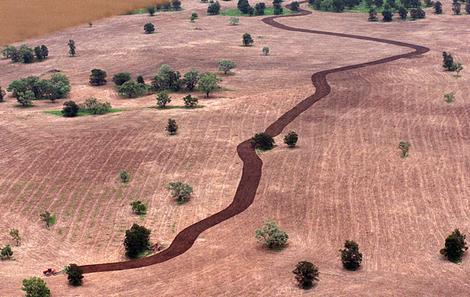
Debate on the Government’s package to overhaul native vegetation laws, based on an election promise to end broad-scale clearing, will take place this week. Last month the Premier, Bob Carr, announced a $406 million deal between farmers and environmentalists to end broad-scale clearing.
Most of the money is expected to go towards such things as tree planting and fencing waterways to help counter salinity and erosion. But local authorities may also compensate farmers for not clearing land. Clearing will still be allowed where it is deemed environmentally necessary.
Under the new system, natural resource management is being overhauled. Thirteen catchment management authorities will replace 19 catchment management boards, 20 regional vegetation committees and 33 water management committees.
Scientists often name land clearing as one of Australia’s most urgent environmental concerns. It contributes to soil salinity, loss of biodiversity and greenhouse gas emissions because carbon dioxide is released into the atmosphere when the cleared timber is disposed of, usually through burning.
.
‘Green groups attack logging growth’
[Source: ‘Green groups attack logging growth’, by David Bancroft, My Daily News, 20111229, ^http://www.mydailynews.com.au/story/2011/12/29/green-groups-attack-logging-growth/]
.
Environment groups have banded together to criticise the level of logging occurring in New South Wales. The Nature Conservation Council, The Wilderness Society, National Parks Association, the Northern Inland Council for the Environment and the North Coast Environment Council have issued a joint warning that iconic and endangered species are being threatened by land clearing.
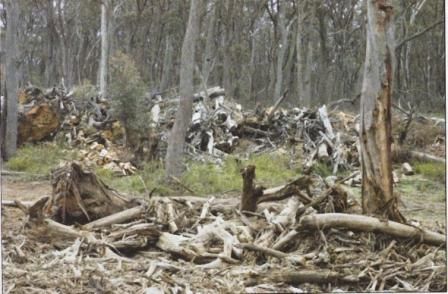 Illegal deforestation for fire wood, near Taralga, on the western edge of the Blue Mountains
Source: ^http://www.orchidsaustralia.com/article_%20conservation_no3.htm Illegal deforestation for fire wood, near Taralga, on the western edge of the Blue Mountains
Source: ^http://www.orchidsaustralia.com/article_%20conservation_no3.htm
.
In a joint press release, the groups said the NSW annual report on native vegetation released by the Office of Environment and Heritage (Ed. yet another money wasting name change) this month showed 2009/10 was the “worst year on record for clearing of native bushland”.
.
The Wilderness Society campaigns manager Belinda Fairbrother said the report showed that in 2009/10 an area equating to 138,400 football fields was cleared for crops, forestry or infrastructure.
.
“This is higher than any other year since records commenced in 1988 and shows the NSW Government has failed in its promises to restrain land clearing, resulting in rapid and accelerating degradation of wildlife habitat and water catchments,” she said.
North Coast Environment Council president Susie Russell said the report made a sad end to the International Year of Forests.
“The area cleared for forestry in 2009/10 was almost five times greater than it was in 1988/89,” she said.
“It reveals a massive increase in the rate and intensity of logging in NSW, which will be causing untold damage to the extraordinary high diversity forests of north-east NSW.”
Nature Conservation Council chief executive officer Pepe Clarke said land clearing was recognised as the single greatest threat to wildlife in Australia.
“It causes the death of birds and animals, the extinction of species, leads to the poisoning of soils from salinity and makes a major contribution to global warming,” he said.
.
 The Liberal-Labor Party ‘Island Vision’ for Australia’s State Forests
‘The Hill’ (Penrose State Forest, NSW) 2007, drawing by James King The Liberal-Labor Party ‘Island Vision’ for Australia’s State Forests
‘The Hill’ (Penrose State Forest, NSW) 2007, drawing by James King
^http://www.jamesking.com.au/drawings.html
.
Tags: 1788 Colonial Invasion, Cathcart State Forest, deforestation, Eden woodchip mill, fire wood, Forests NSW, Google Earth, hazard reduction, Helicopter Aerial Incendiary, Island Vision for Australian State Forests, koala habitat, land clearing, Logging, Long-footed Potoroo, Murrah/Mumbulla State Forests, not logged yet, Orbost Spiny Crayfish, Powerful Owl, precautionary principle, Sooty Owl, spotted-tailed quoll, State-sanctioned Arson, VicForests, Wielangta State Forests
Posted in Koalas, Owls, Quolls, Threats from Bushfire, Threats from Deforestation, Threats from Farming | No Comments »
Add this post to Del.icio.us - Digg
Wednesday, January 4th, 2012
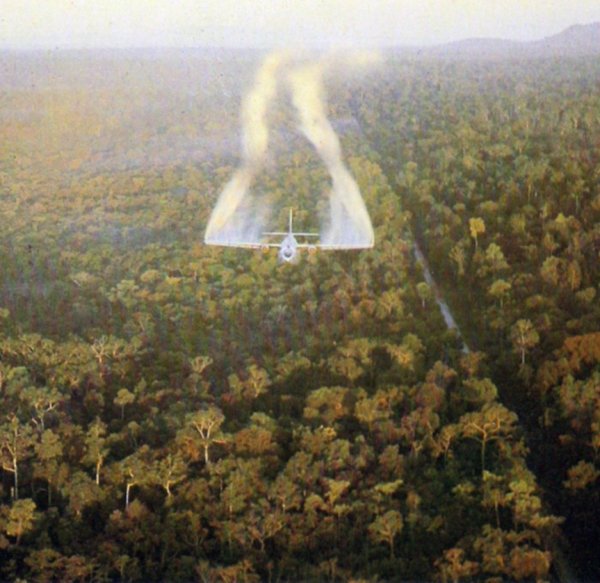
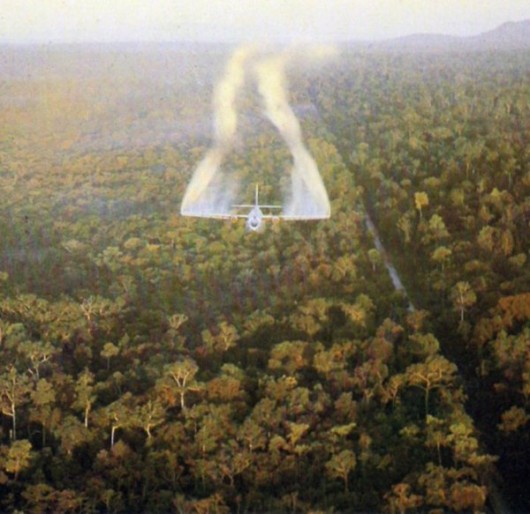 Carcinogenic Dioxin labeled as ‘Agent Orange’
was used as a widespread ecological exterminator by the United States and Australian
governments in last century’s US War Against the Vietnamese People Carcinogenic Dioxin labeled as ‘Agent Orange’
was used as a widespread ecological exterminator by the United States and Australian
governments in last century’s US War Against the Vietnamese People
.
Agent Orange is the code name for one of the herbicides and defoliants used by the US military as part of its herbicidal warfare program, Operation Ranch Hand, during the Vietnam War from 1961 to 1971.
A 50/50 mixture of 2,4,5-T and 2,4-D, it was manufactured for the US Department of Defense primarily by Monsanto Corporation and Dow Chemical. The herbicides used to produce Agent Orange were later discovered to be contaminated with TCDD, an extremely toxic dioxin compound. It was given its name from the color of the orange-striped 55 US gallons (210 L) barrels in which it was shipped, and was by far the most widely used of the so-called “Rainbow Herbicides”.
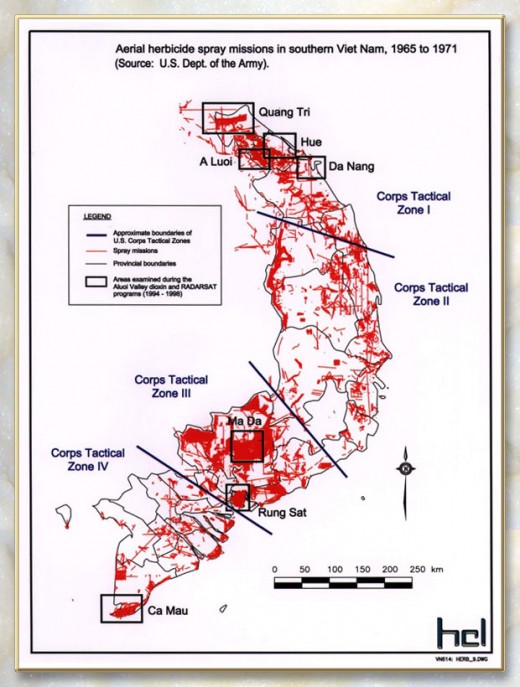
During the Vietnam war, between 1962 and 1971, the US Army sprayed 20,000,000 US gallons (80,000,000 L) of chemical herbicides and defoliants in Vietnam, eastern Laos and parts of Cambodia, as part of Operation Ranch Hand. The program’s goal (Ed: tactical theory) was to defoliate forested and rural land, depriving guerrillas of cover; another goal was to induce forced draft urbanization, destroying the ability of peasants to support themselves in the countryside, and forcing them to flee to the US dominated cities, thus depriving the guerrillas of their rural support base and food supply. [Read More]
Source: US Veterans Contact Point & Information Center, ^http://www.usvcpic.us/?p=1835]
.
 United States Congress approval of widespread defoliant poisoning
of Vietnam, Laos and Cambodia
The US Military code named it ‘Operation Ranch Hand’
during the US declared Vietnam War from 1961 to 1971
^http://www.the-savage-flsjr.com/img/new%20page%203.htm United States Congress approval of widespread defoliant poisoning
of Vietnam, Laos and Cambodia
The US Military code named it ‘Operation Ranch Hand’
during the US declared Vietnam War from 1961 to 1971
^http://www.the-savage-flsjr.com/img/new%20page%203.htm
.
Agent Orange Human Effect:
.
‘It is the war that will not end. It is the war that continues to stalk and claim its victims decades after the last shots were fired (2). The use of Agent Orange still has an effect on the citizens of Vietnam today. It has poisoned their food and creating health concerns. This chemical has been reported to cause serious skin diseases as well as a vast variety of cancers in the lungs, larynx, and prostate. Children in areas exposed to Agent Orange, or have parents who were exposed to agent orange during the war, have been affected and have multiple health problems–including cleft palate, mental disabilities, hernias, and extra fingers and toes, and many other birth defects.’

‘Recent laboratory tests of human tissue samples ( blood, fat tissue, and breast milk) taken from veterans who were exposed during the war and people living in sprayed areas revealed levels of dioxin higher than levels found in people living in non-sprayed areas of Vietnam as well as people living in industrialised countries. The most noteworthy are the levels of dioxin in breast milk. The high level of dioxin in nursing mothers shows how contamination spreads and bio-acumulates from mothers to their children (5).
Epidemiological studies show an elevated rate of diseases and disorders in people exposed to dioxin. These include high rates of cancers, abnormalities during pregnancies, neurological and metabolic disorders, and especially birth defects.’

Agent Orange Environmental Effect:
.
The consequences of spraying these toxic chemicals continue to have devastating effects on the environment. Millions of gallons of Agent Orange caused a great ecological imbalance.
.
‘It destroyed timber, wild animals and forest products.’
.
Without forest cover to retain water, flooding in the rainy season and drought in the dry season has adversely affected agricultural production. Topsoil is easily washed away, further hindering forest recovery. While the uplands have been and continue to be eroded, the lowlands have become choked with sediment, further increasing the threat of flooding.
[Source: ^ http://vietnamartwork.wordpress.com/war-end-agent-orange-effect/]
.
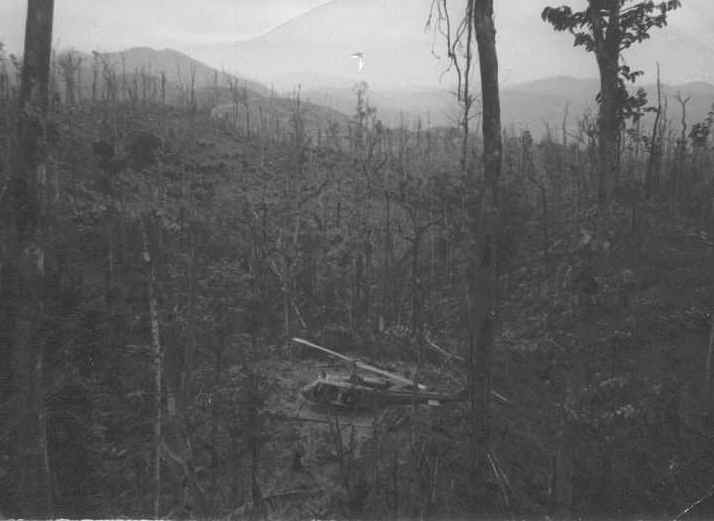
 Deforested and still contaminated Cam Lo, Vietnam
(Photo by Dr. P.T. Dang, 2004) Deforested and still contaminated Cam Lo, Vietnam
(Photo by Dr. P.T. Dang, 2004)
.
‘Over 30 years after the war, forest ecosystems on these hills south west of Cam Lo and most landscape in Quang Tri Province, Vietnam, damaged by Agent Orange and by heavy bombing have not been able to recover.
Dioxins in the soil, river bed, and in the food chain are serious sources of health threat; bomb craters (encircled) dotted the landscape, obstruct farming and provide excellent breeding ground for malaria, dengue and other disease transmitted mosquitoes; and unexploded ordnance (UXO’s) still buried in the ground continue to be extremely hazardous to people living in the area.’
[Source: ^http://www.tc-biodiversity.org/vn_ecorestoration_e1.htm]
.
‘Agent Orange cancer deaths probe – Innisfail forests’
.
[Source: ‘Agent Orange cancer deaths probe’, The Australian, sourced from AAP, 20080518, ^http://www.theaustralian.com.au/news/agent-orange-cancer-deaths-probe/story-e6frg6oo-1111116372310] 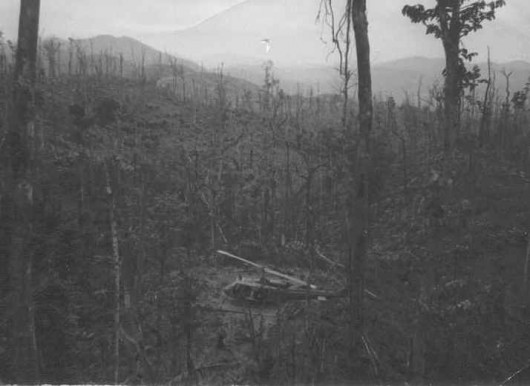 Agent Orange ‘secretly tested’over the rainforest
at the back of Innisfail, Far North Queensland, Australia in 1966 Agent Orange ‘secretly tested’over the rainforest
at the back of Innisfail, Far North Queensland, Australia in 1966
by the Australian Regular Army
.
‘Concerns that cancer deaths are higher in a north Queensland town where the Army tested chemical weapons at the start of the Vietnam War will be investigated by the (Queensland) state government, Premier Anna Bligh says. Australian military scientists sprayed the toxic defoliant Agent Orange on rainforest in the water catchment area of Innisfail in 1966, Fairfax reported today.
The sprayed site, where jungle has never regrown, lies on a ridge about 100 metres above the Johnstone River, which supplies water for the town in the state’s far north.
Figures from the Queensland Health Department show 76 people died from cancer in the town of almost 12,000 in 2005, 10 times the state’s average and four times the national average.
“Any concerns these residents have can and will be investigated thoroughly just as we have when there’s been complaints about unusual cancer rates at workplaces,” Ms Bligh told reporters in Brisbane.
“I would encourage these residents who have any concerns to talk to the Environmental Protection Agency.”
Ms Bligh would not say whether the Army should come clean about its testing of Agent Orange in the region.
“I am not even sure what the facts are behind any Defence Force action in that area,” she said.
“If there has been any suggestion the Defence Force has any matters they should deal with I would encourage people to talk to the federal government and we will be doing the same.”
Researcher Jean Williams, who has been awarded the Order of Australia Medal for her work on the effects of chemicals on Vietnam War veterans, found details of the secret tests at Innisfail in Australian War Memorial archives.
“These tests carried out between 1964 and 1966 were the first tests of Agent Orange and they were carried out at Gregory Falls near Innisfail,” she told Fairfax.
“I was told there is a high rate of cancer there but no one can understand why.
“Perhaps now they will understand.”
.
Ms Williams found three boxes of files in the archives, with one file, marked “considered sensitive”, showing the chemicals 2,4-D, Diquat, Tordon and diemthyl sulphoxide (DMSO) were sprayed on the rainforest.
.
“It was considered sensitive because they were mixing together all the bad chemicals, which just made them worse,” she said.
Innisfail RSL president Reg Hamann, who suffers cancer after being exposed to Agent Orange while fighting in Vietnam, said his children had been born with health issues.
“The amount of young people in this area who die of leukaemia and similar cancers to what I got from Agent Orange is scary.
“The authorities are scared of digging into it as there would be lots of law suits.”

.
Agent Orange being used in the Amazon – July 2011
[Source: ‘Vietnam Era Weapon Being Used to Clear the Amazon’, by Stephen Messenger, Business / Corporate Responsibility, TreeHugger, 20110705, ^http://www.treehugger.com/corporate-responsibility/vietnam-era-weapon-being-used-to-clear-the-amazon.html]
.
Agent Orange is one of the most devastating weapons of modern warfare, a chemical which killed or injured an estimated 400,000 people during the Vietnam War — and now it’s being used against the Amazon Rainforest.
According to officials, ranchers in Brazil have begun spraying the highly toxic herbicide over patches of forest as a covert method to illegally clear foliage, more difficult to detect that chainsaws and tractors.
.
In recent weeks, an aerial survey detected some 440 acres of rainforest that had been sprayed with the compound — poisoning thousands of trees and an untold number of animals, potentially for generations.
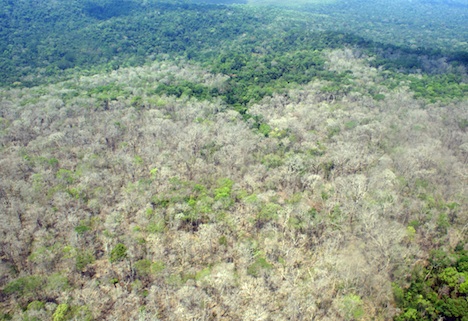
Officials from Brazil’s environmental agency IBAMA were first tipped to the illegal clearing by satellite images of the forest in Amazonia; a helicopter flyover in the region later revealed thousands of trees left ash-colored and defoliated by toxic chemicals. IBAMA says that Agent Orange was likely dispersed by aircraft by a yet unidentified rancher to clear the land for pasture because it is more difficult to detect than traditional operations that require chainsaws and tractors.
Last week, in another part of the Amazon, an investigation conducted by the agency uncovered approximately four tons of the highly toxic herbal pesticides hidden in the forest awaiting dispension. If released, the chemicals could have potentially decimated some 7,500 acres of rainforest, killing all the wildlife that resides there and contaminating groundwater. In this case, the individual responsible was identified and now faces fines nearing $1.3 million.
According to a report from Folha de São Paulo, the last time such chemicals were recorded in use by deforesters was in 1999, but officials say dispensing the devastating herbicide may become more common as officials crack down on the most flagrant types of environmental crime.
“They [deforesters] have changed their strategy because, in a short time, more areas of forest can be destroyed with herbicides. Thus, they don’t need to mobilize tree-cutting teams and can therefore bypass the supervision of IBAMA,” says Jerfferson Lobato of IBAMA.
While Agent Orange was originally designed to clear forest coverage in combat situations, its use became a subject of controversy due to its impact on humans and wildlife. During the Vietnam War, the United States military dispersed 12 million gallons of herbicide, impacting the health of some 3 million, mostly peasant, Vietnamese citizens, and causing birth defects in around 500 thousand children. Additionally, the chemical’s effect on the environment have been profound and lasting.
Last month, over three decades after Agent Orange was last used in Vietnam, the US began funding a $38 million decontamination operation there. Meanwhile, in the Brazilian Amazon, the highly toxic chemical was being discovered anew and sprayed over the rainforest.
.
  . .
Tags: 245T, 24D, Agent Orange, Amazon forest, Australian Government, birth defects, chemical herbicides, defoliants, dioxin, Dow Chemical, Gregory Falls, Innisfail, Jean Williams, Johnstone River, Mekong Delta, Monsanto Corporation, Operation Ranch Hand, TCDD, United States, Vietnam war, Vietnam War veterans
Posted in Amazon (BR), Mekong (VN), Threats from Deforestation, Threats from War | No Comments »
Add this post to Del.icio.us - Digg
Friday, December 30th, 2011
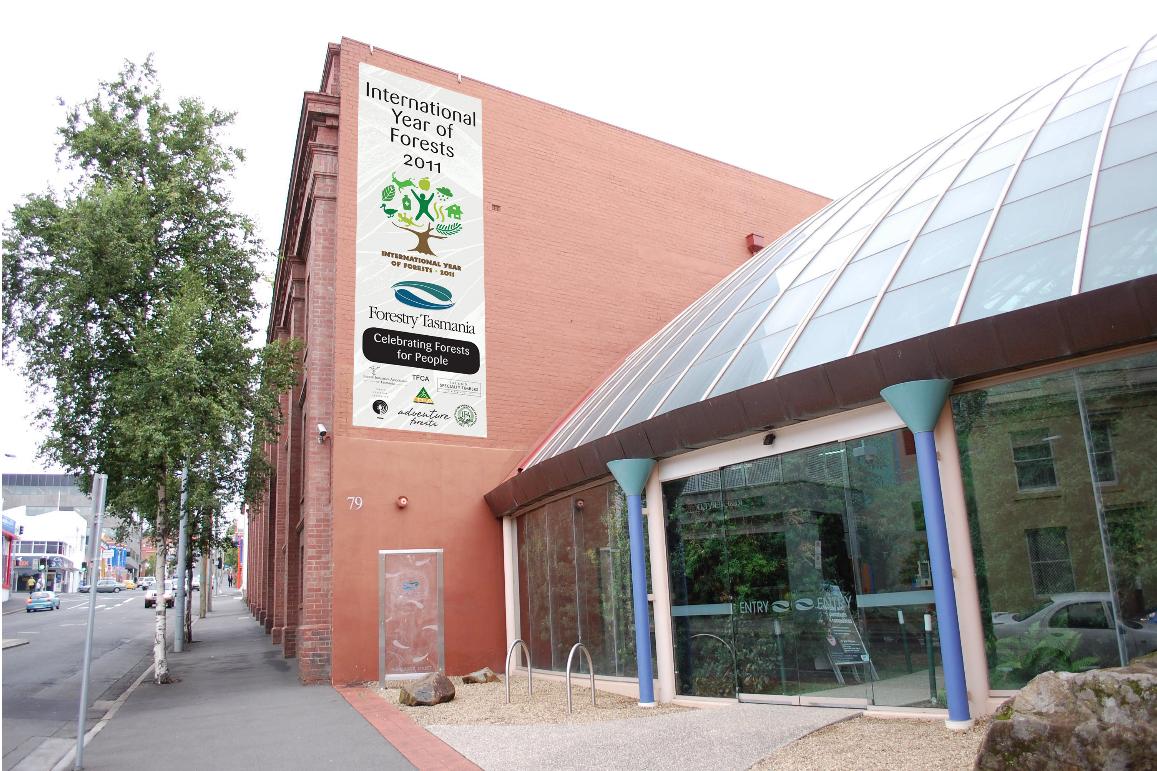
What area of old growth native forest has been saved from business-as-usual deforestation as a result of the United Nation’s declaration of 2011 as the International Year of Forests?
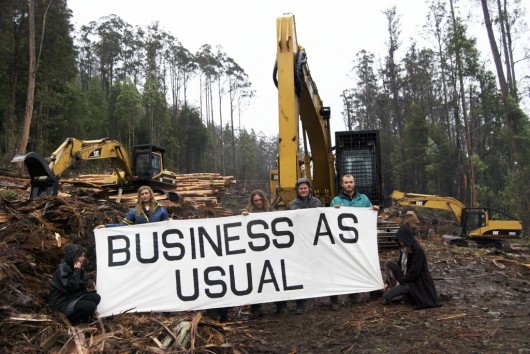 In Tasmania frankly it’s been logging Business-as-Usual
for taxpayer-funded ‘Forestry Tasmania’
(Source: Still Wild Still Threatened,
^http://observertree.org/2011/12/22/mirandas-daily-blog-day-8/) In Tasmania frankly it’s been logging Business-as-Usual
for taxpayer-funded ‘Forestry Tasmania’
(Source: Still Wild Still Threatened,
^http://observertree.org/2011/12/22/mirandas-daily-blog-day-8/)
.
UN International Year of Forests 2011 – ‘Global Objectives‘?

This is (was) the official UN website: ^http://www.un.org/en/events/iyof2011/
.
Well, at the time of writing, the public relations material on the official UN website conveys a general message that the ‘Forests 2011‘ programme is intended “to strengthen global efforts to improve the state of forests” and draws upon its dedicated subsidiary United Nations Forum on Forests (UNFF), adopting four Global Objectives:
- Reverse Forest Loss – reverse the loss of forest cover worldwide through sustainable forest management, including protection,restoration, afforestation and reforestation, and increase efforts to prevent forest degradation.
- Enhance Forest-based Benefits – economic, social and environmental benefits, including by improving the livelihoods of forest-dependent people.
- Increase Sustainably Managed Forests – including protected forests, and increase the proportion of forest products derived from sustainably managed forests.
- Mobilize Financial Resources – reverse the decline in official development assistance for sustainable forest management and mobilise significantly-increased new and additional financial resources from all sources for the implementation of sustainable forest management.
.
[Source: ^ http://www.un.org/en/events/iyof2011/forests-for-people/global-objectives/]
.
Sounds encouraging, but where are the stated deliverables?, key result areas?, key performance indicators?, programme targets?, UN budget to achieve these global objectives? Where is the implementation plan and the delegated implementation task force?
The website is thick on its public relations message, but thin on substance. In the absence of any mention of the means to achieve these four objectives, my initial reaction is that it is more motherhood and perhaps just about ‘raising awareness‘. But don’t we already know that deforestation is a critical global problem?
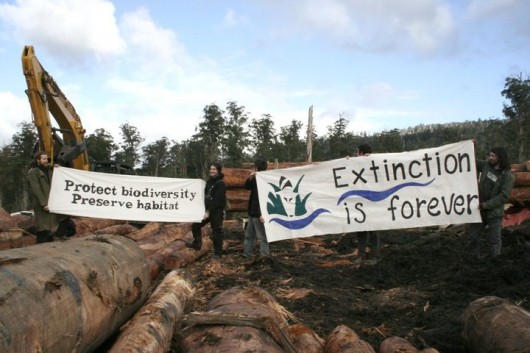
.
The aim of the UN International Year of Forests 2011 seems to have merely been “to raise awareness and strengthen the sustainable management, conservation and sustainable development of all types of forests for the benefit of current and future generations“.
.
It just sounds like more Forestry spin!
.
And ‘sustainable forest management‘ is a familiar phrase and one bandied about not by environmentalists, but by forestry industry – i.e. industrial loggers. Type ‘sustainable forest management’ in Google at look at the websites results:
- Australian Government Department of Agriculture, Fisheries and Forestry (i.e. derives revenue from logging)
- Australian Forest Education Alliance (AFEA) – includes members from Australian Forest Products Association, Forests NSW, Forest Education Foundation Tasmania, Forest and Wood Products Australia, Primary Industries and Resources South Australia, Forestry Sustainable Forestry Program (Southern Cross University), NSW Forest Products Commission WA, VicForests (i.e. all derive revenue directly from logging, or subsidised by industrial loggers)
- Forestry Tasmania (i.e. derives revenue from logging)
- Forests NSW (i.e. derives revenue from logging)
- Food and Agriculture Organisation of the United Nations (encouraged forest be used for wood production)
- The Institute of Foresters of Australia
- Department of Sustainability and Environment (Victoria) (encouraged logging and burning of native forests)
- etc.
.
UN International Year of Forests 2011 – ‘Global Achievements‘?
.
The only other information that may be gleaned from the official UN site covers topics such as promotional events, films, photos, collaborative global partner organisations plus some forest statistics, a few online publications but that’s about it. So today on 30th December 2011 as the International Year for Forests draws to a close, what has the UN programme actually achieved?
What area of the world’s native forests has been protected from otherwise business-as-usual deforestation? What has stopped Forestry Tasmania and its band of loggers from their business-as-usual holocaust treatment of Tasmania’s endangered ancient native forest ecosystems?
Answer: More PR funding for the UN’s next programme?
.
Australian Government’s endorsement of International Year of Forests 2011
.
Rather than convey an assessment here, I shall just quote from the Australian Government’s website dedicated to supporting this programme (before it vanishes):
.
[Source: ^ http://www.internationalyearofforests.com.au/]
.
Australia’s Forests
.
‘Australia has some of the most beautiful and productive forest areas in the whole world. These fantastic and magical places mean a lot of different things to different people. Some of us work with the wood from the forests. Some work with the creatures that live in the forests. Some of us live in the forests and some of us play in the forest (camping, hiking, exploring) and some of us just love looking and being in a forest!
‘Without a doubt what ever your use, be it a little or a lot, Australian’s should be proud of Australia’s forests!
‘The United Nations announced 2011 as the International Year of Forests. Australians can unite and celebrate our sustainably managed forests and the diversity that our forests bring to our lives. Our forests give us wood that we use every single day and these very same forests give us the best playground that our kids could ever hope for. Australia’s forests are used by everyone and are the best in the world!
.
Ministers Address
.
‘Australia has about 4 per cent of the world’s forests on 5 per cent of the world’s land area, and has one of the best managed forestry sectors in the world.
‘The nation’s forests, and the products they produce, provide significant employment, environmental and recreational benefits to communities across Australia. Australia’s forestry and wood manufacturing sector employs nearly 76,000 people, many in regional areas, and generates around $7 billion worth of wood and paper products annually.
‘Across the nation the forests in conservation reserves cover over 23 million hectares. These reserves provide recreational benefits for communities and contribute to the 12 billion tonnes of carbon stored by Australian forests. Industry and government have been working hard to make sure our forests remain sustainable and viable for the long-term.
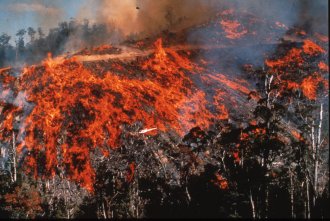
‘The Australian Government recognise the importance of World Forestry Day and the International Year of Forests and has actively supported both initiatives. This year the Gillard Government intends to release legislation to ban the importation of timber products that have not been legally harvested. This law will contribute to global efforts to stop illegal logging, provide for sustainable forest products made in Australia and reduce unfair competition. The Gillard Government remains committed to promoting sustainable forestry initiatives and encourages people to celebrate the International Year of the Forest.’
Senator Joe Ludwig,
Minister for Agriculture, Fisheries and Forestry
.
And guess who’s embraced the 2011 International Year of Forests with public relations relish?
.
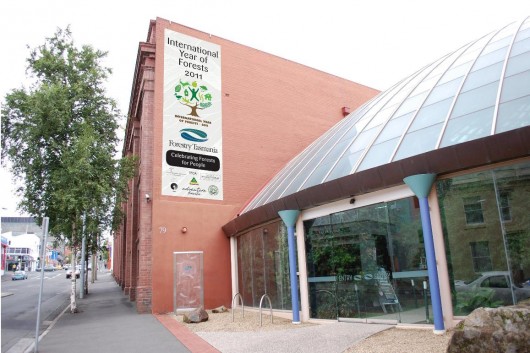 Forestry Tasmania Forestry Tasmania
“Congratulations to Forestry Tasmania (FT) who held a successful Tasmanian launch of International Year of Forests. Held in Hobart on 25 January the ‘forest in the city’ event proved to be a popular summer holiday diversion with a steady stream of families, shoppers and naturalist flowing in to the Melville Street Dome throughout the afternoon.”
.
[Source: ^http://www.internationalyearofforests.com.au/news.php]
.
.
‘International Year of Forests 2011 off and running in Tasmania’
.
[Source: Forestry Tasmania website, 20110131, ^http://www.forestrytas.com.au/news/2011/01/international-year-of-forests-2011-off-and-running-in-tasmania?utm_source=feedburner&utm_medium=feed&utm_campaign=Feed:+forestrytas+%28ForestryTas.com.au+News+and+Topics%29]
..
‘Forestry Tasmania (FT) kicked off its celebrations for the United Nations International Year of Forests 2011 with an open day at the ‘forest in the city’ in its Hobart headquarters on 25 January. The event proved to be a popular summer holiday diversion, with a steady stream of families, shoppers and naturalists flowing into the Melville Street Dome throughout the afternoon. Their curiosity was rewarded by science and fire fighting displays, indoor abseiling, and even the opportunity for the young (and young at heart) to have their photo taken with ‘Krusty’, FT’s very own giant freshwater crayfish.
 Forestry Tasmania’s promotional campaign for the International Year of Forests 2011
…to educate children early on that Forestry is good for native forests.
Tasmania’s endangered Giant Freshwater Crayfish just loves loggers destroying its habitat.
Get ’em while they’re young Bob! Forestry Tasmania’s promotional campaign for the International Year of Forests 2011
…to educate children early on that Forestry is good for native forests.
Tasmania’s endangered Giant Freshwater Crayfish just loves loggers destroying its habitat.
Get ’em while they’re young Bob!
.
Forestry Tasmania’s General Manager Corporate Relations and Tourism, Ken Jeffreys, said the open day was just a taste of things to come, with a 12-month calendar of events planned to celebrate the International Year of Forests.
“We have a number of exciting projects scheduled over the next year, such as the opening of new accommodation at Tahune, to be called the AirWalk Lodge.
“This development will, for the first time, see family accommodation available at one of Tasmania’s most highly visited tourism attractions. It will allow our guests to spend a full day experiencing all of the activities on offer at the AirWalk, as well as the many other attractions on offer in the Huon Valley.
“The year will also see a number of high-profile sporting events on state forest, including mountain biking and the multi-sport Ben Lomond Descent.
“And one of our bursary recipients, Shannon Banks, is going to attempt to visit all 52 of our recreation and tourism attractions around the State over the year. She’ll be writing a blog about her adventures, which we hope will inspire Tasmanians to experience the wonders of the forests in their own backyard.”
.
Mr Jeffreys said FT’s staff were excited by the opportunities presented by the International Year of Forests 2011.
“This year, we want to show the community that we are proud of the work we do to ensure the full range of forest values are maintained in perpetuity. Our staff worked hard to create displays for the launch that were fun and informative. The public’s reception showed us that there is a great deal of interest, and open-mindedness, about the way our forests are managed.”
.
Speech notes Simon Grove (Conservation Biologist with Forestry Tasmania – Division of Forest Research & Development):
.
‘Before I hand over to Rebecca White MHA to officially launch the International Year of Forests, I’ve been asked to say a few words about what our forests mean to the people that work here in Forestry Tasmania. Since our values come from our personal life-experiences, all I can do is tell you my own story, while recognising that every one of us here has their own story too.
I work as a researcher, a conservation biologist, with Forestry Tasmania. In some ways I deal with the meat in the sandwich that is forestry today – what does nature have to say about how we manage – or should manage – the forests in our care? But I want to start at the beginning. Life is all about discovery, learning and figuring things out, and I was lucky to discover early in life that nature, and forests, can be an excellent source of inspiration and experimentation. So here are a few of my naturalists’ memories, going back to toddlerdom.
I remember:
- Figuring out that earthworms have bristles that work like legs – if you fill an empty milk-bottle with worms and then leave the milk-bottle in the kitchen, the worms climb out and slither all over the kitchen floor.
- Learning that if I sat very still in the woods, I could watch the native mice going about their lives – and I could even catch them in my hands – but that they would bite my little sister’s hands if she tried the same thing.
- Learning that bumblebees loved the nectar of honeysuckle flowers as much as I did – and that they wouldn’t sting if I picked them up to enjoy the sensation of having them buzzing around in my cupped hands – but that they would sting my little sister’s hands if she tried the same thing.
- Discovering that it wasn’t only nasty wasps that filled the summer air with their droning, but beautiful flower-loving hoverflies – but little sisters aren’t always good at telling them apart.
- Realising that hungry ground-beetles eat lizards if you keep them in the same cage and don’t feed them.
- Learning that baby starlings abandoned by their parents get too hot if you try and incubate them on the boiler.
- Discovering that tadpoles kept in a glass jar don’t turn into frogs unless you give them some land to climb out onto.
- Realising that flower-presses were designed for delicate plants such as dandelions, and not for cacti.
- Learning that seashells brought back from the beach get very smelly if they still have their animals in them.
- Discovering that puffball fungi give off clouds of spores if you wee on them.
- Discovering that blackbirds’ eggs taste as good as chooks’ eggs if you fry them up on a camping stove in the garden.
- Figuring out that foxes eat cherries – you can find the stones in their poos.
- Figuring out that I could make wonderfully whiffy stink-bomb mixture by adding all sorts of sordid ingredients – dog-poo, apple-cores, ink – to the liquid accumulating in the bottom of a tree-hollow; but that if I then added real chemical stink-bomb ingredients to this then I ended up with dead-maggot stew instead.
.
We all have stories like this. (Ed: perhaps only at FT) In retrospect, we can see that they make us who we are today. Our challenge is to ensure that the next generation is encouraged to explore and experiment too.
I didn’t grow up in Tasmania, but the other side of the world in England. But I don’t think it would have made much difference to my outlook as a child. Nature’s all around us, and children the world over are tuned into it. If it’s nurtured, as it was in me, the empathy for nature can grow. Otherwise it may die away. The presence here today of so many families and children is testament to the amount of nurturing going on around us – which is wonderful to see. And what better place to do so than in our forests.
Some of us are lucky in that as adults we still get to liberate our inner child from time to time – every day if we’re very lucky. That’s how I’ve managed to live my life since leaving school – right through the years of university study; of working with nature conservation organisations in the UK; of working in Uganda as a conservation trainer in the forest department and in Indonesia as a training adviser on an international sustainable forest management project. It’s how I lived my life when I was researching rainforest insects in North Queensland for my PhD. And it’s how I have done so for the past decade as a conservation biologist here at Forestry Tasmania.
And despite what you might expect from media coverage of forestry issues, I don’t feel alone. Many people working in forestry here in Tasmania are naturalists at heart, and many more who wouldn’t call themselves naturalists nevertheless have a deep appreciation for the bush and an understanding of what makes it tick. Not so much sawdust in our veins, as bushdust – an empathy with the forests, and a recognition that we humans are not so much their lords and masters as their stewards.
My brother and I used to call chainsaws ‘long bottoms’, because to my ear they sounded like someone doing a very long fart. Later in my youth I came to see them as the conservationist’s friend, as we went about clearing wildling pines invading the heathland where rare birds nested. Today I know that chainsaws also have more prosaic functions – people use them to harvest trees so that they can be turned into products that we all use, such as timber and paper. This would be a tragic end for the forest if harvest were indeed the end-point. But it’s not, because experience shows that the elements of nature displaced by the harvest begin to move straight back in almost as soon as the chainsaws fall silent, and the forest begins to regrow and to fill with life again.
A background in natural history is good for making connections – among species and among natural processes. We learn that eagles feed on pademelons that graze on grasses and browse on young saplings; eagles nest in the old trees that grew up after the last wildfire and that escaped the browsing of pademelons; fungi and beetles recycle the trees – and even the eagles and pademelons – once they die. Eagles, trees, fungi, pademelons and beetles are all connected. Those of us steeped in natural history and ecology also make connections between humans and the rest of nature. We’re the original environmentalists. We recognise that the world faces not only a GFC but also a GEC – a global environmental crisis. I should emphasise that this crisis is not the outcome of sustainable forestry. But it is the cumulative outcome of all of our growing material demands outstripping the planet’s ability to supply. We all – especially our children – have to deal with the consequences.
In this context, we still expect the world’s remaining forests to be reservoirs of nature and yet to continue to supply our material and spiritual needs. It’s a big ask, but it can be done – certainly so in a place like Tasmania, with all the expertise in forestry and conservation at our disposal.
If I’ve discovered one big theme about the natural world during my life, it is that nature, for all its fragility, is remarkably resilient – think how forests recover after a bushfire. And the main take-home message from the forestry Masters course that I took at Oxford all those years ago, reinforced by daily experience since then, is that forestry is as much about people as it is about trees. Connecting the two concepts I come to a heartening conclusion. Through the increasing value that all of us place on our forests, they look set to become landscapes not of conflict but of reconciliation. Let’s see if we can use this International Year of Forests to further that end.
I’d now like to formally hand over to Rebecca White MHA, so that she can officially launch this International Year of Forests as Forestry Tasmania’s Ambassador.’
.
(Tasmanian) State Labor Member for Lyons and International Year of Forests Ambassador, Rebecca White MP, was on hand to officially launch Forestry Tasmania’s celebrations for 2011. She said the UN’s theme for the year, ‘celebrating forests for people’, had struck a deep chord with her.
“This theme resonated deeply with me, as it conveys the need to manage forests for many values, including conservation and sustainable development. It means that these values, which are often portrayed as being in conflict, are in fact intertwined. It also recognises that people are central to the effective management of forests.
“With careful, scientifically driven management, such as we have in Tasmania, there need not be a contradiction between conserving biodiversity and providing wood products and other non-commercial values from forests.
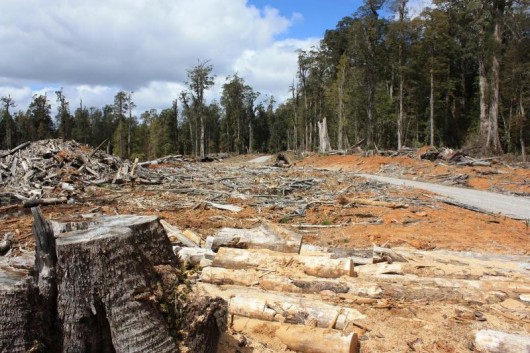 Forestry Holocaust of the Tarkine, October 2009
.
“While not all values may be delivered in any one area of forest, they are delivered across the entire landscape. While there are of course a number of challenges confronting the forest industry at present, it’s nonetheless important to remember that our state forests provide skilled employment for thousands of Tasmanians, and indirect employment for many more in our rural and regional communities.
“And of course, our state forests also provide clean drinking water to our towns and cities, they store the equivalent of 24% of Tasmania’s carbon emissions each year, and they provide a host of recreation activities and tourism attractions that appeal to locals and visitors alike.”
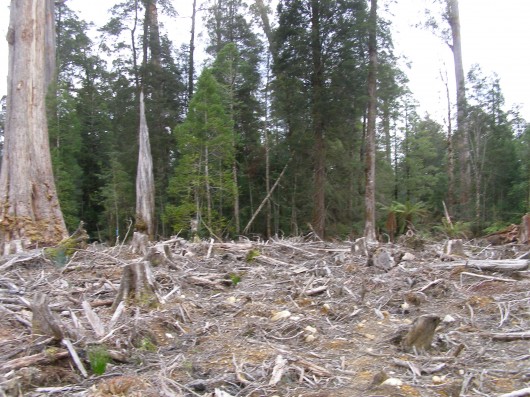 Upper Florentine old growth forest clearfelled by Forestry Tasmania in 2009,
situated behind Forest Defenders’ Camp Flozza
(Photo by Editor 20110928, free in public domain, click to enlarge) Upper Florentine old growth forest clearfelled by Forestry Tasmania in 2009,
situated behind Forest Defenders’ Camp Flozza
(Photo by Editor 20110928, free in public domain, click to enlarge)
.
World Deforestation Clock
.
- Each year about 13 million hectares of the world’s forests are lost due to deforestation, but the rate of net forest loss is slowing down, thanks to new planting and natural expansion of existing forests.
- From 1990 to 2000, the net forest loss was 8.9 million hectares per year.
- From 2000 to 2005, the net forest loss was 7.3 million hectares per year – an area the size of Sierra Leone or Panama and equivalent to 200 km2 per day.
- Primary forests are lost or modified at a rate of 6 million hectares per year through deforestation or selective logging.
- Plantation forests are established at a rate of 2.8 million hectares per year.
.
NOTE: 13,000,000 hectares/year = .412 hectares/sec
[Source of statistics: FAO Forest Resources Assessment 2005]
See the World Deforestation Clock at http://www.cifor.org/defclock.
.
Tags: clearfell, Corporate Relations, Forestry Holocaust, Forestry spin, Forestry Tasmania, giant freshwater crayfish, Logging, logging business as usual, sustainable forest management, tarkine, UN International Year of Forests, UN International Year of Forests 2011, United Nations Forum on Forests, Upper Florentine Forest, Upper Florentine Valley
Posted in Tasmania (AU), Threats from Deforestation, Threats from Greenwashing, Threats to Wild Tasmania | No Comments »
Add this post to Del.icio.us - Digg
|
|
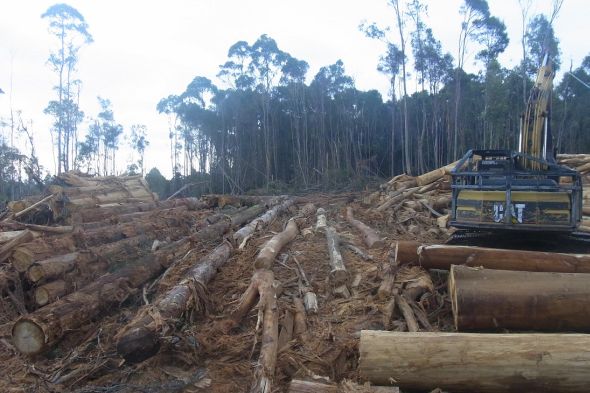 Tasmania’s Old Growth Forests
– victims of obsessive compulsive logging by Forestry Tasmania
(Photo courtesy of HVEC and Code Green)
Tasmania’s Old Growth Forests
– victims of obsessive compulsive logging by Forestry Tasmania
(Photo courtesy of HVEC and Code Green)
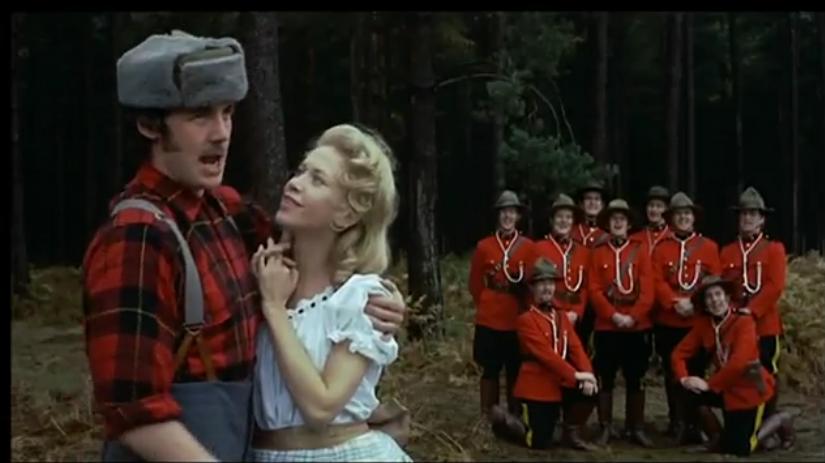
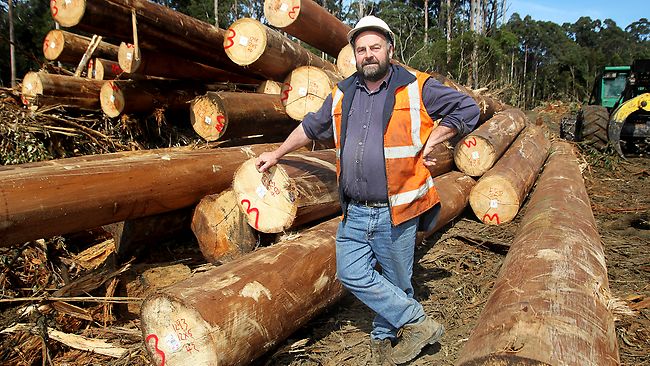 .
.