July 30th, 2010
by Editor 20100730.
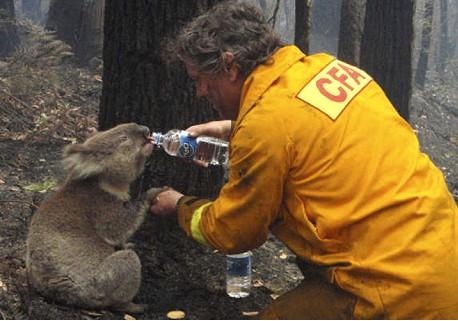 [© 2009 CFA. The koala dubbed ‘Sam’ who only temporarily survived
the worst bushfire tragedy in Australia’s history in February 2009. [© 2009 CFA. The koala dubbed ‘Sam’ who only temporarily survived
the worst bushfire tragedy in Australia’s history in February 2009.
The final findings of the Victorian Bushfires Royal Commission into the bushfire management of the February 2009 firestorm are due to be publicly released tomorrow.
What will government do to prevent a repetition? This must be the ultimate question, else what has it all been about? The recurring history of bushfires followed by enquiries shows that little is done to prevent a repetition. The risk of over reacting and incinerating vast swathes of habitat is a likely immature kneejerk response. The bunker suggestion is a last ditch tactic, but it is not a strategy. It is not the needed transformation of bushfire management.
Emergency management funding is not priority government funding for the head of the Victorian Government in Australia, Premier John Brumby.
The despicable reality of government bushfire management policy across Victoria and indeed Australia is:
‘You’re On Your Own’ – before, during and after!
It is government policy Australia-wide, played out in repeated wildfires, investigations, coroner enquiries, royal commissions in Victoria, New South Wales, Australian Capital Territory, South Australia, Western Australia, Tasmania, Queensland, Northern Territory as it has been, is and remains.
The only way to change callous government attitude is to change government – and to keep changing the government until the government attitude to our life, assets, public responsibility and environmental responsibility changes.
Across Australia, the official bushfire management ‘Stay or Go‘ policy has become a government euphemism for government neglect.
Bushfire and natural disaster is not just the lot of Victorians. Disaster and mass trauma is an Australian national issue, that statistically re-occurs every year and is trending climatically to get worse.
Australia needs a national force for handling national emergencies. It has to become professional to cope. It has to be given resource capability to cope, to plan, mitigate and to crisis manage the after effects of disasters. Not just bushfires, but damaging storms, floods, and any disaster situation across Australia and responsibly throughout our immediate Oceanic Region. All emergency services across Australia need to be rolled up into a single co-ordinated national and professionally paid force.
Australia needs a professional, national Emergency Management Australia.
Emergency Management Australia needs to be set up now as a fully multi-skilled, world-class professional paid force as a new forth arm of Australia’s Defence Force integrated with the Army, Navy and Airforce. It is time Australian governments cease shirking responsibility and despicably hand balling crisis management to noble charities like the Salvation Army, Red Cross and Country Womens Association.
Emergency Management is the task of government. This is what our taxes are for!
To be serious the annual budget needs to be what Australia is wasting on America’s selfish military crusade in Afghanistan.
To do less is to continue to sacrifice local family volunteers financed by chook raffles, resourced by drip feed, only so they can helplessly piss into the flames.
To do less is to continue to see government dispense crisis management to local charities and when it is all over to present a public servant scapegoat for public stoning to pacify those who have lost everything.
Else it’s same old, same old government neglect of its public and environmental responsibilities.
© The Habitat Advocate Public Domain
Leave a Reply
You must be logged in to post a comment.
July 2nd, 2010
by Editor 20100702.
[The information in this article has been sourced from United Nations Environment Programme World Environment Day website]
http://www.unep.org/wed/2010/english/
World Environment Day is a environmental event initiated by the United Nations Environment Programme (UNEP) aimed at stimulating worldwide awareness of the environment and encourages political attention and action. It is commemorated on 5th June each year and first started back in 1972.
The approach of World Environment Day is “to give a human face to environmental issues and enable people to realize not only their responsibility, but also their power to become agents for change in support of sustainable and equitable development.”
World Environment Day 2010

The theme of WED 2010 is ‘Many Species. One Planet. One Future.’
It echoes the urgent call to conserve the diversity of life on our planet and encourages all people to carefully consider the actions each person needs to take to help preserve all life on Earth..and prevent increasing extinctions.
‘A total of 17,291 species are known to be threatened with extinction – from little-known plants and insects to charismatic birds and mammals.
The reason? Human activities. With our present approach to development, we have caused the clearing of much of the original forest, drained half of the world’s wetlands, depleted three quarters of all fish stocks, and emitted enough heat-trapping gases to keep our planet warming for centuries to come. We have put our foot on the accelerator, making species extinctions occur at up to 1000 times the natural rate.
For this reason, the United Nations has declared 2010 the International Year of Biodiversity. It is an opportunity to stress the importance of biodiversity for human well-being, reflect on our achievements to safeguard it and encourage a redoubling of our efforts to reduce the rate of biodiversity loss.’
The State of the Planet’s Biodiversity
Key Findings from the Millennium Ecosystem Assessment:
- Scientists have no clear idea of how many species — from algae to blue whales — live on earth. Estimates are up to 100 million of which only about 1.8 million have been named so far. Humans are but one of those species.
- Though the exact number is impossible to determine, an unprecedented mass extinction of life on Earth is occurring. Scientists estimate that between 150 and 200 species of life become extinct every 24 hours.
- There have always been periods of extinction in the planet’s history, but this episode of species extinction is greater than anything the world has experienced for the past 65 million years – the greatest rate of extinction since the vanishing of the dinosaurs.
- This mass extinction is due, in large measure, to humankind’s unsustainable methods of production and consumption, including the destruction of habitats, expanding cities, pollution, deforestation, global warming and the introduction of “invasive species”.
- “Climate change is forecast to become one of the biggest threats to biodiversity,” the UN Convention on Biological Diversity said in a statement marking May 22.
- “Approximately 20-30 per cent of plant and animal species assessed so far are likely to be at greater risk of extinction if increases in global average temperature exceed 1.5 to 2.5 Celsius” (2.7 to 4.5 Fahrenheit), according to a report in April 2007 by the UN climate panel. Beyond that, it said ecosystems would face ever more wrenching changes.
- Biodiversity contributes directly or indirectly to many aspects of our well-being, for instance, by providing raw materials and contributing to health. More than 60 per cent of the world’s people depend directly on plants for their medicines.
- Over the past century, many people have benefited from the conversion of natural ecosystems to agricultural land and from the exploitation of biodiversity. Although many individuals benefit from activities that lead to biodiversity loss and ecosystem change, the full costs borne by society often exceed the benefits.
- World leaders agreed at a 2002 UN Summit in Johannesburg to “achieve by 2010 a significant reduction of the current rate of biodiversity loss at the global, regional and national level as a contribution to poverty alleviation and to the benefit of all life on earth.”
- To achieve greater progress towards biodiversity conservation, it will be necessary – but not sufficient – to urgently strengthen actions on the conservation and sustainable use of biodiversity and ecosystem services.
What is biodiversity?
Biodiversity (biological diversity) reflects the number, variety and variability of living organisms and how these change from one location to another and over time. Biodiversity includes diversity within species (genetic diversity), between species (species diversity), and between ecosystems (ecosystem diversity).
Biodiversity is important in all ecosystems, not only in those that are “natural” such as national parks or natural preserves, but also in those that are managed by humans, such as farms and plantations, and even urban parks. It is the basis of the multiple benefits provided by ecosystems to humans.
Where is biodiversity?
Life, and thus biodiversity, is essentially everywhere on Earth’s surface and in every drop of its bodies of water. The best known dimension of biodiversity is the classification of animals and plants into species, which mainly focuses on animals observable to the naked eye.
What is the link between biodiversity and ecosystem services?
Ecosystem services are the benefits obtained by people from ecosystems.
These include:
- provisioning services such as food, clean water, timber, fiber, and genetic resources;
- regulating services such as the regulation of climate, floods, disease, water quality, and pollination;
- cultural services such as recreational, aesthetic, and spiritual benefits;
- supporting services such as soil formation, and nutrient cycling.
Biodiversity plays an important role in the way ecosystems function and in the services they provide. The local loss of an essential species can disrupt ecosystem services for a long time. Changes in the interactions between species can also lead to negative impacts on ecosystem processes.
The preservation of resident species can enhance resistance of a wide range of natural and semi-natural ecosystems against invasive species.
There have been worldwide declines in the diversity of pollinating insects that are essential for the reproduction of many plants.
Biodiversity, in particular the diversity of plant forms and the distribution of landscape patches, influences climate at local, regional, and global scales. Some components of biodiversity affect carbon sequestration and thus are important in fighting climate change.
The ecosystem’s ability to control pests is strongly dependent on biodiversity and benefits food security, rural households, and national incomes of many countries.
The microbes living in the sea contribute to pollution control by removing toxic substances from the environment, but how species diversity influences this removal is not well understood.
Why is biodiversity loss a concern?
Biodiversity is essential for the benefits the ecosystems can provide to humans and hence for human well-being. Its role goes beyond ensuring the availability of raw materials to include security, resiliency, social relations, health, and freedoms and choices.
Biodiversity loss has direct and indirect negative effects on several factors:
- Food security: The availability of biodiversity is often a “safety net” that increases food security and the adaptability of some local communities to external economic and ecological disturbances.
- Vulnerability: Many communities have experienced more natural disasters over the past several decades. For example, because of the loss of mangroves and coral reefs, which are excellent natural buffers against floods and storms, coastal communities have increasingly suffered from severe floods.
- Health: A balanced diet depends on the availability of a wide variety of foods, which in turn depends on the conservation of biodiversity.
- Energy security: Wood fuel provides more than half the energy used in developing countries. Shortage of wood fuel occurs in areas with high population density without access to alternative and affordable energy sources. In such areas, people are vulnerable to illness and malnutrition because of the lack of resources to heat homes, cook food, and boil water.
- Clean water: The continued loss of forests and the destruction of watersheds reduce the quality and availability of water supplied to household use and agriculture. In the case of New York City, protecting the ecosystem to ensure continued provision of clean drinking water was far more cost-effective than building and operating a water filtration plant.
- Social relations: Many cultures attach spiritual, aesthetic, recreational, and religious values to ecosystems or their components.
- Freedom of choice: Loss of biodiversity, which is sometimes irreversible, often means a loss of choices. The notion of having choices available irrespective of whether any of them will be actually picked is an essential constituent of the freedom aspect of well-being.
- Basic materials: Biodiversity provides various goods – such as plants and animals – that individuals need in order to earn an income and secure sustainable livelihoods. In addition to agriculture, biodiversity contributes to a range of other sectors, including ecotourism, pharmaceuticals, cosmetics, and fisheries.
What competing goals can affect biodiversity?
When humans modify an ecosystem to improve one of the services it provides this generally results in changes to other ecosystem services. For example, actions to increase food production can lead to reduced water availability for other uses, and degraded water quality. In the long term, the value of services lost may greatly exceed the short-term economic benefits that are gained from transforming ecosystems.
What is the value of biodiversity for human well-being?
Unlike goods bought and sold on markets, many ecosystem services do not have markets or readily observable prices. This means that the importance of biodiversity and natural processes in producing ecosystem services that people depend on is not reflected in financial markets.
Degradation of ecosystem services could be significantly slowed or reversed if their full economic value were taken into account in decision-making.
A way of assigning monetary values to them is to rely on non-market valuation methods. These methods have been applied to clean drinking water, recreation, or commercially harvested species.
Non-market values can be either the value to society from the active use of the asset or a “non-use” value, which reflects the value of an asset beyond any use, such as the value of existence of species.
The private use value of biodiversity and ecosystem services by individuals will typically ignore the “external” benefits of conservation to society in general. For example, a farmer may benefit from intensive use of the land but generally does not bear all the consequences caused by leaching of excess nutrients and pesticides into ground or surface water, or the consequences of loss of habitat for native species.
Intensive use of ecosystems often produces the greatest short-term advantage, but excessive and unsustainable use can lead to losses in the long term. A country could cut its forests and deplete its fisheries, and this would show only as a positive gain to GDP, despite the loss of capital assets, because of the income generated by the sale of those products.
Moreover, many ecosystem services, such as groundwater, are available freely to those who use them and so again their degradation is not reflected by standard economic valuation methods.
How are the impacts of biodiversity loss distributed geographically?
The changes in ecosystems are harming many of the world’s poorest people, who are less able to adjust to these changes and who are affected by even greater poverty, as they have limited access to substitutes or alternatives. For example, poor farmers often cannot afford using modern methods for services previously provided by biodiversity.
Poor people have historically disproportionately lost access to biological products and ecosystem services as demand for those services has grown. The transfer in ownership of ecosystem resources often excludes local communities, and the products of their exploitation are not destined for the local market.
What are the current trends in biodiversity?
For all aspects of biodiversity, current pace of change and loss is hundreds of times faster than previously in recorded history and the pace shows no indication of slowing down.
Virtually all of Earth’s ecosystems have been dramatically transformed through human actions, for example, 35% of mangrove and 20% of coral reef areas have been lost. Across the world, ecosystems have continued to be converted for agricultural and other uses at a constant pace over at least the last century.
Species extinction is a natural part of Earth’s history. However, over the past 100 years humans have increased the extinction rate by at least 100 times compared to the natural rate. The current extinction rate is much greater than the rate at which new species arise, resulting in a net loss of biodiversity.
What factors lead to biodiversity loss?
Some of the key drivers include land use change, climate change, invasive species, overexploitation, pollution, and changes in human population, incomes or lifestyle.
Changes in biodiversity are driven by combinations of these drivers that work over time, on different scales, and that tend to amplify each other. For example, population and income growth combined with technological advances can lead to climate change.
Historically, habitat and land use change have had the biggest impact on biodiversity in all ecosystems, but climate change and pollution are projected to increasingly affect all aspects of biodiversity.
Overexploitation and invasive species have been important as well and continue to be major drivers of changes in biodiversity.
How is climate change affecting biodiversity?
Recent changes in climate, such as warmer temperatures in certain regions, have already had significant impacts on biodiversity and ecosystems. They have affected species distributions, population sizes, and the timing of reproduction or migration events, as well as the frequency of pest and disease outbreaks.
Projected changes in climate by 2050 could lead to the extinction of many species living in certain limited geographical regions. By the end of the century, climate change and its impacts may become the main direct driver of overall biodiversity loss.
How might biodiversity change in the future under various plausible scenarios?
The Millennium Ecosystem Assessment developed four plausible scenarios to explore the future of biodiversity and human well-being until 2050 and beyond. The different scenarios are based on either increased globalization or increased regionalization, and an either reactive or proactive way of addressing environmental issues.
Overall, in all four scenarios, agricultural land will expand and forest cover will shrink, particularly in developing countries. This will lead to a continuing decline in local and global biodiversity, mainly as a result of habitat loss. More proactive approaches to the environment will be more successful in slowing these trends.
Human well-being will be affected by biodiversity loss both directly and indirectly. Direct effects include an increased risk of sudden environmental changes such as fisheries collapses, floods, droughts, wildfires, and disease.
Changes will also affect human well-being indirectly, for instance in the form of conflicts due to scarcer food and water resources.
Though the average income per person (GDP) is projected to rise in all scenarios, this can mask increased inequity for instance in terms of food security. Major decisions will have to address trade-offs between competing goals, for instance between agricultural production and water quality, or between water use and aquatic biodiversity.
What actions can be taken to conserve biodiversity?
Protected areas are an essential part of conservation programs, but they are not sufficient by themselves to protect the full range of biodiversity and can be difficult to enforce. To be successful, sites for protected areas need to be carefully chosen, ensuring that all regional ecosystems are well represented, and the areas need to be well designed and effectively managed.
Market tools, such as direct payments for ecosystem services or transfers of ownership rights to private individuals, can provide economic incentives to conserve biodiversity and to use ecosystem services sustainably.
Prevention and early intervention have proven to be the most successful and cost-effective way of tackling invasive species. Once an invasive species has become established, its control and particularly its eradication through the use of chemicals or through the introduction of other species is not necessarily effective and is extremely difficult and costly.
To be conserved, biodiversity must be integrated into the agriculture, fishery, and forestry sectors. These sectors are directly dependent on biodiversity and affect it directly. The private sector can make significant contributions, for example by adopting certain agricultural practices.
International agreements need to include enforcement measures and take into account impacts on biodiversity and possible synergies with other agreements. Most direct actions to halt or reduce biodiversity loss need to be taken at local or national level.
Informing all of society about the benefits of conserving biodiversity, and explicitly considering trade-offs between different options in an integrated way, helps maximize the benefits to society. Ecosystem restoration is generally far more expensive than protecting the original ecosystem, but is becoming increasingly important as more areas become degraded.’
> Further Reading
> Ecosystems and Human Well-Being – Biodiversity Synthesis
Global Host Country 2010: Rwanda
 The World Environment Day 2010 programme was hosted by Rwanda and took place from 29 May – 5 June2010. The World Environment Day 2010 programme was hosted by Rwanda and took place from 29 May – 5 June2010.
Rwanda is hilly and mountainous country located in Central Africa near the equator. It has a humid climate with an average rainfall is about 1,250 mm p.a. It covers an area of 26.338 km2, with an extreme human population density averaging 321 people per km2. Its central plateau includes the volcanic Virunga range in the northwest, home to what is estimated to be a third of the world’s remaining 750 mountain gorillas.
‘Environment is a very important and sensitive factor in the socioeconomic, political and cultural development of the country; Rwanda is naturally endowed with water, biodiversity and landscapes that have shaped the livelihoods, economic and social structure of the country over centuries. These landscapes are, however, fragile and over the years, they have been severely degraded, thereby affecting the quality of livelihoods and economy.
Environmental degradation and climate change impacts have been recognized at the highest political level, as some of the main barriers to realizing Rwanda’s medium and long-term development aspirations enshrined in the Vision 2020 and in the Economic Development and Poverty Reduction Strategy ( EDPRS) respectively. This realization has been translated into a resolve of the Government of Rwanda (GoR) to effectively control pollution, conserve biodiversity, and restore productive ecosystems.
Current state of Biodiversity of Rwanda
Rwanda has a remarkable variety of ecosystems and of flora and fauna. Its location at the heart of the Albertine Rift eco-region in the western arm of the Africa’s Rift Valley is a contributory factor. This region is one of Africa’s most biologically diverse regions. It is home to some 40 per cent of the continent’s mammal species (402 species), a huge diversity of birds (1,061 species), reptiles and amphibians (293 species), and higher plants (5,793 species).
The most biologically diverse habitats in Rwanda lie within three protected areas including Volcanoes National Park, Akagera National Park, and Nyungwe National Park. The last is known to be the largest mountain rainforest in Africa and covers around 1013 Km2of rugged terrain, ranging in elevation from 5,200–9,680 feet, including tall, closed-canopy forests, bamboo thickets, and open, flower-filled marshes. This ecosystem maintains the hydrological system of not only the country but also the region.
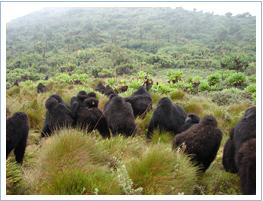
Rwanda shelters 151 different types of mammal species, eleven of which are currently threatened and none of which are endemic. Among them are the primates (14 to 16),with half of the remaining world population of mountain gorillas (Gorilla gorilla berengei). The gorillas are found in the Volcanoes National Park.
The Natural Mountainous forests, concentrated in the Western Province which also harbors the Lake Kivu, are home to golden monkeys, the white and black colobus monkey, the owl faced monkey which is on the red list of IUCN to mention but a few. In the East, the relief is characterized by a vast monotonous region cut up in big hardpan strips strewn with a multitude of lakes and marshes which are habitat to various natural resources including hippos, giraffes, zebras, leopards, crocodiles, and nearly 600 species of birds.
Rwanda is one of the top birding countries with 670 different birds having been recorded. Four of species of birds in Rwanda are threatened with extinction: the shoebill (Balaeniceps rex) found in Akagera; Grauer’s rush warbler (Bradyptrus graueri) found in Volcanoes National Park in Nyungwe and in the swamps of Rugezi; the Kungwe apalis(Apalis argentea) found in Nyungwe; and the African or Congo barn owl (Phodilus prigoginei) found along Lake Kivu.
This rich biodiversity is mainly conserved in protected areas (three national parks, natural forests, wetlands). Despite its size and high population density, almost 20 per cent of the national territory is dedicated as protected areas.
With the highest population density in Africa, coupled with its dependence on natural resources, the major threats to the biodiversity and genetic resources in Rwanda are mainly linked to population pressure and the problem of land scarcity. Other threats to the biodiversity are linked to human activities such as loss of habitat by conversion of natural habitats, mining, agriculture and the introduction of alien species.
The rich biodiversity of Rwanda, provide an opportunity for the development of the tourism sector in Rwanda. Rwandan tourism is mainly based on visits in national parks, with the Volcanoes National Park, the most visited.
Rwanda’s Green Initiatives
Under the leadership of President Paul Kagame, who is one of Africa’s strongest voices on environmental sustainability, Rwanda has developed a visionary strategy for sustainable development and environmental protection, with a spate of new policies and laws for environmental management.
Rwanda’s green initiatives include:
- Environment organic law promulgation
- Establishment of Rwanda Environment Management Authority
- Biodiversity and wildlife policies development
- Programmes aimed at halting the effects of climate change, including preserving wetlands and forests as well as a countrywide tree-planting
- Protection of river banks and lake shores for biodiversity conservation
- Tourism revenue sharing scheme for communities surrounding Protected Areas.
- A country-wide ban on non-biodegradable plastic bags
- Nationwide community works known as Umuganda which include activities like litter cleanups tree-planting and greening of cities.
- Trash collection in Kigali, with the litter recycled into cooking bricks as an alternative to firewood.
- Development of renewable energies (Biogas, solar, hydropower) and Rainwater harvesting in schools, household and in public and private institutions
Rwanda’s Endangered Mountain Gorillas
 Dian Fossey & Karisoke Research Centre, Rwanda Dian Fossey & Karisoke Research Centre, Rwanda
‘Dian Fossey founded the Karisoke Research Center on Sept. 24, 1967, in Rwanda’s Volcanoes National Park between Mt. Karisimbi and Mt. Bisoke. She recalled this historic event in her book, Gorillas in the Mist.’
‘…There she began a long-term scientific study of the endangered mountain gorillas. She pioneered ways to approach the gorillas so they would accept human observers, and she learned to identify individual gorillas by the wrinkles on their noses. She also promoted active conservation, protecting the gorillas through measures such as armed anti-poaching patrols. At that time, she feared that the mountain gorilla might become extinct by the end of the 20th century, as her mentor, Dr. Louis Leakey, had warned. A census published in 1981 found that the population had fallen to 242 individuals, from a 1960 estimate of 400-500. Now, 40 years later, Fossey might be surprised to learn that some 380 mountain gorillas are known to inhabit the Virunga mountains (according to a 2003 census), a significant increase since her time.’
‘The Fossey Fund currently employs a staff of 125 at the Karisoke Research Center including gorilla trackers, researchers and anti-poaching patrols.’
Will the mountain gorilla survive?
‘The year 2002 marked the 100th year since the mountain gorilla was first scientifically identified as a distinct subspecies of gorilla. The future of the gorillas is most dependent on the protection and survival of the forests in which they live, since they depend on this land for food, safety and normal activities. But the forests are often in danger from growing human populations, and from civil war in the region.’
Threats to Gorilla Survival
‘All types of gorillas in Africa are endangered, primarily due to human activity such as poaching, disease transmission, and habitat destruction. Ultimately, human poverty is the greatest threat to gorillas. Gorillas live in countries in Africa with some of the highest population densities and lowest adult life spans, literacy rates, and standards of living in the world. The challenges that such intense poverty brings to gorilla conservation vary depending on where in Africa the gorillas live. Western gorillas, which inhabit 11 west African countries from Nigeria to Angola, are primarily threatened by illegal hunting for food, habitat loss from logging, and disease specifically the Ebola virus, which has a roughly 95% mortality rate in gorillas. Eastern gorillas are found only in Rwanda, Uganda and the Democratic Republic of Congo, and are not generally hunted for food like their western counterparts. They are primarily threatened by habitat loss when their forests are converted to farmland and pasture; local civil unrest; poachers’ snares set for other animals such as antelope; respiratory and other diseases probably transmitted by humans; and poaching for the gorilla infant trade.
The only type of gorilla that is known to be increasing is the mountain gorilla. Between 1989 and 2003, the Virunga mountain gorilla population increased by 17% and nearly all that increase occurred within the sector of the park protected by The Fossey Fund. This is astounding, particularly given that civil wars occurred in both Rwanda and Congo during portions of this time period. This increase is attributed to the intense conservation efforts of the national park authorities in Rwanda, Congo and Uganda as well as the Dian Fossey Gorilla Fund International and its partners.’
Gorilla Rehabilitation & Grace
‘Since Dian Fossey’s time, gorilla conservationists have sometimes had to care for infant gorillas confiscated from poachers. But these young gorillas are physically and emotionally fragile, and have usually suffered from extremely traumatic conditions. It is assumed that at least four gorillas have been killed to obtain an infant: certainly the mother, likely the silverback and probably other family members coming to protect their kin.’
The Fossey Fund cares for many young orphaned gorillas rescued from poachers or armed conflict, with the goal of one day returning them to the wild. Raising the gorillas for release will provide genetic diversity critical for a healthy species.’
A new state-of-the-art facility was just opened in Kasugho, Democratic Republic of the Congo called GRACE (Gorilla Rehabilitation and Conservation Education center). This Fossey Fund facility will be a haven for up to 30 rescued Grauer’s gorillas, where they will live in a group similar to those in the wild and ultimately, we hope, will be released into the wild as their own family. The center is on land donated by the local community. The gorillas will have access to 20 hectares (49 acres) of forest when construction is complete.’
The first four gorilla residents arrived at GRACE on April 27th by UN helicopter. The infants had been living in a temporary facility in Goma with their human care staff who must take on the role of both silverback and mother for the youngsters. The gorillas instantaneously seemed at ease, after a stressful travel day, when they were allowed to roam their new forest home. They started eating forest foods that they hadn’t seen since they were taken from the forest and even started building nests. Six more orphaned gorillas will arrive at GRACE in mid-June.’
The GRACE Center will have an impact beyond the rehabilitation of rescued gorillas. Studies have shown that gorilla rehabilitation centers in other areas have helped to discourage the illegal trade in live gorilla infants. Authorities are quicker to confiscate poaching victims if they know there is a place that will receive them. In addition, the center will welcome researchers and students, and house a conservation education and public information program designed by the local university, the Tayna Center for Conservation Biology (TCCB).’
Helping People Help Gorillas
‘Helping people in Africa thrive helps endangered gorillas survive, too.
Poverty reduction, health promotion and conservation education are irrevocably linked to environmental protection. The Dian Fossey Gorilla Fund International has developed programs to help people in Rwanda and the Democratic Republic of Congo where we protect gorillas, to address many of these issues: alleviating extreme poverty; developing public-private partnerships; increasing access to essential medicines; combating disease through intestinal parasite treatment and educational prevention; empowering women; helping children go to school; reducing child mortality; improving maternal health; assisting in environmental stability and reversing loss of environmental resources. The Fossey Fund’s people programs have four major goals:
- To provide a healthy environment for local people living around protected areas.
- To enhance environmental protection and conservation of endangered species living in Volcanoes National Park.
- To improve awareness and understanding of the role of community projects in successful natural resource conservation.
- To ensure sustainability of community projects and community ownership of the projects through capacity building and local involvement.’
Copyright 2010 The Dian Fossey Gorilla Fund International. All rights reserved.
^ Further Information: The Dian Fossey Gorilla Fund International
Environmental Partners
Biomimicry Institute

In support of World Environment Day, the Biomimicry Institute provided scientific information for the WED 2010 poster series. The Biomimicry Institute (TBI) is a 501c3 non-profit organization dedicated to nurturing and growing the global community of people learning from, emulating, and conserving life’s genius to create a healthier and more sustainable human existence on this planet.
^http://www.biomimicryinstitute.org/
CinemAmbiente

In support of WED 2010, CinemAmbiente, Italy’s prime environmental film festival directed by Gaetano Capizzi and co-organized by the National Museum of Cinema, has moved its customary autumn date forward to spring to coincide with WED. CinemAmbiente will run from 1-6 June in Torino, Italy. In addition, CinemAmbiente, in collaboration with agencies and associations, will hold special film screenings in 20 cities throughout Italy on 5 June. CinemAmbiente is the head of the Environmental Film Festival Network (EFFN) and Europe’s first zero-emission festival.
^http://www.cinemambiente.it/splash.php
Clean Up the World

In support of World Environment Day 2010, Clean Up the World will invite its member organisations around the globe to conduct environmental activities with a focus on protecting and promoting biodiversity in their communities. Activities such as planting native trees, cleaning up local parks and waterways, conducting nature walks or organising environmental education exercises will be undertaken. Members will also register their local activities with UNEP.
Now celebrating its 18th year, Clean Up the World, held in conjunction with UNEP, mobilises an estimated 35 million volunteers from 120 countries annually making it one of the largest community based environmental campaigns in the world. While its Member’s activities can be conducted throughout the year, including World Environment Day, Clean Up the World’s flagship event is Clean Up the World Weekend, 17-19 September 2010. Clean Up the World is a not-for-profit, non-government, apolitical organisation that unites communities with a common focus to clean up the world. For more information, please contact e-mail: info@cleanuptheworld.org
^http://www.cleanuptheworld.org/en/
Green TV

In support of WED 2010, Green TV is promoting WED 2010 video materials throughout their online channels, including GreenTV News, iTunes, Blinkx, MySpace, YouTube and Metacafe. Green TV is the world’s leading online TV channel for ‘green’ video. New films are available every day from organisations working around the world. Green TV is proud to be partnered with UNEP and is supporting World Environment Day by promoting WED films and covering relevant stories in its weekly news broadcast.
^http://www.myspace.com/mygreentv
ENERGY Globe Award

In support of World Environment Day 2010, the Energy Globe Awards will be held during the World Environment Day celebrations in Kigali, Rwanda. The ENERGY GLOBE Award TV Gala – a WED partnership project – will take place on 3 June. It will be broadcast worldwide. The ENERGY GLOBE Award was initiated by the Austrian Mr. Wolfgang Neumann and has been awarded annually since 2000. It distinguishes projects from all around the world that conserve natural resources and utilize renewable or emission-free sources. The goal of the ENERGY GLOBE Award is to create the necessary awareness concerning solutions to our environmental problems and to demonstrate that each of us can make a positive contribution. The ENERGY GLOBE Jury is headed by Congresswoman Maneka Gandhi, former Indian Minister for Environment.
^http://www.energyglobe.com/en/energy-globe-award/
National Geographic Society

In support of WED 2010, the National Geographic Society and GlobeScan presented the 2010 results of the annual Greendex consumer behaviour study. This quantitative consumer study of 17,000 consumers in 17 countries (14 in 2008) asked about such behavior as energy use and conservation, transportation choices, food sources, the relative use of green products versus traditional products, attitudes towards the environment and sustainability, and knowledge of environmental issues. The Greendex measures the impact of the average consumer in each country surveyed; it does not measure the environmental impact of a total country.
The National Geographic Society is one of the world’s largest nonprofit scientific and educational organizations. Founded in 1888 to “increase and diffuse geographic knowledge,” the Society works to inspire people to care about the planet. It reaches more than 375 million people worldwide each month through its official journal, National Geographic, and other magazines; National Geographic Channel; television documentaries; music; radio; films; books; DVDs; maps; exhibits; live events; school publishing programs; interactive media; and merchandise. National Geographic has funded more than 9,200 scientific research, conservation and exploration projects and supports an education program combating geographic illiteracy.
^http://www.nationalgeographic.com/
GlobeScan

GlobeScan is an international opinion research consultancy. Companies, multilateral institutions, governments and NGOs trust GlobeScan for its unique expertise in reputation research, sustainability, and issues management. GlobeScan provides global organizations with evidence-based insight and advice to help them build strong brands, manage relations with key stakeholders, and define their strategic positioning.
^http://www.globescan.com/
The Dian Fossey Gorilla Fund International
In support of WED 2010, the Dian Fossey Gorilla Fund International has assisted in organizing events in Rwanda. In addition, the Fossey Fund has kindly contributed photographs for use in WED related materials. The Dian Fossey Gorilla Fund International is dedicated to the conservation and protection of gorillas and their habitats in Africa. Founded by Dr. Dian Fossey as the Digit Fund and renamed after her death, the Fossey Fund operates the Karisoke Research Center in Rwanda, and maintains a staff of scientists, trackers and anti-poaching patrols in Volcanoes National Park. The Fund also works with community-managed reserves and national parks in the Democratic Republic of Congo, and operates extensive education, health and other community outreach programs.
^http://gorillafund.org/
Treehugger

In support of World Environment Day 2010, Treehugger is working with UNEP to raise awareness about WED celebrations. Treehugger partnered with UNEP and Racepoint Group (on behalf of the Government of Rwanda) for the WED Blogging Competition which will see one lucky blogger win a free trip to Rwanda for the WED celebrations from 3-5 June 2010. TreeHugger is the leading media outlet dedicated to driving sustainability mainstream. Partial to a modern aesthetic, we strive to be a one-stop shop for green news, solutions, and product information.
^http://www.treehugger.com/
World Association of Zoos and Aquariums (WAZA)
In support of WED 2010, the World Association of Zoos and Aquariums (WAZA) is promoting WED by encouraging members to take part in WED through an on-line information page.
WAZA is the unifying organisation for the world zoo and aquarium community. Its mission is to provide leadership and support for zoos, aquariums, and partner organizations of the world in animal care and welfare, conservation of biodiversity, environmental education and global sustainability. WAZA supports biodiversity conservation and is partnering with CBD, the Convention on Biological Diversity on the occasion of the International Year of Biodiversity 2010. For WAZA and its members biodiversity is the theme for 2010 and zoos and aquariums worldwide are joining in with numerous events and activities. WAZA therefore fully supports the related activities for WED 2010, information and supporting material is provided on www.waza.org
^http://www.waza.org/en/site/home
Further Information on World Environment Day
UNEP World Environment Day
THE UNITED NATIONS IN GENEVA IN GREEN
Pittsburgh — A United Nations World Environment Day Host City
UNEP World Environment Day in South Korea
Millions of Pieces: Only One Puzzle
Highlights from WED 2010
Wikipedia – history of World Environment Day
Greenfest (Australia)
United Nations Association of Australia (Victorian Division)
© The Habitat Advocate Public Domain
Leave a Reply
You must be logged in to post a comment.
June 5th, 2010
by Editor 20100605.

…on the 2nd weekend in May each year
2010 Theme: ‘Save migratory birds in crisis – every species counts!’
Source: http://www.worldmigratorybirdday.org/2010/
Threats to migratory birds and their habitats include:
- Loss (reclamation) and degradation of habitat
- Human disturbance
- Poaching
- Introduced predators
- Invasive plants
- Climate change
About
‘World Migratory Bird Day (WMBD) was initiated in 2006 and is a annual awareness-raising campaign highlighting the need for the protection of migratory birds and their habitats. On the second weekend each May, people around the world take action and organise public events such as bird festivals, education programmes and birdwatching excursions to celebrate World Migratory Bird Day.’
‘World Migratory Bird Day activities take place in many different countries and places, but are all linked through a single global campaign and theme.’
‘Every year WMBD focuses on a different topic; this year’s theme is “Save migratory birds in crisis – every species counts!” – aims to raise awareness on globally threatened migratory birds, with a particular focus on those on the very edge of extinction – the Critically Endangered migratory birds. In line with the International Year of Biodiversity, the 2010 WMBD theme also highlights how migratory birds are part of the biological diversity of our world and how the threat of extinction faced by individual bird species is a reflection of the larger extinction crisis threatening other species and the natural diversity that underpins all life on earth.’
History
‘World Migratory Bird Day was initiated by the African-Eurasian Migratory Waterbird Agreement (AEWA) Secretariat in collaboration with the Secretariat of the Convention on the Conservation of Migratory Species of Wild Animals (CMS) in 2006.’
‘Originally, the idea of designating a day for migratory birds arose in the United States in 1993, when the US Fish and Wildlife Service, the Smithsonian Migratory Bird Center and the Cornell Laboratory of Ornithology initiated celebrations of the ‘International Migratory Bird Day’ (IMBD), which encourages bird festivals and education programmes across the United States and other parts of the Americas. Although this day continues to be successfully celebrated in the western hemisphere, something similar was missing for the rest of the world.’
‘On the occasion of its 10th anniversary in 2005, the African-Eurasian Migratory Waterbird Agreement (UNEP/AEWA) – a United Nations Environment Programme (UNEP) administered environmental treaty, initiated the Migratory Waterbird Days (MWD) which were held in Africa, Europe and parts of Asia. As this event was well received in the African-Eurasian region, the idea arose to broaden the scope into a commemorative day which celebrates the phenomenon of migration and all migrating birds, including waterbirds on a global scale.’
‘Hence, the very first World Migratory Bird Day was launched by AEWA and CMS on the weekend of 8-9 April 2006 on Ms. Kuki Gallmann’s famous wildlife reserve ‘Ole Ari Nyiro’ in Laikipia, Kenya. The central launching event called WINGS was inspired by the phenomenon of bird migration and was attended by a number of international personalities from the worlds of art, business and conservation.’
‘Since then, World Migratory Bird Day (WMBD) has been celebrated in an increasing number of countries and has steadily grown in popularity each year. While the annual WMBD campaigns are prepared and coordinated centrally by the AEWA and CMS Secretariats, national authorities and NGOs worldwide, in particular BirdLife International and its partners, help to encourage individuals and organisations around the world to celebrate World Migratory Bird Day and to incorporate each year’s theme into their awareness-raising programmes and festivals.’
‘Through the help of thousands of committed individuals, organisations and government authorities – World Migratory Bird Day has turned into a truly global commemorative event, which helps turn the world’s attention to the wonders of bird migration and the need for their conservation in a concentrated and global scale each year.’
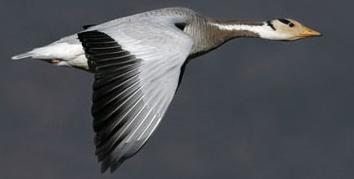
WMBD 2010 “Save migratory birds in crisis – every species counts!
‘The United Nations declared 2010 to be the International Year of Biodiversity (IYB). This is an appreciation of the value of biodiversity for our lives. However, it is not only a celebration, but also an invitation to take action to safeguard the variety of life on earth. Our planet’s biological diversity is very rich and amazing. It is the result of billions of years of evolution and forms the complex web of life of which we are part and upon which we totally depend. Humankind relies on this diversity, because it provides us with food, fuel, medicine and other essentials which we need every day.’
‘Regardless of that, species are disappearing because of human activities and there are a lot of species that are in danger of becoming extinct. These losses are irreversible and the decline of biodiversity endangers our livelihood. The current rate of extinction is a thousand times faster than the natural one. Normally, only one bird per century becomes extinct, but during the last thirty years 21 bird species disappeared. At the moment 192 birds are classified as Critically Endangered as a result of habitat loss, hunting, pollution, climate change, human disturbance and other reasons. These threats are directly or indirectly man-made. Without immediate action, many of these endangered species will not be here in a few years time. The Balearic Shearwater (Puffinus mauretanicus), for example, is expected to become extinct within a human generation due to fisheries by-catch. And there are several other species which are extremely rare. The population size of Slender-billed Curlew (Numenius tenuirostris), New Zealand Storm-petrel (Oceanites maorianus) as well as Rueck’s Blue-flycatcher (Cyornis ruckii) is under 50 individuals.’
‘Therefore in 2010, the International Year of Biodiversity, World Migratory Bird Day focuses on Globally Threatened Migratory Birds and especially on those thirty-one migratory bird species, which are classified as Critically Endangered in the IUCN Red List. These are birds, which face extinction. Migratory birds rely on several different habitats; they need different locations for breeding and raising their young, and for feeding. Some of them migrate up to thousands of kilometers to find suitable areas and cross many different habitats, regardless of any political borders. Thus, saving migratory birds means saving their required habitats and that benefits other species as well. Because birds are found nearly everywhere and, with more than 10,000 described species, being the best known and best-researched taxon, they serve as vital indicators of distribution and state of biodiversity and the ecosystems they inhabit. If a bird species becomes threatened by extinction it is a clear sign that the conditions of, or the ecosystem itself, have changed and that other species that depend on this ecosystem may be affected as well. Saving every species is therefore essential, because if one species becomes extinct, the whole ecosystem will be affected.’
WMBD 2009 “Barriers to migration”
‘On 9-10 May 2009 World Migratory Bird Day was celebrated in over 50 countries around the world. Under the main theme “Barriers to migration”, 130 registered events took place. These events helped to raise awareness on man-made barriers and demonstrated that obstacles like wind turbines, power lines and tall buildings pose a threat to migratory birds.’
WMBD 2008 “Migratory Birds – Ambassadors for Biodiversity”
‘In 2008, World Migratory Bird Day (WMBD) was celebrated for the third time on 10-11 May 2008. Over 136 activities took place in 59 countries around the world to mark World Migratory Bird Day in 2008 and the events helped spread the idea of migratory birds as messengers for the conservation of biodiversity worldwide.’
WMBD 2007 “Migratory birds in a changing climate”
‘In 2007, World Migratory Bird Day was celebrated in more than 58 countries and with more than 100 different events all across the planet on 12-13 May. The central theme “Migratory birds in a changing climate” helped to focus the world’s attention on the plight migratory birds are facing due to global warming. WMBD activities highlighted the effects that increasing temperatures, altered rainfall and vacillating weather conditions have on migratory birds.’
WMBD 2006 “Migratory birds need our support now!”
‘The first World migratory Bird Day took place on 8-9 April, 2006. At the time, migratory birds were receiving very negative media coverage as a result of them being falsely believed to be the main cause for the spread of Avian Influenza (H5N1) around the world. So the idea arose to use the first World Migratory Bird Day to counter some of the negative and often unbalanced publicity migratory birds were receiving at the peak of the Avian Influenza discussion. For this reason the theme of the first World Migratory Bird Day in 2006 became: “Migratory birds need our support now!”. The centre of the campaign was a launching event called WINGS which took place on the edge of the Great Rift Valley in Kenya and was hosted by Ms. Kuki Gallman, a famous writer and conservationist. Altogether, 68 other WMBD related events took place in all corners of the world to support the launch and the very first WMBD campaign.’
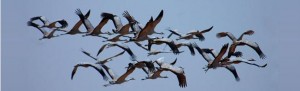
African-Eurasian Waterbird Agreement [AEWA]
^ http://www.unep-aewa.org/
About AEWA
The Agreement on the Conservation of African-Eurasian Migratory Waterbirds (AEWA) is the largest of its kind developed so far under CMS. It was concluded on 16 June 1995 in the Hague, the Netherlands and entered into force on 1 November 1999 after the required number of at least fourteen Range States, comprising seven from Africa and seven from Eurasia had ratified. Since then the Agreement is an independent international treaty.
The AEWA covers 255 species of birds ecologically dependent on wetlands for at least part of their annual cycle, including many species of divers, grebes, pelicans, cormorants, herons, storks, rails, ibises, spoonbills, flamingos, ducks, swans, geese, cranes, waders, gulls, terns, tropic birds, auks, frigate birds and even the south African penguin.
The agreement covers 118 countries and the European Union (EU) from Europe, parts of Asia and Canada, the Middle East and Africa. In fact, the geographical area covered by the AEWA stretches from the northern reaches of Canada and the Russian Federation to the southernmost tip of Africa. The Agreement provides for coordinated and concerted action to be taken by the Range States throughout the migration system of waterbirds to which it applies. Of the 118 Range States and the European Union (EU) currently 63 countries (as of 1 February 2010) have become a Contracting Party to AEWA.
Parties to the Agreement are called upon to engage in a wide range of conservation actions which are describes in a comprehensive Action Plan. This detailed plan addresses such key issues as: species and habitat conservation, management of human activities, research and monitoring, education and information, and implementation.
At the fourth Session of the Meeting of the Parties, which took place from 15-19 September 2008 in Antananarivo, Madagascar, a number of important decisions were taken. For more information on Resolutions adopted at MOP4 click here.
Although the Agreement only entered into force a few years ago, its implementation is well underway. The European Union, Belgium, Denmark, France, Germany, The Netherlands, Switzerland and United Kingdom increasingly support the implementation of AEWA. In addition to this support, the GEF council approved the African-Eurasian Flyways Project in November 2003 and its implementation started in July 2006. This project which is executed by Wetlands International in close cooperation with BirdLife International especially focuses on: capacity building, cooperative research and monitoring and communication activities.
AEWA Background
Throughout history, migration of animals has been a universal phenomenon. Many animals migrate in response to biological requirements, such as the need to find a suitable location for breeding and raising their young, and to be in favourable areas for feeding. In some cases, these specific requirements are fulfilled in locations separated by distances of thousand of kilometres.
During their migration, these animals cross political boundaries between nations; boundaries that have no inherent meaning for animals, but which have a dramatic influence on their annual life-cycles and their individual survival chances, due to the great differences that exist between countries in conservation policy. Migratory species are dependent on the specific sites they find at the end of their journey and along the way. Increasingly these sites are threatened by man-made disturbances and habitat degradation. Migratory animals may also fall victim to adverse natural phenomena, such as unfavourable climatic conditions.
The above mentioned influences are aggravated by the fact that it has long been held that migratory species legally do not fall within the jurisdiction of one particular country which could be held responsible for any harm occurring to them.
1972 In 1972 the United Nations Conference on the Human Environment, recognized the need for countries to co-operate in the conservation of animals that migrate across national boundaries or between areas of national jurisdiction and the high seas. This recommendation resulted in the Convention on the Conservation of Migratory Species of Wild Animals
1983 This Convention, commonly referred to as the Bonn Convention, (after the German city where it was concluded in 1979), came into force in 1983. The goal of the Convention is to provide conservation for migratory terrestrial, marine and avian species over the whole of their range. This is very important, because failure to conserve these species at any particular stage of their life cycle could adversely affect any conservation efforts elsewhere. The fundamental principle of the Bonn Convention therefore, is that the Parties of the Bonn Convention acknowledge the importance of migratory species being conserved and of Range States agreeing to take action to this end whenever possible and appropriate, paying special attention to migratory species, the conservation status of which is unfavourable, and taking individually or in co-operation appropriate and necessary steps to conserve such species and their habitat. Parties acknowledge the need to take action to avoid any migratory species becoming endangered. In particular, the Parties:
*shall endeavour to provide immediate protection for migratory species included in Appendix I;
*shall endeavour to conclude Agreements covering the conservation and management of migratory species included in Appendix II.
Agreements are the primary tools for the implementation of the main goal of the Bonn Convention. Moreover, they are more specific than the Convention itself, involve more deliberately the Range States of the species to be conserved, and are easier to put into practice than the whole Bonn Convention.
AEWA History
The African-Eurasian Waterbird Agreement is an international agreement aiming at the conservation of migratory waterbirds.
1988 After the first Conference of Parties of the Bonn Convention, where it was decided to prepare an Agreement for the Western Palearctic Anatidae, in 1988 the Dutch Government began developing a draft Western Palearctic Waterfowl Agreement as part of its Western Palearctic Flyway conservation programme. During the process of drafting and consultation, the name of the Agreement was changed into the African-Eurasian Waterbird Agreement (AEWA), emphasizing the importance of Africa for migratory birds.
1994 The first consultative meeting of Range States of AEWA was held in Nairobi in June 1994. This meeting strongly supported the concluding of AEWA, and consensus could be achieved on almost all matters of substance.
1995 In June 1995 the final negotiation meeting was held in The Hague. The Meeting adopted the Agreement by consensus and accepted with appreciation the offer of the Government of the Kingdom of the Netherlands to act as Depositary, to provide at its own expense until 1 January 1999, an Interim Secretariat and to host the first session of the Meeting of the Parties. For more information go to Agreement page.
1996 The Dutch Government, Ministry of Agriculture, Nature Management and Fisheries, established the Interim Secretariat on 1 January 1996. On 15 August 1996, the Agreement was opened for signature at the Ministry of Foreign Affairs of the Netherlands.
1999 In accordance with Article XIV, in 1999 the required number of at least fourteen Range States, comprising at least seven from Africa and seven from Eurasian, was achieved and the Agreement entered into force on 1 November 1999. Only a few days later the first Session of the Meeting of the Parties (MOP1) took place in Cape Town, South Africa. The Meeting of the Parties is the governing body of the Agreement. For more information on this Meeting you are referred to the meetings section.
2000 As adopted by the Meeting of the Parties, a permanent Secretariat was established and co-located with the Convention Secretariat in Bonn. Following the decision of the Meeting of the Parties, this Secretariat is administered by UNEP.
2002 The second Session of the Meeting of the Parties took place from 25 – 27 September 2002 in Bonn, Germany. The Proceedings of the Meeting can be downloaded here.
2005 The African-Eurasian Waterbird Agreement, which was concluded under the aegis of the Convention on Migratory Species of Wild Animals in The Hague, the Netherlands, on 16 June 1995 celebrated its 10th Anniversary.
2005 To mark the 10th anniversary of the Agreement on the Conservation of African-Eurasian Migratory Waterbirds (AEWA) the Standing Committee of AEWA has established the AEWA Waterbird Conservation Award in order to recognise and honour institutions and individuals within the Agreement area that have significantly contributed towards the conservation and sustainable use of waterbirds.
2005 The third Session of the Meeting of the Parties took place from 23-27 October 2005, in Dakar, Senegal. For more information please visit the meetings section on the AEWA website.
2006 AEWA, together with the Convention on Migratory Species (CMS) and other partner organizations, launched the first World Migratory Bird Day (WMBD) on the weekend of 8-9 April 2006.
2007 World Migratory Bird Day (WMBD) was celebrated for second time in 56 countries and at more than 100 different locations all across the planet on the weekend of 12-13 May 2007. With these numbers, AEWA has managed to surpass the number of events and participating countries in 2006 (70 registered events in 46 countries)! During the course of summer of 2007, the AEWA Secretariat received 157 drawings from children from all over the world, who took part in the Drawing Competition. The children up to the age of 16 years were requested to portray their thoughts on this year’s WMBD theme “migratory birds in a changing climate” and to express their fears and visions on paper.
2008 World Migratory Bird Day (WMBD) was celebrated for the third time on 10-11 May 2008 and this year more than 136 events were registered in 59 countries around the world.
2008 The fourth Session of the Meeting of the Parties took place from 15-19 September 2008 in Antananarivo, Madagascar. For more information on the outcome of the meeting please visit the meetings section on the AEWA website.
2009 The fourth World Migratory Bird Day (WMBD) took place on 9-10 May 2009 and motivated thousands of people in over 50 countries to conduct special events and activities to mark this global celebration.
The central theme of this year’s WMBD: “Barriers to migration” helped to highlight the increasing threat posed by man-made structures on migratory birds, such as wind turbines, power lines, windows and tall buildings etc. Over 130 different WMBD events, which took place in all corners of the world, were registered on the WMBD website (www.worldmigratorybirdday.org).

AEWA Contracting Parties (total 63)
(as of 1st February 2010)
*Date of Signing, agreement not yet entered into force in this country.
AEWA Publications
^ http://www.unep-aewa.org/publications/index.htm
AEWA Partners
United Nations Environment Programme (UNEP) is the voice for the environment in the United Nations system. It is an advocate, educator, catalyst and facilitator, promoting the wise use of the planet’s natural assets for sustainable development.
^ http://www.unep.org/
 The United Nations General Assembly declared 2010 the International Year of Biodiversity. The goals of this special year are to raise awareness of the importance of biodiversity, highlighting the fact that it continues to be lost, and to celebrate novel solutions being carried out around the world for its conservation and sustainable use, and the equitable sharing of the benefits from the use of genetic resources. The Year 2010 was chosen to coincide with the biodiversity target agreed by world leaders in 2002. During the Year scientists will report on a global trend on biodiversity. The United Nations General Assembly declared 2010 the International Year of Biodiversity. The goals of this special year are to raise awareness of the importance of biodiversity, highlighting the fact that it continues to be lost, and to celebrate novel solutions being carried out around the world for its conservation and sustainable use, and the equitable sharing of the benefits from the use of genetic resources. The Year 2010 was chosen to coincide with the biodiversity target agreed by world leaders in 2002. During the Year scientists will report on a global trend on biodiversity.
^ http://www.cbd.int/2010/welcome/
 Convention on the Conservation of Migratory Species of Wild Animals (CMS; also known as the Bonn Convention)aims to conserve terrestrial, aquatic and avian migratory species throughout their range. It is an intergovernmental treaty concluded under the aegis of the United Nations Environment Programme (UNEP). Since the Convention’s entry into force, its membership has grown steadily to include 113 (as of 1 January 2010) parties from Africa, Central and South America, Asia, Europe and Oceania. Convention on the Conservation of Migratory Species of Wild Animals (CMS; also known as the Bonn Convention)aims to conserve terrestrial, aquatic and avian migratory species throughout their range. It is an intergovernmental treaty concluded under the aegis of the United Nations Environment Programme (UNEP). Since the Convention’s entry into force, its membership has grown steadily to include 113 (as of 1 January 2010) parties from Africa, Central and South America, Asia, Europe and Oceania.
^ http://www.cms.int/
 African-Eurasian Migratory Waterbird Agreement (AEWA)is an intergovernmental treaty developed under the CMS dedicated to the conservation of migratory waterbirds. The Agreement covers 255 species of birds, ecologically dependent on wetlands for at least part of their annual cycle. The treaty covers a large geographic area, including Europe, parts of Asia, Canada, the Middle East and Africa. So far 63 out of the 118 countries (as of 1 February 2010) in this area have become Contracting Parties to the International Agreement. African-Eurasian Migratory Waterbird Agreement (AEWA)is an intergovernmental treaty developed under the CMS dedicated to the conservation of migratory waterbirds. The Agreement covers 255 species of birds, ecologically dependent on wetlands for at least part of their annual cycle. The treaty covers a large geographic area, including Europe, parts of Asia, Canada, the Middle East and Africa. So far 63 out of the 118 countries (as of 1 February 2010) in this area have become Contracting Parties to the International Agreement.
^ http://www.unep-aewa.org/
 BirdLife Internationalis a global partnership of conservation organisations that strives to conserve birds, their habitats and global biodiversity. BirdLife International has long been committed to the conservation of migratory birds and the habitats upon which they depend. The BirdLife Partnership is engaged in migratory bird conservation at numerous scales, from projects focused on individual species or key sites, to broader policy and advocacy work to promote migratory species conservation, and involvement in flyway-scale projects. BirdLife Internationalis a global partnership of conservation organisations that strives to conserve birds, their habitats and global biodiversity. BirdLife International has long been committed to the conservation of migratory birds and the habitats upon which they depend. The BirdLife Partnership is engaged in migratory bird conservation at numerous scales, from projects focused on individual species or key sites, to broader policy and advocacy work to promote migratory species conservation, and involvement in flyway-scale projects.
^ http://www.birdlife.org/
 Wetlands Internationalis an independent, non-profit, global organisation, dedicated to the conservation and wise use of wetlands. Wetlands International works globally, regionally and nationally to achieve the conservation and wise use of wetlands, to benefit biodiversity and human well-being. Wetlands Internationalis an independent, non-profit, global organisation, dedicated to the conservation and wise use of wetlands. Wetlands International works globally, regionally and nationally to achieve the conservation and wise use of wetlands, to benefit biodiversity and human well-being.
^ http://www.wetlands.org/
 The Partnership for the East Asian – Australasian Flyway– Launched in November 2006, the Partnership is an informal and voluntary initiative, aimed at protecting migratory waterbirds, their habitat and the livelihoods of people dependent upon them. There are currently 21 partners including 10 countries, 3 intergovernmental agencies and 8 international non-government organisations. The Partnership provides a framework for international cooperation, including: (1) development of a Waterbird Site Network (for sites of international importance to migratory waterbirds), (2) collaborative activities to increase knowledge and raise awareness of migratory waterbirds along the flyway, and (3) building capacity for the sustainable management and conservation of migratory waterbird habitat along the flyway. The Partnership for the East Asian – Australasian Flyway– Launched in November 2006, the Partnership is an informal and voluntary initiative, aimed at protecting migratory waterbirds, their habitat and the livelihoods of people dependent upon them. There are currently 21 partners including 10 countries, 3 intergovernmental agencies and 8 international non-government organisations. The Partnership provides a framework for international cooperation, including: (1) development of a Waterbird Site Network (for sites of international importance to migratory waterbirds), (2) collaborative activities to increase knowledge and raise awareness of migratory waterbirds along the flyway, and (3) building capacity for the sustainable management and conservation of migratory waterbird habitat along the flyway.
^http://www.eaaflyway.net/
 The World’s Rarest is a not-for-profit initiative that aims to highlight the plight of the most threatened species on Earth and to raise funds to support their conservation. During 2010, the project will be focussed on birds and contribute to BirdLife International’s Preventing Extinctions Programme. The project is based on a prestigious international photo competition, with exciting prizes, entry to which is open to anyone. Images submitted to the competition will be feature in a new book entitledThe World’s Rarest Birds, which is due to be published by the not-for-profit UK publisher WILDGuides in 2011. The World’s Rarest is a not-for-profit initiative that aims to highlight the plight of the most threatened species on Earth and to raise funds to support their conservation. During 2010, the project will be focussed on birds and contribute to BirdLife International’s Preventing Extinctions Programme. The project is based on a prestigious international photo competition, with exciting prizes, entry to which is open to anyone. Images submitted to the competition will be feature in a new book entitledThe World’s Rarest Birds, which is due to be published by the not-for-profit UK publisher WILDGuides in 2011.
^ http://www.theworldsrarestbirds.com/
© The Habitat Advocate Public Domain
Leave a Reply
You must be logged in to post a comment.
May 26th, 2010
by Editor 20100526.
So what has the long trusted conservation brand of the National Parks and Wildlife Service come to represent in New South Wales?

Does tourism and revenue matter more than conservation?
The NSW Keneally Government’s Tourism Bill threatens to introduce specific tourist development provisions into the National Parks and Wildlife Act, 1974, including a long shopping list of facilities to allow for such things as fast food joints, supermarkets, golf courses, rifle ranges, conference centres and resorts of all sorts. It is tantamount to prostituting our National Parks. Instead of Parks and Wildlife being the custodian of wildlife and wilderness, it will become an ‘eco-pimp‘ – procuring visitation to protected areas that exploits and harms fragile ecology for commercial gain.
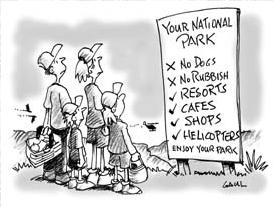
Keneally’s eco-pimp bill threatens to prevent future court appeals against bad developments in our precious National Park. Our Courts should retain the power to thrown out developments, such as private universities and wedding reception centres that don’t belong in our national parks.
Like the precursor Part 3A Planning tyranny bill before it, Keneally’s eco-pimp bill invites construction of new private accommodation facilities inside National Parks.
There is no evidence whatsoever to support the notion that private development in national parks will boost the tourism industry or provide extra funds for park management. A stronger nature tourism industry for NSW with more people enjoying the parks is best achieved by encouraging tourism investment in nearby towns where it most benefits regional communities.
There should be bi-partisan support to strengthen national park laws, not to weaken protection so as to facilitate commercial development. With our rapidly growing population, the integrity and protection of our parks is more important now than ever before.
The cost of visiting National Parks should remain small, to ensure parks can be accessible to all.
The environmental credentials of any party that supports Keneally’s Exploitation Bill, or any aspect of it, would be permanently tainted.
Keneally is blind to the motives of this anti-environment bill. Take her out of her sheltered urban environment and to experience some of our magnificent wilderness first hand may allow her to realise the precious values of the natural world and the wicked folly of this bill.
© The Habitat Advocate Public Domain
Leave a Reply
You must be logged in to post a comment.
May 25th, 2010
by Editor 20100525.
At the end of April a copy of the “National Parks and Wildlife (Sustainable Tourism) Bill, 2010” came into the possession of the Colong Foundation. This Bill introduces specific tourism provisions into the National Parks and Wildlife Act, 1974, including a long shopping list of development opportunities that would permit fast food joints, supermarkets, wedding reception centres, conference centres and resorts of all sorts.
The Colong Foundation sought the advice and assistance of Mr Tim Robertson SC, who in 2004 so admirably defended the Grose Wilderness from exclusive occupation by Fox Studios. Justice Lloyd in his judgment on that case found that the production commercial feature film “Stealth” (about rouge military aircraft), “has nothing to do” with the National Parks and Wildlife Act’s objects or the purpose for reserving land as National Park. The case was thrown out Court, but not until after several local conservationists had been arrested defending wilderness.
If this “Sus. Tourism Bill” is passed, then the legal action to stop “Stealth-type” activities will be virtually impossible and bad developments will sprout up in our precious National Parks.
The whole point of these changes is to destroy the nexus between uses of the national park and the conservation purposes for which the park was reserved, and the power of the Court to adjudicate on whether the Minister’s decision accords with those purposes. Under these new laws, it is the Minister, and not the Courts, who will decide whether a use accords with the Park’s purpose.
Mr Robertson advised that the proposed legislation “removes the legal protection of National Parks from uses which damage their ecology and landscapes, by destroying the principle that National Parks can only be used for a purpose which promotes the use of the land as a public park. It provides the legal authority for the privatisation of National Parks by enabling exclusive possession rights to be given for commercial purposes to private interests under the broad rubric of sustainable tourism. Under this rubric, National Parks will be able to be used for general tourist purposes, such as tourist resorts, convention centres, shopping centres, fast food outlets, sporting activities and fun parks, at the discretion of the Minister, even where those uses do not promote the conservation of the Parks.”
The tourist industry grab for land rights over National Parks has to be stopped. Environment groups will be taking the issue to the people at the Penrith by-election and through the media.
Given the Coalition’s stance on Part 3A planning laws, it seems unlikely that the Coalition Parties will support these new park laws. The Shadow Environment Minister, Catherine Cusack wrote to the Nature Conservation Council in November 2009 and advised that she and the then Shadow Tourism Minister, Don Page, “do not support private accommodation facilities inside National Parks.”
The NSW Government should act to strengthen national park laws as they have repeatedly promised to do, not weaken them to facilitate commercial development. National Parks and Wildlife should not be selecting development sites in parks with the aim of offering these sites to the tourism industry in an “investor-ready” form. Our parks should not become profit centres for developers.

There is no evidence whatsoever to support the notion that private development in national parks will boost the tourism industry or provide extra funds for park management. A stronger nature tourism industry for NSW with more people enjoying the parks is best achieved by encouraging tourism investment in nearby towns where it most benefits regional communities.
With our rapidly growing population, the integrity and protection of our parks is more important now than ever before.
How is it that the Coalition Parties seems capable of grasping these ideas, while the NSW Labor Government remains unresponsive?
Keith Muir, Director, Colong Foundation for Wilderness
Sydney, Australia
© The Habitat Advocate Public Domain
Leave a Reply
You must be logged in to post a comment.
May 21st, 2010
by Editor 20100521.
a poem….

– – –
A Scribbly Gum here I stand
My species iconic, proud, but now condemned
They cast the red die on my girth, the red mark of death
So numbingly final
Glazed thoughts I can only muster
My roots here so ancient, means nothing to them
Scribblies flourished this land since Gondwana dawn
Pervading this old stone country high and deep
– – –
Once a wild place
A natural order, virgin and vast
Of times past, these primitive escarpments hosted wilderness
When old men Scribby Gums knew no saw
– – –
Came the getters, the settlers, the saws
For conquest, for progress, for their plot with a view
Wilderness they castrate, deemed it ‘battleaxe’
Ridges and valleys to the slaughter
Slaughter they sanitized, deemed it ‘clearing’
– – –
Some saw the wrong
Some good laws got through
Some Scribblies saved from slaughter
So why not protect me now?
– – –
Heritage denied me just trees away
Relegated from their Listing, on the fringe
Zoned a resource, a fuel, a hazard
Decisions cast from the Hill, to serve those from distant hills
Now they reason I block their view, I block their way
They cast the red die on my girth, the red mark of death
– – –
I’ll miss the rain most, the best time
When nature regains control
When the cloud drifts in, when it feels wild again
And dark rumblings roam and flare above
Dousing me in soaking cloud
Wild escarpment days
– – –
Motors approach. They come for me
Only a bus, it slows, they take photos, it groans away
Quiet again
– – –
Below the cloud, a piercing sunset glows my bark gold
Down the valley, the bush blanket surges
A breeze rising up the escarpment, fans me fresh
Around me branches sway, then settle, restful
Still again,
Quiet again
– – –
Soon they come
They cast the red die on my girth, the red mark of death
My death an extinction wedge
When they scatter my woodchips on their plot
Will they know I was once a Scribbly Gum – free and wild?
Their photos will torment of treasure lost
This wild country locked in myth
Motors approach
A saw starts
No!
.
by Editor, 23-Oct-04.
© The Habitat Advocate All Rights Reserved
Leave a Reply
You must be logged in to post a comment.
May 15th, 2010
by Gorillaman 20200515.
In and upon my travels throughout our Australian continent, its shorelines and its interiors, I see the impacts of international corporatized exploitations. Some would argue that this corporate exploitive activity is a necessary component to cultivate Australia’s ongoing economy, though I myself tend to hold a far differing opinion.
This land of Australia lived quite well in our days not long past, indeed without such fervent corporates ever hunting for multi-million dollar profits so to appease the gods of corporate gluttonous predatory plunder upon our Australia.
I now question the manner in which for instance, the Howard Federal Liberal government of recent time, soon began the sell-off of such great amounts of our eternal free-flowing river waters, to whosoever chose to purchase same. Never considered by this government here, were the resultant out-takes of such huge amounts of our once proudly valued and esteemed freely-flowing and constant river waters.
There was found to be a ready market for such sales, even to be quickly sought by former government ministers with arranged corporate inclined and intended operatives, then to amass all that could be purchased and or promised, for such purposes upon open dry-lands not generally visited by the soon to be created abundancy of broad acre irrigation farming initiatives. Never considered by this government were the ensuing reductions in their effect upon our seasonal wetlands and swamp-lands, nor to the many river dependant towns and communities and so on, including the small privately owned food producing farmers downstream of such massive water out-take excesses.
The most exploited of our river systems are those that fed into and became one of the major sources of water that feeds into the Murray-Darling River Systems.
Since time immemorable these river systems above-mentioned, were ever reliant upon such as the seasonal Northern Queensland flooding rains, then of the Vic/NSW winter highland melting-snows, that seasonally would ultimately feed into the many downstream outback-area lakes, billabongs, creek systems et al, and also supplied such other particular flora and fauna dependant realms and natural water holdings. So another export commodity has arrived from the mighty corporate America that soon fails us here in our Australia.
An easily accessible internet search today, will soon reveal the huge reduction of which once were previously, the eternal annual river water volumes and flow-rates?
To compare the present situation to what we once held nationally as in important primary source of water for the Eastern States of Australia, as now now measured against the resulting huge corporate inland farming operations, has now departed us seemingly gone into the forever….
The Angry Gorillaman.
© Gorillaman All Rights Reserved
Leave a Reply
You must be logged in to post a comment.
May 12th, 2010
by Editor 20100512.
Yesterday, The NSW Department of Environment, Climate Change and Water (DECCW) within its Parks and Wildlife Group set fire to over 2500 hectares of remote wilderness in the Greater Blue Mountains World Heritage Area.
This deliberate burning was carried out in the name of ‘hazard reduction’ – in order to reduce the available ‘fuel’ (native vegetation) for potential future wildfires or bush arson.
Under the orders of the Blue Mountains regional manager, Geoff Luscombe, this deliberate burning was started around Massif Ridge some 12 kilometres south of the town of Woodford in wild inaccessible forested area of the World Heritage Area.
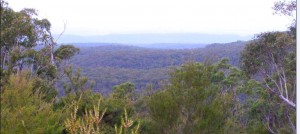
Aerial incendiary from a helicopter was used to ignite the forest vegetation floor and incinerate all ground cover and vegetation habitat across a large contiguous area, crossing over creeks and gullies. Fanned by a light southwesterly, the fire incinerated all native ground cover up to the tree canopy for a distance of 5 km into the Blue Labyrinth up to The Oaks Fire Trail.
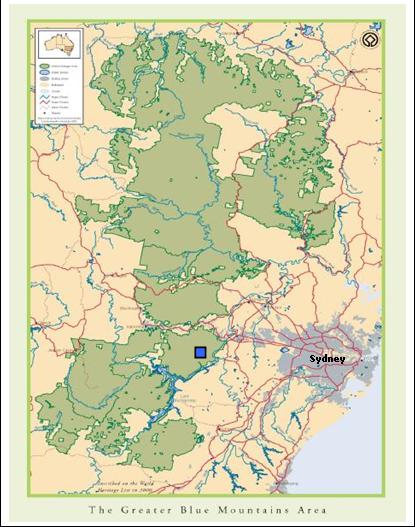
Luscombe told the media that:
“this late warm weather has created a window of opportunity for us to get this important burn done and we’re taking full advantage. “The 2507-hectare burn will be conducted south of the Woodford-Oaks fire trail, and as a result the trail will be closed to mountain bikers and bushwalkers for the duration of the burn – approximately four to five days….“This burn is aimed at reducing fuel loads to help protect properties and assets in the region.” [1]
Luscombe ignores the massive natural asset in the region is indeed the Greater Blue Mountains World Heritage Area he is setting fire to. The scale of the forested area affected equates to a 5km x 5km area, or 25km2 – an area about 1/3 the size of Lake Burragorang. Yet, the official Rural Fire Service website typically and misleadingly shows the burn area size as ‘zero’ hectares.[2]
| Incident Name |
Alert Level |
Location |
Council Area |
Status |
Type |
Size (Ha) |
Agency |
Last Updated |
| Massif Ridge Hazard Reduction |
Advice |
Massif Ridge Hazard Reduction |
Blue Mountains |
Under Control |
Other |
0 |
Dept Environment & Conservation |
|
The scale of the combined burns was also evident from the blanket of smoke smothering the entire Sydney basin and Cumberland Plain yesterday. This is shown in the following photo from the Sydney Morning Herald.
 Smoke Haze over Sydney Smoke Haze over Sydney
© Photo by Sydney Morning Herald
Broadscale Burning Policy
The purpose of bush fire-fighting is to put out bushfires and in the case of wildfires to limit their spread and impact.
However, DECCW’s bush burning policy is advocating exactly the opposite. This year up until 19th April 2010, DECCW boasts that it has performed 193 prescribed burns across NSW ‘treating’ more than 56,000 hectares. Last year it manage 168 prescribed burns ‘treating’ a similar 59,202 hectares. It claims this represents one of the biggest ever deliberate burning programs in National Parks’ history.[3] This equates to an area of national parks being burned every year approximating ¼ the area of the Australian Capital Territory; and this is on top of wildfire and bush arson.
Every year DECCW contracts helicopters and indiscriminately tosses out incendiary devices over wilderness forests. Thousands of hectares are burnt in a free-for-all and thousands of native animals are roasted. Thank crikey these State-sanctioned arsonists aren’t given access to napalm.
DECCW labels its deliberate burning of native vegetation with euphemisms like ‘hazard reduction’, ‘controlled burning’, ‘prescribed burning’, ‘cool burning’ and even ‘ecological burning’. It claims burning vast areas of vegetation somehow ‘assists’ biodiversity, justified on the simplistic premise some species of flora are fire tolerant and grow back. DECCW claims that its burning is essential to manage biodiversity to maintain the reproductive viability of a species or a community of species. DECCW’s ‘eco-logic’ is that since the bush grows back after fire it must be a good impact and therefore good for biodiversity.
DECCW terms areas of national parks targeted for such broadscale burns as ‘Strategic Fire Advantage Zones’ or SFAZs. DECCW justifies charcoaling a massive contiguous landscape as ‘assisting’ biodiversity.
Bollocks!
Luscombe himself has admitted that given the few reliable days a year it is considered safe to burn, DECCW engages in broadscale burning simply a matter of operational convenience.
Mosaic burning is too labour intensive and the typically inaccessible gullied terrain and thick forested vegetation of many national parks makes mosaic burning impracticable and too costly. Be clear; it is all about operational efficiency, not ecological biodiversity.
Last March, DECCW set fire to 2,200 hectares of native habitat in the Blue Mountains in remote wilderness in Kanangra-Boyd National Park near Jenolan Caves.[4] In April 2008, DECCW dropped aerial incendiaries in remote wilderness just to the north along the Krungle Bungle Range.
Like the Rural Fire Service, DECCW is denied serious public resources to detect and suppress wildfires, so it demonises and burns the bush, so destroying the natural asset it is charged to protect and conserve.
DECCW has descended into ecological bastardry, imposing a regime of arson fundamentalism upon nature. This is an unprincipled ‘bush-phobic’ culture.
Broadscale burning is sterilised ecosystems and driving species extinction
The Sydney Morning Herald reported ‘a rogue breeze drove smoke from hazard reduction burning in the Blue Mountains down to street level.’[5] It is more the rogue management of the National Parks Service that misguidedly thinks burning vast swathes of bush at once is good for biodiversity. This demonstrates the wanton disregard for native fauna and flora habitat and disrespect for Aboriginal cultural heritage.
Large contiguous areas of tens of thousands of hectares severely compromising flora and fauna conservation, potentially causing permanent ecological change and loss of species. In the process, DECCW is destroying natural and cultural heritage values of National Parks, causing long-term ecological damage and driving native species extinction.
Collectively, the forested area of the Blue Labyrinth now will lay sterilised of the naturally rich biodiversity of flora and fauna. When the rains come the exposed tops soil will wash away. Watercourses will choke with sediment. The thin fragile soils will change and so change the ability of the soil to replace the complex floristic structure. Only plants that are fire tolerant will recover. Only plants that are hardy to poor soils will recover. There will be less floristic diversity, not more.
Ground-dwelling mammals will have had their burrows, dens, nests, shelters burned and destroyed by the fires. Food sources for spotted-tailed quolls, rufous betongs and wombats will have gone. The undergrowth will have gone leaving a bare open charred landscape. Such a disturbed open landscape benefits feral pedators like cats and foxes and wild dogs. Complex and dense ground vegetation reduces the impacts of predators. But the post-fire regrowth takes many months and creates a simple shrub and herb layer. This allows maximum freedom of movement for cats and foxes, and provides minimum concealment for their prey.[6]
Territorial mammals and raptors do not simply relocate. They remain in their territory and have to compete with these feral predators. Many die. As top order predators like quolls and owls die, this alters the food chain and contributes to local extinctions.
Such broadscale deliberate burning of forest habitat is a threatening process driving Australia’s mammalian extinctions.
Australia has the worst record of mammalian extinctions of any country on Earth, with nearly 50% of its native mammals becoming extinct in the past 200 years.[7]
Australian native fire tolerant fauna (‘pyrophytes’) like most Eucalyptus, Acacia, Proteaceae, Xanthorrhoeaceae and many native ferns and grasses recover quickly after bush fire. However not all species of Eucalypt are fire tolerant (or ‘pyrophobes’) as commonly assumed. Eucalyptus parvula, Eucalyptus saxatilis and Eucalyptus tetrapleura are not fire tolerant. Also, some species of Acacia are not fire tolerant such as Acacia georgensis and Acacia chrysoticha.
Flora diversity varies with soils, aspect, topography and other factors. The Blue Labyrinth is characterised by a labyrinth of ridges and gullies, hence its name. Flora along riparian zones is generally wetter and not as well adapted to fire as ridgeline flora. Yet DECCW’s one-size-fits-all blanket broadscale burning of 2500 hectares up hill and own dale completely disregards the complex biodiversity variations between the gullies and ridgelines. What its blanket burning yesterday has done to the Blue Labyrinth, however, is indeed to have encouraged a consistent simpler form of regrowth vegetation – that is, less biodiversity.
Obviously no animal species is fire tolerant. The Blue Mountains provides habitat to many native mammals including Yellow-bellied Gliders, Koalas, Feathertail Gliders, Eastern Pygmy-possums, Brush-tailed Rock-wallabies, Spotted-tailed Quolls and Antechinus. What happens to these mammals when caught in burn-offs? Where are the native zoological surveys before and after reports for each of these burns?
Native mammals and raptor birds are territorial and do not relocate and typically perish. Broadscale unnatural fire regimes produce unnaturally high biomass, but not true biodiversity.
DECCW’s policy has bad biased biodiversity and fire ecology science to support its simplistic economic approach to bushfire management. DECCW has lost its way as a custodian of protected areas. It is now charged with priorities for exploitative tourism.
Land clearing and frequent broadscale bushfire continue to put many unique species of Australian wildlife at risk. Over the last two hundred years many species of plants and animals have become extinct. DECCW as trusted custodian of NSW’s natural wild areas and in increasing its frequent broadscale burning is possible the greatest contributor to species extinctions across NSW.
Broadscale Burning Justifications Lack Scientific Merit
The DECCW is charged with custodial responsibility for environmental conservation and protection of the national parks and reserves under its control. DECCW is the lead agency responsible for environmental management of the Greater Blue Mountains World Heritage Area (GBMWHA). The GBMWHA Strategic Plan provides management principles and a framework for the integrated management, protection, interpretation and monitoring of the heritage values.
Two key strategic objectives for DECCW management of the GBMWHA is to ‘identify, protect, conserve… the World Heritage values of the GBMWHA’ and to reduce the potential for major impacts to adversely affect the integrity of the GBMWHA. Where there is doubt about the potential impacts of an action on World Heritage values
the ‘precautionary principle’ shall be applied. Under the ‘precautionary principle’:
“where there are threats of serious or irreversible damage, lack of full scientific certainty shall not be used as a reason for postponing cost-effective measures to prevent environmental degradation”.[8]
Aerial incendiary to indiscriminately burn 2500 hectares of remote wilderness is clearly an impact causing serious and likely irreversible damage to important faunal habitat. Such bush fore management practice on a large congruous scale clearly lacks scientific certainty.
In a CSIRO Journal of Wildlife Research, Michael Clarke, associate professor in the Department of Zoology at La Trobe University says it is reasonable for land management agencies to try to limit the negative effects of large fires and to be sure they do not lead to irreversible damage to native wildlife and habitat.
Much hazard reduction is performed to create a false sense of security rather than to reduce fire risks, and the effect on wildlife is virtually unknown. The sooner we acknowledge this the sooner we can get on with the job of working out whether there is anything we can do to manage fires better. We need to know whether hazard reduction can be done without sending our wildlife down a path of firestick extinctions.[9]
Clarke has called for the massive burn-offs to be scrutinised much more closely.
“In this age of global warming, governments and the public need to be engaged in a more sophisticated discussion about the complexities of coping with fire in Australian landscapes.”
He wants ecological data about burns collected as routinely as rainfall data is gathered by the agricultural industry. Without it, hazard reduction burning is flying scientifically blind and poses a dangerous threat to wildlife.
“To attempt to operate without proper data on the effect of bushfires should be as unthinkable as a farmer planting a crop without reference to the rain gauge.”
In the coming decades, native plants and animals will face enough problems – most significantly from human-induced climate chaos – without having to dodge armies of public servants armed with lighters. Guesswork and winter smoke are not enough to protect our towns and assets now, and the risk of bushfires increases with the rise in carbon dioxide.[10]
The incinerating of 2500 hectares of remote bushland in the Blue Labyrinth yesterday was not to protect the houses and properties of Woodford some kilometres away.
Such broadscale deliberate lighting of thousands of congruous hectares of native forest habitat is not protecting houses. This is not clearing dead vegetation around properties. It was fuelled by an unquestioned vandalistic compulsion to burn any bushland that has not been burnt, simply for that reason and that reason alone. The bushfire management call it strategic. But it is a cultural bush-phobia – a fear and lack of respect for the natural landscape. It harks to early Australian colonial mindset that feared the bush to the extent that one had to tame it else invite wildfire Armageddon.
Contempt for Aboriginal Archaeology in the Blue Labyrinth
The Blue Labyrinth is a rugged natural region of forested hills and gullies a few kilometres south of the central Blue Mountains village of Woodford. It is an area of ancient Aboriginal culture. There are caves in the area displaying Aboriginal rock art dating back tens of thousands of years.
In February 2006, DECCW’s Aboriginal Heritage Information Management System (AHIMS) collated an official record of indigenous archaeological sites across the Greater Blue Mountains World Heritage Area. It listed some 850 discrete archaeological sites and 973 features in the GBMWHA, representative of past indigenous activities that remain in the landscape and are essentially the “Aboriginal archaeological record”.
An Assessment of the Aboriginal Cultural Heritage Values of the Greater Blue Mountains World Heritage Area by the Blue Mountains World Heritage Institute (BMWHI) in 2007 highlights the important Aboriginal cultural heritage values of the area. Recent discovery and documentation of numerous Aboriginal archaeological sites and features in the Blue Labyrinth include shelters, shelter walls, rock platforms marked with imagery and grooves. These have largely been preserved because of the rugged and inaccessible terrain. The GBMWA remains highly significant for the many Aboriginal communities associated with it and there is a renewed and re-invigorated interest in the Area’s cultural heritage.”[11]
In December 2006, leading world rock art expert Dr. Jean Clottes to dozens of sites across the GBMWHA and the central coast. Clottes was recently appointed to UNESCO to advise the institution on the creation of a World Heritage Rock Art List.
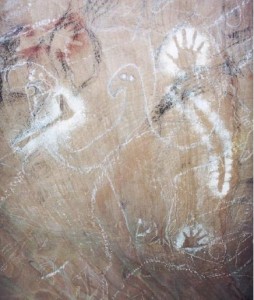
The main eagle depiction at Eagle’s Reach,
acknowledged as extremely rare by the Aboriginal community
© Photo by Paul S.C. Taçon
He was so impressed with the GBMWHA rock art sites, and associated contemporary Gundungurra, Darug, Wiradjuri and Darkinjing stories that he considers the Area to have world Heritage significance. Indeed, it was the living connections to the sites and larger landscapes that most impressed him.[12] Rock Art at Bora Cave in the Blue Labyrinth is an example of important cultural connections of the local Gundungurra and Darug to the area.
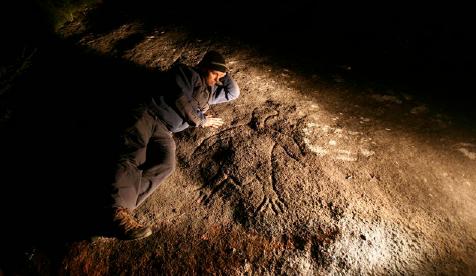
Life-size eagle engraving, Gallery Rock
© Photo by Tristram Miller
Through the Mapping Country research in the Blue Labyrinth area of the Blue Mountains National Park, hundreds of Aboriginal cultural places were recorded. The BMHWI highlighted in its 2007 report the risk of damage by natural environmental processes and exposure to modern human activities. Particularly highlighted was the risk posed by an increase in the frequency and intensity of wildfires and… and efforts to control fires can damage or destroy rock art sites. By locating and mapping sites they can be catered to as part of fire management strategies.[13]
Yet, it would appear from anecdotal evidence that DECCW failed to contact the traditional Aboriginal owners of this land to inform them of the planned burning. It is likely with such indiscriminate broadscale burning that some of the cultural sites may have been irreparable damaged.
What happened to Attic Cave, Dadder Cave and the Aboriginal archaeology between the Massif and The Blue Labyrinth? Was it burnt out and destroyed by DECCW’s needless incineration?
What happened to the wildlife and wildlife habitat? DECCW these days is more a patsy of NSW Labor right wing economic rationalism focusing on tourism revenues, than it is on its core ecological wildlife conservation raison d’etre .
References:
[1] ‘Smokin’: Sydney cloaked by burn-off’, by Paul Tatnell, Sydney Morning Herald, 11th May 2010, http://www.smh.com.au/environment/smokin-sydney-cloaked-by-burnoff-20100511-usg7.html
[2] NSW Rural Fire Service, http://www.rfs.nsw.gov.au/dsp_content.cfm?cat_id=683
[3] DECCW, Nature Conservation > Fire > Managing fire in NSW national parks > Preparation and hazard reduction, http://www.environment.nsw.gov.au/fire/prepandhazreduction.htm
[4] ‘Hazard Reduction – DECC playing with matches in Kanangra-Boyd NP’, 13th March 2009, http://candobetter.org/node/1142
[5] ‘The big smoke finally enjoys a little light relief’, by Ben Cubby, Environment Editor, Sydney Morning Herald, 12th May 2010, page 1, http://www.smh.com.au/environment/the-big-smoke-finally-enjoys-a-little-light-relief-20100511-uuum.html
[6] Chris Johnson, ‘Australia’s Mammal Extinctions: A 50,000 year history’, Cambridge University Press, Melbourne, p.226
[7] Tasmanian Department of Primary Industries, Parks, Water and Environment, http://www.dpiw.tas.gov.au/inter.nsf/WebPages/BHAN-53777B
[8] United Nations, General Assembly, ‘Report of the United Nations Conference on Environment and Development, Rio de Janeiro, 3-14 June 1992, Annex I: ‘Rio Declaration’, http://www.un.org/documents/ga/conf151/aconf15126-1annex1.htm
[9] ‘The dangers of fighting fire with fire’, by James Woodford, 8th September 2008,in Sydney Morning Herald, http://www.smh.com.au/news/opinion/the-dangers-of-fighting-fire-with-fire/2008/09/07/1220725850216.html
[10] ‘The dangers of fighting fire with fire’, by James Woodford, 8th September 2008,in Sydney Morning Herald, http://www.smh.com.au/news/opinion/the-dangers-of-fighting-fire-with-fire/2008/09/07/1220725850216.html
[11] Blue Mountains World Heritage Institute, 2007, ‘Assessment of the Aboriginal Cultural Heritage Values of the Greater Blue Mountains World Heritage Area’, p.10, http://www.bmwhi.org.au/docs/Assessment%20of%20Aboriginal%20Cultural%20Heritage%20Values.pdf
[12] Blue Mountains World Heritage Institute, 2007, ‘Assessment of the Aboriginal Cultural Heritage Values of the Greater Blue Mountains World Heritage Area’, p.10, http://www.bmwhi.org.au/docs/Assessment%20of%20Aboriginal%20Cultural%20Heritage%20Values.pdf p.26
[13] Blue Mountains World Heritage Institute, 2007, ‘Assessment of the Aboriginal Cultural Heritage Values of the Greater Blue Mountains World Heritage Area’, p.10, http://www.bmwhi.org.au/docs/Assessment%20of%20Aboriginal%20Cultural%20Heritage%20Values.pdf p.36
© The Habitat Advocate Public Domain
Tags: aboriginal archaeology, biodiversity, blue labyrinth, Blue Mountains, bush fire, Geoff Luscombe, hazard reduction, mammalian extinctions, massif ridge, prescribed burning, threatening process, Woodford-Oaks fire trail
Posted in Blue Mountains (AU), Threats from Bushfire | No Comments »
Add this post to Del.icio.us - Digg
Leave a Reply
You must be logged in to post a comment.
|
|