April 25th, 2010
by Editor 20100425.
International Wildlife Photography Exhibition 2010
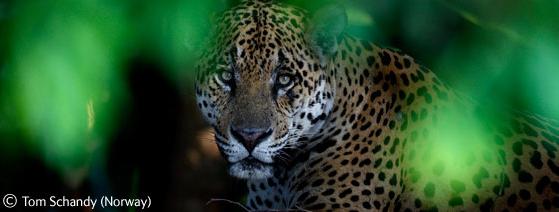 Winning Wildlife Photograph for 2010, by Tom Schandy Winning Wildlife Photograph for 2010, by Tom Schandy
Concurrently on exhibition at both the National History Museum in London and at the Australian Museum in Sydney is a brilliant display of wildlife photography, that recognises the Wildlife Photographer of the Year under a number of international awards.
On exhibition is not only the winning wildlife photographs but also those of the runners-up and the highly commended photographic entries. Entries have also been grouped into age groups so that children and young adults of differing age bracket categories also have their own competition award. This provides an excellent incentive for young people to take a special interest in wildlife and wildlife photography, for it is in our young peopke that the future of wildlife species will be utterly dependent to survive extinction.
The Editor had the opportunity to visit the exhibition held at the Australian Museum in Sydney yesterday and although this current exhibition is all but over, a visit by everyone should be an annual event. The experience is beautiful, inspiring, educational if not a touch sad when realising many of these photos may be of future extinctions. That they are in a museum is a wake up call to humanity and its morality.
Wildlife photography, the wildlife photography awards and the public exhibition of the entrants in each year’s competition contribute vitally in raising mainstream awareness of the plight of threatened wildlife, of poaching, the destruction of their habitats and the increasing risks of wildlife extinctions.
^Australian Museum, Sydney
^Natural History Museum, London
Wildlife Photographer of the Year Award 2010
Exhibited at Australian Museum, Sydney
‘Audience Type: General
Event Type: Special exhibition
Opens: 24 December 2009
Closes: 26 April 2010
Location: Level G, Special Exhibition Space
Experience the power, mystique and beauty of nature. See more than 90 dramatic images, from big cats fighting to silent icy landscapes, all in the Wildlife Photographer of the Year 2009 exhibition.
With over 43,000 competition entries from 94 countries across the globe, this is a selection of the most powerful images capturing wildlife and nature. Photography categories include:
-
- Gerald Durrell Award for Endangered Wildlife
- One Earth
- Animals in Their Environment
- Behaviour: Birds
- Behaviour: Mammals
- Behaviour: All Other animals
- The Underwater World
- Animal Portraits
- Urban and Garden Wildlife
- Creative Visions of Nature
- In Praise of Plants
- Nature in Black and White
- Wild Place
- 10 years and under
- 11-14 years
- 15-17 years.’
Exhibition Owned jointly by:

Exhibition Patron:
Exhibition Sponsor:
Major Sponsor:
Gerald Durrell Award for Endangered Wildlife
‘This award commemorates the late Gerald Durrell’s work with endangered species and his long-standing involvement with the competition. The award is given to the most memorable image and that which captures the unique character or spirit of the subject. The species featured must be officially listed in the 2008 IUCN Red List of Threatened Species as critically endangered or endangered, vulnerable or near threatened at an international or national level.’
Winner
Tom Schandy (Norway)‘The look of a jaguar’
In a small, protected area of swamp-forest in the western area of the Pantanal wetland, in Mato Grosso, Brazil, jaguars still roam free from human harassment. They’re notoriously difficult to see, and pawprints are as lucky as most people get. Along the riverbanks, though, it’s possible to spot them. When Tom took a boat down the Rio Paraguay, he saw four jaguars in three days. This male had picked a slightly concealed spot where he could watch for prey such as capybara. Tom observed him for an hour. ‘He was totally calm, even though he was aware of us.’ At sunset, the jaguar rose, yawned and scent-marked. Then he faded back into the dense forest. [Camera equipment used: Canon EOS-ID Mark III + 500mm f4 lens; 1/250 sec at f4; ISO 400; beanbag]
This photograph is available to buy as an official print by going to the National History Museum website
Runner-Up
Juan Carlos Muñoz, (Spain)
‘Elephant onlooker’

This photograph is available to buy as an official print by going to the National History Museum website
‘Not only are pygmy elephants critically endangered, but they also favour thick forest, which meant that Juan Carlos had his work cut out trying to find any. As he travelled by boat down the Kinabantangan River in Sabah, Borneo, the heavens opened. ‘It was so torrential,’ says Juan Carlos, ‘that I couldn’t decide what I was more worried about, the boat sinking as it filled up with rain or how to protect my camera gear.’ Suddenly the undergrowth parted and a male pygmy elephant looked out. Slowly munching on leaves, he serenely watched the ongoing boat chaos through the sheets of rain, giving Juan Carlos the chance to take his portrait before the elephant melted back into the forest. Pygmy elephants are found only on the island of Borneo and were classified as a subspecies of the Asian elephant in 2003. [Camera equipment used: Canon EOS-1Ds Mark II + Canon 100-400mm lens; 1/60 sec at f5; ISO 400.]
http://www.nhmshop.co.uk/veolia-environnement-wildlife-photographer-of-the-year-2009/elephant-onlooker/product.html
One Earth Award
‘This award highlights conservation issues or actions and the interaction between humans and the natural world. Images must demonstrate the power and resilience of our planet and its impact on us. Whether graphic or symbolic, each picture must be thought provoking, memorable and encourage respect or concern for our natural world.’
Winner
Thomas Haney (United States of America)
‘The lone fir’
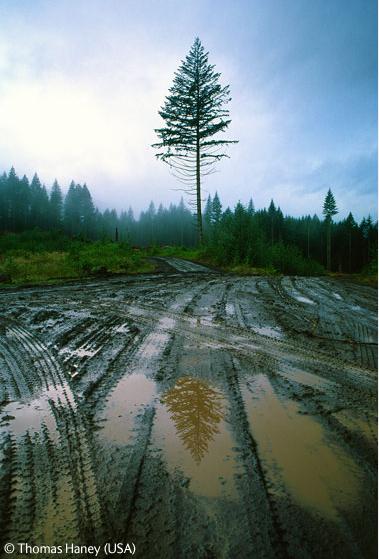 This photograph is available to buy officially as a print from visiting the National History Museum This photograph is available to buy officially as a print from visiting the National History Museum
‘It was late afternoon when Thomas came upon this scene outside Forks, Washington, while documenting old-growth logging in the Pacific Northwest. Loggers had left a single Douglas fir standing in a clearcut area, perhaps to help reseed the area for future logging. ‘As I walked towards it on the muddy road, criss-crossed with the tracks of logging trucks, I saw the reflection in the puddle,’ says Thomas. ‘It was a powerful image, reminding me of the towering forest that once stood here,’ he says. This area has been logged before, so this tree is likely to have been planted as part of a mono-age crop, vastly different from the multilayered forests that once blanketed the region. ‘Clearcutting has long been a focal point of the environmental movement, and while it seems to be falling out of favour in North America, it’s still the preferred method around the world.’
[Camera equipment used: Minolta Maxxum 7 + Minolta 20-35mm f3.5-4.5 lens, + .3 graduated-split neutral-density filter; 2 sec at f16; Fujichrome Velvia 50].
Highly Commended
Andy Rouse (United Kingdom)
Stalking the tiger

‘Andy and his guide Dicky Singh followed the fresh pug marks down the track. When they caught up with the tiger, they discovered it was Machali, a female very familiar to Dicky. Indeed, she’s something of a local celebrity in Ranthambore National Park. It wasn’t long before jeep-loads of tourists drew up to admire her. The drivers kept a respectful distance, but Machali is well used to such attention from the wildlife paparazzi. It has been suggested that Machali has contributed about $10 million to the local economy. Andy believes that ‘if we are to save this wonderful cat, then it has to have an economic value to a local community, and that’s what I wanted to show with this picture.’ [Camera equipment used: Nikon D3 + Nikon 70-200mm lens; 1/250 sec at f5.6; ISO 800.]
For more photos visit:
^Australian Museum, Sydney
^Natural History Museum, London
© The Habitat Advocate Public Domain
Leave a Reply
You must be logged in to post a comment.
April 22nd, 2010
by Editor 20100422.
About Earth Day Network
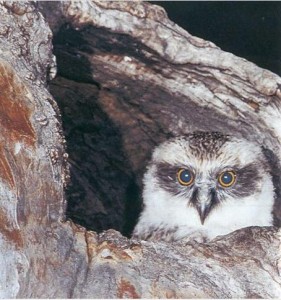 Powerful Owl chick (Brown Mountain, East Gippsland Australia) Powerful Owl chick (Brown Mountain, East Gippsland Australia)
[The following summary information has been extracted from the Earth Day website -editor]
‘Earth Day Network was founded on the premise that all people, regardless of race, gender, income, or geography, have a moral right to a healthy, sustainable environment.
Earth Day Network
1616 P Street NW, Suite 340
Washington, D.C., 20036
Tel: +1 202.518.0044 | Fax: +1 202.518.8794
http://www.earthday.org
Email general inquiries to: info@earthday.net.
Earth Day Mission
‘To broaden and diversify the environmental movement worldwide, and to mobilize it as the most effective vehicle for promoting a healthy, sustainable environment.
Reach
‘We pursue our mission through a combination of education, public policy, and activism campaigns. Earth Day Network has a global reach with more than 20,000 partners and organizations in 190 countries. More than 1 billion people participate in Earth Day activities, making it the largest secular civic event in the world.
Goals
- To Promote Civic Engagement — EDN works with partner organizations to provide opportunities for all citizens to become active at the local, state, national and global levels.
- To Broaden the Meaning of “Environment” — EDN is committed to expanding the definition of “environment” to include all issues that affect our health, our communities and our environment, such as air and water pollution, climate change, green schools and environmental curriculum, access to green jobs, renewable energy, and a new green economy.
- To Mobilise Communities — For the past four years, Earth Day Network has helped create a solid environmental platform for the National Latino Congreso. In 2010, we partnered with the Congreso to pass a strong climate change resolution.
- To Implement Groundbreaking Environmental Education Programs — Earth Day Network’s GREEN Schools Campaign seeks to green all of America’s K-12 schools within a generation. Green schools save money, conserve energy and water, and have better performing and healthier students. The National Civic Education Project is empowering students to solve local environmental problems. .
- To Help Bring Clean Water and Sanitation to the World — Earth Day Network’s Global Water Network allows individuals, organizations, or businesses to help fund water projects in rural areas around the globe.
- To Inspire and engage college students to become environmental leaders — EDN’s campus outreach seeks to grow the size, diversity, and strength of the environmental community in colleges and universities around the world.
- To Support Earth Day Events and Actions around the World — From greening schools in post-Katrina New Orleans to improving water and sanitation services in a refugee community in Ghana, EDN supports and coordinates thousands of Earth Day events worldwide each year. Earth Day, April 22, is the largest secular holiday in the world, now celebrated by more than one billion people.
Core Issues
Advocacy
Earth Day Network seeks to bridge the gap between concerned citizens and their leaders. Action is needed between individuals and organizations with local elected officials to discuss environmental issues. In this way we can push for change in Congress and the White House.
Climate Change
The Earth’s climate is significantly changing at a faster than normal rate. One thing remains clear: mankind’s actions are behind these changes. Fortunately humans are presented with the opportunity to make changes necessary to fight this phenomenon.
Promoting a campaign for reducing consumption of energy at school and at home, and reducing the use of the cars as a way of transport.
Conservation & Biodiversity
Diversity is nature’s greatest gift, but it is threatened around the world by human expansion and activities. Action is needed to help conserve the world’s biodiversity.
5th Ecosystem Services Forum
Education
Earth Day Network is a globally recognized leader in the fields of environmental education and green schools. Our Education programs carry a successful history of providing educators, students and the general public with resources and solutions to create a healthier, more sustainable planet.
Adopt a Meter2 of Land
Anacostia River Environmental Education Fair
Energy
Americans are roughly 5 percent of the world’s population and consume 25 percent of the world’s resources. Almost 50 percent of the energy we produce comes from coal. The time to build a clean energy network is now. Action must be taken to develop renewable energy and we must begin a responsible transition off of coal and oil.
Food & Agriculture
It is important that humans begin supporting organic or small farms, local production and sustainable techniques while harvesting increased yields and protecting the topsoil. The time for action is now, before the world’s rich farmland washes into the sea, and before chemical pesticides and fertilizers cause any more harm to our drinking water and our oceans.
Green Economy
We believe that the choice between the economy and green energy is a necessity to expanding the green sector and opening up a vast trove of jobs. Green industries are the future, and will put Americans back to work, producing real, exportable goods.
Green Schools
Earth Day Network’s successful history of working with teachers, PTAs, students and school administrators has led us to develop a long term, national campaign on green schools. Our National GREEN Schools Campaign, in partnership with the U.S. Green Building Council (USGBC) and The Clinton Foundation, aims to green all of America’s K-12 schools within a generation!
A school becomes “green” through a variety of means. By having more sustainable, energy-efficient, low-resource-using school buildings and school yards, our nation saves energy, reduces carbon emissions, and saves money.
By integrating environmental and sustainability education into our K-12 curriculums, our school’s students are more equipped to be leaders in the emerging green economy. We are achieving our Green Schools Campaign goals through green school policy reform, green makeovers for schools nation-wide, teacher grant programs & resources available on our Educators’ Network…
Recycling & Waste Reduction
The garbage dumps and junkyards of the world are filling quickly, with goods that might have been reused, recycled or composted. The world’s first old computers rot in scrap yards overseas, leeching toxic chemicals into the ground. Action must be taken to reduce the amount of waste we produce.
Sustainable Development
As the world’s human population grows, so does our footprint. We must find ways of living and growing in harmony with nature, and with the earth’s finite resources. Action is needed to promote green building, organic agriculture and responsible environmental practices.
Water
Earth Day Advisory Committee
Her Royal Highness Princess Lalla Hasnaa Alaoui of Morocco: President, Mohammed VI Foundation for the Protection of the Environment
Debbie Allen: American Actress, Choreographer, Television Director, Television Producer; Member of the President’s Committee on the Arts and Humanities
Ford W. Bell, DVM: President, American Association of Museums
Antonio H. Benjamin: Justice, High Court of Brazil (STJ); Co-President of the International Network for Environmental Compliance and Enforcement (INECE) and Deputy-Chair of the IUCN Commission on Environmental Law
Sir Richard Branson: British Entrepreneur; Founder and Chairman, Virgin Group
Lester Brown: Founder, Earth Policy Institute; Founder, Worldwatch Institute
Beverly J. Camhe: Producer, Beverly Camhe Productions
Richard Cizik: Evangelical Leader
Christo and Jeanne-Claude: Environmental Artists
Cerphe Colwell: Radio Legend
Phillipe Cousteau Jr.: Co-Founder, President and CEO, EarthEcho International; Ocean Environmentalist, Educator and Documentarian
Mia Couto: World-renowned Mozambican Writer and Biologist, Great Limpopo Transfrontier Park
Leonardo DiCaprio (Co-Chair): American Actor and Film Producer; Environmentalist; Founder, Leonardo DiCaprio Foundation; Board of Trustees, National Resources Defense Council; Board Member, Global Green USA
S. Richard Fedrizzi: President, CEO and Founding Chairman, United States Green Building Council
Jose Maria Figueres: Former President of Costa Rica; Sustainable Development and Technology Expert
Oliver Fleurot: CEO of Public Relations, Corporate and Financial Communications and Events Management, Publicis
Al Gore: 2007 Nobel Peace Prize Laureate; 45th Vice President of the United States
Paul Hawken: Director, Natural Capital Institute (NCI)
Denis Hayes(Chair): President and CEO, Bullitt Foundation; Coordinator of the first Earth Day in 1970
Joe Holland: United States Olympic Nordic Combined Skier and three-time National Nordic Combined Championship Winner
David L. Hunke: President and Publisher, USA Today
Benjamin T. Jealous: President and CEO, National Association for the Advancement of Colored People (NAACP)
Yolanda Kakabadse: President, Fundación Futuro Latinoamericano (FFLA)
Donna Karan: Fashion Designer and Creator, DKNY; Founder, Urban Zen Foundation
Katie Lee: Cookbook Author
Sheri Liao: President, Global Village of Beijing
Daniel Libeskind: Architect and Artist; Founder, Studio Daniel Libeskind
Maya Lin: Environmentalist, Artist, and Architect
Mindy S. Lubber: President, Ceres; Director and Investor, Network on Climate Risk
Dame Ellen MacArthur DBE: World Record Holder for solo sailing around the Earth and Dame Commander of the Order of the British Empire
Julia Marton-Lefèvre: Director General, International Union for Conservation of Nature (IUCN)
Bill McKibben: American Environmentalist and Writer; Founder, 350.org
Edward Miles: Senior Fellow, Joint Institute for the Study of Atmosphere and Oceans (JISAO); Co-Director,Center for Science in The Earth System, JISAO
Mrs. Gaylord Nelson: Wife of the late Senator Gaylord Nelson, the Founder of Earth Day
Shaquille O’Neal: Professional Basketball Player, National Basketball Association (NBA)
Raymond C. Offenheiser, Jr.: President, Oxfam America
Dr. Rajendra Kumar Pachauri: Nobel Peace Prize Laureate; Chairman, Intergovernmental Panel on Climate Change (IPCC)
John Podesta: President, Center for American Progress
Carl Pope: Executive Director, Sierra Club
David A. Randall: Recipient of the National Aeronautics and Space Administration (NASA) Medal for Exceptional Scientific Achievement and the Meisinger Award of the American Meteorological Society
Ambassador Mohamed Sahnoun: Ambassador, Special Advisor to United Nations Secretary General; Board Member, International Institute for Sustainable Development
U.S. Senator Bernard Sanders: United States Senator, from the State of Vermont
Larry Schweiger: President, National Wildlife Federation
Martin Scorsese: American Film Director, Screenwriter, Producer, and Actor, Sikelia Productions;
Founder and Chairman, World Cinema Foundation; President, Film Foundation
Pete Seeger: Environmental Activist; Performing Artist
Jigar Shah: CEO, Carbon War Room
Ben Silverman: Executive Producer, The Office; Creator, The Biggest Loser; Founder and CEO, Electus
James Gustave Speth: Professor, Vermont Law School; Dean, Yale School of Forestry and Environmental Studies; Co-Founder, Natural Resources Defense Council (NRDC)
Eric A. Spiegel: President and CEO, Siemens Corporation; Member, Business Roundtable
Achim Steiner: Executive Director, United Nations Environment Programme (UNEP)
Rabbi Warren Stone: Environmental Chair, Central Conference of Rabbis
Barbra Streisand (Co-Chair): American Singer, Composer, Film and Theatre Actress, Director, and Producer; Founder and President, The Streisand Foundation; Kennedy Center Honoree
Mark Tercek: President and CEO, The Nature Conservancy
Ted Turner: Founder and Chairman of the Board of Trustees, Turner Foundation; Founder and Chairman, United Nations Foundation; Founder, Turner Endangered Species Fund; Founder, Cable News Network (CNN)
James West: CEO, Alamy Limited
Keith Williams: President & CEO, Underwriters Laboratories Inc.
Edward O. Wilson: Harvard University Research Professor Emeritus; Two-time winner of the Pulitzer Prize; Scientist and Environmentalist
Abdelkbir Zahoud: Secretary of State, Ministry of Energy, Mines, Water and Environment of Morocco.
What are your national and local governments doing to contribute to the goals of Earth Day?
[The following summary information has been extracted from the Convention on Biological Diversity website -editor]
http://www.cbd.int/countries/profile.shtml?country=au
Note: this information is dated to 2005, so Australia is five years out of date.
In Australia:
Status and Trends of Biodiversity
Overview
‘As a large island continent Australia contains a diverse range of biogeographic regions. The arid interior occupies approximately 70% of the continent, with tropical monsoon areas to the north and a Mediterranean and temperate climate to the south. Australia’s marine habitats are just as diverse, ranging from extensive coral reefs to seagrass plains, giant kelp forests and the sand-bottomed habitats that cover much of the continental shelf. Australia is endowed with a unique and diverse biodiversity, with an estimated 80% of endemic wildlife, including flowering plants, fungi, mollusc, insects, fishes, frogs, reptiles and mammals. This high level of endemism has earned Australia its place among the world’s 12 megadiverse countries. A particularity of Australia is its marsupials, having evolved into a great diversity of species filling an extraordinary range of niches, which in other countries are largely occupied by placental mammals. As of February 2001, there were 1,478 species and 27 ecological communities listed as either endangered or vulnerable at the national level. Vegetation clearing remains a significant but diminishing threat to terrestrial biodiversity. Threats affecting Australia’s coral reefs include the effects of sediments, agricultural chemicals and nutrients, fishing and tourism, oil spills, and climate change.
Number and Extent of Protected Areas
‘Terrestrial protected areas covered 10.52% (80.89 million hectares) of the country in 2004 whereas marine protected areas, including ‘no take’ zones’, covered 64,600,000 hectares or 7% of Australia’s marine jurisdiction.
Percentage of Forest Cover
Of the estimated 33% forest cover of Australia at the time of European settlement, there is now 21% remaining.
National Biodiversity Strategy Action Plan
Major features of National Biodiversity Strategy and Action Plan
‘The overall goal of the Strategy for the Conservation of Australia’s Biological Diversity (1996) is to protect biological diversity and maintain ecological processes and systems. There are 6 main objectives, with priorities covering the identification and description of: main ecosystems, existing knowledge about biodiversity, and threats. The strategy also provides the framework to develop a mechanism and management plans for: biodiversity in general, protected areas, information and support of conservation projects, major introduced pests, control of access to genetic resources, bioregional planning and management, private lands to complement the protection provided by the public estate in protected areas, and for local governments to assume a significant role in the conservation of biodiversity.
National Biodiversity Strategy Action Plan National Strategy (English)
National Biodiversity Strategy Action Plan (English)
Implementation of the Convention
Measures Taken to Achieve the 2010 Target
‘Australia has substantially moved towards specific, time bound and measurable outcomes in regional planning under the National Action Plan on Salinity and Water Quality (NAP) and the Natural Heritage Trust (NHT). Regional plans are playing an important role in protecting and enhancing Australia’s unique biodiversity, the viability of rural and regional communities and the future of agricultural industries. Resource Condition Indicators, coordinated by the Australian Government’s Monitoring and Evaluation Working Group (MEWG), are being developed primarily to measure the performance of investments made under funding programs and to contribute to overall assessments of resource condition. The EPBC Act provides for the identification and listing of threatened species and ecological communities, the development of recovery plans for listed species and communities, the recognition of key threatening processes, and where appropriate, reducing the impact of these processes through the development and implementation of threat abatement plans. The international movement of wildlife and wildlife products for commercial purposes is also regulated under the EPBC Act and legislation to meet CITES obligations. The threat of pollution on the conservation of biodiversity is being addressed through the National Pollutant Inventory, whose goals include the maintenance and improvement of ambient air quality as well as marine, estuarine and fresh water quality.
Initiatives in Protected Areas
‘Between 2002 and 2004, terrestrial protected areas increased by 0.44% of the total land area. Designation of marine protected areas has accelerated over the reporting period with one of the most significant increases occurring because of the rezoning of the entire Great Barrier Reef, which became law in July 2004. The proportion of the Marine Park protected under ‘no-take’ zones was increased from less than 5% to more than 33%, and now protects representative examples of each of the 70 broad habitat types identified across the Great Barrier Reef region. By the end of 2002 the National Representative System of Marine Protected Areas (NRSMPA) covered approximately 64,600,000 hectares or 7% of Australia’s marine jurisdiction.
Initiatives for Article 8(j)
‘Several Australian initiatives address this article, such as the Indigenous Protected Areas Program, in which the Department of the Environment and Water Resources and indigenous communities work together to: develop management plans, and hold indigenous knowledge workshops through the Natural Heritage Trust. The Australian Government has also taken measures to engage indigenous people in the key goals of Australia’s Oceans Policy by involving them in the use, conservation and management of Australia’s marine jurisdictions. This led to the development of pilot ‘Sea Country’ Plans as a potential vehicle for indigenous involvement in marine resource use and management processes. There are currently six plans being developed, allowing indigenous people to consider their sea country management priorities, needs and interests. Finally an Indigenous Advisory Committee (IAC) has been established under the Environmental Protection and Biodiversity Conservation Act 1999 (EPBC Act). The Committee advises the Minister for the Environment and Water Resources on the operation of the Act, taking into account the significance of indigenous peoples’ knowledge of the management of land and the conservation and sustainable use of biodiversity.’
The Habitat Advocate supports the principles of the Earth Day Network.
© The Habitat Advocate Public Domain
Leave a Reply
You must be logged in to post a comment.
April 8th, 2010
This article provides an extract summary of the IUCN website – Editor.
.
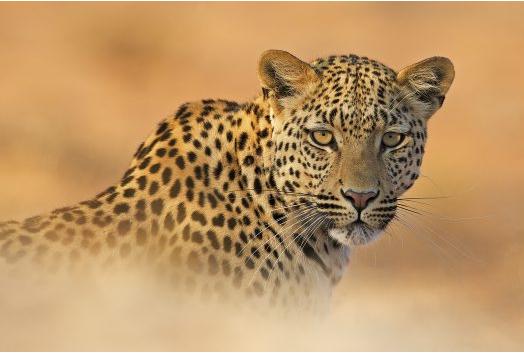 ‘Eyes in the oasis’
© Lee Slabber, (South Africa), 2009 Wildlife Photographer of the Year
.
‘Every morning, Lee would drive 50 kilometres (32 miles) across the Kalahari Desert dunes that separated two dry riverbeds in the Kgalagadi Transfrontier Park, South Africa. The only sign of life – or rather, death – was near a small pan, a mini-oasis in the middle of the dunes, where oryx bones lay scattered all about in various states of decay. One day, Lee stopped to photograph the bones. As he did so, he sensed that he wasn’t alone. ‘I got the feeling I was being watched,’ he said. ‘I slowly turned to face a most beautiful young male leopard, looking intently at me from behind a small bush. I could see how the deep-red dunes would be perfect camouflage for him.’ A moment later, the leopard fled, ‘obviously as shocked to see me as I was to see him.’
[Camera equipment used: Canon EOS-1D Mark III + Canon EF 600mm lens; 1/250 sec at f5.7; ISO 200.]This photograph is available to buy as a print.
http://australianmuseum.net.au/image/Eyes-in-the-Oasis/ ‘Eyes in the oasis’
© Lee Slabber, (South Africa), 2009 Wildlife Photographer of the Year
.
‘Every morning, Lee would drive 50 kilometres (32 miles) across the Kalahari Desert dunes that separated two dry riverbeds in the Kgalagadi Transfrontier Park, South Africa. The only sign of life – or rather, death – was near a small pan, a mini-oasis in the middle of the dunes, where oryx bones lay scattered all about in various states of decay. One day, Lee stopped to photograph the bones. As he did so, he sensed that he wasn’t alone. ‘I got the feeling I was being watched,’ he said. ‘I slowly turned to face a most beautiful young male leopard, looking intently at me from behind a small bush. I could see how the deep-red dunes would be perfect camouflage for him.’ A moment later, the leopard fled, ‘obviously as shocked to see me as I was to see him.’
[Camera equipment used: Canon EOS-1D Mark III + Canon EF 600mm lens; 1/250 sec at f5.7; ISO 200.]This photograph is available to buy as a print.
http://australianmuseum.net.au/image/Eyes-in-the-Oasis/
.
The United Nations (UN) has declared 2010 the International Year of Biodiversity.
Why?
- To seek to significantly reduce the rate of biodiversity loss by the end of 2010
- To celebrate and promote biological diversity – the variety of life on Earth
- To boost awareness of how important biodiversity is for humanity
- To highlight how seriously biodiversity and nonhuman species are threatened with extinction, and the implications for human wellbeing.
The UN’s Approach to Protecting Biodiversity
- Sound management of natural resources to support peaceful communities
- Encouraging well-balanced economic growth
- Reducing poverty
.
IUCN
The IUCN, the International Union for Conservation of Nature, is the world’s oldest and largest global environmental network – a democratic membership union with more than 1,000 government and NGO member organizations, and almost 11,000 volunteer scientists in more than 160 countries.
The IUCN helps the world find pragmatic solutions to our most pressing environment and development challenges. It supports scientific research, manages field projects all over the world and brings governments, non-government organizations, United Nations agencies, companies and local communities together to develop and implement policy, laws and best practice.
The IUCN posits 5 sound reasons why humans need to maintain health biodiversity
- To maintain food sources
- For medicinal benefits associated with diverse plant and animal life
- To mitigate the effects of climate change
- To provide employment
- To enable peoples vulnerable to the effects of climate change improve their livelihoods and increase their resilience to climate change impacts.
.
The Importance of Biodiversity for its own sake [posited by Editor]
- To respect natures processes and ecosystems
- To prevent continuing extinctions
- To prevent extreme climate change
.
To boost global awareness of the importance of biodiversity for humanity
‘The IUCN together with its Members and partners wants to see biodiversity at the top of the global agenda, leading to stronger action from all sectors of society including government and industry to safeguard it.’ ‘Humans are an integral part of biodiversity and have the power to protect or destroy it.’ ‘In the western world, we have become so far removed from biodiversity that we’ve forgotten how much we use it in our daily lives from the food we eat to the clothes we wear to the medicines we use.’
When we Bluefin tuna, we rarely think of the species that the tuna depends on to thrive, or that this species is a serious risk of being fished into extinction. When forestry agencies fell a mature tree to make a table or woodchips, mammalian habitat is lost.
.
To highlight how seriously biodiversity is threatened
Human activities continue to destroy the natural world at an unprecedented rate through habitat destruction, over-harvesting, pollution, poaching, and induced climate change. We’re facing a global species extinction crisis. We need to do better at making the scientific, social, economic and cultural case for keeping diversity, and show just how much it supports nearly every aspect of human life and progress. Through our International Year of Biodiversity focus, we’ll be doing just that, starting with a look at IUCN’s projects relating to forest biodiversity in February.
.
Risks to Biodiversity, Ecosystems and nonhumans species is at crisis point
- ‘The escalating extinction crisis shows that the diversity of nature cannot support the current pressure that humanity is placing on the planet.’
- ‘Every day biodiversity is being lost at up to 1,000 times the natural rate. The extinction of individual species, but also habitat destruction, land conversion for agriculture and development, climate change, pollution and the spread of invasive species are only some of the threats responsible for today’s crisis.’
- ‘Coral reefs provide food, storm protection, jobs, recreation and other income sources for more than 500 million people worldwide yet 70% of coral reefs are threatened or destroyed.’
- ‘17,291 species out of 47,677 assessed so far are threatened with extinction.’
- ‘Of the world’s 5,490 mammals, 79 are Extinct or Extinct in the Wild, with 188 Critically Endangered, 449 Endangered and 505 Vulnerable.’
- ‘1,895 of the planet’s 6,285 amphibians are in danger of extinction, making them the most threatened group of species known to date.’
- ‘With the current biodiversity loss, we are witnessing the greatest extinction crisis since dinosaurs disappeared from our planet 65 million years ago. Not only are these extinctions irreversible, but they also pose a serious threat to our health and wellbeing.’
- ‘From time immemorial, nature has fed us, cured us, and protected us. But today the roles have switched. We need to feed nature, we need to cure it and protect it if we want to secure a healthy and prosperous future for our children.’
- ‘Climate change is set to be one of the major drivers of species extinctions in the 21st century: approximately 20 to 30 per cent of plant and animal species are likely to be at increasingly high risk as global mean temperatures rise.’
.
IUCN Species Most Vulnerable to ‘Climate Change Extinction’
A recent IUCN report identifies the following 10 species are most vulnerable to ‘climate change extinction‘.
- ^Arctic Foxes
- ^Clownfish
- ^Koalas
- ^Emperor Penguins
- ^Leatherback Turtles
- ^Staghorn Corals
- ^Ringed Seals
- ^Quiver Trees
- ^Salmon
- ^Beluga Whales
.
Arctic Foxes
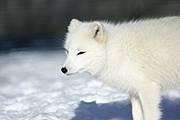
The Arctic Fox [Alopex lagopus or Vulpes lagopus]
Also known as the White Fox, Polar Fox or Snow Fox.
The total population estimate for 1997 is around 60 adults in Sweden, 11 adults in Finland and 50 in Norway.
[Source: Tannerfeldt, M. (1997). Population fluctuations and life history consequences
in the Arctic fox.. Stockholm, Sweden: Dissertation, Stockholm University].
- The Arctic Fox is one of the top land-dwelling predators of the Arctic region. It is thought to be one of the first mammals to have colonised Sweden and Finland following the last ice-age.
- As the Arctic region warms, tundra habitat may slowly be replaced by boreal forest from the South. Forest habitat is unsuitable for Arctic Foxes.
- Red Foxes prey on and are superior hunters to Arctic Foxes. Northward encroachment of Red Foxes into the Arctic Fox’s range has already been documented and is likely to continue as the tundra warms.
- Arctic Foxes prey largely on lemmings and voles. Milder and shorter winters are predicted to cause declines in the regularity of these rodents’ population cycles, as well as decreases in their overall numbers.
- These factors are likely to cause declines in Arctic Fox numbers and range size. Arctic Foxes highlight the impacts of climate change on the ways that species interact with each other, both through competition and via changes in predator-prey relationships.
.
Koalas
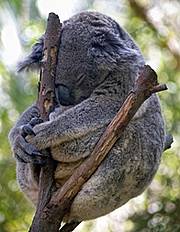
The koala (Phascolarctos cinereus)
is an arboreal herbivorous marsupial native to Australia.
According to the IUCN, as CO2 levels increase, the nutritional quality of eucalyptus leaves
is declining and the koala faces malnutrition and ultimate starvation.
[Editor: What Australian would have thought our precious and assumed plentiful Koalas could be threatened? Well the Tasmanian Tiger was once plentiful across Tasmania. None of us should take our wildlife for granted]
- ‘Koalas are iconic animals native to Australia. They are true habitat and food specialists, only ever inhabiting forests and woodlands where Eucalyptus trees are present.’
- ‘Increasing atmospheric CO2 levels will reduce the nutritional quality of Eucalyptus leaves, causing nutrient shortages in the species that forage on them. As a result, Koalas may no longer be able to meet their nutritional demands, resulting in malnutrition and starvation.’
- ‘Increasing frequency and intensity of droughts can force Koalas to descend from trees in search of water or new habitats. This makes them particularly vulnerable to wild and domestic predators, as well as to road traffic.’
- ‘Koala populations are reported to be declining due to malnutrition, the sexually-transmitted disease chlamydia, and habitat destruction.’
- ‘Koalas have very limited capability to adapt to rapid, human-induced climate change, making them very vulnerable to its negative impacts.’
.
Emperor Penguins
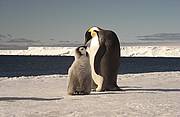
The Emperor Penguin (Aptenodytes forsteri)
The tallest and heaviest of all living penguin species and is endemic to Antarctica.
- For much of the year, Emperor Penguins live on thick sea ice in the Antarctic, which they use for mating, chick rearing and moulting.
- In some regions of the Antarctic, seasonal sea ice extent and thickness have reduced in recent decades following climate change. Continued warming will lead to further reductions in sea ice, impacting Emperor Penguins, with more northerly colonies being most at risk.
- The biomass of Antarctic krill has decreased in recent decades correlating with decreases in sea ice. Changes in krill abundance are likely to negatively affect Emperor Penguins and many other Antarctic species.
- Emperor Penguins highlight the possible impacts of rising sea temperatures and melting sea ice due to climate change. These changes directly or indirectly affect many other species in the Antarctic marine ecosystem.
.
Ringed Seals
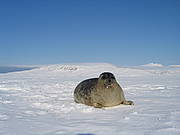
The ringed seal (Pusa hispida), also known as the jar seal
Ringed seals are slaughtered by Artic natives [Inuit] and often killed by the fishing gear of commercial trawlers.
Now climate change is a serious threat to their extence because much of their habitat is dependent upon pack ice.
- ‘Ringed Seals live primarily in the high Arctic and are heavily dependent on Arctic ice, almost never coming onto land.’
- ‘Warming spring temperatures and early ice breakup are causing nursing young to be prematurely separated from their mothers and to be exposed both to the elements and to predators.’
- ‘To cope with global warming, Ringed Seals will need to shift their territories to track suitable ice conditions. Increases in disease and disturbance by humans are also likely challenges.’
- ‘Marked decreases in Ringed Seal abundance are likely to have cascading effects in Arctic food webs. They are the most important species in the diet of Polar Bears.’
- ‘Ringed Seals highlight the direct impacts of climate change on polar habitats, including the effects ice loss has on other ice-adapted species.’
.
.
IUCN participation and Goals for 2010
.
Failure of the 2010 Biodiversity Target
Adopted in May 2002 during the sixth Conference of the Parties to the Convention on Biological Diversity, the 2010 Biodiversity Target aimed to achieve, by 2010:
‘a significant reduction of the current rate of biodiversity loss at the global, regional and national level as a contribution to poverty alleviation and to the benefit of all life on earth’.
Unfortunately, we now know that this aim is far from being met. As we are facing an ever-increasing biodiversity crisis, we need a new, clear and realistic target to respond to it.
Negotiations on the new post-2010 framework will be taking place throughout this year, paving the way for the 10th Meeting of the Parties to the Convention on Biological Diversity in October.
.
1. 2010 Convention on Biological Diversity [Japan]
To follow up on the 1992 Earth Summit in Rio de Janeiro where world leaders adopted the Convention on Biological Diversity (CBD). The Convention has three main objectives:
- To conserve biological diversity
- To use biological diversity in a sustainable way
- To share the benefits of biological diversity fairly and equitably.
The Tenth meeting of the Conference of the Parties to the Convention on Biological Diversity will take place from 18 to 29 October 2010 in Nagoya, Japan.
.
This meeting is set to be a milestone for the Convention. It is during this event that the Parties of the Convention are expected to adopt a new set of post-2010 biodiversity targets. They will also agree upon an international regime to regulate access to genetic resources and the sharing of benefits that we gain from their use.
To keep up to date visit: http://www.cbd.int/cop10/
COP10 [Nagoya] Issues for in-depth consideration
- Inland waters biodiversity
- Marine and coastal biodiversity
- Mountain biodiversity
- Protected areas
- Sustainable use of biodiversity
- Biodiversity and climate change
.
2. COP10 Meeting of the Access and Benefit Sharing Working Group [Colombia]
From 22-28 March 2010, around 600 delegates representing Parties to the Convention on Biological Diversity (CBD), non-governmental and international organizations, and partners, gathered in Cali in Colombia to give the final push to the negotiations on the international regime to regulate access to genetic resources and the distribution of the benefits derived from their use.
This is the ninth and final meeting of the Ad Hoc Open-ended Working Group on Access and Benefit Sharing (ABS) before the tenth Conference of the Parties of the Convention (COP10). The Working Group has been mandated to finalize its work and deliver an ABS international regime to be adopted at COP10 in Nagoya, Japan later this year. The clock is thus ticking but despite the pressure, delegates seem positive about a favourable outcome of the meeting.
http://www.iucn.org/cbd/?4972/Final-Meeting-of-the-ABS-Working-Group-kicks-off-in-Colombia
.
3. Million-dollar boost to people and biodiversity [West Africa]
Part of the IUCN Forest Conservation Programme this IUCN initiative works to improve the livelihoods of people in West Africa receiving a major boost in the form of a CHF 1.9 million grant from Switzerland’s State Secretariat for Economic Affairs (SECO).’
http://www.iucn.org/iyb/iucn_action_22/around_the_world/?4787/Million-dollar-boost-to-the-people-and-biodiversity-of-West-Africa
.
4. The Satoyama Initiative [Japan]
‘Led by IUCN Member the Ministry of the Environment of Japan and the United Nations University Institute of Advanced Studies, the Satoyama Initiative focuses on conserving villages and farmlands, together with the sustainable practices and traditional knowledge that they represent.’
http://www.iucn.org/iyb/iucn_action_22/around_the_world/?4699/People-and-nature
.
5. Protecting life-saving knowledge [Bangladesh]
‘In the remote area of south-east Bangladesh, known as the Chittagong Hill Tracts, IUCN Bangladesh is making sure that traditional health knowledge and practices are revived and secured for future generations.’
http://www.iucn.org/iyb/iucn_action_22/around_the_world/?4703/protecting-knowledge
.
6. Guggul Tree Conservation [India]
IUCN’s biologist Vineet Soni has enlisting the help of tribespeople of the arid regions of Gujarat and Rajasthan, in India to secure the rare ‘Guggul Tree’ [Commiphora wighii], at risk due to overharvesting. Its resin has been a key component in the ancient Indian Ayurvedic system of medicine as an effective treatment for bone fractures, arthritis, inflammation and obesity, and is now widely used in modern medicine for heart problems. Vineet has led a group of friends have founded the Indian Council for Plant Conservation to conserve threatened plant species of Rajasthan through community involvement, running workshops to help make local people aware of the importance and conservation of plants.
http://www.iucn.org/iyb/iucn_action_22/around_the_world/?4702/People-for-plants
.
7. Elephant Foster Parents [Sri Lanka]
‘In Sri Lanka, three elephants are killed every week as a result of human-elephant conflict, leaving behind defenceless orphans. To address this, IUCN State Member The Department of Wildlife Conservation has launched a novel foster parent scheme, where contributions from donors are used to shelter helpless young elephants in a transit home until they have reached an appropriate age to be released into the wild.’
http://www.iucn.org/iyb/iucn_action_22/around_the_world/?4511/Elephant-foster-parents-in-Sri-Lanka
.
8. A future for Wild Cats [Colombia]
Colombia has six native wild cat species including the jaguar, puma, and ocelot. As in many other countries, the species are threatened by habitat loss, loss of prey and killing by livestock farmers. Lack of information on their populations, their prey and ecosystems have until now prevented the design of effective conservation strategies.
But thanks to multi-stakeholder efforts, the National Conservation Programme for Felids in Colombia is now underway. This has established conservation guidelines for all species by region and aims to form an integrated nationwide initiative to establish the abundance and distribution of these species and their prey, and how to tackle conflicts between the wild cats and farmers.
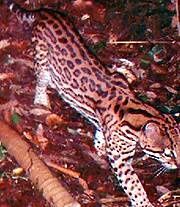
Ocelot (Leopardus pardalis)
http://www.iucn.org/iyb/iucn_action_22/success/?4512/A-future-for-Colombias-wild-cats
.
9. CoP15 to the Convention on International Trade in Endangered Species of Wild Fauna and Flora (CITES)
.
At Doha, Qatar, 25 March 2010 regulatory bodies from around the world met to discuss agreeing on conventions to ensure the continued survival of species threatened by wildlife trade.
Trade regulation for bluefin tuna, African elephants, tigers, sharks, polar bears and coral have all been under discussion in Doha.
During the conference, IUCN called for a more holistic approach to elephant conservation, urging Parties to rise above divisive issues raised at this meeting in favour of more decisive action on the known problems facing African elephants in many parts of their range including decreasing habitat as a result of the needs of growing human populations and managing human-elephant conflict.
Before the next conference in 2013 in Thailand, CITES has a huge challenge to meet in specifically addressing the key challenges and gaps identified at this conference so that discussions at CoP16 can truly support sustainable trade in all wild species.
http://www.iucn.org/iyb/resources/news/?4979/Time-for-closer-collaboration-on-wildlife-trade
.
10. Talks to dismantle trade in tiger poaching [Southern Asia]
Tigers are listed in CITES Appendix I, which includes species threatened with extinction and allows non-commercial trade only in exceptional circumstances, such as for research. Globally, on a species level, tigers are listed as Endangered on the IUCN Red List of Threatened Species™.
At COP15, poaching and illegal trade in tigers was discussed with countries being asked to provide information to the CITES Secretariat and Interpol to help develop anti-poaching strategies.
Estimates from 2007 indicated that there were as few as 3,400 tigers in the wild throughout Asia. Numbers have decreased since then. In the early 1900s there were more than 100,000. Tigers are primarily poached for their skins with other body parts being used for decorative purposes or for traditional medicines.
“If we use tiger numbers as a performance indicator then we must admit that we have failed miserably and that we are continuing to fail. How have we let this happen?” says CITES Secretary-General Willem Wijnstekers. “Although the tiger has been prized throughout history, and is a symbol of incredible importance in many cultures and religions, it is now literally on the verge of extinction.
2010 is the Chinese Year of the Tiger and the International Year of Biodiversity; this must be the year in which we reverse the trend. If we don’t, it will be to our everlasting shame.”
http://www.iucn.org/iyb/resources/news/?4923/Talks-to-dismantle-trade-in-tiger-poaching
.
11. Call for Post-2010 Strategic Plan on Biodiversity
The IUCN is calling for a clear post-2010 Strategic Plan on Biodiversity.
We have failed to meet the target adopted through the Convention on Biological Diversity to reduce the rate of biodiversity loss by 2010.
According to the Millennium Ecosystem Assessment, 60% of ecosystem services worldwide have become degraded in the past 50 years, and the IUCN Red List of Threatened Species™ gives us alarming facts on species extinction rates, which are increasing continuously.
IUCN is calling for a short, focused and action-oriented Strategic Plan to be adopted at the meeting of the Convention on Biological Diversity in Nagoya, Japan, in October.
“Simply aiming at halting biodiversity loss is no longer sufficient; we also need to restore and maintain the populations, habitats and ecological cycles that enable biodiversity and ecosystem services – such as food, water or medicine – to persist “ says Jane Smart, Director of IUCN’s Biodiversity Conservation Group. “To achieve this, we need engagement on all possible levels, with the economic sector, the development community through to the public sector and civil society. It is critical that the role of biodiversity as the foundation of life, livelihoods and development is understood by all.”
To meet these goals, perverse incentives, like subsidies that harm biodiversity, need to be removed and new regulations and financial incentives need to be put in place, clearly reflecting the value of natural resources. Greater interaction between science and policy, and cohesion between multilateral environmental agreements and other organizations are also essential for the implementation of the new biodiversity targets, according to IUCN experts.’
http://www.iucn.org/iyb/resources/news/?4962/Healthy-biodiversity-is-no-luxury—its-the-foundation-of-all-life-on-earth
.
12. Bringing the Bison Back [North America]
The next 10 to 20 years could be extremely significant for restoring wild populations of American bison to their original roaming grounds. But for this to happen, more land must be made available for herds to roam free, government policies must be updated and the public must change its attitude towards bison.
A new publication by IUCN, American Bison: Status Survey and Conservation Guidelines 2010, reports on the current status of American bison, in the wild and in conservation herds, and makes recommendations on how to ensure that the species is conserved for the future.
“Although the effort to restore bison to the plains of North America is considered to be one of the most ambitious and complex undertakings in species conservation efforts in North America, it will only succeed if legislation is introduced at a local and national level, with significant funding and a shift in attitude towards the animal,” says Dr Simon Stuart, Chair of IUCN’s Species Survival Commission.
Five hundred years ago, tens of millions of American bison roamed free on the plains of North America, from Alaska to northern Mexico. Now the American bison – which includes both plains and wood bison – is listed as Near Threatened on IUCN’s Red List of Threatened Species™. As of 2008, there were approximately 400,000 bison in commercial herds in North America, some 93 percent of the continental population. But little progress has been made in recent decades to increase the number of animals in conservation herds, which are managed carefully for their genetic diversity and ecological roles. In 2008, there were 61 plains bison conservation herds in North America containing about 20,500 animals, and 11 conservation herds of wood bison, containing nearly 11,000 animals.
“While substantial progress in saving bison from extinction was made in the 20th century, much work remains to restore conservation herds throughout their vast geographical range,” says University of Calgary Environmental Design Professor and co-editor of the study, Dr Cormack Gates, who is also co-Chair of the IUCN Bison Specialist Group. “The key is recognition that the bison is a wildlife species and to be conserved as wildlife, it needs land and supportive government policies.”
The survival of bison populations is affected by many factors, including limited habitat and severe winters. Yet the greatest challenge is to overcome the common perception that the bison, which has had a profound influence on the human history of North America, socially, culturally and ecologically, no longer belongs on the landscape.
“The decimation of the American bison in the late 1800s inspired the first recovery of bison and an entire conservation movement that protected wildlife and wild places across North America,” says Keith Aune, Senior Conservation Scientist, Wildlife Conservation Society. “The IUCN Status Survey and Conservation Guidelines provide a new framework for inspiring a second recovery of bison and restoring functional grassland ecosystems.”
Bison have the best chance of full recovery as wildlife by being allowed to roam freely across hundreds of thousands or even millions of hectares. Making this possible poses one of the biggest challenges for restoring bison herds as both public and private landowners will need to give their support.
“The bison is the largest land mammal in North America, and yet it is perhaps the most neglected icon,” says Steve Forrest, WWF Northern Great Plains Manager for Conservation Science. “These guidelines provide a roadmap for bringing the bison back to its rightful place as a keystone of the great plains.
http://www.iucn.org/iyb/resources/news/?4750/Bringing-Bison-Back-to-North-America
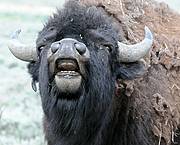
Bison on the American Prairie Reserve
Photo: Steve Zack, Wildlife Conservation Society
.
Further Reading
.
http://www.iucn.org/iyb/
http://www.iucn.org/iyb/resources/news/
http://www.cbd.int/2010/welcome/
http://www.countdown2010.net/year-biodiversity
http://www.unep.org/iyb/
http://www.environment.gov.au/biodiversity/
http://www.environment.gov.au/biodiversity/strategy/draft-strategy.html
http://www.healthyparkshealthypeoplecongress.org/
.
Leave a Reply
You must be logged in to post a comment.
April 7th, 2010
by Eva Vincent 20100324.
[This article submitted by Eva Vincent, Helena, Montana, USA 24-Mar-2010.]

You are all familiar by now with the U.S. quarter series in the America the Beautiful Quarters Program, featuring each state, including the U.S. territory of Guam. Well, now this year a new quarter series will begin next month in April dedicated to the national parks. Each quarter will feature on one side a 1932 portrait of George Washington and on the other an image depicting a national park totaling 56 coins. The first park will be Hot Springs National Park in Arkansas with the image of the park headquarters with the National Park Service emblem.
Yesterday was a ceremony in WA D.C. unveiling the design for the Yellowstone quarter (pictured) which will be out in June. What is pictured on the coin is none other than old faithful with a bull bison in the foreground.
“The program is designed to celebrate the nation’s legacy of conservation.” NPS
Conservation?? Yeah right! For the past 200 years these bison have been slaughtered to near extinction. Even as you read this the Montana Department of Livestock is getting ready for their spring hazing of these remnants. This animal that once numbered into the millions is now down to a meager 3,000 and will be even less if they are slaughtered by government agencies as in the past.
Also, there is a new “study” that is to be carried out this year by Animal Plan Health Inspection Service (APHIS). The guise basis for this is to determine whether or not bull bison (as pictured above in the new U.S. coin) transmit brucellosis to cattle. Of course this is FALSE. First, brucellosis is a reproductive disease brought into this continent by European cattle. It causes cattle to abort their first calf. The disease is transmittable by ingestion of infected afterbirth or infected milk. Brucellosis was first found in Yellowstone bison in 1917 after some buffalo were fed milk from infected cows. Most wildlife are infected or have been at some point and now carry antibodies to the disease. Second, no buffalo would voluntarily mate with domestic cows. This new “study” of APHIS constitutes tranquilizing 50 bull bison, even in rut, in order to study their semen and blood.
Then, there is the deal with Ted Turner where 87 bison, who had been in quarantine were given to Turner for his bison ranch. In a previous post I said 88 were going. This is true, but only 87 went because one cow wasn’t pregnant. Here are some more numbers to consider in this atrocity:
40 are still in quarantine at Corwin Springs
86 are housed at Turner’s (21 of these are pregnant)
122 have been slaughtered
1 calf died after transport to Turner’s land
If this is a “legacy of conservation” then it is very dismal to say the least.
If you would like to help out in saving this countries LAST genetically pure, continuously wild bison check out Buffalo Field Campaign. This is the only group in the field year round documenting the government’s actions against the buffalo and taking the issue to WA D.C.
© The Habitat Advocate Public Domain
Leave a Reply
You must be logged in to post a comment.
March 31st, 2010
by Editor 2010330.
—————————————————————————-
Victorian Government’s VicForests is attempting to log old growth forests at Brown Mountain in East Gippsland, despite Brown Mountain being confirmed habitat for threatened and vulnerable wildlife. Local not-for-profit environment group Environment East Gippsland has commenced proceedings against VicForests in the Supreme Court of Victoria asking the Court for a permanent injunction to stop VicForests from logging Brown Mountain.
Reports:
(most recent at top)
Brown Mountain Landmark Court Case [Melbourne Supreme Court, 23-25 March 2010]
Court case finishes – summary of the final 3 days.
Quoted Source: Environment East Gippsland 20100330, http://www.eastgippsland.net.au/
‘The final days of summing up both VicForests’ and EEG’s arguments were heard in the Melbourne Supreme Court on Tuesday, Wednesday and Thursday (23rd-25th March). These were the last submissions presented to Justice Osborn who heard the 17 day trial that started on the 1st March.
‘In summary – both sides presented their condensed arguments from the past 3 weeks. Early in the case, the economic claims were not allowed as VF had not made any allegations in its defence about economic impact, and there was only summary evidence supplied by VF, without details. The arguments focused on the laws covering protection of threatened species and how VF did or didn’t abide by them. Justice Osborn has reserved his decision . Our legal team have said he could hand this down in a month or two or three … Despite some fairly revealing and insightful evidence being given and some quite startling information to come out of cross examination of witnesses, the decision will be looking at the complexities of the laws governing forests and wildlife management.
‘A support team of about 45 people attended the Melbourne start of the case to show that there was widespread interest in Brown Mountain (see pics). Thanks everyone who came along and who sat through the proceedings.
1st Day (Tues) – the defence (VicForests) lawyers had the stage on day 1 and delivered their case.
‘To those who hadn’t heard the facts, arguments and cross examinations of the previous 3 weeks, it could have sounded fairly reasonable and even worrying. Read our responses to their arguments below. VF lawyers’ arguments consisted of the following:
- EEG didn’t have standing to take the case to court as we are too small a group, don’t have a special interest in Brown Mountain, only an emotional or intellectual interest. The fact that we didn’t apply to be on the local Shire environment committee, and the claim that we didn’t take part in the Nat Estate study on 1990 – (but we actually did) and various other arguments were used to attempt to argue we shouldn’t be able to sue VicForests.
- It was DSE that should have looked out for threatened species, not VicForests. VF can’t change zonings.
- The Potoroo wasn’t ‘detected’ within the meaning of the action statement (FFG Act) – although the animals and the sites were confirmed, the full two weeks of footage was withheld by EEG (under instruction from our lawyers) until late 2009 – making the authorities suspicious of possible tampering and was the reason given by VF for not protecting the area.
- Language in the FFG Act and Sustainable Forests (Timber) Act, is not enforceable.
- VF noted that the Forest Management Plan was out of date (ended in 2006), which generated much discussion. Justice Osborn pointed out that if it was no longer applicable, then all logging in EG was illegal as the FM Plan is needed before forest can be logged. That point was then quickly resolved.
- The Precautionary Principle, which was a major argument in the whole case. It was first claimed by VF not to give rise to any legally enforceable obligation against it, and even if it did, VF claimed it had observed the PP even if it wasn’t thought to be regarded as enough precaution.
- VF claim Potoroo wasn’t ‘detected’ to their or DSE’s satisfaction,
- On Quolls – there are 75 already protected in EG and that was enough,
- For the new species of crayfish – it’s still being named and so doesn’t have a prescription for protection and the 100 metre buffer around the creek will protect it
- Sooty and Powerful Owls – only dusk calls detected but no confirmed nesting or roosting sites so no need to protect. Plus there are enough Sooty Owls Management Areas and Powerful Owl Management Areas, despite some evidence from DSE suggesting the protection zone targets had not been reached.
- Giant Burrowing Frogs – even if it is high quality and likely habitat, none have yet been detected.
- Hollow Bearing Trees – logging prescriptions are claimed to look after them.
- Gliders are there in high numbers, yes – but it’s not for VF to protect them and 100 mts along creek should do anyway.
- The Precautionary Principle requires caution, but not total infallibility. Actions to express adherence to the PP can be many. VF argued that a 100 metre buffer along the creek was caution enough for all the species.
2nd day of summing up (Wed) –EEG, the plaintiff’s case was presented.
Debbie Mortimer SC argued that:
- ‘The standards and conditions in the FFG Act Action Statements, Forest Management Plan and the Code of Forest Practices hasn’t been and can’t be complied with by VicForests.
- VicForests was the “agent of harm” about to begin clearfelling when we applied for the first injunction, and VF was as obliged to adhere to the law for threatened wildlife as was DSE.
- VF don’t need to have DSE declare a conservation zone for VF to adhere to the law or decide not to log.
- The Allocation Order (giving forests to VicForests from DSE), Timber Release Plan and the Code (for logging) all mention adhering to the Forest Management Plan.
- The issue of whether EEG has legal standing to bring the case to court was argued well for showing we did have standing. It had not been objected to by VF strongly before we embarked on the 17 day trial.
- If various surveys had not have been carried out (owls, Gliders, Crayfish and Potoroos), the court case would not have commenced. Surveys show a genuine interest.
- Obligation on VF are mandatory – they don’t allow them to ‘duck and weave’ around these obligations.
- The main law is the Flora and Fauna Guarantee Act – it deals directly with Threatened Species, and binds the state/crown to protect endangered wildlife. The FM Plan and the Code both refer to it.
- Forests are a community property. Managed for common good into future. DSE’s position in the evidence given by Lee Meizis was that the Timber Release Plan gave ownership of forests to VF to exploit, but with the right to exploit comes responsibilities for conservation.
- FFG Act has strong ‘must do’ language and is imposed on government authorities. Important objectives of FFGA disregarded by VF. Action Statements within the FFGA are enforceable.
- Debbie Mortimer said “In every way, VicForests pushed away from its conservation duties” to benefit its access to forests for logging.
- VF is not abiding by the law by merely reading the Action Statements.
- Logging high quality Quoll habitat is endangering the animal’s survival. At odds with the Precautionary Principle because this species is only found at a functional level in East Gippsland now.
- Sustainable Forests (Timber) Act directly forced VF to adhere to the Code. Allocation Order also states VF MUST comply with CFP, PP, AS and FMP.
- Not complying with the Code was a breach. Acts refer to the Code being adhered to.
- VF must consider advice from relevant experts in Flora and Fauna. The advice of these internal DSE experts were ‘completely sidelined’ during the process that lead to the decision to clearfell Brown Mountain. It was also claimed that the Minister was not given important information on these species.
- The 100 mt buffer offered by VF would not protect the Gliders, Quoll, owls, Potoroo and Large Brown Tree Frog and was unknown if it would adequately protect the Giant Burrowing Frog, Brown Mt Crayfish and Square-tailed Kite. Leaving additional large trees while logging and burning the remainder would be unlikely to protect the habitat values of hollow bearing trees (85 out of 207 was all that survived the logged and burnt coupe across the creek in April 2009).
- The guideline to protect 100 ha for rich populations of gliders is self-regulating and doesn’t need major fuss – just needs to be mapped and complied with.
- Justice Osborn discussed decent reserve designs and ‘whacking in’ some reserve along the creek.
- The oft-cited ‘risk-weighted consequences’ of the precautionary principle the VF lawyers used daily, does not mention social or economic ‘balance’ and in context is only about conservation risks and consequences.
- We are dealing with some species in a demonstrable state of decline. Failure to halt damage is serious. There is lack of scientific certainty as there is no research or info on impact of logging.
- New reserves mean nothing unless we assess the quality and type of the habitat, logging history etc.
- BHP was used as an example of a company which must employ specialist ecologists/biologists if it plans to carry out potentially damaging work. VF either needs to employ biodiversity staff, or get in consultants to survey and advise forest planning.
- Potoroo detections 100% authentic – no questioning by VF of witnesses – fully accepted, yet despite 3 verified detections, VF made no attempt to consult with DSE biologists or protect 50 ha for each as stated in the FFGA.
- DSE set up its own ‘rules’ outside of existing legislation.
- DM asked for full injunction to logging.
Day 3 – Thursday – response from Defendant (VF)
- ‘Having to abide by the SFT Act could mean that every logger, truckie, contractor, roading operator must comply with these laws as well. Does that mean every worker has to set up a biodiversity unit and consult biologists?
- Argues again, it’s all DSE’s responsibility.
- Argues that the words for Greater Glider protection in the FMP says “approximately 100 ha” is unenforceable – how much is ‘approximately’?
- VicForests Lawyers couldn’t find any expert biologists to speak for them. They tried.
- Not being given the entire potoroo footage was the whole problem.
- The 400 ha reserve to the (drier, steeper) west is a benefit for all the species.
- Crays were found in the creek next to a previously logged forest so therefore they can survive OK.
- Potoroo no 2 (on camera) wasn’t used in original evidence (it was actually discovered after writ was served but this was overlooked by VF lawyers).
- The hair tube evidence of the Potoroo near proposed coupe 19 didn’t come with a copy of the note when it was sent off for analysis – so how do we know where it really was?
This ended the long trial for the wildlife of Brown Mountain. We await Justice Osborn’s final decision …”
Court Case:
‘Environment East Gippsland Inc v VicForests [2010] VSC 53 (25 February 2010)’
(Supreme Court of Victoria)
SOURCE: http://www.austlii.edu.au/au/cases/vic/VSC/2010/53.html
|
JUDGE:
|
|
|
WHERE HELD:
|
Melbourne
|
|
DATE OF HEARING:
|
|
|
DATE OF RULING:
|
|
|
CASE MAY BE CITED AS:
|
Environment East Gippsland Inc v VicForests (Ruling No 2) |
|
|
|
Revised 4 March 2010
|
HIS HONOUR:
1 ‘The background to this proceeding is stated in the decision of his Honour Justice J Forrest made last year, and granting injunctive relief to the plaintiff. The injunction restrains logging and associated works within coupes located at Brown Mountain in East Gippsland. The underlying basis on which the plaintiff seeks relief in the proceeding, and upon which it sought and obtained injunctions is that the coupes in issue have such conservation significance that logging of them would be unlawful, having regard to applicable legislative and governmental controls which seek to protect such significance.
2 The plaintiff by summons dated 23 February 2010 now seeks leave to amend its statement of claim in accordance with a form of amendment appended to the summons. That application is resisted by the defendant insofar as the amendments raise allegations of the presence of the three animal species within the relevant area, which have not previously formed the basis of the plaintiff’s claim. The matter is fixed for trial at Sale commencing on Monday next, and has been the subject of a framework of pre-trial directions intended to ensure that it would be ready to proceed at that date, and to ensure that the defendant was accorded procedural fairness. The defendant wishes the matter to proceed next Monday whether or not the amendments are permitted, because any delay will result in the continuation of the injunction which it submits is causing it continuing economic loss and prejudice. The plaintiff contends that the amendments can be made at this very late stage without the necessity of any adjournment of the trial, and that the trial can proceed with adequate procedural fairness from the defendant’s point of view. I accept the relevant principles relating to the application were restated by the High Court in the case of Aon Risk Services Australia Limited v ANU.
3 For present purposes it is sufficient to repeat what was said in the judgment of the plurality: An application for leave to amend a pleading should not be approached on the basis that a party is entitled to raise an arguable claim, subject to payment of costs by way of compensation. There is no such entitlement. All matters relevant to the exercise of the power to permit amendment should be weighed. The fact of substantial delay and wasted costs, the concerns of case management, will assume importance on an application for leave to amend.
4 The underlying objective of the court must of course be to achieve a just resolution of the dispute between the parties. That notion in a case such as the present extends to the objective insofar as it is reasonably possible of ensuring that justice is seen to be done with respect to the real matters in dispute between the parties. In the present, case I accept that the amendments in issue arise out of circumstances to which the plaintiff was alerted by advice given to the plaintiff by a series of expert witnesses who have carried out ongoing site investigations for the purposes of preparing reports for the trial. If the amendments are refused, and this evidence is excluded, the evidence will not be the best evidence available as at the date of trial of the conservation significance of the land.
5 In my view, such a refusal would not only on the face of it prejudice the plaintiff’s case, but also necessarily detract from the credibility of the evidentiary basis on which the Court proceeds to determine the matter. And I am further of the view that this issue is of particular significance in the present case because it raises issues of the public interest both from the point of view of the position of the plaintiff and the defendant.
6 Accordingly the amendments should be allowed in the absence of prejudice to the defendant, which can be said to outweigh the prima facie desirability of the amendment. The notion of prejudice is to be approached broadly as the decision of Aon makes clear. In the present case, it is first submitted on behalf of the defendant that there has been delay on the part of the plaintiff which should preclude the granting of any indulgence to it. In particular, reference is made to the identification of a new species of crayfish in a report dated 7 December 2009 prepared by Dr McCormack.
7 The substance of this report was not the subject of advice to the defendant’s solicitor until 18 February this year. I accept the delay was regrettable and contrary to the intention and indeed the spirit of the directions made previously by the court in order to put the case in a proper position for trial. Nevertheless, the relevant expert retained by the defendant has now had the opportunity to consider and respond to the report in issue, and I am not persuaded that delay with respect to this aspect of the matter justifies refusal of the amendment.
8 Next it is submitted the defendant will suffer significant procedural prejudice if the amendments are allowed. It is not submitted that repleading the defence will occasion undue difficulty. And on the face of it, the probability is that the defence will be repleaded in parallel terms to the pleas which have previously been made in relation to other species which the plaintiff alleges are present in the relevant area.
9 The problem from the defendant’s point of view is in respect of obtaining expert advice responsive to the material now put forward in respect of the alleged presence of bird and frog species only recently identified as relevant on behalf of the plaintiff. This difficulty is exacerbated due to personal circumstances affecting the expert whom the defendant has retained in this matter, and proposes to call to give evidence.
10 Although the question is, I accept, finely balanced, I have come to the view that the procedural prejudice in issue can be significantly ameliorated and it may reasonably be hoped avoided, if an appropriate basket of directions is made by the Court. First, I would not fix a time for the filing and service of an amended defence, but simply direct that such an amended defence be filed and served as soon as is reasonably practicable.
11 Secondly, I would direct that save with the consent of the defendant, the plaintiff call all evidence other than that relating to the matters of fact alleged in the amendments prior to calling evidence concerning such matters. Thirdly, I would direct that Professor Ferguson be at liberty to respond to evidence relating to such matters by viva voce evidence with no written notice of the substance of such response. And fourthly, I would specifically direct that the defendant be at liberty to apply for further directions relating to the evidence concerning such matters.
12 It seems to me that if these directions are made, then having regard to the pleadings as a whole as they currently stand and the expert evidence foreshadowed in the documents that have been filed with the Court, a fair trial should be reasonably possible. I should further record that during the course of argument I indicated to counsel for the defendant that the court would adopt a flexible approach to the giving of Professor Ferguson’s evidence if that should become necessary.
13 In addition to the procedural concerns which the defendant has expressed, the defendant also submitted that it could not be satisfactorily compensated by an order for costs thrown away in respect of the consequences of any amendment. It was submitted that there was a real prospect that an order for costs would not be able to be met by the plaintiff, and reference was made to the debate in the practice court with respect to this aspect of the matter at the time of the hearing relating to injunctive relief.
14 I have come to the view that such prejudice will be minimised if I fix an amount in respect of such costs and order that it be paid within a relatively short time. The parties have now agreed that it would be appropriate to order that the plaintiff pay the defendant’s costs thrown away by reason of the amendment of the statement of claim, fixed in the amount of $12,000, and that that amount be paid by 5 March 2010.
15 Finally I should add for the sake of completeness that it was submitted on behalf of the defendant that certain amendments proposed with respect to the statement of claim by way of deletion of factual allegations do not go far enough. I am not persuaded that the pleading is on the face of it materially inadequate in relation to the matters raised, for the reasons I discussed with counsel during argument. It seems to me that the underlying issue is one which will have to be resolved at trial and in the light of the evidence as it emerges during the course of the hearing.
16 Accordingly, I propose to make orders generally in accordance with the oral reasons I have just given. First, that the plaintiff have leave to file and serve an amended statement of claim generally in accordance with the form appended to the summons dated 23 February 2010. I say generally because the proposed paragraph 80D needs to be denoted as such in the amended statement of claim.
17 Secondly, that the defendant file and serve an amended defence to the amended statement of claim as soon as is reasonably practicable. Thirdly, save with the consent of the defendant, the plaintiff call all evidence other than that relating to matters of fact alleged in the amendments permitted to the statement of claim prior to calling evidence concerning such matters. Fourthly, that Professor Ferguson be at liberty to respond to evidence relating to such matters by viva voce evidence with no written notice of the substance of such response to the plaintiff.18 Fifthly, the defendant be at liberty to apply for further directions with respect to evidence relating to such matters. Sixthly, that the plaintiff pay the defendant’s costs thrown away by reason of the amendments, including the costs of this application fixed at $12,000, on or before 5 March 2010.’
© The Habitat Advocate Public Domain
Leave a Reply
You must be logged in to post a comment.
March 30th, 2010
by Editor 2010330.
The New South Wales government logging agency, euphemistically named ‘Forests NSW’, has ongoing plans to log old growth native forests through the South East Corner bioregion of NSW. These forests provide rare and important habitat for Australian fauna, some of which in this region are now critically threatened with extinction due to the logging, burning and deforesting activities of Forests NSW, the National Parks Service under its parent which changes its name every frew years, and the NSW Rural Fire Service.
Australia’s SE Corner (SEC) Bioregion encompasses the shires of Eurobodalla, Bega Valley, Bombala and parts of Cooma-Monaro and Snowy River. The South East Corner forests include the Tilba, Bermagui, Murrah, Mumbulla, Tanja and Wapengo State Forests . It also includes a number of national parks including the Biamanga National Park.
Not surprisingly, many Australians, and particularly locals in this bioregion, value these forests being protected and are opposed to the habitat destruction being wrought to the old growth forests. Key active environmental organisations seeking to protect these forests include the Friends for Five Forests and the South East Region Conservation Alliance Inc. (SERCA). SERCA is an umbrella organisation for conservation, environment and for citizens’ groups who want to conserve and protect the natural environment of South East NSW, Australia. SERCA’s member organisations include Bega Environment Network | Chipstop | The Coastwatchers Association Inc | Colong Foundation for Wilderness | Friends of Durras | National Parks Association – Far South Coast | Natural Native Forests | SE Forest Rescue | Yurangalo Inc.
SERCA formed in September 2005 to ’maximise efforts and resources’ of these organisations to combat the continued NSW Government-sanctioned woodchipping of native forests, to participate in formal environmental planning by the NSW Government in the regionprocesses and importantly to protect these forest habitats from damaging development and land and forest management practices.
Below is a series of reports on the events affecting these forests from these various organisations and from media reports up until March 2010.
Forests NSW have moved into log the Mumbulla State Forest
SOURCE: Friends for Five Forests, 20100329, http://www.fiveforests.net/
29 March 2010:
‘Forests NSW have moved into Compartments 2133 and 2135 in Mumbulla State Forest.
‘After a local resident photographed koala prints on Lizard road, near Cpt 2163 next on the logging list, the DECCW have apparently decided to undertake surveys before their burning operation on the other side of the road.
‘Much of the forest in Mumbulla creek catchment of Biamanga NP is growing on the Murrah soil landscape – still the only place koalas have been located. On this basis and in combination with the State Government’s management, the species remains endangered and likely to become extinct.’
Tanja State Forest – local residents meeting with State Forest reps.
Richard Blakers, 20100322 http://www.serca-online.org/our_media_releases/2010/Blakers22.rtf
22 March 2010:
‘Residents shocked by scale of proposed logging in Tanja State Forest Local residents met with State Forest representatives last week to discuss proposed logging operations in Tanja State Forests.’
‘The residents thanked the State Forests representatives for meeting with them and listened carefully to the information they provided. However, residents are very unhappy with the outcome of the meeting. They were shocked to discover the scale and intensity of the proposed logging and are not satisfied with State Forest responses to any of the concerns raised.’
‘The areas to be logged lie between Bega and Tathra along the north side of the Bega River. Near Mogareeka, the logging comes to within 50 metres of the river. It is also along the eastern side of ReedySwamp Road and extending along all the ridges and down to within 15 -20 metres of the drainage lines and creeks draining into the Bega River.’
‘The State Forests representatives explained steps taken to protect water quality, wildlife and scenic values in the logging operations. However it was clear that the measures are the barest minimum and worked out to allow for maximum tree removal, not maximum protection of other forest values.’
‘State Forests representatives conceded that after the proposed logging operation all available larger trees will have been removed from the forest and it will be well over 100 years before similar trees will again be available for commercial logging.’
‘They also stated that the logging was being driven by their need to meet wood supply agreements, and that within 3-5 years this kind of logging would stop in the Southern Region Forests because the supply of older trees will be exhausted. Once this happened, the industry would restructure to be able to use smaller trees.’
‘State Forests acknowledged that this logging will have significant short and long term impacts on local residents, and suggested the solution might be for residents to question their decision to buy property adjoining state forest.’
‘Residents think this is not a helpful attitude that does not address any of their issues.’
‘The residents have legitimate concerns about what happening to the public forests around our towns and homes. State Forests representatives do not seem to be in any position to cater to the residents needs because they are under pressure to meet wood supply agreements.’
‘Residents are therefore demanding that the State Government bring forward plans to restructure the timber industry and place a moratorium on logging in these coastal forests. It is not reasonable that these areas of older forest that have significant values other than just timber production should be sacrificed in order to meet such short term
goals.’
Koala colony under threat
Source: ABC 7pm TV News NSW, 18 March 2010, http://www.abc.net.au/news/video/2010/03/18/2849958.htm
‘Environmental groups say State Government plans to commence logging in the Bega Valley, on the NSW far south coast, will decimate the local koala population.The last known population of koalas on NSW’s far south coast could be under threat by State Government plans to log their habitat.’
Forests NSW & RFS burn 700 ha of Biamanga NP
SOURCE: Friends for Five Forests, 20100329, http://www.fiveforests.net/
Early March 2010:
‘Working collaboratively the NPWS, Forests NSW and the Rural Fire Service [RFS] have decided to burn close to seven hundred hectares of Biamanga National Park.
‘It appears the timing of this operation is consistent with plans to begin unsustainable logging on Monday 29 March. Consequently the NPWS is proposing to close the Lizard road to reduce access to the logging area from the east.’
NSW Government report on koalas in Mumbulla State Forest is flawed
SOURCE: Friends for Five Forests, 201002, http://www.fiveforests.net/
February 2010:
‘The month ends with NSW government releasing a belated ‘interim’ report on the highly inefficient and non-adaptive/heuristic koala surveys. Amongst other disturbing elements the survey took 5 times as long to complete as the pilot survey. The cost to date, leaving aside the eight arrests and other time runs at over $1million, being twice the estimated value of all the sawlogs remaining in Mumbulla State Forest.’
‘The survey outcome, based on employing a 2% (?!) activity contour, is that less than 5% (1089 ha) of the area surveyed (22,000 ha) is said to be occupied by koalas. Regrettably there is some uncertainty about how this area has been derived as the RGB-SAT methodology measure for a single tree in a plot is 3.3%. There are no details as to how the 2% contour has been calculated although theoretically it should encompass a greater area than a 3.3% contour but this is apparently not the case.’
‘Seems to be another example of how the NSW and other governments put unsustainable logging above all else. On a positive note the genetic analysis demonstrates the NSW Scientific Committee was quite wrong.’
Loggers are set to destroy one of Australia’s last remaining koala habitats.
Source: John Hibberd, SERCA: http://www.serca-online.org/our_media_releases/sercamembers/Koala.pdf
February 2010:
‘The NSW Government has started sending contractors into the forests in South Eastern NSW. Negotiations between the NSW Department of Environment and the state government agency responsible for logging, Forests NSW, appear to have failed to reach a compromise.
‘The irony is that the NSW Government last year ordered a survey to try and find koalas in the coastal forests that are now about to be logged. The survey, which was conducted across all land tenures, found a small, active population of about 30 koalas and is continuing.
‘It seems the NSW Government has now decided its contractual obligations to supply saw logs locally and woodchips to Asia are more important then protecting this much loved native animal, which is immortalized in Australian culture.
‘The disease, Chlamydia, plus loss of habitat have contributed to a dramatic decline in koala numbers over recent decades, with the species now close to being declared endangered.
“Soon it will be too late to save the species.” Says Debora Numbers of koalas in Australia may be as low as 45,000 recent surveys by the Australian Koala Foundation show.
‘The koala population in South Eastern NSW was once healthy but in the last 100 years has been decimated by hunters interested in koala pelts and by logging.
‘Forests NSW have not publically given a date for the start of logging in the Mumbulla State Forest, no doubt expecting direct action from conservationists who forced loggers out of an area close by three years ago.
‘The issue will put heat on the new premier of the state of NSW, American-born Kristina Keneally, who was installed by the right-wing faction of the party recently.
‘And Commonwealth Minister for the Environment Peter Garrett – a former rock star with internationally successful band Midnight Oil and environmentalist – has been asked to intervene.
‘Steve Phillips – arguably NSW most experienced and expert Koala scientist, said on ABC radio recently,” We have got the management prescriptions (for koalas) wrong, especially in the SE …. The small area of koala habitat remaining is such a precious resource …. They have just got to be protected so they can continue to expand ….. there is no longer any argument about what is important habitat”.
‘NSW Minister for forestry Ian MacDonald stated in Parliament in 2008 that despite recurrent financial losses, logging in native forests will continue, in order to support jobs.
‘Yet billions of dollars of taxpayer funds have been pumped into plantations as replacement timber and fiber for industry and export. NSW Forests rely heavily on the outdated Regional Forest Agreements that were signed off in the late 90s giving new areas in National Parks to the state but retaining forests for logging. Conservationists say the industry is outdated and only propped up by political will and union backing.
‘These agreements are excluded from the Environment Protection Act (EPBC) as well as climate change and water supplies.
‘Will zoos soon be the only places to see koala? Will NSW Premier Kristine Keneally do her part and stop logging these coastal forests of Mumbulla, sealing the fate of these last few koala?’
‘It seems not despite 2010 being The Year of Biodiversity.’
Logging Plan Poses Threat to Precious Koala Colony
SOURCE: Friends for Five Forests, 20100124, http://www.fiveforests.net/ from Sydney Morning Herald.
January 2010:
‘The year begins with the NSW government deciding to support the (Japanese) native forest logging industry and their proposals to eliminate the last koalas. According to the Sydney Morning Herald: Forests NSW and the Department of Environment and Climate Change are “ . . . in search of a compromise between felling trees and maintaining enough forest to allow the koalas to survive.” (http://www.smh.com.au/environment/conservation/logging-plan-poses-threat-to-precious-koala-colony-20100124-msm7.html)
‘Referring to the Regional Forest Agreements the recently released independent review of the EPBC Act states “ . . . if the terms of the approval are not complied with, or if there is insufficient reporting information to verify that compliance, Dr Hawke recommends that the approval should be terminated.” And “ . . . the full protections of the Act should apply to forest activities.” In his press release Environment Minister Peter Garret stated:
“ . . . the Government notes the concerns raised by Dr Hawke in recommendation 38 in the review regarding the current mechanisms in the Act for forest management under Regional Forest Agreements (RFAs), and is committed to working with state governments to improve the review, audit and monitoring arrangements for RFAs, including their timely completion, clearer assessment of performance against environmental and sustainable forestry outcomes, and a greater focus on compliance of RFAs in the intervening years.”
‘The Government intends to use upcoming RFA renewal processes to improve the achievement of these outcomes in future RFAs. In light of this, the Government rejects the mechanisms proposed in recommendation 38 and does not propose to review section 38 of the EPBC Act as it currently applies to RFAs.” [Source: http://www.environment.gov.au/minister/garrett/2009/mr20091221.html]
The fact that the DECC are working with Forests NSW to ensure logging in the catchments suggests that they either remain unconvinced that logging spreads Bell-miners or they believe that koalas like sick trees. If the Commonwealth are committed to these ideas they should have no problems working with the state government.’
Forests NSW ignores koalas to permit logging of Mumbulla State Forest
SOURCE: Friends for Five Forests, 20100329, http://www.fiveforests.net/
December 2009:
‘With no apparent reason, other than to progress koala extinction the NSW Government is reportedly planning business as usual when work resumes in the New Year. This work has begun and the Department of the Environment for Climate Change (DECC) has deleted from their website all information about the koala surveys over the past 2 years.’
‘The NPWS Regional manager Tim Shepard is reported as saying “. . . now we have a good idea of where Koalas live . .” We are using this information to help us plan our hazard reduction programs”(Coastal Custodians, Nov/Dec 2009). Also, a rumour has spread from the Wapengo Watershed Association claiming Forests NSW will begin the year logging koala habitat in Mumbulla State Forest. While the source of this proposal remains unconfirmed, it does confirm some suspicions. Notably that logging is to be suspended at Bermagui so the negative impacts of uncontrollable wildfire in logging slash adjacent to the town, can be reduced over summer. Killing koalas is, apparently, OK.’
Logging begins in Compartment 2001 in Bermagui State Forest
SOURCE: Friends for Five Forests, 20100329, http://www.fiveforests.net/
‘Forests NSW have approved logging in 89% of the compartment as opposed to the maximum of 60% allowed for in their legal approvals. Desperate to maintain timber supplies this logging confirms the statement from Forests NSW manager Mr Martin Linehan that “We can do what we want when we want“.
‘Fifteen months after the NSW Government released a map that is inconsistent with the outcomes of the pilot koala surveys. Koala expert Dr Steve Phillips has been interviewed ABC local radio about the uncertain fate for koalas at a national level and the last few Five Forests koalas.’
Forests NSW Illegally Logging in Bermagui
SOURCE: Friends for Five Forests, 20100329, http://www.fiveforests.net/
September 2009:
‘Four arrests have been made as a result of Forests NSW claims, but examination of the operational map, the prohibited area notice and the logging plan(s) for Cpt 2002 demonstrate the logging is outside the IFOA. Critical koala habitat is being destroyed while the NSW police support Forests NSW illegal logging.’
‘Logging began in Compartment 2002 of Bermagui State Forest on Thursday September 10. The logging plans (download from resources page) for the compartment are not an accurate or honest representation of soil, flora, water or roads in the compartment. Details of concerns about the operations, also available on the resources page, have been passed onto the NSW police and NCS International.
‘Forests NSW can log this critical koala habitat on the only soil landscape known to have koalas because they have been able to abuse the process based on unproven claims about koalas in the south east.’
‘A community conducted review of the Eden Regional Forest Agreement (RFA) between the Commonwealth and NSW State Governments has found that forests in the southeast are being exploited at rate that far exceeds the limits of ecological sustainability and those of the relevant legislation.’
‘Community representative on the Forest Resources and Management Systems Committee for the Eden assessment process and review author Mr Robert Bertram believes that the RFA has failed to achieve the legislated ecological milestones and this failure has negative implications at local, regional and global levels.’
“ The review analyses Annual reports from the NSW Forestry Commission that indicate dramatically reduced timber yields of 60% for sawlogs and 40% for pulp logs and a massive escalation in areas being logged, such that over the past five years nearly 50% of all State forests in the Eden region have been scheduled for logging.’
“These outcomes confirm that extensive canopy dieback and the associated death of millions of trees in the southeast is having a significant impact on the native forest logging industry. It is apparent that some 50,000 hectares of additional forests have been covertly handed over to ensure wood supplies.’
“These additional forests include areas that the Forestry Commission failed to declare during the Eden assessment and vast tracts of forests on the tablelands, that have similarly not been assessed. It is apparent that these Crown forests are being logged with the assistance of significant public subsidies and at a rate that greatly exceeds the requirements of the RFA.
However, of greatest concern is that the RFAs are designed to ignore the science that explains the decline of eucalyptus forests and it’s relationship to timber supplies, species extinction, catchment degradation and climate change. It seems that Government departments and other publicly funded organizations are either threatened or ‘paid off’ to ignore or suppress relevant information. The success of the RFA has been to demonstrate that ignorance and greed has overcome credible science, accountability and intergenerational equity.”
‘The review entitled: ‘The effects of deforestation on timber volumes, areas logged and associated climate change issues: A community review of the EdenRegionalForest Agreement” can be downloaded at the Friends of the Five Forests website: http://www.fiveforests.net/resources
Forests NSW has compartment 2002 in the Bermagui State Forest on its worklist
SOURCE: Friends for Five Forests, 2005, http://www.fiveforests.net/
‘Friends of Five Forests and their supporters will have to mount yet another campaign to have the logging stopped if Black Lagoon and Meads Bay are to be protected in accordance with the sanctuary zone classification they have been given as part of the Batemans Marine Park, and if the very few remaining koalas are to have any chance of survival. This large compartment of predominantly spotted gums is a significant part of the catchment for Narira Creek and Black Lagoon, which link into Meads Bay.’
‘The Batemans Marine Park provides for the highest level of protection of Black Lagoon and Meads Bay as sanctuary Zones. Logging can be expected to lead to further serious siltation of the Creek, and to damage plant and fish life in both the Lagoon and Meads Bay. The Park Zone Plan does not come into operation until June 2007.’
‘Pre-emptive action by Forests NSW to log compartment 2002 in the interim would make a mockery of the Marine Park zoning.’
‘The compartment contains areas of significant koala habitat. It is also next to part of the Kooraban National Park that contains the only koalas in this immediate region. Both this area and compartment 2002 are occupied by the Five Forests koala population, which was nominated as endangered some years ago.’
‘NSW Government release of a report by consultants on a Koala Management Plan for the region is now well overdue.’
‘Friends of Five Forests and their supporters will have to mount yet another campaign to have the logging stopped if Black Lagoon and Meads Bay are to be protected in accordance with the sanctuary zone classification they have been given as part of the Batemans Marine Park, and if the very few remaining koalas are to have any chance of survival.’
150 residents call for immediate halt to all logging operations in the Five Forests
SOURCE: Friends for Five Forests, 20050320, http://www.fiveforests.net/
20 March 2005:
‘More than 150 people from many areas of the Bega Valley Shire and beyond attended a meeting at the Murrah Hall to hear about logging operations being implemented by non-adaptive land managers in the coastal forests around Bermagui.’
‘The meeting was unanimous in calling for an immediate halt to all logging operations in the Five Forests.’
‘In late May 2005 the NSW Forestry Commission breached the conditions of the Regional Forest Agreements and their Threatened Species licence when they started to log critical Koala habitat in Cuttagee catchment part of Murrah State Forest.
‘As a result of community actions the logging crew pulled the operation four days after it started and after FNSW arrested two people.’
‘Several actions are being planned and implemented that are aimed at stopping the further destruction of our flora, fauna and degradation coastal catchments and implementing sustainable forest management.’
The second stage has been the production of management and research proposals that take a holistic approach to natural resource management. The management and research proposals blend appropriate restoration forestry with world’s best practise and public accountability.’
As a result of the communities efforts and after failing to find anyone in DEC prepared to accept the mission, the NSW State Government has recently employed consultants to gather community opinions for possible input into a Koala Management Framework.’
[Background Ecology] ‘Koalas in the Bega Valley’
SOURCE: John Hiberd, SERCA, 201002, http://www.serca-online.org/latest_news/koala.pdf
‘There were once, 100 years ago, hundreds of thousands of koalas in the Bega Valley. They were so numerous that you could even see them in the trees along Bega’s main street! Hunting for the fur trade, habitat loss through extensive clearing, and fire have all decimated that once vast population.
Now all we know for sure is that a tiny remnant clings on in Mumbulla State Forest, with a few scattered individuals possibly elsewhere. And this is what they
are going to log and burn. Recent DECCW surveys have shown that this population is slowly recovering, and may now number up to 50 individuals. Studies of tree species preferred by Mumbulla koalas have shown that species diversity appears to be important for them.’
‘Surprisingly, given this population’s small size, DNA analysis by Sydney University has shown that Mumbulla koalas are genetically strong, and thus potentially able to increase their numbers without some of the inbreeding problems that have affected other disjunct koala populations.
Koalas need space. They need space to find the most nutrient rich leaves for their highly specialised diet; they need space so that young males, forced from their homes, can find new territories; they need space to handle our changing climate with more frequent and longer droughts; and they need space if their population is going to grow to a more viable size, capable of withstanding major events such as fire or disease.’
‘It is this space that they are being denied. And for what? For the sake of a few months supply of sawlogs and woodchips. Once they have logged and burnt, we may have prolonged the inevitable decline of the local sawlog industry, but we will have lost our koalas for ever!’
‘It is also no good just thinking that we can log carefully. The requirements of koalas are so poorly understood as to make it impossible to be certain which trees they are going to need, or in which direction they are going to need to move. Perhaps forestry believe that they can get away with just “not logging the trees with koalas in them”! And once the forest has been logged it will be burnt, which will nicely finish off any remaining koalas!’
‘The koalas of the Far South Coast are an integral component of our natural heritage – a natural heritage which has endured for millenia – respected by the traditional Aboriginal custodians of the land – a heritage which has led to the designation of this area as Australia’s Coastal Wilderness, with a campaign aimed at increasing tourism in the area and thus improving the local economy. Yet again we face the dilemma of short-term economic gain versus long-term
environmental degradation and the loss of opportunity to establish a truly sustainable local economy.’
‘A Koala recovery programme in these coastal forests has the potential to become an internationally recognised species recovery project, since:
-
They are an iconic species facing regional extinction, but for which there appears to be a reasonable chance of recovery with appropriate management actions;
-
There is a significant role for indigenous people, both because they are custodians of the area (especially the adjacent Biamanga National Park), and because of potential training and employment opportunities that could arise through the recovery program;
-
We now have a sound scientifically-based foundation giving us the capacity to monitor the conservation status of the population;
-
There are a range of educational and research outreach opportunities involving tertiary institutions, schools and field studies centres;
-
We can build a significant role for the local community; and,
-
We can develop substantial opportunities for research-based tourism and thus grow the local economy in a sustainable manner.
© The Habitat Advocate Public Domain
Tags: Bermagui State Forest, Biamanga National Park, Forests NSW, Koala, Logging, Mumbulla, Murrah, SE Corner Forests, SERCA, South East Region Conservation Alliance, Tanja, Tilba, Wapengo
Posted in Koalas, South East Corner (AU), Threats from Bushfire, Threats from Deforestation | No Comments »
Add this post to Del.icio.us - Digg
Leave a Reply
You must be logged in to post a comment.
March 29th, 2010
by Editor 20100329.
The Editor had been intending to take the following two photographs for some years.
Perhaps self-evident, but the first shows a ‘wildlife crossing’ sign by the NSW Roads and Traffic Authority (RTA) at the side of a widened busy four lane section of the Great Western Highway on the Boddington Hill climb at Wentworth Falls, Blue Mountains, in Australia.
The second photo shows a two metre provision for wildlife to cross under the barrier in the middle of a one kilometre long continuous concrete median barrier. This section being on a 80kph downhill bend and typically ignored.
Presumably, the only wildlife crossing would be guaranteed to become ‘road kill’. This wildlife crossing is greenwash tokenism at its disingenuous best.
This section of the Great Westren Highway traverses a ridgeline through a narrow land zone excluded from listing in the Greater Blue Mountans World Heritage Area, atthis location just 500 metres away. Another reason why the Blue Mountains while conveying a first impression of wild and protected, is almost devoid of the ground dwelling mammals that were once prolific.
Throughout the Blue Mountains, no wildlife corridor provision exists. Indeed, local residents have their own disputes with this arrogant state government department to achieve local pedestrian and vehicular crossings of the expressway development, let alone wildlife. What wildlife?
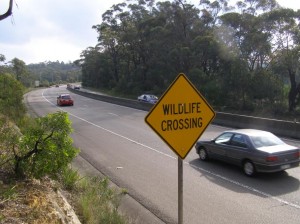
‘Wildlife Crossing sign’, Boddington Hill
Photo by Editor, 20100327
 Actual wildlife crossing provided by the RTA
Photo by Editor, 20100327
Actual wildlife crossing provided by the RTA
Photo by Editor, 20100327
Scientifically Recorded species of the Upper Blue Mountains:
Short-Beaked Echidna ( Tachyglossus aculeatus )
Tiger Quoll (Dasyrus maculatus)
Brown Antechinus ( Antechinus stuartii )
Dusky Antechinus ( Antechinus swainsonii )
Common Ringtail Possum ( Pseudocheinus peregrinus )
Common Brushtail Possum ( Trichosurus vulpecula )
Swamp Wallaby ( Wallabia bicolour )
Grey Headed Flying Fox ( Pteropus poliocephalus )
Bush Rat ( Rattus Fuscipes)
Swamp Rat (Rattus lutreolus)
Garden Skink (Lampropholis guichenoti)
Blue Mountains Water Skink (Eulamprus leuraensis)
Eastern Water Skink (Eulamprus quoyii)
Blotched Blue Tongue (Tiliqua nigrolutea)
Pink –Tongued Lizard ( Hemisphaeriodon gerardii)
Weasel Skink ( Saproscencus musteline)
Copperhead ( Austrelaps superbus )
Eastern Brown Snake ( Pseudonaja textiles )
Red – Bellied Black Snake ( Pseudechis porphyriacus)
Common Eastern Froglet ( Crinia signifera )
Striped Marsh Frog ( Lymnodynastes peronii )
[Source: Extract from FAUNA OF THE GULLY, Upper Kedumba River Catchment, Les Peto 2007].
Sightings of these species are so rare these days as to almost, sadly, presume that many have been forced into local extinction by colonist Australians and their descendants and subsequent immigrants.
On 20th December 2010, a local reader sent in the following photographs of the same ‘wildlife crossing’ site where a wallaby had been killed. Many motorists use the derogatory term ‘roadkill’, but this reader certainly conveyed a higher respect for our wildlife. The reader contributed the following personal account with the photos:
.
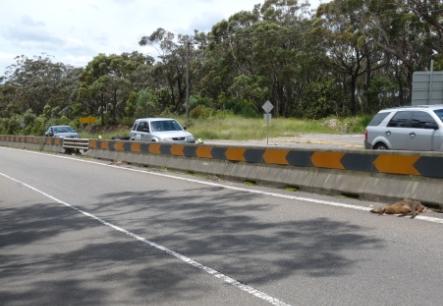
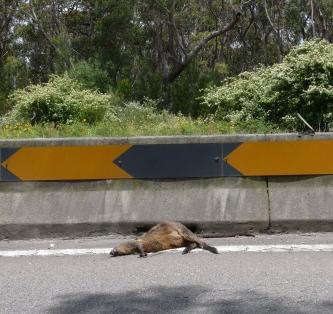
“It shows a swamp wallaby roadkill less than ten metres from the so-called ‘wildlife crossing‘. The carcass has been there for a few days – as a mountains resident you have probably already seen it for yourself.
I too have been wanting to take a photo of the site for the last few years and was prompted to do so after the events of yesterday. I was heading down the highway on my way to work in the morning when I spotted the wallaby on the road. This was the first time in the four years I’ve been living in the mountains that I have seen any significant roadkill at the site, and I felt sickened as I have always considered the wildlife crossing an absolute joke, but now it’s become deadly serious. Further, only two minutes after I saw the wallaby, I came across an injured sulfur-crested cockatoo in the middle of the highway at Bullaburra. After wrapping it up in a jumper, I got my partner to come down from our home in Wentworth Falls to retrieve it, and it subsequently died just before reaching the local WIRES volunteer’s home.
Yesterday’s events have inspired me to address the issue of the complete lack of any facilitation of wildlife movement across the highway – a huge barrier separating the northern and southern sections of the mountains. This has led me to your website – and it is heartening to know that there are plenty of others out there who are also disturbed by the status quo. “
.
© The Habitat Advocate Public Domain
Leave a Reply
You must be logged in to post a comment.
March 22nd, 2010
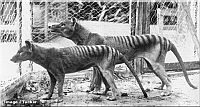 Possibly the last Tasmanian Tigers [Thylacinus cynocephalus]
in Hobart Zoo 1928.
http://www.naturalworlds.org/thylacine Possibly the last Tasmanian Tigers [Thylacinus cynocephalus]
in Hobart Zoo 1928.
http://www.naturalworlds.org/thylacine
.
Any species (carnivorous or herbivorous) that was perceived as an obstruction to man’s so called “progress” was killed through either direct assault by shooting, trapping and laying poisoned baits, or by simply obliterating its habitat.
The thylacine is a classic victim of greed, false notions, irrational opposition toward native wildlife and apathetic attitudes. Thousands of these magnificent animals were killed by Tasmania’s farming community in a misguided attempt to protect alien livestock such as sheep that didn’t belong on the island in the first place.
When compared to other factors, it is unlikely that many domestic animals were actually taken by thylacines. For example, historical records show that the majority of sheep losses were in reality attributable to thieves and predation by feral domestic dogs. Indeed, loss of stock due to thylacines was probably never substantial enough to be economically significant.
In the case of Tasmania, it was unfortunately the thylacine which became the settlers’ target of blame for agricultural troubles. As has so often been the case, a wild, misunderstood species was accused of “getting in the way of development”.
Presented on the Natural Worlds website “is a gallery of twelve historical photographs which date from the late 18th to early 19th centuries. They are a poignant visual record of one of man’s most hurtful actions toward his marsupial cousins. The scenes depicted in this gallery are highly unpleasant, but they should not be forgotten.
 Adult Thylacine with young
© Australian Museum
http://australianmuseum.net.au/image/Adult-Thylacine-with-young/ Adult Thylacine with young
© Australian Museum
http://australianmuseum.net.au/image/Adult-Thylacine-with-young/
.
The persecution of the Thylacine is not just a terrible blight on Australian history, but indeed, that of the world at large. Like all species, this animal is a part of the natural heritage of the planet as a whole – the product of millions of years of evolution. Places which still retain populations of other endangered species would be well advised not to let a similar tragedy befall them.” [Source: C. Campbell’s Natural Worlds 2006, www.naturalworlds.org/thylacine]
.
.
‘Kumanjayi Tiger’
.
Aboriginal Australians hold a cultural taboo against seeing images of the deceased.
Central Australian Aboriginal peoples have traditionally used the term “Kumanjayi” to precede the name of a deceased person.
Did Australian Aboriginal peoples ever force the extinction of a species? Probably not. So the British word ‘extinction’ may probably not have an equivalent term amongst the Australian Aboriginal languages making up over 400 distinct nations that existed across Australia before the 1788 Australian Invasion.
Colonial Australians, dominated by the British, have forced the extinction of many species endemic to Australia, notably and distressingly, the Tasmanian Tiger. Cameron Campbell on his website www.naturalworlds.org provides a rare collection of historical images of the now extinct Tasmanian Tiger. This extinction is one of the most avoidable in history and so or the more tragic and condemning of colonial Australia’s culture. Campbell’s images and old videos convey a magnificently healthy top order predator fine-tuned through eons of Darwinian evolution to survive and thrive in Tasmania’s harsh wild country.
But colonist culture of the time treated the tiger misguidedly like vermin and so in primitive eyes despised it, hunted it, skinned it and ultimately exterminated it from the planet.
Australia is a unique and special island-continent and out of respect for our country, we should start respecting its natural values and embrace its traditional cultures. All of Australia’s natural fauna and flora are endemic: that is, they exist nowhere else on the planet. So how can we as supreme custodians chose to neglect, exploit and destroy this privileged closenessto such uniqueness?
With our knowledge of the existence values and of the human threats to native species, we must stop in our tracks to save the remaining species and their habitat before they are gone.
This website respects the prominence of local Aboriginal rites and advocates a name change of the Tasmanian Tiger to ‘Kumanjayi Tiger’. Should we be able to see images of it without feeling a strong sense of cultural taboo by actively persecuted to extinction? The tiger lives on now only in myth as Australia’s own proud, vibrant, healthy and uniquely Australian top order species.
If any man admires his dog, this was a magnificently wild native dog like no other.
That we killed it to extinction is an abomination.
.
© The Habitat Advocate Public Domain
Leave a Reply
You must be logged in to post a comment.
|
|


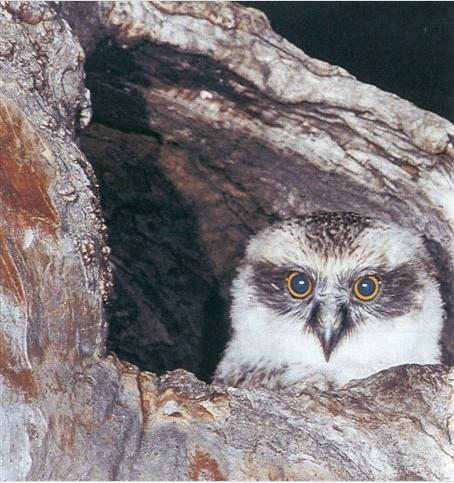
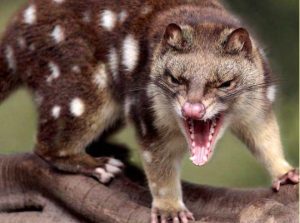

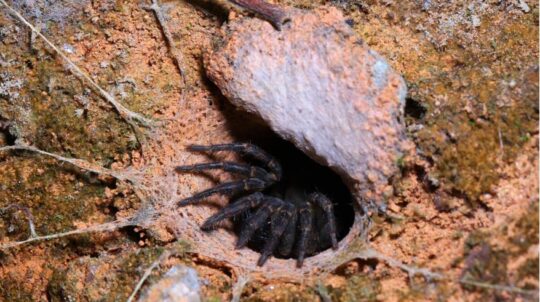
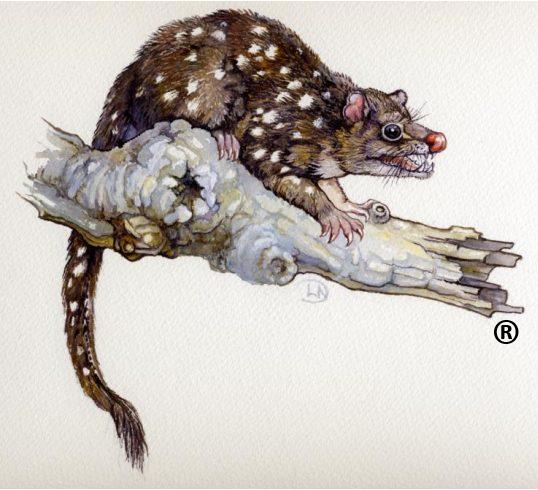


I want peak bodies to lobby the RTA to provide tunnels or under/over the road crossings for wildlife in NSW. They do it overseas like Canada, why not here.
One of the engineers in Western RTA lives in Bathurst and he told me it was to expensive and was speechless when I said “It could save lives,how much do they cost?”
Who could I ask about this other than theRTA
Rhonda, the RTA-come-RMS are road engineers who follow the orders of the NSW Government, and who supply a constant list of road projects to keep themselves in perpetual work. Costs are a relative matter of political priorities and for wildlife corridors to be factored into road design you need to make the issue part of the political process. Start with lobbying (if not joining) the peak bodies to lobby the NSW Government, not the RTA-come-RMS.
Ed.