Archive for the ‘Habitat Advocacy’ Category
Friday, February 7th, 2014
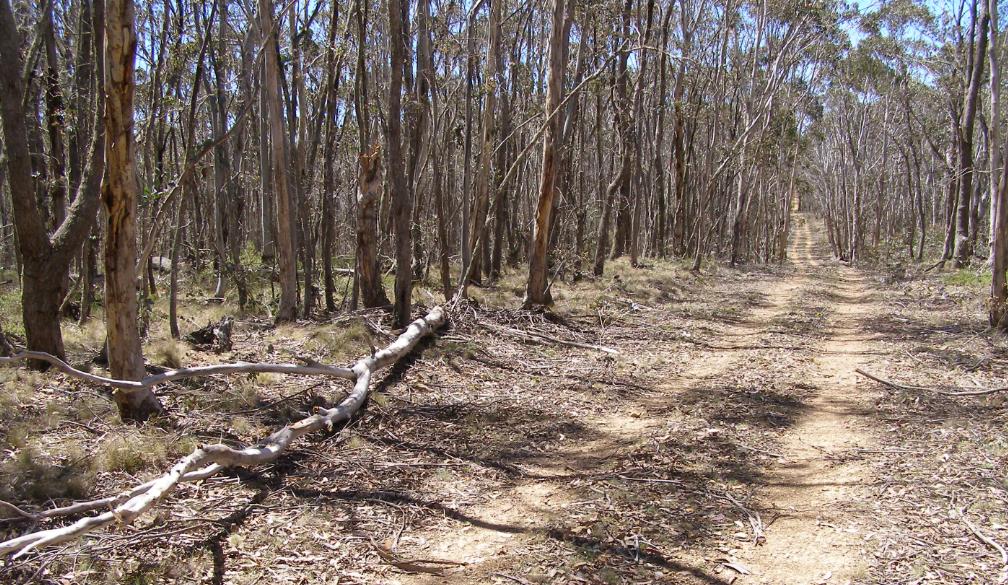
 Guy Fawkes River National Park near Ebor Falls
Northern Rivers Region, New South Wales, Australia
These parks are located in the traditional lands of the Gumbaynggirr and Banbai Aboriginal people.
Sites of high cultural significance are located along traditional walking routes between the Boyd River and high country around Ebor.
[Click image to enlarge, photo by Editor 20131025, © under ^Creative Commons]
Guy Fawkes River National Park near Ebor Falls
Northern Rivers Region, New South Wales, Australia
These parks are located in the traditional lands of the Gumbaynggirr and Banbai Aboriginal people.
Sites of high cultural significance are located along traditional walking routes between the Boyd River and high country around Ebor.
[Click image to enlarge, photo by Editor 20131025, © under ^Creative Commons]
.
Welcome to Country
.
<< I am so honoured to have been asked to be with you here today and would like to thank the Custodians and Keepers of this country, both past and present, for the privilege, of welcoming you, this morning.
I extend, a very special welcome to all the Elders with us today, Indigenous and non-Indigenous.
Becoming welcomed to country, is not just saying “welcome to the country of the Wonnarua, Tharawal, Gandangara, Wiradjuri, Gomilaroi, Bandjalung, worimi and leaving it at that.
It’s about wanting our welcomed people to at least, at some time in their lives, experience some of the many important cultural aspects of our countries, which have survived.
Our languages, our songs, dances, stories, foods, kinships, arts and histories.
It’s about shedding ourselves of all of those negative generalisations, stereotypes and guilt, which some of us, may still have for each other.
It’s about wanting welcomed peoples, to get to know us, in all our positive ways.
History tells us that our peoples went through some very terrible times, with some legacies of those times, still yet to be addressed, positively.
It’s about non Indigenous Australia’s sincere recognition,that this whole country was already under custodianship, respected and nurtured by people, before the advent of British rule.
It’s about seeing each other as equals, and commemorating the positive developments of this country, which we have all shared in, as being Australians together.
My peoples have merged and interacted with the new people who came to our lands since Invasion times started in 1788 and will continue to do so.
We now speak your English, wear your attire, do your dances, play your sports, eat your foods, sing your songs and know your stories and histories.
There are also non Indigenous people who speak our languages, sing our songs, eat our foods and know our stories and histories.
We have integrated into your many religious, political, social and sporting, organisations and in doing so, became one of this countries most integrative groups.
Our women married into the first Irish, Anglo and Celtic stock, plus those groups which came here under the many immigration policies this country has had, especially after the 1940s.
We are all Australians today, aren’t we?
Ladies and Gentlemen, on behalf of the Gadigal Clan of the Eora Nation whose land this function is now on, to sincerely welcome you in their language, the language of this country.
.
Boodyeri Mulinawul!
Good Morning!
Dyinalyungs, Mullabos, Guragalungalyungs, Guragalyungs
Ladies and Gentlemen, Girls and Boys.
Gurigarang tali ngia niya bidya mulinawul
Glad to see you here this morning
Dali dingaladi bamal marana Yura Warrane Eora
This is the land of the original peoples of Sydney, the Eora.
Wingara ngubadi Eora Bamal
Please Respect Eora Land.
Garigarang walama wugul kamaru
May your stay here be fruitful and safe and your departure, in peace.
Yanu Yanu.
Bye Bye’. >>
.
[Source: ‘Welcome to Country’, Aboriginal speech delivered at the start of the 2013 Masters Interpretation Workshop, Thursday, November 21, 2013, by James Wilson-Miller, Curator, Koori Arts, History & Design, Design & Society, Powerhouse Museum, 500 Harris Street, Ultimo, Sydney, NSW 2007 Australia]
.
Sunday, November 24th, 2013
 Kanangra Range, Kanangra-Boyd National Park Kanangra Range, Kanangra-Boyd National Park
[Photo by Editor 20131109, © under ^Creative Commons]
.
Budthingeroo
(a poem)
.
I could tell you a thing or two about Budthingeroo
About its mount, its bouldered ridge beyond
About its creek that carves through its lost ravine
All named after, Budthingeroo
About old Jimmy Whalan’s stock yards up on the wild Kanangra Range
Above where the Kowmung Cedars grew tall and the log moss grew thick
He’d well know how summer scorches its grassy woods
How its winters bite to the bone
Stunted yet happy Scribbly Gums thrive on the stoney soil
Holding on for dear life enduring the cold Oberon squalls
It’s much quieter these days up on Budthingeroo
The cedar men took their bounty
The cattle stockmen have long gone
The fires of ’29 took their toll of what was left of country
Now it’s wilderness of sorts across the Kanangra Range, cept for Rock Wallaby
Now it’s wilderness of sorts, cept for their escaped pigs and dogs
Or was Park’s Kanangra-Boyd just for thirsty Sydney, sterilised by cruel 1080?
A Sydney traveller can find the signs of the old colonial life
By passing through Luther and Budthingeroo
Past Whalan’s old paddocks, fences and greyed broken yards
And wonder ’bout the origin of Kanangra map’s many odd namings
A thousand stumps could tell you a thing or two about what happened at Budthingeroo.
.
 The cedar men took their bounty. The cattle stockmen have gone.
Kanangra Range, Kanangra-Boyd National Park
[Photo by Editor 20131109, © under ^Creative Commons] The cedar men took their bounty. The cattle stockmen have gone.
Kanangra Range, Kanangra-Boyd National Park
[Photo by Editor 20131109, © under ^Creative Commons]
.
by Editor, first recited 20131124, at a breakfast camp near Box Creek on the Boyd Plateau, Kanangra-Boyd National Park.
.
Sunday, November 3rd, 2013
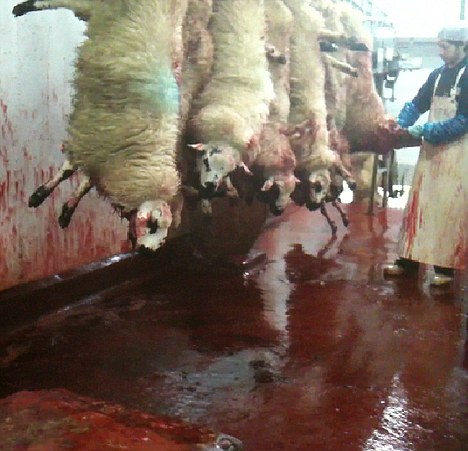
Australian live sheep endure halal torture in a Kuwait livestock market, October 2013
[Source: Animals Australia, ^http://www.banliveexport.com/take_action/kuwait-sheep-sold-illegally/]
.
<< On streets, in backyards and in back rooms at markets, countless sheep, during the Festival of Sacrifice, endure the agony of having their throats cut whilst fully conscious. Often killed by untrained hands, there’s no guarantees of a quick end to their suffering.
In the week leading up to the Festival of Sacrifice, Australian sheep were again found being illegally sold from a notoriously cruel livestock market in Kuwait.
They were destined to be sold to individual buyers for ‘sacrificial’ slaughter.
This very market was the scene of some of the most distressing and confronting cruelty that Animals Australia has ever documented. In 2010 our investigators gathered evidence of sheep being dragged, thrown, trussed and stuffed into car boots, tied onto roof racks and having their throats brutally cut – all while fully conscious.
https://www.youtube.com/watch?feature=player_embedded&v=G0Vmx0n6QYg
‘Strict’ live export rules were meant to protect animals from this fate.
But this is the third time Animals Australia investigators have found sheep in this market. Fourteen months ago we lodged our first complaint with the Department of Agriculture. As a result they imposed additional conditions on the export licences of the three exporters who sent Australian animals into Kuwait.
This footage was taken at Al Rai market in August 2012, and sparked Animals Australia’s first complaint to the Department of Agriculture:
.
.
Despite the additional conditions placed on the exporter, when our investigators returned in February this year, Australian sheep were STILL being offered for sale from this marketplace. A second complaint supported by extensive evidence was lodged and this investigation is still ongoing – nine months later.
Again, in October this year, Australian sheep were still there. This time on the eve of the Festival of Sacrifice – the peak time of animal cruelty and suffering in the region.
Regulations will continue to be disregarded and animals will continue to suffer unless the exporters responsible face severe penalties for breaches. >>
[Source: ‘Sheep suffer as exporters break rules again’, Aussie sheep endure cruel slaughter in Kuwait livestock market, Animals Australia, Oct 2013]
.
<< Sydney-based Halal Certification Authority Australia chairman Mohamed El-Mouelhy, Australia’s leading halal certifier, said it was impossible to stop people in the Middle East slaughtering animals at home or in the street.
“It’s part of the culture, and this is something that everyone has to do to give two-thirds to the poor and one-third they keep,” he said.
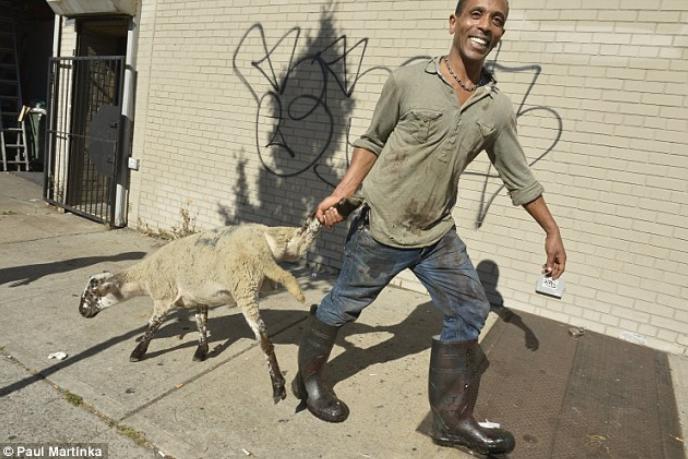
Fahad Saddique, manager of the Al Yasin halal butchery in Sydney’s Lakemba has called on animal-rights activists to show greater religious and cultural tolerance over live exports.
Australia’s Agriculture Minister Barnaby Joyce has conceded cruelty to exported livestock could not entirely be wiped out. Australia’s Prime Minister Tony Abbott says only “very foolish governments” make “policy on the run on the basis of one or two media reports”.
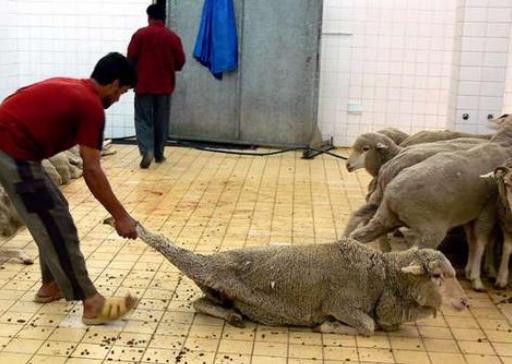
Animals Australia Lyn White said the problem was not religious, but simply about animal cruelty:
“This case is first and foremost about an Australian export company which has broken the law and whose ongoing disregard for Australian regulations in Jordan should attract the strongest sanctions. Australian export requirements permit halal, fully conscious slaughter, but they state that it needs to occur in abattoirs with appropriate infrastructure and trained workers so that the risks of cruel treatment are reduced.
The on-selling of Australian animals to private buyers for slaughter was strictly banned because of the welfare repercussions, especially during religious festivals. Animals Australia said 10,000 Australian sheep were sold outside the current Exporter Supply Chain Assurance Scheme introduced to make exporters responsible for animal welfare throughout the supply chain. >>
.
[Source: ‘Call for cultural tolerance over live exports as activists release film’, by Lauren Wilson, Rachel Baxendale, Jared Owens, The Australian (newspaper), 20131101, ^http://www.theaustralian.com.au/national-affairs/policy/call-for-cultural-tolerance-over-live-exports-as-activists-release-film/story-fn59nm2j-1226750892608]
.
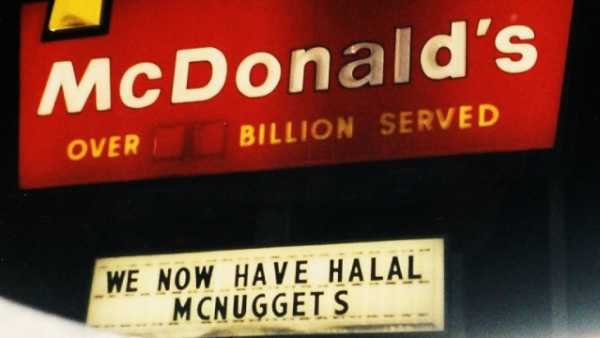 Most chain fast food outlets in Australia now stipulate that only Halal tortured animal meat be served in their stores
Buy Maccas, KFC, Hungry Jacks, Subway, Sumosalad, or any kebab takeaway and so condone halal torturing of livestock animals. Most chain fast food outlets in Australia now stipulate that only Halal tortured animal meat be served in their stores
Buy Maccas, KFC, Hungry Jacks, Subway, Sumosalad, or any kebab takeaway and so condone halal torturing of livestock animals.
.
.
.
Further Reading:
.

.
[1] Animals Australia, ^http://www.animalsaustralia.org/
.
[2] Ban Live Export, ^http://www.banliveexport.com/
.
[3] Get Up, ^https://www.getup.org.au/campaigns/animals/live-export/
.
[4] World Society for the Protection of Animals, ^http://www.wspa.org.au/wspaswork/liveexport/
.
[5] Australian Government’s official encouragement of live animal export, ^http://www.daff.gov.au/animal-plant-health/welfare/export-trade
.
Friday, September 20th, 2013
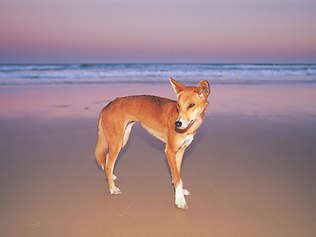
Last Monday 20130916, around 8.30am a native dingo was hit by a vehicle at 18 Mile Beach between Eurong and Dilli Village on Fraser Island. The Island is a World Heritage listed National Park and the wildlife is protected under the Nature Conservation Act.
Distressed witnesses stated the vehicle deliberately changed direction and aimed for the dingo which was struck. The vehicle continued to proceed at speed along the beach. It was described as an Orange Pajero.
The female lay suffering and howling in the sand with her mate close by licking her wounds, a Police Officer was called, who in turn contacted Rangers, sadly, the dingo had to be euthanised.
She appeared to be feeding. The fate of her pups is unknown.
This senseless act of cruelty will hardly cause a stir, there needs to be much stiffer penalties for injuring our wildlife. This is not acceptable.
The School holidays are here, a dingo casualty now, a child could be next.
If anyone has information please contact the local police or QPWS on (07) 4121 1800
Cheryl Bryant. Publicity Officer. Save Fraser Island Dingoes Inc.
 This is an old model Pajero, which may look like the killer’s car
.
[Ed: It is past time that Fraser Island was completely closed to all tourism]
.
Thursday, August 1st, 2013
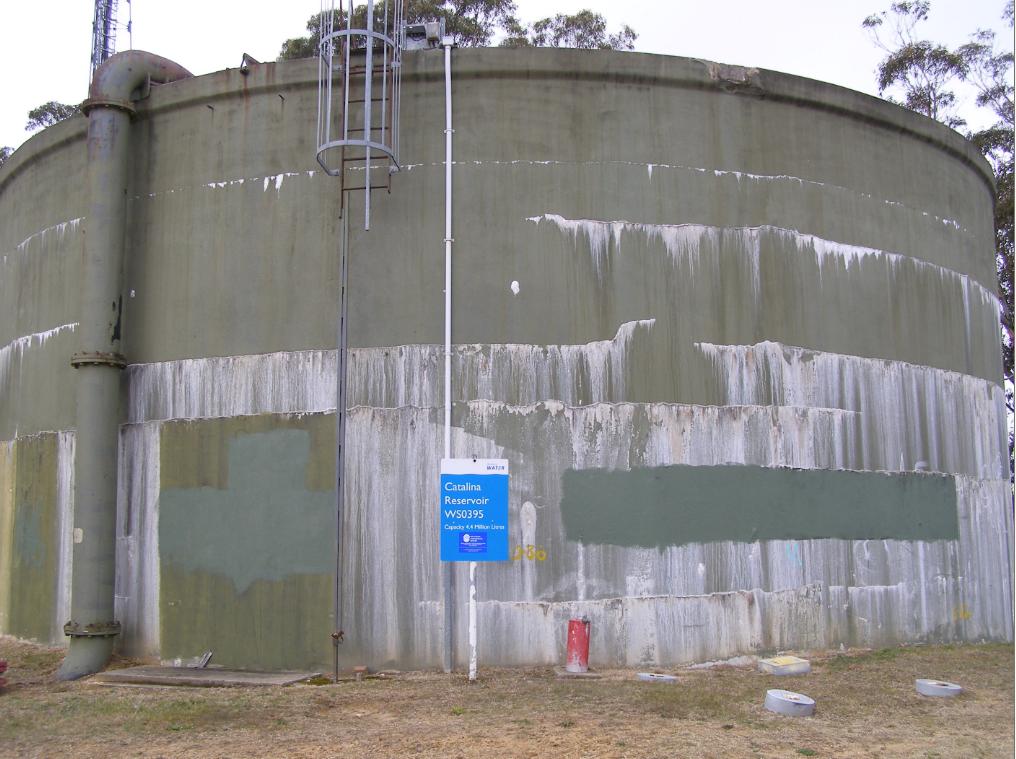 Blue Mountains drinking water tank with chlorine salt stains Blue Mountains drinking water tank with chlorine salt stains
Mineral salt efflorescence
Narrow Neck Road, Katoomba
[Photo by Editor, 20130507, Photo © under ^Creative Commons]
.
Rainwater, streams, surface water, ground water, aquifers and Australia’s Great Artesian Basin are all interconnected hydrology across Eastern Australia.
In the Blue Mountains plateau country, west of Sydney, sandstone-ironstone geology creates a subterrainean barrier to rainwater absorption and so the ground water slowly flows horizontally over longer periods. This sustains upland swamps and wetland ecosystems.
Human built settlement across the central Blue Mountains ridgeland since the 1820s introduced sewage contamination into the downstream watercourses, gullies and gorge country below. The raw sewage drainage piping into the valleys below the townships has recently been diverted expensively to contained closed system sewage infrastructure. But urban runoff and dodgy stormwater overflows into legacy sewage mains cause ongoing leakages into the water catchments of the Blue Mountains.
Savvy local bushwalkers know not to drink the water from watercourses downstream of Blackheath, Springwood, Katoomba and other such townships.
Prudent government authority, Sydney Water, disinfects its drinking water reservoirs in the Blue Mountains, to be safe.
But some of the Blue Mountains water that falls as rain in a largely wilderness region, is captured as drinking water in a few reservoirs, then pumped by larged pipes up to large water tanks above the Blue Mountains townships to enable gravity to deliver pressurised water to thousands of homes.
.
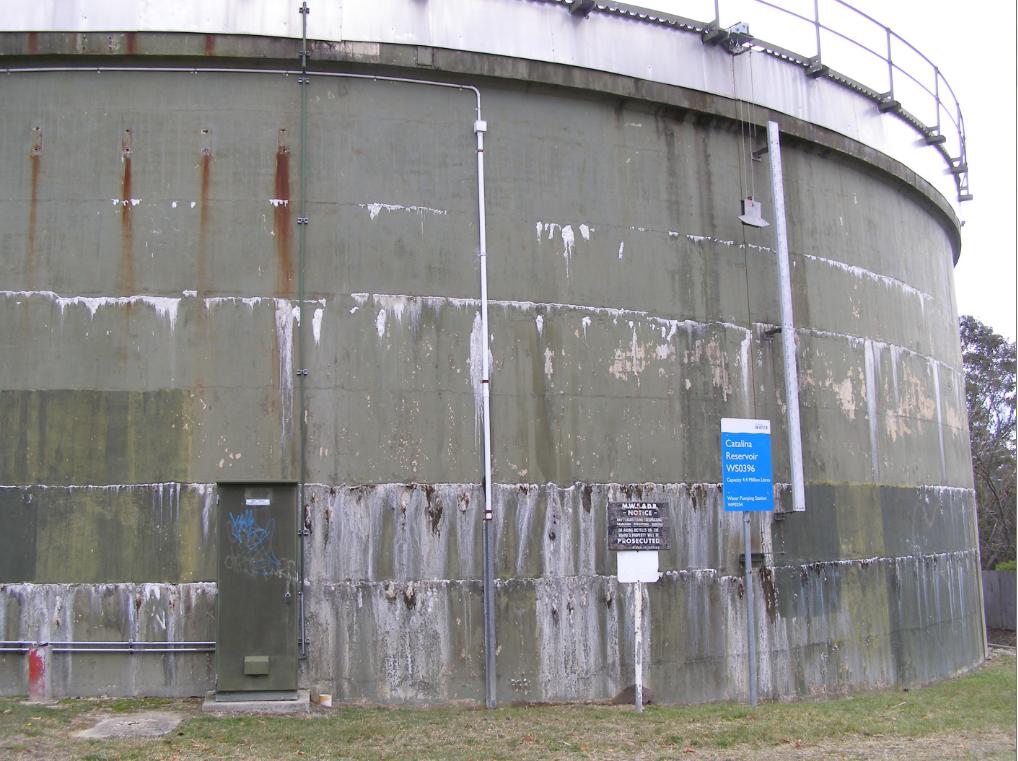 Second Blue Mountains drinking water tank with chlorine salt stains
Narrow Neck Road, Katoomba
[Photo by Editor, 20130507, Photo © under ^Creative Commons]
.
Ed: Are we to now expect fresh green paint over the chlorine salt efflorescent tanks to hide the problem?
.
.
Chloramine Tap Water
.
Across New South Wales, Sydney Water routinely disinfects drinking water in its reservoirs to control the risk of prevalent and toxic E. coli, Cryptosporidium and Giardia bacteria contamination.
Sydney Water applies a derivative of chlorine known as chloramine in its reservoirs – a disinfectant formed by mixing chlorine with ammonia. This is less toxic than the hypochlorous acid typically applied to swimming pools. Given the history in the Blue Mountains of sewage and runoff downstream from upstream townships, Sydney Water ups the dosage of chloramine, to be sure.
Chloramine is a less effective disinfectant than the hypochlorous acid, but it is longer lasting and stays in the water system as it moves through the pipes that transport it to consumers (a process that can take three or four days). For this reason, chloramine is often used alongside chlorine as a “secondary” disinfectant designed to remain in drinking water longer. But what are the long term impacts of drinking Chloramine contained in drinking water. What long term scientific studies have been done and publicly reported?
Chlorine by itself is a very dangerous material. Liquid chlorine burns the skin and gaseous chlorine irritates the mucus membranes. Concentrations of the gas as low as 3.5 parts per million can be detected by smell while concentrations of 1000 parts per million can be fatal after a few deep breaths.
In the Blue Mountains, the tap water is decidedly hardened in taste by the chlorine additive. So should tap water in the Blue Mountains be drunk safely?
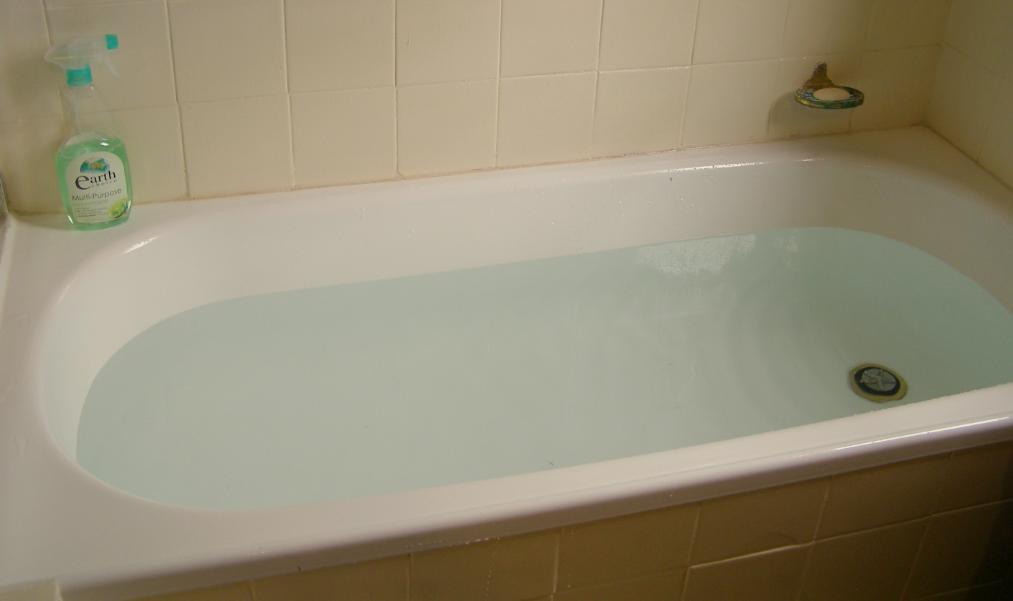 Blue Mountains bath with a distinctive chlorine aqua tinge
[Photo by Editor, 20130502, Photo © under ^Creative Commons] Blue Mountains bath with a distinctive chlorine aqua tinge
[Photo by Editor, 20130502, Photo © under ^Creative Commons]
So is the Blue Mountains tap water safe to drink?
.
Thursday, July 11th, 2013
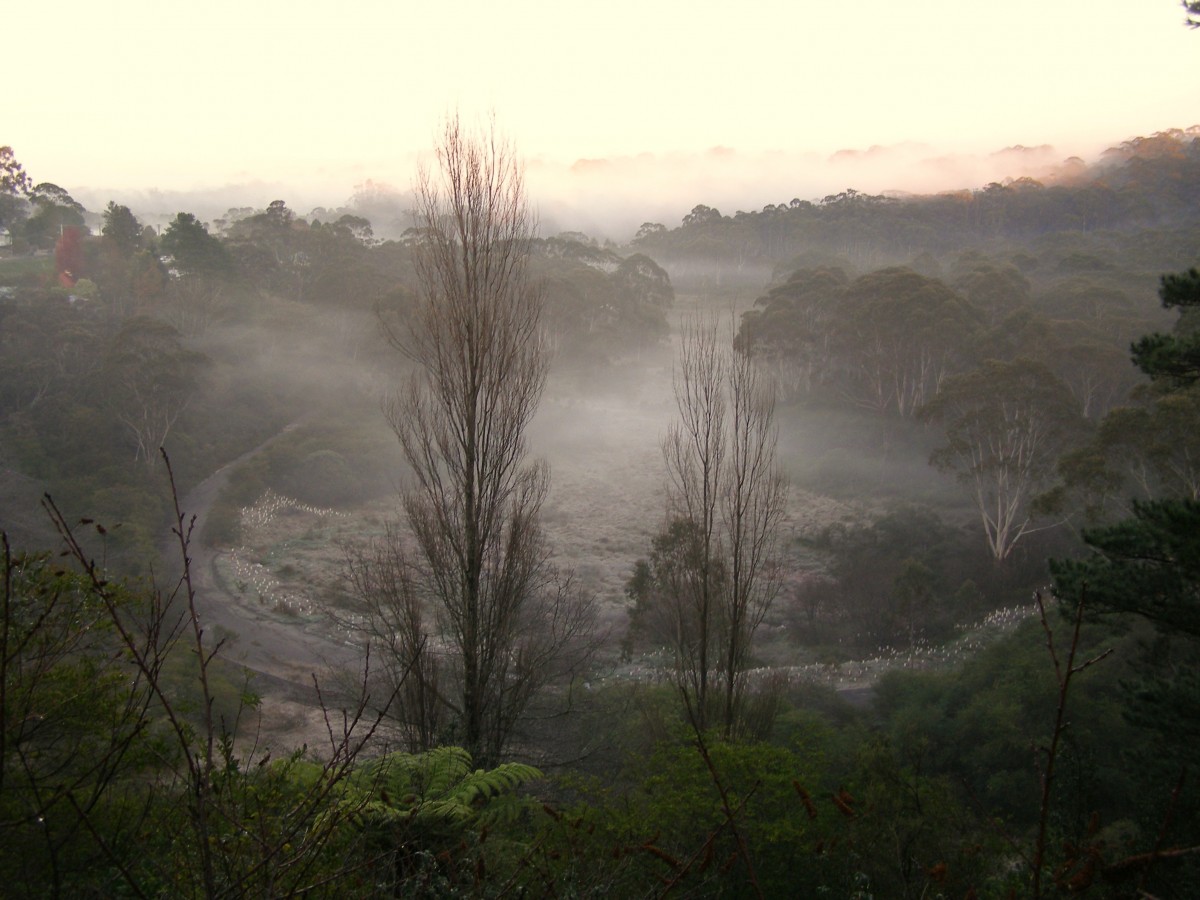 Frosty Morning in the Gully
[Photo by Editor, 20130711, Photo © under ^Creative Commons]
Click image to enlarge Frosty Morning in the Gully
[Photo by Editor, 20130711, Photo © under ^Creative Commons]
Click image to enlarge
.
Calling Me Home
.
<< I can feel the souls of my ancestors calling me back home
To all the familiar places and tracks I once did roam
I can see my Grandmother’s house at the end of Adams Street,
Where all the Aunties, Uncles and Cousins I did meet
To the banks of the Bokhara River running under the Richmond Bridge
You can hear the waters flow to the sound of an Elder’s didge
I can smell the boogalies cooking in a camp oven at my Aunty’s place
I can see the sun arising on the wrinkles of my Pop’s face
I can recall how my uncle taught me how to ride
In a paddock near their place with Robbo by my side
But I know I must stay here to get a good education
For I want to go back home after my graduation
To see the many family, friends and familiar faces I have known
I can feel the souls of my ancestors calling me back home
They’re calling me back, my ancestors in Mother Earth
I want to go back home, to the country of my birth. >>
.
[Source: ‘Calling Me Home’, by Lyndon Lane, Goodooga, NSW, in Koori Mail 507, p.23, ^http://www.creativespirits.info/aboriginalculture/arts/calling-me-home]
.
Monday, July 8th, 2013
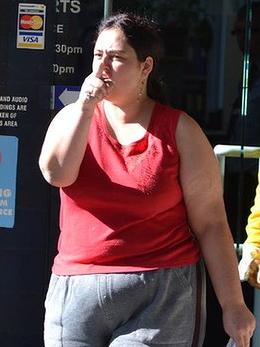 Rosemary Donovan outside Mandurah Magistrate’s Court, Western Australia today Rosemary Donovan outside Mandurah Magistrate’s Court, Western Australia today
after being found guilty of 24 counts of animal cruelty.
[Photo by ABC News]
.
The RSPCA is calling for a West Australian woman to be banned from ever owning animals again after she was found guilty of animal cruelty.
Rosemary Muriel Donovan was charged after RSPCA inspectors visited her residential property in Coodanup, south of Perth, in July 2011.
The inside of the house, where the birds and cats were living, was in a filthy condition. There they found about 80 animals in what the society has described as “seriously appalling conditions” at her residential Coodanup property.
RSPCA inspectors said they found 30 cats in the living room, faeces on the floor and the smell of ammonia so strong that one inspector had to leave the house because he felt sick. Among the animals RSPCA inspectors found an aviary where a rabbit was found walking over dead budgies lying on the floor. Dead guinea pigs were also found on the floor in some of their cages.
Former RSPCA inspector Nat McWhinney said the stench in the house reminded her of a piggery. Another former inspector, Ken Ostle, claimed there were guinea pigs and birds in cages in some bedrooms of the house. He said there were 50 birds and some rabbits in aviaries in the backyard.
The court was told about cats allegedly riddled with mites, fleas and ringworm. Witnesses for the prosecution described a rabbit with an infected eye and another rabbit with wounds.
RSPCA inspectors said the cats had ringworm and fleas, the guinea pig cage had dead animals on the floor, and birds were kept in cages that were too small.
The RSPCA says the animals did not have sufficient food or water. The RSPCA has called for a large fine and a ban on Rosemary Donovan owning any more animals.
Donovan is facing five years in prison or a $50,000 fine after being found guilty of 24 counts of cruelty. She will be sentenced on Friday.
.
[Source: ‘Woman found guilty of 24 counts of animal cruelty’, 20130708, ABC News and local media, ^http://www.abc.net.au/news/2013-07-08/woman-found-guilty-of-animal-cruelty/4806206?section=wa]
.
Friday, June 7th, 2013
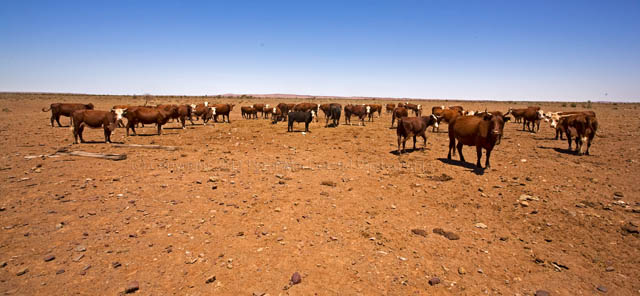 Australian cattle with no pasture, no water, no shade, in baking desert heat.
Typical is the wrath of Northern Australian Cattle Farmers.
Southern Australian Cattle Farmers would never allow this treatment to their prized herds.
Australian cattle with no pasture, no water, no shade, in baking desert heat.
Typical is the wrath of Northern Australian Cattle Farmers.
Southern Australian Cattle Farmers would never allow this treatment to their prized herds.
.
<<The Independent Member for Denison, Andrew Wilkie, has joined Lyn White from Animals Australia ( ^http://www.animalsaustralia.org/ ) to release new footage of cruelty to Australian livestock exported to Egypt and announce another attempt to progress legislation to ban the trade.
Mr Wilkie said his Bill would phase out live exports in three years, as well as immediately impose mandatory stunning of Australian livestock slaughtered overseas.
Mr Wilkie:
“The live export industry is systemically cruel, opposed by the vast majority of Australians and not in our economic interests. This latest evidence of horrific animal cruelty in Egypt demonstrates that this trade will never have appropriate animal welfare outcomes and must be stopped.
I have given formal notice of my intention to introduce the Live Animal Export (Restriction and Prohibition) Bill 2013 into Federal Parliament. A similar Bill was rejected by the Government and Opposition in August 2011. Since then we have seen shocking evidence of more live export cruelty in Kuwait, Pakistan, Israel, Egypt and Indonesia.
It is my hope that the Government and Opposition will now see sense and support the end of this cruel trade.”>>
.
[Source: ‘New footage of cruelty to Australian livestock’, by Andrew Wilkie MP, Independent Member for Denison MR, 20130516, Tasmanian Times, ^http://tasmaniantimes.com/index.php?/article/new-footage-of-cruelty-to-australian-livestock/]
.
.
[Source: Animals Australia, ^http://www.animalsaustralia.org/take_action/cattle-cruelty/]
.
Outback Marginal Grazing is Unviable
.
- Outback Queensland depends upon the inflated outback cost of diesel to freight cattle hundreds of kilometres to abattoirs or to port for live export
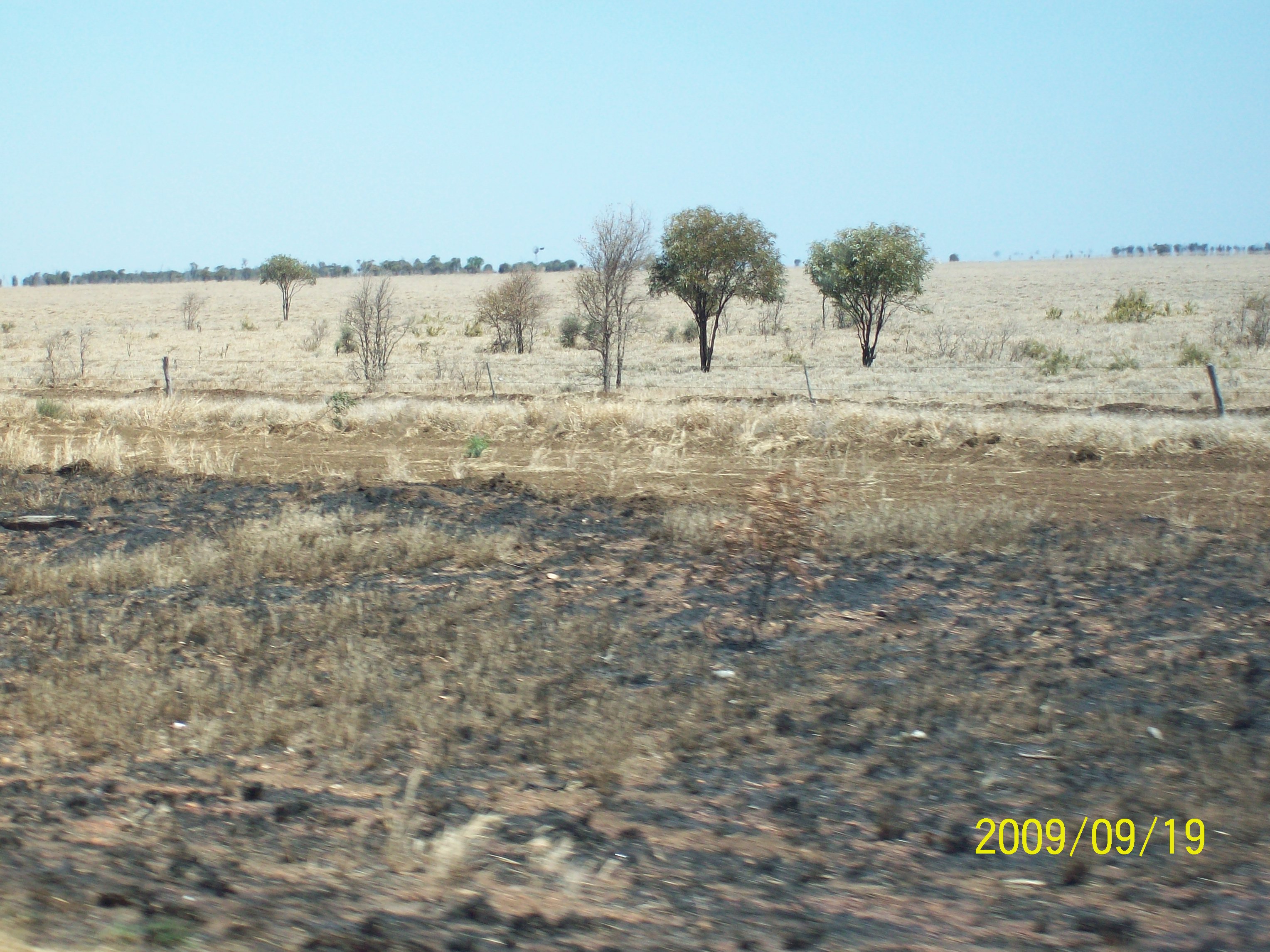
- Australia’s native northern has since colonial times been abused, overgrazed, broadscale burned uncontrollably until the savannah has become desert
- Seasonal drought has struck northern Australia’s savannah yet again, like in 2011 and many times prior – nothing new there.
- Greedy cattle farmers have built up excess herds, creating over-supply in cattle at meatworks, meaning cattle prices have plummeted below the cost of getting them to market
- Indonesia’s live export market was always a short term option as Indonesia built its own herds to a point of self-sufficiency – no news there
- Starved cattle stock with visible bony ribs are currently selling for $20 a head at Longreach. It happened before in the 1974 beef crash – no lessons learnt from that.
- Western Queensland land values have slumped and northern and western Queensland stations — like their excess cattle — are virtually impossible to sell
- Australia’s rural sector is now weighed down with $66 billion of combined debt, many cattle farmers are in a debt crisis and marginial equity in properties
- Bankers are now starting to call in debts, especially in the north, triggering a new round of station sales and mortgagee auctions.
- Three of Australia’s biggest cattle companies, Macquarie Agricultural Fund’s Paraway Pastoral, the stock-exchange listed Australian Agricultural Company and North Australian Pastoral Company have already written down the value of their vast portfolios by a combined $80m.
- AACo announced yesterday that fast-falling cattle prices had forced a $43m writedown of the value of its 600,000-head herd.
- The Cattle Council of Australia yesterday warned that this week’s disastrous $20-a-head sale prices had created a critical situation.
- “These prices are indicative of the critical conditions our northern producers are experiencing; unseasonably dry conditions, suppressed market conditions and the continued fallout from the live trade suspension,” CCA president Andrew Ogilvie said. “I fear that the situation will continue to get worse.”
- A survey by rural bankers Rabobank this week reflected widespread fears of approaching drought. It showed 37 per cent of farmers had lost confidence in the future and expect the next year ahead to be tougher than the past 12 months. About one third expect to suffer a fall in income in 2013-14.>>
.
[Source: ‘Drought stalks the land again’, by Sue Neales, Rural reporter, The Australian newspaper, 20130504, ^http://www.theaustralian.com.au/news/nation/drought-stalks-the-land-again/story-e6frg6nf-1226634963784]
.
Ain’t a farmer’s duty to leave a place better than how one found it?
.
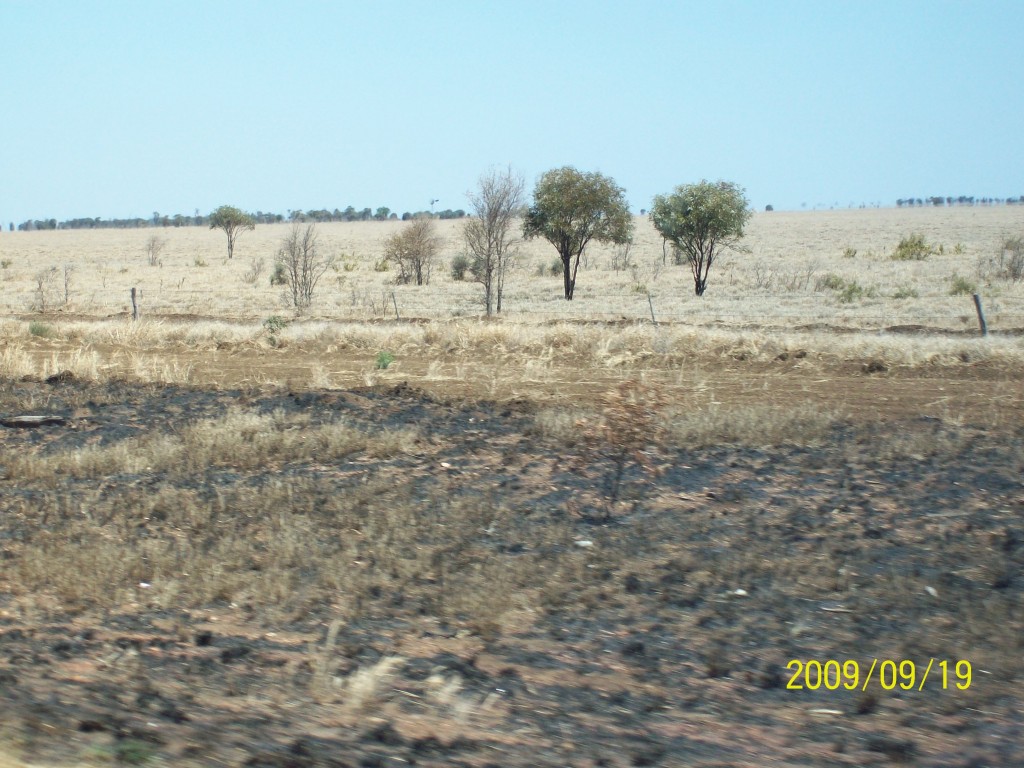 Not looking good.
Generations of Cattle Overgrazing of Australia’s Northern Savannah has decimated it to desert.
It’s similar to the 1930s dustbowlers of the American midwest; farmers abused the land and now they expect charity?
Snap out of the family history dogma.
While you have life and limb, relocate to reliably greener pastures! Not looking good.
Generations of Cattle Overgrazing of Australia’s Northern Savannah has decimated it to desert.
It’s similar to the 1930s dustbowlers of the American midwest; farmers abused the land and now they expect charity?
Snap out of the family history dogma.
While you have life and limb, relocate to reliably greener pastures!
.
[Ed: A previous image here has been removed by us upon becoming aware of its alleged copyright. We obtained the image from the Internet and there were no copyright notices. We noted multiple copies attributable to different sources. Nevertheless we have removed the image immediately and offer our apologies to the owner/s of the image.]
.
Australian Drought Every Decade
.
Australia is subject to seasonal drought commonly at intervals of 11 to 14 years. This has nothing to do with Climate Change theory. Think more El Niño and the varying Pacific Ocean currents and temperatures. The pattern is historically consistent since at least colonisation and probably through millennia.
Major droughts have included 1803, 1809-10, 1813-15, 1826-29, 1835, 1838-39, 1846, 1849-50, 1864-66, 1868, 1877, 1880-86, 1888, 1902, 1911-15, 1918-20, 1937-47, 1965-68, 1982-83, 1991, 1994-2006, 2013.
Australia is the driest continent on Earth. Don’t rural Australian kids get that drummed into them in primary school? Northern Australia’s vast and dry savannah country, inland and west of the Divide is marginal at best for pasture, let alone cropping. Yet after a few bouts of rain, short term memory kicks in. The marginal farmer’s false hope of good timely rain is legendary chronic folklore full of wishful thinking, short term memory loss and denial of Australia’s weather.
.
Occasional rain has become the Marginal Farmer’s Pyrite – fool farmer’s gold.
.
Overgrazing
.
One of the risks associated with arid and semi-arid grazing systems in particular, is land degradation as a result of overgrazing. Overgrazing can be defined as the practice of grazing too many livestock for too long a period on land unable to recover its vegetation, or of grazing ruminants on land not suitable for grazing as a result of certain physical parameters such as its slope.
Overgrazing exceeds the carrying capacity of a pasture. However there may be other factors involved or contributing to apparent overgrazing such as climate change. Overgrazing often results in soil erosion, the destruction of vegetation, and other problems related to these processes.
.
Overgrazing is repeating the US Dustbowl of the ’30s
.
<<Extensive deep plowing of the virgin topsoil of the Great Plains in the preceding decade had displaced the natural deep-rooted grasses that normally kept the soil in place and trapped moisture even during periods of drought and high winds. Rapid mechanization of farm implements, especially small gasoline tractors and widespread use of the combine harvester, were significant in the decisions to convert arid grassland (much of which received no more than 10 inches (250 mm) of precipitation per year) to cultivated cropland.
During the drought of the 1930s, without natural anchors to keep the soil in place, it dried, turned to dust, and blew away with the prevailing winds>>
.
The glut of unwanted cattle is a symptom of an industry run by incompetents. Cattle farmers who put their trust in government and industry big wigs do so at their peril.
.
Australia has only 6% Arable Land
.
<<The Arable land (% of land area) in Australia was 6.14 in 2009, according to a World Bank report, published in 2010.
Arable Land includes land defined by the Food and Agriculture Organization of the United Nations as ‘land under temporary crops (double-cropped areas are counted once), temporary meadows for mowing or for pasture, land under market or kitchen gardens, and land temporarily fallow‘. Land abandoned as a result of shifting cultivation is excluded.>>
.
[Source: ‘Arable land (% of land area) in Australia’, ^http://www.tradingeconomics.com/australia/arable-land-percent-of-land-area-wb-data.html]
.
.
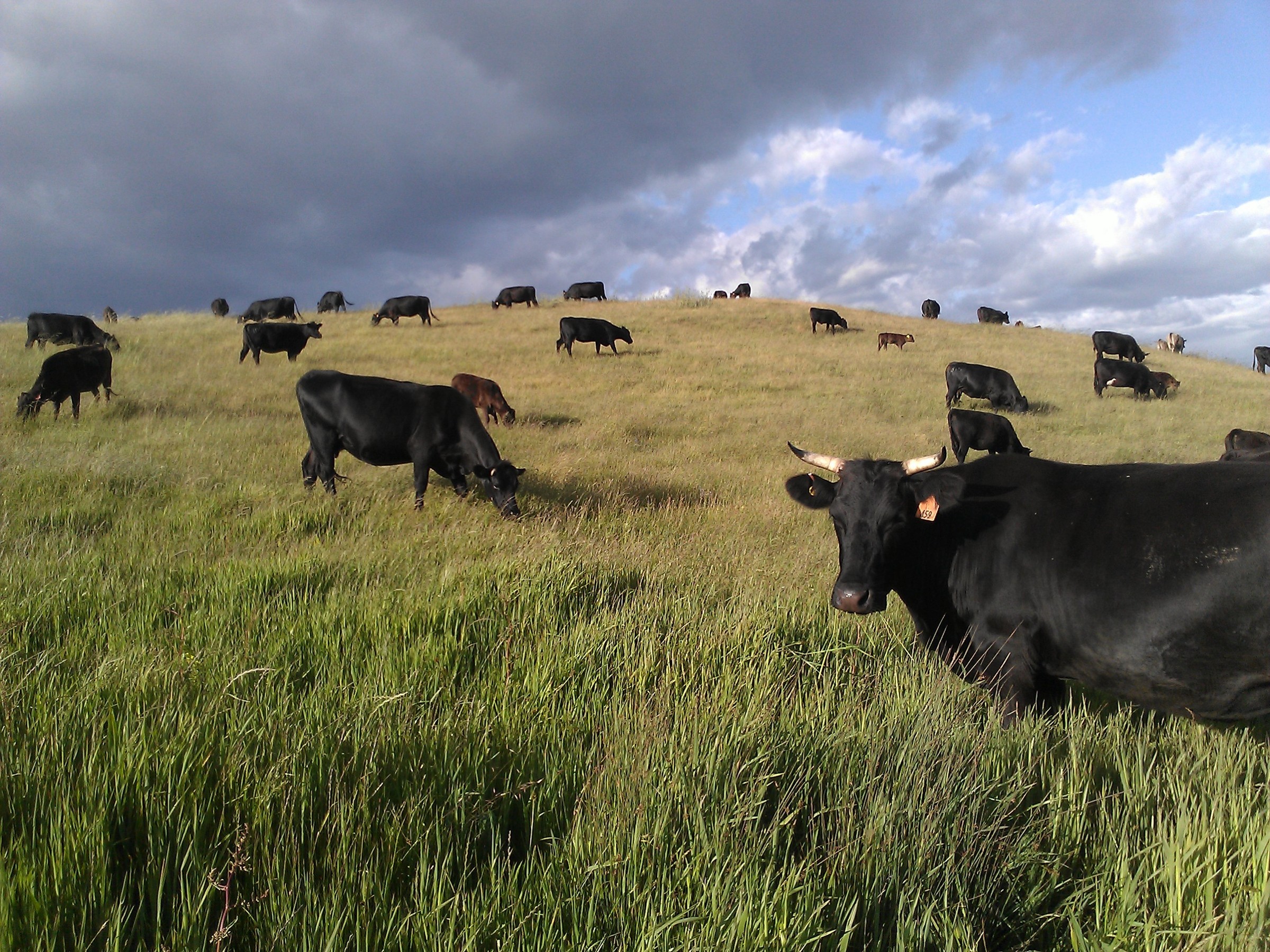 Prime Australian Country for Waygu Beef
Read: ^http://wagyu.une.edu.au/]
Prime Australian Country for Waygu Beef
Read: ^http://wagyu.une.edu.au/]
.
Case Study of Good Rainfall and Sustainable Location
.
Corumbene Brangus Cattle
.
<<At Corumbene Brangus we are dedicated to producing the type of stock that you would be proud to have in your herd. We have taken the time to assess, improve and adapt our breeding herd to the Southern Australian climate and producing cattle of distinction and character that we love.
Our property is situated in the Western District of South West Victoria. We have a high average rainfall of about 30″, with temperature ranging from mid 40’sC (104 Fahrenheit) in summer to low minus in winter. Our pastures are predominately rye and clover kept productive with an extensive pasture renovation and soil conditioning program.
Corumbene Brangus cattle are raised solely on these healthy pastures. Brangus cattle are known for their ability to excel on pasture alone with early finishing and easy fleshing ability no matter what season or time of the year, in all our weather extremes. We calve down during Spring (August-October) each year.>>
.
[Source: Corumbene Brangus, ^http://www.corumbenebrangus.com/cattle.htm]
.
Observations about MLA’s herded strategy for Northern Australia
.
1. Putting all cattle into a single export market to Indonesia is poor strategy – remember that proverb, don’t put all your eggs in one basket – what action has been taken to develop other export markets?
2. Indonesia has long indicated to Australia that it is breeding towards self-sufficiency in its own live cattle supply, so the decrease in live cattle demand was on the cards, to eventually dry up.
3. Northern Australia’s drought and flood cycle is not new. Farmers must have been aware of the likelihood of drought following the floods of the past four years, so why risk excessive stock?
4. Poor quality control of live export to ensure Australian standards were being met was slack. The strategic risk of discovery of cruel abuse of cattle by an Indonesian abattoir was high. So given that risk, the Meat and Cattle Association (MLA) should have been proactive and diligent in ensuring such abuse was not possible. When abuse is systemic it is only a matter of time before it would be publicly exposed. And the likely consequences of a trade shut down would be been reasonably forseeable.
5. Aside from the above live export has an ongoing record or cruelty and abuse under industry self regulation. So it is always going to be high risk from a social stakeholder perspective. Those who live by the sword…
6. In Australia, in any industry – media, agriculture, mining, forestry- self-regulation never works to the standard expected of Australian society.
.
We have no sympathy for the industry. May the northern Australian cattle industry linked to live trade go bankrupt as it morally deserves.
.
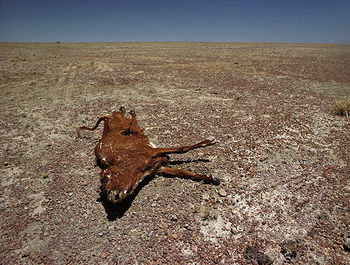 Once a farmer can inflict such upon his stock, he possesses such evil to do so the same to his children
Criminal bastardry deserves criminal justice.

<<She won’t mind if the place we stand is marked by ash.
She believes what doesn’t kill her only takes more time to kill her.
Then she smiles as she paints her lips and does her lashes.
Stunning as a taxidermy victim in a silver cage.
I’m arrested by an aria brought from the country.
Stuck in dumb amazement like a dog who’s told to levitate.
This smash number-one goes to her lover in the belfry,
Singing like a bird in flames and headed for the window pane.
In the coming years, let’s try and milk a fortune off them.
I think we’re qualified by now.
Alouette, gentille alouette.
Head to toe so thoroughly until we’re both dismembered.
Alouette, gentille alouette.
Naá¯ve, yes, but none the worse, spinning glue back into horses.
I’ll never leave the place where you are.
Hand-in-hand into a rented car.
Merrily into the abattoir.
Spilling out all over, I’ll be Noah on the storm.
And two-by-two in love we’ll speed back into bed and never leave it.
In the coming years, let’s try and milk a fortune off them.
I think you’re qualified by now.
Alouette, gentille alouette.
Head to toe so thoroughly until we’re both dismembered.
Alouette, gentille alouette.
Naá¯ve, yes, but none the worse, spinning glue back into horses.
Alouette, gentille alouette.
Head to toe so thoroughly until we’re both dismembered.
Alouette, gentille alouette.
Alouette, gentille alouette.>>
.
[Source: The Pernice Brothers’, Cruelty To Animals’]
.
[Ed: My father’s family heritage was sheep farming in Victoria’s west dry marginal Wimmera and our sheep farming roots extended back to 18th Century England. That tradition ended under tragic circumstances near Stawell in 1942; yet in hindsight, subsequent generations of our family are far better for it. Relocating takes more guts than putting up. Honour is more deserving of our future generation; the oldies should understand.]
.
Tags: animal cruelty, Australian Agricultural Company, Australian livestock, Cattle Overgrazing, Egypt, El Niño, Indonesia, Indonesian abattoirs, Indonesian torture of Australian Cattle, Israel, Kuwait, live cattle trade, Marginal Farmer's Pyrite, Meat and Livestock Association, North Australian Pastoral Company, Northern Australian Savannah, Pakistan
Posted in 53 Animal Welfare!, Threats from Farming | 1 Comment »
Add this post to Del.icio.us - Digg
|
|