Archive for the ‘Threats from Bushfire’ Category
Saturday, May 28th, 2011
Valuable fringe bushland of the Central Blue Mountains (BM) is steadily disappearing as a consequence of Blue Mountains (city) Council-approved housing development integrated with the associated hazard reduction burning that it invites.
Blue Mountains Council has become culturally conditioned to automatically squirm and acquiesce when any threat of a State Environmental Court appeal process that may be instigated to dare challenge Blue Mountains Council, despite a fair and rigorous environmental assessment and ruling. Local political pressure is such that now Blue Mountains Council staff are encouraged to give up and bend over, as if so urbane as to be beholden to developer intimidation. Yet for years such has become Blue Mountains Council’s urbane squeamish mindset, as if the staff and management came from overdeveloped Western Sydney (which most of them they have).
There are morally corrupt politics controlling land use development in the Blue Mountains ~ many are receiving a cut of perceived cheap, yet increasingly scarce, bushland habitat.
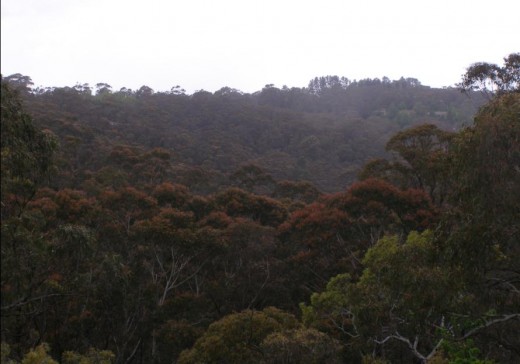 Thick natural bushland habitat just west of Katoomba
Central Blue Mountains Region.
New South Wales, eastern Australia. Thick natural bushland habitat just west of Katoomba
Central Blue Mountains Region.
New South Wales, eastern Australia.
.
.
Case in point:
.
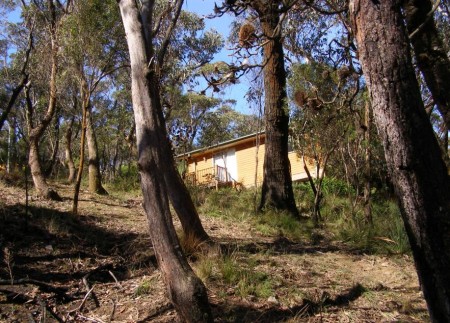
Not so long ago, Blue Mountains Council approved this cypress pine cottage be built in/abutting thick timbered bushland on a west facing slope downwind of the prevaling westerly winds.
Bushfire risk mapping rated the site as ‘extreme’ bushfire risk, yet the cypress pine cottage got built. The builder/developer has long since profited and so moved on, leaving behind a bushfire vulnerable cottage on a site that should never have been built on in the first place.
But try telling a pro-development council that a property owner can’t develop his/her land!
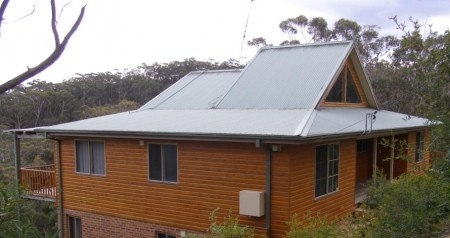 The cypress pine cottage, 2008
. The cypress pine cottage, 2008
.
The site was purchased in/abutting dense wooded bushland, which was slashed and bulldozed. Down from the house, around a dozen mature native trees were chainsawed to provide for escarpment views to the west.
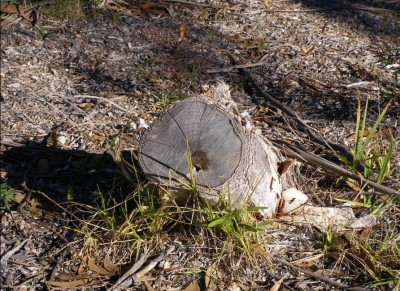 One of the chainsawed native trees
. One of the chainsawed native trees
.
The property has since been sold. Yet, the issue of a cypress clad cottage being approved in extreme fire risk bushland was raised with Blue Mountains Council’s senior development officer, Lee Morgan, on 25-Feb-2009 (Council ref. Customer Service Request #106889). But there was no response.
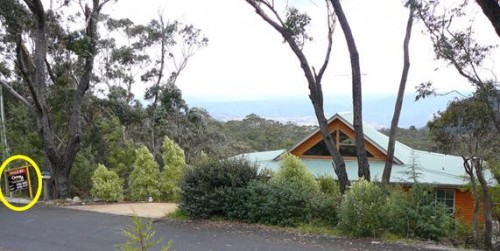 The cottage was sold in 2008…with views
…less the dozen chainsawed Eucalypts to make way for the views. The cottage was sold in 2008…with views
…less the dozen chainsawed Eucalypts to make way for the views.
.
It is typical of Blue Mountains Council’s planning approvals that they encourage development encroachment on the fringe bushland which separates the Blue Mountains National Park from the townships of the Central Blue Mountains.

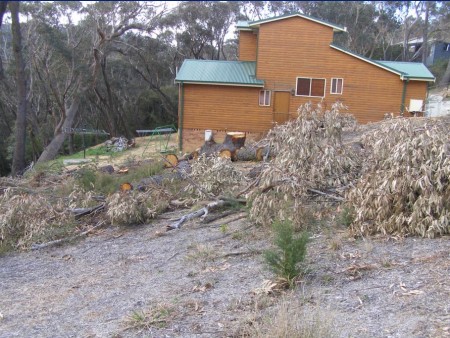 A nearby cottage of remarkably similar cypress pine cladding
has surrounding trees chainsawed and the vegetation slashed to bare earth. A nearby cottage of remarkably similar cypress pine cladding
has surrounding trees chainsawed and the vegetation slashed to bare earth.
.
.
Then comes the ‘hazard’ reduction
.
Housing development encroachment is being wedged deeper into fringe bushland, closer to the Blue Mountains National Park, many seeking the profit that escarpment views bring. The sites are indefensible against bushfire. Many are zoned extreme bushfire risk, yet these bush houses received Council building approval.
The Rural Fire Service (RFS) calls for hazard reduction because, with just its truck resources, it would not have access to defend these houses in the event of a serious bushfire. Co-incidentally, the property owners (developers) now cry for RFS hazard reduction to protect their ‘assets’ from the risk of bushfire. Co-incidentally, many property owners (developers) in the vicinity who have these new bush houses do the same.
Of course, to the fire-lighting cult, this is music to their ears and so the Rural Fire Service in cohorts with Blue Mountains Council rustled up a hazard reduction certificate. In September 2008, Blue Mountains Council’s Bushfire Technical Officer, Peter Belshaw, issued a Hazard Reduction Certificate for over 11 hectares of bushland and escarpment heath across Bonnie Doon Reserve to be burnt under a ‘hazard’ reduction programme. Click on image below for details.
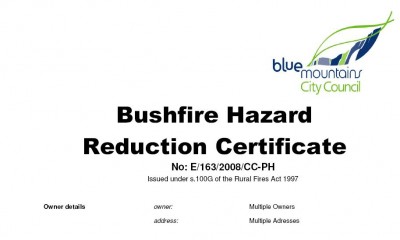 Click image to open PDF document Click image to open PDF document
.
Earlier that year in mid February (2008), some seven months prior, slashing of heathland and a watercourse had been carried out by a Rural Fire Service contractor in preparation for the hazard reduction burning ~ the fire-lighters just couldn’t wait.
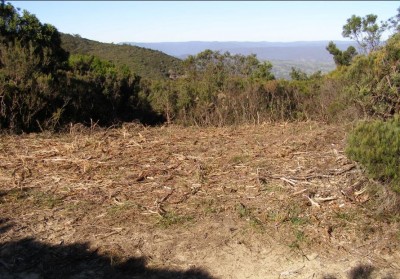 Blue Mountains escarpment is slashed by the RFS, a kilometre west of the cottage site. Blue Mountains escarpment is slashed by the RFS, a kilometre west of the cottage site.
.
.
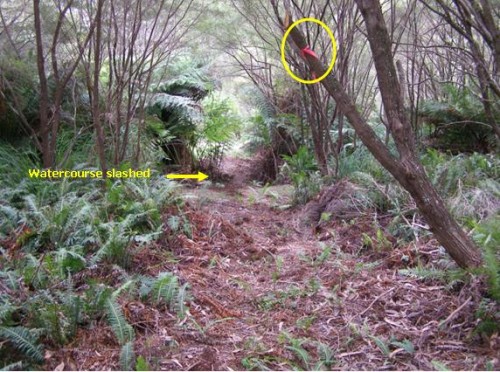 The RFS contractor slashed a trail for over 700m through heathland and through a riparian zone,
even before the Hazard Reduction Certificate was issued.
.
The RFS contractor slashed a trail for over 700m through heathland and through a riparian zone,
even before the Hazard Reduction Certificate was issued.
.
Then comes the intense HR burning:
.
Three years hence, mid afternoon on Friday 11th February 2011, smoke can be smelt and seen rising to the west on the horizon near Bonnie Doon Reserve. A call to emergency ‘000’ confirms that it is not a bushfire, but that official hazard reduction operations are underway. It is still well within the bushfire risk season.
.
Bonnie Doon Reserve is a natural wild area of about 22 hectares that includes a mix of bushland, heathland and upland swamp situated on the Blue Mountains escarpment at the western fringe of the township of Katoomba. It lies above Bonnie Doon Falls. The area is zoned ‘community land’ and ‘environmental protection’ and comes under the control and custodianship of the Blue Mountains Council. Bonnie Doon Reserve has a history of volunteer bushcare to conserve the still wild Blue Mountains escarpment habitat. The reserve is immediately upstream of the endangered Dwarf Mountain Pine (Microstrobos fitzgeraldii) and Leionema lachnaeoides (yellow flowering shrub) found almost nowhere else on the planet. The habitat conservation of both species, particularly the exclusion of fire are considered critical to their survival as a species.
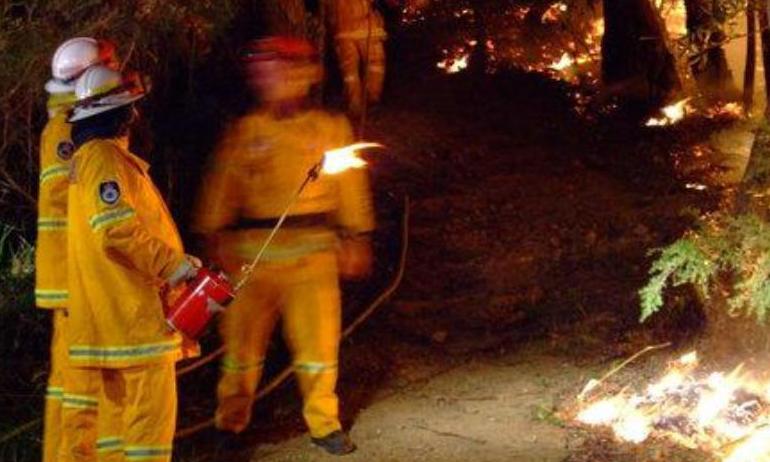
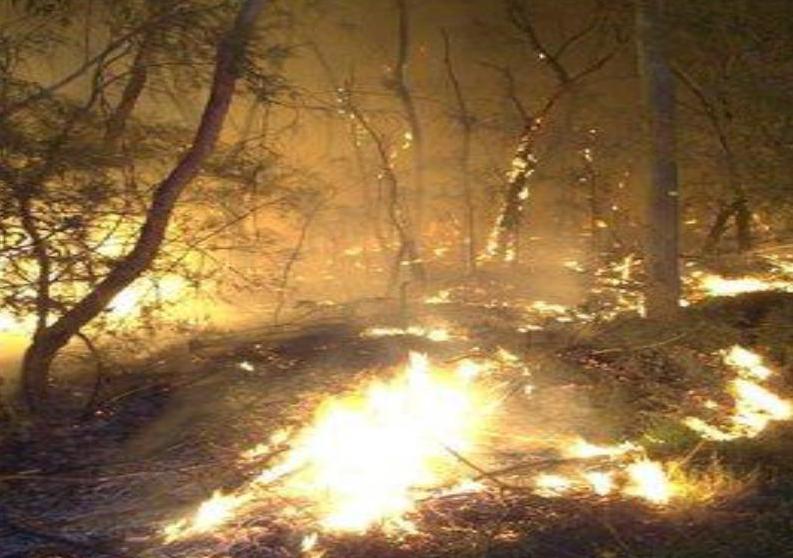
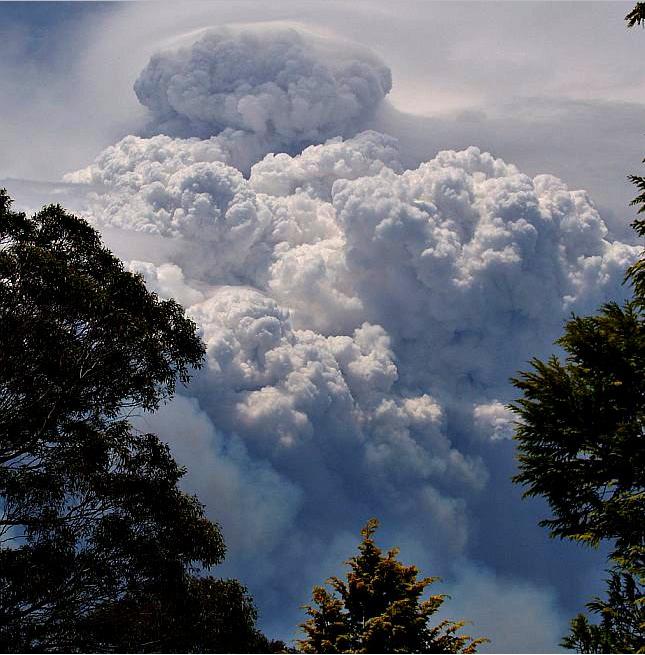
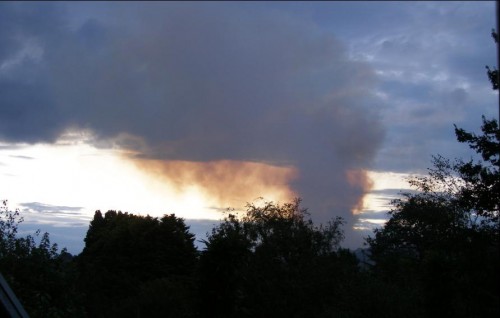 The ‘hazard’ reduction (HR) burning commences The ‘hazard’ reduction (HR) burning commences
.
From a distance of about two kilometres, I can see the smoke billowing strongly and its lasts for over two hours. The direction of the smoke places it around Bonnie Doon Reserve. The strength and density of the smoke indicates that it is more than light burning of ground cover. It is an intense but localised fire.
.
The aftermath of the burning:
.
We have our suspicions, but with other commitments we can’t get around there for some time to investigate the location affected to determine the scale and severity of the burning. In fact it isn’t until nearly three months later on Sunday 1st May 2011, that we inspect the burnt site. The fire was localised.
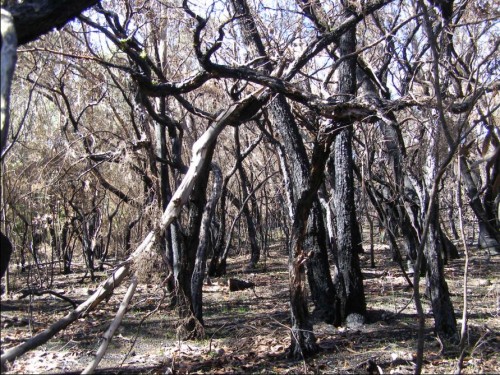 The aftermath
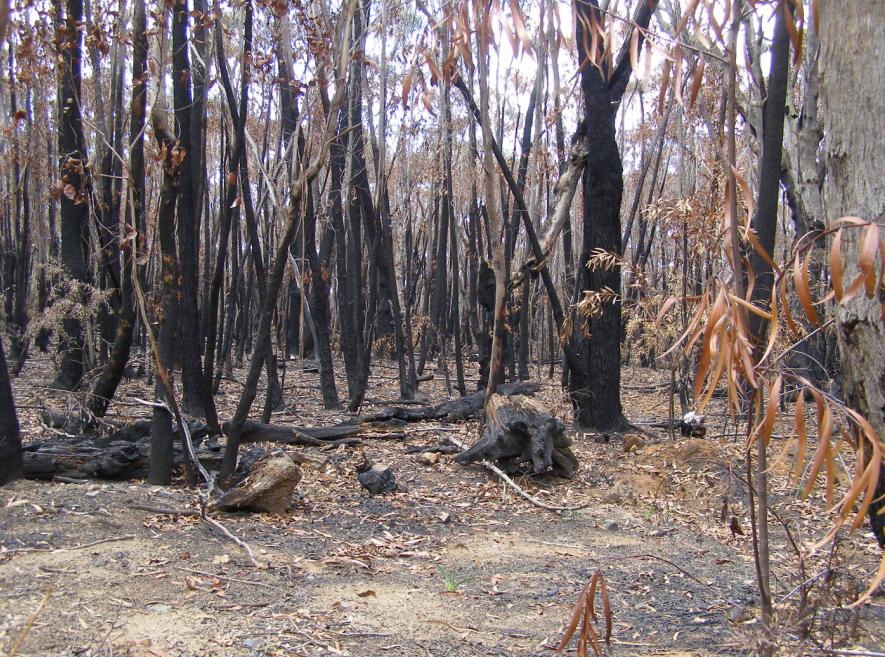
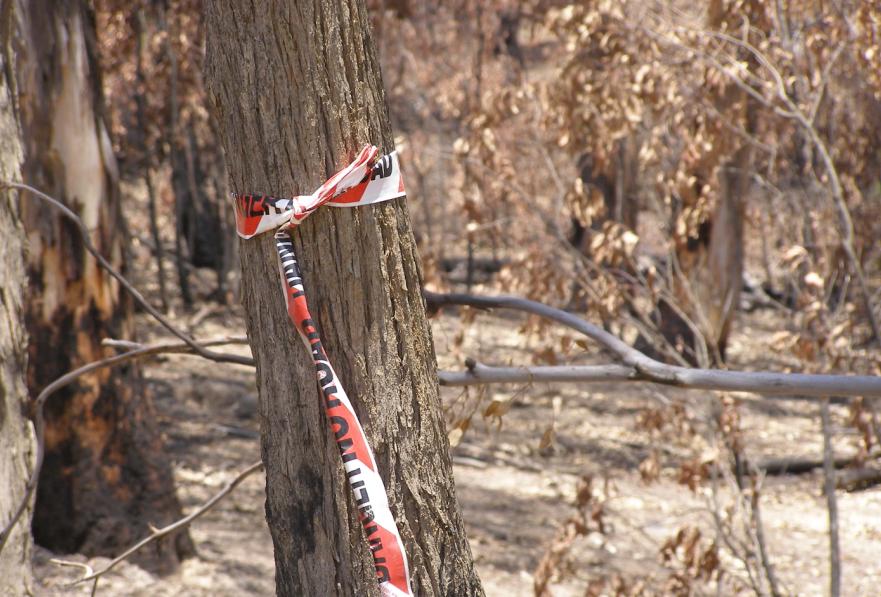
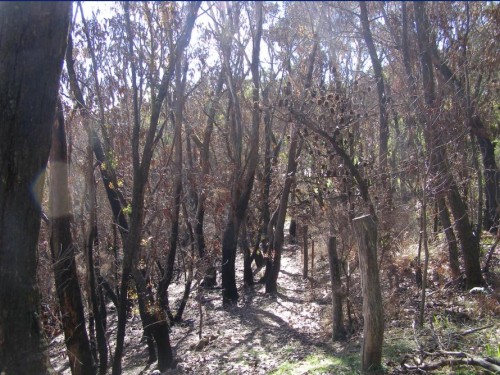
Three months on, evidence of more than just ground-cover has been burnt.
Deliberate intense burning has been allowed to penetrate deep into mature Eucalypts The aftermath
Three months on, evidence of more than just ground-cover has been burnt.
Deliberate intense burning has been allowed to penetrate deep into mature Eucalypts
.
.
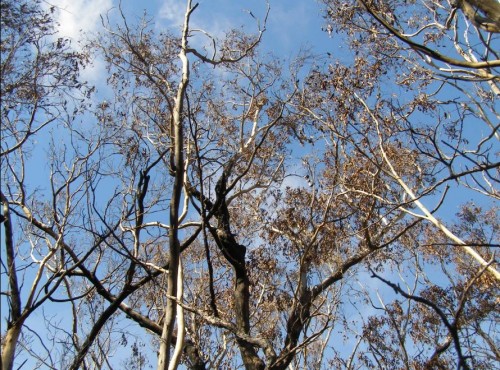 The fire was so intense that the flames reached into the tree canopy.
It must have been a blaze and half for RFS fire-lighters. The fire was so intense that the flames reached into the tree canopy.
It must have been a blaze and half for RFS fire-lighters.
.
.
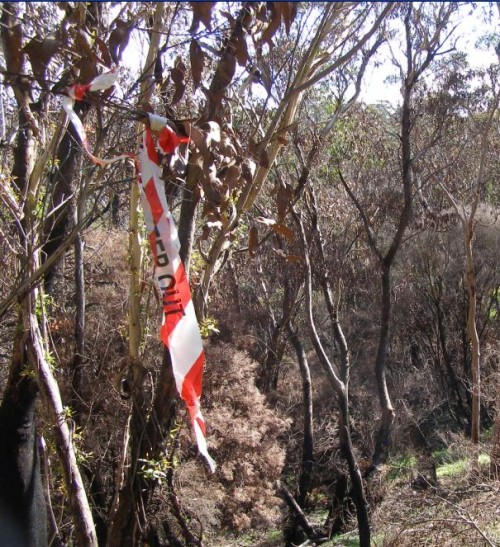 RFS telltale
. RFS telltale
.
The fire was indeed localised. It is very clear, still three months on, that this ‘hazard’ reduction burn had specifically targeted the native bushland surrounding the cypress cottage – an area of perhaps two hectares.
Consequence:
So not only has the developer of the cottage site completely destroyed the bushland on the site, but he has succeeded in having an additional two hectares burnt in the process all associated with the one cottage. Council’s initial approval of the cottage construction has directly led to the destruction of two hectares of what began as intact native bushland. The developer has profited from the bush, but in the process the ecological cost has been ignored ~ it is a perpetuation of a 19th and 20th Century single bottom line exploitation of the natural environment. It is happening across the Blue Mountains and being encouraged by Blue Mountains Council rules, practices and attitudes.
.
 The cottage relative to the HR burn (aftermath) The cottage relative to the HR burn (aftermath)
.
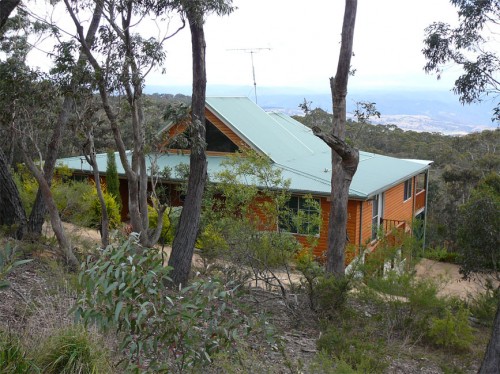
The cottage now with great views, plus an extra 2 hectares of cleared bush done cheap
Blue Mountains (city) Council making bushland-fringe development cheap
.
The ‘hazard’ reduction certificate process has become an insidious part of the development process across the Blue Mountains. The catalyst that is Council’s lax bushland protection zoning, is facilitating fringe deforestation. The combination of Council’s housing approvals on bush blocks with its ‘hazard’ reduction approvals have become a self-perpetuating twin mechanism for incremental encroachment into Blue Mountains fringe bushland, and it shows no sign of stopping.
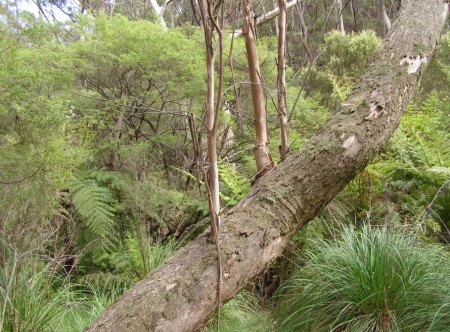 Bushland habitat at Bonnie Doon at risk of further burning Bushland habitat at Bonnie Doon at risk of further burning
.
Hazard reduction has become a cosy win-win-win-win outcome for all collaborators: (1) the builder/developer who profits, (2) the real-estate agent who get the sales commission (first when the bush block is sold, then again when the house is sold with views), (3) Council which earns developer charges in the short term and an expanded rate revenue base over the long-term, and (4) the RFS fire lighters who have become more adept and occupied lighting bushfires than putting them out.
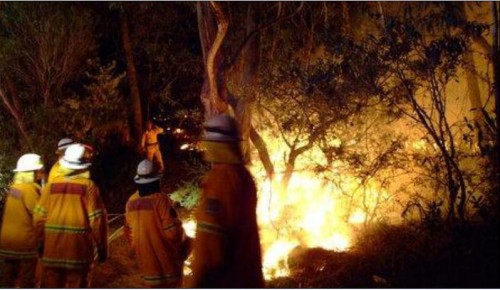 Fire-lighters look on during the Hazard Reduction Burn, Bonnie Doon Reserve Fire-lighters look on during the Hazard Reduction Burn, Bonnie Doon Reserve
.
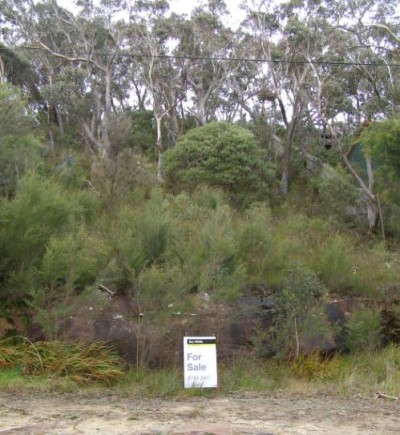 More bushland for sale
~ a ‘lose-lose’ outcome for native habitat and the remnant disappearing wildlife is supports.
More bushland for sale
~ a ‘lose-lose’ outcome for native habitat and the remnant disappearing wildlife is supports.
.
An harbinger of more burning for Bonnie Doon:
.
Of the eleven odd hectares of the 22 ha Bonnie Doon Reserve targeted by the RFS for slashing and burning on the hazard reduction certificate, nine hectares of bushland and escarpment heathland still stands to be burnt, which could happen anytime.
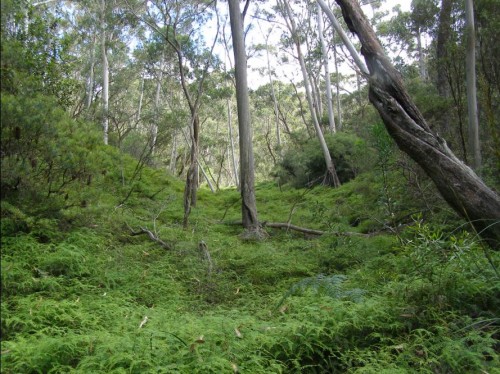 Bonnie Doon Reserve
on the western fringe of Katoomba township Bonnie Doon Reserve
on the western fringe of Katoomba township
(click photo to enlarge)
(Photo by us, so free in public domain)
.
– end of article –
.
 Blue Mountains escarpment is slashed a kilometre west of the house site Blue Mountains escarpment is slashed a kilometre west of the house site
, in preparation for over 11 hectares of buring Bonnie Doon Reserve
Tags: Blue Mountains City Council, Blue Mountains National Park, Blue Mountains World Heritage Area, Bonnie Doon Reserve, bush block for sale, bush fringe development, bush profits, bushland housing, Dwarf Mountain Pine, extreme bushfire risk, hazard reduction, hazard reduction certificate, housing encroachment, Leionema lachnaeoides, Microstrobos fitzgeraldii, property development, real estate land sales, Rural Fire Service, slashing
Posted in Blue Mountains (AU), Threats from Bushfire, Threats from Deforestation, Threats from Development | No Comments »
Add this post to Del.icio.us - Digg
Thursday, May 26th, 2011
[The following article has been borrowed from a section of a previous article on this website: ‘Blue Mountains copping government-arson‘, since this important message has ramifications beyond the natural areas of the Blue Mountains].
.
– – – – – –
.
.
From the frying pan…
.
When bushfire management can contrive no other excuse for setting fire to native vegetation, like when native vegetation is many miles away from human settlement and so poses no direct threat; out comes a concocted academic theory called: ‘ecological burning ‘. Over how many beers?
When those in whom our community trusts to put out bushfires, decide instead to start setting fires to bushland, and descend instantly into a betrayal of that that trust, to whom can our community entrust to put out bushfires? Government has been proven to suck.
What has happened to ecological values of the bush and the sense of urgency to put out bushfires that threaten both it and us?

.
‘Ecological Burn’ Theory
.
- The ‘ecological burn’ theory starts with the premise that because humans have observed that the Australian bush ‘grows back’ (eventually) after a bushfire, it may be concluded that the Australian bush can tolerate bushfires. This hypothesis relies on evidence that selected species of Australian germinate after smoke and fire and the example of epicormic growth of many Eucalypts after fire.
- The deductive fallacy of this theory is that all the Australian bush is bushfire tolerant.
- This deduction is then extended by unsupported assumption that since the Australian bush is bushfire-tolerant, bushfire must be an integral natural process to which the Australian bush has become adapted to bushfire.
- The assumption is then extrapolated to assert that bushfire is indeed beneficial to the Australian bush.
- The assumption is then stretched even further to conclude that without bushfire the Australian bush will be adversely affected.
- The ecological burn theory then prescribes that by burning the Australian bush, whether by natural or unnatural means, the biodiversity of the Australian bush will be improved.
- The deductive fallacy goes further, to suit the motives of the fire-lighters. The outrageous generalisation is made that all the Australian bush must be burnt at some stage for its own ecological benefit.
.
So the ‘Ecological Burn’ mantra has become:
‘Go forth and burn wilderness. It’ll grow back. It’ll do it good.‘
.
.
Habitat ‘fuel’ gone…so it wont burn now!
.
The perverted irrational logic that Australia’s native vegetation has adapted to recover from bushfire is akin to claiming the human body is adapted to recover from injury such as burns. A wound may heal but no-one seeks to be injured in the first place. And not all wounds heal. A third degree burn to more than 50% of a human body is almost a certain death sentence. What percentage of a wild animal’s body can be burnt and the animal still survive? That’s a perverted question for the fire-lighters.
Broadscale hazard reduction is not mosaic patch-work fire. It is not creating a small scale asset protection zone around the immediate boundary of a human settlement. It is wholesale bush arson that is driving local extinctions. Ever wonder why when bush walking through the Australian bush so few native animals are seen these days? Their natural populations have been decimated through two centuries of human harm – mainly poaching, introduced predation and habitat destruction including by human-caused bushfires and human-abandoned bushfires.
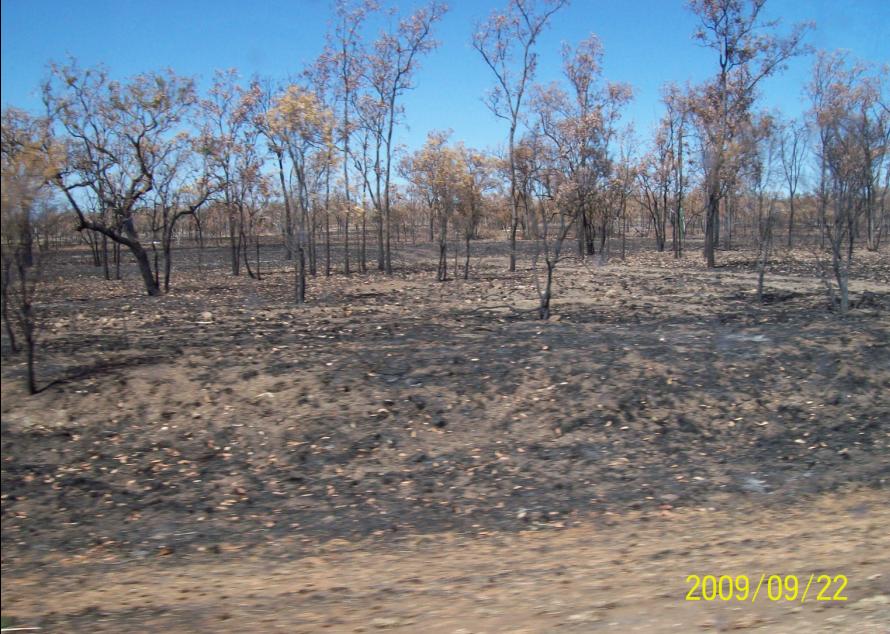
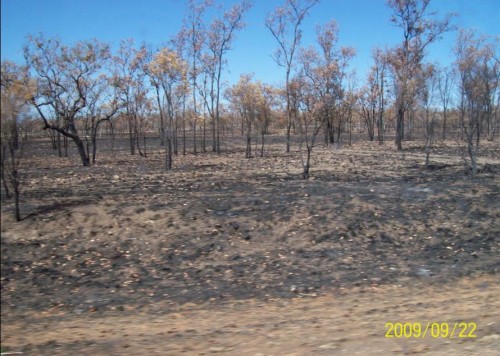 Broadscale incineration of native bushland across northern Queensland
by the Rural Fire Service Queensland.
Habitat ‘fuel’ gone ~ so it won’t burn now! Broadscale incineration of native bushland across northern Queensland
by the Rural Fire Service Queensland.
Habitat ‘fuel’ gone ~ so it won’t burn now!
©Photo by Ann Jurrjens, 20090922.
(click photo to enlarge, then click again to enlarge again).
..
.
.
.
Likely Origins of the ‘Ecological Burn’ myth
.
The concept of the ‘ecological burn’ sounds like the academic contrivance that it is. It is an outpouring from a handful of forestry academics who have successfully sold their consulting services to government under a similarly contrived expertise of being ‘fire ecologists‘ or ‘fire scientists‘. Well, at least ‘garbologists‘ work for a living.
After a major bushfire, an affected and sometimes devastated public cries for answers and the media cash in with their newspaper-selling witch hunt. The responsible government politicians and department directors of the bushfire management deflect accountability away from themselves by instigating a tried and tested ‘bushfire enquiry‘. Those enquiries seek expert evidence and so the ‘fire ecologists’ come out of the woodwork, professing expert insight into the reasons for uncontrolled bushfire and contriving theories for better bushfire management. They invariably proclaim ‘I told you so!
With the frequency of uncontrolled bushfires year after year, there have been so many enquiries across Australia, sufficient to fill bookshelves; each one wastefully gathering dust. Yet with the almost annual disaster recurrence somewhere across Australia, the relevance of ‘fire ecologists’ has morphed fire ecology into an almost full-time occupation – generally on the payroll of the government agencies seeking to justify excuses why they didn’t put out the bushfires in the first place.
The origins of ‘fire ecology’ and to the ‘ecological burn’ theory may be at least traced back to Victoria, an Australian state with perhaps the worst record of bushfire management in the country. During 1999 a series of ‘Fire Ecology Workshops’ were held at Country Fire Authority stations across the state. In that year the ‘Interim Guidelines an Procedures for Ecological Burning‘ was published by Victorian Government’s departments: Natural Resources and Environment and Parks Victoria. References to this and related documents may be found by following the links under References below.
It must have been like an evangelistic mission by these new ‘fire ecologists’, leveraging the common human terror of fire into a way of dealing with that fear once and for all. The final solution would go beyond ‘back-burning‘, beyond the ‘controlled burn‘, beyond ‘hazard reduction‘. It means burning the bush before it burns; but this time on a massive scale, taking the fire-fight to wilderness.
The ‘ecological burn’ theory has gone further. It has brainwashed fire-fighters and natural land managers into believing that burning the bush is indeed good for the bush, good for biodiversity. This is a paradigm cultural shift to a sense of ecological righteousness – by burning the bush you are doing biodiversity a favour. And the fire scientists’ proof of their theory is down to the epicormic growth and the selected native plant species shown to be fire-tolerant, and with that fire-tolerance must be ecologically sustainability. As soon as some green regrowth occurs, they are out taking photos to support and promulgate their theory. ‘Look it grows back’ they claim. Except that these same species that recover from fire have ended up dominating the natural landscape.
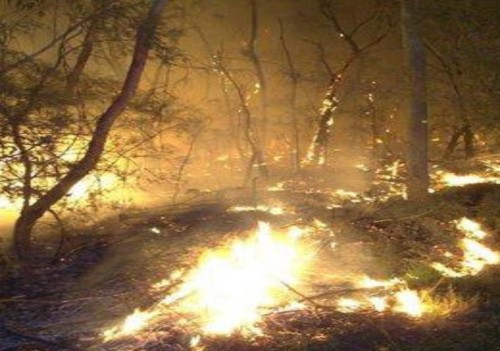 Fire-Lighters’ bliss
.
Fire-Lighters’ bliss
.
‘A Firelighters’ Bliss‘:.
‘a state of profound satisfaction in lighting a bushfire, the equivalent happiness and joy in doing so, a constant pyromaniac state of mind, undisturbed by gain or loss, so long as the lit bush burns fiercely’. i.e. the aroused state of ignition frenzy by either a closet, suspected or convicted bush-arsonist!
.
So forget Aboriginal traditional mosaic burning theory – so passé and so ineffective (below napalm baseline). So the message is officially clear, if you want to avert calamities like Black Friday, Black Saturday and the demonising of the rest of the days of the week, burn the bush in swathes, lest it burn you first. The theory is ecological satanism. It is up there with the Y2K bug. It has led a wholesale conversion of bush fire-fighters into fire-lighters on a grand scale akin to scientology’s hold on young people in the 1970s. It has culminated in an escalation of prescribed burning to an extent well outside any reasonable justification for protecting human life and property from the risk of bushfire. The ‘ecological burning’ extremists evangelise is that burning should be ‘strategic’ and for strategic zones spanning thousands of hectares of wilderness to be targeted for burning. What they avoid problem-solving is why they don’t put out the ignitions in the first place.
‘Ecological fire’ is a myth that has festered into the greatest ‘eco-crime’ in Australia’s history, second only to 19th and 20th Century widespread clear-felling. The ‘ecological fire’ myth is the most devastating driver of man-made extinctions plaguing Australia in the 21st Century.
.
A Test for ‘Fire Ecologists’:
.
Name one case study in Australia published in a peer-recognised scientific journal… in which independent wildlife ecologists have conducted proper before-and-after field tests of fauna-and-flora-biodiversity…where natural (pre-1788) biodiversity has been found to flourish… as a provable result of a broadscale ecological burn!
.
In August 2000, possibly the country’s chief druid of bushphobia, Kevin Tolhurst, produced a report seeking to justify the previous year’s setting fire to most of the Mount Cole State Forest, situated over 20km east of the town of Ararat in Victoria’s central west district. At the time, Tolhurst was part of the School of Forestry at the University of Melbourne.
Part of the report included, Appendix 3: Guidelines for the Ecological Burning in foothill forests of Victoria, in which an overview of the Mt Cole Case Study was provided. Notably, this report is provided not found on the University of Melbourne website, but that of the Department of Primary Industries of Victoria website. Clearly the ‘ecological burning’ concept stems not from preferred prestigious academic credentials, but moreso from politically motivated Primary Industries exploitive expedience.
The primary vegetation types targeted were ‘grassy dry forest’ and ‘herb-rich foothill forest’ which had not been burnt for an estimated 35 years, according the Natural Resources and Environment (Vic) corporate GIS database.
.
Tolhurst’s report states:
“Mt Cole State Forest was selected on the basis of having extensive areas of long-unburnt vegetation. A couple of areas within the forest had already been earmarked for prescribed burning from a fire-protection point of view. Mt Cole is an extensive area of easily defined forest with a wide range (of) vegetation types, ages, uses and values. The landscape management unit used in this example is about 32,000 ha in extent if which about half is forested and the other cleared for agriculture. There is little functional connection between this forest area and any other forest.”
“..The broad ecological management objective for Mt Cole State Forest, as part of the Midlands Forest Management Area is to : ‘Ensure that indigenous flora and fauna and communities survive and flourish throughout the Midlands Forest Management Area.”
…Flora and Fauna Inventory:
“Species found in study area as a result of a ramble survey of approximately 20 minutes at each location.”
.
Clearly, the motive underlying the so-called ‘ecological burning’ was the irrational fire-lighting cult fear of ‘long-unburnt vegetation’ daring to remain unburnt or so long – a symptom of bushphobia. ‘From a fire-protection point of view’ is the real motive and so it was convenient to just set fire to the lot. So some 32,000 hectares of a surviving island of native habitat was torched. After decades of agricultural land clearing Mt Cole State Forest had indeed been sadly reduced to having “little functional connection between this forest area and any other forest.” So why not just wipe the rest off the face the Earth? It probably stood out like a sore thumb coloured red for ‘high risk on ‘strategic’ CFA maps anyway.
And the blanket ‘ecological burn’ would see to it to ‘ensure that indigenous flora and fauna and communities survive and flourish throughout the Midlands Forest Management Area.”
Perhaps, post-burn, a similar 20 minute flora and fauna inventory was conducted in the CFA truck with a few tinnies, playing… ‘first-to-spot-the-first-bloated-blackened-wombat‘.
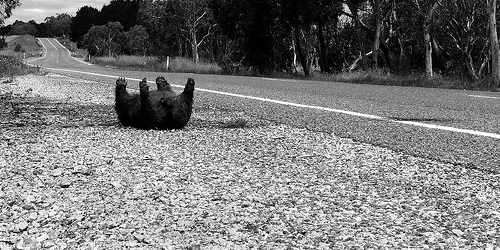 Dead Wombat Dead Wombat
.
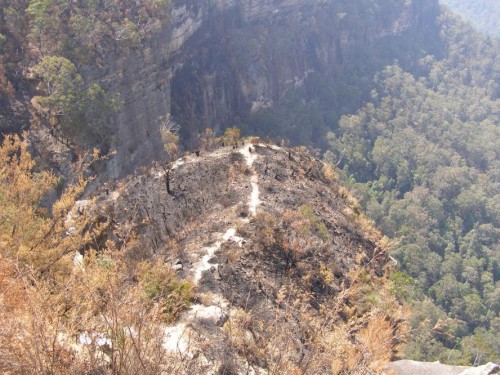
Defacto Hazard Reduction on the Grose Valley Escarpment, 2006
The fragile yet complex and vital soil biota of the escarpment built up over perhaps centuries,
gone after subsequent rain.
Habitat ‘fuel’ gone ~ so it won’t burn now!
(click photo, then click again for zoom details)
[Photo is ours, so free in public domain]
.
.
.
.
References
.
[1] ‘ Management of Fire for the Conservation of Biodiversity‘ – Workshop Proceedings, May 1999, Fire Ecology Working Group (Gordon Friend, Michael Leonard, Andrew MacLean, Ingrid Sieler), Natural Resources and Environment, Parks Victoria, ^ http://www.dpi.vic.gov.au/CA256F310024B628/0/0F55F0F75BFB3FCECA257231000D9F4D/$File/Mgt+of+fire+for+Cons+and+Biodiv.pdf.
.
[2] ‘Appendix 3: Guidelines for the Ecological Burning in foothill forests of Victoria’, Department of Primary Industry (Victoria) website, ^ http://www.dpi.vic.gov.au/CA256F310024B628/0/CC122443185E3E38CA257231001076A7/$File/MgtofCons_MtCole_CaseStudy_p21-27.pdf.
.
* Above references accessed 20110526.
.
.
– end of article –n
Tags: bush arson, bushfire tolerant, dead wombat, defacto hazard reduction, eco-crime, ecological burn, ecological burning, epicormic growth, fire ecologist, fire scientist, fire-lighter bliss, government bush-arson, hazard reduction, prescribed burning
Posted in 36 Tests of Harm!, Threats from Bushfire | 1 Comment »
Add this post to Del.icio.us - Digg
Saturday, May 21st, 2011
Wildlife Service sets fires to another 3000ha of World Heritage bushland
.
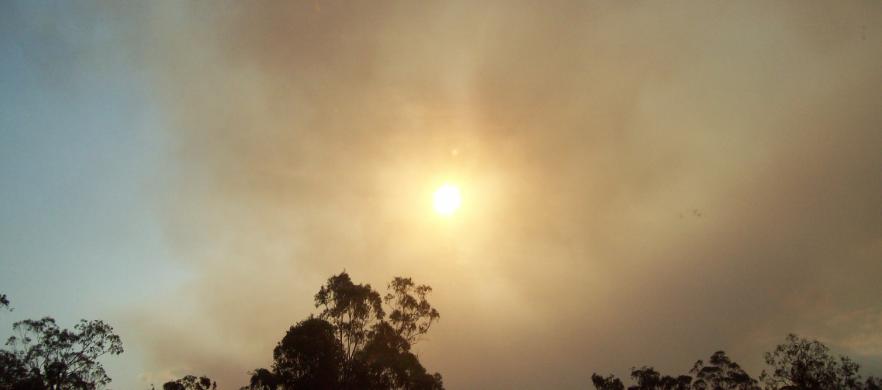
Last Wednesday (18th May 2011) right across the Blue Mountains, thick smoke choked the sky in a eye watering haze. By Friday, an artificial red sunset was blazing through the wood smoke at the end of two days of New South Wales government-sponsored bush arson.
I knew exactly the ecological disaster unfolding, out of sight out of mind.
In its annual misguided winter ritual, the National Parks and Wildlife Service (Wildlife Service), aided and abetted by the Rural Fire Service has deliberately setting fire to remote bushland across The Blue Mountains World Heritage Area – a ‘natural planet asset’ of which the Wildlife Service is international custodian.
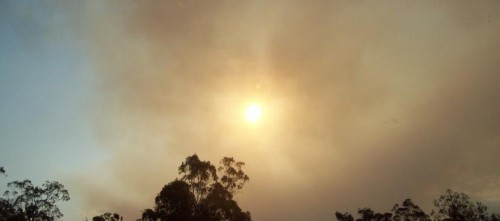
.
Linden Ridge HR Ops (May 2011)
.
On Wednesday afternoon 18th May 2011, the aerial incendiary bombing commenced at Linden Ridge and extended down to the Grose River inside the Blue Mountains National Park (within designated wilderness within the World Heritage Area). Bushfire management euphemistically call it ‘hazard reduction‘ (HR) ; rejecting any notion that bushland habitat is a natural asset, and instead demonising it as a ‘hazard’.
.
Massif Ridge HR Ops (May 2010)
.
The Linden Ridge ‘ops’ follows an almost identical HR ‘ops’ conducted the same time last year on 12 May 2010 in which aerial incendiary ‘ops’ commenced around Massif Ridge some 12 kilometres south of the town of Woodford in wild inaccessible forested area of the World Heritage Area. Some 2500 hectares of high conservation habitat bushland in a protected wilderness area called the ‘Blue Labyrinth’ was indiscriminately incinerated – ridgetops, gullies, everything. Refer to previous article on this website: >’National Parks burning biodiversity‘.
The same Blue Mountains National Park has been targeted by the same aerial incendiary bombing by the same Wildlife Service. Both the operations were carried out under the orders of the Blue Mountains regional manager, Geoff Luscombe.
 This is reducing the ‘hazard’
Click photo to enlarge, then click again to enlarge again and look for anything living.
After a year look for the animals.
After two years look for the animals…. This is reducing the ‘hazard’
Click photo to enlarge, then click again to enlarge again and look for anything living.
After a year look for the animals.
After two years look for the animals….
.
.
.
Gross Valley Defacto HR Ops (Nov 2006)
.
Both the above HR Ops follow the massive conflagration of November 2006, infamously recalled across the Blue Mountains community as ‘The Grose Fire‘. Two abandoned lightning strikes coupled with HR Ops along the Hartley Vale Road and escaping backburns coalesced and incinerated an estimated 14,070 hectares of the Grose Valley and adjoining ridge lands, much of which is designated wilderness. Many consider the actions of the bushfire management response in hindsight to have been a defacto hazard reduction burn. With such an effective elimination of the natural ‘hazard’ that year, as well as the public outrage, HR Ops went quite for four years.

How many animals native to this beautiful Grose Valley suffered an horrific burning death?
How many of their kind have now perished forever from the Grose?
…ask your Wildlife Service at Blackheath!
Charles Darwin in 1836 counted platypus in the area.
.
The perverted rationalisation by bushfire lighting theorists who have infiltrated the Wildlife Service is that the natural bushland, forests and swamps of the Blue Mountains World Heritage Area are perceived not as a valuable natural asset, but as a world ‘hazard’ area to be feared and ‘to be burned in case they burn‘.
These same bushfire lighting theorists have effectively infiltrated, appeased and silenced local conservation groups such as the otherwise very vocal Blue Mountains Conservation Society, the National Parks Association of New South Wales and the umbrella conservation group the New South Wales Conservation Council.
The local conservation movement’s complicity to sanction explicit broadscale ecological harm is a disgraceful and ignoble abandonment of cherished core values, and a breach of duty to faithful environmental membership.
.
.
.
Broadscale indiscriminate ‘HR’ is no different to wildfire or bush arson
The Linden Ridge and Massif Ridge HR Ops were approved and executed by government in the name of ‘hazard reduction’ – to reduce the available ‘fuel’ (native vegetation) for potential future wildfires or bush arson. In both cases, the massive broadscale natural areas burnt were not careful mosaic low intensity burning around houses. This was broadscale indiscriminate fire bombing of remote natural bushland many miles from human settlement. How can the deliberate setting alight of bushland where no fire exists, where no human settlement requires protection from the risk of wildfire be construed but anything other than ‘government-sanctioned bush-arson‘?
.
The ‘Ecological Burn’ Myth
.
When bushfire management can contrive no other excuse for setting fire to native vegetation, such as when that vegetation is many miles away from human settlement and so poses no direct threat, out comes the concocted theory of the ‘ecological burn’. The ‘ecological burn’ theory starts with the premise that because humans have observed that the Australian bush ‘grows back’ (eventually) after a bushfire, it may be concluded that the Australian bush can tolerate bushfires. This hypothesis relies on evidence that selected species of Australian germinate after smoke and fire and the example of epicormic growth of many Eucalypts after fire.
The first deductive fallacy of this theory is that all the Australian bush is bushfire tolerant. This deduction is then extended by unsupported assumption that since the Australian bush is bushfire-tolerant, bushfire must be an integral natural process to which the Australian bush has become adapted to bushfire. The assumption is then extrapolated to assert that bushfire is indeed beneficial to the Australian bush. The assumption is then stretched even further to conclude that without bushfire the Australian bush will be adversely affected. The ecological burn theory then prescribes that by burning the Australian bush, whether by natural or unnatural means, the biodiversity of the Australian bush will be improved.
The deductive fallacy goes further, to suit the motives of the fire-lighters. The outrageous generalisation is made that all the Australian bush must be burnt at some stage for its own ecological benefit. ‘So go forth and burn it. The bush will grow back. It will do it good.’
.
The perverted irrational logic that Australia’s native vegetation has adapted to recover from fire, is akin to claiming the human body is adapted to recover from injury such as burns. A wound may heal but no-one seeks to be injured in the first place. And not all wounds heal. A third degree burn to more than 50% of a human body is almost a certain death sentence. What percentage of a wild animal’s body can be burnt and the animal still survive? That’s a perverted question for the fire-lighters.
Broadscale hazard reduction is not mosaic patch-work fire. It is not creating a small scale asset protection zone around the immediate boundary of a human settlement. It is wholesale bush arson that is driving local extinctions. Ever wonder why when bushwalking through the Australian bush so few native animals are seen these days? Their natural populations have been decimated through two centuries of human harm – mainly poaching, introduced predation and habitat destruction including by human-caused bushfires and human-abandoned bushfires.

The recent concept of the so-called ‘ecological burn’ is a contrivance, a myth. It is a false cause fallacy. Ecological fire a defunct scientific theory contrived by bushfire management engaging unemployed graduates to think up an idea for a PhD. It belongs in the same discarded bucket of defunct scientific theories from days of yore of such ilk as ‘alchemy‘, ‘phlogiston‘, ‘flat earth‘, ‘hollow earth‘ and ‘the birth cries of atoms’ theories. Yup, these were once believed.
[Source: http://www.shortopedia.com/O/B/Obsolete_scientific_theories].
.
The effect on wildlife habitat by broadscale ‘hazard’ reduction is no different than if it was caused by wildfire or bush arson. The hazard to wildlife habitat is the same. The broadscale blanketing of bushland with high intensity burns that reach into the tree tops and scorching ground cover and earth, present the same intense fire regime. The landscape is laid to waste in just the same way as wildfire or bush arson does. Habitat and the wildlife it accommodates become the innocent victims of horrific bushfire, no matter how caused.
There is no wildlife monitoring before, during or after one of these aerial incendiary ‘ops’. Aerial incendiary guarantees no discretion between fire sensitive habitat and fire-resilient habitat. It is a simplistic, convenient a cheap one-size-fits-all solution that re-colours the fire maps to appease political masters. The chopper boys are given their bombing co-ordinates and then do their search and destroy mission. These airborne lads should apply their skills to good and not evil. They should stick to improving their water bombing skills, not participating in this perverted fire-lighting culture.
When the rains follow, the thin yet vital topsoils get washed away into the gullies and streams. This erodes the landscape and prevents regrowth of many flora species due to the lack of vital nutrients. After both the Massif Ridge HR and the Linden Ridge HR, heavy rains did follow.
Only the species of flora adapted to bushfire recover. Fire sensitive species of flora are eliminated from the landscape. Name one species of fauna that is fire tolerant. Where are the zoologists in the Wildlife Service to tell of the impact of the HR? If this mob is providing a ‘service’, it certainly ain’t providing a service to wildlife.
.
.
.
Wildlife Service chief boasts of mass incineration of 92,000 ha of National Parks
.
And the Wildlife Service regional chief for the Blue Mountains region, Geoff Luscombe, in his media release 17th May 2011 boasted of his:
“3000 hectare burn” that “the NPWS carried out more than 92,000 hectares of hazard reduction in 269 burns in 2009/10 – its biggest ever program.”
.
To put this area into perspective, in terms of the Blue Mountains World Heritage Area of about 1 million hectares, such a hazard reduction programme over a decade would decimate the Blue Mountains completely. And they call themselves a ‘Wildlife Service’?
Once again thousands of hectares of pristine flora and fauna habitat in deep inaccessible terrain, miles from houses and human property, has been incinerated from the air using contracted aircraft dropping indiscriminate aerial incendiaries. If only these boys had napalm!
Luscombe confirms in his media release…
“An aircraft will be used to manage the burn as most of the burn will take part in remote areas of the Blue Mountains.”
.
This incineration of natural wildlife habitat is justified by the Wildlife Service as ‘strategic‘ and ‘hazard reduction‘ operations are one of many being conducted by NPWS around the state making the most of the dry sunny winter conditions. This burn is part of the NPWS annual fire management program.
Luscombe again:
…“reducing the volume of fuels within strategic areas of the Park, can assist in limiting the intensity and rate of spread of a wildfire in the area.”
.
Then on Friday 20th May 2011, vertical plumes of smoke were seen rising from Cedar Valley south of the Jamison Valley ~ another one of these secret HR aerial incendiary black ops that the public is not supposed to know about? No notice on either the Blue Mountains Rural Fire Service site or the Wildlife Service site. Out of sight, out of mind.
.
.
.
‘Strategic Fire Management Zones’ – a symptom of a bushphobic cult out of control
.
Under the Blue Mountains Bushfire Management Committee which governs the Blue Mountains region, ‘environmental assets’ are restricted to “threatened species, populations and ecological communities and Ramsar wetlands, locally important species and ecological communities, such as species and ecological communities especially sensitive to fire.”
So how does aerial incendiary discriminate when setting fire to a contiguous 2500 hectares or 3000 hectares of wilderness?
Answer: It doesn’t , it doesn’t seek to, it doesn’t care. The guidelines are only to keep the greenies happy. It’s called ‘greenwashing’.
The Wildlife Service in its official Fire Management Strategy, has relegated 97.7% of the Blue Mountains National Park into either what it calls ‘Strategic Fire Advantage Zones’ or else ‘Heritage Zones. In essence, heritage Zones are valued natural areas that are protected from fire, whereas the Strategic Fire Advantage Zones are expendable. The Wildlife Service proclaims that …due to the ‘relative lack of practical fire control advantages’ (lack of access and resources), Strategic Fire Management Zones are ‘managed’ to protect community assets… to reduce fire intensity… assist in the strategic control… to contain bush fires and to strengthen existing fire control advantages.
All of which simply means is that it is expendable and can and should be burnt in case it burns. Strategic Fire Management Zones ‘are considered priority for ‘treatment‘ – read targeted for broadscale indiscriminate aerial incendiary. So 2500 hectares of wilderness around Massif Ridge copped it last winter and 3000 hectares of wilderness around Linden Ridge copped it this winter. If it’ red on the fire map, burn it!
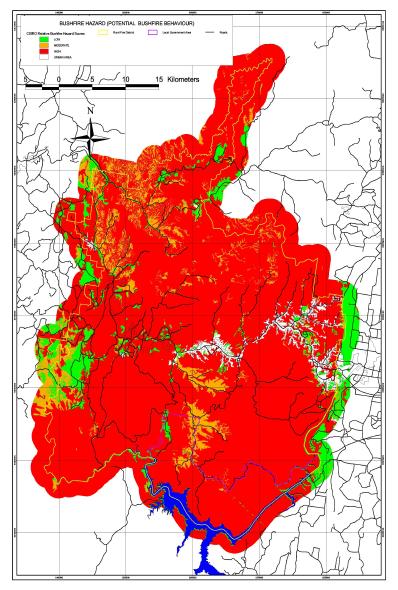
What do these ecological vandals get up to deep in the wilderness at night with their matches and petrol drip torches out of the direct view of the public? They put up signs to deny public access to their nefarious activities. Out of the public view, they are out of sight out of mind.
A cult is a group whose beliefs or practices are considered abnormal or bizarre. Starting large bushfires would seem to fit that definition. Fire-lighting is a cult of ecological deviance, just like any form of arson.
.
.
Precautionary principle ignored
.
“Where there are threats of serious or irreversible environmental damage, lack of full scientific certainty should not be used as a reason for postponing measures to prevent environmental degradation.” [Source: Principle 15 of the Rio Declaration (1992)] Such is the internationally agreed precautionary principle which Australia has adopted as a guiding principle of environmental management. The National Strategy for Ecologically Sustainable Development (1992) adopts the precautionary principle as a “core element” of ESD as does the Inter-Governmental Agreement on the Environment, and the Wildlife Service is supposed to be bound by it in its management of National Parks.
The Wildlife Service once a trusted upholder of the science-based ‘precautionary principle‘ has of late succumbed to the more red neck bushphobic fear of the bush. What the general public hears about the Wildlife Service these days is its broadscale fire bombing of vast areas of vegetation in its ‘protected’ National Parks. This is confirmed these days by the wood smoke-filled air choking many communities and responsible for unknown volumes of smoke emissions contributing to net human-caused pollution to the planet – what many call ‘climate change’.
In the Wildlife Service’s Plan of Management for the Blue Mountains National Park the only reference to the precautionary principle is “Maximum levels of total commercial recreational use in the park will be set for particular activities and particular locations according to precautionary principles.” (p.84) In its Fire Management Strategy for the Blue Mountains, the only reference to the precautionary principle is “the precautionary approach will generally be applied in the absence of specific information.” (p.53)
Clearly the Wildlife Services respect for the precautionary principle is tokenistic, and wholeheartedly disregarded with its use of aerial incendiaries. The Blue Mountains delicate ecosystems are vulnerable to the indiscriminate fire regimes being imposed upon them. The burning into the tree canopy, the broadscale contiguous burning, the scorching of the landscape until bare earth can be seen is highly damaging to the many micro ecosystem across the Blue Mountains. When such burning occurs what happens to the micro-organisms, fungi species and the natural soil biota?
.
” Much hazard reduction is performed to create a false sense of security rather than to reduce fire risks, and the effect on wildlife is virtually unknown.”
~ Michael Clarke (Associate Professor, Department of Zoology, La Trobe University, 2008)
.
.
.
.
A discredited Wildlife Service
.
The once trusted and respected Wildlife Service has lost its conservation way. It now spends more time, money and training on burning fragile ecosystems in its National Parks and exploiting those same parks for tourism exploitation, than it does on wildlife habitat rehabilitation. Sydney’s Taronga Zoo has become far more active and valuable in its urban wildlife recovery programmes than the Wildlife Service is in the wild.
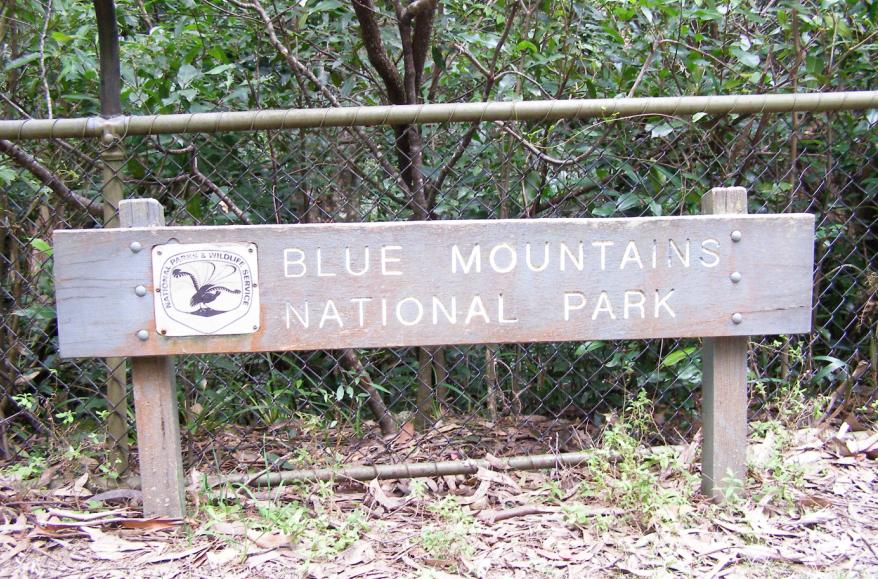
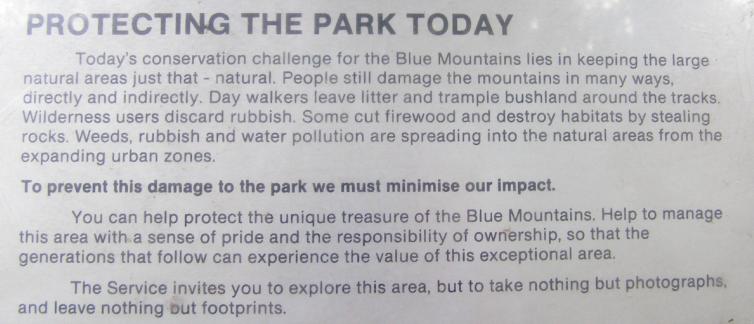
At the carpark above Katoomba Falls within the Blue Mountains National Park, a rather old and deteriorating sign put up by the Wildlife Service years ago, conveys a conservation message to park users. The last two sentences are particularly poignant in light of the massive scale of broadscale bush arson repeatedly being inflicted by the protectorate of the National Park – the Wildlife Service. If only the Wildlife Service would “leave nothing but footprints” and follow its own maxim.
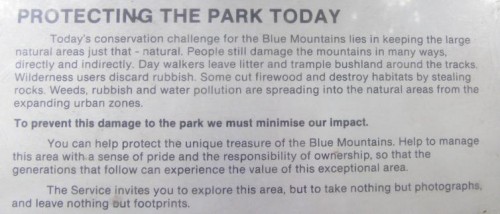
Indiscriminate bush arson of remote bushland in a National Park shows that the Wildlife Service has descended into a predatory wolf in sheep’s clothing. It’s management cannot be trusted with its custodial responsibility to protect the unique treasure of the Blue Mountains.
Once I had a desire to embark on a career as a National Parks Ranger. Had I, in the end, I would have morally wrestled with the hypocritical politics and lasted less than the initial probationary period. I empathise with those who hold a personal commitment to ecology and environmentalism within the Wildlife Service.
.
.
.
The key drivers of the ‘HR Culture’
.
The perverted and unquestioned rush to set fire to as much bushland as possible across the Blue Mountains and indeed across Australia is being driven by five cultural factors:
- ‘Ecological Fire’ Myth. (as described above) Certain ”fire ecologists’ (a self-described term for many seeking to make this a lucrative profession) who are funded by bushfire management agencies, not surprisingly have conjured the academic theory that burning the bush is good for it because it increase biodiversity – just what bushfire management with their cheque book want to hear! They have conjured the term ‘ecological fire‘, which as a euphemism sounds good, so it must be good. So those setting fire to the bush may have no moral qualms. Crap. Show me any native fauna that proliferate after fire – ‘ecological’ or otherwise!
- Under-Resourced. Bushfire management is being repeatedly denied the necessary resources and technologies to quickly detect, respond to and suppress bushfore ignitions as and when they do occur, so there is a mindset of futile frustration that nothing can be done to stop bushfires frequently getting out of control.
- Bushphobic Extremists have become effective in their fear campaign to influence natural land managers, politicians and the media in their one dimensional theory that if bushland is not burnt to remove ‘fuel loads’ catastrophic firestorms will inevitably bring forth Armageddon. They preach that only the wholesale removal of forests will prevent wildfire. (Replacement with concrete would prevent it too.) Their constant evangelising reaches such irrational hysteria, that in order to appease them, HR Ops are promised and executed just to keep them at bay.
- False Sense of Security. ‘Much hazard reduction is performed to create a false sense of security’ (James Woodford, 8-9-2008). But how is burning remote bushland many kilometres from the human interface, allaying human security concerns? Yet hazard reduction is known to directly cause a sharp increase in fuel loads due to an unnaturally high and uniform germination of understory plants.
- Winter Idleness. Fire fighting naturally quietens off during the cooler wetter month of winter, and since Australian bushfire management agencies in the main only do bushfire management rather than throw on an SES jacket, multi-task in complimentary emergency management; many bushfire agencies are perceived (rightly or wrongly) as being idle over winter. So HR gives ’em all something to do!
.
.
.
The Wildlife Service must ‘love the smell of napalm (and smoke) in the morning’
.
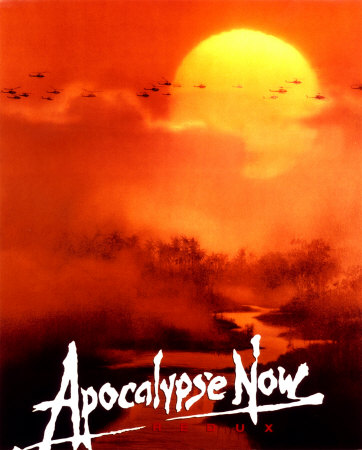
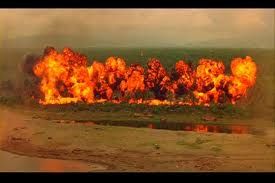
The Wildlife Service undertaking these remote HR Ops, sending in the airborne firelighters, must be like watching the Huey helicopter beach attack scene in Francis Coppola’s 1979 film Apocalypse Now, based on Joseph Conrad’s novel ‘A Heart of Darkness’. Colonel Kilgore in his black Confederate cowboy hat shouts:
“We’ll come in low out of the rising sun, then about a mile out we’ll put on the music; scares the hell out of the slopes.”
Richard Wagner’s “Ride of the Valkyries” is played and the boys play war games with real aircraft and real fire and causing real death and destruction.

A giant napalm strike in the nearby jungle dramatically marks the climax of the battle. Kilgore exults to Willard, “I love the smell of napalm in the morning… The smell, you know that gasoline smell… Smells like … victory”, as he recalls a battle in which a hill was bombarded with napalm for over twelve hours.

The Wildlife Service aerial incendiary boys must think of themselves as Special Forces. Perhaps there is a Colonel Kurtz among them – like an insane killer operating deep inside Laos. Kurtz’ final lines in the film are “The horror! The horror!” How comparable with what is happening deep inside Australia’s wilderness areas, out of sight out of mind? …with extreme prejudice!

How comparable is the US secret war fire bombing of Vietnam, Cambodia and Laos during the Vietnam War with the out of sight fire bombing by the Wildlife service of vast areas of Australia’s natural landscape?
The legacy of the Wildlife Services’ aerial incendiary campaigns deep inside National Parks will be one remembered for fire bombing wildlife habitat from once natural and densely vegetated into a one unnatural, sterile and ghostly quiet.
When it is too late, hazard reduction will be acknowledged by our children as naiive threatening process of our generation that drove Australia’s remaining wildlife into extinction.
.
.
Further Reading:
[1] ‘ Catering for the needs of fauna in fire management: science or just wishful thinking?’ by Michael F. Clarke, Wildlife Research, Vol. 35 No. 5 Pages 385 – 394, Published 19 August 2008, ‘Ecological fire management in Australia is often built on an assumption that meeting the needs of plant species will automatically meet the needs of animal species. However, the scarcity of..’. ‘Wildlife Research: Ecology, Management and Conservation in Natural and Modified Habitats’, a CSIRO Journal, ISSN: 1035-3712, eISSN: 1448-5494, Available for subscription at http://www.publish.csiro.au/index.cfm
[2] ‘ The dangers of fighting fire with fire‘, by James Woodford, Sydney Morning Herald, 20080908, p.11, http://www.smh.com.au/news/opinion/the-dangers-of-fighting-fire-with-fire/2008/09/07/1220725850216.html (Accessed 20110523).
-end of article –
Tags: aerial incendiaries, applied ecology, blue labyrinth, Blue Mountains National Park, Blue Mountains wildlife, Blue Mountains World Heritage Area, bushfire myth, bushfire tolerant, bushphobic, conservation biology, ecological burn, fire-lighting cult, fuels, government bush-arson, greenwashing, Grose Valley Fires 2006, hazard reduction, heritage zone, koala extinction, leave nothing but footprints, Linden Ridge HR, Massif Ridge HR, NPWS, precautionary principle, prescribed burning, RFS, strategic fire advantage zone, strategic fire management zone, wildfire, Wildlife Service
Posted in Blue Mountains (AU), Threats from Bushfire | No Comments »
Add this post to Del.icio.us - Digg
Thursday, March 24th, 2011
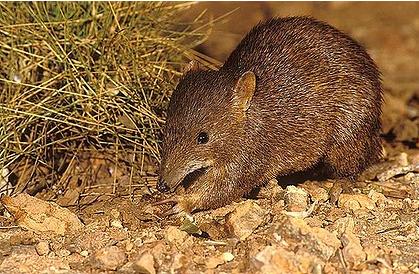 Golden Bandicoot is under threat of extinction in The Kimberley. Golden Bandicoot is under threat of extinction in The Kimberley.
.
“Australia has the worst extinction record for mammals of all countries in the world (Johnson 2007), and has international obligations (Convention on Biological Diversity 2006) and national commitments (Commonwealth of Australia 1999) to avoid species extinctions. Meeting these obligations will require effective and ongoing conservation management.”
[Source: Priority threat management to protect Kimberley wildlife, p47,CSIRO Ecosystem Sciences, Feb 2011, Australia]
.
.
.
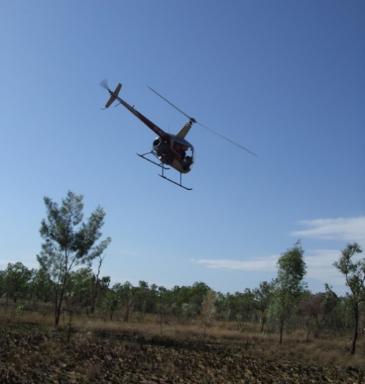
At 6am on 1st June 1990, I started my prepared and serviced HT Holden outside my father’s place in Melbourne and executed my planned drive mission across to Adelaide then up the Centre to Kununurra in the East Kimberley. I was 26; I had saved up. I was on a mission to get my commercial helicopter license and to work in cattle mustering in the Kimberley in the process to ‘get my hours up’.
The Kimberley was a very hot and steamy; a world away from temperate urban Melbourne.
Well, after some months and growing up in a remote landscape, I did achieve my license with Golden West Helicopters, then did some mustering. I took risks, recalling pivot turns over isolated beaches and I learnt a lot…what city kids should.
Some memories that will remain with me (until my memory doesn’t) are the waking to East Kimberley bird calls from the pilot shack at the red dusty caravan park down the road from Kununurra Airport. When building my cross-county and low-level endorsement hours up, I will never forget flying the R22 low over wild rivers full of long lizards (crocs), or slowly navigating the thick mist at 50 foot AGL at dawn, or flying free over the wide rugged red rock landscape, or finding the eagles nest on a remote hill miles off in some north westerly direction from Kununurra. My memory of the Kimberley is of a wild special place, like Emma Gorge and the amazing remote drive to Wyndham – so isolated – so free. But it is the unique bird calls that recur in my memory of the magic natural tropical home of The Kimberley.
So when I now later learn that the Kimberley and its scarce wildlife are under threat, I have no hesitation posting the following article to advocate the urgency of the Kimberley’s wildlife conservation.
The Kimberley is indeed like nowhere else!
~ Editor
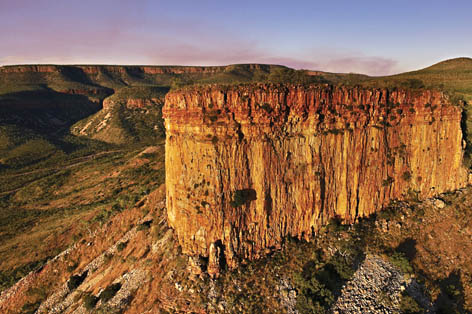
.
.
According to the findings of a current ecological study and report published in February 2011 by the CSIRO and The Wilderness Society:
“up to 45 native species in the Kimberley region will die out within 20 years if no action is taken”.
.
The report found that the two most destructive threats to survival of native species are:
-
Feral cats
-
Frequent large scale fire regimes (deliberate or neglected)
.
It has called for an immediate cash injection of $95 million to save wildlife like the Golden Bandicoot, the Scaly-tailed Possum and the Monjon Rock Wallaby from extinction. Even with the current $20 million per year spent on Kimberley conservation the region is still set to lose some 31 native animals, according to the report.
The report is a culmination of collaborative ecological research and workshops was undertaking across the Kimberley region by scientists with the CSIRO’s Ecosystem Sciences, along with The Wilderness Society, Australian Wildlife Conservancy, Fenner School of Environment and Society (ANU), and The Ecology Centre at the University of Queensland. Its authors from these organisations include Josie Carwardine, Trudy O’connor, Sarah Legge, Brendan Mackey, Hugh Possingham and Tara Martin. Regrettably, the only contributing organisations permanently based in the Kimberley appear to be the Kimberley Land Council and Environs Kimberley. Perhaps this is half the problem; the other half being ye ol’ lack of political will, because surely Australia has plenty of taxpayer funds in circulation.
If ever the ecological precautionary approach principle was a vital precondition of human actions, the Kimberley is the place where it most applies. The recurring theme throughout the report is the lack of comprehensive survey data from the region. Ecologically, the Kimberley is grossly data deficient. Consequently, humans know not what they do, nor what the impact of what they do is, nor how close the thirty odd threatened and endangered native animals are to regional extinction.
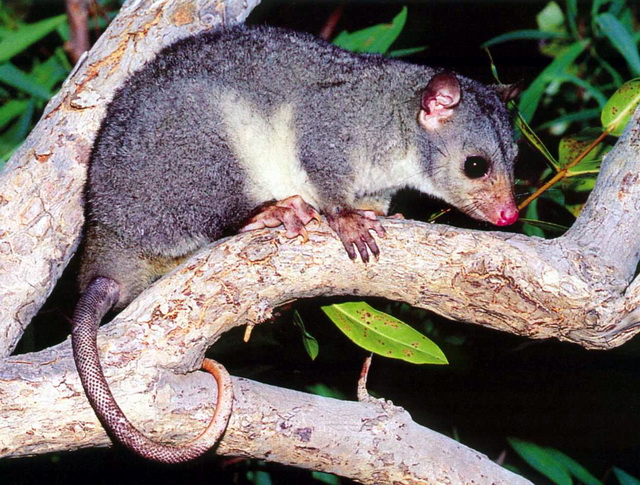
The Scaly-tailed Possum (Wyulda) , Monjon Rock Wallaby and the Cave-dwelling Frog are thought to be uniquely endemic to the region, so if they are wiped out from the Kimberley, as a species they will become globally extinct, like the Tasmanian Tiger (Thylacene) and the Dodo.
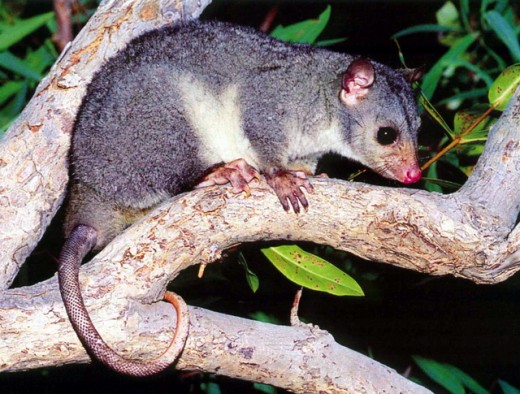 Wyulda, or Scaly-tailed Possum (Wyulda squamicaudata)
endemic to the Kimberley, and highly sensitive to bushfires Wyulda, or Scaly-tailed Possum (Wyulda squamicaudata)
endemic to the Kimberley, and highly sensitive to bushfires
.
Due to human encroachment and habitat destruction across northern Australia and the ferals and destructive practices they have brought with them, the still mainly wild Kimberley remains the last survival refuge for many of Australia native at-risk species.
Native vertebrate fauna of the Kimberley like the Northern Quoll, Golden-backed Tree-Rat, Golden Bandicoot, Gouldian Finch, Spotted Tree Monitor, Western Chestnut Mouse, and Stripe-faced Dunnart are at serious risk of extinction.
.
Priority Threat Management Actions for The Kimberley
.
Experts identified key broadscale threat management actions for improving wildlife persistence (p5):
1. Combined management of fire and introduced herbivores! – feral donkeys, cattle, horses, pigs
2. Eradication, control, quarantine of weeds! – rubber vine, gamba grass, mesquite, passionfruit
3. Control of introduced predators! (particularly feral cats)
.
“The single most cost-effective management action would be to reduce the impacts from feral cats (at $500,000 per bioregion per year) with a combination of education, research and the cessation of dingo Baiting.” [p.6-7]
.
While anticipated to have low feasibility of success, the feasibility has not been started nor tested.
“The next most cost-effective action is to manage fire and introduced herbivores (at $2–7 million per bioregion per year); this action is highly feasible and, if implemented effectively, would generate large improvements in probabilities of persistence for almost all wildlife species.” [p.6-7]
.
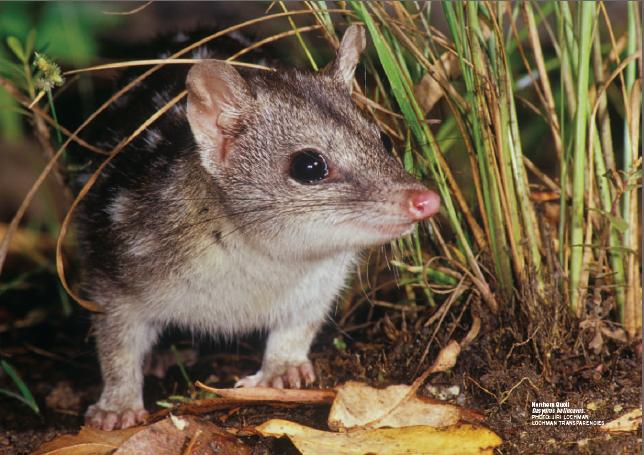
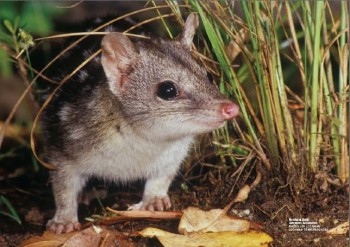 Northern Quoll (Dasyurus hallucatus)
Native to the Kimberley, but seriously at risk from feral cats and bushfires Northern Quoll (Dasyurus hallucatus)
Native to the Kimberley, but seriously at risk from feral cats and bushfires
.
.
Natural Integrity and (Human) Threats
.
.
Threats to The Kimberley from ‘Bushfire Management’
.
“Frequent, extensive and very hot fires in the Kimberley affect its ecosystems in several ways. They change the structure and composition of vegetation, endangering some species of plants and removing important wildlife habitat refugia. They also leave the ground unprotected from the heavy monsoonal rains, causing soil erosion and later stream sedimentation.”
Inappropriate fire regimes pose a threat to biodiversity in the Kimberley and across northern Australia (e.g. Bowman et al. 2001; Russell-Smith et al. 2003). Historically, Indigenous people managed fire throughout the region, which included fine scale prescribed burning across a variety of vegetation types and around important cultural and food resource sites, such as rainforest patches. This most likely resulted in a mosaic of burnt and unburnt vegetation and provided buffers against unplanned wildfires around critical biodiversity refuges (Environmental Protection Authority 2006).

Broadscale State-sanctioned Arson of the Kimberley
(Photo: Ed Hatherley, Western Australia Department of Environment and Conservation)
[Source: ^http://www.australiangeographic.com.au/journal/new-fire-plan-for-the-kimberley.htm]
.
These fire patterns have been replaced in the past few decades with one that is increasingly dominated by extensive and intense mid to late dry season fires. As a consequence, the mean age (and variance) of the vegetation has declined (Legge et al. 2010).
Altered fire regimes interacting with other degrading processes, especially over-grazing, have led to structural and floristic change in vegetation, declines in vegetation cover and critical resources such as tree hollows. They are also associated with increased soil erosion after heavy rains (doubled erosion rates have been recorded in similar situations in the Top End of the Northern Territory (Townsend and Douglas 2000), leading to increased sedimentation in stream beds. These changes have severe negative impacts on native flora and fauna (Vigilante and Bowman 2004; Legge et al. 2008). Extensive flat savanna areas are more vulnerable to large intense fires, as there are fewer inflammable refugia such as rocky areas.
Without appropriate management, the impacts of fire are likely to increase as the region is predicted to become even more fire prone with ongoing climate change (Dunlop and Brown 2008)”. [pp.11-12]
.
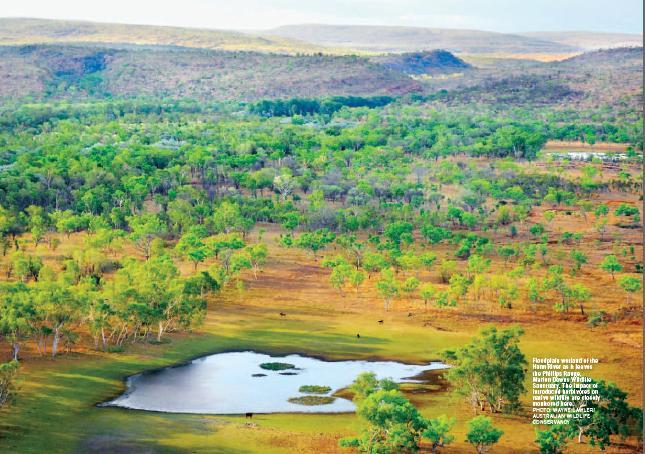
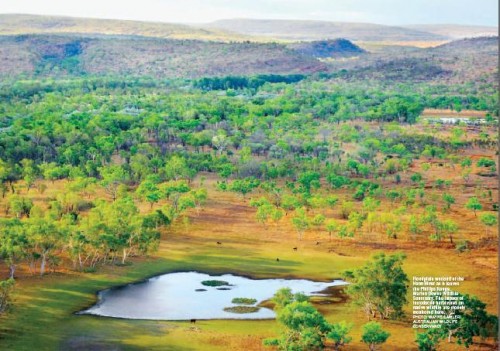 Floodplain wetland of the Hann River
as it leaves the Phillips Range,Marion Downs Wildlife Sanctuary, The Kimberley.
© Photo by Wayne Lawler, Australian Wildlife Conservancy Floodplain wetland of the Hann River
as it leaves the Phillips Range,Marion Downs Wildlife Sanctuary, The Kimberley.
© Photo by Wayne Lawler, Australian Wildlife Conservancy
.
.
Threats to The Kimberley from ‘Feral Cats’
.
“Invasion by feral predators has contributed to range reductions and population declines of many native animals in Australia; small to medium sized mammals have been particularly affected. The primary feral predator in the Kimberley is the domestic cat. Cats have possibly been present in the region since the 1880s and were established by the 1920s (Abbott 2002).
The number of cats occurring in the Kimberley is unknown due to difficulties in survey, although a radio-tracking study at Mornington Wildlife Sanctuary suggests there is one individual per 3 km², each eating 5–12 native vertebrates daily. If this population density of cats occurred throughout the region there would be over 100,000 individuals present, consuming at least 500,000 native animals every day (Legge unpublished data).
There is some evidence that dingoes, as a top predator, can help control the negative effects of smaller predators like foxes and cats (Glen et al. 2007; Johnson and VanDerWal 2009; Letnic et al. 2010; Kennedy et al. 2011). The regular baiting of dingoes is therefore likely to exacerbate the problem of introduced feral predators (Wallach et al. 2010).” [pp.13-14]
 Cat killing wildlife
[Source: Australian Wildlife Carers Network, ^http://www.ozarkwild.org/cats.php,
Photo: Australian Government] Cat killing wildlife
[Source: Australian Wildlife Carers Network, ^http://www.ozarkwild.org/cats.php,
Photo: Australian Government]
.
“The Kimberley is a national priority in this effort to avoid further extinctions due to its intact suite of wildlife species, including many endemics, and its role as a refuge for an increasing list of species that are declining or have been lost in other areas of northern Australia.” [p.47]
.
.
Further Reading on Kimberley Conservation:
.
[1] Carwardine J, O’Connor T, Legge S, Mackey B, Possingham HP and Martin TG (2011), Priority threat management to protect Kimberley wildlife , CSIRO Ecosystem Sciences, CSIRO Australia, Brisbane, and The Wilderness Society, (76 pages), ISBN 978 0 643 10306 1, http://www.csiro.au/resources/Kimberley-Wildlife-Threat-Management.html
[2] ‘Australia to lose 45 species in 20 years’, 20110323, AAP, http://www.smh.com.au/environment/australia-to-lose-45-species-in-20-years-20110322-1c5bx.html
[3] Marion Downs Sanctuary (Kimberley), Australian Wildlife Conservancy, http://www.australianwildlife.org/AWC-Sanctuaries/Marion-Downs-Sanctuary.aspx.
[4] Mornington Sanctuary (Kimberley), Australian Wildlife Conservancy, http://www.australianwildlife.org/AWC-Sanctuaries/Mornington-Sanctuary.aspx
[5] Kimberley Land Council, http://klc.org.au/
[6] Environs Kimberley, http://www.environskimberley.org.au/
[7] Kimberley Australia, http://www.kimberleyaustralia.com/kimberley-environment.html
[8] Save the Kimberley, http://savethekimberley.com/blog/?tag=kimberley-environment-development-conservation
[9] Save the Kimberley, http://www.savethekimberley.com/wp/tag/kimberley-environment-development-conservation/
[10] The Wilderness Society, http://www.wilderness.org.au/campaigns/kimberley/northern-australia-taskforce-recognises-kimberley-environment-must-be-protected
[11] The Kimberley – Like Nowhere Else, http://www.likenowhereelse.org.au/what_needs_to_be_done.php
[12] (Government site) West Kimberley National Heritage assessment, Australian Heritage Council,
http://www.environment.gov.au/heritage/ahc/national-assessments/kimberley/index.html
[13] Kimberley Foundation Australia (KFA), http://www.kimberleyfoundation.com
.

.
– end of article –
Orang-utans
Tags: Australian wildlife, Cave-dwelling Frog, conservation, CSIRO, Golden Bandicoot, Golden-backed Tree-Rat, Gouldian Finch, Kimberley, Monjon Rock Wallaby, Northern Quoll, Priority threat management, Scaly-tailed Possum, Spotted Tree Monitor, Stripe-faced Dunnart, The Wilderness Society, threat management, Western Chestnut Mouse, Wyulda
Posted in Bandicoots, Kangaroos and Macropods, Kimberley (AU), Mice (native) and Antechinus, Possums and Gliders, Quolls, Reptiles, Threats from Bushfire, Threats from Colonising Species | No Comments »
Add this post to Del.icio.us - Digg
Saturday, March 19th, 2011
Rural Fire Management Reform Series
Recommended Reform Initiative #03:
.
Formation of a ‘Civil Emergency Corps’
.
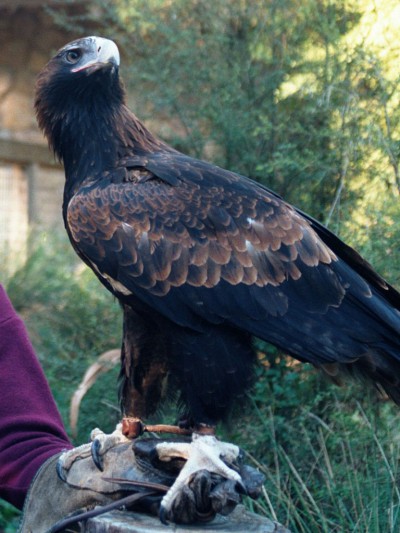 Australia’s Wedged-tailed Eagle (Aquila audax)
– an ideal mascot for a Civil Emergency Corps Australia’s Wedged-tailed Eagle (Aquila audax)
– an ideal mascot for a Civil Emergency Corps
© Photo reproduced with permission from Trevor Hampel,
Source: Trevor’s Birding website: ^http://www.trevorsbirding.com/
.
.
.
1. Purpose of this Reform Initiative
.
As one solution to Australia’s failing governance to mitigate and tackle national disasters (bushfires, storms, floods, drought, earthquakes,etc) I propose the complete overhaul of Australia’s current state-based disparate system. This reform initiative proposes to transform and consolidate the many state-based bushfire and emergency services across Australia and Emergency Management Australia into one standardised national professional body. I propose a new national defence corps be established under new national legislation. The proposed name of that body is to be Australia’s ‘Civil Emergency Corps‘.
The purpose of a ‘Civil Emergency Corps‘ shall be to reach beyond rural fire fighting and to encompass the breadth of all civil emergency fields non-military in nature. The ‘Civil Emergency Corps‘ is to be Australia’s primary and sole central organisation to deal with civil emergencies including national disasters, natural or otherwise. It is to supercede and make redundant the current Emergency Management Australia – which merely co-ordinates state government responses to major civil defence emergencies “when State and Territory resources are inappropriate, exhausted or unavailable.” – [Source: http://en.wikipedia.org/w/index.php?title=Emergency_Management_Australia&oldid=32590701]
The ‘Civil Emergency Corps‘ is to become a fourth arm of Australia’s defence forces along with and having the equivalent status and ‘defence power’ as the Army, Navy and Air Force, yet be purely non-combative. The ‘Civil Emergency Corps‘ will be an equal partner with our Army, Navy and Air Force, but instead of focusing on national defence against human-based threats, the Civil Emergency Corps will focus on national defence against mainly natural threats.
Under Section 51(vi) of the 1901 Australian Constitution, the clause dealing with ‘‘defence power‘ gives the Commonwealth Parliament the right to legislate with respect to “the naval and military defence of the Commonwealth and of the several States, and the control of the forces to execute and maintain the laws of the Commonwealth“. Just as ‘defence power‘ has allowed the Commonwealth to raise an army and navy, the term was considered broad enough to add the Royal Australian Air Force (RAAF) as a defence power in 1921. Similarly, it is argued that a new ‘Civil Emergency Corps‘ charged with civil defence and natural disaster emergencies fits within the Constitutional definition of ‘defence power‘.
A special national commission should be established by the Australian Government to review and shape the purpose, functional scope, framework, organisation structure and strategies of this new corps. The initial intent is that this Civil Emergency Corps is to be modelled along the lines of the United States Federal Emergency Management Agency (FEMA) and the Federal National Response Framework (NRF), but tailored to Australia’s specific needs and circumstances and that of the Oceanic region. The design of the organisation will be based on input received from current emergency personnel, emergency experts and from the broader Australian community. Ideas from comparable organisations overseas will also be considered, such as from nations having proven effective national civil defence organisations.
Funding is to be on par, have the same budget process as, the Australian Regular Army. The days of reliance on meat trays, raffles, grants and community fund raising must end. The task is too important for petty funding. Instead, the organisation is to be professionally paid, run in a military structure and to military discipline and precision. Australians in time of need deserve no less. Like the Army it will have core full-time regulars, augmented with a part-time reserve component. It will be initially staffed by the current people already performing emergency service work. Initially the existing infrastructure (buildings, plant and equipment) shall be utilised. Over time the organisation will evolve to coming up to par with the equivalent performance standards as the Army. Its resourcing will be exponentially increased to equip it to properly anticipate, monitor, and respond to any non-military emergency.
.
Essential Functions of the Civil Emergency Corps
.
- To assume all the work of the State Emergency Services, Fire Services and Rescue Agencies
- Disaster risk, contingency and mitigation planning – land and maritime
- Natural Disaster Response – fire, explosion, contamination, flood, drought, storm, sea surge, earthquake, biological/nuclear emergency, etc
- Disaster Relief
- Disaster Recovery
- HAZMAT Response
- Disaster Management Training
- Community Education in Natural Disaster Preparation and Mitigation
.
.
.
2. Recommended Policy
.
To transform and consolidate the many state-based bushfire and emergency services across Australia and Emergency Management Australia into one standardised federal professional body – Australia’s ‘Civil Emergency Corps‘. The ‘Civil Emergency Corps‘ is to be Australia’s primary and sole central organisation to deal with civil emergencies including national disasters, natural or otherwise.
A special national commission to be established by the Australian Government to review and shape the purpose, functional scope, framework, organisation structure and strategies of this new corps. The initial intent is that this Civil Emergency Corps is to be modelled along the lines of the United States Federal Emergency Management Agency (FEMA) and the Federal National Response Framework (NRF), but tailored to Australia’s specific needs and circumstances. The design of the organisation will be based on input received from current emergency personnel, emergency experts and from the broader Australian community. Ideas from comparable organisations overseas will also be considered, such as from nations having proven effective national civil defence organisations.
This is not an exercise in administrative consolidation. It is a transformation of a disparate, outmoded and under resourced emergency infrastructure into a single centrally co-ordinated non-combat national defence organisation. It is to be a continually learning organisation learning from past mistakes, such as the failings of the management of the 2009 Victorian Bushfires. It is not to be a traditional hierarchical structure, but a programme-based matrix organisation, requiring exceptional leadership skills of its executive.
.
.
3. Recommended Formation and Structure
.
Incorporated into Australia’s Defence Context
.
- Australian Regular Army / Army Reserve
- Royal Australian Navy / Navy Reserve
- Royal Australian Air Force / Air Force Reserve
- Civil Emergency Corps / Civil Emergency Reserve
.
Civil Emergency Corp Structure
.
In the same way as Australia’s three other corps are configured, the new Civil Emergency Corps is to be comprised of ‘Regulars’ – full-time and professionally paid, as well as ‘Reservists’ who commit on a part-time and on demand basis, who are no-less professionally trained and paid commensurate with time served.
The organisational structure is to be headquartered in Canberra, located strategically next to the Australian Bureau of Meteorology, as well has being networked geographically with a ‘State Corps’ for each State and Territory.
Regionally, this new organisation will have ‘Regional Brigades’ and at the local level ‘Local Units’. Each component will have its share of regulars and reservists. The existing infrastructure of the various emergency services agencies would be utilised.
In addition, in order to deal with highly specialised functions, dedicated Corp Specialist Regiments will be established (see proposed list below).
1. National Government Ministry
- Minister for Civil Emergency
- Deputy Minister for Civil Emergency
- Parliamentary Secretary for Civil Emergency
- A ‘National Command Centre’ – based in Canberra next to the Bureau of Meteorology (BOM), for strategic reasons, headed by a ‘Corps General Marshall
.
2. State and Territory Corps
- Each headed by a ‘Corps Brigadier‘
- The organisational structure is to based on a hybrid geographical model of both Fire Brigades and State Emergency Service, decided on a region by region assessment.
.
3. Regional Brigades
- each headed by a ‘Regional Commander‘
.
4. Local Units
- each headed by a ‘Unit Captain‘
.
The regionalisation of the Civil Emergency Corps is to adopt the similar geographic structure aligned to a hybrid of that of the pre-existing State Emergency Services and Rural Fire Services.
For instance, currently across New South Wales State Emergency Service (SES), NSW is divided into 17 ‘Regions’ based on major river systems.
‘Each of the 226 volunteer units belongs to a Region, which is led by a Region Controller. Region boundaries coincide as nearly as possible with major river systems. Each Region Controller is responsible for the operational control of emergency flood and storm responses, including planning, training, operational support and other functions within their area of control. The Region Headquarters also provides administrative support to the units in its region. The Region Headquarters all have fully functioning Operations Centres and a group of volunteers who help with training, planning, operational and other functions.’
.
[Source: http://www.ses.nsw.gov.au/about/ ]
.
Merger and Integration:
.
All pre-existing emergency service organisations, with the exception of the ambulance and police services, are to be disbanded and merged and integrated into one national body, the Civil Emergency Corps.
The reason to maintain independence of the police services is due to the police function and role being more closely aligned to law and order than to dealing with civil emergencies. The reason to maintain independence of the ambulance service is due to the ambulance function and role being more closely aligned to hospital and medicare care than to dealing with civil emergencies.
.
Nationally:
• Emergency Management Australia
• Care Flight Group
• Australian Volunteer Coast Guard
• St John Ambulance Service
.
.
NSW Corps:
A merger and integration of the Fire and Rescue NSW, NSW Rural Fire Service, and Community Emergency Services Incorporated.
.
Victorian Corps
A merger and integration of the Victorian Fire Brigade, Country Fire Authority and the State Emergency Service.
.
Queensland Corps
A merger and integration of the Queensland Fire and Rescue Service, Queensland State Emergency Service and the Queensland Rural Fire Service.
.
South Australian Corps
A merger and integration of the South Australian Metroplitan Fire Service, Country Fire Service, and the State Emergency Service.
.
ACT Corps
A merger and integration of the ACT Fire Brigade, ACT State Emergency Service and the ACT Rural Fire Service.
.
West Australian Corps
A merger and integration of the Fire and Emergency Services Authority of Western Australia (which has already merged its emergency service agencies).
.
North Australia Corps
A merger and integration of the Northern Territory Fire and Rescue Service, Northern Territory Emergency Service, Bushfire Volunteer Brigades, Rescue Co-ordination Centre (Northern Territory Transport Group).
.
Tasmanian Corps
A merger and integration of the Tasmanian Fire Service, and the State Emergency Service Tasmania.
.
.
.
Corps Specialist Regiments
.
• Specialist Regiments shall be established, each having its own part-time payrolled Reserve component.
.
‘Evacuation Regiment’
• emergency field transport and logistics to effect evacuation of displaced persons and their personal effects
• assumes basic human needs provision of displaced persons (emergency accommodation, food and clothing, emergency sanitation, emergency childcare
• currently performed by charity groups like The Salvation Army, The Australian Red Cross, St Vincent de Paul Society, Anglicare Australia, Mission Australia, Catholic Mission, and others
.
‘Utilities Regiment’
• public utility repair and rebuilding – drinking water, sewage and sanitation, electricity, gas services
.
‘Reconstruction Regiment’
• debris clearance, demolition, salvage, engineering, construction, civil infrastructure, and relief housing, farm fencing repairs.
.
‘Communications Regiment’
• Corps internal communications including satellite management for monitoring of bushfires and storms, (attached to Army Signals), land phone, mobile/SMS, public broadcast services, internet services, including evacuee/missing persons database and related communications, plus public relations communications
.
‘Search and Rescue Regiment’
• assumes land search and rescue functions previously performed by various State Police special units, as well as rescue of trapped people from earthquakes, mines, landslides, etc.
.
‘Airborne Regiment’
• Equipped with its own fleet of aircraft and special purpose airfields, this regiment will be regionally based and assume all avaition services including helicopter rescue, fire bombing, airborne evacuation transport, air search and rescue, and air-ambulance. It will integrate the various pre-existing airborne emergency services of each state,namely the NSW Police Rescue Unit, Westpac Rescue Helicopter Service (NSW), CareFlight Group, Search and Rescue Squad (of the Victorian Police), Tasmanian Air Rescue Trust, RACQ CareFlight, Capricorn Helicopter Rescue Service (Rockhampton), Royal Flying Doctor Service.
.
‘Maritime Regiment’
• assumes functions previously performed by Coast Guard, including sea search and rescue and vessel salvage functions. It will integrate the various pre-existing maritime emergency services of each state, namely Marine Rescue NSW, Volunteer Marine Rescue (Qld), the South Australian Sea Rescue Squadron, the Volunteer Marine Rescue Western Australia, and Sea Rescue Tasmanian Inc.
.
‘Medivac Regiment’
• The risk in times of civil emergency, is that already busy ambulance services become overstretched in being expected to provide the extraordinary levels of emergency medical needs of affected people and communities. This is unacceptable. Not a replacement of the State-based Ambulance Services, The Medivac Regiment will be dedicated to functions currently otherwise performed in times of disaster by State-based Ambulance Services, Royal Flying Doctor Service, Army Medics, St John Ambulance and paramedics, and emergency field medicine. In addition it will provide medical emergency evacuation, hospital transfers, and specialise in proactive disease prevention, containment and vaccinations at times of pandemic and epidemic emergencies.
.
‘Community Regiment’
• provides the full range of trauma counselling, psychological and associated mental health services, which will typically extend many months and sometimes years after exposure to a disasterous event
.
‘Vet Regiment’
• Specialised livestock and pet recovery, animal sheltering, emergency veterinary services, emergency relief livestock agistment, stock feed provision and distribution
.
‘Biosecurity Regiment’
• All biosecurity emergency planning and response to disease outbreaks, pandemics, epidemics, pestilence, plague, national health threats or emergencies, including mass casualty events, communicable disease outbreaks, and quarantine emergency planning and response.
.
.
Civil Emergency Strategic Partners
.
- Australian Regular Army – Engineers, Signals (Communications), Transport & Logistics
- Royal Australian Navy
- Royal Australian Air Force
- Australian Bureau of Meteorology
- Australian Government Department of Health and Aging ‚Health Emergency
- Australian Security and Intelligence Organisation
- State and Federal Governments ‚ Premiers Departments
- New Zealand Government ‚ Ministry of Civil Defenc and Emergency Management CentreLink
- CSIRO
- Bushfire CRC
- Seismology Research Centre, Australia
- Geoscience Australia
- Australian Broadcasting Commission
- Department of Community Services (and State equivalents)
- Major Supermarket Retailers – Coles, Woolworths, Metcash
- Shipping Container company
- Commonwealth Bank of Australia
- Satellite Service Provider – Australian Satellite Communications Pty Ltd,
- Commonwealth Serum Laboratories (CSL)
- Australian Antarctic Division
- Telstra
- Qantas
- Brambles Shipping
- The Salvation Army
- The Australian Red Cross
- Infrastructure Australia
- State Ambulance Services
- State Police Services
- State Health Agencies
- Metcash, Coles, Woolworths
- LinFox, Toll Holdings,
- Departments of Community Services
- CentreLink
- Australia Post
- State Morgues and Funeral Directors
- Business Council of Australia
- Small Business Council of Australia
- Insurance Council of Australia
- and many others.
.
Funding
.
The funding for such an organization needs to continually be drawn from multiple sources as it does now so as to share the burden, but the revenue needs to be ramped up and applied on a more ‘user-pays’ but means-tested calculation basis, including
- Council rates component (indexed according to one’s properties bushfire zoning and house preparedness to mitigate bushfire damage – not how much natural vegetation one may have cleared around one’s property)
- State taxes (existing, but with a portion of property stamp duty revenue allocated to this funding)
- Federal taxes (existing) and Australia’s annual Defence Budget reined in away from wasteful capital expenditure on extravagant projects like the Joint Strike Fighter towards funding the more pertinent need of civil emergency funding
- Property insurance premiums increased (indexed according to one’s properties bushfire zoning and house preparedness to mitigate bushfire damage – not how much natural vegetation one may have cleared around one’s property)
- A blanket tax on exotic plants – eg 10% and legislation banning sales of gazetted noxious species with associated fines eg $2000
- New legislation to effect a new bushfire levy imposed on property development applications eg 5% of the estimated construction value
- New legislation to effect a parental financial liability for children found to have caused bushfire damage – fines mean tested up to $100,000
- New legislation to given power to the EPA and local councils to fine people and organizations for illegal damage to native vegetation. The same satellite monitoring system as that used to detect ignitions would be admissible evidence. Fines mean tested up to $100,000
.
Can Australia afford this?
.
Well can Australia afford not to? Wait until the next disaster and then ask the question again, and again.
.
When Australians observe the hundreds of millions of dollars (indeed billions) of taxpayer moneys spent by State and Federal Governments in wasteful projects, the answer is a simple yes, easily. Question the opportunity cost of the following recent examples of government inappropriate spending and waste:
- Nov 2010: Prime Minister Gillard donates $500 million to Indonesian Islamic Schools
- Jul 2010: A Senate inquiry into the Rudd-Gillard Government’s botched $300 million Green Loans program has confirmed that some groups of assessors hired as part of the program are still owed over $500,000 in fees due to mismanagement and poor administration procedures under the scheme with some assessors blasting the Federal Government for failing to implement proper checks and balances.
- Mar 2010: The Rudd Government has recorded an $850 million blow-out in the cost of its household solar power program. Labor had only intended to spend $150 million over five years on solar rebates but instead splurged $1 billion in just 18 months!
- Dec 2010: Queensland Premier Bligh committed $1.2 billion into the Tugun Desalination Plant, which has been plagued by problems since it opened last year, will be shut early next year, along with half the $380 million Bundamba treatment plant and the new $313 million plant at Gibson Island. Water infrastructure has cost Queenslanders $9 billion recently and they are entitled to know the money is being spent wisely.
- Dec 2010: Queensland Premier Anna Bligh shelved a $192 million project involving carbon capture research. Bligh has said she is determined to make carbon capture storage economically viable and has committed another $50 million of taxpayers money to finding the answer. The Bligh government has already spent $102 million researching cleaner coal technology through the state-owned ZeroGen, a joint state-commonwealth government and industry led-research project for coal-fired power production.
- Sep 2010: Victorian Premier Brumby’s Wonthaggi desalination plant will cost Victorians $15.8 billion over the next three decades, departmental figures show, leading the state opposition to accuse the government of hiding the project’s true cost.
- And disaster management it is better invested up front in prevention and response, than afterward in relief and recovery.
.
Yes, Australia can afford it. Governments need to stop wasting taxpayer money.
.
.
.
4. Justifications for this Reform Initiative
.
- Since European colonisation of Australia in 1788, successive natural and unnatural disasters have occurred, yet government preparedness and response has repeatedly fallen well short of the duty and standard expected by the Australian public. The 1939 Black Friday bushfires were perhaps the greatest wake up call to complacent governments, yet since then countless bushfires, storms, floods and other civil emergencies have seen government well behind the eight ball to cope and to exercise its civil responsibility to protect the Australian public. While in 1939, emergency management knowledge, resources, technology and techniques were primitive, in 2011 now, there is no excuse. In bushfires, storms and floods people are continuing to die, houses destroyed and vast areas of natural habitat destroyed. Only myopic denial and lack of political prevent Australian governments at all levels from fulfilling their civic governance responsibilities in civic emergency contingency resourcing and management. It is no longer tolerated for governments to hide behind the veneer of the volunteer involvement to deflect public critisism of the government neglect of civil emergency management. Australia has a litany of disasters through its recent history:
- March 1899: more than 400 die in Cyclone Martha at Cape York, far north Queensland.
- December 1916: Flood kills 61 at Clermont, Queensland
- April 1929: Northern Tasmanian floods kill 44
- December 1934: Melbourne floods kill 36 and leave 3000 homeless
- March 1935: Cyclone in Broome, West Australia kills 141
- February 1955: Hunter Valley floods kills 25 in Singleton and Maitland, NSW
- February 1967: Tasmanian bushfires kill 62, most in Hobart
- January 1974: Brisbane floods kill 14 (Cyclone Tracy 25,000 made homeless)
- December 1989: Earthquake in Newcastle, NSW kills 13
- July 1997: Landslide at Thredbo, NSW kills 18
- February 2009: Black Saturday bushfires in Victoria kill 173
- and many others.
[Source: The Australian newspaper, ‘Summer, season of catastrophe‘, 20110112, p.11]
- Current emergency management across Australia remains grossly under-resourced, ill-equipped and typically wholly reliant upon unpaid volunteers and individual community members dong their bit. It is government negligence to the extreme.
- The cost of maintaining the status quo of relying upon multiple State-based agencies continues to be in the hundreds of millions dealing with major bushfires each year. Bushfires don’t stop at State borders and invariably each summer, crews cross borders anyway to help out. Each State simply doesn’t have the resources to do an effective job when it comes to major bushfire events, or indeed major natural disasters. So the task become national anyway.
- During the cooler winter months, when there a few if any bushfires, those agencies tasked in bushfire management are in the main idle, while at the same time the State Emergency Services are often overwhelmed dealing with storm emergencies. By combining all emergency services (excluding police and ambulance services) into one national body, the combined force will be better trained and resourced to tackle any form of civil emergency any time of year. The resources will be more continuously employed, have greater capacity and be at a greater state of readiness to deal with civil emergencies.
- Australian governments at all levels need to stop their ‘too-little-too-late’ reactionary responses to emergency management in Australia . The Australian people, the Australian economy and the Australian natural environment deserve better. Currently, we have disparate grossly underfunded State run groups largely staffed by local volunteers – volunteer rural fire services, volunteer state emergency services, and total dependence upon various charities like the Red Cross and Salvation Army. The responsibility for emergency management throughout Australia has been run on the cheap by successive State and Federal governments since Black Friday of 1939. National Disaster Management is probably the most neglected responsibility of all government services, because to do it right involves long term planning beyond election cycles and costs so much money.
- Nationally, Australia has no central organisation that deals with national disasters, natural or otherwise. The job is left to the relevant State Government concerned; somewhat a leftover remnant of colonialism. There is a token agency under the Federal Attorney General’s Department, called Emergency Management Australia, but the name is more impressive than the tasks it performs. In 2005 under the Howard Government, Emergency Management Australia was on paper “tasked with co-ordinating governmental responses to emergency incidents” and with providing training [at Mount Macedon] and policy development, yet “the actual provision of most emergency response in Australia (was)… delivered by State Governments.” [Source: http://en.wikipedia.org/w/index.php?title=Emergency_Management_Australia&oldid=32590701]. In November 2007 under the Rudd Government, the Emergency Management Australia focus was modified, slightly: “On request, the Australian Government will provide and coordinate physical assistance to the States in the event of a major natural, technological or civil defence emergency. Such physical assistance will be provided when State and Territory resources are inappropriate, exhausted or unavailable.” – and they gave it an acronym ‘COMDISPLAN’ standing for Commonwealth Government Disaster Response Plan. [Source: http://en.wikipedia.org/w/index.php?title=Emergency_Management_Australia&oldid=174306765 ]
That is, in lay terms, the Australian Government will only help in national emergencies when the States can’t handle a public emergency.
Such a bureaucratic attitude is hardly proactive leadership from our wealthy developed nation!
- Emergency Management in Australia doesn’t even have a dedicated minister responsible. Instead, the entire responsibility is tagged on to the Federal Attorney General’s Department. Currently the task is being delegated to an ‘Acting’ Attorney-General Brendan O’Connor and shared with Minister for Human Services Tanya Plibersek. It is as if the Australian Government has a head in the sand approach to national emergencies at home, hoping they won’t happen, but when they do, she’ll be right mate! – we’ll fob our way through it as best we can with what’s lying around. What a bloody irresponsible approach to national emergency management! And all the government does is to encourage the thousands of Queensland residents affected by the flooding to lodge a claim for the Australian Government‚ Disaster Recovery Payment ‘AGDRP’ – another acronym!
- The Council of Australian Governments (COAG) met in Brisbane on 7 December 2009 and agreed to a range of measures to improve Australia’s natural disaster arrangements. COAG recognised “the expected increase to the regularity and severity of natural disasters”, and so agreed to a new whole-of-nation ‚resilience based approach to natural disaster policy and programs.” Under a Natural Disaster Resilience Program, at Federal level we now have Commonwealth funding for disaster mitigation works and support for emergency management will be approximately $110 million over four years. That funding would deliver more effective benefits by being channelled to single national body, rather than spread across multiple duplicated agencies.
- The responsibility for proper governance of civil disaster management (contingency planning, mitigation, resourcing and response) by Australian governments span not just within Australia’s shores but as a wealthy nation and an international citizen, Australia owes a duty of care to countries in its region. Last September, Australia’s closest neighbour, New Zealand, suffered a devastating earthquake in Christchurch, and we don’t have to travel far back to recall the 2004 Indian Ocean Tsunami that devastated coastal Sumatra, Thailand, Sri Lanka and the Maldives. Currently, Australia is responding with emergency management personnel, equipment and funding to the Japanese Government following the earthquake, tsunami and nuclear plant emergencies. That response would be all the more effective, co-ordinated and resourced if under professional umbrella Civil Emergency Corps.
.
.
.
5. Benefits of this Reform Initiative
.
- Only with a national, military style and fully funded organisation, can Australia expect to adequately prepare, resource and deal with national civil emergencies. The current State-based volunteer-dependent system does not have a hope of getting access to real-time satellite monitoring of the nation for ignitions, tsunamis, storms and the like, nor access to standby airborne fleet to effect military speed responses. Instead, the current system relies on an outmoded and slow truck-centric ‘mum-and-dad’ army whom, while well-intentionedand dedicated, are grossly inadequate to meet the scale of the challenge.
- The increased prevalence of climate change is expected to increase the frequency and severity of natural disasters in our region, yet Australia’s readiness continues to lag decades behind the requisite emergency management need. Only a complete transformation of Australia’s emergency management to a military-speed national defence force has a chance of adequately preparing Australia for inevitable future natural disasers and civil emergencies.
- Collectively across all the existing emergency organisations, Australia already spends billions in emergency management, but is not coping and is under-performing against 21st century triple bottom line expectations
- Cumulatively, Australia already spends billions in emergency management, but most of the cost is in response due to being under-prepared. In natural disaster management, mitigation and prevention where possible are better than the cost of poor response. It is cheaper economically and on lives.
- A professional organisation, on the payroll is fairer to the workers involved. Government reliance on community volunteers is exploitative and the standards can never collectively match full paid professionals with state of the art resourcing. Taxes are paid by the people so that government will protect them in both military and civil defence.
- A single national Corps is better positioned than multiple disjointed organisations to prepare for and respond to the ever increasing array of national disasters, but such an organisation would retain the critical advantage of regional and local personnel and resources. Economies of scale and efficiency gains from removing duplication in administration and overheads would come from a single Corps. But a key condition must be that any job losses would attract full retrenchment payouts.
- Many secondary school leavers could be readily recruited into a non-combative Civil Emergency Corps service for limited services, than are attracted to the traditional three combative military corps.
- Amalgamating the many disparate organisations into one will enable national standardisation of policies, procedures and techniques as well as enable best practice in effectiveness and efficiency.
- By having a national, multi-skilled, professionally trained and properly resourced Civil Emergency Corps, Australia will be better placed to assist and respond to natural disasters across Australia and throughout the Oceanic region.
.
.
Proposed mascot of Australia’s overdue ‘Civil Emergency Corps’ :
.
 Australia‘s Wedge-Tailed Eagle
Source: ^ http://commons.wikimedia.org/wiki/File:Wedge_tailed_eagle_in_flight04.jpg Australia‘s Wedge-Tailed Eagle
Source: ^ http://commons.wikimedia.org/wiki/File:Wedge_tailed_eagle_in_flight04.jpg
.
Australia’s magnificent wedge-tailed eagle should be the mascot of this new organisation. It is uniquely Australian, a highly respected native bird and the eagle traditionally is a symbol for guardianship, protection, power, strength, courage, wisdom and grace. All these qualities quite apt for a Civil Emergency Corps. An appropriate motto is ‘defending our community’ – or perhaps ‘vigilant, capable, immediate‘ but instead of in English or translated back to Latin, more appropriate that it be in an Australian Aboriginal language.
.
[Footnote: This article has been prepared based upon material in a previous article on this website published 1st January 2011 entitled ‘National Disasters Best for Capable Army‘].
..
.
Further Reading:
.
[1] ‘Nat MPs push levy for disaster fund’, by Joe Kelly, The Australian, January 05, 2011,
http://www.theaustralian.com.au/national-affairs/treasury/nat-mps-push-levy-for-disaster-fund/story-fn59nsif-1225982479225]
.
[2] ‘PM Julia Gillard to help flood-hit Queensland weather storm’, by Sean Parnell and Jared Owens, The Australian, 4th January 2011, http://www.theaustralian.com.au/national-affairs/pm-julia-gillard-to-help-flood-hit-queensland-weather-storm/comments-fn59niix-1225981305357
.
[3] ‘Premier visits NSW towns in flood’s path’ , ABC, 6th January 2011,
http://www.abc.net.au/news/stories/2011/01/06/3107563.htm
.
[4] ‘Carnarvon on flood warning but levees hold’, 20th December 2010, ABC
http://www.abc.net.au/news/stories/2010/12/20/3097642.htm
.
[5] ‘SA has been facing ‘very high’ fire danger’, ABC, 1st January 2011,
http://www.abc.net.au/news/stories/2011/01/01/3104707.htm
.
[6] Bushfires in Australia
http://en.wikipedia.org/wiki/Category:Bushfires_in_Australia
.
[7] Floods in Australia
http://en.wikipedia.org/wiki/Category:Floods_in_Australia
.
[8] Droughts in Australia
http://en.wikipedia.org/wiki/Category:Droughts_in_Australia
.
[9] Severe Storms in Australia
http://en.wikipedia.org/wiki/Severe_storms_in_Australia
.
[10] Cyclones in Australia
http://en.wikipedia.org/wiki/Category:Cyclones_in_Australia
.
[11] Black Saturday Bushfires
http://en.wikipedia.org/wiki/Black_Saturday_bushfires
.
[12] Earthquakes in Australia
http://en.wikipedia.org/wiki/Category:Earthquakes_in_Australia
.
[13] 1997 Thredbo Landslide
http://en.wikipedia.org/wiki/1997_Thredbo_landslide
.
[14] Role of the Australian Army
http://en.wikipedia.org/wiki/Australian_Defence_Force
.
[15] Australian Government – Natural Disasters in Australia
http://www.cultureandrecreation.gov.au/articles/naturaldisasters/
.
[16] Trevor’s Birding website: ^http://www.trevorsbirding.com/
.
[17] Wikipedia, http://en.wikipedia.org/w/index.php?title=Emergency_Management_Australia&oldid=32590701]
.
[18] State Emergency Service (NSW), http://www.ses.nsw.gov.au/about/
.
[19] The Australian newspaper, ‘Summer, season of catastrophe‘, 20110112, p.11
.
[20] Wikipedia, http://commons.wikimedia.org/wiki/File:Wedge_tailed_eagle_in_flight04.jpg
.
[21] Federal Emergency Management Agency, http://www.fema.gov/
.
[22] 2009 Victorian Bushfires Royal Commission http://royalcommission.vic.gov.au/Commission-Reports
.
.
– End of article –
Tags: Anna Bligh, Australia's Wedged-tailed Eagle, Australian Regular Army, Black Saturday, Brisbane flood, bushfire, bushfire reform, Christchurch earthquake, civil defence, Civil Emergency Corps, Country Fire Authority, Country Fire Service, Cyclone Yasi, defending our community, defensive infrastructure, disaster contingency, Emergency Management Australia, Japan Tsunami, Reform Initiative, Rural Fire Management Reform, Rural Fire Service, vigilant capable immediate
Posted in 12 Strategic Leadership & Management!, Threats from Bushfire | 3 Comments »
Add this post to Del.icio.us - Digg
Saturday, February 19th, 2011
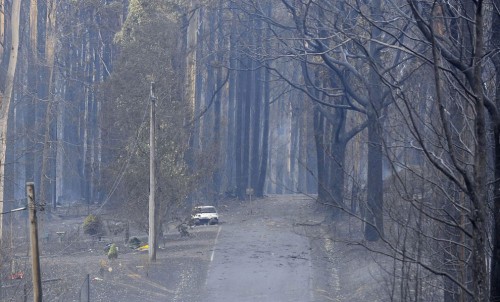
.
1. Purpose of Reform Initiative
.
This reform initiative proposes to standardise and make compulsory throughout the NSW Rural Fire Service the following requirements:
- To record the complete direct and indirect costs attributed to fighting and supporting the fighting of each registered bushfire event received and responded to by the NSW Rural Fire Service (RFS) across New South Wales.
- For each registered fire responded to by the RFS, the combined direct and indirect costs incurred by the RFS and all associated organisations are to be incorporated into the Total Fire Cost of each registered fire.
The purpose of capturing the Total Fire Cost of each registered fire is to establish and maintain a database of the Total Fire Cost for every received and registered fire by the NSW Rural Fire Service across New South Wales.
.
.
2. Recommended Policy
.
The Fire Control Centre of each Rural Fire District in New South Wales must establish and maintain a separate Fire Event Log of each registered fire occurring, either wholly or partially, within its Rural Fire District.
A minimum Australian standard of vital fire information necessary for a Fire Event Log must be established and approved by the NSW Rural Fire Service Commissioner. This standard must be reviewed annually ahead of each peak fire risk season.
A suitable training programme in Fire Event Log Procedures must be established to enable suitable fire personnel to be trained in order to competently maintain a Fire Event Log to the minimum Australian standard.
This policy should be integrated into the RURAL FIRE SERVICE Standard Operating Procedures once a process of consultation with all relevant personnel has been extensively undertaken across the entire breadth of the organisation.
Once approved, a Fire Event Log Policy and Procedures should be gazetted into the Rural Fires Act (NSW), 1997 and considered similarly for each fire authority in each Australian State.
.
.
3. Recommended Procedures
.
1. The Fire Control Centre of each Rural Fire District across New South Wales must establish a new and separate Fire Event Log upon becoming first aware of any fire within its fire district.
2. A Fire Event Log must be maintained continuously throughout the duration of a fire within a Fire District until such time as the responsible Fire Control Officer (or higher RURAL FIRE SERVICE command) declares the fire extinguished within that district.
3. A Fire Event Log must be recorded using the RURAL FIRE SERVICE central computer system, with appropriate daily data back ups generated at the end of each day.
4. The Fire Control Officer for a given Rural Fire District is ultimate responsibile and accountabile for establishing and maintaining an accurate and thorough Fire Event Log for each fire in its district. A Fire Control Officer may only delegate the task of maintaining a Fire Event Log to a qualified fire fighter holding a current endorsement in Fire Event Log Procedures.
5. The Fire Control Officer of each Rural Fire District must endeavour to capture all information about a fire in a separate Bushfire Event Log for each fire (where possible) including, but not limited to:
5.1. The designated name of the subject fire
5.2. Date & time of the ignition
5.3. Location of the ignition
5.4. Cause of the ignition
5.5. GIS digital map updating of the fire spread, likely path and key data
5.6. Details of the initial reporting of the fire outbreak/detection details
5.7. Lapse time to initial response & details of initial response action
5.8. Location of fire(s) & fire behaviour updates at 15 minute intervals
5.9. Local and forecast weather statistics relevant to the fire
5.10. Interstate agencies seconded
5.11. Daily updates on Total Area Burnt
5.12. Daily updates on any lives Lost
5.13. Daily updates on property lost, including number of dwellings
5.14. Daily updates on area of private property & farmland burnt
5.15. Daily updates on areas of mapped high conservation areas burnt
5.16. Daily updates on the number of fire-fighters involved
5.17. Daily updates on the number of aircraft involved
5.18. Daily synopsis on the fire(s) status
5.19. Executive decisions and actions taken, including incident declaration
5.20. Critical issues
5.21. Key operational threats & risks
5.22. Fire resource needs and shortfalls
5.23. Contact details and correspondence with assigned fire investigation
5.24. Total duration of fire activity once extinguished
5.25. Injury Summary Report
5.26. Resource Usage Summary Report by contribution agency
5.27. Register of Support Agency Involvement
6. When a fire takes the form of combined fires or multiple fire fronts within reasonable proximity in a geographic area, the responsible Fire Control Officer may order that a single Fire Event Log be maintained for the combined fires/multiple fire front.
7. Regular communication must be maintained between the Fire Control Centre and field brigades fighting a fire to facilitate logging fire activity to a minimum standard that allows communications at a minimum interval of 15 minutes.
8. Any communications failures or difficulties between firefighting crews (ground and airborne) and Fire Control, or any problems experienced in maintaining a minimum 15 minute communications frequency, must be immediately reported by the Fire Control Officer, or in the case of a major fire incident, to the Incident Controller.
9. A Fire Event Log is to be deemed the official single register of a fire event, a core operational document and a legal document admissible in a court of law.
10. As an internal document, a Fire Event Log is not automatically available for public access. The RURAL FIRE SERVICE Commissioner may at his/her discretion allow public access to such a document via a Freedom of Information Request from a member of the public.
11. The integrity and security of a Fire Event Log is paramount and is the ultimate responsibility of the Fire Control Officer assigned to a given fire. A digital copy of Fire Event Log must be provided by a Rural Fire District branch to RURAL FIRE SERVICE Headquarters within 7 days of the fire being declared extinguished. A secure and accessible database of Fire Event Logs is to be maintained by both the respective Rural Fire District branch and for all fires across NSW by RURAL FIRE SERVICE Headquarters.
 Koala burnt in Victorian Bushfires of February 2009
© Photo by Rebecca Hallas
[Source :http://www.watoday.com.au/national/physical-scars-will-remain-20090211-83u7.html ]
.
. Koala burnt in Victorian Bushfires of February 2009
© Photo by Rebecca Hallas
[Source :http://www.watoday.com.au/national/physical-scars-will-remain-20090211-83u7.html ]
.
.
.
4. Justifications for Reform Initiative
1. While it is acknowledged that the author is not a member of the Rural Fire Service and so privy to existing Rural Fire Service policy and procedures for recording bushfire operations, the lack of operational detail provided the Section 44 Incident Controllers Report for the Nov-06 Grose bushfire and the absence of minutes from the subsequent Inter-Agency review on 19-Dec-06, highlight shortcomings in record keeping of fire operations.
2. Perhaps much of the information reported of bushfire events is obtained from personal recollection of events from individual line personnel a considerable time after the event. For instance, the Section 44 Report into the Grose bushfire (14-Nov-06 to 3-Dec-06) is dated 8-Feb-07, two months later. There are obvious problems relying upon recollecting detailed events, the precise time and order of those events, the changing fire behaviour, the decisions made and actions taken and the changing conditions at the time. The absence of a factual minute by minute event log makes it difficult to be accurate and comprehensive in reporting major bushfire incidents. In the event of a major fire, maintaining a Fire Event Log will provide a record the performance of the four ICS functions – control, operations, planning and logistics.
3. It may well be that bushfire agencies in each Australian state have their own methods and protocols for recording fire events. It may also be that different agencies and indeed different regional branches have their own different ways of recording bushfire event data. There is likely no universal consistent standard across Australia of recording bushfire events as they occur. Some records may be better than others. There is a need to have a consistently high standard of record keeping for bushfire events across Australia.
4. Recent coronial inquests in Australia into bushfire deaths (Canberra Bushfire Jan 2003, Eyre Peninsula Fire Jan 2005), highlight the need for fire authorities need to have accurate records of bushfire events so that they are better able to defend their actions in court.
.
.
5. Benefits of Reform Initiative
.
1. The benefits of establishing and maintaining a Bushfire Event Log is to better enable bushfire management to achieve an accurate and comprehensive record of a fire – the events, decisions and actions and outcomes associated with each fire event. All relevant operational data associated with a fire will be recorded in one convenient document.
2. A Bushfire Event Log will provide a reliable source document for preparing a fire incident report. This will avoid the often difficult task of having to recall events, the order of those events, decisions made along with the fire behaviour at the time, long after a fire sometimes days or weeks later when memories have faded.
3. Recent reports and inquests have highlighted failures in fire-fighting communications, which arguably had a role in contributing to operational problems in controlling the spread, severity and impacts of fires. Compulsorily requiring a Bushfire Event Log will require regular communication between fire-fighters and Fire Control. This requirement will help drive the need to improve the reliability of operational communications during a bushfire event.
4. A Bushfire Event Log will provide a actual live record of the performance of the co-ordination, command and control functions of the ICS, including the operational sequence: Reaction, Reconnaissance, Appreciation, Plan, Issue of Orders and Deployment. This log will be highly useful at a debriefing session following a fire, allowing operational problems to be better identified. This will aid the RURAL FIRE SERVICE to increases its knowledge and understanding of rural fire fighting.
5. A Bushfire Event Log will enable bushfire management to be more transparent in reporting its operations, assisting any possible coronial investigations, for operational evaluation and improvement, analysis and to contribute firefighting practice into bushfire research. By making fire event logging compulsory, regular information must be fed back to central command in order to achieve the minimum reporting standard. This will drive a higher standard in strategic communications.
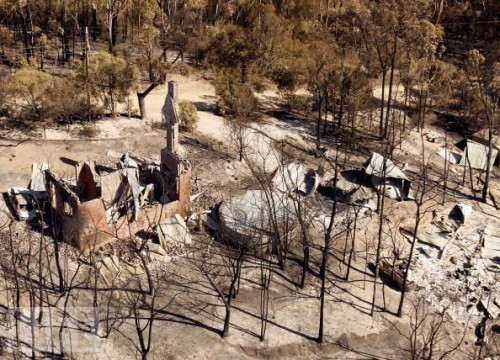 Property incinerated in Kinglake Fire 7th February 2009.
Source: http://www.life.com/image/84754030 Property incinerated in Kinglake Fire 7th February 2009.
Source: http://www.life.com/image/84754030
.
– End of article –
Thursday, February 3rd, 2011
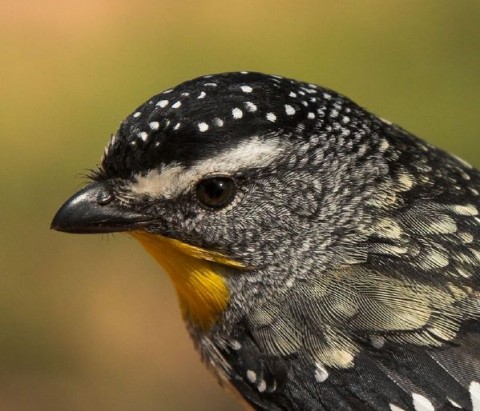 Spotted-Pardalote (Pardalotus punctatus)
© Photo by Julian Robinson
http://www.ozanimals.com/Bird/Spotted-Pardalote/Pardalotus/punctatus.html Spotted-Pardalote (Pardalotus punctatus)
© Photo by Julian Robinson
http://www.ozanimals.com/Bird/Spotted-Pardalote/Pardalotus/punctatus.html
.
.
Ben Esgate [1914-2003] from an interview in October 2002 [Jim Smith PhD]:
.
“Birds and everything like that are getting scarcer.
I reckon that since I have grown up, the bird life on the Blue Mountains has receded by 80%.
Too many bushfires destroy the breeding grounds of many birds, particularly Kookaburras and birds that use hollows. Clearing of land unnecessarily, and always killing the big trees, not the little ones. The big ones make the nests of tomorrow. In the smaller bird line, feral cats are causing no end of trouble. Pardalotes and all that sort haven’t got a chance, anything that builds a nest low in the trees.
Burning off National Parks, and areas adjacent to National Parks, just because the mob squealed because they have gone a built a house near the National Park, and now you have to keep fire from getting it.
The first things that happens then is that you have got to keep burning off around where people live…It might only destroy a bit in this place and a bit in that place, but it is still destroying things.”
“I reckon that I shot every third fox that I ever saw, never mind the ones I went hunting for, in my life. One in every three bit the dust and I’ve shot dozens and dozens and dozens of them. That meant that, including the offspring, there were several hundred foxes less to feed on our native wild life and wipe them out.
I saw them wipe our Rock Wallabies out in the Megalong completely…I shot foxes for many years, right up until I was 80.
I was knocking over 20 a winter up there (Galong Bluffs), when I was 79.
I never shot in a National Park. They knew up there, the National Parks mob, they knew I was knocking them off and they thought it was wonderful.”
.
.
Further Reading:
.
[1] http://www.survival.org.au/birds_spotted_pardalote.php
[2] Blue Mountains Bird List, by Carole Proberts, http://www.bmbirding.com.au/bmlist07.pdf
[3] ‘ The last of the Cox’s River men : Ben Esgate 1914-2003‘ / by Jim Smith, ( NLA).
.
– end of article –
Tags: Ben Esgate, bird life, Blue Mountains wildlife, burning off, bushfires, feral cats, foxes, getting scarcer, hazard reduction, Jim Smith, Kookaburras, Megalong, Pardalote, Rock Wallabies, tree hollows
Posted in 07 Habitat Conservation!, 34 Wildlife Conservation!, Birds (Australian), Blue Mountains (AU), Threats from Bushfire, Threats from Poaching and Poisoning | No Comments »
Add this post to Del.icio.us - Digg
Friday, January 28th, 2011
Australian native forests – are they valuable ecosystems and habitats for wildlife; or bushfire fuel hazards to be burned, before they burn?
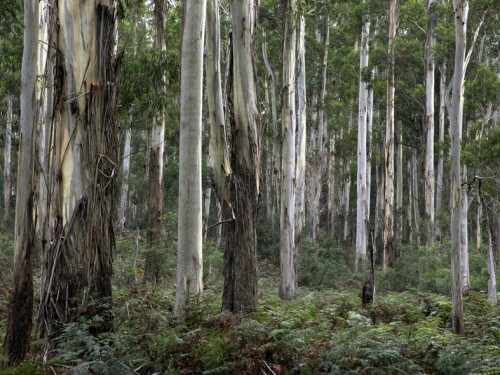 Blue Mountains wet schlerophyl forest
© Photo by Henry Gold, wilderness photographer
. Blue Mountains wet schlerophyl forest
© Photo by Henry Gold, wilderness photographer
.
.
Bushfire Management’s root problems
.
- Bushfire Management which recognises wildlife habitat as an asset worth protecting makes the fire fighting task immensely complex. So moreover the more simplistic and cost saving rationale of ‘protecting life and property’ holds sway, where no thought is given to the conservation values or to the habitat needs of wildlife. The inculcated and unquestioned bushfire management attitude that native forests are the cause of bushfires, rather than being victims of bushfires, belies one of the three key root problems of why bushfire management is failing. Ignitions left to burn in inaccessible terrain time again have proved be devastating not just for nature and wildlife, but consequentially for human life and property. Wildfire does not discriminate.
- Bushfire Management across Australia is so poorly equipped to detect and suppress ignitions when they do occur, that out of frustration, fear has been inculcated to encourage all native forests be dismissed as bushfire hazards and ‘prescribed burned’ as a precaution. Across the New South Wales Rural Fure Service, the term is quite unequivocal – ‘Hazard Reduction‘ . Broadscale hazard reduction, euphemistically labelled ‘strategic burns‘ or deceptively ‘ecological burns‘ and has become the greatest wildlife threatening process across Australia driving wildlife extinctions.’
- Both the localised and regional impacts of bushfire and hazard reduction upon wildlife ecology are not fully understood by the relevant sciences – ecology, biology and zoology. Fire ecology is still an emerging field. The Precautionary Principle is well acknowledged across these earth sciences, yet continues to be dismissed by bushfire management. They know not what they do, but I do not forgive them.
.
Australia’s record of wildlife extinctions are the worst of any country in the past two hundred years.
‘Of the forty mammal species known to have vanished in the world in the last 200 years, almost half have been Australian. Our continent has the worst record of mammal extinctions, with over 65 mammal species having vanished in the last 50 000 years.’ [Chris Johnson, James Cook University, 2006]
.
‘Australia leads the world in mammal extinctions. Over the last two hundred years 22 mammal species have become extinct, and over 100 are now on the threatened and endangered species list, compiled as part of the federal government’s Environment Protection and Biodiversity Conservation Act.’ [Professor Iain Gordon, research scientist in CSIRO’s new Biodiversity Theme, 2009.]
.
Uncontrolled bushfires, broadscale and frequent hazard reduction, and land clearing are the key drivers causing Australia’s remaining wildlife to disappear. Once habitat is destroyed, the landscape becomes favourable to feral predators which kill the remaining unprotected fauna. Thousands of hectares of Australia’s native forests are being burnt every year and are becoming sterile park lands devoid of undergrowth habitat. Wave after wave of habitat threats continue to undermine the layers of resilience of native fauna, until fauna simply have no defences left and populations become reduced to one local extinction after another.
James Woodford in his article ‘The dangers of fighting fire with fire‘ in the Sydney Morning Herald, 8th September 2008, incitefully observed:
‘Fighting fires with fear is a depressing annual event and easy sport on slow news days. Usually the debate fails to ask two crucial questions: does hazard reduction really do anything to save homes, and what’s the cost to native plants and animals caught in burn offs? What we do know is a lot of precious wild places are set on fire, in large part to keep happy those householders whose kitchen windows look out on gum trees.
Hazard reduction burning is flying scientifically blind. Much hazard reduction is performed to create a false sense of security rather than to reduce fire risks, and the effect on wildlife is virtually unknown. An annual bum conducted each year on Montague Island, near Narooma on the NSW far South Coast has become a ritual in which countless animals,including nesting penguins, are roasted.
The sooner we acknowledge this the sooner we can get on with the job of working out whether there is anything we can do to manage fires better. We need to know whether hazard reduction can be done without sending our wildlife down a path of firestick extinctions.’
.
.
‘Koalas may be extinct in seven years’
[Source: Sydney Morning Herald, 20070411]
.
‘Extreme drought, ferocious bushfires and urban development could make koalas extinct within seven years, environmentalists are warning. Alarms about the demise of the iconic and peculiar animal, which sleeps about 20 hours a day and eats only the leaves of the eucalyptus tree, have been raised before.
But Deborah Tabart, chief executive officer of the Australia Koala Foundation, believes the animal’s plight is as bad as she has seen it in her 20 years as a koala advocate.
“In South-East Queensland we had them listed as a vulnerable species which could go to extinction within 10 years. That could now be seven years,” she said. “The koala’s future is obviously bleak.”
South-East Queensland has the strongest koala populations in the vast country, meaning extinction in this area spells disaster for the future of the species, said Tabart.
The biggest threat is the loss of habitat due to road building and development on Australia’s east coast – traditional koala country. The joke, said Tabart, is that koalas enjoy good real estate and are often pushed out of their habitat by farming or development.
“I’ve driven pretty much the whole country and I just see environmental vandalism and destruction everywhere I go,” she said. “It’s a very sorry tale. There are [koala] management problems all over the country.”
Massive bushfires which raged in the country’s south for weeks during the summer, burning a million hectares of land, would also have killed thousands of koalas.’
[Read More]
.
.
‘A Bushfire action plan which protects people, property and nature’
[Source: The wilderness Society, 20090219, http://www.wilderness.org.au/campaigns/forests/bushfire-action-plan]
.
 In the immediate aftermath of the devastating Victorian Bushfires of 2009, The Wilderness Society, in response to bushfire management’s quick blaming of the native forests for the bushfires; drafted a ‘Bushfire Action Plan‘ that sought to recognise the need to protect nature along with people and their property. In the immediate aftermath of the devastating Victorian Bushfires of 2009, The Wilderness Society, in response to bushfire management’s quick blaming of the native forests for the bushfires; drafted a ‘Bushfire Action Plan‘ that sought to recognise the need to protect nature along with people and their property.
.
‘Bushfire remains one of the most complex and difficult aspects of our environment to deal with. Climate change is expected to make things even tougher, with increases in the number of high fire danger days and the number of people and houses at risk increasing with the tree/sea change phenomenon.
With the onset of climate change, mega-bushfires that burn massive areas are expected to occur more often.
A joint CSIRO and Bureau of Meteorology study of the impact of climate change in bushfires found parts of Victoria faced up to 65% more days of extreme fire risk by 2020, and 230% more by mid-century.
Yet clearly we have a lot to learn and the Royal Commission will set a new agenda for land and fire management, prevention and response. Many challenges will remain but some aspects seem clear. We need more money and support for fire fighters if we are to successfully protect life, property and the environment. Two key areas are the early detection of fires including the use of aerial surveillance and remote sensing especially in remote areas, increasing rapid response capacity including more “Elvis” helicopters to fight bushfires as soon as they start.
The outstanding work of firefighters on the front line needs to be backed up with the best available knowledge, planning and resources to ensure operations are as effective as possible in protecting people, property and nature. There is an urgent need to increase investment in these areas and rapidly establish scientific underpinning to fire management, as well as properly resourcing implementation and fire operations.
We also need more information for government and community about how to deliver fire management in a way that also protects the natural environment and our unique wildlife.
Fuel reduction burning has an important place in the fire management toolbox, and we support its place in scientifically underpinned fire management for the protection of life, property and the environment.
The issue of fuel reduction burning often dominates the fire debate, as if it is the only fire management tool. But it’s important to remember that this is only one tool in fire management, and not the silver bullet that will fire proof the landscape.
Environmental groups want to see the science that supports the current fuel reduction program, including a scientific justification for so-called hazard reduction burns in specific areas and the scientific justification for the route and extent of fire break establishment. Environmental groups are particularly concerned about the lack of impact assessment of these programs on biodiversity, particularly given their uncertain benefits to reduce the extent, frequency and severity of fire.
Views on these measures tend towards two extremes. One extreme is that we should fuel reduction burn all forest areas every 20 years and carve out thousands of kilometres of fire breaks, the other is that all our forests are wilderness areas which should just be allowed to burn and not manage our forests for fire at all.
For the Australian bush to be healthy and to protect people, property and nature we need a scientifically based balance between these extremes.
Fire management is not ‘one size fits all’ when it comes to the Australian bush. It needs to be targeted and specific, because we know that different kinds of bush respond differently to fire and therefore need different management. For native plants and animals to survive, fire management needs to promote “good” fire at the right time of year, of the right type and size. And that varies with vegetation type and resident native animals. Grasslands will require more frequent fires compared with forests, while areas such as rainforest will need to be protected from fire altogether.
That’s why we need good ecological science informing fire management, which has come a long way in understanding what’s best for native plants, but we need a better understanding of what fire management is best for protecting wildlife and avoiding extinctions. Its critical that scientists, fire agencies and governments work together to understand how to best manage fire to protect habitat for endangered wildlife, because no one wants fire management to lead to extinctions.
Of course, the protection of life & property needs to come first in fire management – but we can do that while also protecting nature and wildlife. A balanced approach is to prioritise the protection of life and property in areas close to farms and townships, and to prioritise fire management for the environment in remote areas and national parks.
A continuation of the expansion in knowledge, resources and support for fire management and community preparedness will best ensure the protection of life, property and the environment into the future…
.
We have developed a 6-point plan to reduce the bushfire risk and help protect people, property, wildlife and their habitat.
- Improve aerial surveillance to detect bushfires as soon as they start.
- Ramp up hi-tech, quick response capability, including more ‘Elvis’ helicopters to fight bushfires as soon as they ignite.
- More research into fire behaviour and the impact of fire on wildlife and their habitat.
- Around towns and urban areas – prioritise the protection of life and property with fuel reduction and fire break management plans.
- In remote areas and National Parks – prioritise the protection of wildlife and their habitat through scientifically-based fire management plans.
- Make native forests resistant to mega-fires by protecting old-growth forests, rainforests and water catchments from woodchipping and moving logging into existing plantations.
.
.
Critique of Roger Underwood’s Criticism of TWS ‘6-Point Plan‘
.
 On 12th February 2009, Roger Underwood, a former rural firefighter and a forestry industry employee in Western Australia, had his article published in The Australian newspaper criticising the above recommendations of The Wilderness Society (TWS). On 12th February 2009, Roger Underwood, a former rural firefighter and a forestry industry employee in Western Australia, had his article published in The Australian newspaper criticising the above recommendations of The Wilderness Society (TWS).
Regrettably, rather than offering constructive criticism and proposing counter arguments with supportive evidence, Underwood instead dismisses the Wilderness Society’s contribution, but disappointingly with empty rhetoric. Underwood states upfront:
“the trouble with the society’s action plan to reduce the risk of bushfires is that it won’t work.“
.
The Wilderness Society’s six-point action plan aims to counter the current bushfire management strategy that relies upon hazard reduction burning and the ecological damage this is causing – ‘destroying nature’, ‘pushing wildlife closer to extinction’, ‘increasing the fire risk to people and properties by making areas more fire prone’.
Underwood claims that statistics exist showing no massive increase in prescribed burning, but in fact that prescribed burning has declined. Yet Underwood fails to provide nor even reference any such statistics. He fails to recognise that both bushfires and prescribed burning collectively cause adverse impacts on wildlife. If all burning of native vegetation, however caused, is included in the assessment, then would statistics indeed show an increasing trend in the natural area affected by fire in Australia?
.
‘Burn it before it burns’ Theory
.
Underwood questions the wildlife extinction problem without any basis. He then adopts the ”old chestnut‘ theory of blaming the threat to wildlife on ‘killer bushfires‘. ‘Killer bushfires’ (the firestorm threat) has become the default justification by bushfire management for its policy of prescribed burning. This is the ‘Burn it before it burns!‘ defeatist attitude. If one burns the bush, there will be no bush to burn. Underwood’s claim that ‘killer bushfires’ are a “consequence of insufficient prescribed burning” is a self-serving slippery slope fallacy. If nature is an asset of value to be protected, then it is defeatist to damage it to prevent it from damage. The history of so-called ‘controlled burns‘ have an infamous reputation of getting out of control and becoming wildfires. If the attitude of burning as much of the bush as possible to avoid uncontrolled wildfire, then then paradoxically the implied incentive is to let controlled burns burn as much as possible to minimise the risk of unexpected fires in the same area.
.
In respect to each of The Wilderness Society’s (TWS) Six Point Plan, one counters Underwood’s responses as follows:
.
1: Improve aerial surveillance to detect bushfires as soon as they start
.
Underwood supports aerial detection as “a first-rate resource and a comprehensive system” but says that it can fail completely under hot, unstable atmospheric conditions and when there are very high winds. However, fire towers and aircraft are not the means of bushfire surveillance today. Low orbiting geostationary satellites with infrared and high resolution cameras can now spot individual cars in real time and through cloud and smoke. Satellites are not affected by atmospheric conditions such as high winds or hot temperatures. Modis-Fire is one company that specialises in such satellite technologies.
In addition, the CSIRO, with the Department of Defence and Geoscience Australia, has developed an internet-based satellite mapping system called ‘Sentinel Hotspots‘. Sentinel Hotspots gives emergency service managers access to the latest fire location information using satellite data. Fire fighting organisations across Australia have used this new strategic management tool, since it was launched in 2002, to identify and zoom in on fire hotspots. [Read More]
In 2003, an article in the International Journal of Wildland Fire entitled ‘Feasibility of forest-fire smoke detection using lidar‘ extolled the virtues of forest fire detection by smoke sensing with single-wavelength lidar.
Such technologies are available if the political will was met with appropriate investment. Such technologies could be available to a military-controlled national body, but unlikely to be available to volunteer members of the public. It all depends on the standard of performance Australians expect from bushfire management.
.
2: Ramp up hi-tech, quick response capability, including more ‘Elvis’ helicopters to fight bushfires as soon as they ignite.
.
Underwood dismisses aerial fire-bombing as a “dream” that “has never succeeded in Australia, and not even in the US” and “next to useless“.
Well, it seems Underwood is contradicted by the recent decisions of Australia State Governments across Australia’s eastern seaboard to charter not just one Erikson Aircrane but three. Not only was Elvis contracted from the United States in Summer 2010 to Victoria, “Elvis” was based in Essendon, ‘Marty‘ was based in Gippsland and ‘Elsie‘ was based in Ballarat. Clearly, the Victorian State Government considers the cost of these three aircraft justifiably cost-effective in offering quick response capability to fight bushfires.
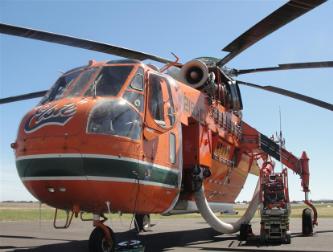 Dedicated Fire Fighting Erikson Aircrane ‘Elsie‘ based in Ballarat, Victoria during the 2010 Summer
© Photo ABC Ballarat http://www.abc.net.au/local/audio/2010/12/22/3099609.htm
.
In South Australia, the Country Fire Service (CFS) believes in the philosophy of hitting a fire ‘hard and fast’.
.
‘CFS volunteers and aerial firefighting aircraft are responded within minutes of a bushfire being reported and as many resources as possible are deployed to keep the fire small and reduce the chance of it getting out of control. It is not widely known that South Australia has a world class initial attack strategy of aerial firefighting. The value of a rapid aerial firefighting approach has been supported by Bushfire Cooperative Research Centre research. In their 2009 report titled ‘The cost-effectiveness of aerial fire fighting in Australia, the Research Centre wrote the following in their summary
.
The results of the analysis show that the use of ground resources with initial aerial support is the most economically efficient approach to fire suppression. Aircraft are economically efficient where they are able to reach and knock down a fire well before the ground crew arrives. This buys time for the ground forces to arrive and complete the containment. Rapid deployment of aerial suppression resources is important. This advantage is much greater in remote or otherwise inaccessible terrain. Where other suppression resources are unable to reach the fire event within a reasonable time period, sole use of aircraft is economically justified.’
[http://www.bushfirecrc.com.au/research/downloads/The-Cost-Effectiveness-of-Aerial-Fire-Fighting-in-Australia.pdf].
. Dedicated Fire Fighting Erikson Aircrane ‘Elsie‘ based in Ballarat, Victoria during the 2010 Summer
© Photo ABC Ballarat http://www.abc.net.au/local/audio/2010/12/22/3099609.htm
.
In South Australia, the Country Fire Service (CFS) believes in the philosophy of hitting a fire ‘hard and fast’.
.
‘CFS volunteers and aerial firefighting aircraft are responded within minutes of a bushfire being reported and as many resources as possible are deployed to keep the fire small and reduce the chance of it getting out of control. It is not widely known that South Australia has a world class initial attack strategy of aerial firefighting. The value of a rapid aerial firefighting approach has been supported by Bushfire Cooperative Research Centre research. In their 2009 report titled ‘The cost-effectiveness of aerial fire fighting in Australia, the Research Centre wrote the following in their summary
.
The results of the analysis show that the use of ground resources with initial aerial support is the most economically efficient approach to fire suppression. Aircraft are economically efficient where they are able to reach and knock down a fire well before the ground crew arrives. This buys time for the ground forces to arrive and complete the containment. Rapid deployment of aerial suppression resources is important. This advantage is much greater in remote or otherwise inaccessible terrain. Where other suppression resources are unable to reach the fire event within a reasonable time period, sole use of aircraft is economically justified.’
[http://www.bushfirecrc.com.au/research/downloads/The-Cost-Effectiveness-of-Aerial-Fire-Fighting-in-Australia.pdf].
.
Underwood claims that: “Elvis-type aircranes cost a fortune, burn massive amounts of fossil fuel, use gigalitres of precious water and are ineffective in stopping the run of a crown fire that is throwing spot fires. Water bombers do good work protecting houses from small grass fires. But against a big, hot forest fire and during night-time they are next to useless.”
Underwood conveys a sense of dogged reliance in traditional fire truck centric thinking as if to preserve an old firie culture of ‘we know best‘ and ‘nothing is going to change our thinking‘ mindset. May be it is out of petty envy wherein many volunteer firies can command trucks but wouldn’t have a clue flying helicopters and so would feel sidelined.
Well, since the 2009 Victorian Bushfires, more than A$50 million worth of new initiatives have been introduced or are under development.
“Further changes are likely to be introduced as the Royal Commission, which was established to investigate the Black Saturday disaster, is ongoing. Aerial firefighting is set to be addressed by the commission. Among new initiatives in Victoria is a A$10 million trial of a very large air tanker (VLAT) – the first-ever such experiment in the country. On 14 December, a McDonnell Douglas DC-10-30 Super Tanker, leased from US company 10 Tanker Air Carrier, arrived in Melbourne. Australian regulator, the Civil Aviation Safety Authority, and underwent final compliance assessment to allow it to enter service in January.”
.
[Source : http://www.flightglobal.com/articles/2010/02/09/338056/australia-puts-firefighting-tankers-to-the-test.html]
Underwood may well dismiss aerial suppression technology as ‘razzle-dazzle‘, but he is right to state that such investment requires governments to put more resources into research and into monitoring bushfire outcomes, including the environmental impacts of large, high-intensity bushfires and continuous feedback to management systems from real-world experience out in the forest.’
.
3: More research into fire behaviour and the impact of fire on wildlife and their habitat
.
While Underwood claims that he supports more research into fire behaviour and fire impacts, he is dismissive of the conclusions of much of the research already done, but offers no explanation. This seems an internal contradiction. What are the conclusions of the research?
Underwood claims the conclusions do not support the Wilderness Society’s agenda. How so? What is TWS agenda?
Underwood conveys an unsubstantiated bias against the Wilderness Society, only offering an ad hominem fallacious argument – attacking the messenger, not the argument.
.
The science on fire ecology is still emerging. The Wilderness Society validly states above that ‘bushfire remains one of the most complex and difficult aspects of our environment to deal with‘, that ‘there is an urgent need to increase investment in these areas and rapidly establish scientific underpinning to fire management, as well as properly resourcing implementation and fire operations‘ and ‘the lack of impact assessment of these programs on biodiversity, particularly given their uncertain benefits to reduce the extent, frequency and severity of fire‘.
.
4: Around towns and urban areas – prioritise the protection of life and property with fuel reduction and fire break management plans.
.
Underwood here perceives an inconsistency in TWS Action Plan – suggesting its support for fuel reduction around urban areas contradicts its claim that fuel reduction makes the burned areas “more fire prone”. However, this action item is about prioritising fuel reduction on a localised basis around the immediate areas where life and property are located.
Whereas broadscale hazard reduction that is carried out many miles from human settlements has become a new strategy of bushfire management. The excuse used is euphemistically termed a ‘strategic burn‘ or even an ‘ecological burn‘ in the name of encouraging biodiversity. Except that the practice seems to be a leftover habit from the Vietnam War in which helicopters are used to drop incendiaries indiscriminately into remote areas without any care for the consequences.
 A so-called ‘ecological burn‘ of Mt Cloudmaker
This was conducted by helicopter incendiary by NSW National Parks and Wildlife Service (DECCW)
in the remote Krungle Bungle Range of the Blue Mountains World Heritage Area
(Photo by editor from Hargraves Lookout, Shipley Plateau, 20080405 , free in public domain) A so-called ‘ecological burn‘ of Mt Cloudmaker
This was conducted by helicopter incendiary by NSW National Parks and Wildlife Service (DECCW)
in the remote Krungle Bungle Range of the Blue Mountains World Heritage Area
(Photo by editor from Hargraves Lookout, Shipley Plateau, 20080405 , free in public domain)
.
A recent example is the ‘strategic burn’ authorised and executed by the NSW Department of Environment, Climate Change and Water (DECCW) in the Blue Mountains World Heritage Area on 12th May 2010. Some 2500 hectares of remote wilderness was deliberately set alight around Massif Ridge, some 12 kilometres south of the town of Woodford in wild inaccessible forested area of the World Heritage Area. The excuse was to reduce the available ‘fuel’ (native vegetation) for potential future wildfires. [>Read More: ‘National Parks burning biodiversity‘ ]
.
5: In remote areas and National Parks – prioritise the protection of wildlife and their habitat through scientifically-based fire management plans.
.
Underwood contends another stock standard industry claim that where native forests have been protected, they have naturally accumulated fuel loads in which sooner or later an uncontrollable landscape-level fire occurs. So his anthropocentric theory runs that is humanity’s responsibility not to let nature be nature, but to control nature and so to burn the bush before it burns. This theory is premised on the defeatist approach that in the event of a bushfire, bushfire management is not in a position to detect and suppress it.
And so Underwood, poses the standard industry response of “more frequent planned burning under mild conditions“. He assumes that leaving the overstorey and the soil intact will ensures a diversity of habitat for wildlife. Yet Underwood is not a zoologist and has no understanding of the vital role that dense ground vegetation provides to Australia’s native ground dwelling mammals (e.g.the Long-footed Potoroo, Spotted-tailed quoll, Eastern Pygmy Possum, the Petrogale penicillata, Broad-toothed Rat, Bolam’s Mouse, the Smoky Mouse, the Eastern Chestnut Mouse, the Long-nosed Bandicoot), as well as nexting birds, flightless birds, amphibians and reptiles.
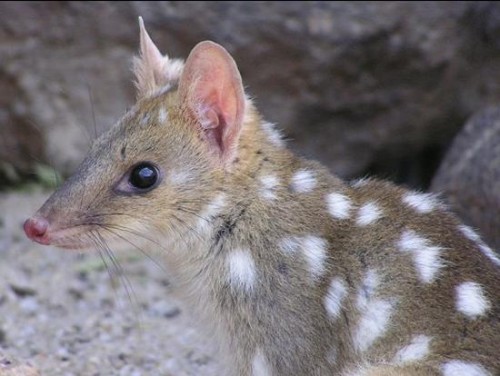 Eastern Quoll – Dasyurus viverrinus – EXTINCT on mainland Australia
© Photo by Andrea Little http://www.mtrothwell.com.au/gallery.html Eastern Quoll – Dasyurus viverrinus – EXTINCT on mainland Australia
© Photo by Andrea Little http://www.mtrothwell.com.au/gallery.html
.
Underwood’s view reflects the simplistic misguided view of biodiversity of most of Australia’s bushfire management – that the presence of trees and regrowth of fire-tolerant plants equates to biodiversity.
Can Underwood name one species of Australian fauna that is fire tolerant?
Underwood misinterprets the text of TWS which advocates an holistic fire management system, not as a silver bullet or ‘one-size-fits- all’ convenient panacea that pretends to fire proof the landscape. The only guarantee of ‘one-size-fits- all’ hazard recution is a sterile forest devoid of biodiversity and causing local species extinctions. TWS argues for a scientifically-based and balance approach recognising that some forest ecosystems like rainforests are most definitively fire-intolerant.
.
6: Make native forests resistant to mega-fires by protecting old-growth forests, rainforests and water catchments from woodchipping and moving logging into existing plantations
Underwood challenges this last item stating there is no evidence that old growth forest is less likely to burn than the regrowth forests. This is false. Australian native forests that regrow after fire are those that are fire-resistant. Typically, these genus (Eucalypt and Acacia) regrow quickly and become dense mono-cultures. If a fire passes through again, the fire is often more intense and devastating. Old growth forests, rainforests and riparian vegetation around water catchments tend to be moist and so less prone to bushfires.
But this sixth item is not about the relative propensity of old growth forests to burn more readily than regrowth forests, so Underwood’s argument is a distracting red herring. TWS’ aim here is more about placing a higher value on old growth and rainforests due to their greater biodiversity and due to their increasing scarcity. Clearly, TWS is ideologically opposed to woodchipping and logging of old growth forests and rainforests. Logging operations typically involve follow up deliberate burning and such fires have frequently got out of control. Underwood’s needling criticism of TWS for having a lack of knowledge of fire physics or bushfire experience is a typical defensive criticism leveled at anyone who dares to challenge bushfire management. Conversely, if Underwood has the prerequisite knowledge of fire physics or bushfire experience, he is not very forthcoming except to defend the status quo of bushfire management.
The recent bushfire results are demonstrating that bushfire management is increasingly unable to cope with bushfire catastrophes nor meet the expectations of the public to protect life, property and nature.
.
.
Further Reading:
.
[1] ‘Studies of the ground-dwelling mammals of eucalypt forests in south-eastern New South Wales: the species, their abundance and distribution‘ by PC Catling and RJ Burt, CSIRO, 1994, http://www.publish.csiro.au/paper/WR9940219.htm
.
[2] ‘Australia’s Mammal Extinctions – A 50,000-Year History‘, by Chris Johnson, 2006, James Cook University, North Queensland. http://www.cambridge.org/aus/catalogue/catalogue.asp?isbn=9780521686600
.
[3] ‘Solving Australia’s mammal extinction crisis‘, (2009) by Professor Iain Gordon, research scientist in CSIRO’s new Biodiversity Theme, ABC Science programme. He chaired a symposium on Australia’s mammal extinction crisis at the 10th International Congress of Ecology in Brisbane August 2009. http://www.abc.net.au/science/articles/2009/09/02/2674674.htm
.
[4] ‘Koalas may be extinct in seven years‘ , Sydney Morning Herald, 20070411, http://www.smh.com.au/news/environment/koalas-may-be-extinct-in-seven-years/2007/04/11/1175971155875.html
.
[5] ‘A Bushfire action plan which protects people, property and nature‘, The Wilderness Society, 20090219, http://www.wilderness.org.au/campaigns/forests/bushfire-action-plan
.
[6] ‘Manage bush better so climate won’t matter‘, by Roger Underwood (ex-firefighter), The Australian newspaper, 20090212, http://www.theaustralian.com.au/news/manage-bush-better-so-climate-wont-matter/story-e6frg73o-1111118824093
.
[7] ‘Locating bushfires as they happen‘, CSIRO – Sentinel Hotspots, http://www.csiro.au/solutions/Sentinel.html
.
[8] ‘Modis-Fire’ satellite bushfire detection, http://modis-fire.umd.edu/Active_Fire_Products.html
.
[9] ‘Elsie’s first day on the job, Ballarat’s fire fighting helicopter‘, by Prue Bentley (ABC TV Ballarat), 20101222, http://www.abc.net.au/local/audio/2010/12/22/3099609.htm
.
[10] ‘South Australia – Country Fire Service – Factors that influence aircraft selection‘ – http://www.cfs.sa.gov.au/site/about_us/aerial_firefighting/aircraft_selection.jsp
.
[11] ‘Australia puts firefighting tankers to the test‘, Fight Global 20090209, http://www.flightglobal.com/articles/2010/02/09/338056/australia-puts-firefighting-tankers-to-the-test.html
.
[12] ‘Bushfire-CRC – Aviation content’, http://www.bushfirecrc.com/category/bushfiretopic/aviation.
.
[13] ‘Towards New Information Tools for Understanding Bushfire Risk at the Urban Interface‘, 2004, R. Blanchi, J. Leonard, D. Maughan, Bushfire-CRC, CSIRO Manufacturing & Infrastructure Technology, Bushfire Research. [Read full report]
[end of article]
.
Tags: Australian native forests, Blue Mountains wildlife, broadscale burning, bushfire action plan, Bushfire-CRC, Chris Johnson, CSIRO, dangers of fighting fire with fire, eastern quoll, ecological burn, Erikson Aircrane, fire-intolerant, fuel reduction, fuel reduction program, ground dwelling mammals, hazard reduction, Henry Gold, koala extinction, mammal extinctions, Modis Fire, Montague Island hazard reduction, precautionary principle, precribed burning, Professor Iain Gordon, Roger Underwood, Rural Fire Service, Sentinel Hotspots, sterlisation of forests, strategic asset management, The Wilderness Society, threatening process, Victorian Bushfires 2009, wildfire, wildlife extinctions, wildlife habitat
Posted in Blue Mountains (AU), Threats from Bushfire | No Comments »
Add this post to Del.icio.us - Digg
|
|
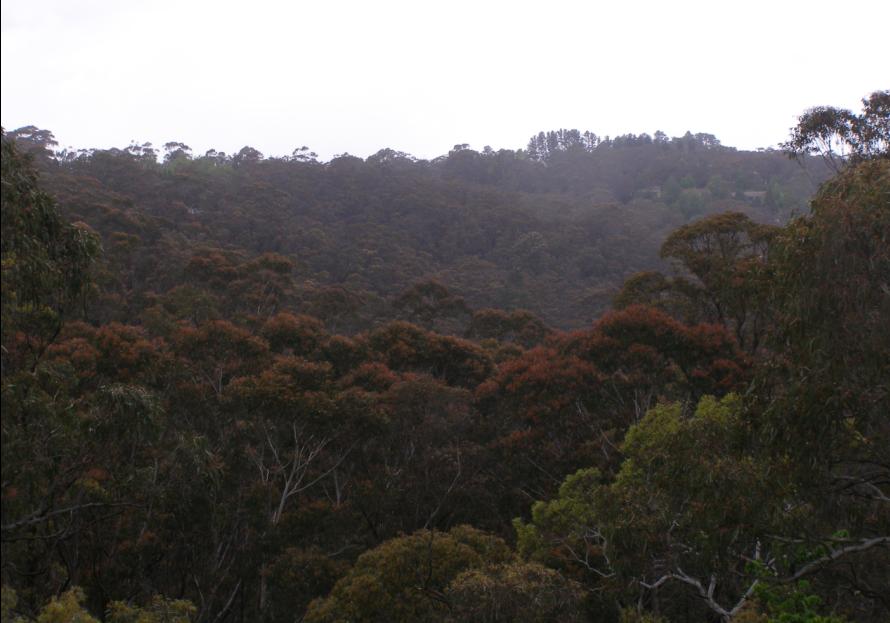 Thick natural bushland habitat just west of Katoomba
Central Blue Mountains Region.
New South Wales, eastern Australia.
Thick natural bushland habitat just west of Katoomba
Central Blue Mountains Region.
New South Wales, eastern Australia.
 The cypress pine cottage, 2008
.
The cypress pine cottage, 2008
.
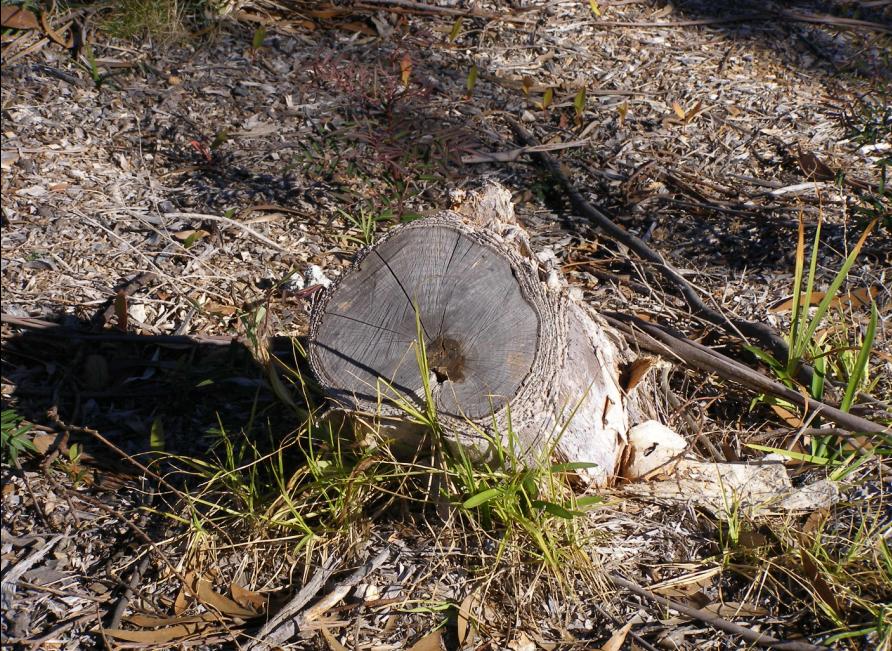 One of the chainsawed native trees
.
One of the chainsawed native trees
.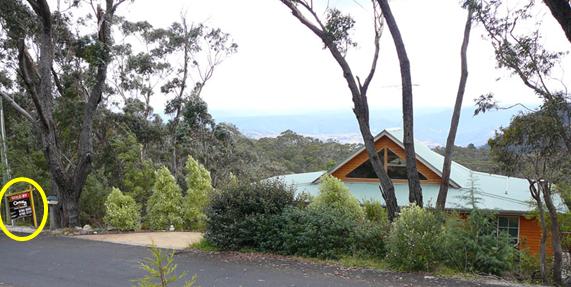 The cottage was sold in 2008…with views
…less the dozen chainsawed Eucalypts to make way for the views.
The cottage was sold in 2008…with views
…less the dozen chainsawed Eucalypts to make way for the views.
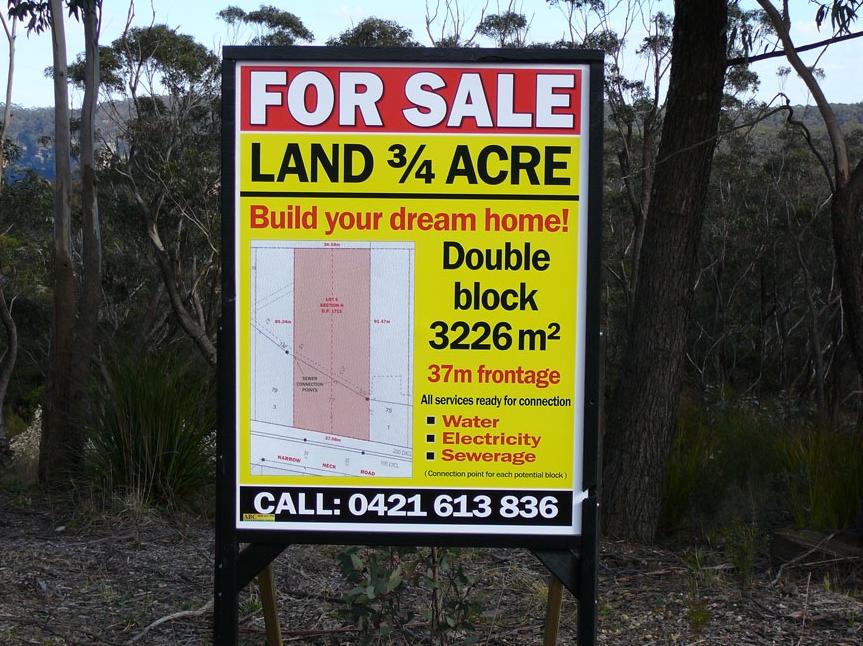
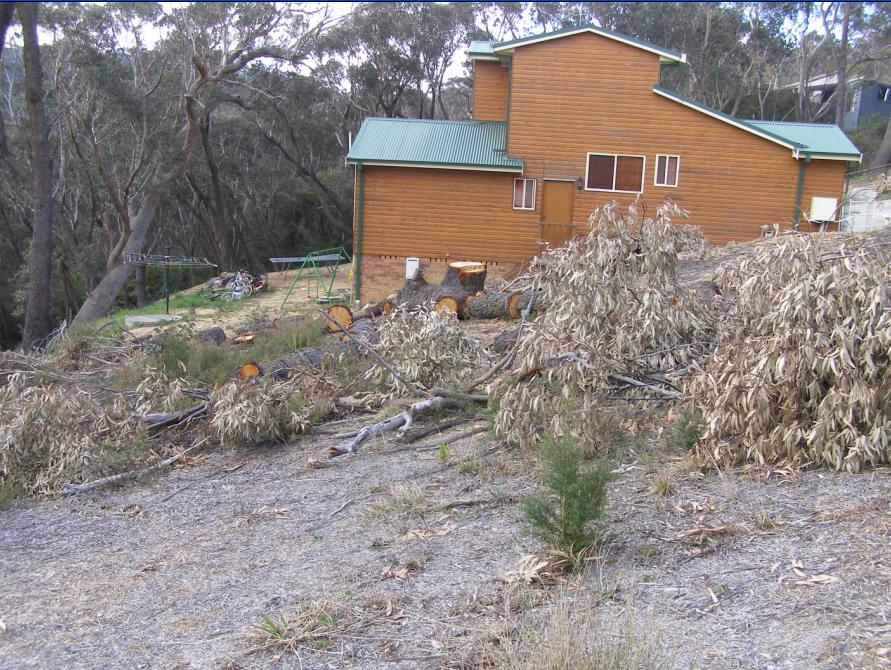 A nearby cottage of remarkably similar cypress pine cladding
has surrounding trees chainsawed and the vegetation slashed to bare earth.
A nearby cottage of remarkably similar cypress pine cladding
has surrounding trees chainsawed and the vegetation slashed to bare earth.
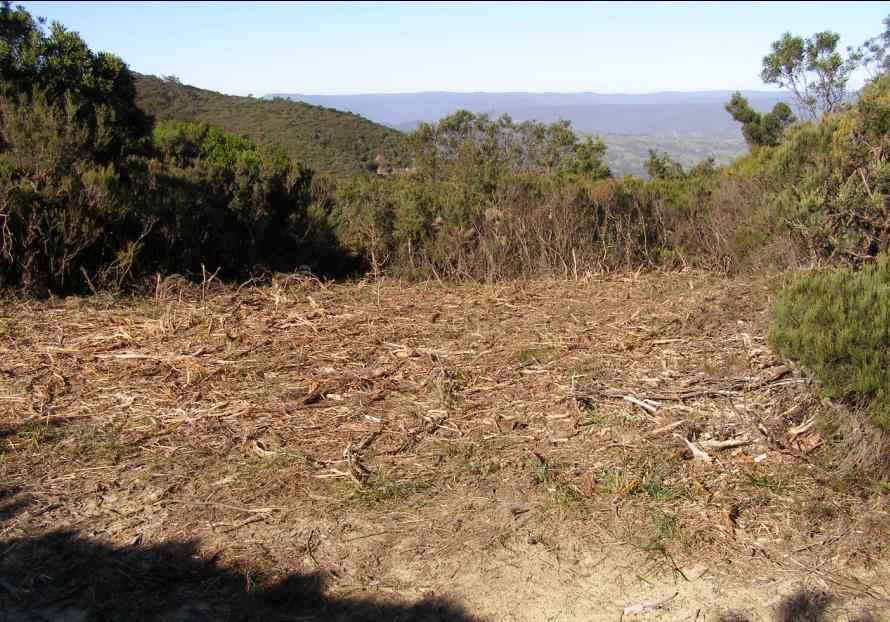 Blue Mountains escarpment is slashed by the RFS, a kilometre west of the cottage site.
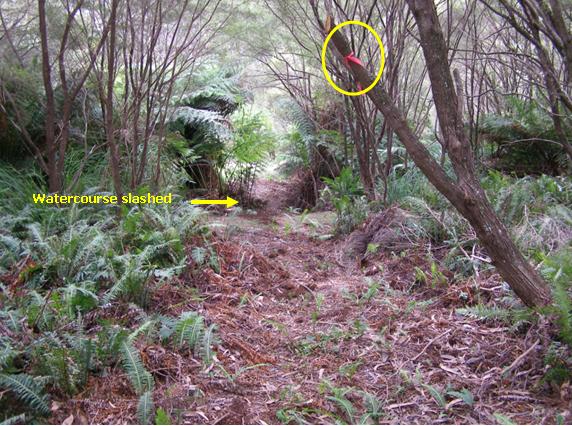 The RFS contractor slashed a trail for over 700m through heathland and through a riparian zone,
even before the Hazard Reduction Certificate was issued.
.
The RFS contractor slashed a trail for over 700m through heathland and through a riparian zone,
even before the Hazard Reduction Certificate was issued.
.
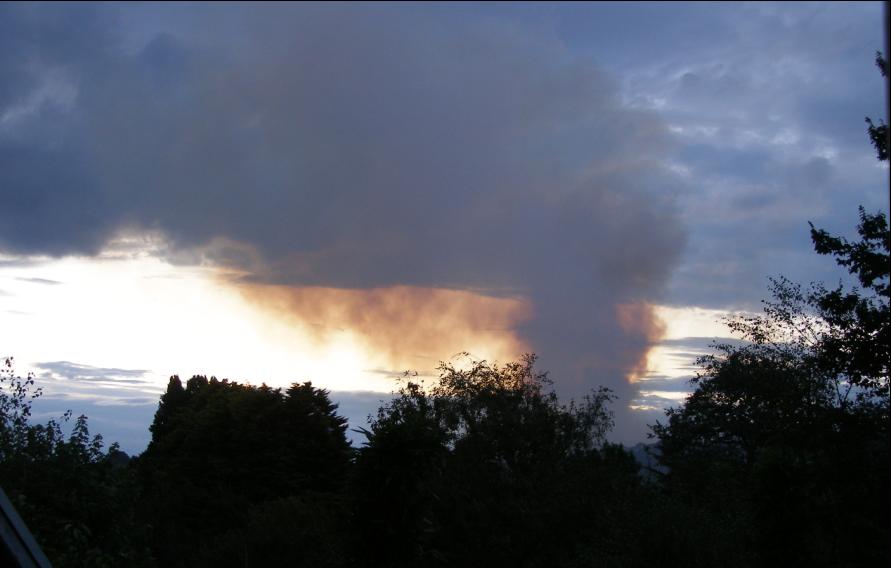 The ‘hazard’ reduction (HR) burning commences
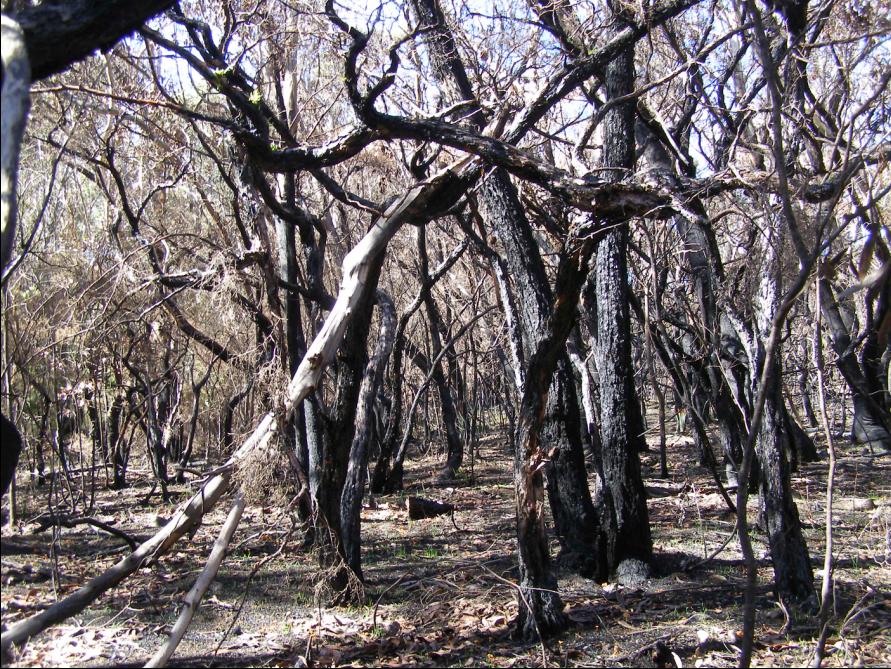 The aftermath
Three months on, evidence of more than just ground-cover has been burnt.
Deliberate intense burning has been allowed to penetrate deep into mature Eucalypts
The aftermath
Three months on, evidence of more than just ground-cover has been burnt.
Deliberate intense burning has been allowed to penetrate deep into mature Eucalypts

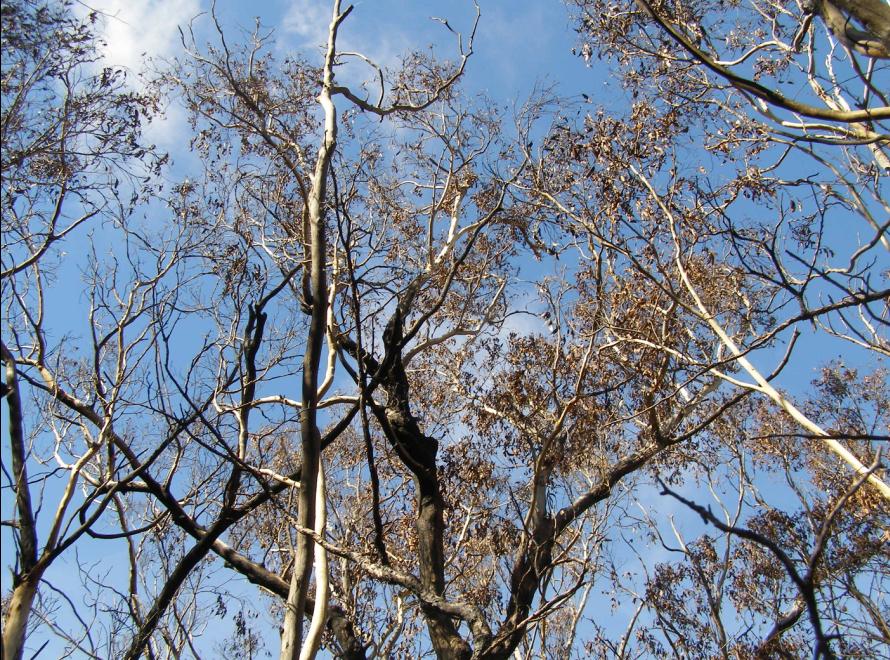 The fire was so intense that the flames reached into the tree canopy.
It must have been a blaze and half for RFS fire-lighters.
The fire was so intense that the flames reached into the tree canopy.
It must have been a blaze and half for RFS fire-lighters.
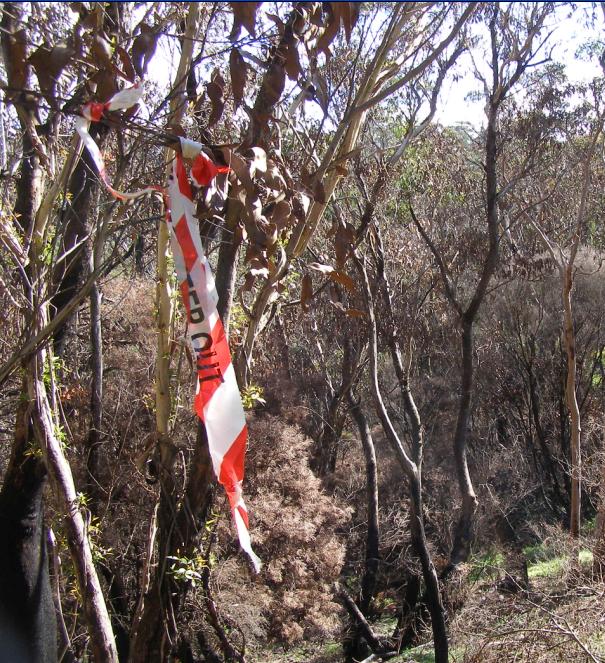 RFS telltale
.
RFS telltale
.
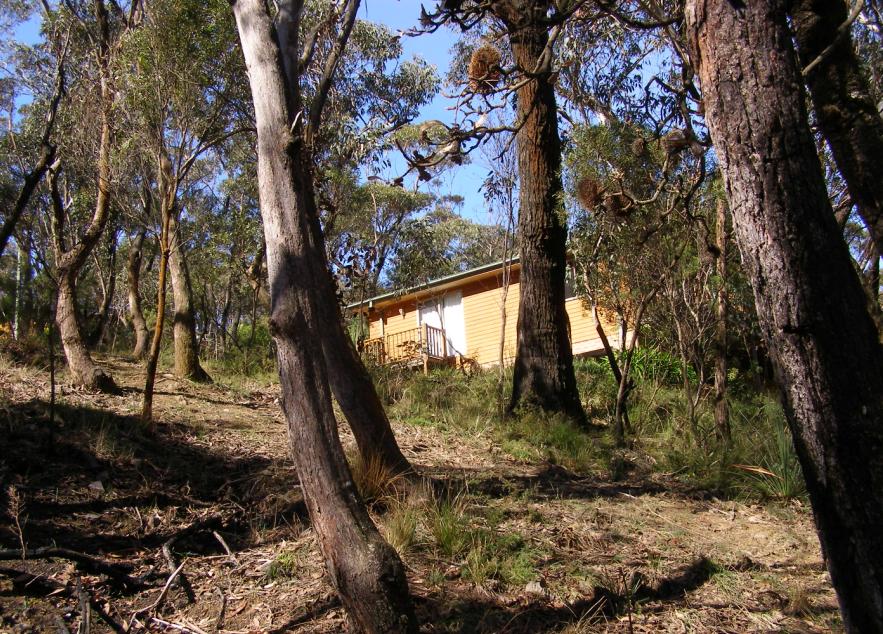 The cottage relative to the HR burn (aftermath)
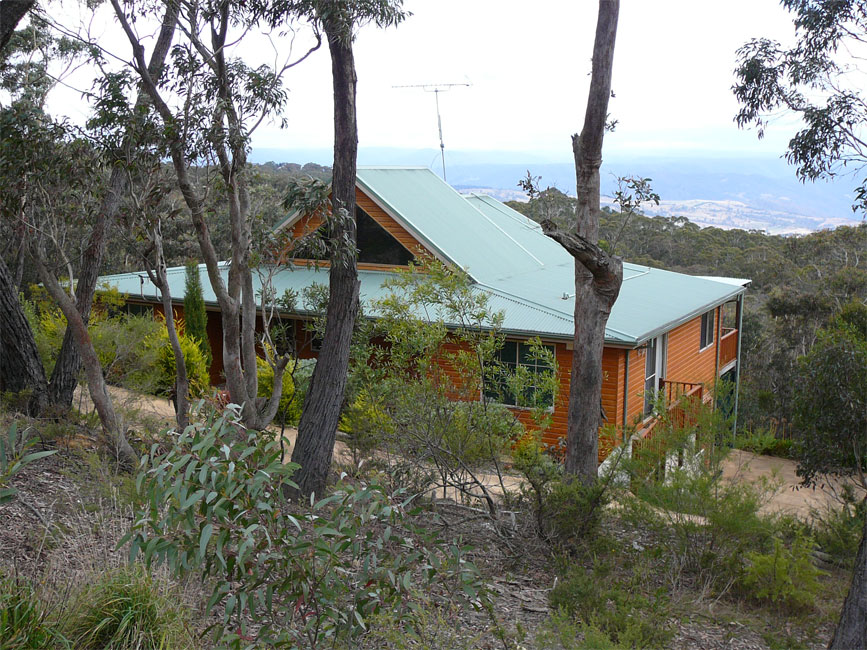
 Bushland habitat at Bonnie Doon at risk of further burning
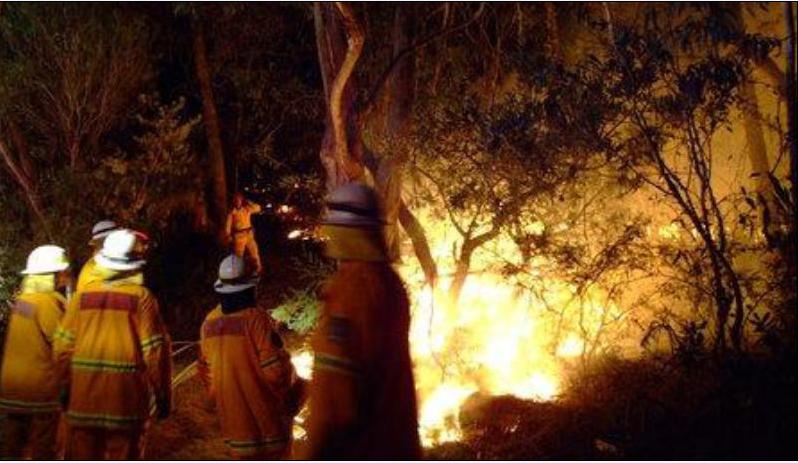 Fire-lighters look on during the Hazard Reduction Burn, Bonnie Doon Reserve
 More bushland for sale
~ a ‘lose-lose’ outcome for native habitat and the remnant disappearing wildlife is supports.
More bushland for sale
~ a ‘lose-lose’ outcome for native habitat and the remnant disappearing wildlife is supports.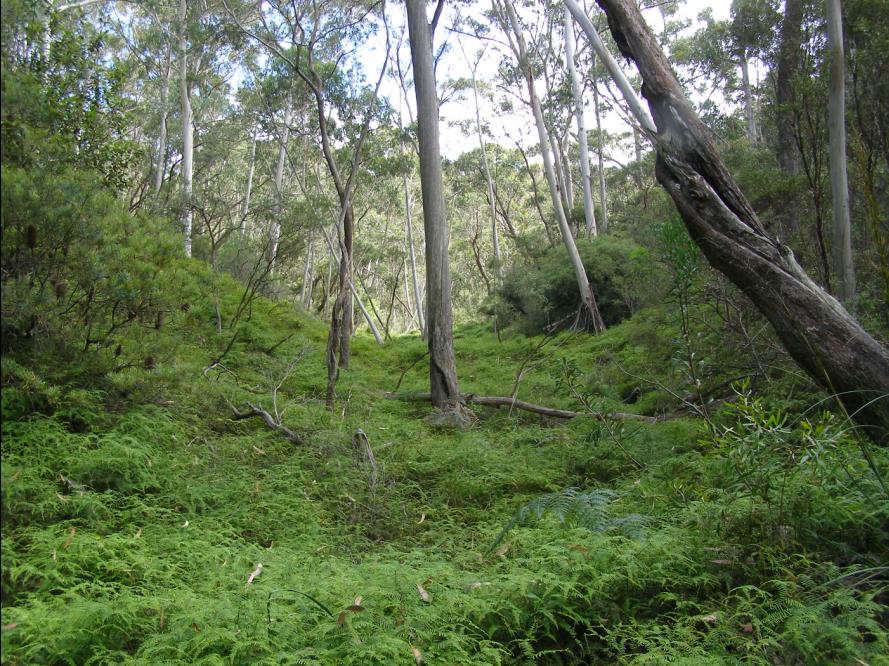 Bonnie Doon Reserve
on the western fringe of Katoomba township
Bonnie Doon Reserve
on the western fringe of Katoomba township Blue Mountains escarpment is slashed a kilometre west of the house site