Archive for the ‘Habitat Threats’ Category
Tuesday, December 20th, 2011
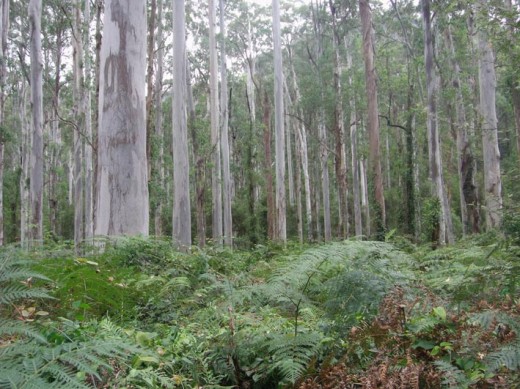
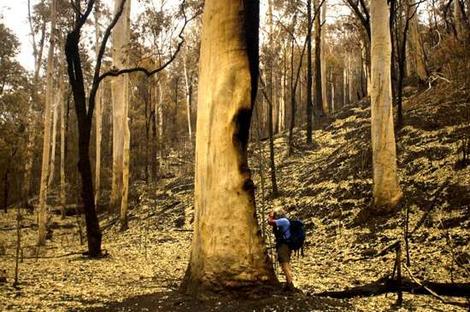 The Blue Gum Forest’s fire-scarred trees of December 2006
some of which have graced the Grose Valley in the Blue Mountains for hundreds of years.
Photo: Nick Moir (Source: Sydney Morning Herald, 20111211, Front Page) The Blue Gum Forest’s fire-scarred trees of December 2006
some of which have graced the Grose Valley in the Blue Mountains for hundreds of years.
Photo: Nick Moir (Source: Sydney Morning Herald, 20111211, Front Page)
.
The following articles are drawn from those by Gregg Borschmann, the first of which hit the front page of the Sydney Morning Herald on Monday 11th December 2006, following the massive bushfire conflagration that coalesced in the Grose Valley on 23rd November 2006.
From the community’s perspective, no noticeable lessons have been since learned by the Rural Fire Service (RFS) responsible. The prevailing bushfire management culture is that unless private property is directly, bushland is not valued and so not defended from bushfire. Indeed the approach is to let a bushfire burn as a defacto hazard reduction, so long as it doesn’t threaten human life or property. The RFS does not consider bushland an asset worth protecting from bushfire no matter what its conservation value, so with such a mindset such an ecological tragedy could well happen again.
.
‘The ghosts of an enchanted forest demand answers’
.
[Source: ^http://www.smh.com.au/news/national/the-ghosts-of-an-enchanted-forest-demand-answers/2006/12/10/1165685553891.html]
.
‘More than seventy years ago this forest inspired the birth of the modern Australian conservation movement. Today Blue Gum Forest stands forlorn in a bed of ash. But was it unnecessarily sacrificed because of aggressive control burning by firefighters focused on protecting people and property? That is the tough question being asked by scientists, fire experts and heritage managers as a result of the blaze in the Grose Valley of the upper Blue Mountains last month.
As the fate of the forest hangs in the balance, the State Government is facing demands for an independent review of the blaze amid claims it was made worse by control burning and inappropriate resources.
This comes against a backdrop of renewed warnings that Australia may be on the brink of a wave of species loss caused by climate change and more frequent and hotter fires. There are also claims that alternative “ecological” approaches to remote-area firefighting are underfunded and not taken seriously.
In an investigation of the Blue Mountains fires the Herald has spoken to experienced fire managers, fire experts and six senior sources in four agencies and uncovered numerous concerns and complaints.
- It was claimed that critical opportunities were lost in the first days to contain or extinguish the two original, separate fires.
- Evidence emerged that escaped backburns and spot fires meant the fires linked up and were made more dangerous to property and heritage assets – including the Blue Gum Forest. One manager said the townships of Hazelbrook, Woodford and Linden were a “bee’s dick” away from being burnt. Another described it as “our scariest moment”. Recognising the risk of the backburn strategy, one fire officer – before the lighting of a large backburn along the Bells Line of Road – publicly described that operation as “a big call”. It later escaped twice, advancing the fire down the Grose Valley.
- Concerns were voiced about the role of the NSW Rural Fire Service Commissioner, Phil Koperberg.
- Members of the upper Blue Mountains Rural Fire Service brigades were unhappy about the backburning strategy.
- There were doubts about the mix and sustainability of resources – several senior managers felt there were “too many trucks” and not enough skilled remote-area firefighters.
- Scientists, heritage managers and the public were angry that the region’s national and international heritage values were being compromised or ignored.
- There was anecdotal evidence that rare and even common species were being affected by the increased frequency and intensity of fires in the region.
- Annoyance was voiced over the environmental damage for hastily, poorly constructed fire trails and containment lines, and there were concerns about the bill for reconstruction of infrastructure, including walking tracks.
The fire manager and ecologist Nic Gellie, who was the fire management officer in the Blue Mountains for the NSW National Parks and Wildlife Service during the 1980s and ’90s, says the two original fires could have been put out with more rapid direct attack.
“Instead, backburning linked up the two fires and hugely enlarged the fire area … what we saw would be more accurately described as headfire burning, creating hot new fire fronts. While it protected the town of Blackheath, the plateau tops burnt intensely – and that created new problems both for management of the fire and the protection of biodiversity.
“When extreme fire weather, hot days and high winds arrived as predicted, the expanded fire zone was still not fully contained – and that was the cause of most of the high drama and danger that followed.”
In that dramatic week, Mr Gellie confronted Mr Koperberg with his concerns that the commissioner was interfering with the management of the fire by pushing hard for large backburns along the northern side of towns in the Blue Mountains from Mount Victoria to Faulconbridge, along what is known in firefighting circles as the “black line”.
The Herald has since confirmed from numerous senior sources that “overt and covert pressure” from head office was applied to the local incident management team responsible for fighting the fire.
There were also tensions relating to Mr Koperberg’s enthusiasm for continuation of the backburning strategy along the black line – even when milder weather, lower fuel levels and close-in containment were holding the fire.
Several sources say the most frightening threat to life and property came as the fire leapt onto the Lawson Ridge on “blow-up Wednesday” (November 22) – and that those spot fires almost certainly came from the collapse of the convection column associated with the intensification of the fire by the extensive backburns.
The Herald has also confirmed that
- The original fire lit by a lightning strike near Burra Korain Head inside the national park on Monday, November 13, could not be found on the first day. The following day, a remote area fire team had partly contained the fire – but was removed to fight the second fire. The original fire was left to burn unattended for the next couple of days;
- An escaped backburn was responsible for the most direct threat to houses during the two-week emergency, at Connaught Road in Blackheath. However, at a public meeting in Blackheath on Saturday night, the Rural Fire Service assistant commissioner Shane Fitzsimmons played down residents’ concerns about their lucky escape. “I don’t want to know about it. It’s incidental in the scheme of things.”
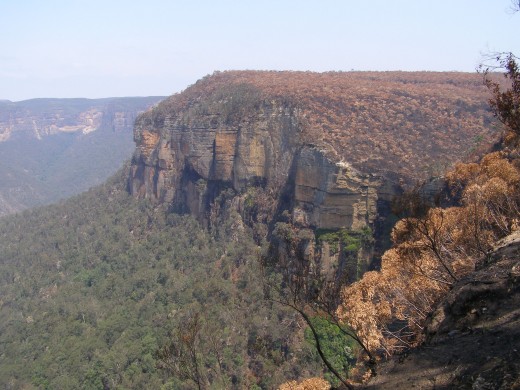 Blackheath escarpment broadscale backburn – “incidental in the scheme of things“?
(Photo by Editor 20061209, free in public domain, click photo to enlarge) Blackheath escarpment broadscale backburn – “incidental in the scheme of things“?
(Photo by Editor 20061209, free in public domain, click photo to enlarge)
.
Mr Koperberg, who is retiring to stand as a Labor candidate in next year’s state elections, rejected the criticisms of how the fire was fought.
He told the Herald: “The whole of the Grose Valley would have been burnt if we had not intervened in the way we did and property would have been threatened or lost. We are looking at a successful rather than an unsuccessful outcome.
“It’s controversial, but this is world’s best backburning practice – often it’s the only tool available to save some of the country.”
The commissioner rejected any criticism that he had exerted too much influence. “As commissioner, the buck stops with me. I don’t influence outcomes unless there is a strategy that is so ill-considered that I have to intervene.”
Mr Koperberg said it was “indisputable and irrefutable” that the Blue Mountains fire – similar to fires burning now in Victoria – was “unlike any that has been seen since European settlement”, because drought and the weather produced erratic and unpredictable fire behaviour.
.
 Phil Koperberg
NSW Rural Fire Service Commissioner at the time of the Grose Fire Phil Koperberg
NSW Rural Fire Service Commissioner at the time of the Grose Fire
.
The district manager of the Blue Mountains for the Rural Fire Service, Superintendent Mal Cronstedt, was the incident controller for the fire.
Asked if he would do anything differently, Mr Cronstedt answered: “Probably.” But other strategies might have also had unknown or unpredictable consequences, he said.
Jack Tolhurst, the deputy fire control officer (operations) for the Blue Mountains, said: “I am adamant that this fire was managed very well. We didn’t lose any lives or property and only half the Grose Valley was burnt.”
Mr Tolhurst, who has 50 years’ experience in the Blue Mountains, said: “This fire is the most contrary fire we have ever dealt with up here.”
John Merson, the executive director of the Blue Mountains World Heritage Institute, said fire management was being complicated by conditions possibly associated with climate change.
“With increased fire frequency and intensity, we are looking at a fundamental change in Australian ecosystems,” he said. “We will lose species. But we don’t know what will prosper and what will replace those disappearing species. It’s not a happy state. It’s a very tough call for firefighters trying to do what they think is the right thing when the game is no longer the same.
“What we are seeing is a reflex response that may no longer be appropriate and doesn’t take account of all the values we are trying to protect.”
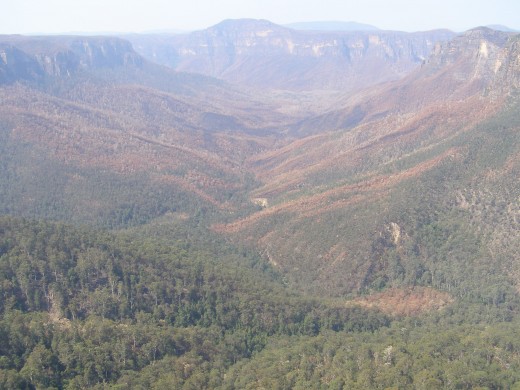 Grose Valley incinerated 23rd November 2006
(Photo by Editor 20061209, free in public domain, click photo to enlarge) Grose Valley incinerated 23rd November 2006
(Photo by Editor 20061209, free in public domain, click photo to enlarge)
..
‘The burning question’
.
[Source: ^http://www.smh.com.au/news/national/the-burning-question/2006/12/10/1165685553945.html]
.
‘A bushfire scars a precious forest – and sparks debate on how we fight fire in the era of climate change.
.
“Snow and sleet are falling on two bushfires burning in the Blue Mountains west of Sydney.” ~ ABC Radio, November 15 (2006).
The news report was almost flippant, something that could happen only in Dorothea Mackellar’s land of drought and flooding rains. Later that evening, two weeks from summer, Sydney had its coldest night in more than a century.
Over the past month – as an early summer collided with a late winter and a decade-long drought – NSW and Victoria have battled more than 100 bushfires. But of them all, last month’s Blue Mountains blaze reveals tensions and systemic problems that point to a looming crisis as bushfire fighters struggle to protect people, property, biodiversity and heritage values in a world beset by climate change.
The tensions have always been there – different cultures, different ways of imagining and managing the landscape. Perhaps they are illustrated by a joke told by two Rural Fire Service crew in the Blue Mountains. “How does the RFS put out a fire in your kitchen? By backburning your sitting room and library.” The joke barely disguises the clash between the imperative of saving lives and homes, and the desire to look after the land, and the biodiversity that underpins our social and economic lives.
For fire managers, whose first priority will always be saving people and property, the equation has become even more tortured with a series of class actions over fires in NSW and the ACT. As one observer put it: “These guys are in a position where they’re not going to take any chances. No one will ever sue over environmental damage.”
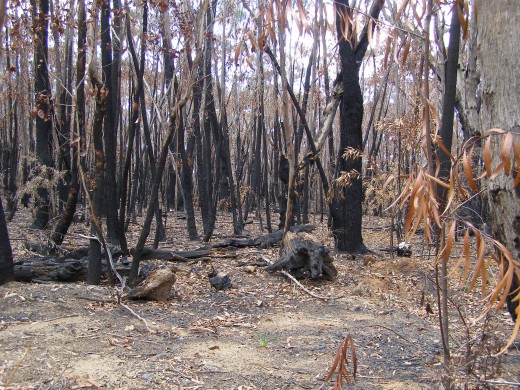
For bushfire management the debate tentatively started a couple of decades ago. The challenge was to do what poets, writers and painters have long grappled with – coming to terms with a country whose distinctiveness and recent evolutionary history have been forged in fire. Drought and climate change now promise to catapult that debate to centre stage.
It is perhaps no accident that such a defining fire has occurred in one of the great amphitheatres of the Australian story, the Grose Valley in the upper Blue Mountains. Charles Darwin passed by on horseback in 1836, and described the valley as “stupendous … magnificent”.
The Grose has long been a microcosm of how Australians see their country. In 1859 some of the first photos in Australia were taken in the valley. Proposals for rail lines and dams were forgotten or shelved. The first great forest conservation battle was fought and won there in 1931-32.
But now the valley is under threat from an old friend and foe – fire.
Ian Brown has worked on dozens of fires in the Blue Mountains. He is a former operations manager for the National Parks and Wildlife Service.
“All fires are complex and difficult, and this sure was a nasty fire … But we need lots of tools in the shed. Those hairy, big backburns on exposed ridges so close to a blow-up day with bad weather surprised me. Frightened me even.”
For Brown, even more worrying is the trend.
“Parts of the Grose have now burnt three times in 13 years and four times in 24 years. Most of those fires started from arson or accident. Many of the species and plant communities can’t survive that sort of hammering.”
Ross Bradstock, a fire ecologist, agrees. Professor Bradstock is the director of the new Centre for the Environmental Risk Management of Bushfires at the University of Wollongong, which is funded by the Department of Environment and Conservation and the Rural Fire Service. He says Australia stands out as one of the countries whose vegetation may be most affected by climate change.
Bradstock says that in south-eastern Australia the potential for shifts in fire frequency and intensity are “very high … If we’re going to have more drought we will have more big fires.”
But the story is complicated and compounded by the interaction between drought and fire. The plants most resistant to fire, most able to bounce back after burning, will be most affected by climate change. And the plants that are going to be advantaged by aridity will be knocked over by increased fire frequency. “In general, the flora is going to get whacked from both ends – it’s going to be hit by increased fire and climate change. It’s not looking good.”
.
Wyn Jones, an ecologist who worked for the wildlife service, says the extremely rare drumstick plant, Isopogon fletcheri, is a good example. There are thought to be no more than 200 specimens, restricted to the upper Grose. Last week, on a walk down into the Blue Gum Forest, Jones found three – all killed by the fire.
.
The NSW Rural Fire Service Commissioner, Phil Koperberg, has been a keen supporter of Bradstock’s centre. Asked if he agreed with the argument that the Grose had seen too much fire, Mr Koperberg replied: “It’s not a comment I disagree with, but had we not intervened in the way we did, the entire Grose Valley would have been burnt again, not half of it.”
The great irony of the fire is that it was better weather, low fuels and close-in containment firefighting that eventually stopped the fire – not big backburns.
Remote area firefighting techniques have been pioneered and perfected over recent decades by the wildlife service. In 2003 a federal select committee on bushfires supported the approach. It recommended fire authorities and public land managers implement principles of fire prevention and “rapid and effective initial attack”.
Nic Gellie, a fire ecologist and former fire manager, has helped the wildlife service pioneer ecological fire management. The models are there – but he says they have not been used often enough or properly.
Doubts have been expressed about the sustainability of the current remote area firefighting model. It is underfunded, and relies on a mix of paid parks service staff and fire service volunteers. Most agree the model is a good one, but not viable during a longer bushfire relying on volunteers.
The Sydney Catchment Authority pays $1 million for Catchment Remote Area Firefighting Teams in the Warragamba water supply area. It has always seemed like a lot of money. But it looks like a bargain stacked against the estimated cost of $10 million for the direct costs and rehabilitation of the Grose fire.
Curiously, one unexpected outcome of the great Grose fire may be that the valley sees more regular, planned fire – something the former wildlife service manager Ian Brown is considering.
“If climate change means that the Grose is going to get blasted every 12 years or less, then we need more than just the backburning strategy. We need to get better at initial attack and maybe also look at more planned burns before these crises. But actually getting those burns done – and done right – that’s the real challenge.”
It may be the only hope for Isopogon fletcheri.
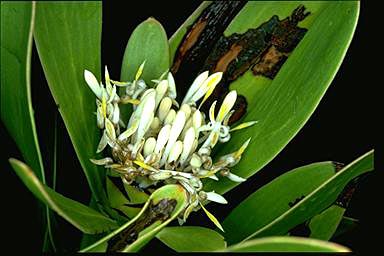 Fletcher’s Drumstricks (Isopogon fletcheri)
http://www.anbg.gov.au Fletcher’s Drumstricks (Isopogon fletcheri)
http://www.anbg.gov.au
.
.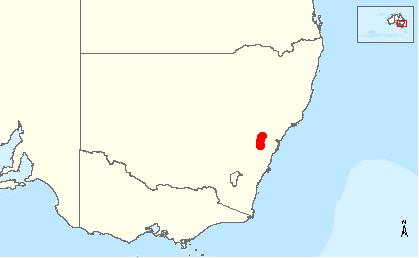 Distribution of Isopogon fletcheri is restricted to a very small area in the Blackheath district of the Blue Mountains.
Given restricted distribution, it is susceptible to local extinction due to environmental and demographic uncertainty and in particular pathogens such as Phytophthora cinnamomi. Distribution of Isopogon fletcheri is restricted to a very small area in the Blackheath district of the Blue Mountains.
Given restricted distribution, it is susceptible to local extinction due to environmental and demographic uncertainty and in particular pathogens such as Phytophthora cinnamomi.
What needs to be done to recover this species? Continued habitat protection.
http://www.threatenedspecies.environment.nsw.gov.au/tsprofile/profile.aspx?id=10440
.
.
What price now?
.
[Source: ^ http://www.smh.com.au/news/national/what-price-now/2006/12/10/1165685553948.html?page=2]
.
The Blue Gum Forest stands tall, straight and surreal in a fire-ground of still smouldering ash. Three weeks ago it was intensely burnt during bushfires in the Grose Valley. The future of the iconic forest – some trees are thought to be 200 to 300 years old – now hangs in the balance.
Last week the massive white-trunked blue gums were dropping their scorched leaves to reveal a stark and unrecognisable forest of tall trunks, bare limbs and fallen logs.
The director of the Colong Foundation for Wilderness, Keith Muir, did not speak out during the fires, but now he wants answers.
.
-
“Could the Blue Gum have been saved using other firefighting strategies that also protected life and property?
-
Was the fire that burnt this very special forest made more intense, unpredictable and extensive by massive backburning operations?
-
Was the Blue Gum sacrificed for the sake of a de facto fuel reduction exercise that didn’t consider heritage values?
-
We need answers. We need an independent inquiry. This is too important to happen again.”
.
In the early 1930s the Herald supported a campaign by bushwalkers to save the Blue Gum from grazing and agricultural development. It was the first successful Australian conservation campaign to protect an almost pure stand of tall mountain blue gum ( Eucalyptus deanei) on about 40 hectares of river flats in the rugged Grose Valley of the upper Blue Mountains. The bushwalkers raised £130 to buy the lease covering the forest and create the Blue Gum Forest Reserve.
The Herald visited the Blue Gum Forest again last week with a forest ecologist, Wyn Jones, and Ian Brown, former National Parks and Wildlife Service operations manager with overall responsibility for fire management. In 1994 Jones, then an ecologist with the service, helped to describe scientifically the rare and newly discovered Wollemi pine. He first saw the Blue Gum Forest more than 40 years ago. He has been involved with it professionally and as a bushwalker ever since.
He said the forest would re-shoot and regrow, but it remains to be seen when and how. He predicted its immediate future would be decided over the next six months. That would depend largely on the vagaries of climate. Severe wind storms, a hot dry summer or even persistent rain, fungal growth and insect attack could all compromise the forest’s ability to bounce back quickly.
More uncertain and potentially bleak is the long-term prognosis. Jones said changing fire regimes caused by humans could be further complicated by climate change, a recipe for more frequent and hotter fires.
The Blue Gum Forest has been burnt four or five times in less than 50 years: by wildfire in 1957, possibly 1968, and in 1982, 1994 and 2006.
“Without human interference , this forest may have been burnt once or perhaps twice in 50 years, not five times,” Jones said.
Jones is convinced cracks in majestic gums were caused by the fire. If they are deep enough to effectively ringbark the surviving trees, then the demise of the forest promises to be a slow and painful affair.
“The old Blue Gum Forest is gone,” he said. “We don’t know what the Blue Gum of the future will look like. We could be heading for strange and very different days.”
===========
‘Friends of the giants’
.
In 1931 the Herald’s conservation reporter, J.G. Lockley, writing under the name Redgum, led a campaign to save the Blue Gum Forest.
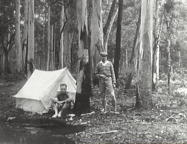
“To destroy the trees would be unforgivable vandalism .. if they are permitted to stay, they will stand straight and true for many generations … Every acre on which those grey gums are growing should be reserved for the distant days, when the nation will know the true worth of the giant trees, which are not understood.”
.
‘Blue Gum Lessons’
.
(Editor’s letter in the Blue Mountains Gazette, 20061220)
.
‘One of our most precious natural heritage assets, the Blue Gum Forest, has been allowed to be scorched by bushfire. This demands an independent enquiry into current fire fighting practices to ensure such a tragedy is not repeated.
Not a witch hunt, but what is needed is a constructive revision into improving bushfire fighting methods incorporating current research into the issue. The intensity and frequency of bushfires have become more prevalent due to disturbances by man, including climate change.
An enquiry should consider the assets worth saving; not just lives, homes and property but natural assets of the World Heritage Area. Fire fighting methods should seek to protect all these values. It seems back-burning, however well-intentioned, burnt out the Blue Gum. This is unacceptable. What went wrong? The future survival of our forests depends on how we manage fire.’
.
A Grose Valley Fire Forum was held at Mount Tomah on Saturday 17th February 2007, but the public were denied entry.
An independent enquiry was never conducted. A public enquiry was never conducted.
.
Tags: backburns, Blackheath, Blue Gum Forest, Blue Mountains, Blue Mountains World Heritage Area, broadscale backburning, ecological values, forest values, Grose Valley, Grose Valley Fires 2006, Isopogon fletcheri, Mal Cronstedt, old growth, Phil Koperberg, RFS, Rural Fire Service
Posted in Blue Mountains (AU), Threats from Bushfire | No Comments »
Add this post to Del.icio.us - Digg
Monday, December 19th, 2011
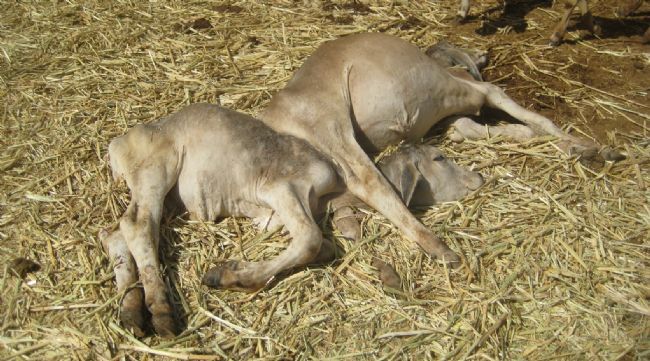
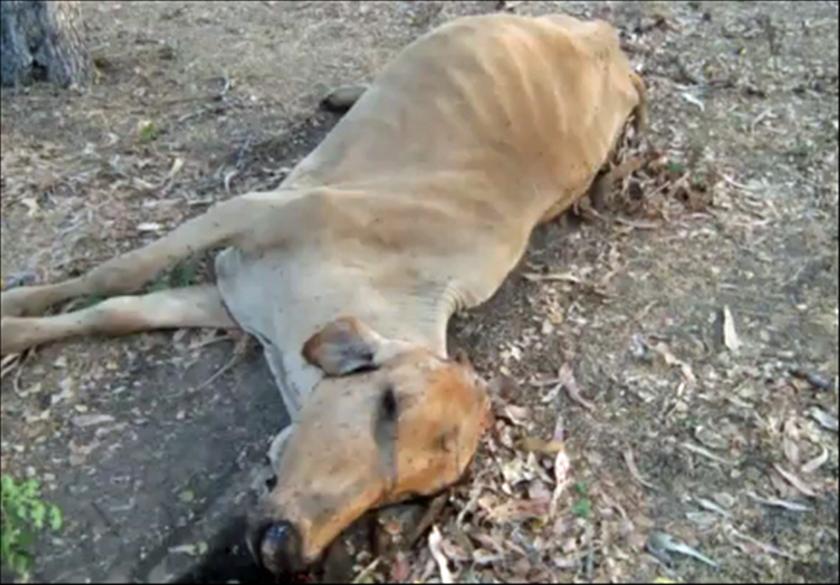
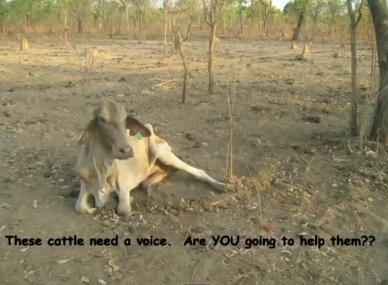 This is not Ethiopia…it is Mataranka Cattle Station in 2010 This is not Ethiopia…it is Mataranka Cattle Station in 2010
Northern Territory, Australia
[Source: ^http://www.youtube.com/watch?v=pMX7fAMSkXA]
.late
This Editor recalls travelling as an impressionable backpacker by chance through Mataranka some years ago in 1983, then again on a career mission in 1990. The first trip was a ‘gap year‘. The second trip was a personal mission driving from Melbourne via Adelaide, up the Stuart Highway, stopping at Victoria River Downs Station and ultimately arriving at Kununurra. My ambition was to acquire a commercial helicopter license, low-level endorsement and associated cattle mustering experience. It was secured through locally connected ‘Golden West Helicopters’ (Slingsby Helicopters) offering an ‘introductory‘ advantage to a parochial profession closed to outsiders. This was the aviation career lure, albeit achieved after $45,000 dispersed, licence acquired but leading into the 1991 recession then Prime Minister Paul Keating said ‘we had to have‘.
The benefits of hindsight they say, or life’s lesson.
It is an extremely hot place in inland northern Australia about 400 km south of Darwin characterised by grassy woodland savannah. Toward the end of the Dry Season, temperatures can exceed 50 degrees celsius in the sun. While the Brahman cattle breed has been long bred across northern Australia because of the breed’s adaptability to hotter climates, no animals can withstand such extreme heat. But worse, no animal can withstand starvation and abuse at the captive hand of cruel sadistic handlers.
At Mataranka Cattle Station, a 77,000 hectare commercial cattle station, between 2008 and 2010, hundreds of cattle as well as horses were cruelly treated, allowed to suffer and die from criminal neglect and starvation. Station Manager Ian Gray was in charge at the time. He was let off by the Northern Territory Government as part of a government cover up to protect the reputation of the cattle industry and of Charles Darwin University which controlled the cattle station. The instances of animal cruelty are perhaps the worst in Australia’s history. They came a time when many Australians become horrified by the footage of inhumane treatment of cattle in Indonesian abattoirs after being exported live from northern Australia.
The Australian beef cattle industry is promoted by the Northern Territory Government as one of Australia’s ‘premium export industries.’
At what cost?
.
“In northern Australia, beef cattle are raised on very large properties (stations) where they graze on native pastures and bush.”
~ CDU website
.
Not only is cattle farming in northern Australia treating northern Australian wilderness as one big cattle paddock and trampling the last remnants of savannah ecosystems, the cattle industry in northern Australia is savagely cruel, immoral and should be shut down. It is no surprise that the main buyer of cattle in northern Australia, Indonesia, is winding down the export trade. Indonesia has been very open about it becoming self-sufficient for years. Those involved in the live cattle export trade have worked themselves into a dead end industry. Based on the following account at Mataranka, the live cattle trade can’t end soon enough.
.
Update (20120103):
It has come to the editor’s attention through a reliable party that the station manager of Mataranka at the time, Ian Gray, has formally rebutted the NT Ombudsman’s report saying that he never maltreated cattle at Mataranka Station. It is anticipated that further insight into this matter will serve to provide a more balanced account of what happened. This article essentially reproduces already reported material from other sources, including the NT Ombudsman and the ABC, which are widely regarded as reliable sources, as well as video footage of the condition of the cattle.
The aim of the article is to raise general awareness of the particular animal cruelty reported at Mataranka Station over several years, plus more broadly of the unethical nature of the cattle industry in northern Australia. We are interested not just in raising awareness of animal cruelty and injustice against wildlife, but changing human behaviour and culture to eradicate cruel and harmful practices. We would like to pursue this subject with an aim of contributing to constructively change to the animal handling culture, harmful farming practices, policies, practices, laws and funding of government, industry and university so as to improve the triple bottom line standards of agriculture across northern Australia. We will be pleased to publish information that helps achieve these ends.
.
.
.
Mataranka Death Campl
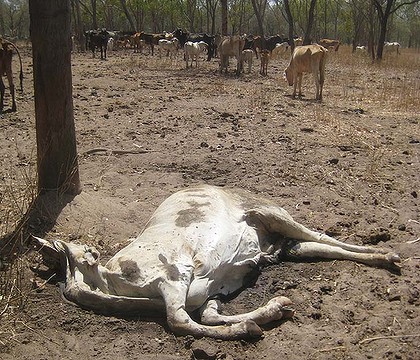
“At Mataranka Station from about August 2009 to December 2009 animals died from malnutrition, lack of water and others were destroyed. In many cases, livestock were tick infested, emaciated, thirsty, dehydrated, victims of attack from wild animals and meat ants. Some would have died an agonising death and those that survived were distressed, probably for months.”
.
[Source: Executive Summary, p.4, Volume 1, REPORT OF INVESTIGATION INTO THE TREATMENT OF CATTLE & HORSES AT CHARLES DARWIN UNIVERSITY MATARANKA STATION, by NT Ombudsman, 2010]
.
Northern Territory’s Charles Darwin University’s (CDU) teaching facility at Mataranka Station has been found to have condoned and ignored widespread animal cruelty, mistreatment, neglect, suffering and starvation of the Station’s 4500-strong herdover a three year period from 2008-2010.
Worse than that, Charles Darwin University in cahoots with the Labor Northern Territory Government have tried to excuse the treatment and sweep the matter under the carpet. The CDU website on 1st February 2010 tried to suggest excuses such as the photos being ‘taken toward the end of the Northern Territory dry season‘, that ‘only a small proportion were in extremely poor condition‘, that cows were ‘calving out of season‘ – the cows fault, and dismissing the abuse simply as ‘poor herd management‘.
It claims CDU acted as soon as it became aware of the problem in September 2009. Crap!
[Source: ^http://ext.cdu.edu.au/newsroom/a/2010/Pages/100201-Mataranka-Station-claims.aspx]
.
Charles Darwin University students exposed to the cruel animal treatment were disgusted, took photos, formally complained to the authorities (which did stuff all) and resigned from the university in disgust. University students training to work in the pastoral industry said they were distressed after seeing animals suffering and dying.
One witness observed carcasses being bulldozed into a mass grave and set alight after animals were starved and left to die on a university-run cattle station. Some of the animals were so weak they were eaten by meat ants or ripped apart by dingoes, wild dogs and feral pigs. Cattle were tick-infested, emaciated and dehydrated while others were too weak to stand and may have spent days on the ground before dying. Still-alive cattle were seen with their bowels ripped out by dingoes, unable to stand. The hoof of one horse fell off, which only occurs after a long period of neglect and months of suffering.
“Some [animals] would have died an agonising death and those that survived were distressed, probably for months,” Ms Richards said.
[Source: ‘Witness tells of mass animal grave‘, Lindsay Murdoch, Mataranka, Northern Territory, 20110425, ^http://www.smh.com.au/environment/animals/witness-tells-of-mass-animal-grave-20110424-1dt35.html]
====
Charles Darwin University’s Katherine Campus still offers a ‘Certificate III in Agriculture (Beef Production)‘ mainly out of Mataranka Station. The campus focuses on agricultural training for Vocational Education and Training (VET) courses, Australian Apprenticeships and traineeships in agriculture. Programs include the nationally-accredited Agriculture & Rural Production VET / TAFE Training Packages. Two-to-five day workshops in rural production skill areas including welding, vehicle maintenance, operating tractors, ride-ons and 4WD driving are also offered by the Katherine campus.
‘Do you want to work in an exciting, challenging industry that involves handling animals and machinery with extensive out-of-doors work? the beef cattle industry may be for you.‘… it promotes.
.
[Source: ^ http://www.comparecourses.com.au/Course/certificate-iii-in-agriculture-beef-production-50670.htm]
.
.
‘Sorry Saga’
.
This article has been prompted by the re-running of the ABC TV’s Landline programme, ‘Sorry saga‘ which was first broadcasted 20110727, and reported by Prue Adams
[Watch Landline Video: ^http://www.abc.net.au/landline/content/2010/s3276556.htm] – still available at the time of publishing.
We’ve seen and heard a fair bit lately about animal welfare. With most of the outrage aimed at the handling of Australian cattle exported live to Indonesia. But today, we’ll show a shocking case of cruelty that occurred right under the noses of government and university authorities in the Northern Territory.
It’s a sorry saga of mismanagement and neglect that’s dragged on for nearly two years. And despite a high-level report recommending prosecution, no one has ever been charged.
Prue Adams prepared this special report for Landline and we should warn some viewers may find images in this story distressing.
TOBY GORRINGE (VOICEOVER): In case you’re unaware, I wish to draw your attention to the serious nature of the animal welfare state of the cattle at Mataranka Station.
PRU ADAMS, PRESENTER: Every journey starts with one small step.
Toby Gorringe could never have foreseen the destination of the journey he began almost two years ago. It’s changed the course of his career and that of a handful of others. It’s led to several high-level inquiries, a well regarded university losing face, and a government scrambling to make departmental and legislative changes.
But still, this stockman and teacher, is far from satisfied.
TOBY GORRINGE, FMR LECTURER CHARLES DARWIN UNIVERSITY: I’ve been in the cattle industry all my life, that’s all I’ve ever done. If I wasn’t mustering cattle and whatever in the bush, I was working in the meat works or shoeing horses or something. So I’ve been around animals all my life. But you don’t have to see what happened there, that was just cruel. Just no other way to describe it. And they got away with it, I can’t believe it.
PRU ADAMS: When Charles Darwin University came into being eight years ago, it inherited the lease on Mataranka Station. An hour’s drive south of Katharine, Mataranka covers 770 square kilometres.
The property and its largely Brahman herd, have provided a useful tool for training students who want to work on the land.
VOICEOVER: So it provides a real life opportunity for pastoral industry training in the Northern Territory, which is vital for a very substantial part of the Northern Territory’s economy.
PRU ADAMS: But in mid 2009, a picture started emerging that all was not well at Mataranka.
A former NT Brahman breeders chairman, Ian Gray, was the station manager at the time and is seen here in an earlier Landline story. Toby Gorringe worked under Ian Gray. He says he complained to his boss that cattle were starving. Photos were taken of some of the dead and dying animals.
TOBY GORRINGE: I’ve seen cows lying down and can’t get up. And their calves are waiting around for them to get up and they can’t. So I’ve seen dead cows and dead calves together and dingos have eaten them alive, ants, pigs, things like that.
This is a letter I wrote to the HR of CDU.
PRU ADAMS: A vocational trainer in beef cattle and horse management, Toby Gorringe took his complaints further up the line within Charles Darwin University, including to the vice chancellor.
Still not satisfied, in October of 2009 he wrote to several Members of Parliament and in January last year contacted the Office of the Ombudsman.
TOBY GORRINGE: I kept going right up until I got to the Ombudsman, and at that time I didn’t trust anybody. And it’s still hard to trust someone, because everywhere I went I was shut down.
JULIE CARLSEN, NT DEPUTY OMBUDSMAN: The complaints were certainly valid and it has been documented quite widely that this is one of the worst animal cruelty cases in Australia.
PRU ADAMS: Julie Carlsen, is the Northern Territory’s Deputy Ombudsman. A former Western Australian police officer, she was put in charge of investigating what had, by the beginning of last year, become a series of complaints from staff, students and teachers at Mataranka Station.
JULIE CARLSEN: The nub of the investigation found that inadequate food was being provided to the animals, if it was provided at all. That watering points had broken down but were not being repaired in an appropriate time frame.
PRU ADAMS: And how many cattle did you find had died in that period?
JULIE CARLSEN: Our estimate was up to 800, and that estimate is based on the information provided to us by the students, by the staff members themselves, by contractors who attended, an independent investigator by the name of Tom Stockwell, who was employed by the University to conduct an investigation.

WOMAN ONE: These black marks around its neck are actually flies.
WOMAN TWO: Oh!
PRU ADAMS: A history of poor record keeping at the station and the death of hundreds of stock the previous year due to a badly managed bushfire, means the exact number of cattle that died will never really be known. The University disputes the Ombudsman’s figure of 800, saying it was more likely to be just over 200, which the Auditor General confirmed based on the University’s own evidence.
Nevertheless between 5 per cent and 18 per cent of the station’s cattle, and at least two horses, perished. And the Ombudsman’s report, tabled in Parliament last October, makes for grim reading.
EXTRACT FROM OMBUDSMAN’S REPORT: Depriving cattle and horses of food and water to the extent that they become so weak that they drop to the ground, is in my view, neglect as defined in the Animal Welfare Act. In one case neglect was so severe that hoof of a horse fell off. This only occurs when there has been months of suffering by the horse.
PRU ADAMS: The ombudsman blamed CDU, Charles Darwin University and…
EXTRACT FROM OMBUDSMAN’S REPORT: Specifically the station manager, for failing to provide the fundamental necessities required to sustain life.
PRU ADAMS: And the Office firmly believed someone should have been prosecuted for animal cruelty. No one ever has been.
JULIE CARLSEN: I personally can’t see why this matter was not given the importance it deserved. That the amount of animals that died, whether it was 200, or whether it was up to 800 was not significant enough for some action to be taken.
PRU ADAMS: Hello Mr Glover, how are you, pleased to meet you too.
The University’s vice chancellor is Professor Barney Glover. We met at a tour of Mataranka Station late last month.
PROF BARNEY GLOVER, VICE-CHANCELLOR CHARLES DARWIN UNIVERSITY: The University accepts the view of the Ombudsman in relation to that matter is that very poor management at the station, primarily related to the station manager at the time, was a major cause of the difficulties that we faced. But on top of that I think it’s also fair to say that the response to the crisis at the time, and I’m on the public record in acknowledging that by the University, was not quick enough to get supplementary feed to the cattle that were in distress and we should have been able to do more, more quickly.
PRU ADAMS: So what went wrong? To begin to answer that question you have to go back a few years when it was decided Mataranka Station would not just act as an education and training site but would also be operated as a commercial venture. Cattle would be bred for sale.
In May 2009 the beginning of the six-month dry season, one of those sales fell through. Meaning the station had more stock than it was able to carry during the hot, dry weather.
TOBY GORRINGE: Well, I seen cattle locked in small paddocks, which are holding paddocks, but they were locked in there for, well they turned out to be in there for over four months. And the weaners that were taken off their mothers were locked in the yards for four months and you could see the condition falling off them on a daily basis.
Cattle that are locked in yards for that period of time don’t get the supplements they need because you can’t feed it to them, they’re not being cattle, they’re just – they can’t act like cattle because they can’t go and walk and have a feed and have a drink when it suits them.
PRU ADAMS: The Katherine Research Station is about an hour’s drive north of Mataranka Station. It was from there, in early September 2009, that government livestock officers were dispatched to check out Toby Gorringe’s complaints. The inspectors later told the Ombudsman they were “absolutely horrified”. They reported the animals were “tick infested and starving”. There were “insufficient water” troughs. A departmental vet read the manager, Ian Gray, his rights, because “serious charges would be laid”.
Another officer later told the Ombudsman that “after 28 years of conducting inspections this was the worst case of neglect he had seen on such a large scale”.
The inspectors said they distributed some feed themselves, and even shot cattle that had fallen and couldn’t get up. But when it was reported back to their own Department of Resources and to the University, the situation was hosed down.
Landline’s attempts to speak with the inspectors on camera have been unsuccessful. A departmental email apparently warned staff not to be involved with our program. Instead, we were referred to Fran Kilgariff, who is new to the role of Animal Welfare Authority in the Department of Housing, Local Government and Regional Services.
FRAN KILGARIFF, ANIMAL WELFARE AUTHORITY: Well, I think what went wrong was that the animal welfare branch, historically, had been focused on small companion animals, dogs and cats and people’s pets, and were largely unprepared for something on that scale and with large animals.
PRU ADAMS: She agrees with the Ombudsman that there was confusion as to which authorities were responsible for livestock welfare.
FRAN KILGARIFF: Look, I think it’s fair to say that in many areas people were not focused on what… perhaps not focused is not the right word, there was not a clarity about what people’s roles were or what the responsibilities of various bodies were, and it’s only when you get an incident as tragic as this that people actually are jolted to think that they actually need to actually be really clear about what their roles and responsibilities are.
PRU ADAMS: In the Northern Territory, to teach with animals, the institution needs a licence. And also needs to establish an Animal Ethics Committee in line with the Animal Welfare Act. At Charles Darwin University, the same person who held the licence for Mataranka Station was also the chairperson of the ethics committee, as well as being Deputy Vice Chancellor of the University.
The Ombudsman called it “an irreconcilable conflict of interest”. That man is Professor Bob Wasson, who appeared before a parliamentary inquiry earlier this month.
(footage from the parliamentary inquiry)
PARLIAMENTARIAN: Were you part of the first inspection by the Animal Ethics Committee, of the station after the complaints were made?
PROFESSOR BOB WASSON: Yes, I was.
PARLIAMENTARIAN: And in that inspection, did you check the shed to see how much hay was in that shed?
BOB WASSON: Yes. There was zero.
PRU ADAMS: In his role on the ethics committee, Professor Wasson was notified very early on about the neglect at Mataranka Station.
Another AEC member reported “the professor would make excuses for the situation at Mataranka”.
(footage from the parliamentary inquiry)
BOB WASSON: I just want to make something very, very clear, and this is not an attempt at any way to shift responsibility. But the AEC was not the manager of Mataranka and I think some of this conversation has sort of blurred that boundary.
BARNEY GLOVER: When that conflict of interest was brought to his attention he immediately resigned to resolve the conflict of interest. Certainly my observations…
PRU ADAMS: From the committee but not from the university?
BARNEY GLOVER: No, but my observations of the Deputy Vice Chancellor’s role during the period of late 2009 and early 2010 was someone who was deeply concerned about the condition of the cattle at Mataranka and very committed to trying to address those difficulties.
PRU ADAMS: In October 2009 this man, Tom Stockwell, independent grazing consultant and owner of Sunday Creek Station was contacted by Professor Bob Wasson to investigate the situation at nearby Mataranka. His report backed up Toby Gorringe’s account of animal neglect and he recommended dismissal of station management.
VOICEOVER: A management system which starved animals to death and then left them for crows, dogs and ants to finish off is frankly distressing in the highest order.
PRU ADAMS: But Mr Stockwell’s recommendations were largely ignored.
Now it seems to me that it was quite apparent by late in 2009, October, November 2009, through Department of Resources reports and also the report by Tom Stockwell who was employed by the University to have a look at the situation…
BARNEY GLOVER: Contracted by the university.
PRU ADAMS: Contracted. It became very apparent that the management was somehow lacking here. Why wasn’t the manager, Ian Gray, sacked?
BARNEY GLOVER: We took into account, and the advice that was provided to me, the report from Tom Stockwell, which was a very comprehensive report. We also took into account the responses to that report by those who were named in the report adversely, in the context of natural justice. We took that into account, while the station manager was stood down. And the recommendation to me was to reinstate the station manager but with a series of conditions attached.
TOBY GORRINGE: So they put him back on; said he had no case to answer; he’s done nothing wrong. So Ian goes in there thinking he’s done nothing wrong. So CDU must be at fault there somewhere because they’ve already told him killing those cattle is not wrong. That’s how I look at it. They put him back on, you have no case to answer, that’s how it looks to me.
PRU ADAMS: Ian Gray was finally encouraged to leave Mataranka in June last year, almost a year after the first complaints were lodged and just as the Ombudsman’s findings were coming to light.
BARNEY GLOVER: The University negotiated a termination of employment contract of the station manager and he left the University.
I don’t believe it constitutes any sort of inducement.
PRU ADAMS: After a 30-year career, Mr Gray says he’s unable to get a cattle industry job and now works in mining. He’s bitter about being targeted by the University, the Ombudsman and the media and doesn’t want to appear on camera. His supervisor and the man who steadfastly supported Ian Gray, in the face of mounting criticism, was qualified university veterinarian, Dr Brian Hyme. He told the Ombudsman “Mataranka was being held to an impossible standard”. He’s also left the CDU to take up a job at a Queensland agricultural college. We spoke at length on the phone but he didn’t want to be quoted for fear of dragging his new employer into the saga.
In April this year, six months after the Ombudsman’s report was tabled in the Northern Territory Parliament, Minister, Malarndirri McCarthy, announced there would be no prosecutions. There’s just 12 months to bring a charge under the Animal Welfare Act and that time had expired.
MALARNDIRRI MCCARTHY, NT LOCAL GOVT MININSTER: It is deeply disappointing that no one will be prosecuted and yes, clearly it is too little too late.
PRU ADAMS: The Minister released two legal advice documents, one from January warning, one from January, warning “the limitation for starting prosecution would expire in April”. And the Opposition claimed it proved the Government was well aware time was running out.
JOHN ELFERINK, NT OPPOSITION JUSTICE SPOKESMAN: The fact that the Government sat on the January report when they still could have brought a prosecution, demonstrates that they were never interested in a prosecution in the first place and I wonder why that might be.
TOBY GORRINGE (reading from email): In case you’re unaware I wish to draw your attention…
PRU ADAMS: In fact Toby Gorringe and his partner sent emails to several members of Parliament, including the Chief Minister, as far back as October 2009. And a freedom of information request lodged by Landline reveals Minister McCarthy was being kept informed of the situation from the middle of last year. The Deputy Ombudsman met with the Minister in late June and showed her the photos of dead and dying animals.
JULIE CARLSEN: I don’t agree that a prosecution was not warranted. My personal view is that had action been taken when it was first brought to the attention of the University, by us, and also the fact that the Minister was advised that a prosecution probably would have been successful.
PRU ADAMS: There have been allegations the Northern Territory Government has stalled any action to make someone responsible for the events at Mataranka, in order to protect its own departmental handling, and the reputations of both the university and the cattle industry. Despite my numerous attempts, the Minister responsible would not make herself available to answer those allegations.
(speaking to Barney Glover)
PRU ADAMS: When the Northern Territory Government came out in April and said that there would be no likelihood of a prosecution, did you, as an organisation, Charles Darwin, as an organisation, feel you’d dodged a bullet?
BARNEY GLOVER: If a prosecution should have occurred they should have occurred and if they didn’t, that was a mistake on the part of the relevant agencies, not to have prosecuted. That’s not a matter of dodging a bullet. My view, based on the wealth of information that’s available now as a result of the very detailed Ombudsman’s report, and the very significant investigations the University’s undertaken, I would be surprised if a prosecution should not have proceeded in 2009.
PRU ADAMS: CDU maintains it issued instructions to ‘keep stock alive,’ and hundreds of cattle were sold to reduce the load. The Vice Chancellor is adamant the University did not interfere in any way with the Government’s decision to not prosecute.
BARNEY GLOVER: But as far as I’m aware never, at any time, was any suggestion made that anyone should take it easy on the University. Our obligation was to fix the problem and to ensure it could never occur again. We were responsible and we needed to take action. So we did not ask for, we did not seek, and we certainly never covered up any suggestion of the Government taking it easy on the University.
PRU ADAMS: OK, and then …
BARNEY GLOVER: Is that clear enough?
PRU ADAMS: That is clear enough. That is clear as a bell, and thank you.
BARNEY GLOVER: Nothing exists.
PRU ADAMS: With many of its students coming from interstate, the University is at pains to point out that things have changed for the better here at Mataranka Station. Hundreds of thousands of dollars has been spent on infrastructure. The animals are well fed and a new manager is under contract until 2013.
(footage driving around the station)
BRAD WALKER: We’ll just go for a quick drive out. We’ll head up the laneways here.
PRU ADAMS: With experience running other cattle stations, Brad Walker has been in charge of making sure there’s better use of paddocks, that there’s appropriate feed and supplement and that breeding the Brahman and composite cattle, gets back on the right track.
BRAD WALKER: There you go, there’s one cow just had a calf, sitting on the ground there now.
PRU ADAMS: A large, new dam provides an inviting spot for a herd of heifers.
The University’s grievance handling procedures have been overhauled and there’s a body which meets regularly to discuss the workings at Mataranka.
ELAINE GARDINER, MATARANKA STATION ADVISORY COMMITTEE: I’m an independent chairman of the Mataranka Station Advisory Committee and that comprises of one person from the University, two industry people, and a person from the Department of Resources in Katherine. So we have a fairly independent view of what’s going on.
PRU ADAMS: And are you absolutely convinced that if you found some element here that was not up to scratch, that the University would take immediate notice?
ELAINE GARDINER: Yes. The Vice Chancellor, I report to the Vice Chancellor after every meeting and he’s very aware of any issues that may arise having had to deal with the issues in the past.
MAN TALKING TO STUDENT AT STATION: And I need to see you riding in this yard…
PRU ADAMS: Charles Darwin University is also considering getting out of the cattle business. Maintaining the training at Mataranka but relinquishing the herd.
BARNEY GLOVER: From certainly the perspective of the University Council, our view is we should be focused on our core business and our core business is really training and education. And so for us to be operating a working cattle station is risky; this is not our business.
PRU ADAMS: The saga at the station has also kicked off a series of changes within government, including the appointment of more animal welfare officers.
FRAN KILGARIFF: We now are in no doubt that the department, that our department, Animal Welfare Branch, is the lead agency in any prosecution. That wasn’t really clear before.
(footage from the parliamentary inquiry)
PRU ADAMS: With the results of a council of Territory cooperation inquiry, due next month, the Animal Welfare Act is also under scrutiny.
FRAN KILGARIFF: Currently the statute of limitations within that act is 12 months, we’re looking at that to see whether that needs to be extended. I think nobody wants to sweep this under the carpet. It’s been such a tragic and disastrous sort of issue that nobody wants to sweep it under the carpet. What we need to do is learn from it.
PRU ADAMS: Toby Gorringe resigned from Charles Darwin University last month and has embarked on the next phase of his life at a community a few hundred kilometres away on the Roper River.
He will be teaching Indigenous teenagers how to ride horses.
TOBY GORRINGE: Horses can teach kids to be anything they want to be.
PRU ADAMS: He’s been scarred by his experience, and believes amidst the current live export debate the case at Mataranka focuses attention on animal welfare in our own country.
TOBY GORRINGE: Australia wants to go and complain about what’s happening in Indonesia and rightly so, so they should, but they want to have a look at their own backyard first. This is a training organisation, has done as bad or worse than what’s happened in Indonesia. So the Government wants to have a look at their own backyard before they go over to Indonesia and tell them what to do.
PRU ADAMS: So it’s been two years now, is it time to move on?
TOBY GORRINGE: Yeah, it’s time to move on. I’ve moved on. I’ve gone to Nucca (phonetic) to work for the school, but it’s very hard to move on mentally because no one’s been charged for what has happened at Mataranka Station. They seem to have got away with animal cruelty which I don’t believe in. And how they got away with it I’ll never know.’
.
.
NT Ombudsman Investigation – NT Government let everyone off scott free
.
The Northern Territory Ombudsman completed a report on the cruelty and neglect in 2010, which was tabled in the NT Parliament in October 2010.last year. The Ombudsman’s office is a place of last resort….
.
“Before making a complaint to us you are encouraged to take all possible steps to resolve your concerns directly with the relevant department. We will not normally investigate a complaint until you have exhausted all regular avenues of appeal or review available. We will assist you to make contact with the appropriate person within a department if needed.”
.
The Northern Territory Ombudsman says Charles Darwin University has not explained how 800 cattle starved to death on its teaching and commercial cattle station. The Ombudsman Carolyn Richards has released her report into the deaths that happened between September last year and May this year at Mataranka Station. The report has criticised the university and government departments for taking six months to properly respond to reports about the animal neglect.
‘Investigation into the Treatment of Cattle and Horses at Charles Darwin University Mataranka Station’
.
This report is about an investigation into the manner in which Charles Darwin University (CDU) managed livestock and conducted operations at the University’s Mataranka Station. The investigation was instigated on the Ombudsman’s Own Motion because of complaints made by people disturbed by the condition and treatment of cattle and horses at that property throughout 2009 and continuing into 2010.
.
- Investigation into the Treatment of Cattle, Horses at CDU Volume 1, 8MB [>Read Report]
- Volume 2 – Cover and Contents, 107KB [>Read Report]
- Volume 2 – pages 4-99, 12MB [>Read Report]
- Volume 2 – pages 100-169, 7MB [>Read Report]
- Volume 2 – pages 170-199, 3MB [>Read Report]
- Volume 2 – pages 200-end, 9MB [>Read Report]
.
Alternatively, download these report sections directly from the NT Ombudsman’s website:
[Source: NT Ombudsmans Office, ^ http://www.ombudsman.nt.gov.au/publications-reports/public-reports/]
.
.
‘Ombudsman slams cattle cruelty‘
[Source: ‘ Ombudsman slams cattle cruelty‘, by Lindsay Murdoch, Mataranka, 20110425, ^ http://www.theage.com.au/national/ombudsman-slams-cattle-cruelty-20110424-1dszj.html]

Carcasses were bulldozed into a mass grave and set alight after animals were starved and left to die on a university-run cattle station, according to a new witness in one of Australia’s worst cases of animal cruelty.
Northern Territory Ombudsman Carolyn Richards said the witness told her office about the incident involving about 800 cattle and horses on Mataranka Station in the Northern Territory, run by Charles Darwin University.
Some of the animals were so weak they were eaten by meat ants or ripped apart by dingoes, wild dogs and feral pigs.
But the university disputes the number of cattle and horses that died, putting it at about 216.
Ms Richards told The Age the grave was on an isolated part of the station, explaining why her estimate differs from the university’s.
The witness, whose name has not been made public, came forward after the Ombudsman had completed a report on the cruelty and neglect which was tabled in the NT Parliament in October last year, Ms Richards said.
Barney Glover, the university’s vice-chancellor, said he had not been told about the new evidence and would contact the Ombudsman about it.
He said the university based its estimate on a study it commissioned last year and physical evidence on the property.
Ms Richards said she was devastated that the NT government had failed to prosecute anyone over offences that occurred on the 77,000-hectare station, 400 kilometres south of Darwin, in 2009 and last year.
In her report, Ms Richards said many cattle on the station were tick infested, emaciated and dehydrated while others were too weak to stand and may have spent days on the ground before dying.
Still-alive cattle were seen with their bowels ripped out by dingoes, unable to stand.
University students training to work in the pastoral industry said they were distressed after seeing animals suffering and dying.
The experience caused some to end their ambition to work in the industry.
Professor Glover denied that the university had played down the cruelty.
“It wouldn’t matter if there was one cow or 200 cows … it is unacceptable that a university would be put in a situation where animals under our care suffered unnecessarily,” he said.
Professor Glover said the university was looking to divest itself of management of the property and cattle while using the station as a base to train students.
The station has a new manager, the number of cattle has been reduced from 4124 in 2009 and the university has set up a Mataranka Advisory Committee.
Melina Tensen, RSPCA Australia’s scientific officer for farm animals, said regardless of how many animals perished “it was the state of the suffering that was horrific … This is up there among the worst cruelty cases Australia has seen,” she said.
.
.
‘Mataranka Station cattle death questions remain‘
.
[Source: ‘ Mataranka Station cattle death questions remain‘, by Emma Masters, 20111027, ^ http://www.abc.net.au/news/2011-10-27/20111027-mataranka-cattle-report-reaction/3604474]
.
An investigation into the starvation of cattle at a Northern Territory property has been unable to determine how many animals died two years ago.
The final report of a parliamentary inquiry into animal welfare was tabled in Parliament yesterday.
The inquiry says it received conflicting estimates on the number of deaths at the Charles Darwin University training property at Mataranka station, which ranged from 200 to more than 1,000.
It concedes the number will never be known because of poorly kept records.
The Council of Territory Cooperation report has recommended a single agency be responsible for the Local Government Act and that animal welfare laws be strengthened.
Local Government Minister Malarndirri McCarthy says she and her department failed in their investigation of the case.
The report also found that Ms McCarthy failed to direct an investigation, let alone a prosecution, reflecting poor judgement.
She says she will be taking that on board and reporting back to Parliament during November sittings.
“What I have said from the outset is this was an absolute disgrace,” she said.
Ms McCarthy says she and her agency were not blameless in the case.
.
.
‘Department boss regrets cattle deaths’
.
[Source: ‘Department boss regrets cattle deaths‘, ABC, by Eric Tlozek, 20110630, ^http://www.abc.net.au/news/2011-06-30/department-boss-regrets-cattle-deaths/2777674]
.
The head of a Northern Territory Government department responsible for animal welfare inspections has told a parliamentary committee he wished his officers had investigated cattle deaths at Mataranka Station earlier.
In 2009, hundreds of cattle died from neglect at the station, 400 kilometres south-east of Darwin.
The Territory ombudsman asked the Department of Housing, Local Government and Regional Services to investigate the matter in June last year. However, the department failed to act within the statutory time limit for animal welfare prosecutions, even though the ombudsman had provided officers with a detailed file of evidence against the station manager.
Department chief executive Ken Davies told the Council of Territory Cooperation today that he regrets that failure to act.
“With the benefit of hindsight, I wish we had, in a nutshell,” he said.
“There is no doubt, given what we now know and our investigative capacity in our Animal Welfare Branch, that a situation like has occurred there, would not happen again.”
Earlier, the vice-chancellor of Charles Darwin University (CDU), which operates Mataranka Station as a training facility, told the committee he does not know why efforts to stop the cattle starving to death were too slow.
Barney Glover says university management first received complaints about the condition of cattle on Mataranka Station in August 2009.
The Territory ombudsman, who investigated the cattle deaths, found that provable incidents of animal cruelty were still occurring in September 2009.
The ombudsman gave the government a detailed file last June containing evidence about animal cruelty.
The Animal Welfare Authority failed to act on her advice to prosecute.
A statutory deadline for prosecutions of those responsible expired in October.
The Ombudsman also said poor management by CDU was partially responsible for the deaths, and that systemic failings in three government departments allowed people to avoid penalty.
Mr Glover says he regrets the university’s attempts to save the cattle were not fast enough for many of them.
“I am on the record as being very concerned that our actions were not quick enough, that our actions were tardy,” he said.
“Whether that is because of inaction of individuals, or whether it is simply because getting feed and water to those animals was just not possible to be done quickly enough, I don’t know.”
A report into the Animal Welfare Act in 2007 recommended extending the statutory time limit for prosecutions and expanding the scope of animal cruelty offences.
Yesterday, Mr Davies told the committee he believes the Act could be improved.
.
.
Recommended actions to restore NT moral leadership:
.
It is clear that the following needs to happen to have a chance of restoring community trust in Northern Territory Government ‘moral leadership’:
.
- Mataranka Station Manager Ian Gray, along with colleagues Tim Biggs and Spud Thomas to be prosecuted with mass animal cruelty to the full extent of the law
- Acting Station Manager of Mataranka Station from September 2008, Douglas Jenkins, to be prosecuted with mass animal cruelty to the full extent of the law
- Charles Darwin University’s Katherine Campus Director of Science & Primary Industries, Dr Brian Heim, to be sacked
- Mr Don Zoellner (Pro Vice-Chancellor VET) to be sacked
- Chair of Charles Darwin University’s Animal Ethics Committee , Professor Robert Wasson, to be sacked
- Charles Darwin University’s vice-chancellor, Barney Glover, to be sacked
- NT Local Government Minister Malarndirri McCarthy to be sacked
- Former NT Local Government Minister Rob Knight to be sacked
- Department of Housing, Local Government and Regional Services, Ken Davies, to be sacked
- Mataranka Station to close down
- Charles Darwin University to be prohibited from running agricultural training for not less than 20 years, then to show cause why it may resume
- The Northern Territory Livestock Act to be repealed and superseded with much stricter national legislation, modelled along the provisions of the Animal Welfare Act.
.
Regrettably, yet more likely, is that the Northern Territory (NT) Government’s anachronistic business-as-usual culture has a reputation such that the NT community sees influential vested interest rural heavyweights in bed with NT government department management and so steering each successive Liberal and Labor government policy.
Is it any wonder that all sense of NT community trust in the political process is typically ridiculed as a corrupt.
The Mataranka Death Camp is yet another graphic instance of NT Gov’mnt anachronistic corruption – ‘out of sight out of mind‘.
.
Legacy Video: ^http://www.youtube.com/watch?v=pMX7fAMSkXA
(Click to play video, adjust volume as it includes audio)
Tags: animal cruelty, animal ethics, Australia's live export trade, Certificate III in Agriculture, Charles Darwin University, dehydrated, emaciated, Katherine Campus, malnutrition, Mataranka Death Camp, Mataranka Station, moral leadership, Northern Territory Government, NT moral leadership, NT Ombudsman, pastoral industry, starving cattle, Threats from Farming, tick-infested, Top End Cattle
Posted in Threats from Farming | Comments Off on Mataranka cruelty – NT Government complicit
Add this post to Del.icio.us - Digg
Thursday, December 15th, 2011
“The moment one definitely commits oneself, then providence moves too. All sorts of things occur to help one that would never otherwise occurred. A whole stream of events issues from the decision, raising in one’s favor all manner of unforeseen incidents and meetings and material assistance which no man could have dreamed would have come his way. Whatever you can do or dream you can, begin it. Boldness has genius, power and magic in it. Begin it now.”
~ attributed to Goethe.
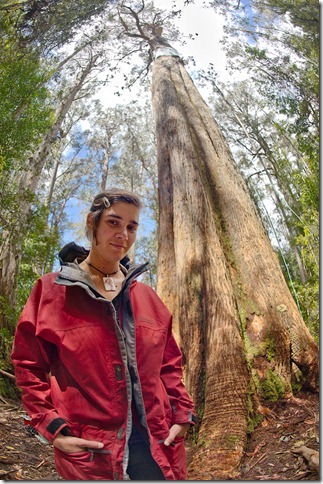 Miranda – Defender of Tasmania’s Forest Heritage
at the foot of ‘The Observer Tree‘
Mount Mueller Forest, Styx Valley, Tasmania
Miranda – Defender of Tasmania’s Forest Heritage
at the foot of ‘The Observer Tree‘
Mount Mueller Forest, Styx Valley, Tasmania
.
One young Tasmanian woman, charged with a deep commitment to her natural island heritage, continues to be prepared to do more to protect Tasmanian old growth forests than most Tasmanians. Miranda Gibson of Still Wild Still Threatened is certainly prepared to do more than the current (read ‘temporary‘) Premier of Tasmania Lara Giddings, and more than the current (read ‘temporary‘) Prime Minister of Australia, Julia Gillard, who have quickly turned their backs on Tasmanians to more populist party-political issues of the day.
.
 Tasmania’s Forest Wars
– what the Intergovernmental Agreement is supposed to resolve. Tasmania’s Forest Wars
– what the Intergovernmental Agreement is supposed to resolve.
.
Gillard and Giddings in breach of Tasmania’s 2011 Forest Agreement
.
Tasmanians are condemning government delinquency on meeting the conservation goals contained in the Gillard Labor Government’s Forests Intergovernmental Agreement (IGA) signed and promised to all Tasmanians in Launceston on 7th August 2011.
 Giddings and Gillard
– hollow Labor promises Giddings and Gillard
– hollow Labor promises
.
IGA Clause 25 states:
.
‘The State will immediately place the 430,000 ha of native forest identified in Attachment A (other than any areas which are not State forest) from the 572,000 ha nominated by ENGOs through the Statement of Principles process, into Informal Reserves.’
.
IGA Clause 27 states:
.
‘In the event that Forestry Tasmania reports that it cannot meet contractual requirements from production resources outside the nominated 430,000 ha the Governments will undertake the following steps. First, an independent expert will be jointly appointed by the Governments to review scheduling and other relevant data and attempt to reschedule harvesting activities so as to meet the requirements of contracts and maintain the interim protection of 430,000 ha. In the event that the independent expert concludes it is impossible to achieve this, the Commonwealth will compensate the contract holder for the value of lost profits and unavoidable costs.’
.
Gillard’s fly-in to Launceston on 7th August 2011 to sign and celebrate the Tasmanian Forests Intergovernmental Agreement with Labor mate Giddings was not a mere plaque unveiling, it was a Tasmanian landmark agreement to provide certainty for Tasmania’s forestry industry, support local jobs and communities, and protect the state’s ancient forests. It deserves the respect of commitment and follow through on promise.
On the one hand it has funded Forestry and its associated families hundreds of millions and with a dignified exit from logging and transition to alternate trades. On the other hand Gillard’s Forest Agreement guarantees protection for Tasmania’s natural but threatened heritage – its most iconic ancient forests, immediately placing 430,000 hectares of iconic old growth native forest into informal reserve – the Styx, Upper Florentine, Huon, Picton and Weld Valleys and the Great Western Tiers, Tarkine and Wielangta.
.
Gillard’s promise made to the Australian people (Prime Minister Gillard’s official website):
.
‘These forests will not be accessed for harvest while verification takes place.‘.
Well, verification is still taking place. And Bill Kelty, who brokered the deal, seems to have run to the hills.
Such a landmark State-wide agreement that promises a ‘strong foundation‘ is hollow if the leadership waddles off to be distracted by other issue so the day, without the committed delegation of trusted lieutenants to see through on implementation. Predecessor PM Kevin Rudd failed classically on the implementation phase of his policy – insulation being his and Garrett’s multi-million dollar incompetent legacy.
“The Australian and Tasmanian governments are taking too long to implement the intergovernmental agreement. If they can get their act together to offer contractors exit packages then they can honour the conservation agreement as well.” Greens Senator Bob Brown has said. “Four months later not one hectare has been protected and Forestry Tasmania continues to fell these magnificent trees as fast as they can put the roads in. All up, more than 10km2 of our wild forests will be destroyed“, Greens Senator Brown said.
All political leaders, while dancing on mountains of power and influence, pragmatically realise that their time in office is temporary. Status quo is not a characteristic of modern democratic politics. What matters most in political careers is legacy. Australia’s current Prime Minister Julia Gillard is starting to stare that legacy in the face as she allows Premier Lara Giddings to breaking the $276 million promise by backing Forestry Tasmania’s current logging of the 430,000 hectares of old growth forest protected under the Gillard Government’s Agreement.
.
Tasmanian Betrayal
.
Gillard and Giddings have allowed Forestry Tasmania to log the protected 430,000 hectares, ignoring the prescribed compensation requirement. Gillard and Giddings have blatantly reneged on their core promise in the Agreement to cease logging and to protect these forests. Gillard and Giddings have betrayed the Tasmanian and Australian people. They have no mandate to stay in power. Their broken promises are to be their legacies.
.
“Those who cannot work with their hearts achieve but a hollow, half-hearted success that breeds bitterness all around”
~ Abdul Kalam, President of India (b.1931)
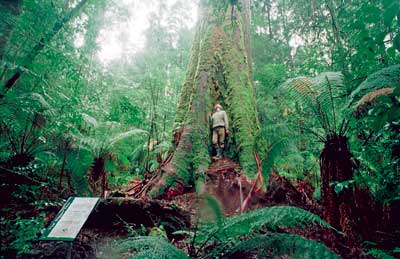 Styx Valley Giants being massacred by State logger ‘Forestry Tasmania’ Styx Valley Giants being massacred by State logger ‘Forestry Tasmania’
.
Tasmania sells itself as ‘the natural state’. But there is a gap between rhetoric and reality as logging of old-growth forests continues – to international dismay.
“And they have these big logs, and you just know they are coming from old-growth forests…I don’t think I could take living there and seeing them every day knowing (the trees) are going mostly to woodchips.” ~ Larraine Herrick or Tumbarumba, Snowy Mountains, New South Wales.
But the Styx has been, and (is continuing) to be, logged by the timber industry in a state in which questions have been repeatedly raised about whether cronyism, corruption and deception underlie the management of forests. Only discovered in 2002, El Grande was a Eucalyptus regnans with a 19-metre circumference. Last autumn (2003), it was killed when a regeneration burn went wrong. Its demise helped fuel a midwinter protest that drew more than 2000 people to the Styx Valley. There, The Wilderness Society and Greenpeace began a tree-sit, 65 metres up a threatened giant eucalypt called Gandalf Staff.
.
[Source: ‘Tasmania: seeing the wood but not the trees‘, by Melissa Fyfe and Andrew Darby, The Age Newspaper, 20040313, ^http://www.theage.com.au/news/science/tasmania-seeing-the-wood-but-not-the-trees/2004/03/13/1078594604573.html]
.
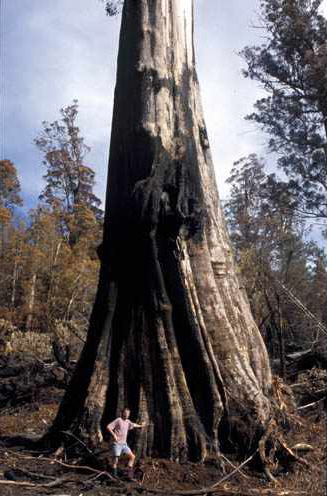 ‘El Grande’
Australia’s largest tree burned to death in 2003 by Forestry Tasmania’s incompetence ‘El Grande’
Australia’s largest tree burned to death in 2003 by Forestry Tasmania’s incompetence
.
Tasmanian forests activist organisation Still Wild Still Threatened have called on the Federal and State governments to honour a $276 million forest deal made on 7th August 2011.
“This deal has already seen $35 million delivered to Forestry Tasmania and Gunns Ltd. without protecting a single tree” said Still Wild Still Threatened spokesperson Ali Alishah.
“It is clear that by backing Forestry Tasmania’s destructive practices within the identified 430,000 ha area of high conservation value native forest, the State and Federal Governments are in direct violation of Clauses 25 and 27 of their own Inter Governmental Agreement.” said Mr. Alishah.
.
.
.
The Observer Tree
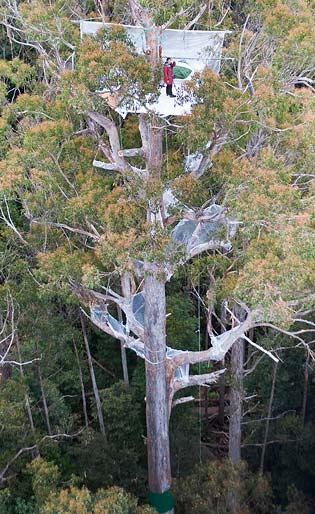
Miranda Gibson on top of The Observer Tree
Totally committed to Tasmanian Forests,
unlike Gillard and Giddings hollow words.
.
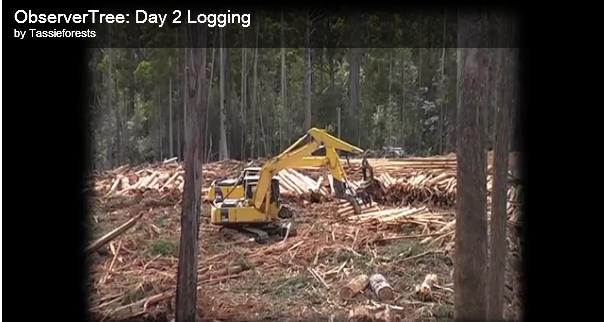
Still Wild Still Threatened have this week launched a new tool in the fight to protect Tasmania’s forests today, unveiling the ‘ObserverTree‘, a 17-storey high tree sit and media centre equipped with the technology to record footage of logging operations and stream these images live to the world via the internet.
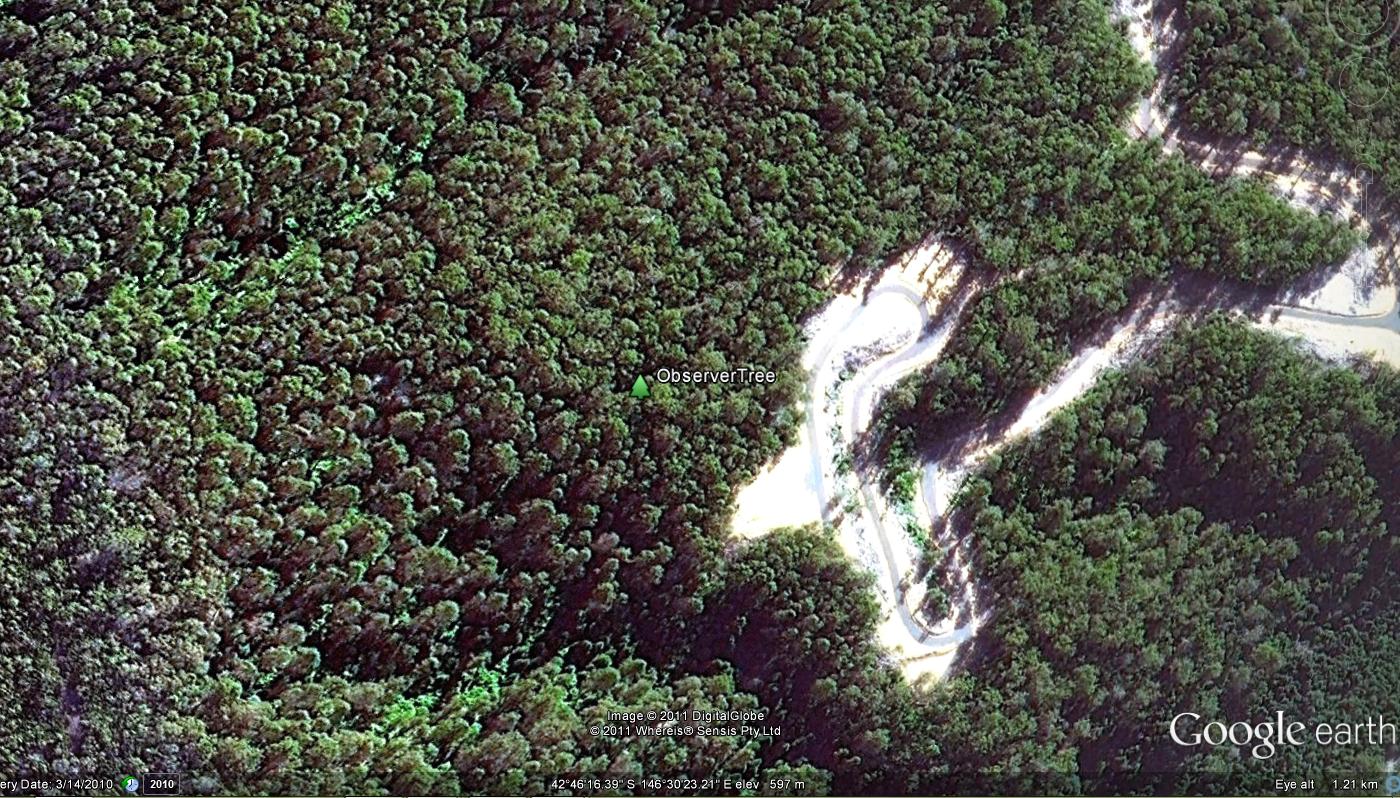
The Observer Tree is located in the Styx Forest below Mt Mueller, in Tasmania’s western wilderness, part of the 430,000 ha of forest that was supposed to receive immediate protection under the federal-state agreement on forests (the IGA). The Observer Tree is situated at the head of a section of Styx Forest currently targeted for logging by Forestry Tasmania.
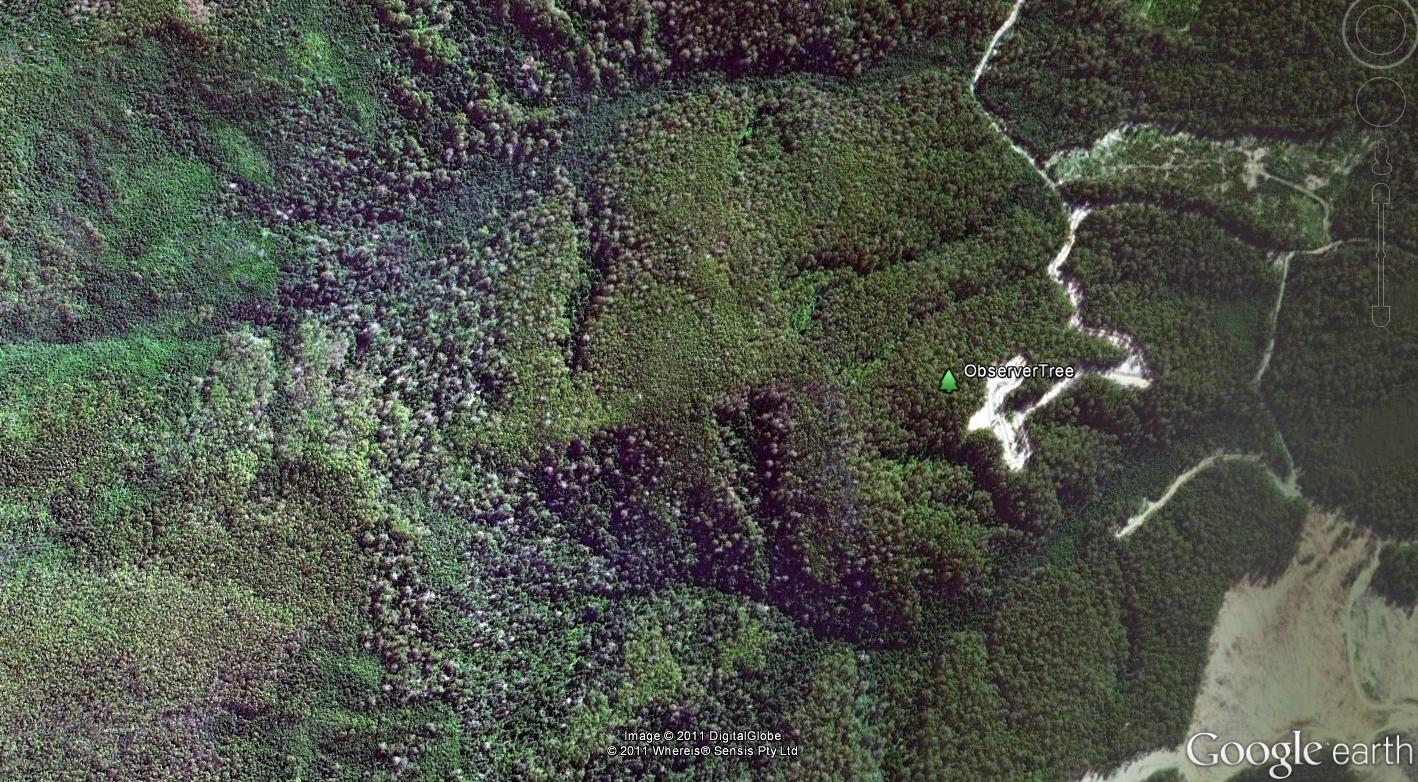
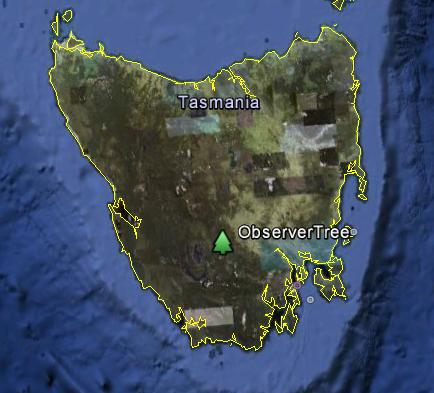 ‘Observer Tree’ location
^http://observertree.org/2011/12/15/observertree-on-google-maps/
‘Observer Tree’ location
^http://observertree.org/2011/12/15/observertree-on-google-maps/
.
Teacher, author and forest activist, Miranda Gibson, has vowed to occupy the tree-platform continuously, until real protection is secured for Tasmania’s forests. Ms Gibson will maintain a daily blog and upload video updates during her stay in the tree, documenting the struggle to protect Tasmania’s forests to concerned people all over the globe.
‘We have used the internet to connect this spectacular patch of threatened Tasmanian forest to the world. The Observer Tree will transmit images and information about the value of the thousands of hectares of forest that remain threatened if Julia Gillard does not keep her word. People across Australia and the globe will have the opportunity to view bear witness to the wasteful destruction of these forests and hear from the people fighting to protect them,’ said Ms Gibson.
For the first time their actual logging will be broadcast live internationally via the web.
Website: ^http://www.observertree.org
Facebook: ^http://www.facebook.com/#!/pages/ObserverTree/152795598158969
Download Google Earth (93MB): GoTo: ^http://www.google.com/earth/download/ge/
.
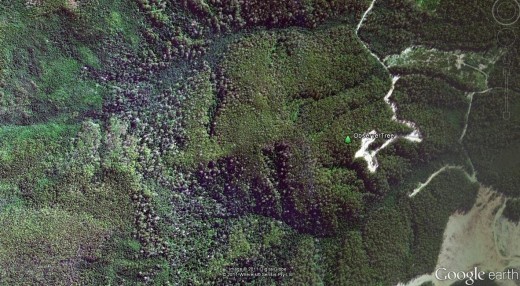 Google Earth’s satellite image of the Observer Tree in dense old-growth, adjacent to Forestry Tasmania’s fresh logging road
(click photo to enlarge) Google Earth’s satellite image of the Observer Tree in dense old-growth, adjacent to Forestry Tasmania’s fresh logging road
(click photo to enlarge)
.
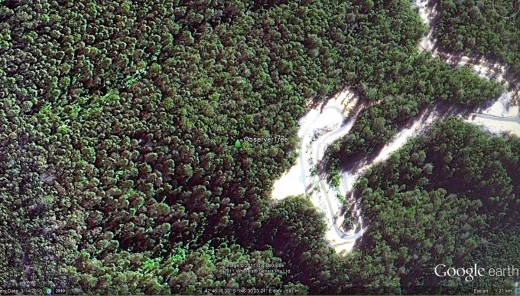 Close up image
(click photo to enlarge) Close up image
(click photo to enlarge)
.
.
Monday: Forestry Tasmania attacks the Styx Forest
.
On Monday 12th December 2011, State forest ‘nazi logger’, Forestry Tasmania, under the command of District Officer (Gauführer) Steve Whitely, rolled in its contracted ‘ecodeath-squad’ into the western end of the magnificent Styx Valley. The targeted forest area is situated at the base of Tasmania’s prominent and wild Mt Mueller on the border of the World Heritage Area. It is situated about 25 km west of the infamous logging town of Maydena.
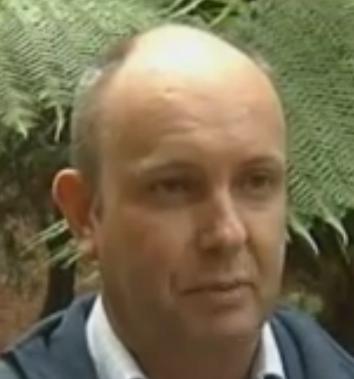 Directing the logging – Forestry Tasmania’s Steve Whiteley
[Source: Southern Cross Television, 20111214]
Directing the logging – Forestry Tasmania’s Steve Whiteley
[Source: Southern Cross Television, 20111214]
.
In true forest nazi style, Forestry Tasmania’s targeted forest area is branded as coupe ‘TN 044B‘.
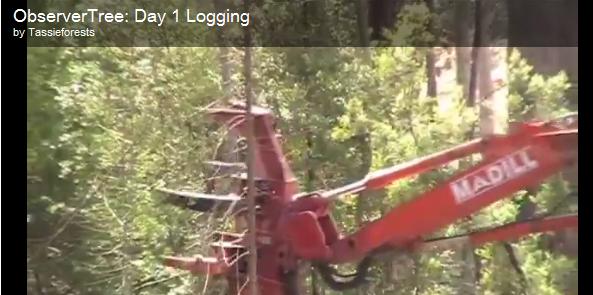 Logging Nazi in and destroying the Styx Valley Forest
Monday 12th December 2011, in direct breach of Prime Minister Gillard’s Forest Agreement. Logging Nazi in and destroying the Styx Valley Forest
Monday 12th December 2011, in direct breach of Prime Minister Gillard’s Forest Agreement.
.
This ‘Madill’ feller buncher was getting well stuck into the Styx Valley last Monday morning just below the Observer Tree. The hydraulic arm clamps onto the trunk of the tree while a cutting mechanism severs the tree at the stump. The machine then lifts the tree, lowers the tree into a horizontal position, and drops the tree on a bunch of logs piled on the ground. The industrial machinery has all the efficiency of a Nazi death factory.
.
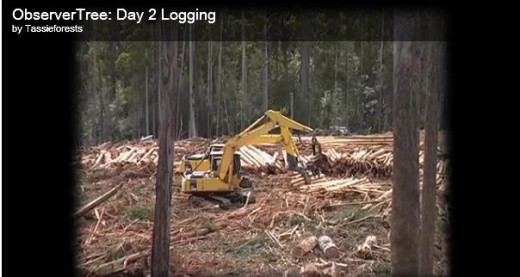
.
Foresty Tasmania is operating in direct contradiction of IGA Clauses 25 and 27. The coupes within the 430,000 ha of high conservation value forest are not to be logged under any condition. The IGA prescribes that relevant customers and contractors are to be granted compensation and million have been set aside for this purpose. Foresty Tasmania under Gauführer Steve Whitely is out of control. He is driving ecological apocalypse in Tasmania’s southern forests. He has become a Walter E. Kurtz.
 Walter E. Kurtz – unhinged, his methods unsound. Walter E. Kurtz – unhinged, his methods unsound.
.
Tags: Abdul Kalam, activist, Bill Kelty, El Grande, Forestry Tasmania, Gandalf, Google Earth, Inter Governmental Agreement, Julia Gillard, Lara Giddings, Maydena, Mount Mueller, nazi logger, Observer Tree, old growth forest, Still Wild Still Threatened, Styx Forest, Styx Valley, Tasmania, Tasmanian Betrayal, Tasmanian Forests Intergovernmental Agreement, The Observer Tree, Woodchipping Tasmania
Posted in Tasmania (AU), Threats from Deforestation, Threats from Weak Environmental Laws, Threats to Wild Tasmania | No Comments »
Add this post to Del.icio.us - Digg
Wednesday, December 14th, 2011
Chinese-owned Yancoal’s Austar Coal Mine in the Hunter Valley, yesterday was found guilty by the Land and Environment Court in New South Wales of gross pollution of Bellbird Creek near Cessnock back in July 2010. Wastewater from the mine’s antiquated on-site septic system was allowed to seep into the creek, killing aquatic wildlife. But it has taken a year and a half for the court to finally prosecute the offence brought before it by the Environmental Protection Agency (EPA). Why?
 Septic pollution of Bellbird Creek
near Cessnock, Hunter Valley, New South Wales, Australia Septic pollution of Bellbird Creek
near Cessnock, Hunter Valley, New South Wales, Australia
.
Yancoal Australia’s parent company is Chinese-based Yanzhou Coal Mining Company, which is ultimately owned by the Shandong provincial government of China. Yanzhou promotes itself as being one of the safest and most productive users of Longwall Top Coal Caving technology (LTCC). Visit its website: ^http://www.yancoalaustralia.com.au/key-assets/austar-coal-mine/
Under its ‘Community Awareness’ section, subsidiary Yancoal Australia offers a scholarship program to assist undergraduate students choosing to pursue a career in the mining industry. How is this community awareness? Obviously there is a lack of environmental awareness. Mining profits are going back to China, at the Hunter Valley’s expense and at Bellbird’s expense.

The logo is very clear about the source and the impact
.
The court has fined Austar $115,000 for the pollution, including ordering Austar Coal Mine to pay $75,000 towards an environmental rehabilitation project and $42,000 in the EPA’s legal costs. This will be on top of Austar’s own legal costs. Austar has also been ordered to publish details of the offence in a local newspaper and industry magazine.
Chief Environmental Regulator for the Environment Protection Authority (EPA), Mark Gifford said “The wastewater contained detergent and effluent from bathhouse facilities located on the Austar site and caused large clumps of white foam up to 2 metres high to be washed downstream.
“The elevated levels of detergent, nutrients and faecal matter along approximately 2km of Bellbird Creek were toxic to aquatic life,” Mr Gifford said.
“This incident could have been prevented if Austar had an appropriate system in place to inspect, monitor and maintain the 90 year old onsite septic system.”
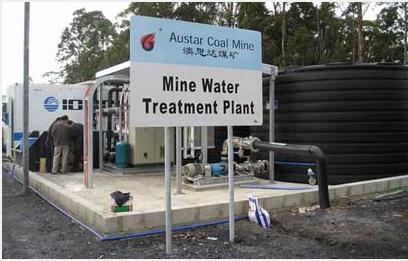
EPA Regional Manager Graham Clarke says it was not a minor incident.
“These are very large scale facilities, obviously bathhouse for the mine facilities they’re not just domestic systems and clearly large amounts of detergent and pollutants were coming from the system into the Bellbird Creek,” he said. “So it’s affected about two kilometres of the waterway at the time so these are not small incidents.”
.
But something is clearly amiss. For Austar’s mine pollution of detergent, nutrients and faecal matter to ‘extend two kilometres downstream‘ along Bellbird Creek and for ‘large clumps of white foam up to 2 metres high‘, this was not ‘seepage‘ – more like full-throttle pumping! Downstream also involves flowing through the village of Bellbird, effectively creating an open sewer through Bellbird.
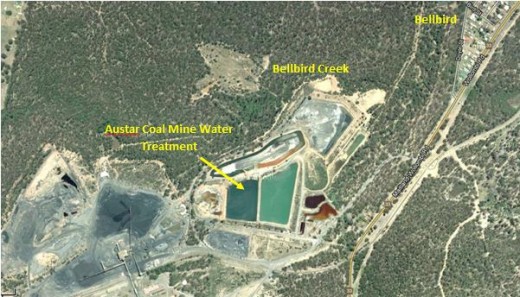
Following NSW Labor Government approval for Austar Coal Mine to begin longwall mining on its Hunter Valley lease, the company published its Community Information Sheet 4 dated June 2006, which on page 2 states:
‘Upgrades to the water management system to improve the recycling of mine water. Austar has been working closely with the Department of Environment and Conservation (EPA) to optimize water recycling and reduce dependency on external water supplies. The proposed improvements will include upgraded pumps, pipelines and water treatment facilities resulting in the Austar mine being almost self-sufficient in water supplies.’
.
The EPA has clearly been negligent in its monitoring, but then the EPA has no watchdog. To fine Yancoal $115,000 is a mere slap on the wrist. Yancoal recorded $1 billion in revenue in 2010, and sold 11 million tonnes of coal from its five operating mines on the east coast. So Yancoal has been fined 0.0115% of its annual revenue – petty cash! [Source: ‘Wesfarmers agrees to $300m Premier Coal deal with Yancoal’, by Nick Evans, Business Reporter, PerthNow, 20110928, ^http://www.perthnow.com.au/business/local-business/wesfarmers-agrees-to-300m-premier-coal-deal-with-yancoal/story-e6frg2s3-1226148929703]
.
- Where is the EPA’s Environmental Impact Statement made available to the local community?
- What has been the ecological cost?
- Where have the pollutants ended up?
- What is the risk to public health of Bellbird and downstream communities?
- What is the full cost of clean up to restore Bellbird Creek and its affected downstream waterways to a before pollution condition and to reinstate the ecological health of the waterways?
- Given Yancoal holds significant coal assets in Queensland and New South Wales, what monitoring is the EPA in those states doing, given that Yancoal has demonstrated that it cannot be trusted to protect the environment?
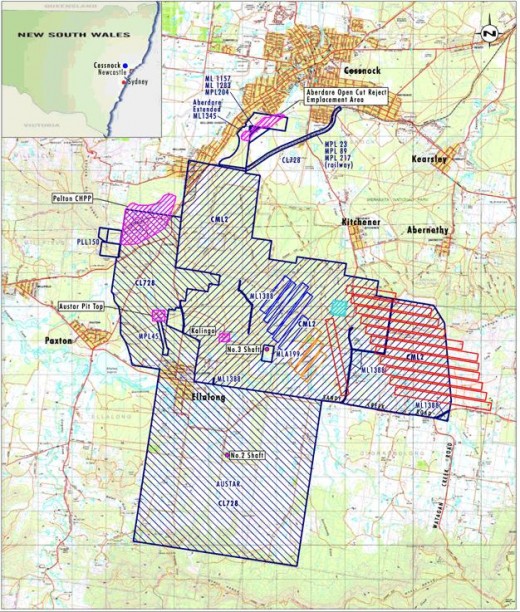 Yancoal’s Mining Leases in the Hunter Valley – set for underground long wall mining Yancoal’s Mining Leases in the Hunter Valley – set for underground long wall mining
.
[Sources: ‘Hunter Valley mine fined for polluting creek’, ABC, 20111213, ^http://www.abc.net.au/news/2011-12-13/hunter-valley-mine-fined-for-polluting-creek/3729336/?site=newcastle, ^http://www.environment.nsw.gov.au/media/DecMedia11121301.htm, http://www.abc.net.au/news/2011-12-14/mine-fine-for-polluting-creek/3729942]
.
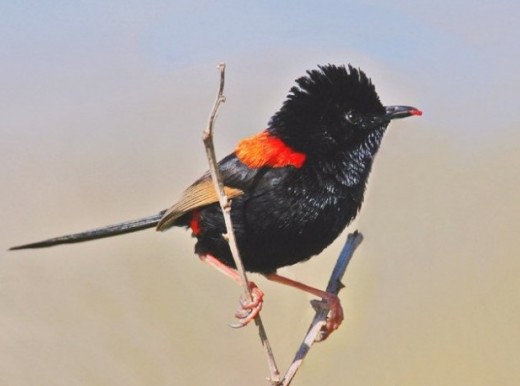 Red-backed Fairy-wren of the rivers of the Hunter Valley
. Red-backed Fairy-wren of the rivers of the Hunter Valley
.
The Red-backed Fairy-wren (Malurus melanocephalus) is a passerine bird in the Maluridae family. It is found only in Australia along the coasts of rivers. These rivers are the Hunter Valley in New South Wales and the Kimberley which is the northern portion of Western Australia.
[Source: ^ http://www.redorbit.com/education/reference_library/science_1/birds/2582912/redbacked_fairywren/index.html]
.
Tags: aquatic habitat, Austar Coal Mine, Austar fined, Bellbird Creek, detergent, EPA, Hunter Valley Coal Mining, Longwall Top Coal Caving (LTCC), mining pollution, nutrients and faecal matter, Red-backed Fairy-wren, septic system, Yancoal Australia, Yanzhou Coal Mining Company
Posted in Birds (Australian), Threats from Mining | No Comments »
Add this post to Del.icio.us - Digg
Monday, December 12th, 2011
“I wish to explore what remains for most – and has been for me – a terra incognita, a forbidden place, a heart of darkness that civilised people have long attempted to repress – that is, the wilderness within the human soul and without, in that living profusion that envelops all creation.”
.
~ Max Oelschlaeger, The Idea of Wilderness: From Prehistory to the Age of Ecology (1993)
.
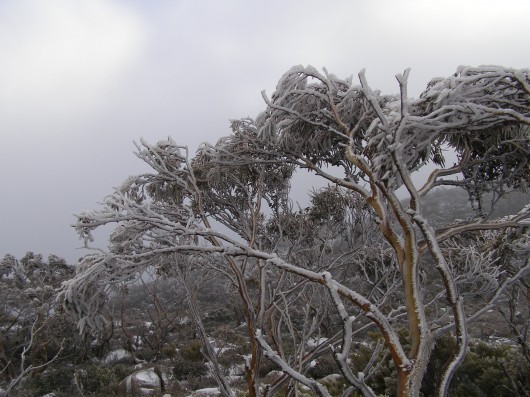 Pinnacle of Mount Wellington, Tasmania
(Photo by Editor 20111001, free in public domain, click photo to enlarge) Pinnacle of Mount Wellington, Tasmania
(Photo by Editor 20111001, free in public domain, click photo to enlarge)
.
In 2007, former United States Vice President Al Gore‘s campaign to educate citizens about global warming was portrayed in an award winning documentary film ‘An Inconvenient Truth‘.
The subject matter, global warming, has indeed become an inconvenient truth because the global scale of the problem is such that the powers that be have so far been finding it difficult to comprehend. They have been told that it demands a response so systemic as to be transformational, which is highly inconvenient for them to say the least. The transformational response is mostly inconvenient to the powerful vested interests in polluting industries that are key contributors to global warming – particularly oil, gas, coal, heavy manufacturing, transport and weapons industries.
.
‘Deluded Convenience’
.
On the flip side of this inconvenience of the truth, powerful vested interests understandably, are hell bent on maintaining their convenient business as usual practices, choosing to ignore, reject and deny the truth. It is their short term interests to do so, because change is expensive and threatens to diminish their power, influence and wealth. But in the long term, by perpetuating practices that are shown to be damaging to the Earth’s climate, the imperative of maintaining a convenient business as usual approach is a deluded one, as everyone will be adversely affected by global warming. They are only deluding themselves. Such harmful business-as-usual practice is a ‘deluded convenience‘.
Harmful business-as-usual practices that are contributing to global warming were once branded aspiringly in the 18th, 19th and 20th Centuries as ‘industrial progress‘. The widespread Western culture from Western Europe and the United States has for over three hundred years idolised the ‘civilised’ advances of the Industrial Revolution, capitalism and economics. Western economies now have many conveniences of lifestyle, but attaining them has caused considerable cost to societies and ecology. Globalisation has destroyed family-based enterprises, local markets and village communities and caused wars and immense suffering. Industrialisation has destroyed many forests, rivers, valleys, coastlines and species. These have been the cost of convenience, the cost of civilisation; and we are now paying the price.
.
“It is fairly widely accepted today that environmental destruction ultimately becomes self-destructive as a sick and impoverished global environment in turn sickens and impoverishes the human members of that ecosystem.
..Why, despite warning signs from a stressed global ecosystem, mounting scientific evidence, and public education campaigns, does degradation of the environment continue to persist and mount?”
.
~ Catherine M. Roach, 2003, ‘Mother Nature: Popular Culture and Environmental Ethics.
.
 Absolute environmental destruction above Queenstown, Tasmania Absolute environmental destruction above Queenstown, Tasmania
.
Bushphobia – a form of deluded convenience
.
Bushphobia is a composite term emanating from Australia, which combines two words ‘bush’ meaning the native forest and scrub environment of Australia’s unique animals and plants, with the non-clinical use of the term ‘phobia’. Phobia (from Greek φόβος, phóbos: fear, phobia) is an anxiety association, a negative attitudes towards, a dislike, disapproval, prejudice, discrimination, or hostility of, aversion to, or discrimination against something. Bushphobia is borne out of learnt acculturation adopting two distinct attitudes:
- A deep fear of the bush due to its propensity to burn and cause horrific wildfires
- A dislike of Australian native vegetation due to its wild untamed appearance which is so different to exotic trees and landscapes that have a more symmetrical and accessible character
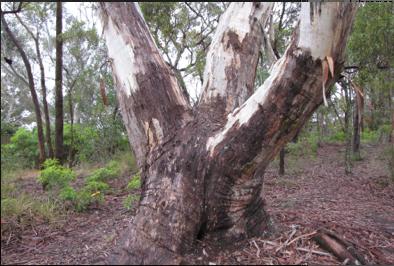 An Australian native tree discriminated against by a pro-development Court ruling…because it may be dangerous
^http://www.savethetree.org/
An Australian native tree discriminated against by a pro-development Court ruling…because it may be dangerous
^http://www.savethetree.org/
In this case a discrimination against the bush, where the word ‘bush’ is an Australian term for native forest and scrubland. Bushphobia was first used with its modern meaning in 2008 in the Blue Mountains in eastern Australia which represents an intolerance and prejudice against the natural Australian bush vegetation mainly because of its susceptibility to burning in the case of bushfires and the consequential fire threat to life and private property.
The combined meaning is to have a persistent irrational fear specific fear or loathing of the natural (bush) environment. There are three classes of phobias: agoraphobia, social phobia, and specific phobia (Wood 521). Bushphobia is a specific phobia associated with a fear of natural environment.
Bushphobia is a socially learnt fear and loathing toward the bush common amongst rural volunteer bushfire fighting organisations which is instilled in new recruits as part of the training tans assimilation process. Bushphobia has thus become a form of learned cultural prejudice amongst the rural fire fighting fraternity throughout Australia. This attitude becomes deep seated and a motive to regard native forests, not as valued natural assets and habitat for native flora and fauna, but only as a combustible fuel that is prone to burn and thus a menace and ‘hazard’. The standard myth conveyed about the bush that inculcates bushphobia is that if the bush is not destroyed and allowed to grow naturally then the bush will develop into an uncontrollable fuel that in the event of a bushfire will cause an horrific fire storm and Armageddon. The issue of inadequate bushfire fighting capabilities is conveniently ignored.
Those who only see the bush through a bushphobic mindset desire to burn it, bulldoze it and destroy it at any opportunity when weather permits such action to be done safely. Deliberate burning of the bush has become a ‘prescribed burning’ policy of Australian governments at both state and federal level attracting massive resources. In New South Wales prescribed burning is labelled ‘hazard reduction’. History however has shown repeatedly that many prescribed burning activities frequently escape control lines an end up destroying vast areas of bush.
.
.
NIMBYism – a celebration of ‘think globally, act locally’
.
The maxim ‘Think globally, act locally‘ has long passed into the vernacular, urging grassroots activism where thinking about the health of the entire planet is translated into taking action at a local level in one’s own community. The phrase has been originally attributed to Scottish town planner and social activist Sir Patrick Geddes FRSE [1854-1932].
 Sir Patrick Geddes (c.1886) Sir Patrick Geddes (c.1886)
.
At a time in the early 20th Century when industrialisation was dramatically altering the conditions of social life, Geddes recognised the role of architectural amenity on urban life, particularly promoting the happiness, health and comfort of all residents, rather than focusing on roads and parks available only to the rich. He applied this in his design of Edinburgh, Tel Aviv and Bombay. Geddes was an advocate of nature conservation and strongly opposed to industrial pollution. Some historians have claimed he was a forerunner of modern Green politics. At a time of rapid urban growth, Geddes coined the term ‘conurbation’ observing how population growth was pushing large towns to merge into one continuous urban and industrially developed area. In Geddes’ 1915 book “Cities in Evolution” his advocacy of maintaining local character in urban planning is clearly evident:
‘Local character’ is thus no mere accidental old-world quaintness, as its mimics think and say. It is attained only in course of adequate grasp and treatment of the whole environment, and in active sympathy with the essential and characteristic life of the place concerned.’
.
Prominent American environmentalist and mountaineer David Brower [1912 – 2000] and founder of Friends of the Earth (FOE) in 1969 is believed to have been the first to applied the phrase ‘think globally, act locally‘ in an environmental context as the slogan for FOE. Application of ‘think globally, act locally‘ maxim in this environmental context has manifest itself most prevalently when grassroots activism erupts as a result of inappropriate land use development threats. Local residents opposing inappropriate development are following the thinking of Geddes by recognising the important value of local amenity to the health and happiness of local residents. Developers are quick to deride the rights of local residents to defend their neighbourhood amenity, labelling them as NIMBY‘s – an acronym for the phrase “Not In My Back Yard“, first coined in 1980 by British writer Emilie Travel Livezey in an article ‘Hazardous Waste‘.
Nimbyism is used typically by proponents of a development to pejoratively describe opposition by neighbouring residents. Nimbyism, however is simply acting locally to protect the values of one’s neighbourhood. Standing by and watching an inappropriate development proceed is an option, but why stand by? Residents who plan to live in a locality for some time and perhaps for the rest of their lives, have a democratic right and a say in what happens to their locality and this includes a say its preserving or changing the locality’s amenity and character. It is about holding strong principles of community governance and valuing the rights of locals to participate in decisions that directly affect them. Local residents are the stakeholders who will have to live permanently with a development and so are most deserving in having a louder voice in development decisions to balance corporate developers and their investors.
Amusing variants of NIMBY are:
- ‘NIMFYE’ = Not In My Front Yard Either
- ‘NIMTOO’ = Not In My Term Of Office [a favourite of politicians]
- ‘NITL’ = Not In This Lifetime
- ‘NOPE’ = Not On Planet Earth
- ‘NOTE’ = Not Over There Either
- ‘GOOMBY’ = Get Out Of My Backyard [Common in new suburbs that encroach on industrial sites or airports]
- ‘NIABY’ = Not in Anyone’s Backyard
- ‘NUMBY’ = Not Under My Backyard (applicable to mining companies)
.
And this Editor’s favourite:
- ‘BANANA’ = Build Absolutely Nothing Anywhere Near Anything
.
.
‘A recent report has found that nearly 80% of U.S. residents oppose any new development in their community. It’s the highest level of opposition recorded in the report’s six-year history, and the first time since 2008 that the amount of opposition has increased.’
.
[Source: ‘As America Ages, NIMBYism Could Increase, by Nate Berg, The Atlantic Cities, 20111017, ^http://www.theatlanticcities.com/politics/2011/10/as-america-ages-nimbyism-could-increase/306/]
Given that Nimyism is a developer term used derogatorily against residents who dare to question and challenge land use development , the counter-language on the side of residents is ‘property rights‘ and ‘planning democracy‘. Many residents out of frustration with the local planning process decide to form an action group. One organisation well experienced in this quest is Sydney-based Save Our Suburbs.
.
Save Our Suburbs
.
‘Save Our Suburbs (NSW) Inc is a non-profit & non-aligned group of residents, originally formed to fight against forced rezoning and over-development of Sydney’s suburbs. It has grown to include communities who are fighting for better planning and regulation on a range of development issues, including major infrastructure projects such as road tunnels. Sydney’s beleaguered residents have been fighting an endless string of localised battles against increased density developments (‘urban consolidation‘) and badly planned developments such as unfiltered tunnel exhaust stacks. We have been fighting local councils about local rezoning and local developments, and state government departments about the lack of regulation and planning. Residents are usually the losers in these local battles. If we want to effectively protect the environment and heritage of our suburbs, we need to take the fight beyond our local areas into the State Government arena. This can only be achieved by organised and united residents. Save Our Suburbs (NSW) Inc has been formed for this very purpose.
.
Fundamental Objectives:
- Return Planning democracy to New South Wales, by allowing true consultation, and giving planning power back to local councils: The people should decide, not a Planning Dictator!
- End big developer donations to political parties: We want planning decisions based on merit, not on money!
- Save our property rights: Provide just compensation for loss of land, income or amenity, and for change of land use.
- End forced urban consolidation- allow sensible land release, with infrastructure funded by the government: Dump the failed planning policies, designed to favour big developers rather than the community.
Read More: ^http://www.sos.org.au/
.
.
Bushphobia – a ‘case’ of deluded convenience
.
‘Our urban footprint is encroaching further and further into bushland. The amount of land used as space for community living is decreasing as urban settlements have sprawled. This is affecting the opportunities we now have to meet and interact as communities. The consequences of urban sprawl include a decline in the supply of affordable housing, increased bushfire risk for individuals and property and increasing impacts on the environment.’
Historically, much of the development in the Blue Mountains has encroached well into bushland with little regard for environmental impact and often without supporting infrastructure, such as sewerage and transport systems. This dispersed, sprawling development pattern along ridgelines has been added to by post war residential development, creating many of the ‘suburbs’, particularly in the lower Blue Mountains. As all available sites for new development dry up it is likely that existing urban areas will come under increasing pressure for redevelopment.’
[Source: Blue Mountains Council, ^http://www.sustainablebluemountains.net.au/imagesDB/resources/Paper14bOurFuture.pdf, p.4]
 An example of current housing encroachment into bushland
Faulconbridge, Blue Mountains, New South Wales, Australia
An example of current housing encroachment into bushland
Faulconbridge, Blue Mountains, New South Wales, Australia
[Source: Century 21 Real Estate, ^http://www.realestateview.com.au/Real-Estate/faulconbridge/Property-Details-buy-residential-2842241.html
.
A case in point involves the current issue about a significant native tree facing death due to the threat of housing development in the Blue Mountains village of Faulconbridge.
About midway along the conurbated highway corridor through the Central Blue Mountains lies the urban village of Faulconbridge. Like all the other villages and towns along this highway, Faulconbridge residential housing ultimately backs on to the Blue Mountains National Park, which forms part of the Greater Blue Mountains World Heritage Area.
 Faulconbridge juxtapositioned to the Blue Mountains World Heritage Area.
[Source: Google Maps]
Faulconbridge juxtapositioned to the Blue Mountains World Heritage Area.
[Source: Google Maps]
.
A local resident action group in St Georges Crescent, Faulconbridge has been recently formed to try to save a significant native tree situated in its natural bush environment from being killed for housing development. The resident group, lead by local Faulconbridge resident Don Cameron, is simply called ‘Save the Tree‘ and a dedicated website has been designed and set up: ^http://savethetree.org
 A mature native tree in a forest but on death row
so that property developers can build a house or two.
(St Georges Terrace, Faulconbridge, Blue Mountains, New South Wales Australia,
Source: ^http://savethetree.org)
.
A mature native tree in a forest but on death row
so that property developers can build a house or two.
(St Georges Terrace, Faulconbridge, Blue Mountains, New South Wales Australia,
Source: ^http://savethetree.org)
.
According the website, the subject tree has been listed on Blue Mountains Council’s Register of Significant Trees since August 1985 – #33. The subject land site where the tree stands comprises remnant bushland including the significant tree as well as three locally rare Faulconbridge Mallee Ash trees (Eucalyptus burgessiana), which is a rare species of flora included on the Australian botanical list of Rare or Threatened Plants (ROTAP).
In early 2010, a development application for two dwellings on the site was submitted to council. The proposal included the removal of a considerable amount of the remaining vegetation including the removal of the significant tree. In that same year, numerous residents submitted objections to the development application. As a result of Council’s notification process, fifteen submissions from local residents were received objecting to the development on the following bases:
- Removal of the significant tree from the site
- Clearing and loss of vegetation, including threatened
- Species of vegetation, and screening of the development
- Impacts on streetscape
- The lot should become public land
- Overdevelopment of the site and the bulk and scale of the development
- The proposed development is out of character with the surrounding development
- Proposed subdivision into 2 lots
- Loss of environmental features of the site
- Increased stormwater impacts and local flooding
- Pedestrian and traffic safety
- Reduced building setbacks
.
[Source: Blue Mountains Council, Ordinary Meeting of 28th June 2011, Section: ‘Using Land for Living’, Item 20, Ordinary Meeting, 28.06.11, p.212, 20. 11/85977. Development Application no. X/443/2010 for a detached dual occupancy consisting of a single storey dwelling and a two storey dwelling…Faulconbridge]
.
Council Planning assessed the Environmental Impacts of the proposed development as follows:
‘There are currently three (3) Faulconbridge Mallee Ash (Eucalyptus burgessiana) located on the subject allotment. This is a rare species of flora which is on the list of Rare or Threatened Plants (ROTAP) published by the CSIRO. While it is acknowledged that Eucalyptus burgessiana are a rare plant, they are not listed as a threatened species under either the Threatened Species Conservation Act or the Environmental Protection and Biodiversity Conservation Act.
‘There are also a number of other indigenous trees on the property including a large Eucalyptus Sclerophylla x Eucalyptus Piperita hybrid which is listed as a significant tree in DCP 9 Significant Trees. The proposed development will result in the removal of much of the vegetation on the site including two (2) of the Eucalyptus Burgessianna and the significant tree. The site also contains a number of significant rock outcrops which are identified by the LEP as a significant natural feature.’
.
The proposed development has been sited to avoid as far as practical impacts on those outcrops. In particular, it is noted that the development has been designed to ensure that both the dwellings and the vehicular driveways are predominantly clear of the two most significant features, being the outcrop adjacent the frontage with St Georges Crescent and the outcrop toward the centre of the lot.
Clause 44(4) provides a hierarchy for considering any adverse environmental impact which may result from any development. This clause requires that any development should be designed and sited so as to have no adverse environmental impact. However the clause goes on to provide that where an adverse environmental impact cannot be avoided and no practicable alternative is available, it is necessary to consider the proposed use of the land with reference to the zone objectives of the land. In this respect, while it would be possible to reduce the impacts if the development was confined to a single dwelling only, it is considered that there are no practicable alternatives that would allow all the rare species and the significant tree to be retained and at the same time, allow the permitted use as a detached dual occupancy.
.
It should also be noted that the significant tree has been assessed as not being viable for retention in any case as the result of extensive decay throughout the trunk. This matter is discussed in more detail in the body of the report.’
.
Biodiversity incremental degradation encouraged by Council Planners
.
The matters for consideration are:
‘ The need to prevent adverse impacts on the near pristine conditions of these subcatchments’
.
Council Planning Response:
‘The proposed development is located on an existing vacant lot within the urban area. There will be a significant amount of vegetation removal but this is unavoidable to provide for development of this site. The site will be revegetated and landscaped.’
(Editor: ‘revegetated’ permits destruction of native bushland in favour of creating an exotic urban garden complete with fertiliser and associated runoff).
Both dwellings will be connected to the sewer.
It is considered that the proposed development will not have any adverse impact on the condition of the Grose River Sub-catchment.
(Editor: What is ignored is the collective impact of multiple development applications on Blue Mountains biodiversity and catchments. The planning guidelines fails to factor the collective death by a thousand cuts).
The proposed development is located clear of the areas of surface rock on the property and has been designed to minimise cut and fill by the use of drop edge beams. While the development will result in the removal of two (2) of the Rare or Threatened Plants listed trees, the site is not part of a contiguous area of bushland and it not considered that their removal will have a significant impact on the species.’
– – –
On 28th June 2011, following Blue Mountains Council’s planning assessment, councillors voted unanimously at a General Meeting to refuse the development application on the basis that it breached Council’s local planning laws. The meeting was addressed by: Don Cameron, Robert Leslie, Rama Decent, Terry Barrett.
A motion was moved by Councillors Searle and McLaren that the Development Application No. X/443/2010 be refused on the following grounds:
- The proposed development is contrary to the objectives for the ‘Living-General’ zone under LEP 2005 in that it does not maintain and improve the character of the area, or respond to the environmental characteristics of the site;
- The proposed development, including the removal of the significant majority of existing trees and other vegetation from the site, will have an unacceptable adverse impact on the established landscape character of the locality;
- The proposed development will have an unacceptable adverse environmental impact and is contrary to the provisions of Clause 44 of LEP 2005 in that it has not been designed and sited to minimise impacts on the rare species of plant Eucalyptus Burgessiana and the destruction of rock outcrops on the property;
- The proposed two storey component of the development will be visually prominent and have an unacceptable impact on the existing streetscape when viewed from St Georges Crescent;
- The proposed development is an over development of the site in terms of the height, bulk and scale of the two storey dwelling fronting St Georges Crescent;
- The proposed development does not comply with Clause 2, Part 1, Schedule 2 – Locality Management within the Living Zones, of LEP 2005 by reason that the rear dwelling encroaches onto the 4 metre secondary street frontage setback to Adeline street, and the Council is not satisfied that the objection lodged pursuant to State Environmental Planning Policy No 1 is well founded or that compliance with the standard is unreasonable or unnecessary in the circumstances;
- The proposed stormwater management measures proposed are not adequate, given the potential run-off from the proposed development of the land as a dual occupancy; and Confirmed Minutes Ordinary Meeting 28 June 2011, p.21 of 28
- The grant of development consent will be contrary to the public interest.
.
Upon being put to the Council meeting, the motion was carried unanimously.
Not content with this unanimous decision, the owners of the site appealed against the Council democratic umpire, and in September 2011 the appeal case was heard by The Land & Environment Court of New South Wales.
Specialist arborists gave conflicting reports on the health and viability of the said tree, perhaps according to their respective client motivations. Yet the arborists of opposing parties were engaged as expert witnesses of the Court and so legally presumed to be independent. But legal presumption conveniently ignores contractual undertaking, so the evidence was likely biased to the respective parties.
In the interim findings, the Acting Senior Commissioner agreed that the tree could be removed, notwithstanding its status as a Significant Tree. (Editor: for whose convenience?)
A final ruling on the case will be made after the applicants have submitted a complying landscape plan. One won’t be surprised if the ultimate outcome is from dense mature intact bush to a clearfelled, bulldozed site, and the Court will somehow justify this in favour of the property owners as it normally does.
More information and analysis on this case will be presented in future.
.
.
Further Reading:
.
[1] ‘ The Idea of Wilderness: From Prehistory to the Age of Ecology’, by Max Oelschlaeger, ^ http://yalepress.yale.edu/book.asp?isbn=9780300053708
 ‘How has the concept of wild nature changed over the millennia? And what have been the environmental consequences? In this broad-ranging book Max Oelschlaeger argues that the idea of wilderness has reflected the evolving character of human existence from Paleolithic times to the present day. An intellectual history, it draws together evidence from philosophy, anthropology, theology, literature, ecology, cultural geography, and archaeology to provide a new scientifically and philosophically informed understanding of humankind’s relationship to nature. ‘How has the concept of wild nature changed over the millennia? And what have been the environmental consequences? In this broad-ranging book Max Oelschlaeger argues that the idea of wilderness has reflected the evolving character of human existence from Paleolithic times to the present day. An intellectual history, it draws together evidence from philosophy, anthropology, theology, literature, ecology, cultural geography, and archaeology to provide a new scientifically and philosophically informed understanding of humankind’s relationship to nature.
Oelschlaeger begins by examining the culture of prehistoric hunter-gatherers, whose totems symbolized the idea of organic unity between humankind and wild nature, and idea that the author believes is essential to any attempt to define human potential. He next traces how the transformation of these hunter-gatherers into farmers led to a new awareness of distinctions between humankind and nature, and how Hellenism and Judeo-Christianity later introduced the unprecedented concept that nature was valueless until humanized. Oelschlaeger discusses the concept of wilderness in relation to the rise of classical science and modernism, and shows that opposition to “modernism” arose almost immediately from scientific, literary, and philosophical communities. He provides new and, in some cases, revisionist studies of the seminal American figures Thoreau, Muir, and Leopold, and he gives fresh readings of America’s two prodigious wilderness poets Robinson Jeffers and Gary Snyder. He concludes with a searching look at the relationship of evolutionary thought to our postmodern effort to reconceptualize ourselves as civilized beings who remain, in some ways, natural animals.’
.
[2] Save Our Suburbs, ^ http://www.sos.org.au/
.
[3] Save The Tree, ^ http://savethetree.org
.
Tags: act locally, an inconvenient truth, Blue Mountains, Blue Mountains City Council, bushphobia, civilisation, conurbation, David Brower, deluded inconvenience, Emilie Travel Livezey, environmental destruction, Eucalyptus burgessiana, Eucalyptus sclerophylla, Faulconbridge, Faulconbridge Mallee Ash, FOE, Friends of the Earth, globalisation, Greater Blue Mountains World Heritage Area, Grose River Sub-catchment, housing encroachment, industrial progress, industrialisation, local character, local residents, Mother Nature, Mount Wellington, NIMBYism, Not In My Backyard, Queenstown, Rare or Threatened Plants (ROTAP), revegetated, rights of locals, Save Our Suburbs, savethetree.org, Significant Tree, Sir Patrick Geddes, Tasmania, terra incognita, The Land & Environment Court of New South Wales, think globally, urban consolidation, wilderness
Posted in Blue Mountains (AU), Tasmania (AU), Threats from Development, Threats from Greenwashing, Threats from Weak Environmental Laws | No Comments »
Add this post to Del.icio.us - Digg
Wednesday, December 7th, 2011
The following article was ‘borrowed’ from CanDoBetter.net under the title ‘The Tarkine Wilderness under threat‘ by author Vivienne Ortega dated 20111207:
.
‘Tasmania’s Tarkine Wilderness Endangered!’
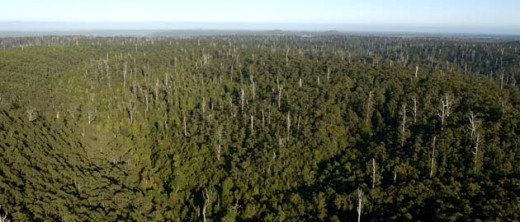 The Tarkine region is located in the north-west of Tasmania. The area encompasses 447,000 hectares of wilderness including the Southern Hemispheres largest single tract of temperate rain forest, a wild coastline with an extraordinary wealth of Aboriginal Cultural Heritage sites. It’s the habitat for over 50 threatened species. The extensive rainforests, beautiful river gorges, buttongrass mountain tops, flowering heathlands and long wild beaches combine to make the Tarkine one of the world’s great treasures. The Tarkine region is located in the north-west of Tasmania. The area encompasses 447,000 hectares of wilderness including the Southern Hemispheres largest single tract of temperate rain forest, a wild coastline with an extraordinary wealth of Aboriginal Cultural Heritage sites. It’s the habitat for over 50 threatened species. The extensive rainforests, beautiful river gorges, buttongrass mountain tops, flowering heathlands and long wild beaches combine to make the Tarkine one of the world’s great treasures.
These rainforests are important for their flora which has links to the ancient continent of Gondwana, and for their lichens and fossils which help tell the story of Australia’s ancient flora and its evolution. The Tarkine is a sensitive region rich in mega-diversity. It’s one of the world’s last remaining temperate rain-forests, the home of the Tasmanian Devil and many other precious species.
.
Tarkine National Heritage a must
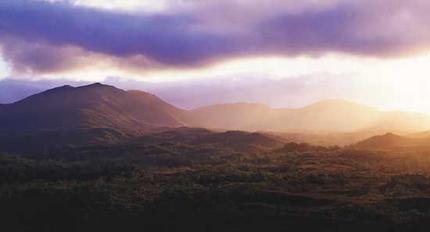 How many places on Earth still look like this?
What an incredible asset of eco-experience (not dodgy eco-tourism) wild Tasmania offers the world’s discerning explorer? How many places on Earth still look like this?
What an incredible asset of eco-experience (not dodgy eco-tourism) wild Tasmania offers the world’s discerning explorer?
.
The Tarkine must be put on the National Heritage List. The heritage assessment of The Tarkine will help ensure that the heritage values are considered in decision-making, so heritage protection is balanced with the social and economic aspirations of the Tasmanian community. Short-term economic benefits should not be at the expense of the un-quantifiable value of ancient woodlands, rugged coastlines, and forest habitat destruction. Mining companies like Venture Minerals are desperate to exploit the minerals beneath Tasmania’s environmentally significant Tarkine area.
 Enter the Tin Men Enter the Tin Men
.
Demand for metals superior to Tasmania’s ecology?
.
Chinese demand for base metals such as gold, iron, tin, zinc, lead, copper is at an all time high, and this would mean logging, pollution, roads, and heavy traffic destroying the landscape and pristine rivers.
Environment Minister Tony Burke was called on to immediately include the Tarkine on the emergency National Heritage Listing amid concerns about the impact on the Tasmanian devil population of a revised tourist road project. He denied that he made a promise to do so. His predecessor, Peter Garrett, first gave the Tarkine wilderness a one-year emergency listing, which Mr Burke let expire. Since then he has let a British mining company test drill in the area. Mr Burke says the new plan for a tourist road is not the same as the original 132-kilometre loop road plan that was subject to a now lapsed emergency listing. One road is not similarly destructive an another? Mining and road proposals threaten to carve up Tasmania’s unprotected the Tarkine wilderness area, local defenders say.
Venture Mineral’s Mt Lindsay tin, tungsten and iron mining proposal, coupled with the revival of the controversial Tarkine link road proposal, should have given Mr Burke grounds to reinstate Tarkine’s emergency National Heritage listing. Heritage listings would not stop mining, but developments would have to pass more rigorous and critical environmental tests.
The Mount Lindsay tin project is the largest of several mines planned around the Tarkine in an emerging new Tasmanian environmental battle. The Tarkine National Coalition said up to nine new open cut mines are in development there. Venture Minerals predict $1 billion in revenue, with more than 500 jobs in construction and 200 in operation. Surely the threats of mining are enough reasons for an emergency heritage listing for the Tarkine?
Mr Burke says the principle that a heritage listing automatically locks out all development is wrong. He says with or without a heritage listing, environmental protection remains. “Developments” and “protection” are inherently contradictory. Mr Jordan who heads the Tarkine National Coalition says Mr Burke’s decision to lift the heritage listing means other mining companies will not be scrutinised as closely as Beacon Hill Resources. The whole area should be protected as a national park.
The interests of miners are being placed above the Minister’s obligations to the environment. All three proposed mining projects will have secured Commonwealth environmental permits during the 18 month period he had at his disposal, allowing them to avoid scrutiny against National Heritage criteria. They will also be allowed to continue exploration drilling and associated access roading without need for Commonwealth assessments.
The mining will cause havoc to the pristine condition of the area. There is nothing “sustainable” now. It’s just window-dressing. What about the costs and long term damage of these industries and jobs? Mr Burke is supposed to represent the environment, not the mining industries. As with his population strategy, that come to nothing, he is now abrogating his duty to protect one of the last temperate rain-forest areas in the world.
.It is wrong to destroy sacred and holy places to plunder their riches, and the same applies to Nature’s sacred places.
 A proud colonial relic of a Tasmanian old growth forest raped, pillaged and plundered
…and today colonial logger descendants, hanging on to the past, are paupers.
(Photo by editor 20110928, free in public domain – click to enlarge, then click to enlarge again) A proud colonial relic of a Tasmanian old growth forest raped, pillaged and plundered
…and today colonial logger descendants, hanging on to the past, are paupers.
(Photo by editor 20110928, free in public domain – click to enlarge, then click to enlarge again)
.
.
Please email a demand to the ultimate decision maker of our temporary time:
Australia’s current Environment Minister: Tony.Burke.MP@aph.gov.au
.
Monday, December 5th, 2011
The following comments were posted by Tigerquoll 20111102, on Tasmanian Times to the article ‘Tasmania’s longest running forest blockade celebrates 5-year milestone‘, by Miranda Gibson, Still Wild Still Threatened (20111101), which began…
.
‘Today “Camp Flozza” celebrates its fifth birthday. The forest blockade has been running continuously for the past five years, holding off logging operations in the Upper Florentine Valley’. [Read More].
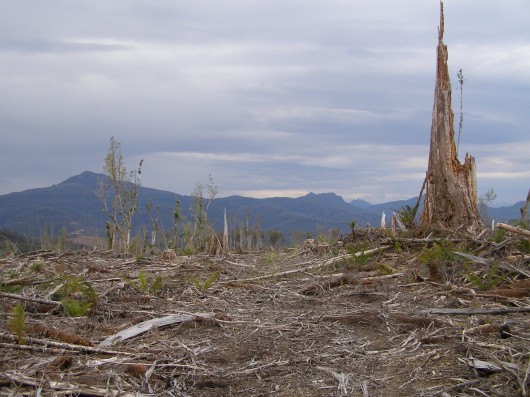 Styx Valley Holocaust
– old-growth clearfelled by Forestry Tasmania
(Photo by editor 20110929 – free in public domain)
(Click photo to enlarge, then click again to enlarge again) Styx Valley Holocaust
– old-growth clearfelled by Forestry Tasmania
(Photo by editor 20110929 – free in public domain)
(Click photo to enlarge, then click again to enlarge again)
.
“A Conservation Agreement halting logging in 430,000 hectares is now over-due. The Intergovernmental Agreement signed in August explicitly states that logging operations must be rescheduled or where this is not possible compensation given. Every hectare of forest lost in this area now represents a complete breach of the promises made by the government.”
.
~ Miranda Gibson, Still Wild Still Threatened
.
.
Of old growth defenders:
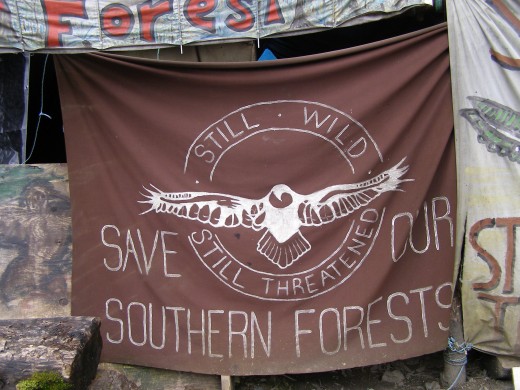
“Here’s to the crazy ones, the misfits, the rebels, the troublemakers, the round pegs in the square holes… the ones who see things differently—they’re not fond of rules… You can quote them, disagree with them, glorify or vilify them, but the only thing you can’t do is ignore them because they change things… they push the human race forward, and while some may see them as the crazy ones, we see genius, because the ones who are crazy enough to think that they can change the world, are the ones who do.”
~ Steve Jobs [1955-2011]
History will recount – the steadfast commitment by these forest defenders to hold their ground, to dig in, in the face of an overwhelming enemy, compares to the dusty amateurs that became the rats of Tobruk.
.
Of old growth rapers:
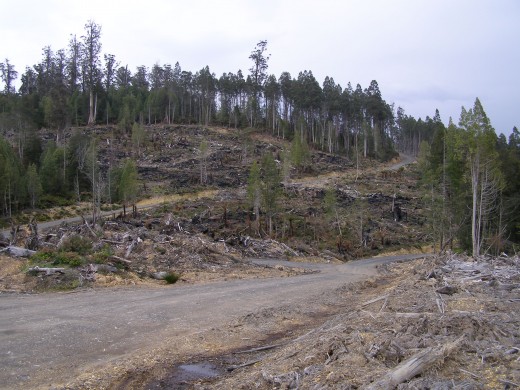 Styx Valley hillside clearfelled – beyond Forestry Tasmania’s locked gates.
(Photo by editor 20110929 – free in public domain)
(Click photo to enlarge, then click again to enlarge again) Styx Valley hillside clearfelled – beyond Forestry Tasmania’s locked gates.
(Photo by editor 20110929 – free in public domain)
(Click photo to enlarge, then click again to enlarge again)
.
A morally-wise person would not put down an animal because it was injured. Moral civilized society has evolved the ‘Veterinary’ profession – a highly skilled field, more highly qualified than human ‘General Practice Medicine’ – why?
In the wild, a female mammal may kill an impaired offspring only to save its remaining healthy young scarce food to survive.
In Tasmania, old growth forests are becoming scarcer by the day, and yes this is still occuring in the 21st Eco-Century, not the 19th Timbergetting Century.
But in the selfish eyes of industrial loggers, any broken branch justifies the clearfell and scorched earthing of old growth forests by the hectare, which are innocuously relegated as ‘coupes’.
What then is a coupe? A forest coupe is earmarked for logging. A selected section of an intact, pristine native old growth forest is earmarked by Forestry Command for ‘harvesting‘, read ‘logging‘, read ‘forest ecology slaughter‘, read ‘forest wildlife habitat destruction‘. Yet to the logger mind forest reads as plunderable timber, and these days as low grade commodity woodchip to greedy asian profiteers, only to sustain a diehard, got-no-where-to-go desperate logger culture. The log-till-I-drop logger mentality is no different to morbidly obese American juveniles confessing dependence on Maccas Big Macs.
I fear loggers would do same to their grandparents once impaired.
‘Corporate industrialism’ is worse than Herbert Spencer’s ‘survival of the fittest’ mindset. It is self-serving Forest Eugenics – evident in Forestry Tasmania’s programmed conversion of native Tasmania into plantations and the scourge of its genetically modified Eucalyptus nitens now exterminating Tasmania’s next condemned species – the Tasmanian Devil.
Beware the Forest Nazis lurking in the privets.
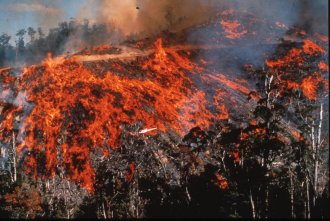
Holocaust is what the Nazis did
This is what Forestry Tasmania did recently to The Tarkine.
.
 ‘Forest Eugenics’ is what Forestry Tasmanian ‘scientists‘ are doing today – ‘Forest Eugenics’ is what Forestry Tasmanian ‘scientists‘ are doing today –
GM-modified Eucalypt nitens plantations replacing native Old Growth
.
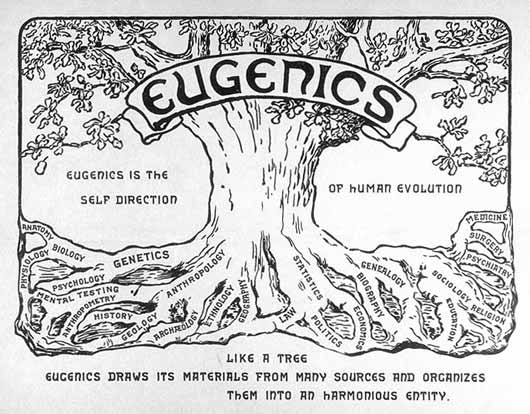 Is this where GM Nitens (shining gum) is taking Tasmanian ecology – to ‘elite forests’?
– superior growth rate, disease resistant, herbicide resistant, but perhaps the GM-exterminator of Tasmanian Devils. Is this where GM Nitens (shining gum) is taking Tasmanian ecology – to ‘elite forests’?
– superior growth rate, disease resistant, herbicide resistant, but perhaps the GM-exterminator of Tasmanian Devils.
.
Tags: Camp Flozza, Eucalyptus nitens, Forestry Tasmania, Intergovernmental Agreement, Logging, old growth, Still Wild Still Threatened, Styx Valley Holocaust, Tasmania, Tasmanian forest eugenics, Tasmanian Times, The Tarkine, Upper Florentine Valley
Posted in Tasmania (AU), Threats from Deforestation, Threats to Wild Tasmania | No Comments »
Add this post to Del.icio.us - Digg
Sunday, December 4th, 2011
“..this awe-inspiring, largely unknown part of Australia – a wilderness that has survived, virtually untouched, for over 65 million years from its Gondwana heritage, but which is today under increasing threat from Man.”
.
~ Robert Purves, June 2010, in Foreword of the book ‘The Tarkine’, edited by Ralph Ashton and published by Allen & Unwin, [Available at ^http://www.allenandunwin.com/default.aspx?page=94&book=9781742372846]
.
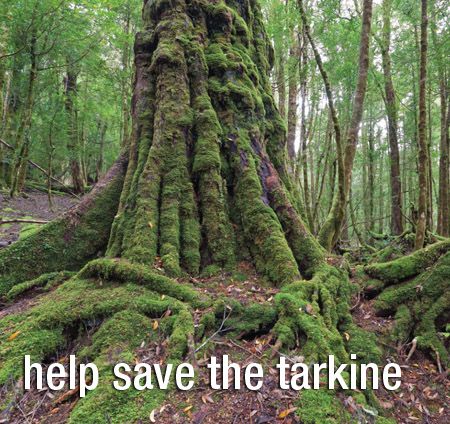 The Tarkine’s mystical beauty of an ancient Giant Myrtle (Nothofagus cunninghammii) The Tarkine’s mystical beauty of an ancient Giant Myrtle (Nothofagus cunninghammii)
.
Urgent press releases from the local champions trying to save The Tarkine:
.
.
‘New threats to the Tarkine’
.
(Source: The Wilderness Society, Tasmania, ^http://www.wilderness.org.au/regions/tasmania/new-threats-to-the-tarkine)

We all know the Tarkine is an environmental jewel – but when mining companies look at this special place, they see the glint of valuable metals instead. Gold, iron, tin, zinc, lead, copper – you name it and chances are it can be found in the mineral-rich bedrock beneath the Tarkine.
With Australia in the grip of an extraction bonanza, and Chinese demand for base metals at an all time high, the pressure to open up the Tarkine to mining is building. So far, 12 mines have been proposed for the Tarkine over the next two years, along with 56 licences for mineral exploration in the area. If even a fraction of these mines go ahead, this wild land of rugged coastline, pristine rivers and forested hills could be compromised – criss-crossed with exploration tracks and roads and dotted with waste dumps, pits and trenches.
The Tarkine is of huge environmental significance. It is one of the largest remaining tracts of temperate rainforest on earth, and home to a huge variety of species including:
- Tasmanian devils
- Tasmanian wedge- tailed eagles
- Spotted-tailed quolls
- Southern bell frogs
- White goshawks
- Giant freshwater lobster
- Eastern barred bandicoots
- Orange-bellied parrots
- and the Huon pine.
.
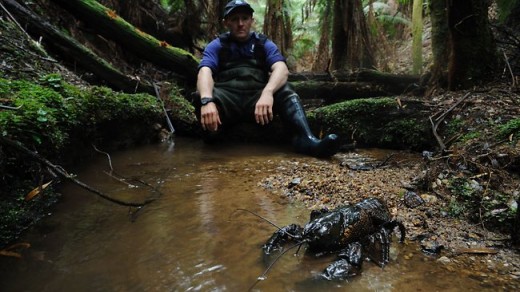 Tasmania’s Giant Freshwater Lobster (Astacopsis gouldi)
It is found only in northern Tasmanian streams (particularly in The Tarkine) and rivers flowing into Bass Strait.
It is found nowhere else in the world, yet is threatened by illegal fishing, land clearing and forestry.
(Source: Matthew Denholm, Tasmania Correspondent, The Australian, 20111109) Tasmania’s Giant Freshwater Lobster (Astacopsis gouldi)
It is found only in northern Tasmanian streams (particularly in The Tarkine) and rivers flowing into Bass Strait.
It is found nowhere else in the world, yet is threatened by illegal fishing, land clearing and forestry.
(Source: Matthew Denholm, Tasmania Correspondent, The Australian, 20111109)
[Read Recovery Plan]
.
Environmental jewel
The Tarkine’s wild, rugged coastline – there’s no land between this point and the South American coast – boasts some of the cleanest air in the world. Because of these values (above ground), the Tarkine has long been the subject of a community-driven National Park proposal. In addition, in 2010, a report by the Australian Heritage Commission recommended that 430,000 hectares of the Tarkine be granted National Heritage status.
But Environment Minister Tony Burke has refused to implement this recommendation, claiming a need for further assessment and consultation. For decades, environmentalists have been working to protect the Tarkine. Some campaigns have been lost – like the road to nowhere in the mid 1990s – others have been won. Now, with the Tasmanian Forest Agreement progressing, it looks like the area may at last be protected from logging.
.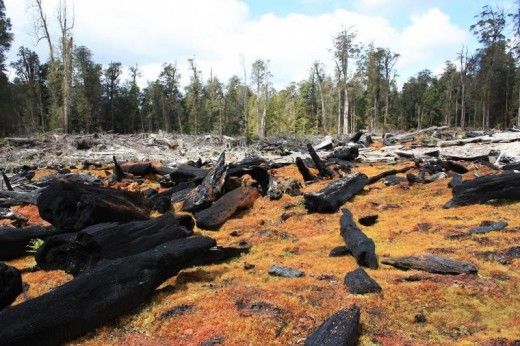 Logging and ‘scorched earthing’ of old-growth rainforest in The Tarkine
(October 2009, Environment Tasmania) Logging and ‘scorched earthing’ of old-growth rainforest in The Tarkine
(October 2009, Environment Tasmania)
.
But mining remains as a threat in this pristine region.
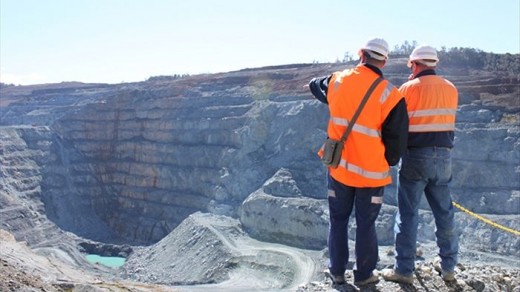 Savage River Open Cut Mine in the north of The Tarkine Savage River Open Cut Mine in the north of The Tarkine
.
It’s not hard to predict what will happen over the coming months: mining companies will pressure the Tasmanian Government to allow these mines to go ahead, dressing their arguments up in the usual disguise by claiming that mining is essential for jobs.
But putting industry ahead of the environment is an approach that has failed for decades and a new approach is needed. The Wilderness Society is involved with a coalition of groups calling for the creation of a Tarkine National Park.
With your support, the Wilderness Society will be standing up for an Australia that values the Tarkine not for the metals that can be extracted by destroying it, but for the precious environmental qualities that it has when left intact.
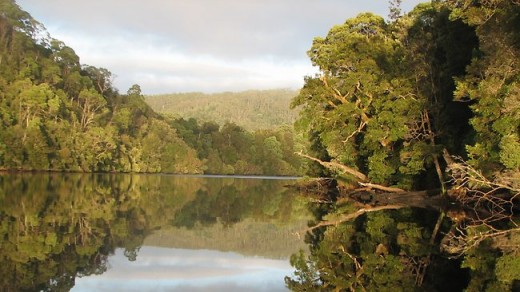
.
‘Burke’s broken promise misleads the public’
.
(by Scott Jordan, Campaign Coordinator, Tarkine National Coalition, 20111202, Tasmanian Times online newspaper, ^http://tasmaniantimes.com/index.php?/weblog/article/burkes-broken-promise-misleads-the-public/)

‘Tarkine National Coalition has reacted angrily to the latest chapter in Environment Minister Tony Burke’s campaign of misinformation regarding the Tarkine National Heritage assessment. The Minister made comment on ABC Mornings (936 Tasmania) that he did not have in his possession any report from the Australian Heritage Council supporting a permanent listing of the Tarkine.
This is at odds with our reading of the Australian Heritage Council report from September 2010 which supported the permanent listing of 433,000 hectares it had assessed as having National Heritage Values. Minister Burke has refused to publicly release this report, despite FOI requests from the ABC last year.
“The Minister is clearly failing in his responsibilities here, and is spinning mistruths to try and cover up his complicity in promoting mining in the Tarkine wilderness reserves,” said Tarkine National Coalition spokesperson Scott Jordan.
The Minister received this report two months before allowing the Tarkine’s Emergency National Heritage Listing to lapse. He then sent the AHC back to reassess the area, with a substantial budget cut and no capacity to complete the work before 2013. This will effectively shepherd up to ten new mine proposals through an EPBC process that cannot in the absence of a listing, legally consider impacts on National Heritage Values such as wilderness, rainforest, geological significance (fossil sites and karst systems), aesthetic character, Indigenous or European cultural heritage.
This mirrors the strategy applied by the Minister at the controversial Brighton By-pass in southern Tasmania and at James Price Point in northern WA, where once EPBC assessments were underway, a National Heritage Listing was applied that could have no legal effect on those ongoing assessments.
Independent advice from Andrew Macintosh, Associate Director of the ANU Centre for Climate Law and Policy confirms that the AHC report does in fact refer to a permanent listing, and advises that the AHC’s terms of reference only allow it to report on whether an area has National Heritage Values and prevents it from making ‘qualified’ or ‘preliminary’ findings. The correspondence from Mr Macintoshcan be downloaded below..
“It becomes impossible to have reasonable dealings with a Minister who won’t stick to the rules, and won’t tell the truth”. “The Minister must immediately release the Australian Heritage Council’s Tarkine report from September 2010”.
.
Emergency National Heritage Listing
The TNC and partner groups (WWF, Australian Conservation Foundation, The Wilderness Society, Tasmanian Conservation Trust, Environment Tasmania and North West Environment Centre) resubmitted a Emergency National Heritage Listing nomination last week, triggered by the threats to National Heritage Values of the Mount Lindsay and other mining proposals.
The resubmitting of the Tarkine Road proposal by the Tasmanian Government called into play a promise made by Minister Burke last December that if the Tarkine Road was resubmitted, that he would immediately re-list the Tarkine. The Minister has failed to deliver on this promise.
“The failure to reapply a Tarkine Emergency National Heritage Listing in response to the Tarkine Road referral clearly shows this Minister’s contempt for the responsibilities of his office, and clearly tells us that any promises he makes are worthless”.
“The key difference between this proposal and the former proposal is not the alterations to the route, but the fact that a mining company now needs this route for transporting product to ports”.
.
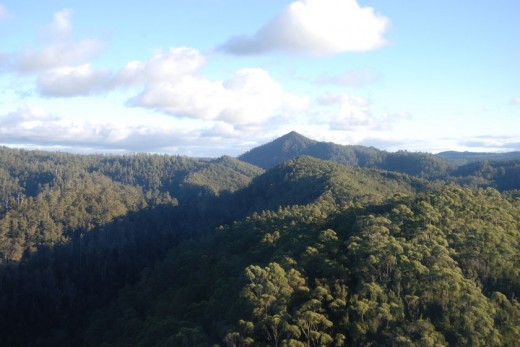
.
.
‘Burke places money and mines before Tarkine’
.
by Senator Christine Milne, Tasmanian Times online newspaper, ^http://tasmaniantimes.com/index.php?/weblog/article/burkes-broken-promise-misleads-the-public/]
.
Federal Environment Minister, Tony Burke, must explain why he will allow the assessment of mining proposals to occur in the Tarkine before acting on advice before him to permanently heritage list the region, Australian Greens Deputy Leader, Christine Milne said today.
“Minister Burke today claimed on ABC local radio to have no information leading to the emergency heritage listing of the Tarkine, but failed to mention a report buried in his department recommending the Tarkine be listed.
“The Environment Minister is playing into the hands of mining companies, who are no doubt jubilant of the 2013 deadline given to the Australian Heritage Council to determine whether permanent heritage listing should be put in place.
“By 2013, all ten of the mining proposals will be submitted to the department and any subsequent heritage listing will have no effect on their operations. The wilderness, geological and cultural values of the Tarkine will not be assessed.
“It is like putting on a seatbelt after your car has crashed.
“Minister Burke’s job has moved from a focus on natural and heritage values to one of being solely concerned with bleeding monetary value from the places he is supposed to protect.
“Peter Garrett placed emergency heritage listing on the Tarkine following the state government’s previous attempt at building a road, and now, with a similar application before him, as well as ten mining applications that will be seriously impinged by such a listing, we have Minister Burke reneging on his promise to heritage list the region should another road proposal be made.
“This ongoing, seven year process to determine heritage listing the Tarkine has become an embarrassment to Australia whose governments persistently fail to recognise the value of this natural jewel.
.
“Minister Burke has everything at his disposal for immediately placing the Tarkine on the National Heritage list.
Act now, Minister Burke, before these mines have your name all over them.”

Tasmania as seen by miners – exploitative ‘below-ground’ values
.
Selected comments readers of Tasmanian Times:
.
by Barnaby Drake (20111202):
“The key difference between this proposal and the former proposal is not the alterations to the route, but the fact that a mining company now needs this route for transporting product to ports”.
‘Is it not just as I predicted? All infrastructure for these mining companies will be paid for by us. Here the original estimate was for $24 Million as a starters. Expect the real cost to be dramatically understated so that they can get their approval before announcing the usual blow-out! And that’s just the start of it. That also means that the Tourism budget will take the hit, but strangely, Forestry will also be able to us this road as the Tarkine is no longer protected. It will then be discovered by TasPorts that they need to upgrade their port facilities somewhere in the West to benefit the local inhabitants and they require another Sqillion Dollars and of course, create a couple of thousand jobs, etc.
Hallelujah! The economy has been saved. Your pensions are safe. A new mining tax will see us all happy and prosperous and MP’s will be able to have their blocked salary increases paid. A replay of the famous once Gunns proposals.
All we need now is an education bus to train the kiddies for the future. Utopia!’
.
by John Hayward (20111202):
‘The Minister would see his responsibility as being to himself, his party, and to their major political contributors. His apparent dishonesty, or ignorance, is merely a consequence of these priorities.’
.
by Russell Langfield (20111202):
‘Can anyone name a promise Environment Minister Burke has kept, or a decision being made which favoured the environment over business interests?’
.
Salamander (20111202):
‘Burke likes to make out he is a man of the people, and responds when he gets enough signals from the people to act for the environment. Yesterday he was complaining about the hijacking of his twitter account by tweets about the Tarkine – but still he won’t do what the people want. Seems to me we have a puppet whose strings are completely controlled by corporations.’
.
by Pete Godfrey (20111203):
‘There is no money for hospitals, police, mobile phones for police, anything that is good for people, but there is always money available for Forestry and Mining. From what I can recall every mine venture that has received grants from the government has failed. All we ever get back is the privelege of cleaning up the mess and a hole in the ground. Part of the Tarkine have already been destroyed comprehensively by Forestry Tasmania, it is time to protect the rest from both of these rapacious subsidy collectors.’
.
by Pete Godfrey (20111203):
‘Unless you count building a road for Mining and Logging access to the area as a grant. I do.
What will happen is that he industry will start up, then say “oh it is not viable without some subsidies” then we put our hand in the the till and hand over heaps of money. Just like all the other mining ventures on the west coast. The companies accept the money then close the mine down not long after.
You can guarantee that the government will pay in the end.
We will pay for the new “mining and forestry road”
We will upgrade port facilities.
We will pay for road damage and bridge damage. Which is what the original Tarkine loop road proposal was about, it was to rebuild two bridges that have washed away before, the Tayatea bridge being one of them.
We may not hear of incentive grants to attract the miners but you can bet that a certain minister from the west will be handing grants out like lollies.’
.
 Maclays Swallowtail (Graphium Macleyanum), a native to The Tarkine
© Photo by Marja-Liisa, Helsinki (‘mliisa’s photostream’ on flickr, AU-2100 from Lynette,
^http://www.flickr.com/photos/25816219@N00/1921054368/ Maclays Swallowtail (Graphium Macleyanum), a native to The Tarkine
© Photo by Marja-Liisa, Helsinki (‘mliisa’s photostream’ on flickr, AU-2100 from Lynette,
^http://www.flickr.com/photos/25816219@N00/1921054368/
.
‘If the Tarkine were to be joined to the world heritage area, a vast reserve would be created, stretching from just a few kilometres south of Tasmania’s north coast all the way to its south-western extremity.
If this were to happen, it would, in my opinion, be among the top half-dozen natural areas remaining in the world. And properly managed, it would bring wealth to Tasmanians into the foreseeable future.’
.
~ Tim Flannery, contribution in ‘The Tarkine‘ (2010), edited by Ralph Ashton, and published by Allen & Unwin.
.
Tags: Australian Heritage Council, Giant freshwater lobster, National Heritage, National Park proposal, old growth forest, Savage River Open Cut Mine, save the Tarkine, scorched earthing, Tarkine National Coalition, Tarkine National Heritage, Tarkine National Park, Tarkine’s Emergency National Heritage Listing, Tasmania, Tasmanian Government, The Tarkine, Tony Burke
Posted in Tasmania (AU), Threats from Deforestation, Threats from Mining, Threats from Road Making, Threats to Wild Tasmania | No Comments »
Add this post to Del.icio.us - Digg
|
|
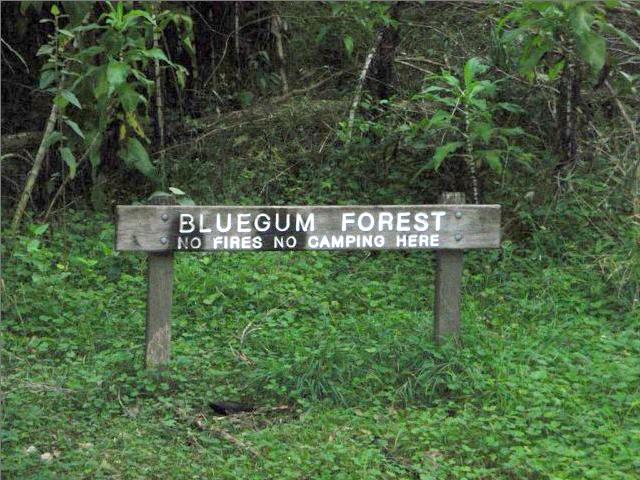
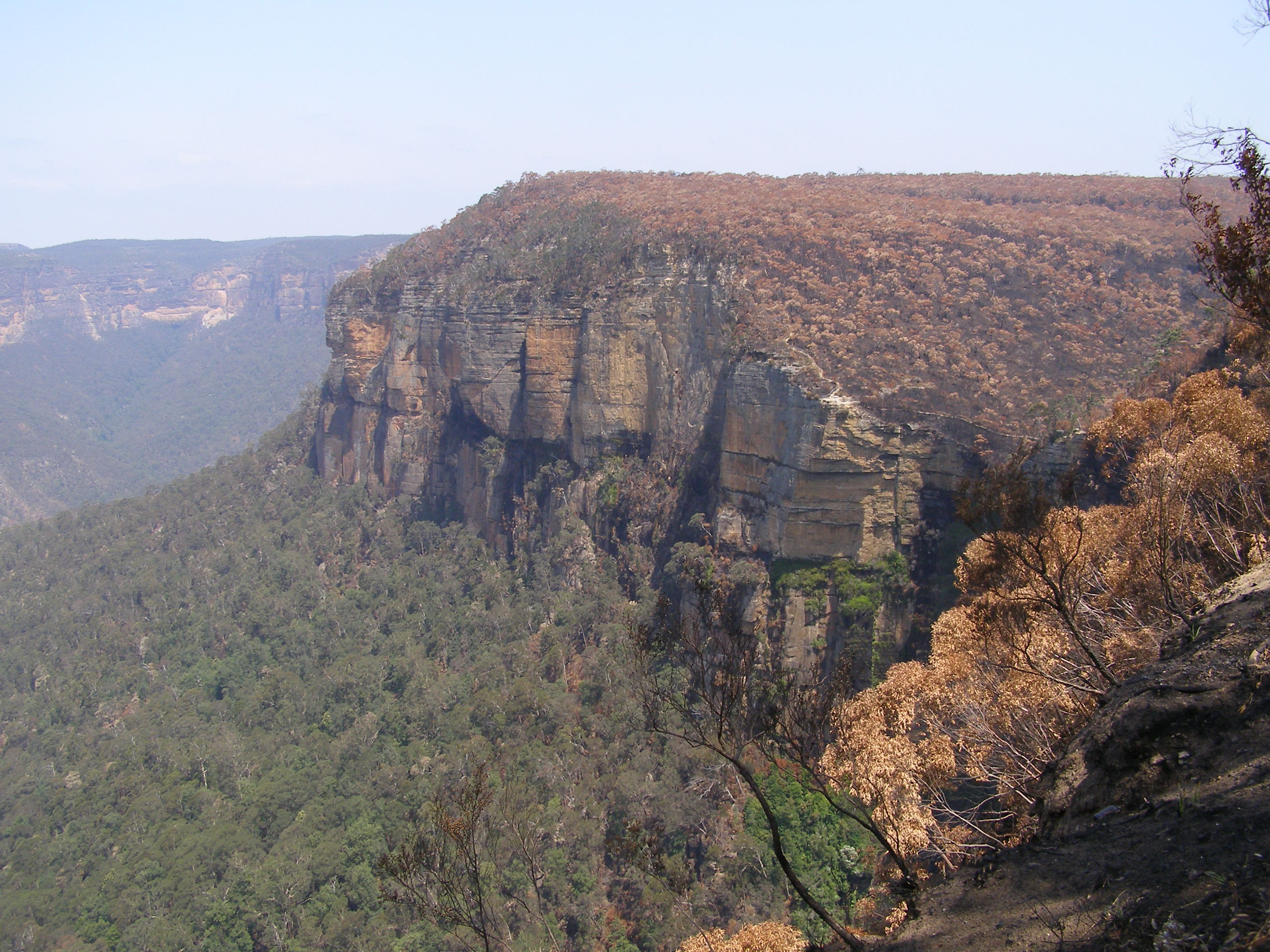 Blackheath escarpment broadscale backburn – “incidental in the scheme of things“?
(Photo by Editor 20061209, free in public domain, click photo to enlarge)
Blackheath escarpment broadscale backburn – “incidental in the scheme of things“?
(Photo by Editor 20061209, free in public domain, click photo to enlarge)
 Grose Valley incinerated 23rd November 2006
(Photo by Editor 20061209, free in public domain, click photo to enlarge)
Grose Valley incinerated 23rd November 2006
(Photo by Editor 20061209, free in public domain, click photo to enlarge)